Highways Cottage // 1902

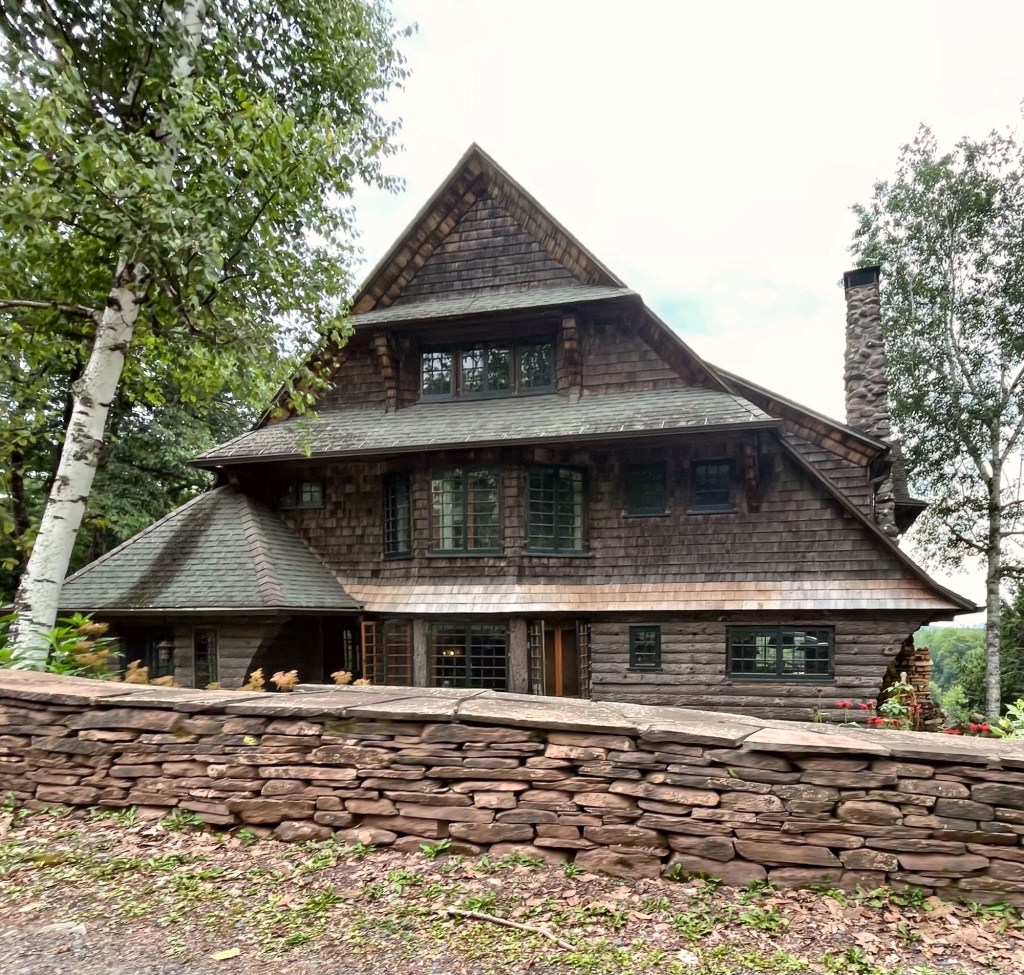
One of the more unique and enchanting historic summer “cottages” I have seen in my travels is this early 20th century rustic example in the Onteora Park colony. Built in 1902 for John S. Stanton Sr. (1837-1933), this residence was later the summer home of Dr. Edward Ahrens and his wife, Gertrude, who founded the Mountaintop Arboretum nearby. The house stands 3 1/2-stories tall and features horizontal log siding on the ground floor and cedar shingle siding above. The facade is dominated by the broad gable end roof that extends downwards to the first floor at flared eaves on the sides and over the windows.
Onteora Park Library // 1906

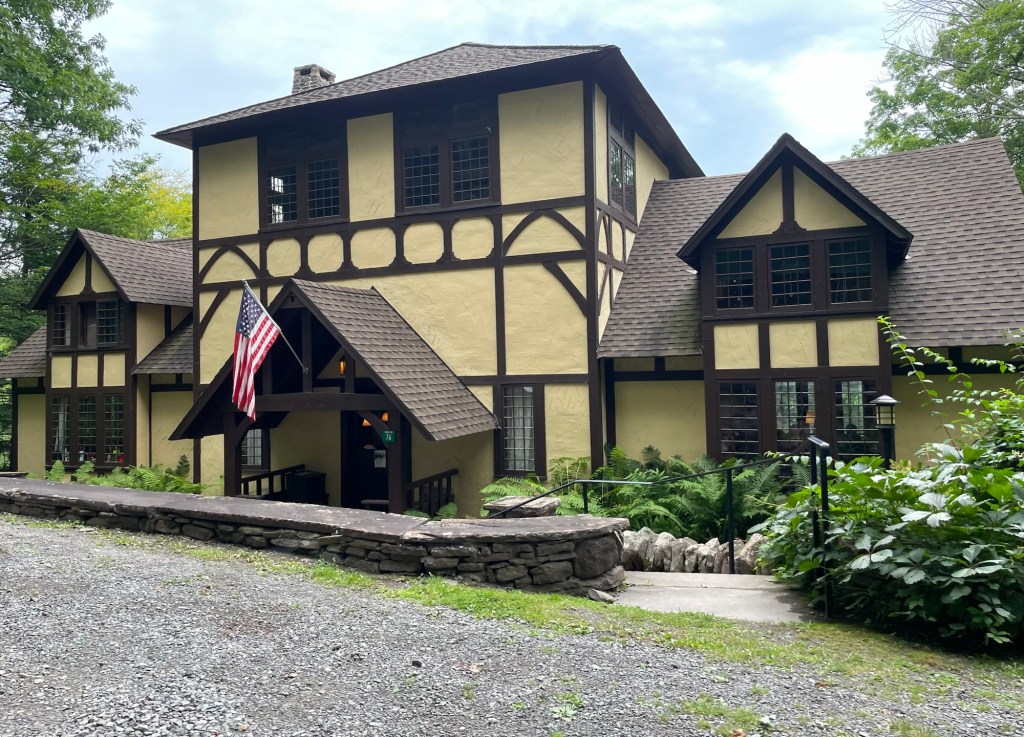
Built in 1906, the Library at the Onteora Park summer colony in Hunter, New York, is one of the many architectural treasures in the development. Designed by George A. Reid, the Canadian artist, architect, and summer resident of Onteora Park, the Tudor-style Arts and Crafts building was constructed in 1906 and opened to a collection of over 1,500 books and a full-time librarian during the summer season. Built of wood-frame construction with stucco exterior finish and adorned by half-timbering, the building has been lovingly maintained and preserved by members of the community for over 120 years.

Former Bear and Fox Inn // 1888

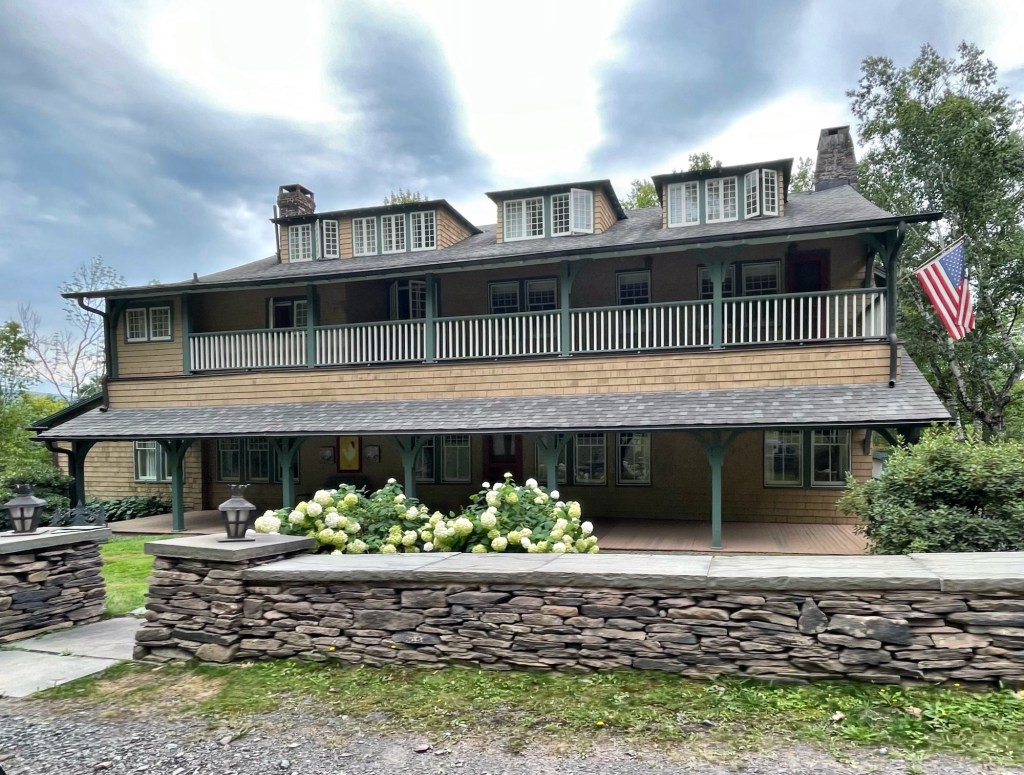
Once the heart of the Onteora Park colony in the Catskills Mountains, this large building was known as the Bear and Fox Inn. The inn was built in 1888 from plans by young architect Dunham Wheeler (1861–1938), the son of the founder of the colony, Ms. Candace Wheeler, along with three cottages, while Ms. Wheeler’s Associated Artists interior design company provided the upholstered furnishings. Candace’s daughter, Dora (Wheeler) Keith, painted an inn sign depicting a bear and fox dancing by the light of the moon. In the early development of Onteora Park, there was no sewer or water system, and the original cottages had no kitchens built within the homes. As a result, the Bear and Fox Inn provided a space where cottagers would meet daily for meals. By the 20th century, cottagers would add kitchens inside their homes, and some dinners and events were moved to the Field House. The Bear and Fox Inn was altered with the removal of the large dining room, and converted to a private residence, which remains to this day. The structure is an excellent example of the Arts and Crafts style in a rustic finishes, typical for Upstate New York summer cottages.

St. John the Evangelist Church // 1885

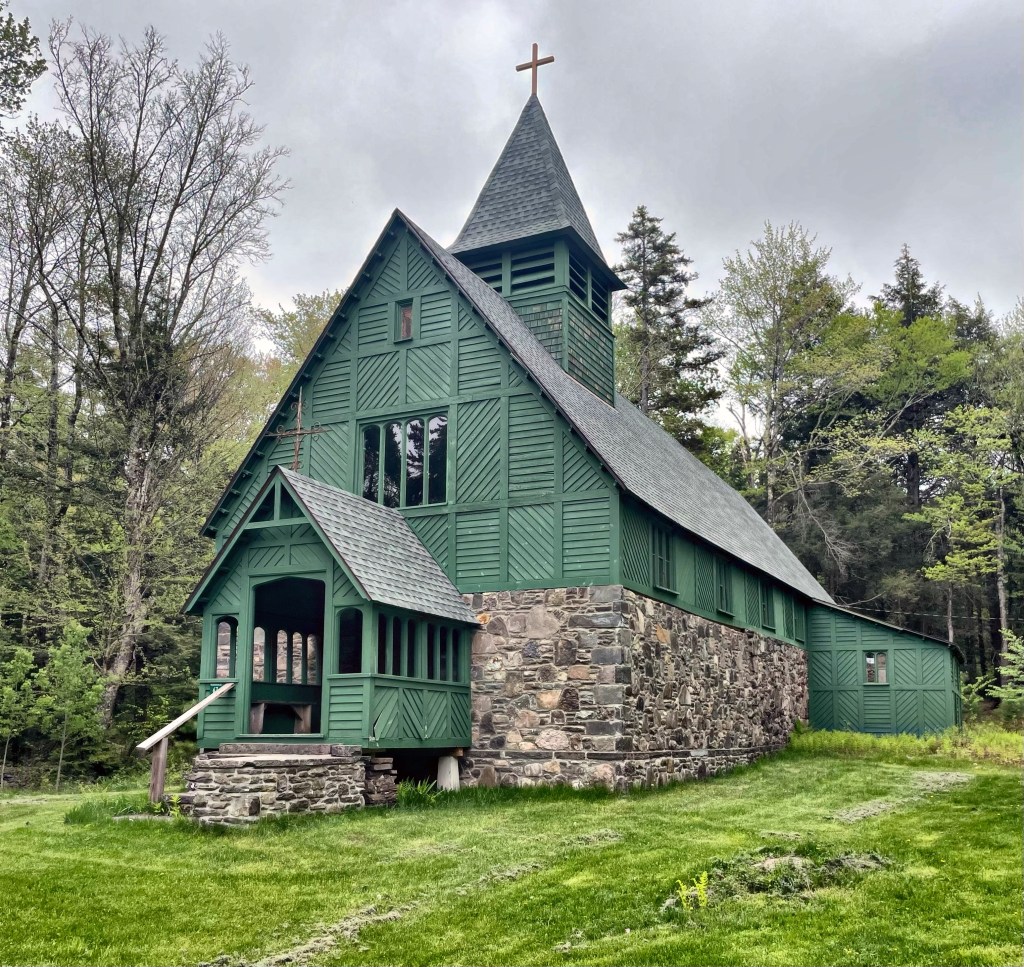
One of the most bucolic and beautiful buildings I have ever seen is this church in the Catskills, just outside of Elka Park, NY. Wow I wish New England could claim this one! The St. John the Evangelist Chapel was developed as part of a smaller enclave of summer cottages for rusticators from the Philadelphia-area, which was largely established by Mr. Alexander Hemsley (1834-1904) a chemist from Philadelphia who would later die from anaccidental chemical explosion at his factory. In 1883, Hemsley sold cottage lots to friends and family to erect summer houses in the Catskills and in 1884, decided to develop a lot for an Episcopal summer chapel. In that same year, Hemsley hired his future son-in-law, William Halsey Wood, to design the chapel. The Stick-style Victorian chapel blends the rustic use of natural materials found on the property with an elegant siting and attention to detail, not typically found in rural chapels. The native stone and stylized half-timbering really stood out to me. The church is used still in the summer with regular services on Sundays in July and August.