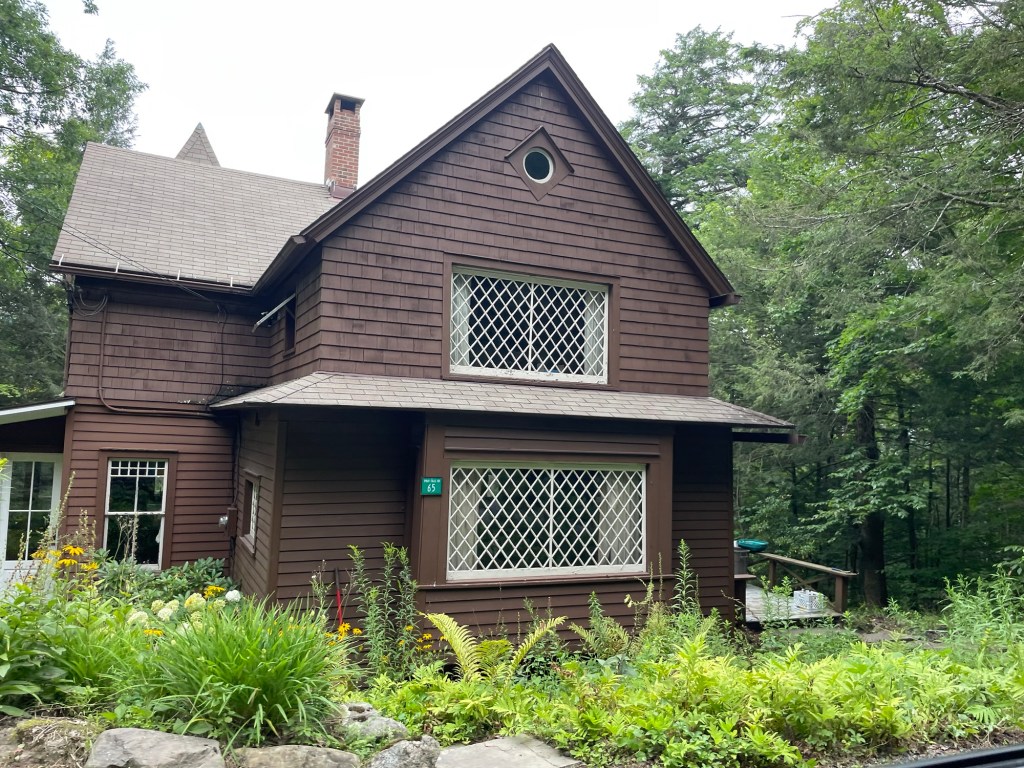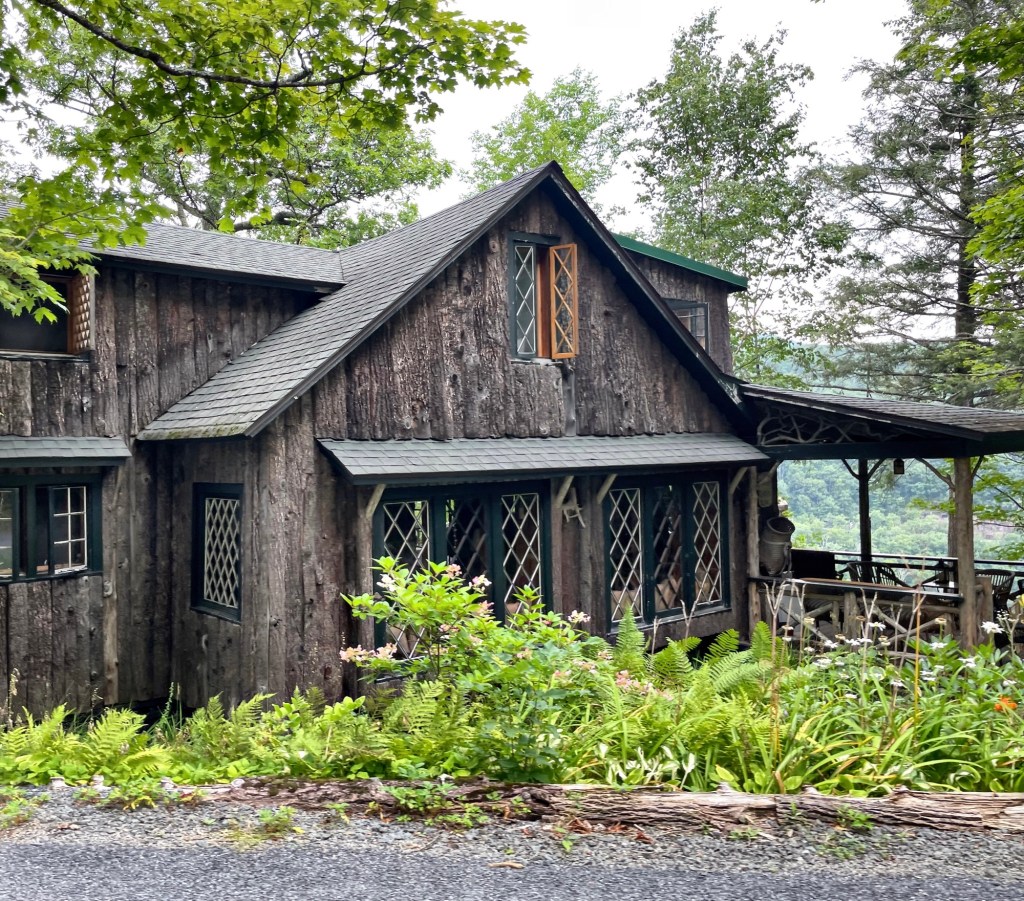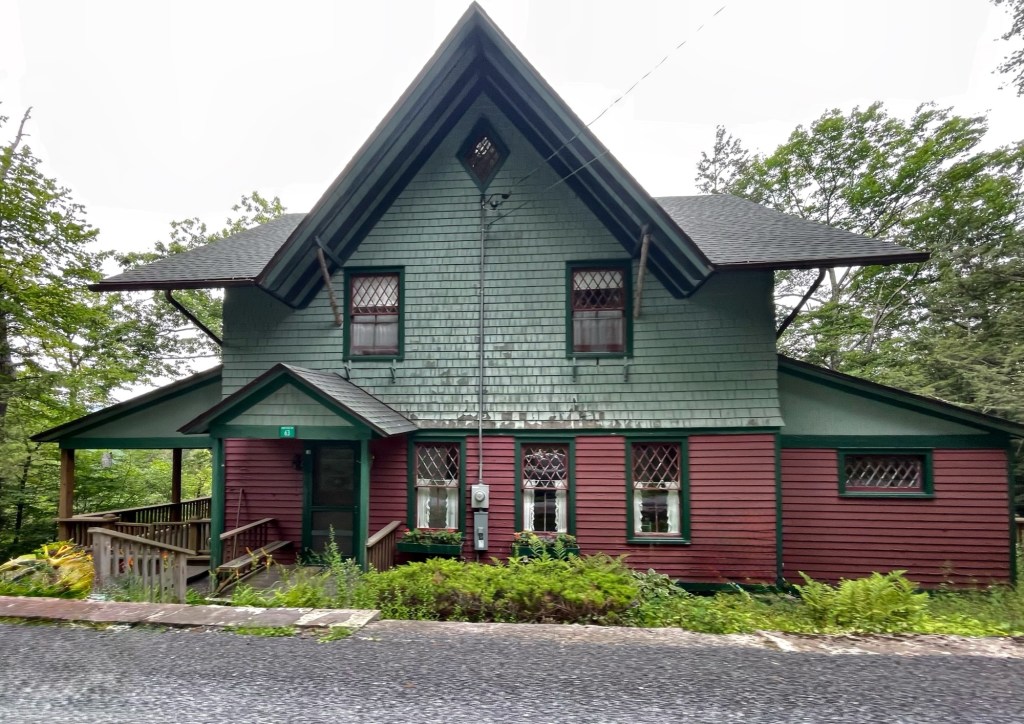
Crossways Cottage // c.1890

Tucked away in the town of Hunter in the Catskill Mountains of New York, the summer colony of Twilight Park has stood as an exclusive and private resort community established in the late 19th century. Twilight Park was born out of the Twilight Club, a Manhattan social club in the late-19th century and brought to life by founder, Charles F. Wingate. Mr. Wingate traveled to the mountaintop in 1887, and became enamored by its natural beauty. He arranged for the purchase of a former sheep’s meadow and led the construction of the first cluster of cottages in what would become a large community of over 100 summer homes. Cottages were laid out on roughly parallel roads at different elevations and on old connecting paths that later became roads with all lots built on ledges overlooking the Catskills. The first cottages were log cabins, and quickly followed by larger, Queen Anne style “cottages” as others invested in the development. Crossways Cottage is one of the many unique late-Victorian summer “cottages” in the exclusive Twilight Park colony in the Catskills of Hunter, New York. The cottage stands out for its cross-gable roof with overly deep eaves which are supported by rustic twig brackets, diamond sash windows, and the use of varied clapboard and shingle siding. 
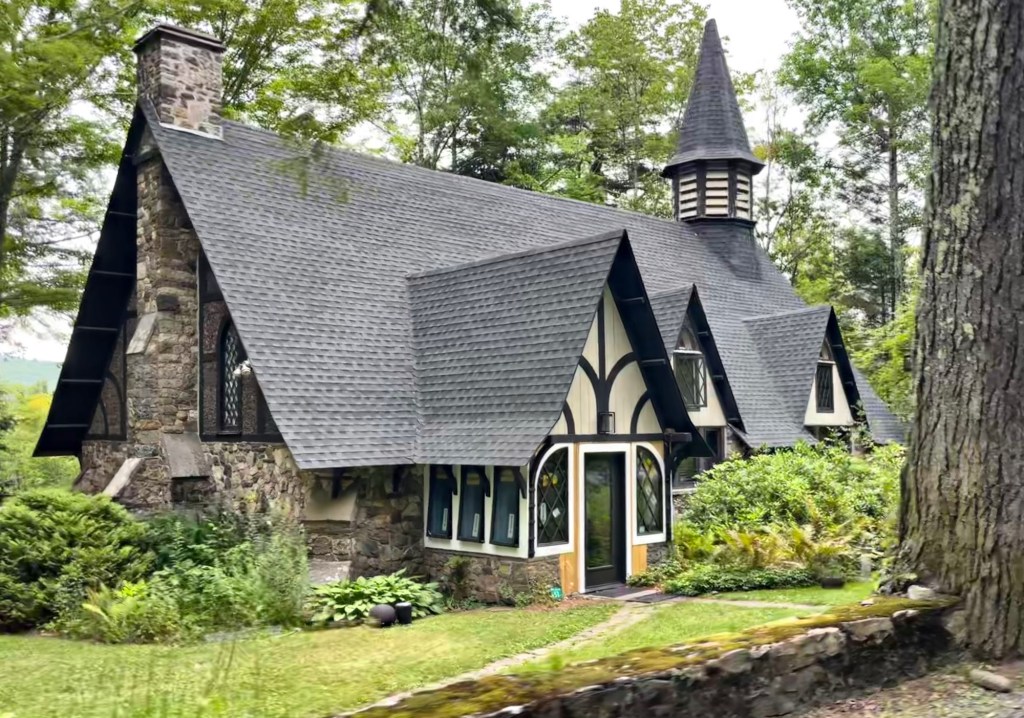
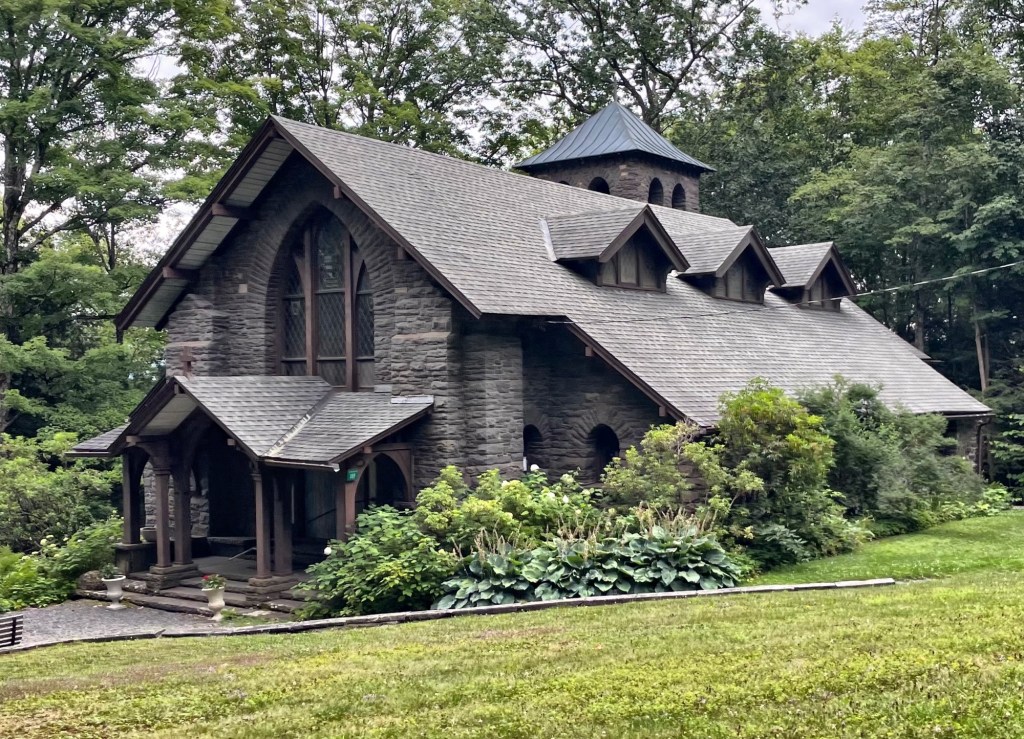
Union Chapel, Twilight Park // 1897

The Union Chapel in the summer colony of Twilight Park in the Catskill Mountains of New York, is one of the finest late Victorian chapels in the region. The edifice was built in 1897, a year following the erection of the All Angels Episcopal Church, in Twilight Park, and was designed to complement the rustic character of the surrounding cottages. The chapel was built as a non-denominational, or Union church, for summer residents of the colony who preferred an alternative to Episcopal sermons down the dirt road. The church was designed by Alice Hands, of the New York firm Gannon & Hands, the first all-female architectural firm in the United States. The chapel was eventually closed in 1970 and converted to a private residence, with some stained glass windows donated to the Episcopal Church in Twilight Park.

Memorial Church of All Angels, Twilight Park // 1896

The Memorial Church of All Angels is located in the center of the summer colony of Twilight Park, found in the town of Hunter in the Catskill Mountains. The founding of the church began shortly after the colony was established in 1888, when two years later, the Rev. H. M. Baum from Evanston, Pa., an early visitor to the Park, realized the need for an Episcopal Church, and funds were raised to build a small chapel, known as the St. Paul’s Church. The church was foreclosed upon in a matter of years. In 1895, church services were again reinvigorated when the Rev. Henry Yates Satterlee, the first bishop of Washington, then the Rector of Calvary Church, New York, had taken the cottage of his cousin, the artist Walter Satterlee, for his summer home. He set out to establish a summer chapel for Episcopalians in Twilight Park, and he hired architect Alexander Mackintosh, to furnish plans for the church. The church opened in 1896, and it would be expanded in 1909 with an addition and porch and again in 1915 with the belltower. The church opens every summer for services and is one of the finest Episcopal chapels in the Northeast.

Sans Souci Cottage // 1894

Tucked away in the town of Hunter in the Catskill Mountains of New York, the summer colony of Twilight Park has stood as an exclusive and private resort community established in the late 19th century. Twilight Park was born out of the Twilight Club, a Manhattan social club in the late-19th century and brought to life by founder, Charles F. Wingate. Mr. Wingate traveled to the mountaintop in 1887, and became enamored by its natural beauty. He arranged for the purchase of a former sheep’s meadow and led the construction of the first cluster of cottages in what would become a large community of over 100 summer homes. Cottages were laid out on roughly parallel roads at different elevations and on old connecting paths that later became roads with all lots built on ledges overlooking the Catskills. The first cottages were log cabins, and quickly followed by larger, Queen Anne style “cottages” as others invested in the development. This cottage, known as Sans Souci Cottage, was built in 1894 in Twilight Park, during the “rustic” period, where Queen Anne Victorian styles made way for a more rustic, Arts and Crafts mode. The cottage was built for owner John McClure and it is notable for its varied siding, diamond-pane windows and large porch overlooking the Catskills.

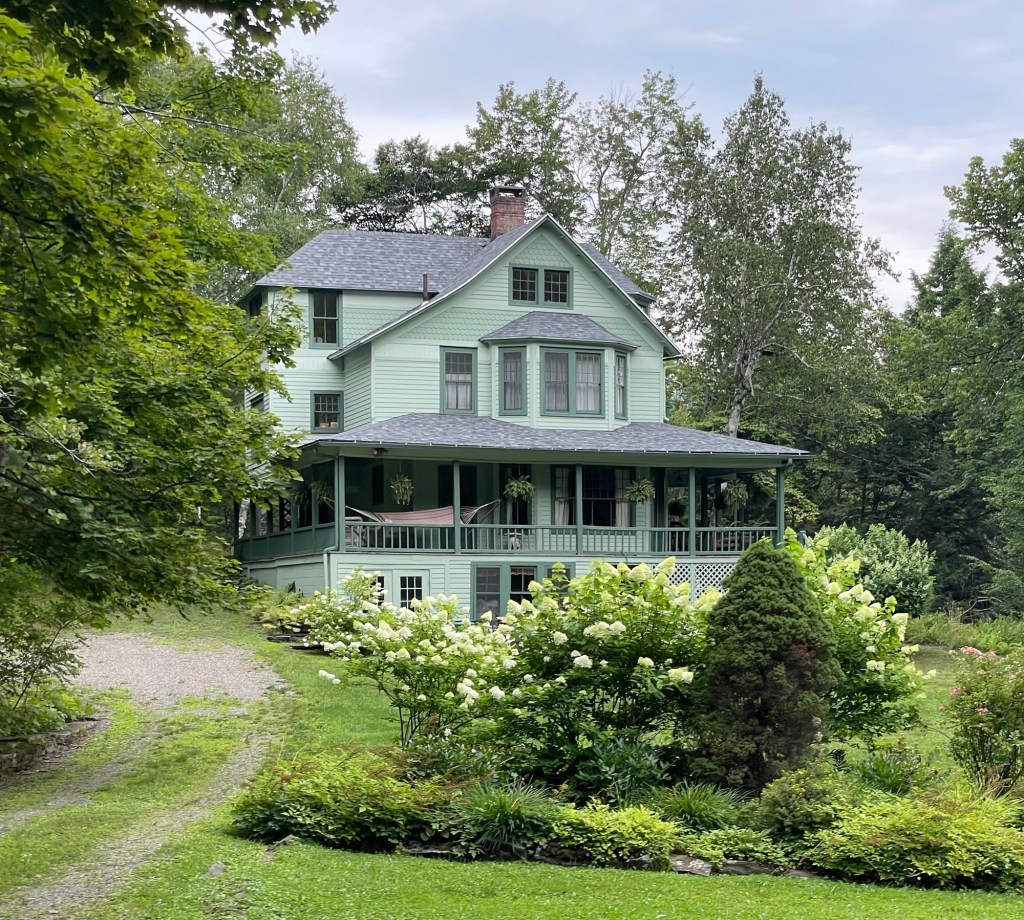
Four Winds Cottage // 1889

Tucked away in the town of Hunter in the Catskill Mountains of New York, the summer colony of Twilight Park has stood as an exclusive and private resort community established in the late 19th century. Twilight Park was born out of the Twilight Club, a Manhattan social club in the late-19th century and brought to life by founder, Charles F. Wingate. Mr. Wingate traveled to the mountaintop in 1887, and became enamored by its natural beauty. He arranged for the purchase of a former sheep meadow and led the construction of the first cluster of cottages in what would become a large community of over 100 summer homes. Cottages were laid out on roughly parallel roads at different elevations and on old connecting paths that later became roads with all lots built on ledges overlooking the Catskills. The first cottages were log cabins, and quickly followed by larger, Queen Anne style “cottages” as others invested in the development. This cottage, known as “Four Winds”, was built in 1889 during the first phase of development in Twilight Park, and it is notable for its varied siding, wrap-around porch, bay window, and elevated siting to provide better views of the landscape.

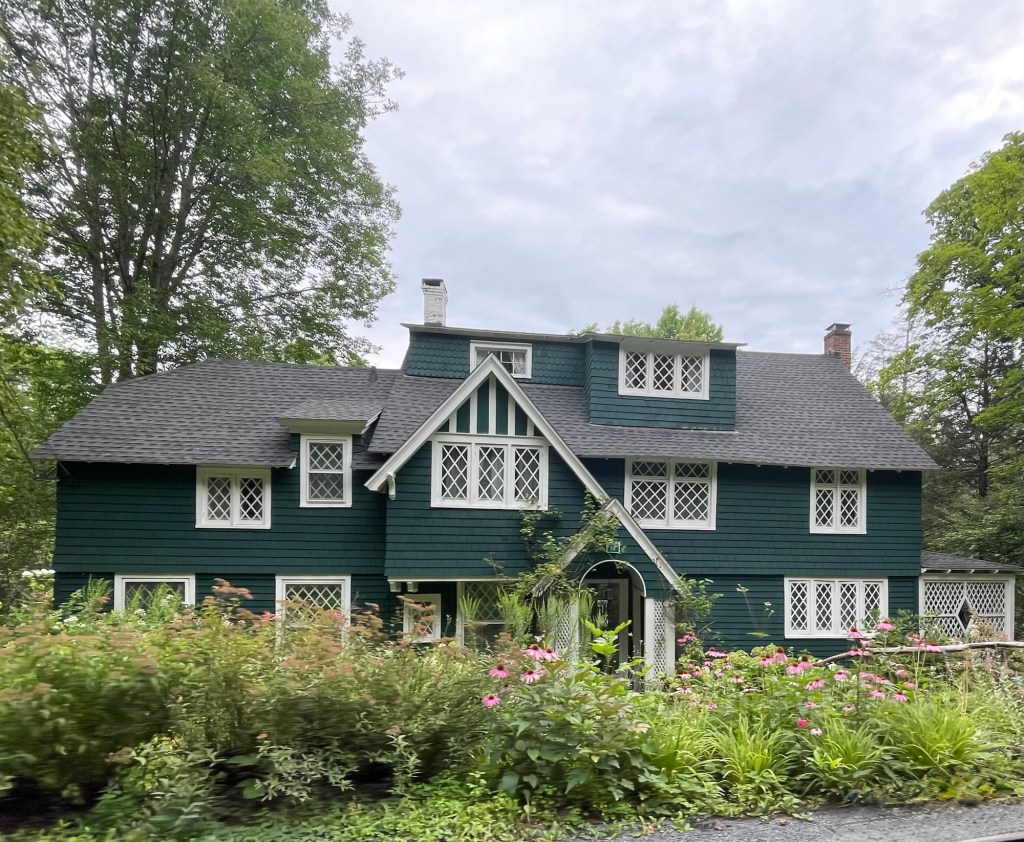
Braeside Cottage // 1888

Tucked away in the town of Hunter in the Catskill Mountains of New York, the summer colony of Twilight Park has stood as an exclusive and private resort community established in the late 19th century. Twilight Park was born out of the Twilight Club, a Manhattan social club in the late-19th century and brought to life by founder, Charles F. Wingate. Mr. Wingate traveled to the mountaintop in 1887, and became enamored by its natural beauty. He arranged for the purchase of a former sheep meadow and led the construction of the first cluster of cottages in what would become a large community of over 100 summer homes. Cottages were laid out on roughly parallel roads at different elevations and on old connecting paths that later became roads with all lots built on ledges overlooking the Catskills. The first cottages were log cabins, and quickly followed by larger, Queen Anne style “cottages” as others invested in the development. This cottage, known as Brae Side Cottage, was built in 1888 during the first phase of development in Twilight Park, and it is notable for its varied siding, diamond-pane windows, complex roof form with dormers, and the laticed entry.

Cosy Cabin // 1887

Tucked away in the town of Hunter in the Catskill Mountains of New York, the summer colony of Twilight Park has stood as an exclusive and private resort community established in the late 19th century. Twilight Park was born out of the Twilight Club, a Manhattan social club in the late-19th century and brought to life by founder, Charles F. Wingate. Mr. Wingate traveled to the mountaintop in 1887, and became enamored by its natural beauty. He arranged for the purchase of a former sheep’s meadow and led the construction of the first cluster of cottages in what would become a large community of over 100 summer homes. Cottages were laid out on roughly parallel roads at different elevations and on old connecting paths that later became roads with all lots built on ledges overlooking the Catskills. The first six cottages were log cabins, with this example, likely in the first batch. From maps and a report on the area, this early cottage appears to have been named “Cosy Cabin” and was first occupied by Mr. Wingate, the founder of the Twilight Club and Twilight Park. The cottage is unique for its vertically laid logs still containing their bark, and the rustic porch balustrade and detailing.