In 1852, Beacon Street in Newton was extended westward from Chestnut Hill through Newton Centre. The village’s suburban development accelerated through the activities of real estate developers as the city became connected to Downtown Boston by roadways and rail. This home was built in 1893 for Andrew and Ann Kistler. Andrew Kistler worked as a leather dealer in Boston, and commuted into the city daily. The Kistler House is an excellent example of Colonial Revival with some added oomph.
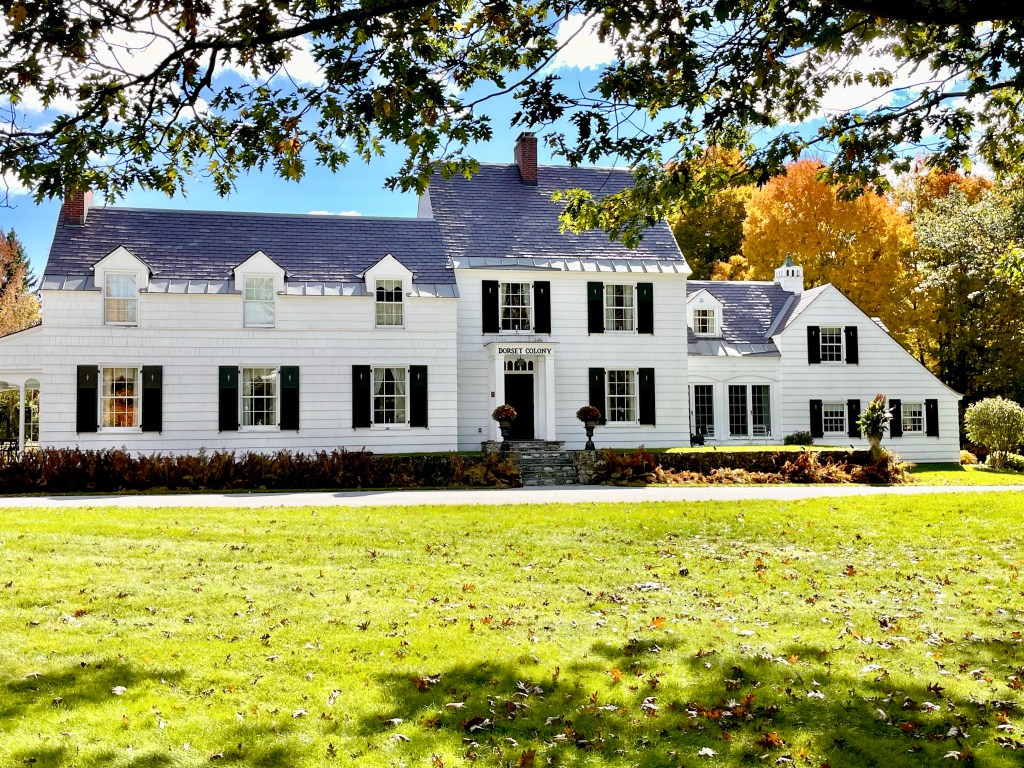
Colonial Revival perfection! This building on the Dorset Town Green was originally constructed around 1885 for Allan Bourn, the purchasing agent of the New York Central Railroad. When Bourn was told by a trusted associate that a railroad stop was going to be built near Dorset, he made the decision to acquire eight acres of pristine land just west of the Dorset Green on Church Street. Bourn, a resident of Westchester, New York, decided to build a vacation home there for his family. The house was named “Maplebourn,” after a large maple tree on the property. Annie Bourn Sheldon, Allan’s daughter, inherited his property after his death in 1925. She and her husband then added two large additional wings onto the house, just at the time that Dorset’s local theater scene was beginning to take-off. After Annie’s husband Harry died in 1942, she began to rent out rooms of her home to visiting actors to the nearby Dorset Playhouse (last post). Actor and playwright, John Nassivera purchased the property and renamed it the Dorset Colony House, converting it to a residency hall. The building has since been purchased by Adele and Herman Raspé, who lovingly have maintained and enhanced the historically and architecturally significant property.
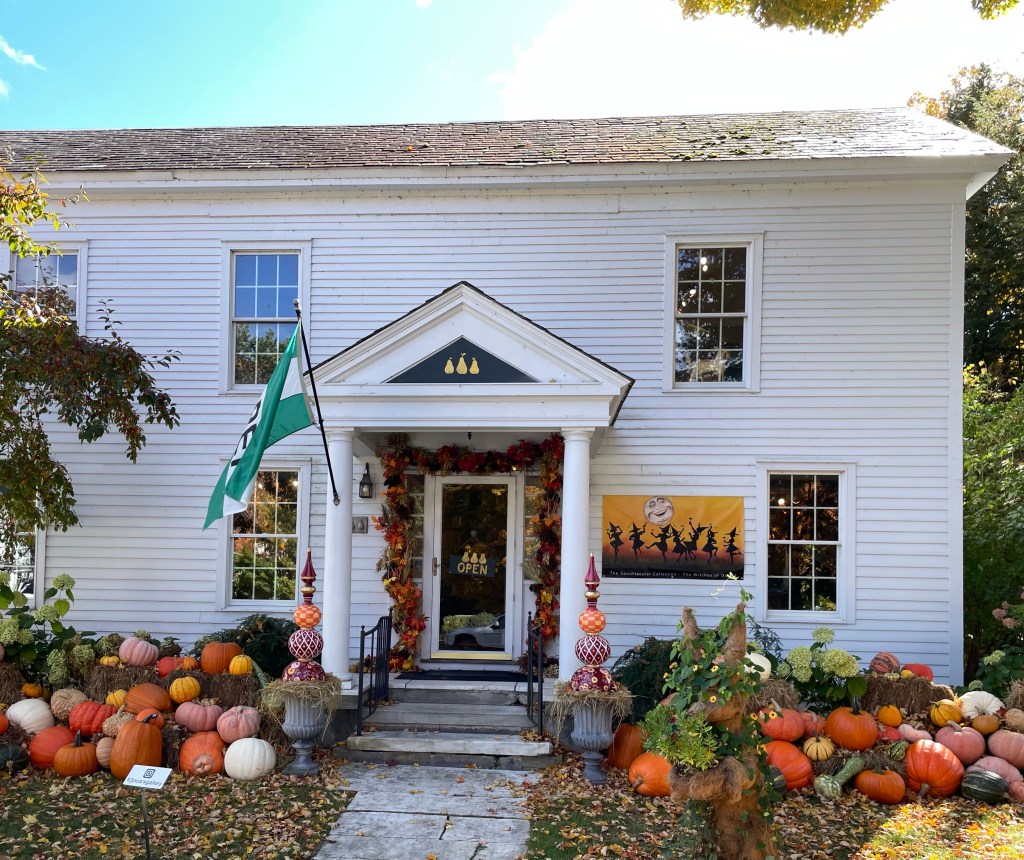
This charming vernacular property in Dorset Village was built around 1830 as a one-story cape house. By the early 20th century, the modest home was enlarged with a second story and an extra bay, all in the Colonial Revival style, mixing the functional or minimally detailed historic building with a little oomph. The addition of a doorway portico and the randomly placed windows on the facade add to the charm. The renovation was completed by owner Bernis Sheldon (1866-1941). After Sheldon’s death, the building became home to the Dorset telephone exchange, who occupied part of the building. The building is now home to the 3 Pears Gallery, who have done a FANTASTIC job mainating and highlighting this beautiful building on the Green!
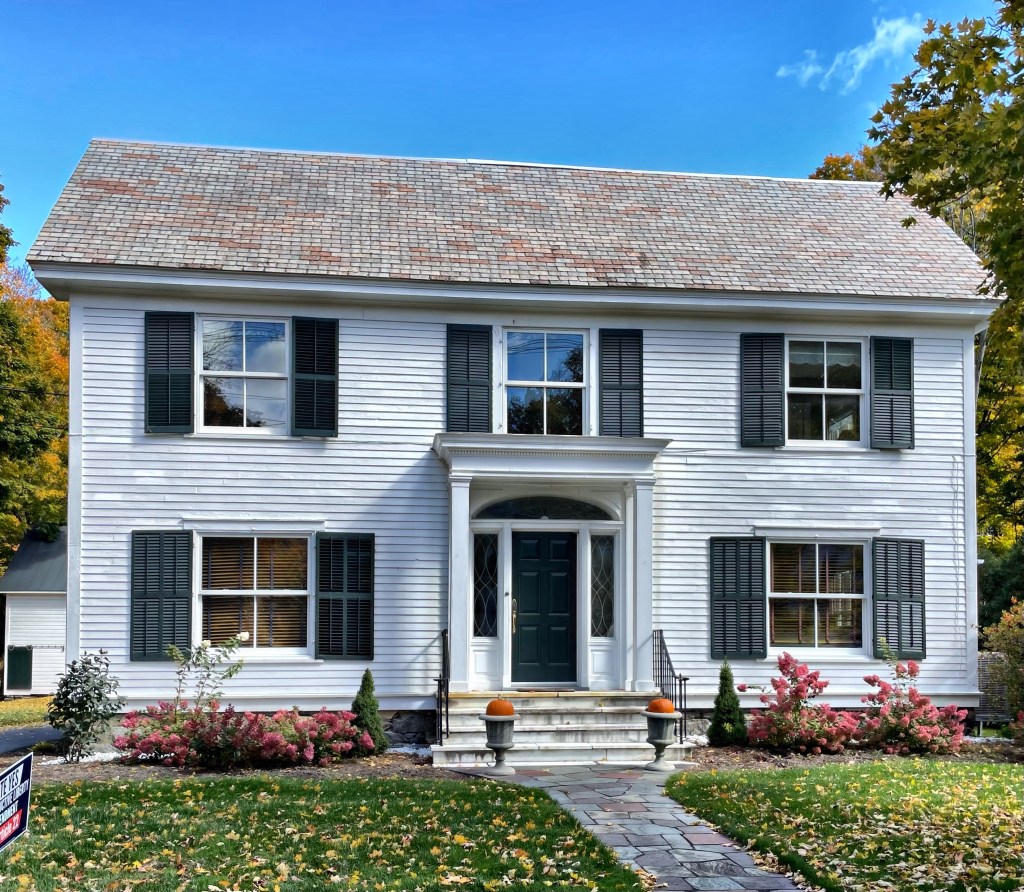
Much of Dorset Village was built in the early-to-mid 19th century, but there are some excellent examples of Colonial Revival and Craftsman homes and buildings. This Colonial Revival house was built c.1890 seemingly by Warren Robbins Dunton (1839-1902), who served as a Captain in the American Civil War. Captain Dunton seemingly built his home after moving the older house on the site back on the lot, building this house at the street. Great house, look at those chunky shutters that actually match the window openings!
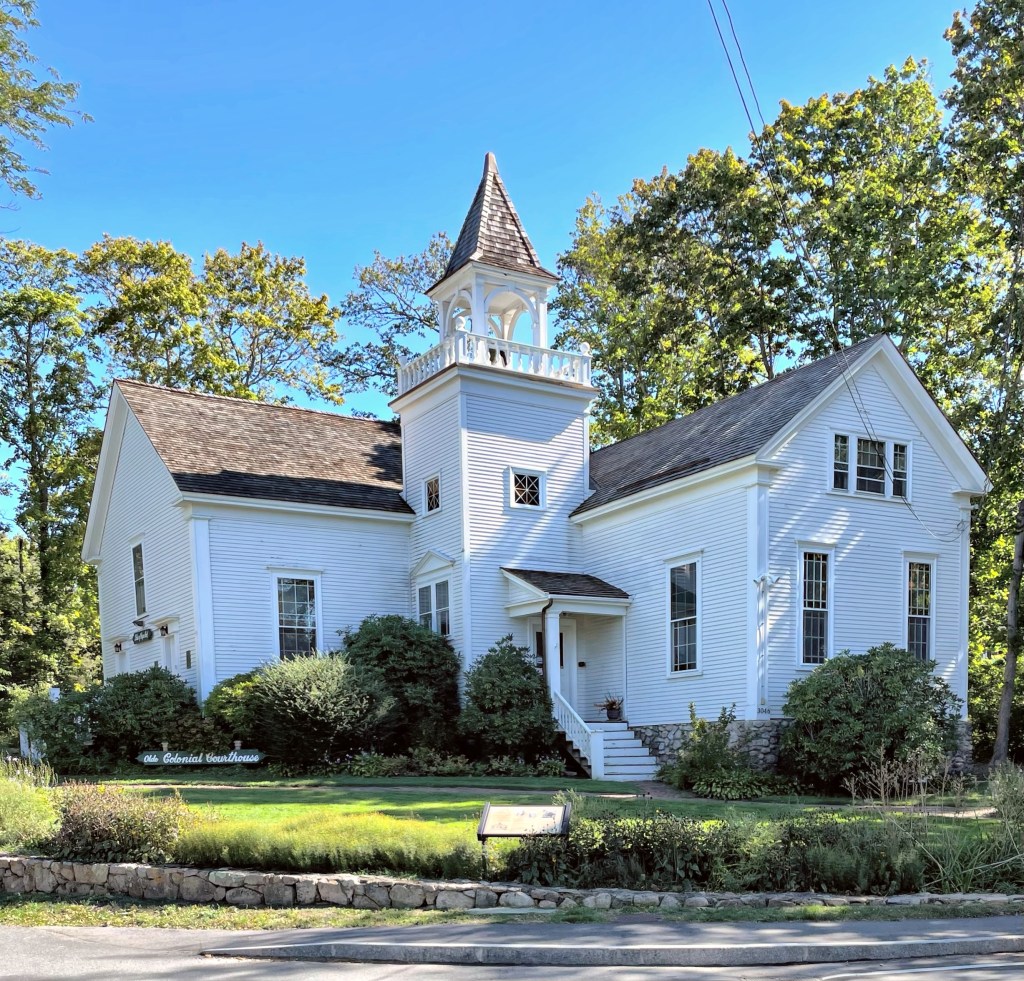
This historic building was constructed in 1763 as the Barnstable County Courthouse replacing an even earlier courthouse building that was outgrown in the village. The building served primarily as a courtroom with jury deliberations carried out in one of the nearby taverns. Additionally, large town meetings were sometimes held in this building until it too was outgrown. This courthouse was the site of a mass protest on Sept. 27, 1774, after Britain revoked Massachusetts Bay’s 1691 charter — one of a series of Coercive Acts intended to punish the colonists for the Boston Tea Party the previous year. As a result of the protest, all Barnstable county officials agreed to ignore Parliament’s new rules, effectively freeing Cape Cod of British control. The significance of this building cannot be understated as the building is one of only two remaining Massachusetts colonial-era courthouses where such protests occurred. The county dedicated its new courthouse in the 1830s, consolidating all court functions in a large, granite structure closer to the present center of Barnstable Village (featured previously). This building was acquired by the Third Barnstable Baptist Church, who renovated the building at the time and again in 1905. After the church was disbanded in 1972, the building was purchased by Tales of Cape Cod, a nonprofit volunteer group committed to preserving the Cape’s history. What a building to be based out of!
By 1919, artists from all over the United States and Europe were living and creating art in Woodstock, NY. As a thriving and expanding group of diverse individuals, the need for a welcoming and open-minded gallery space was quickly recognized. To facilitate this, a group of five painters established two complimentary organizations: The Woodstock Art Association (later changed to Woodstock Artists Association in 1933) who would maintain the exhibition space and set its artistic principles, and the Artists Realty Company who would finance the construction and maintenance of the physical space. The five painters being: Carl Eric Lindin (1869-1942), John F. Carlson (1874-1945), Frank Swift Chase (1886-1942), Henry Lee McFee (1886-1953) and Andrew Dasburg (1887-1979). New York City architect William A. Boring was commissioned to design the new museum and art space for the group. Boring (whos career was anything but boring) briefly worked for McKim, Mead and White for a year before starting his own practice with Edward Tilton in 1891. His most noted work is his 1897 Immigration Station on Ellis Island for which he and Tilton won the design competition as relative unknowns. The refined Colonial Revival building for the Woodstock Artists Association sits right in the middle of the village and its symmetrical façade is defined by a central double door entrance with transom and pedimented enframement. Of particular interest is the row of four elliptical windows above the double-hung windows.
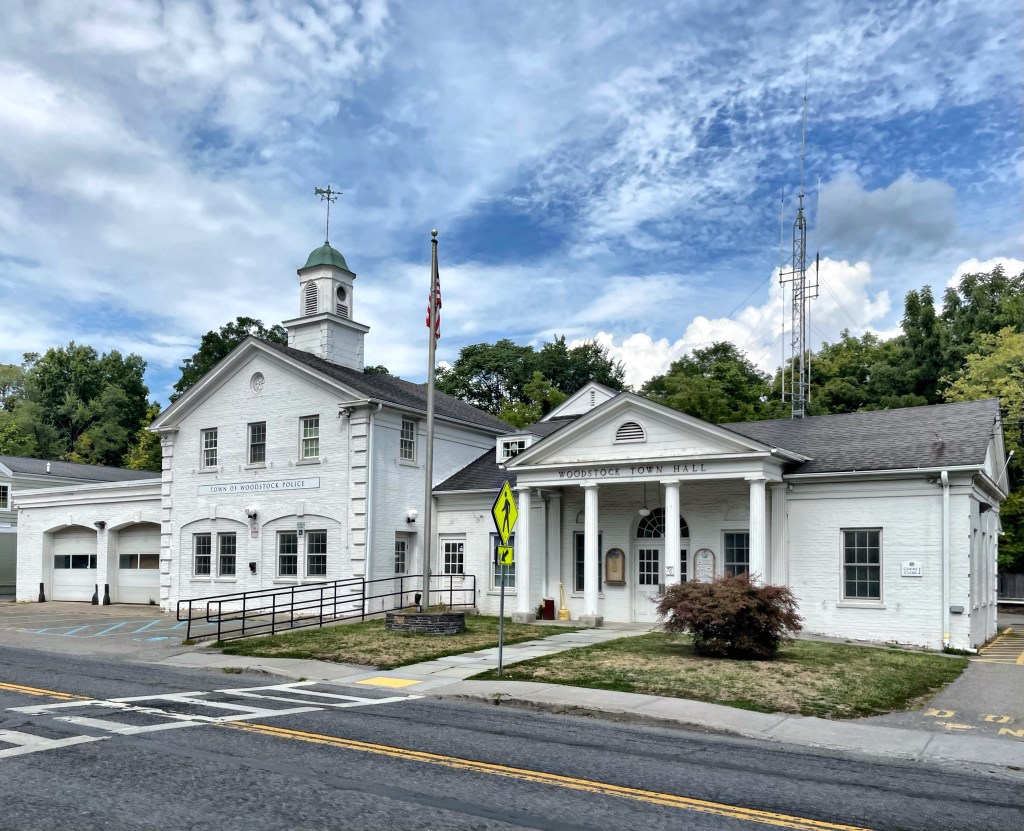
Buildings of New England hits the road! Occasionally, I like to explore and learn about towns and villages in places outside of New England, and one place that has always piqued my interest is Ulster County, NY. One of the more well-known towns in Ulster County is Woodstock, an absolutely vibrant and charming village in the mountains. The first European settlers in the Town of Woodstock were Dutch, along with a few Palatine Germans, who established farms on the fertile land. The town saw some industrial development along Sawkill Creek, but experienced substantial building growth in the early 20th century after the area attracted artists of all types to the area. The village saw population growth which necessitated new city facilities like a town hall and police station. In 1936, construction began on a combined town hall office and police station for the village, in the midst of the Great Depression (possibly using New Deal funds?) The Colonial Revival style building exhibits brick construction with corner quoins, Classical elements like the pediment and columned portico, and a cupola. The only notable alteration since its construction is the infill of the former fire station doors.
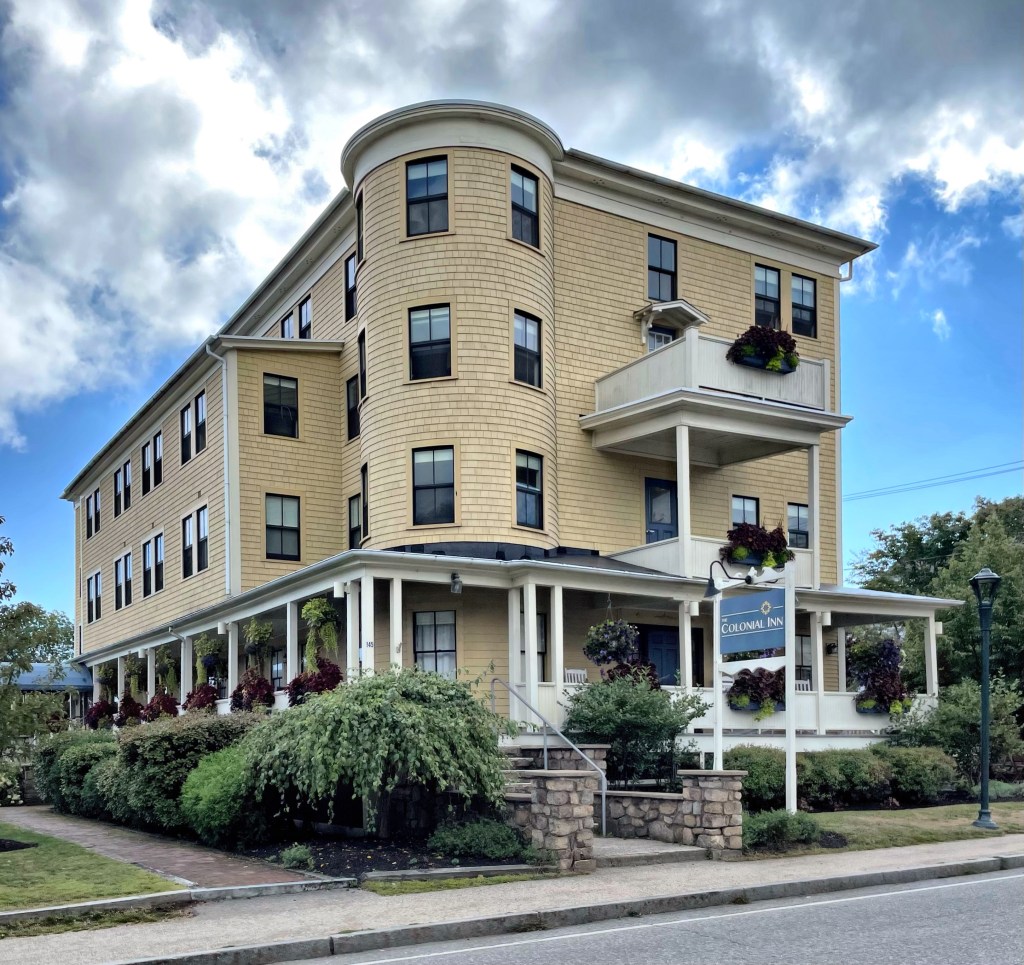
As Ogunquit surged in popularity as a coastal summer retreat in the late 19th century, the flocks of city-dwellers needed a places to rest their head after splashing in the crisp Maine ocean. The original structure began with a mid-19th century house, likely in the Greek Revival style. It was expanded in the 1880s when it opened as a hotel for tourists, equipped with a mansard roof. The hotel consistently sold out of rooms in the summer months and the proprietors decided to expand in about 1897 with a sizeable Queen Anne style addition. A fire in 1951 destroyed the rear wing of the building and the conical tower roofs were removed, resulting in the final form seen today. The hotel is historically significant because it is the only surviving 19th-century hotel in Ogunquit that still serves as a hotel and largely retains its historic appearance, enhanced following a 2013 restoration by the owners who worked with David Lloyd of Archetype Architects. Other hotels of the period have either been converted to condominiums or been engulfed by modern alterations. The hotel was thus placed on the National Register of Historic Places, a large, and worthy addition!
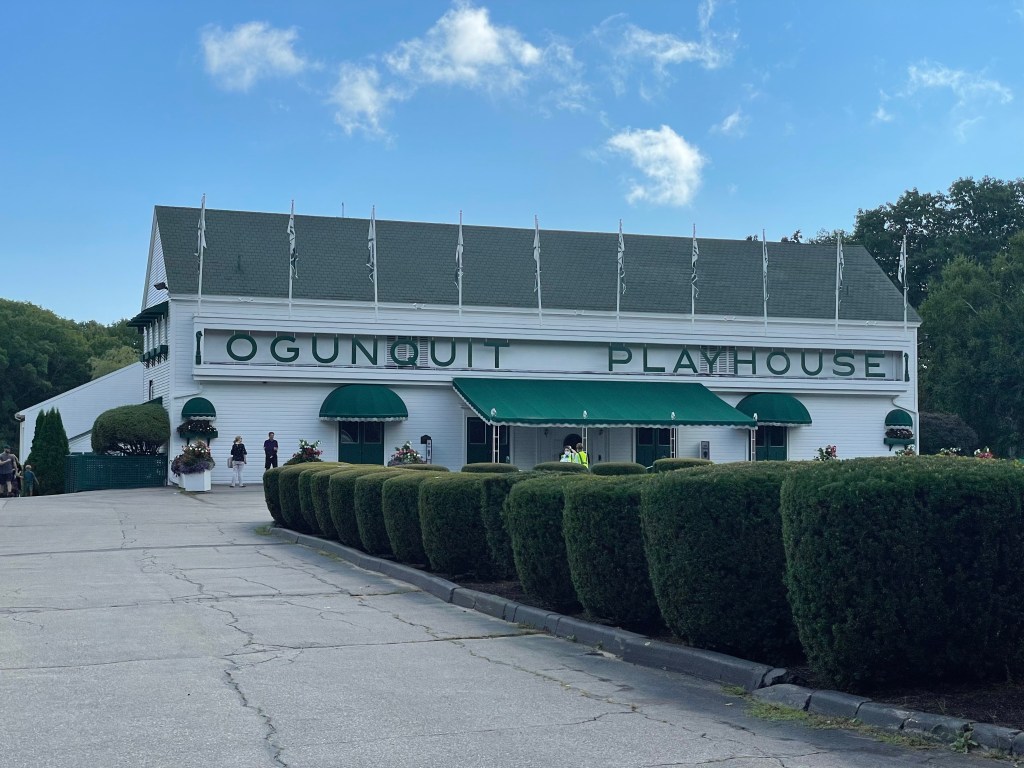
Opened in 1933 in a converted garage and relocated to the existing building upon its completion in the summer of 1937, the Ogunquit Playhouse is an important part of Maine’s historic twentieth-century cultural landscape. The Playhouse was founded by former Hollywood director and Broadway producer Walter Hartwig and his wife Maude, and the building was designed by theater architect Alexander Wyckoff. The site on Rt-1 was intentional as the highway was the main coastal route for the inter-war summer tourist travel. The Colonial-inspired theater was in keeping with the historic nature of New England, but with the grandeur to attract a nation-wide summer audience. Early articles mentioned the building constructed of “…steel and wood, painted white with green shutters and roof, is simple in line, suggesting the Colonial architecture of New England”. Walter Hartwig died in 1941, and his widow Maude took over as the producer for the upcoming season. In 1947, she engaged George Abbott, New York’s most distinguished playwright/producer to share in the managerial duties, and in 1950 John Lane arrived as co-producer. Lane acquired the property in the following year, counting among his first tasks the rebuilding of the stage which was destroyed by a storm the year prior and changing the landscape to move the parking lot in front of the building to the side. The Ogunquit Playhouse continues its 26-week season runs from May through October, with off-season co-productions at The Music Hall in Portsmouth, NH. Go see a show before the season is over!
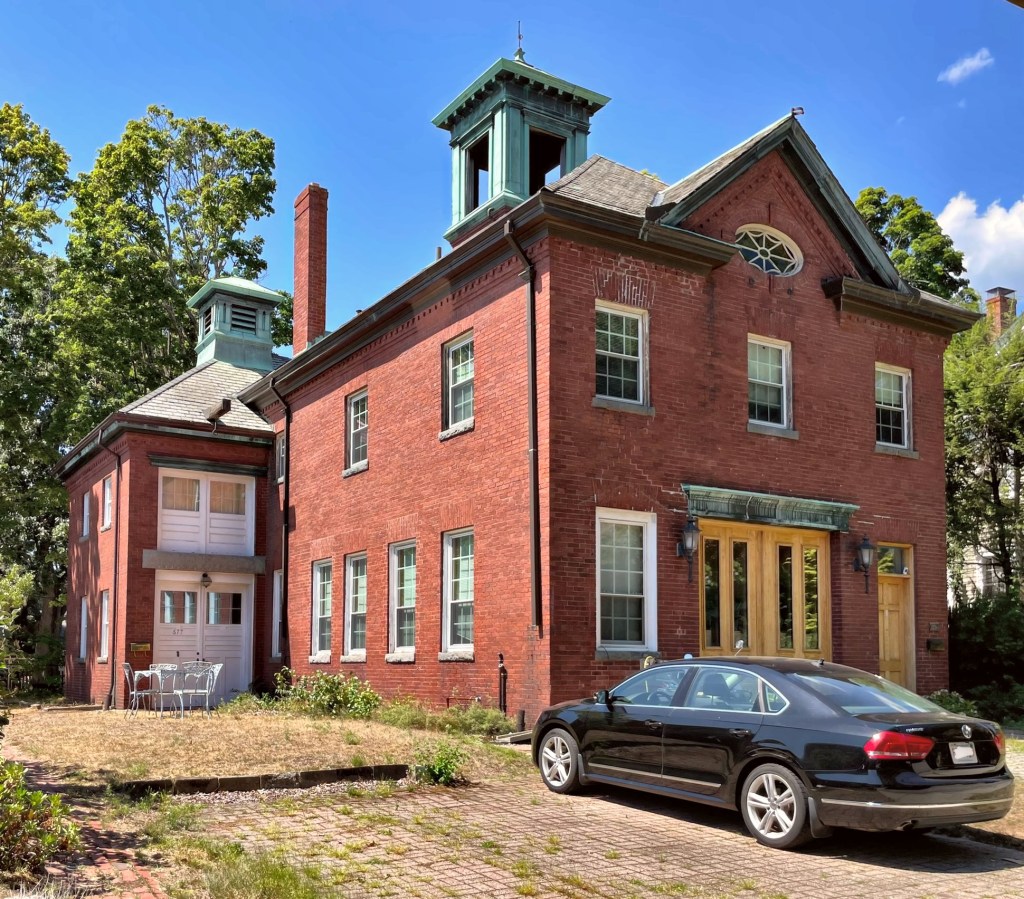
The Newton Lower Falls Firehouse was built in 1900 to serve the village’s fire prevention needs. As nearby Waban Village’s population surged (along with a stronger tax base) the City of Newton constructed a new fire station in 1918, that could serve both areas. This, the already outdated station, was converted to a village library on the ground floor with a janitor’s apartment and storage above. The space was determined to be surplus by the City and was sold off in 1979, quickly converted to housing by a developer. The building retains much of its original character, down to the hose-drying tower.


 Buildings of New England