Clement Studebaker Jr. Summer Residence // 1915

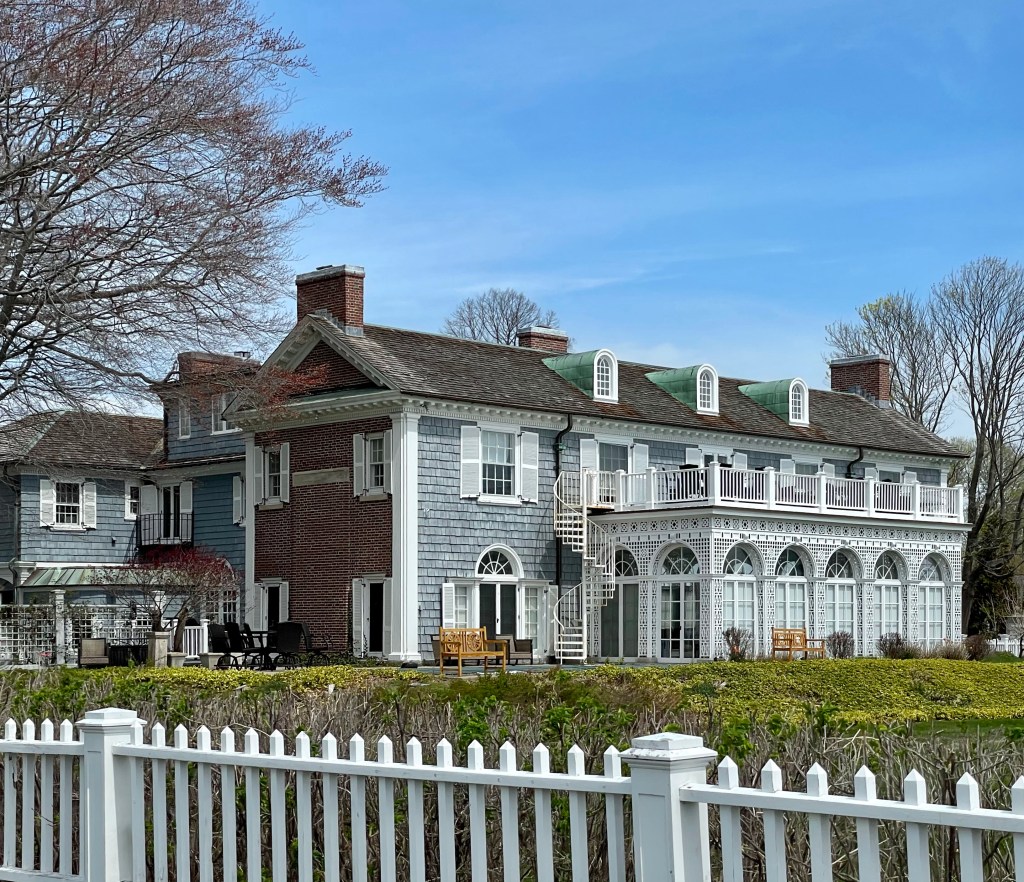
This magnificent coastal mansion embodies historical elegance in Rye Beach, NH. Built in 1914-15 for Clement Studebaker Jr., the Studebaker Estate is one of the most elegant and most recognized residences on the New Hampshire coast, and among the best preserved. The Colonial Revival home is clad with shingle siding with two strong brick end walls. A solarium runs along the ocean-facing facade with ample glazing and delicate woodwork which presents a welcoming presence to passing motorists. Clement Studebaker Jr. was an American businessman and the son of wagon, carriage and automobile manufacturer Clement Studebaker. He held executive positions in the family’s automobile business, Studebaker Corporation. The Studebaker summer residence was recently sold, and the interior photographs are amazing!
George Allen Carriage House // c.1895

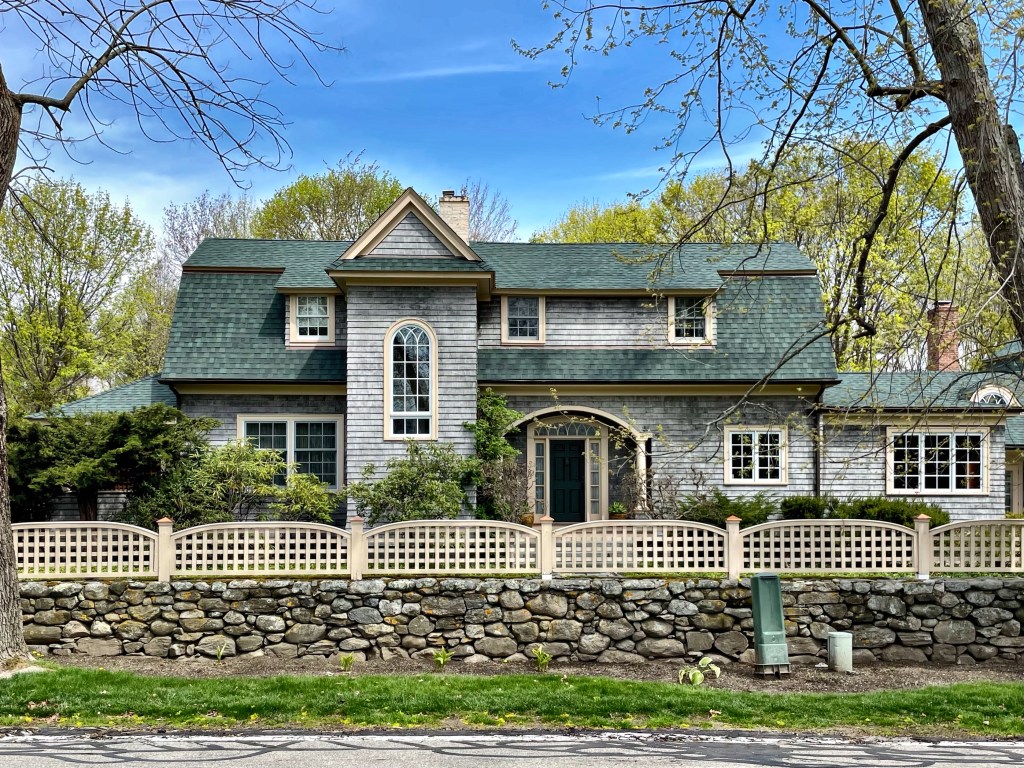
Built at the same time as his summer residence in Rye Beach (last post), George Allen had this gorgeous carriage house built to store his horses and carriage to get around his summertime town. The carriage house is a blending of the Colonial Revival and Shingle styles that mimics much of the main home’s design including the gambrel roof and columned entry. Sometime in the 20th century, with no more use of a carriage house, the property was sold off by heirs of Mr. Allen and converted to a private residence. The new owners have preserved the essence of the original use and made the home stand out among the adjacent mansions.

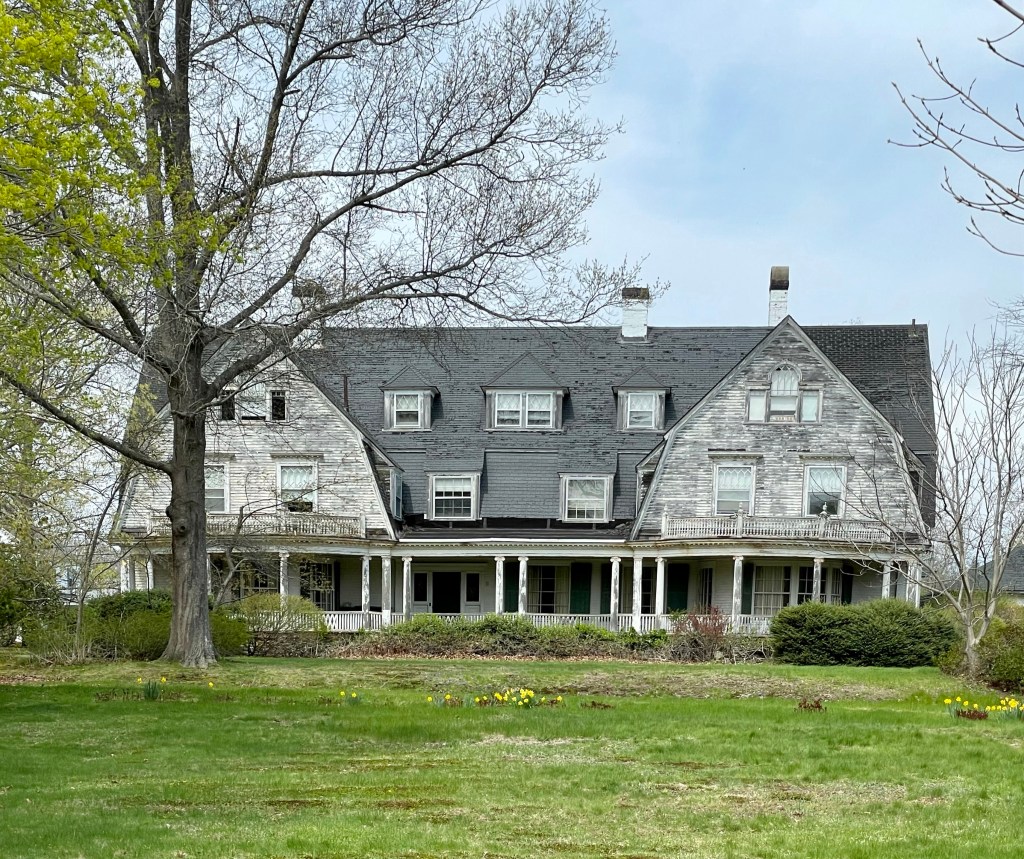
George L. Allen Summer Residence // c.1895

This massive summer “cottage” in Rye Beach, NH, was built around 1895 for St. Louis businessman George L. Allen. The massive Colonial Revival home features a gambrel roof with a series of gabled, hipped and shed dormers to break it up. A circular driveway would have allowed visitors for Great Gatsby-esque parties to get dropped off by their driver and enter right into the home’s large stair-hall. The most stunning facade is the rear, which faces a lawn with views out to the Atlantic Ocean. A full-length porch on the first floor sits recessed under the floor above to provide shelter from the harsh summer sun. Sadly, the mansion has seen better days and appears to be a shadow of its former self. Luckily, almost all of the historic windows remain and the home can definitely be saved. Fingers and toes are crossed to see this beauty preserved.

Tewksbury State Hospital, Superintendent’s Residence // 1894

Located adjacent to the Administration Building at the Tewksbury State Hospital, the Superintendent’s Residence, built in 1894, combines elements of the Craftsman and Colonial Revival styles wonderfully. The home is two-stories, and built of red brick laid in Flemish bond, capped with a slate hipped roof with exposed rafters. A massive uncovered porch wraps around the home and sits atop a rubblestone foundation. Like the adjacent Administration Building, the Superintendent’s Residence was also designed by Boston architect John A. Fox. From this residence, the massive almshouse and asylum would be run by the superintendent, who oversaw day to day activities and made sure everything was running smoothly. The house appears vacant now.

Tewksbury Congregational Church // 1922

Located across the Town Green from the Tewksbury Town Hall (1920), this Colonial Revival style church with Classical elements, perfectly compliments the design motif seen here. The Tewksbury Congregational Church was established in 1734 by some 34 resident families who, after leaving the church in Billerica, established the new town of Tewksbury. Their first church was erected in 1736, and was replaced in 1824. The second church edifice (and much of the town center) suffered a catastrophic fire in 1918, destroying both structures, and resulting in a rebuilding campaign. Architect Curtis W. Bixby of Watertown, furnished designs for the church, which stands boldly beyond a large front lawn.

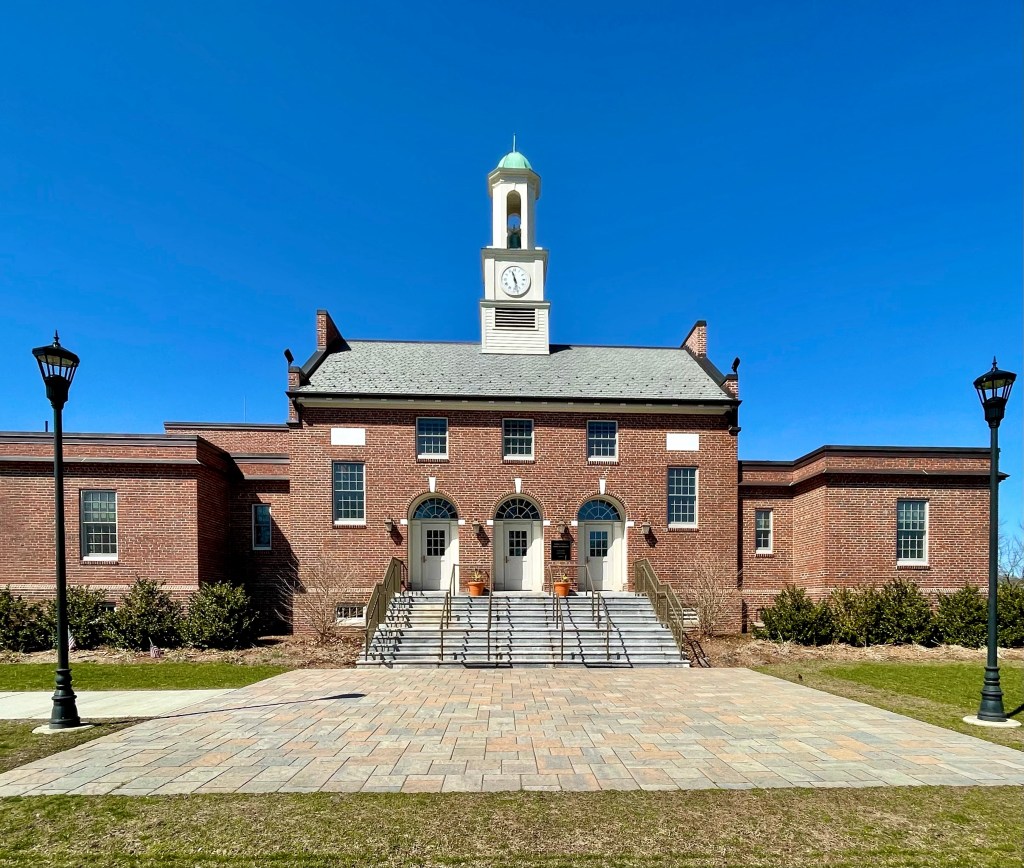
Tewksbury Town Hall // 1920

The town of Tewksbury, Massachusetts was colonized in 1637 and was officially incorporated in 1734 from the town of Billerica. The town was historically home to at least two raids by native peoples during the infamous King Phillip’s War, which killed dozens of men, women and children settlers. The town is named after Tewkesbury, England, likely inspired by some of the original settlers. The town grew as a rural village until it became a suburb of adjacent Lowell and Andover, Massachusetts. The town’s older Town Hall building burned in 1918, and funding was quickly acquired to erect a new, suitable building for the town. The Boston-based architectural firm of Kilham & Hopkins was hired and they designed this gorgeous Colonial Revival building. The symmetrical building features a main two-story block with a rear and side wings. The facade features three entrances with recessed fanlights above. A slate roof is capped by a towering cupola, which adds an additional flair to the building. The structure was so well-designed, it was featured in the Architectural Record in 1919, a national publication.

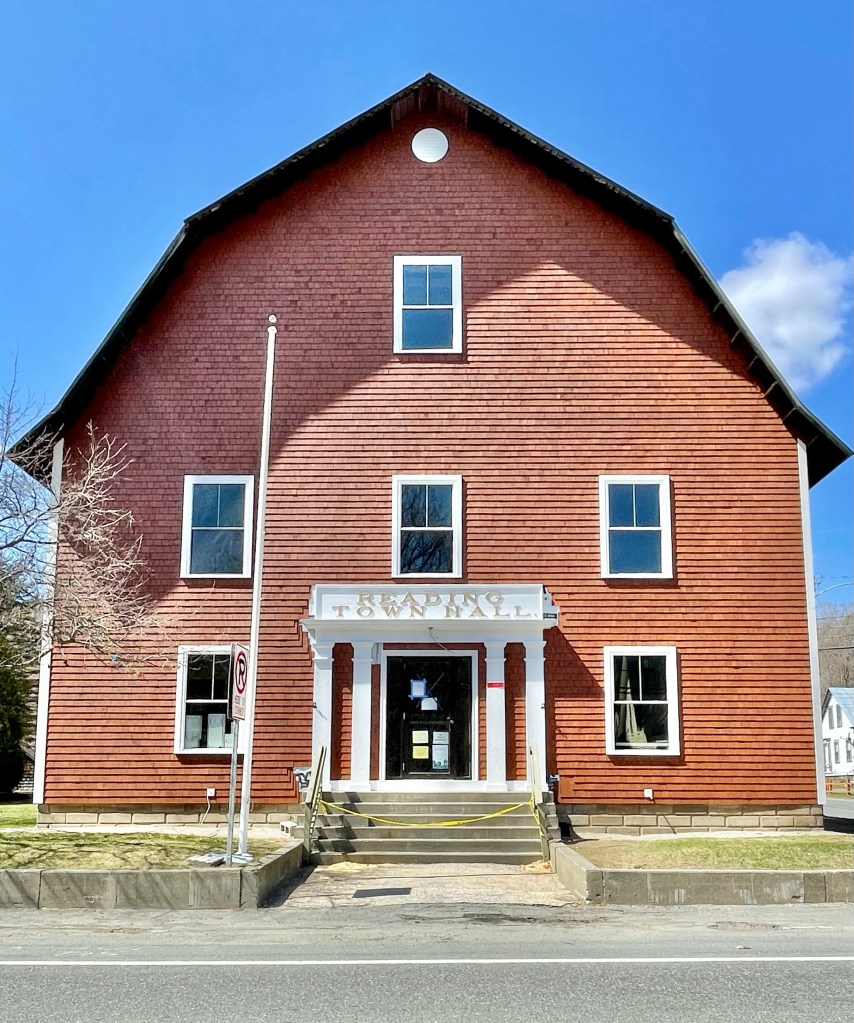
Reading Town Hall // 1911

The Reading Town Hall in Reading, Vermont is an imposing shingle-clad, gambrel roof building which sits in the village of Felchville. The hall was built in 1911 as a gift to the citizens of Reading by Wallace F. Robinson. Wallace Robinson was born in Reading in 1832. He went to Boston as a young man and entered into the provisions (groceries) market, and became quite successful, expanding into the wholesale provisions business and meat packing. He was active in civic and business affairs of Boston, most notably as the President of the Boston Chamber of Commerce and as a State Representative in the Legislature for two terms. By around 1900, Robinson had retired and had taken up a life of philanthropy, spending much of his wealth on memorial buildings and to places that had a lasting impact on him, including Robinson Hall at Dartmouth College and renovations at UVM. The design for the Reading Town Hall is especially notable for the fact that it was designed to resemble historic gambrel roofed barns found in the state.

Oak Hill Middle School // 1936

In the 1930s, America was in the throes of the Great Depression, and towns and cities struggled to provide services for the ever-growing populations, all the while suffering from lower tax revenues. The New Deal was enacted as a result, which provided a series of programs, public work projects, financial reforms, and regulations enacted by President Franklin D. Roosevelt between 1933 and 1939. One of these programs was the Public Works Administration (PWA), which funded and built large-scale public works projects such as dams, bridges, hospitals, and schools, to provide jobs and bolster local economies. In Newton, the developing Oak Hill Village required a new public school, and the town received funding for the Oak Hill Middle School in 1935. Architects Densmore, LeClear, and Robbins were hired to provide designs for a new school, and builders completed the building the next year. The Georgian Revival building is constructed with red brick with cast stone trim. The 16-over-16 windows and cupola also work to showcase the beauty of the design.

Do you know of any PWA projects near you?

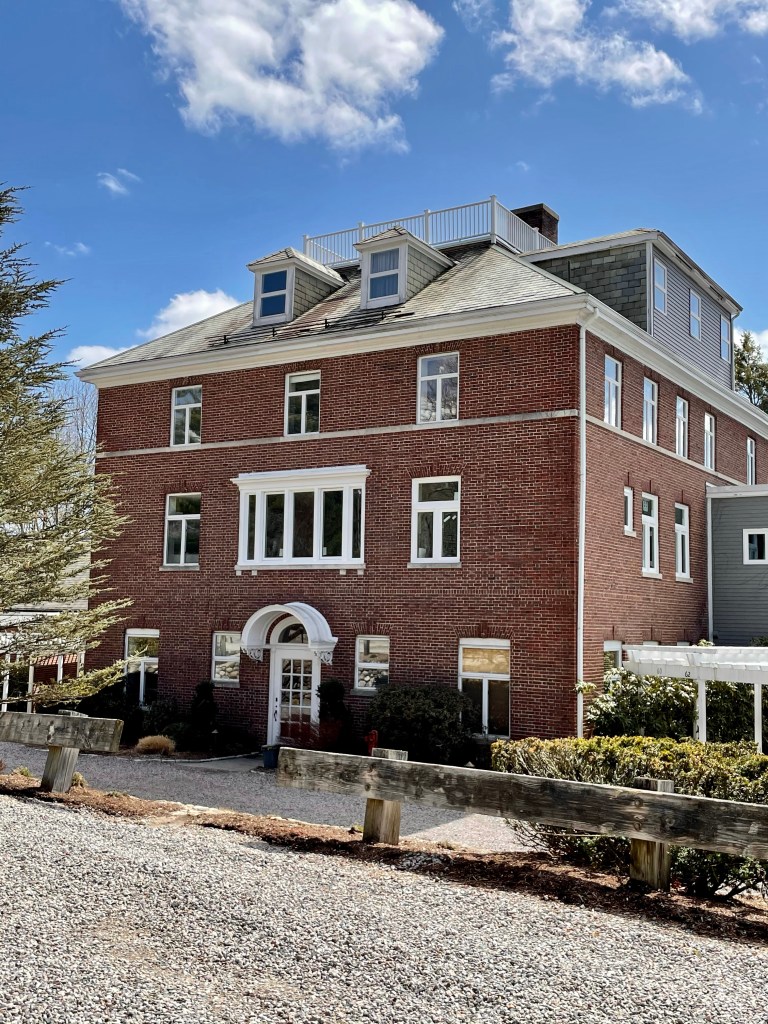
Turner Art Publishing Company Building // 1908

In 1907, the 86-acre Bigelow Estate (featured yesterday), was purchased by Horace K. Turner, owner of an art publishing company founded in Boston about 1904. Turner moved his workshops to the estate so the artists could work in healthy country surroundings. The firm required the long wings contoured into the hillside to provide ample natural light and views to the distance for the workers. In 1920, the entire property, including the Bigelow House and the bungalow workshops, were acquired by the New England Peabody Home, which had been located in Hyde Park for 25 years. It was set up as a school and hospital for “crippled children” and this brick building was added to the center section. Architects for this addition were Coolidge and Shattuck, successors to the firm of Shepley, Rutan, and Coolidge. The Peabody Home was among the first to use sun treatment as a cure for physical ills and the extensive porches were well suited to this purpose. The Peabody Home became obsolete and the property was sold off in the mid-20th century. In 1979, the Peabody Home was sold to Edward Leventhal, who converted the buildings into 22 condominiums. Architects for the project were Jung/Brannen.

Thomas Casey Building // 1896

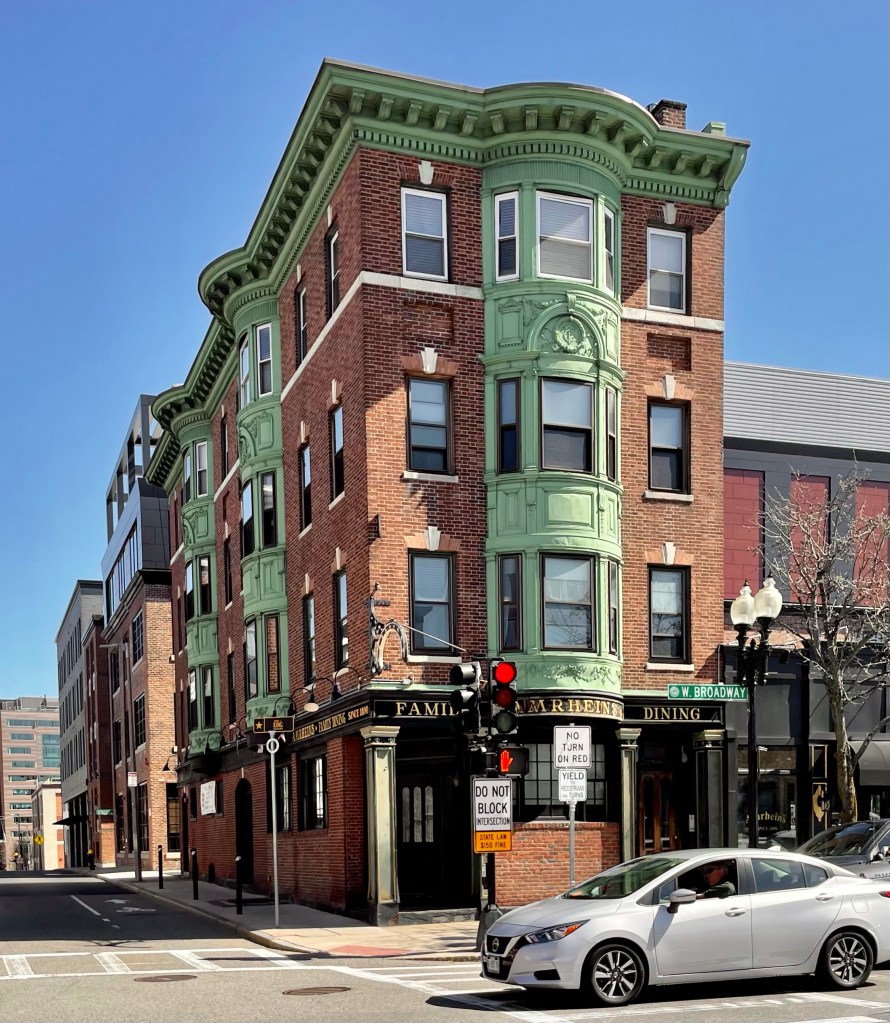
Located on West Broadway in a section of South Boston that has almost been stripped of all of its architectural character and history, sits this historic commercial building, which soon may face the wrecking ball. This building was constructed in 1896 for Thomas Casey, an Irish liquor dealer. He hired Irish-born architect Charles Donagh Maginnis who emigrated to Boston at age 18 and got his first job apprenticing for architect Edmund M. Wheelwright, the city architect of Boston, as a draftsman. The result was a four-story Colonial Revival commercial building, significant for the series of rounded copper bays and cornice. Of special note, there are wreath inlays designed into the bays between the third and fourth floors with the letters “T” and “C” within, representing Thomas Casey. Years after the building was constructed, it was purchased by Emma A. Amrhein, and has – until recently – been home to Amrhein’s Restaurant and Bar. The local landmark had two (unconfirmed) claims to fame; the oldest hand carved bar in America and the first draft beer pump in Boston. The large property was sold, and the developers proposed a large housing development on the site, retaining the Casey-Amrhein building. However, some have recently pushed for the demolition of this building to make the project slightly larger than would be with the historic building.