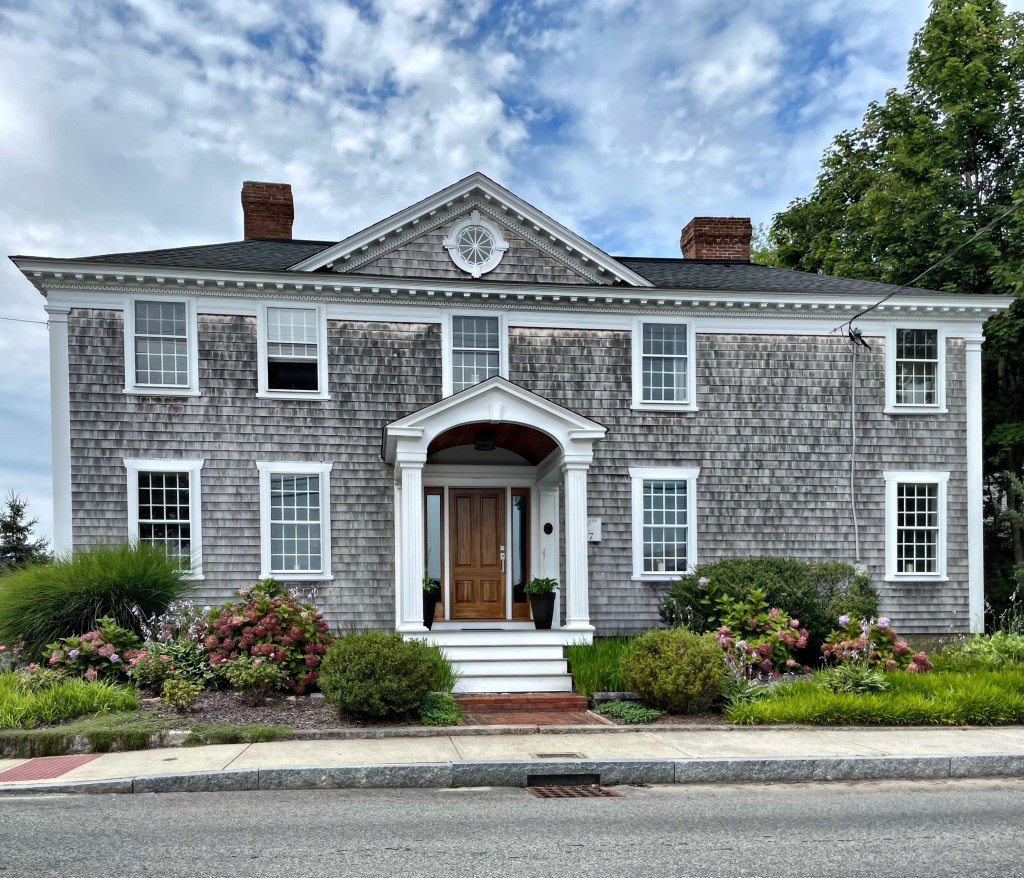
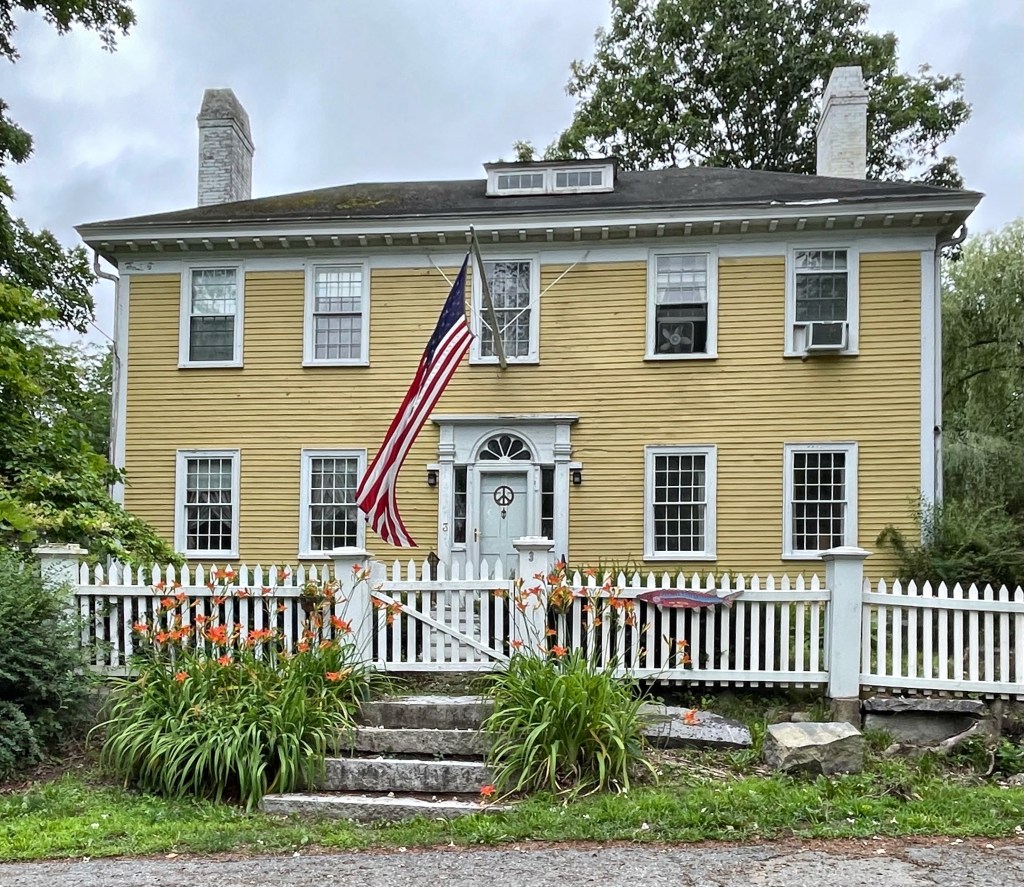
The Richardson Tavern on Main Street in Durham, NH, was built shortly after the conclusion of the Revolutionary War by Captain Joseph Richardson (1756-1824). The tavern was sited on a rise, providing views of Mill Pond in the distance. The tavern provided meeting spaces for town officials and juries to meet and discuss important city matters before the construction of the first purpose-built town hall just a block away. The Federal style tavern was “modernized” in the early 20th century with Colonial Revival dormers and eventually was converted into apartments as the ever-growing University of New Hampshire brought more students into town.
Durham, New Hampshire, sits beside Great Bay at the mouth of the Oyster River, an ideal location for settlement, like the Western Abenaki and their ancestors who’ve lived in the region for an estimated 11,000 years. By 1633, English colonists were spread along the tidal shores of the Oyster River, and brought non-native livestock aboard their ships, “thousands of cattle, swine, sheep, and horses,” requiring them to clear acres merely for pasture. Formerly un-molested fields, carefully cultivated across centuries, were trampled and their crops destroyed. Due to this, violence between the native people and colonizers erupted, and livestock were frequently killed. The Abenaki saw them as a direct threat to their food supply. The Oyster River Plantation (as it was originally named by colonizers), was so named Durham in 1732 when it was incorporated, after County Durham in England.
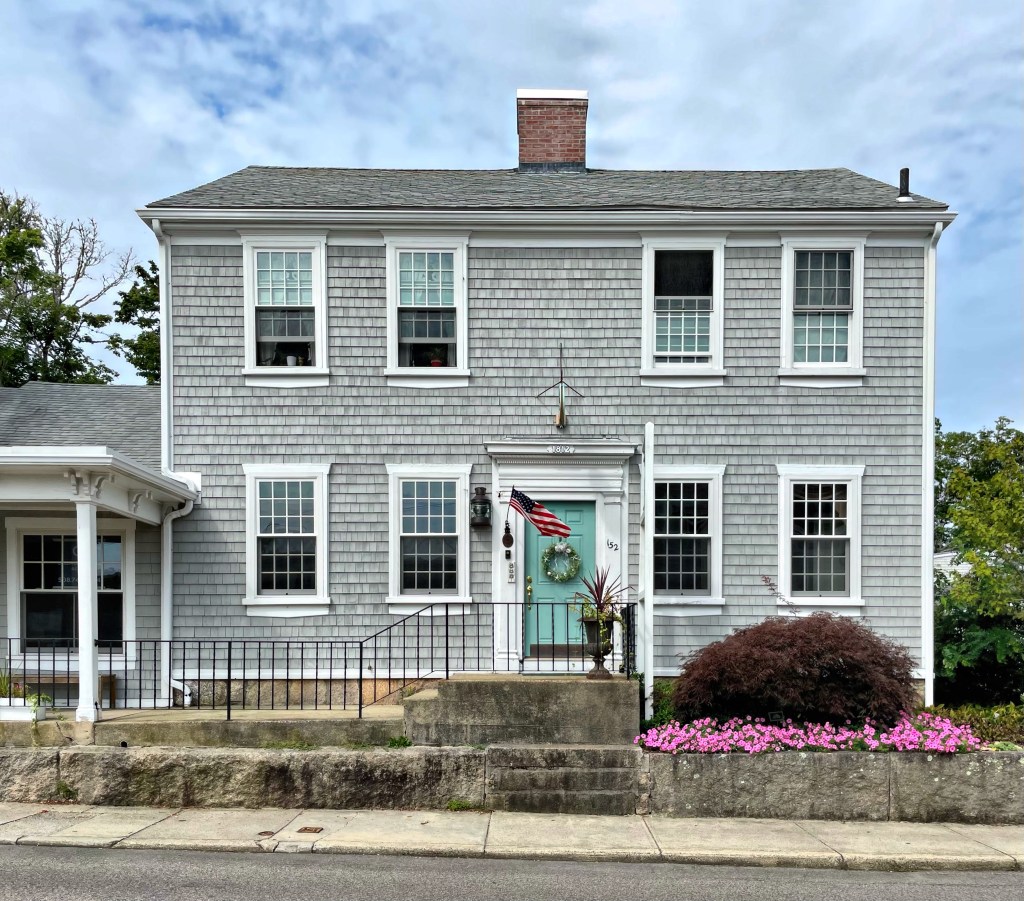
Built in 1825 by Joseph Coe, local merchant and shipbuilder, this brick building was constructed as a prominent corner store with two stories of windows for commercial use and a top floor apartment. The brick structure is an excellent example of Federal style architecture in the Great Bay area of New Hampshire, and its location at the end of Main Street, where it converges with Dover and Newmarket roads, historic routes to the town’s neighbors, provided a lot of traffic of potential customers.After years of meeting in taverns and schoolhouses, the town selectmen voted in 1840 to purchase Coe’s Store for use as a town hall. They purchased the building, later opening the top two floors into one large meeting space. The town outgrew the building and relocated across the street, and since 1961, the building has been occupied by the Durham Historic Association and Museum.
During the 1790s and early 1800s, the rise of the coastal schooner trade and whaling ushered in a long period of prosperity for coastal towns in New England, which continued unabated until the Civil War. The War of 1812 provided many Marion sailors and sea captains with the chance to experience life at sea with privateers papers issued by the United States government, these captains went to sea in their schooners to hunt down British ships, plundering them like pirates. One of these captains was Ward Parker Delano, who built this house in 1797 overlooking Sippican Harbor. Under subsequent owners in the Delano family, the home was modified on numerous occasions in styles popular at the time until the early 20th century when it was Colonialized, which added the portico, gable, and dentils.
Before the days of cars and even trains ruled, people in New England would get around by horseback or stagecoach (horse-drawn carriages) from town to town. Due to the long travel times to get everywhere, many New Englanders built taverns, which served as inns and bars for the weary traveller on their journey. In 1812, a recently married Caleb Handy built this house to serve as a residence and source of income, as a tavern for travellers on the Plymouth-New Bedford stagecoach route. He married Sophia Dexter in 1811, who died just two years later at the age of 22. Two years after the death of his first wife, he married Sophia’s sister, Mary, who just turned 18 (he was 33). The tavern had a ballroom for local dances and a room for serving drinks, based principally on West Indian rum, that was shipped in from sugar plantations, owned by many wealthy white families in New England (many of whom exploited the slavery abroad). The Tavern was later owned by Benjamin Handy, who continued to operate it as a Tavern until the railroad made the stagecoach route obsolete in the middle of the 19th century. It then became a family home. The house was sold to the Sippican Women’s Club in 1923, who renovated and restored much of the building, and held luncheons and events inside. They maintain the building to this day.
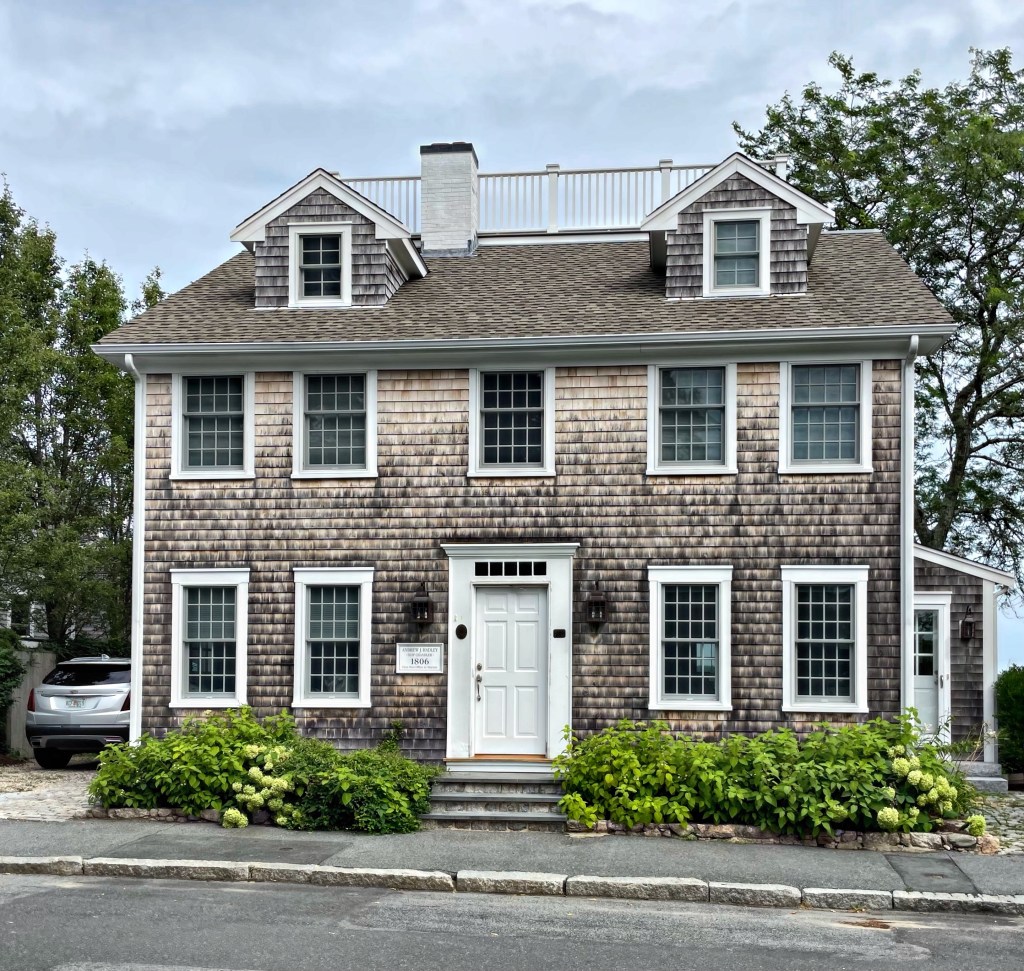
At the corner of Main and Water streets in Marion’s Wharf Village, this beautiful building has long ties to the town’s rich maritime history. The building was constructed by A.J. Hadley in 1806 as a ship chandlery, a shop selling all the goods necessary for sailors and fishermen who were docked just steps away. While Hadley’s store occupied the right half of the first story, the western (left) segment housed the first Post Office in the village, leaving Hadley and his family on the second floor. There is something so special about fishing villages in New England, while the populations of these towns are very different than they once were, the buildings and history still convey martime history and the way of life here over 200 years ago.
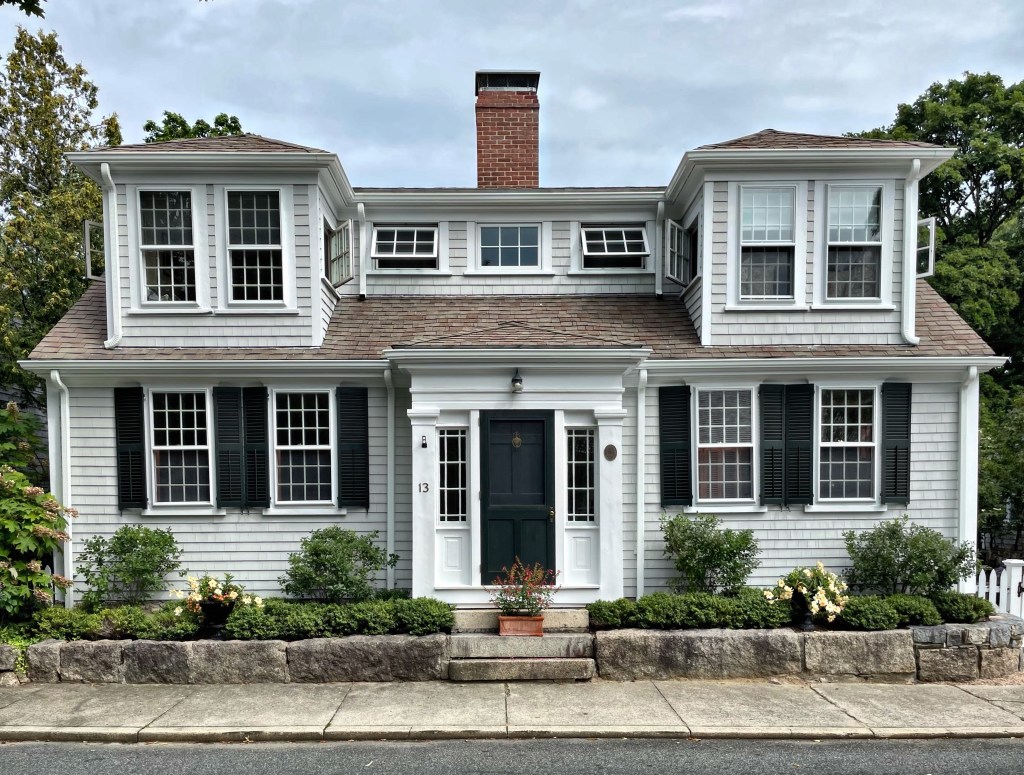
Main Street in Marion, Massachusetts is a house lover’s dream. The street is lined with perfect 18th century capes and old whaling captains houses. This little cape house was built in 1790 for a J. Blankinship, one of the prominent local whaling families in town. By the early 1900s, Henry M. Prichard, an accountant, lived here. Born in New York City, Prichard and his family moved to Massachusetts. During the Civil War, he enlisted in the 25th Massachusetts Volunteer infantry and was part of the Burnside Expedition. According to his obituary,“he was wounded so seriously at the Battle of Cold Spring Harbor that he never fully recovered.” An “ardent devotee of canoeing”, Mr. Prichard retired to Marion, having spent most of his life in New York City and lived out his final days. It was likely he who added the large dormer windows as fresh air and light were seen as cures to ailments in the time. His widow, Abby and daughter, lived here until at least the mid-1920s.
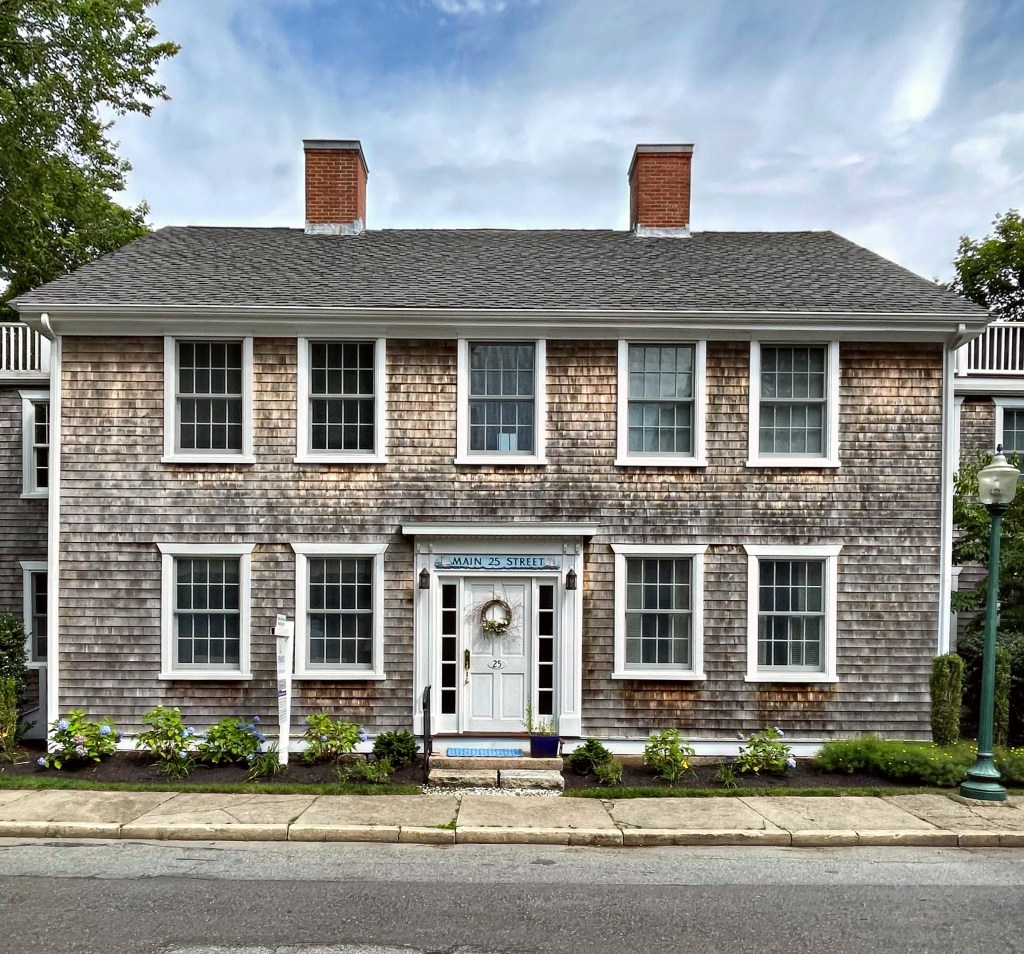
Built around 1790 for Rowland Luce (1756-1835), this Federal home oozes character and charm, and is located right on Main Street in one of my favorite towns, Marion, Mass. Luce was born in Tisbury on Martha’s Vineyard into a very religious family. While studying to become a Deacon like his father, the Revolutionary War broke out, and Rowland served to fight the British, leaving service as a Major. He eventually settled in Marion’s Sippican/Wharf Village and worked as a Deacon for the Congregational Church. The simple house is clad in cedar shingles and has two chimneys, a departure from earlier homes with one, large central chimney.
The “Old Parsonage” was built in 1813 by Capt. John Pitcher, brother of Elizabeth Pitcher Taber, benefactress of the town of Marion. The side of the building that faces the street (what we see) is actually the back of the original dwelling. The Federal period house sits on a raised stone foundation with a central door and shingle siding above. Behind his home, a large pasture was situated where his sheep and cows grazed on fields. Pitcher used to hang a ship’s bell from the branch of an oak tree and ring it every evening at 9 p.m. as a curfew bell for the town. The bell is now located in the Marion Natural History Museum. When Capt. Pitcher died, he left his house to the Congregational Church, which used it as a parsonage for many years. It was sold in May of 2021 and is likely a private home now.
Believe it or not, this beautiful home was once a one-story Cape house! Built in 1828, the home was constructed for Captain Hiram Look, a sea captain, and his new wife Kezziah (Kezia) within a year of their marriage. They had two daughters. Hiram died in 1865, possibly related to the Civil War, which ended that year. After his and his widow’s death, the home was willed to their daughter and her husband, Bernard Coggeshall, who was likely a descendant of the Coggeshall Family of Bristol, RI. The Look daughter died in 1890, and Bernard remarried a year later. Sometime after 2008, this home was enlarged, giving it the second story we see today. If you look closely at photos from before 2008, you can see the matching door surround, window lintels, and window spacing seen today. While the home is completely different, the “updated” version is still appropriate and conveys the home’s history.
This stunning Federal style house in Gardiner, Maine, was built about 1810 by Ebenezer Byram, who had purchased the land from Robert Hallowell Gardiner, a descendant of Dr. Sylvester Gardiner, the “founder” of the town. Dr. Gardiner was a resourceful Boston druggist, who was one of the principal owners of the Kennebec Purchase, known as the Plymouth Company, who purchased land on the west side of the Kennebec River in Maine. Dr. Sylvester Gardiner had been attracted to the Gardiner area for a number of reasons, primarily because of the depth of the water of the river to the point of Gardiner as the head of navigation for ships here. This house overlooking that river was purchased in 1878, by Henry and Laura E. Richards. Laura Richards (1850-1943) was the daughter of Samuel Gridley Howe, an abolitionist and the founder of the Perkins Institution and Massachusetts School for the Blind. Her mother, Julia Ward Howe wrote the words to The Battle Hymn of the Republic, a tune that I am sure most of you have heard of, but never knew the name. Henry and Laura moved to Gardiner in 1876 after suffering financial reverses in Boston, where Henry worked at his family’s paper mill, and it was about that time that Laura Richards began her writing career. At this house in Gardiner, Laura wrote more than 90 books including biographies (including one on her mother), poetry, and several children’s books. Even more impressive, Laura was awarded one of the first four ever Pulitzer Prize in 1917 for her biography on her mother, years before women were even afforded the right to vote!



 Buildings of New England