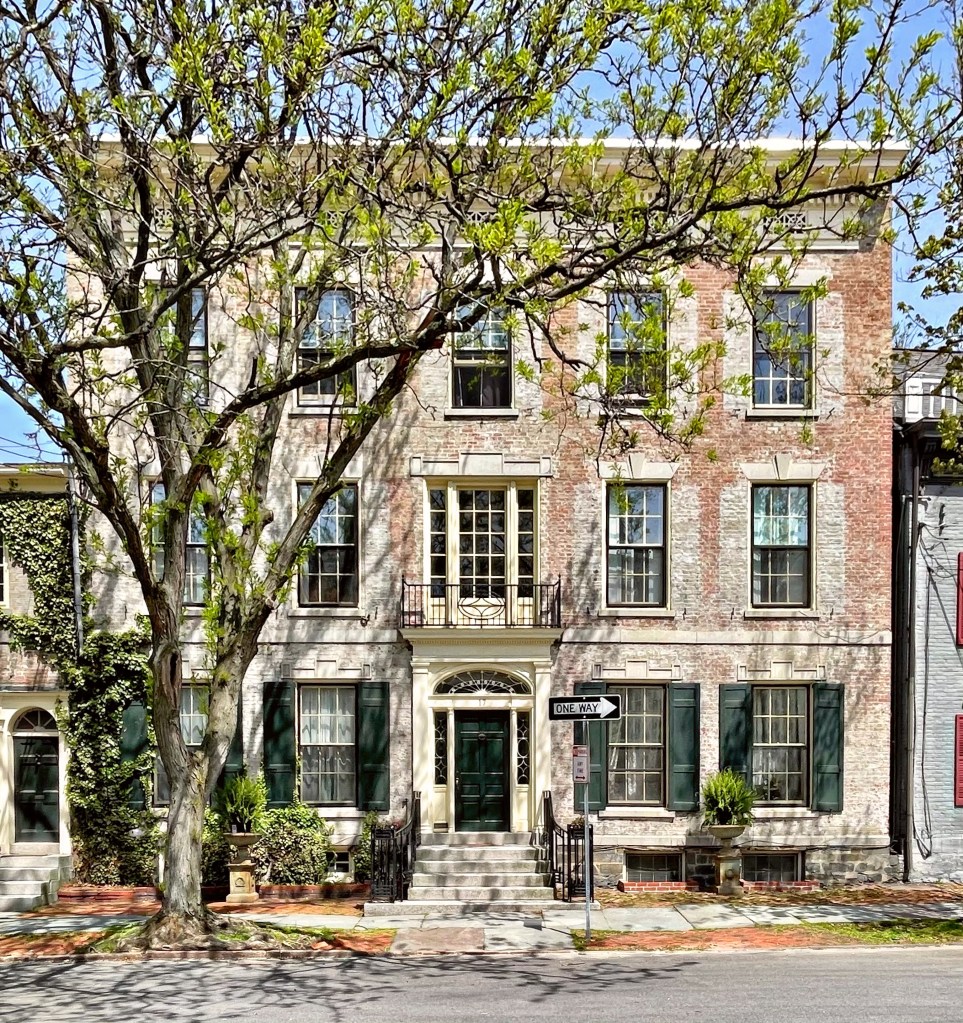
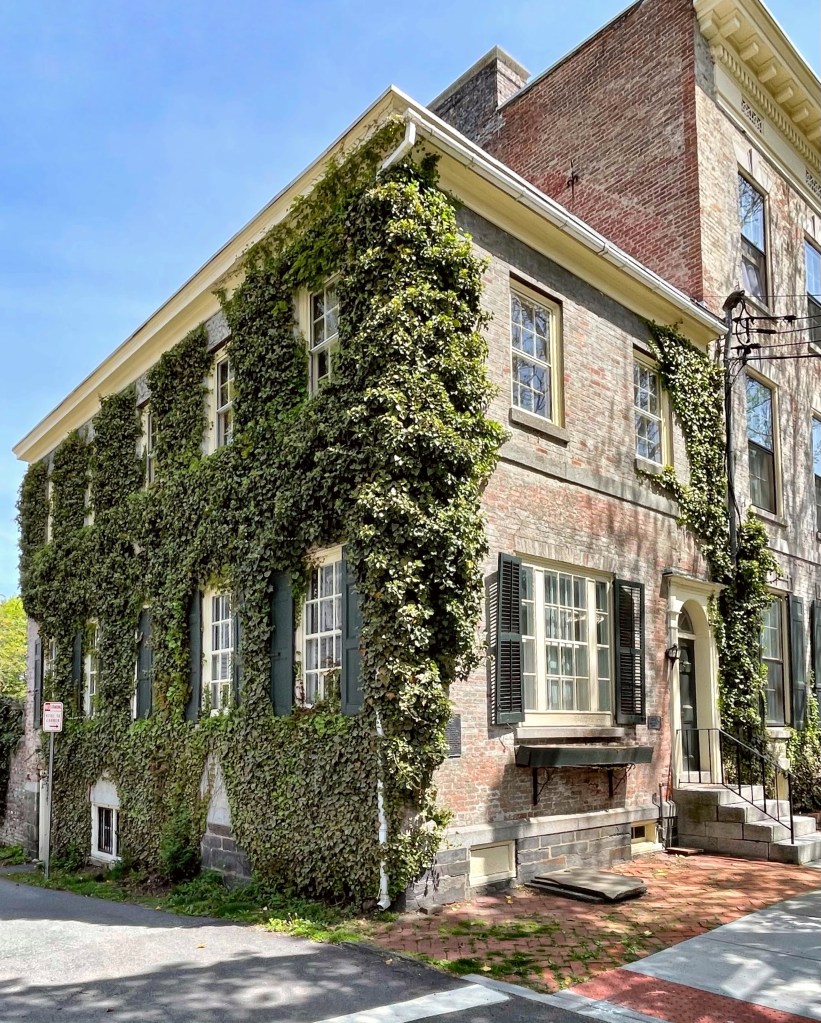
“Old Parsonage” // 1813

The “Old Parsonage” was built in 1813 by Capt. John Pitcher, brother of Elizabeth Pitcher Taber, benefactress of the town of Marion. The side of the building that faces the street (what we see) is actually the back of the original dwelling. The Federal period house sits on a raised stone foundation with a central door and shingle siding above. Behind his home, a large pasture was situated where his sheep and cows grazed on fields. Pitcher used to hang a ship’s bell from the branch of an oak tree and ring it every evening at 9 p.m. as a curfew bell for the town. The bell is now located in the Marion Natural History Museum. When Capt. Pitcher died, he left his house to the Congregational Church, which used it as a parsonage for many years. It was sold in May of 2021 and is likely a private home now.
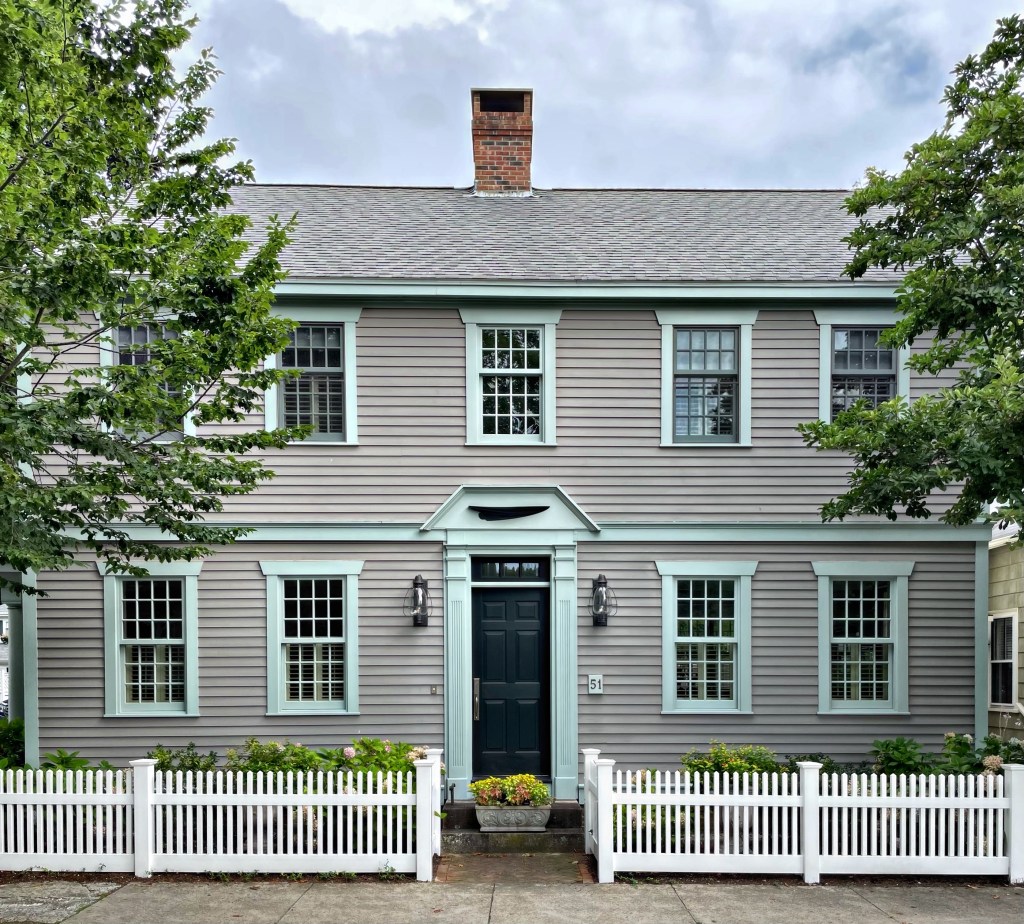
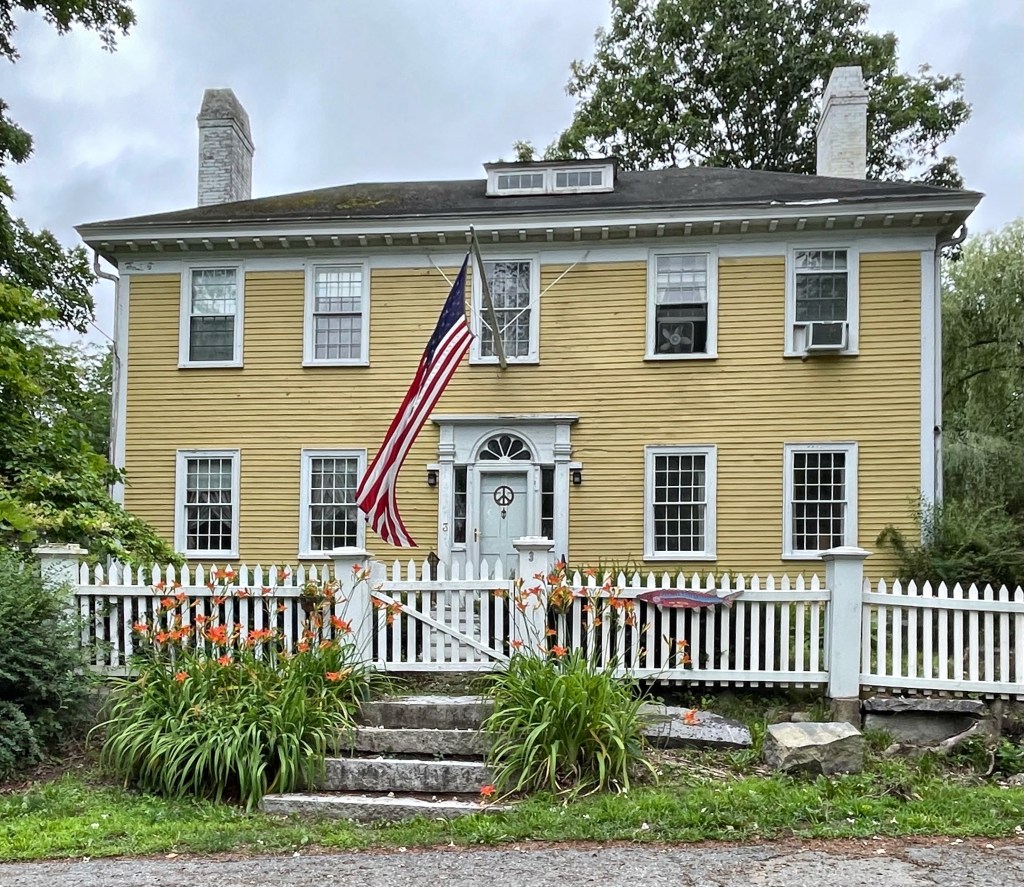
Look-Coggeshall House // 1828

Believe it or not, this beautiful home was once a one-story Cape house! Built in 1828, the home was constructed for Captain Hiram Look, a sea captain, and his new wife Kezziah (Kezia) within a year of their marriage. They had two daughters. Hiram died in 1865, possibly related to the Civil War, which ended that year. After his and his widow’s death, the home was willed to their daughter and her husband, Bernard Coggeshall, who was likely a descendant of the Coggeshall Family of Bristol, RI. The Look daughter died in 1890, and Bernard remarried a year later. Sometime after 2008, this home was enlarged, giving it the second story we see today. If you look closely at photos from before 2008, you can see the matching door surround, window lintels, and window spacing seen today. While the home is completely different, the “updated” version is still appropriate and conveys the home’s history.

What do you think?

Laura Richards House // 1810

This stunning Federal style house in Gardiner, Maine, was built about 1810 by Ebenezer Byram, who had purchased the land from Robert Hallowell Gardiner, a descendant of Dr. Sylvester Gardiner, the “founder” of the town. Dr. Gardiner was a resourceful Boston druggist, who was one of the principal owners of the Kennebec Purchase, known as the Plymouth Company, who purchased land on the west side of the Kennebec River in Maine. Dr. Sylvester Gardiner had been attracted to the Gardiner area for a number of reasons, primarily because of the depth of the water of the river to the point of Gardiner as the head of navigation for ships here. This house overlooking that river was purchased in 1878, by Henry and Laura E. Richards. Laura Richards (1850-1943) was the daughter of Samuel Gridley Howe, an abolitionist and the founder of the Perkins Institution and Massachusetts School for the Blind. Her mother, Julia Ward Howe wrote the words to The Battle Hymn of the Republic, a tune that I am sure most of you have heard of, but never knew the name. Henry and Laura moved to Gardiner in 1876 after suffering financial reverses in Boston, where Henry worked at his family’s paper mill, and it was about that time that Laura Richards began her writing career. At this house in Gardiner, Laura wrote more than 90 books including biographies (including one on her mother), poetry, and several children’s books. Even more impressive, Laura was awarded one of the first four ever Pulitzer Prize in 1917 for her biography on her mother, years before women were even afforded the right to vote!

Gardiner Almshouse // 1834

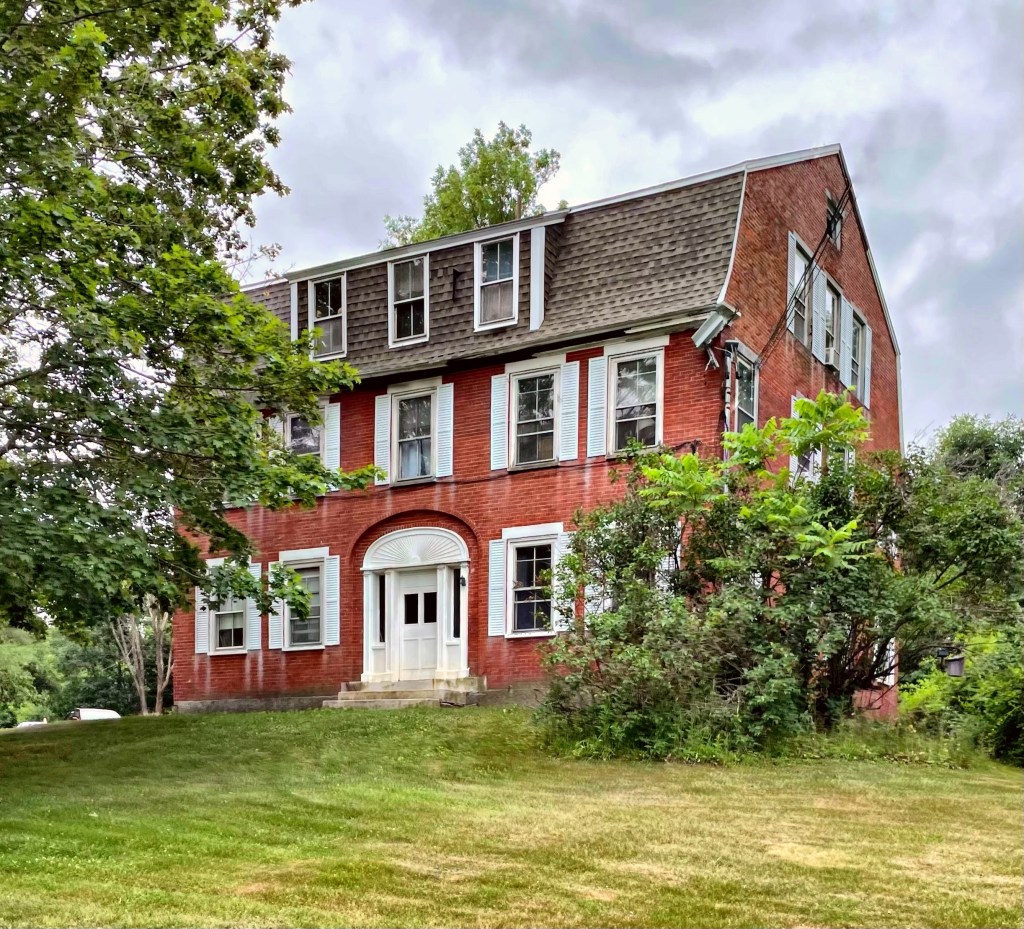
This large brick Federal house was built on the outskirts of Gardiner, Maine, in 1834. Ebenezer Moore, the builder, worked as a carpenter and house-wright in town and showcased his skill on his own brick mansion, selling it to a C.E. Bradstreet. By the late 1840s, the town of Gardiner decided that it would need a new almshouse, city-provided housing for the poor, so they purchased the Bradstreet house and 14-acres of land. In the 1848 town report documents noted, “The establishment is a brick one, of two stories, containing thirty-six fine rooms, including seven fitted for the insane in the most admirable manner, together with a spacious hall. The building is every way a most excellent one for the purpose, and is a monument of the humanity and generosity of the city.” The almshouse served as a working farm where the poor could harvest their own crops and contribute in a small, closed society. The almshouse burned in 1909, and was immediately rebuilt using the outside brick walls. In the Colonial Revival manner, a gambrel roof replaced the former gable roof, which added a third story to the almshouse. The building was eventually sold, as new housing models for low-income residents took off. The former almshouse was converted to an apartment building in 1970, a use that appears to continue to this day.

Beebe-Phillips House // c.1832

The Beebe-Phillips house in Waterford, CT, was built in the 1830s by Orrin Beebe (though some accounts say it was built for his wife Lydia after his death), and is an excellent example of a traditional full-cape house in Connecticut. The home is a vernacular example of the Federal style with no frills or expensive details. The house was originally located elsewhere in town but was moved to its current site on Jordan Green in 1974 by the Waterford Historical Society, next to the Jordan Schoolhouse.

Newington Old Town Hall // 1872

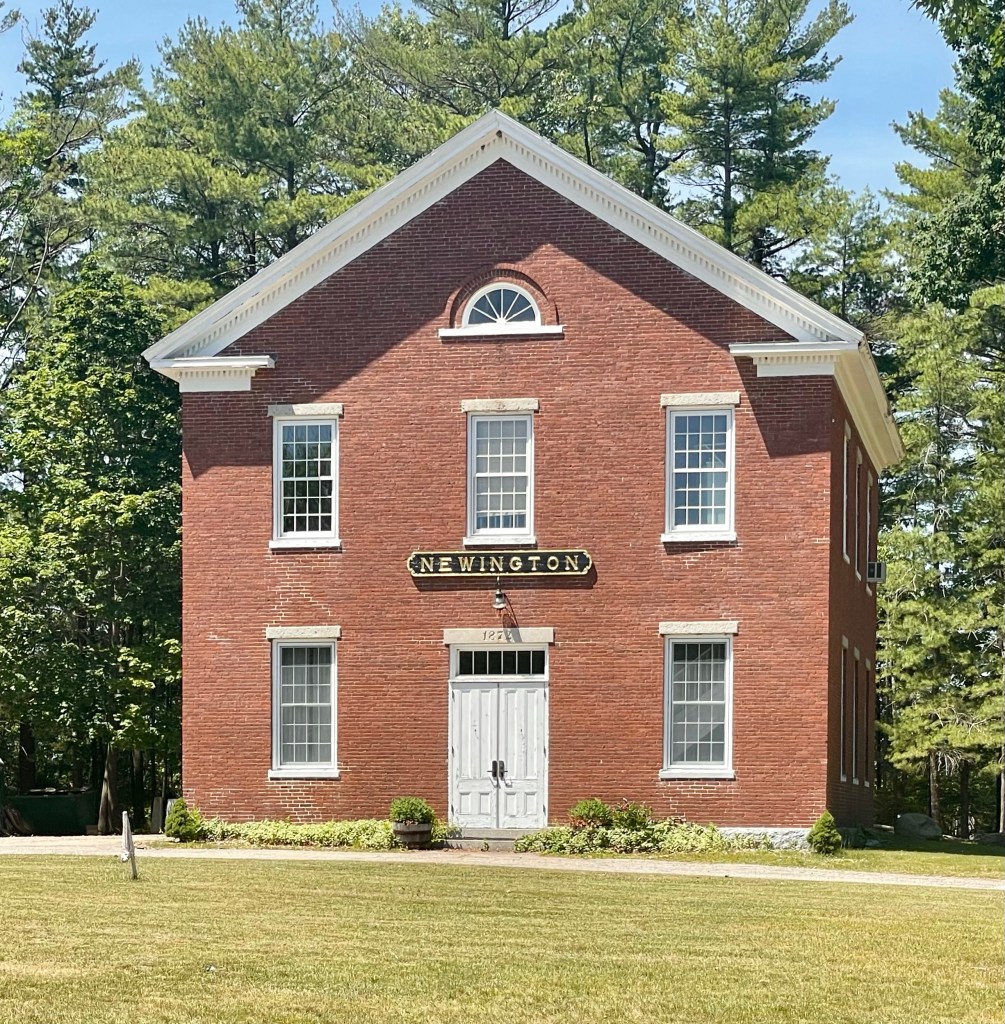
Set in Newington Center, the historic core of the quaint town of Newington, NH, this old Town Hall building looks much like it did when constructed 150 years ago. Newington was originally a part of the town of Dover, and due to boundary disputes among early river settlers and native people, this area was later called Bloody Point. The town was eventually incorporated in 1764, and town functions were held in the local meetinghouse, a common tradition at the time before the separation of church and state. After the American Civil War, the town erected this town hall building which was a one-stop shop for civic functions. The Old Town Hall has served as a school, meeting hall, government office building, home of the local Grange hall and as a local social hall. In 1872 when the building was completed, the town had just 414 residents, a number that has only doubled since that time. The design of the brick town hall is a blending of styles, all were out of fashion when this was built, which include Federal and Greek Revival elements. By the second half of the 20th century, new town offices were built nearby.

Peter Wheeler House // 1832

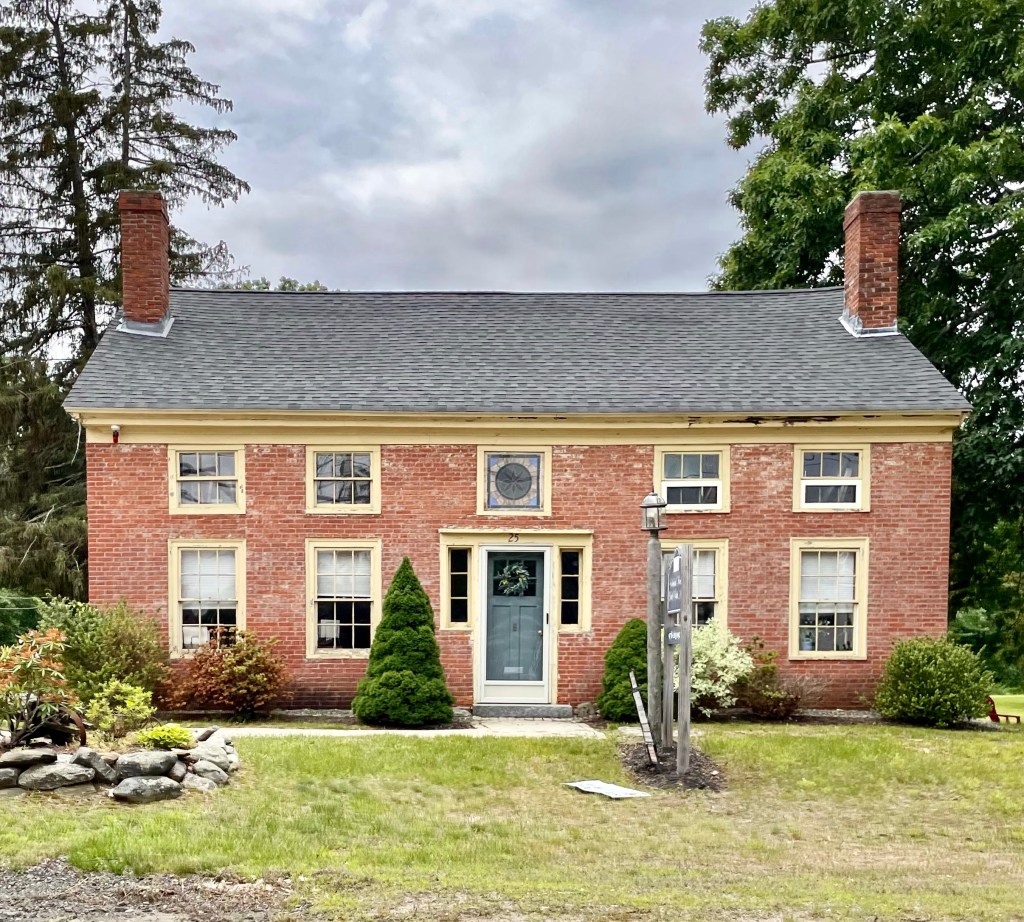
This cute brick house in Boxborough, MA, was built c. 1832 by the Revolutionary War veteran Peter Wheeler where he lived until his death in 1847. The home sits on a heavily trafficked street, yet retains much of its architecture and even historic windows, despite its conversion to commercial use! The brick house features e 6/6 double-hung units on the first story and 3/3 in the second, with the central window featuring stunning stained glass.

Dr. Daniel Robbins House // 1804

Damn I just love old brick Federal houses! This home in Boxborough, MA was constructed in 1804 for Dr. Daniel Robbins, who owned a one-story wooden home on the site in 1798. As building materials were expensive at the time, Robbins likely incorporated that structure as one of the side additions to this new brick house you see here. Robbins served as a town doctor until his death in 1837, and would treat patients in his home or ride on horseback to treat sick residents nearby.

Glapion-Middleton House Ell // c.1800

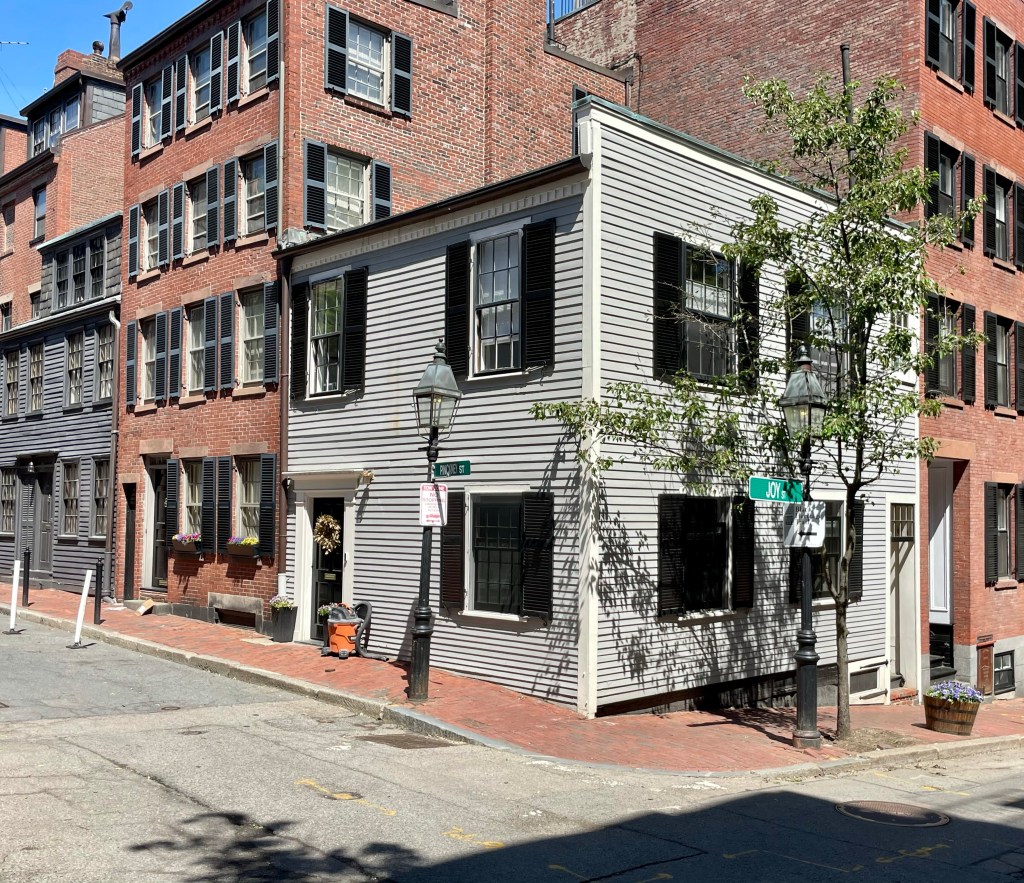
Less than a dozen wood-frame buildings exist on Beacon Hill in Boston, and this curious building is one of them, and also happens to be one of the oldest structures in the neighborhood! Built by 1800, this structure was constructed as an ell/addition to the Glapion-Middleton House at 5 Pinckney Street in Boston. The Glapion-Middleton House (previously featured) was constructed in 1787 after two Black men, George Middleton and Louis Glapion and their wives, built a small double house in the abolitionist center of Boston, Beacon Hill. In recent years, some have speculated that due to this living arrangement and other accounts, that Glapion and Middleton were in-fact gay men, but this is unsubstantiated. After the home was constructed, a two-story, five-bay ell was constructed which connected the home to Joy Street at the corner. The ell served as additional space for the two families and they appear to have had a workshop or store in part of the building. In 1855, owners demolished the center bay of the ell and erected a brick townhouse, similar to others in the neighborhood. The ell in this building was occupied as a store for the majority of its life and became an Italian restaurant and soon after a “Boyer’s Creamery Luncheon”. The property has since been converted to a residence.

Teneyck-Yates House // 1760

Tobias H. Ten Eyck was born in 1717 to a wealthy family from Albany, New York. He lived in Schenectady as a child and met his wife, Rachel De Peyster. The year he married Ms. De Peyster, he had this brick Georgian mansion built, which at the time, had a gambrel roof. Tobias was counted among Schenectady’s wealthiest businessmen, dealing in trade here until his death in 1774. The house was purchased next by James Ellice, who lived in the home with his wife Ann. While on a business trip to Montreal as an “Indian fur trader”, Ellice died at the young age of 33. His widow Ann remarried Joseph C. Yates, a lawyer. The couple occupied this home and Joseph built the one story law office to the side of the building to run his firm out of. He also had this home “modernized in the early 1800s, boxing off the third story and adding the Federal period detailing. He served as the mayor of Schenectady (beginning in 1798), being appointed successively to twelve one-year terms. In 1805 he was elected as a state senator, in 1808 as a State Supreme Court justice, and in 1823, as the seventh governor of New York (1823–1824).