Canton Town Hall // 1902

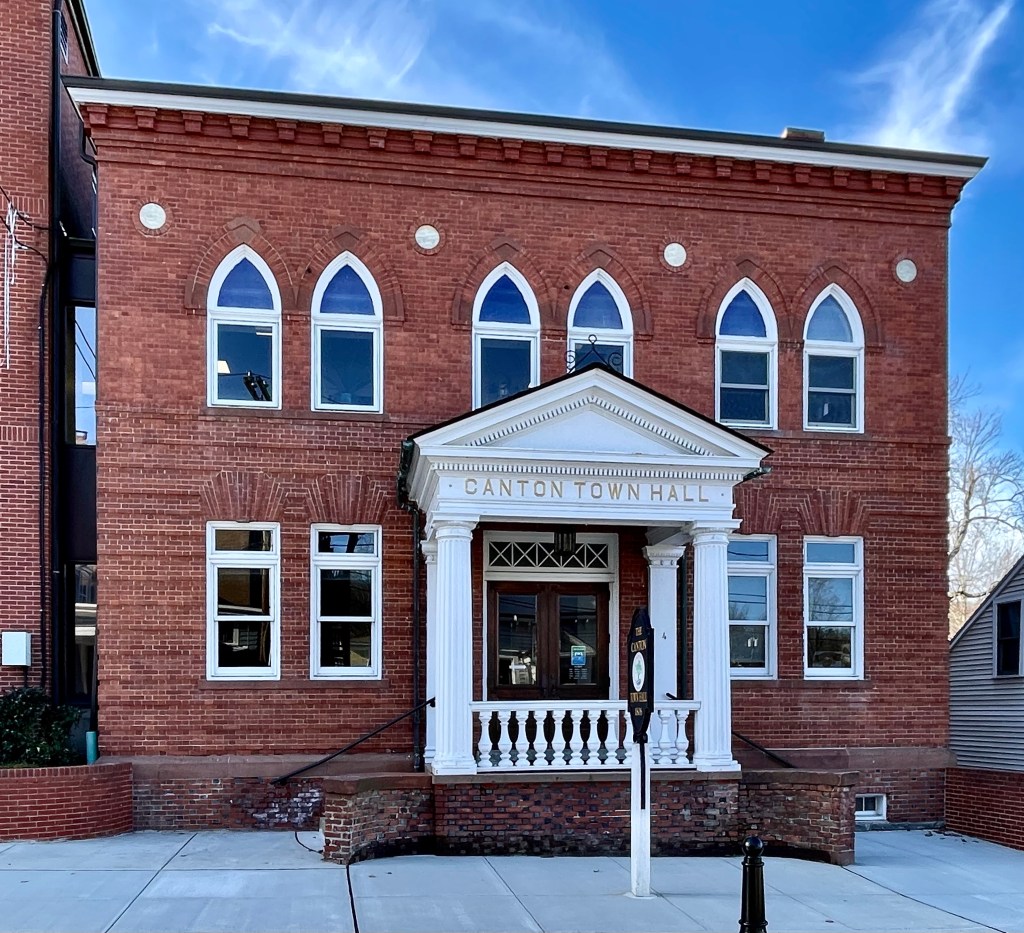
Collinsville, Connecticut grew in importance and population significantly in the 19th century. The traditional, rural town center of Canton remained pastoral with dairy farms on large agricultural lots. With the population centered around Collinsville, it was decided to erect a new town hall building in Collinsville, which is actually at the far edge of town, but the village where most residents lived. In 1902, this two-story, brick building was constructed just off Main Street. The building is unique for the Colonial Revival design, but with Gothic style lancet windows at the second floor. In the second half of the 20th century, the Town of Canton purchased the larger, three-story brick building adjacent to this building and expanded for additional town offices.

Church of the Holy Redeemer // 1907

Built to replace the former St. Sylvia’s Catholic Church (1881-1909), the Church of the Holy Redeemer in Bar Harbor stands as one of the more imposing religious buildings in town. The new church was envisioned by Rev. James O’Brien, who wanted a larger church structure closer to downtown Bar Harbor than the current St. Sylvia’s. The Neo-Gothic stone church was designed by Bangor architect Victor Hodgins, and was constructed from granite blocks quarried from Washington County, Maine. Inside, massive trusses from felled cyprus trees nearby support the roof and stone walls. Gorgeous stained glass windows line the walls which flood the interior with color.

Stone Church // 1832

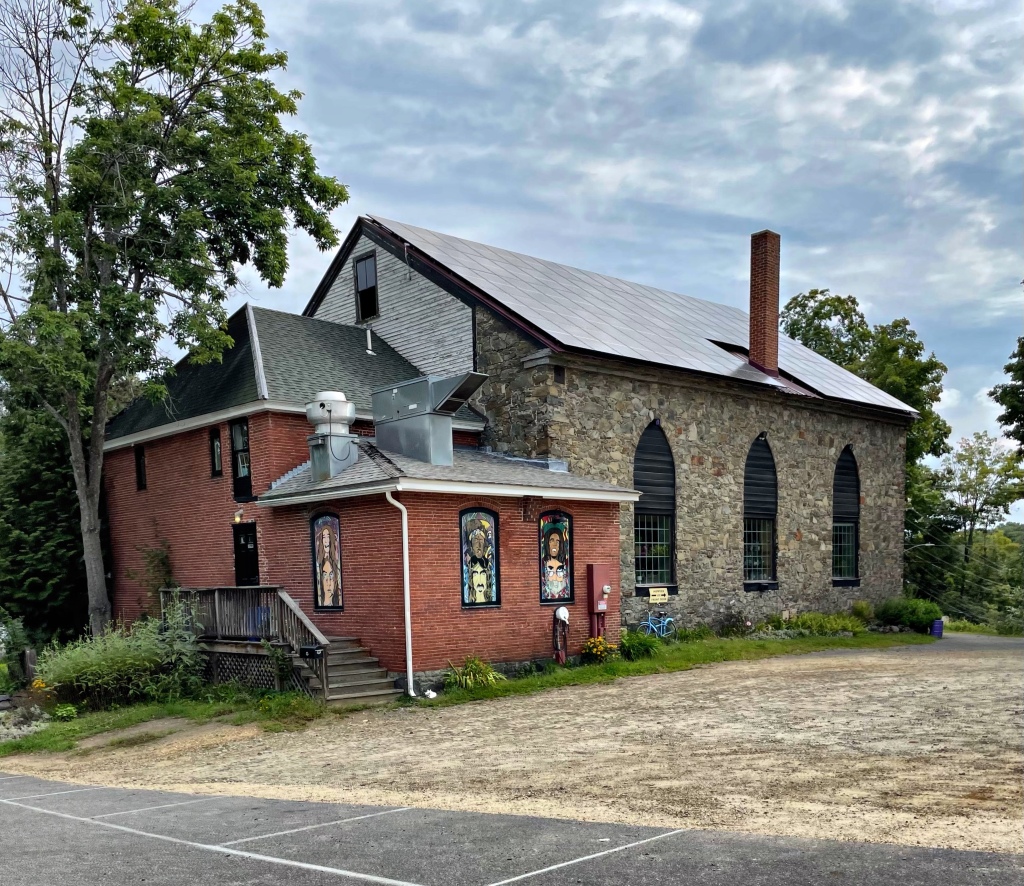
Erected in 1832, the iconic Stone Church building in Newmarket, NH, first served as a Universalist Meeting House before shifting to Unitarian twenty years later. In 1865, it was sold to the Roman Catholic Church, thus establishing the first Catholic Church in Newmarket, NH. In 1890, the congregation moved down to Main Street into a new church next to the town hall, and the Catholics then used the Stone Church as a school for teaching French to children, likely due to the influx of French-Canadian immigrants working at the mills in town at the time. After use as a church, the building was used as a roller-skating rink, playhouse, and VFW hall. In the 1950s, The Newmarket Heel Factory inhabited the building, a shoe manufacturing company. In 1968 the building was ravaged by a fire, and according to legend, the firefighters were reluctant to break the historic windows of the church to vent the fire. In 1970, the building was sold to two UNH students and another, who planned to open a coffee house, but quickly realized they couldn’t sell enough coffee to pay the bills. They decided to sell beer, but weren’t old enough to drink…legally. So one of the boy’s mom’s got the liquor license in her name. Since then, the Stone Church has been one of the most important cultural institutions in the state, providing arts and music space for local musicians and artists to gather and share ideas, over beer. What could be better?!

Captain John Dexter House // 1860

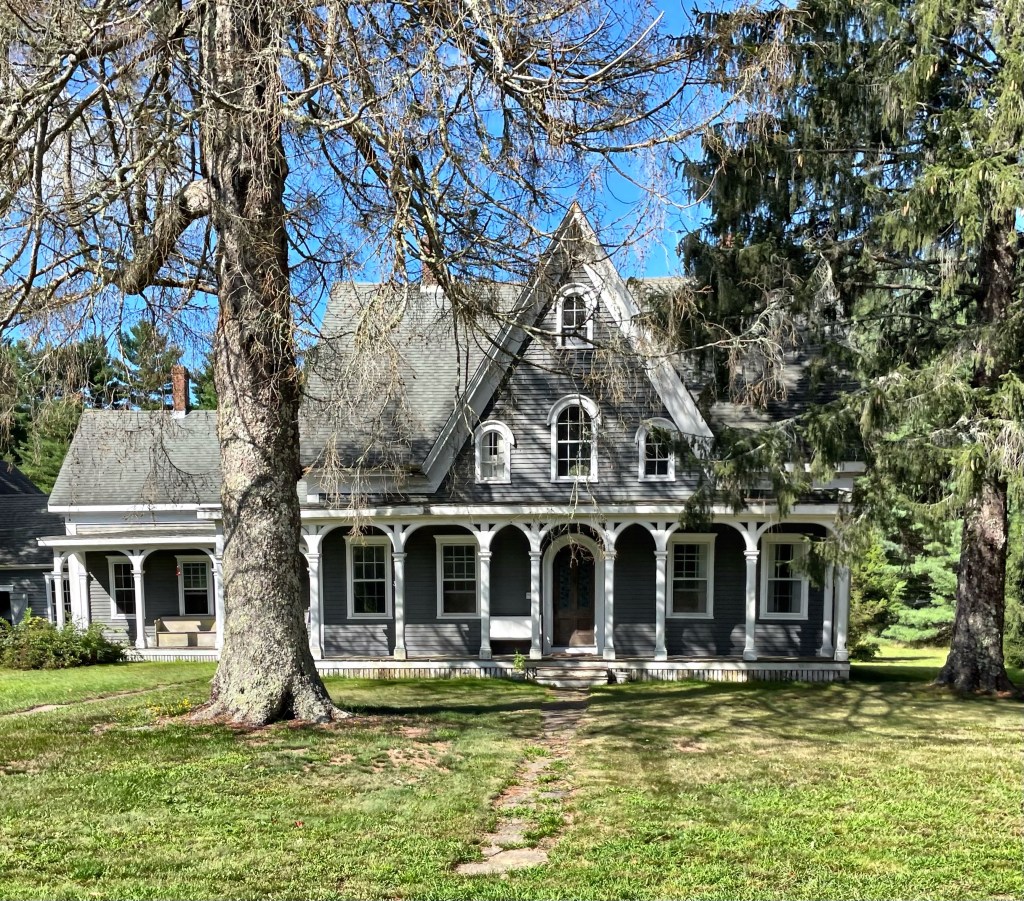
This beautiful house was built by retired whaling Captain John G. Dexter in 1860. The Dexter family’s ties to Rochester, Massachusetts, began when William Dexter became the first descendant of the Dexter
family to settle in town around 1679. William, one of the 32 original grantees of the town (from land by Sachem Metacomet), died in Rochester in 1694 and his four sons and grandsons remained in Rochester through the 19th century. After being away for months or years at a time, Captain John Dexter returned to his hometown to build this home on family land that was previously undeveloped. The Dexter family remained in the house well into the early 20th century, carrying on the family’s deep rooted history in the area. The home is a blending of Gothic and Italianate styles, which work really well in the rural area.

Rochester Congregational Church // 1837

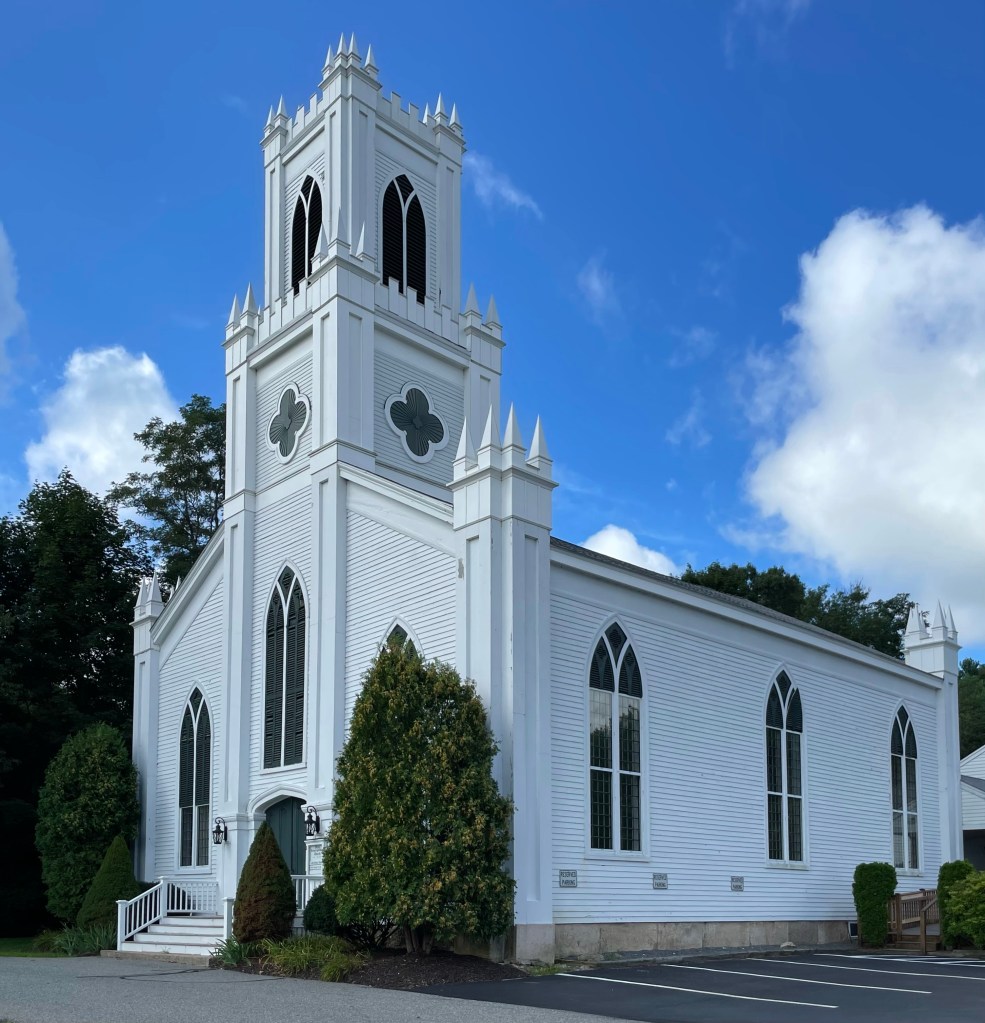
Rochester’s First Congregational Church is the oldest extant building still standing on the Town Green in Rochester Center and is the fourth house of worship to occupy the site. Constructed in 1837 to the designs of architect, Solomon K. Eaton, the beautiful Gothic Revival church building is among the most beautiful in the state. Eaton was well-known for his ecclesiastical structures, but also designed other prominent civic buildings in Southeastern Massachusetts. A fun fact about Eaton is that at age 55, he volunteered for the Union Army during the Civil War and his unit saw action in North Carolina, he returned home after the war and lived out his final days. The church stands out to me for the quatrefoil windows on the bell tower, the pointed finials and comer posts, and large lancet windows. Swoon!

St. Luke’s Episcopal Church // 1871

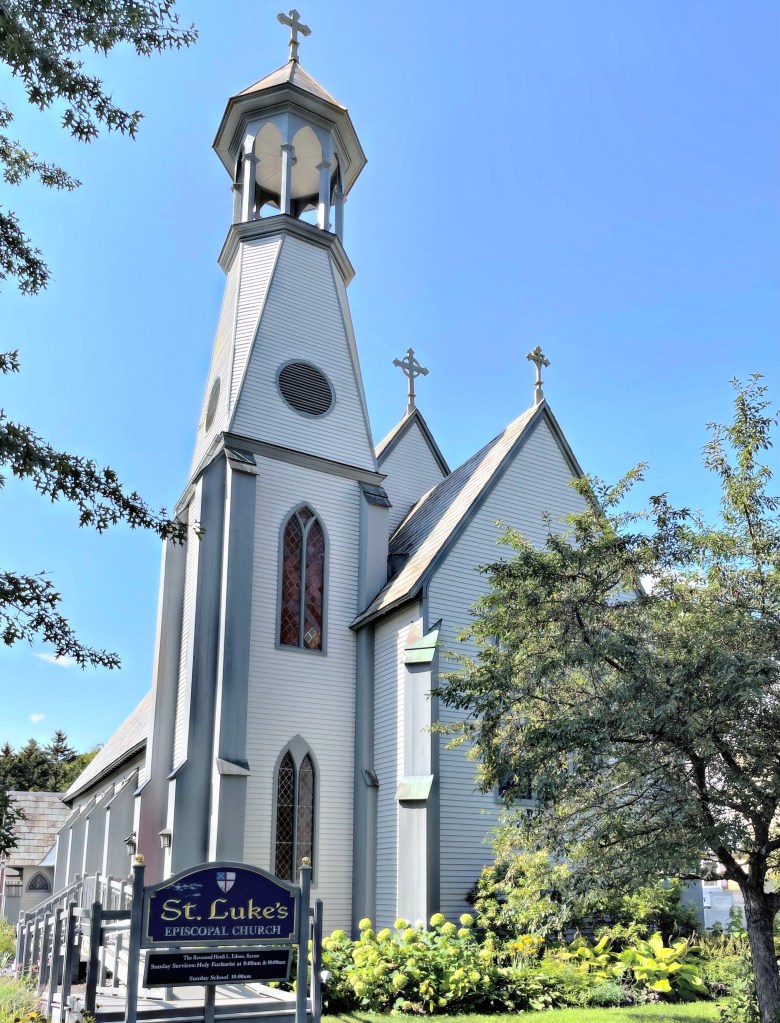
Next door to the Inn Victoria, the beautiful St. Luke’s Episcopal Church in Chester, VT, stands out as one of the only Gothic Revival buildings in the town. A small group of residents gathered in the 1860s to found a Episcopal church in the town, which already had a dominant Congregational church. They furnished money which was matched by the diocese, and Merrick Wentworth was named senior warden. Members of his family and that of Frederick Fullerton, his son-in-law, formed a large part of the congregation. Frederick and Philette Wentworth Fullerton donated a building site across the street from their home, and Mr. Wentworth’s nephew, Boston architect, William P. Wentworth, contributed plans for a Gothic-style frame church, which includes a tall corner belltower.

Smith Memorial Chapel // 1900

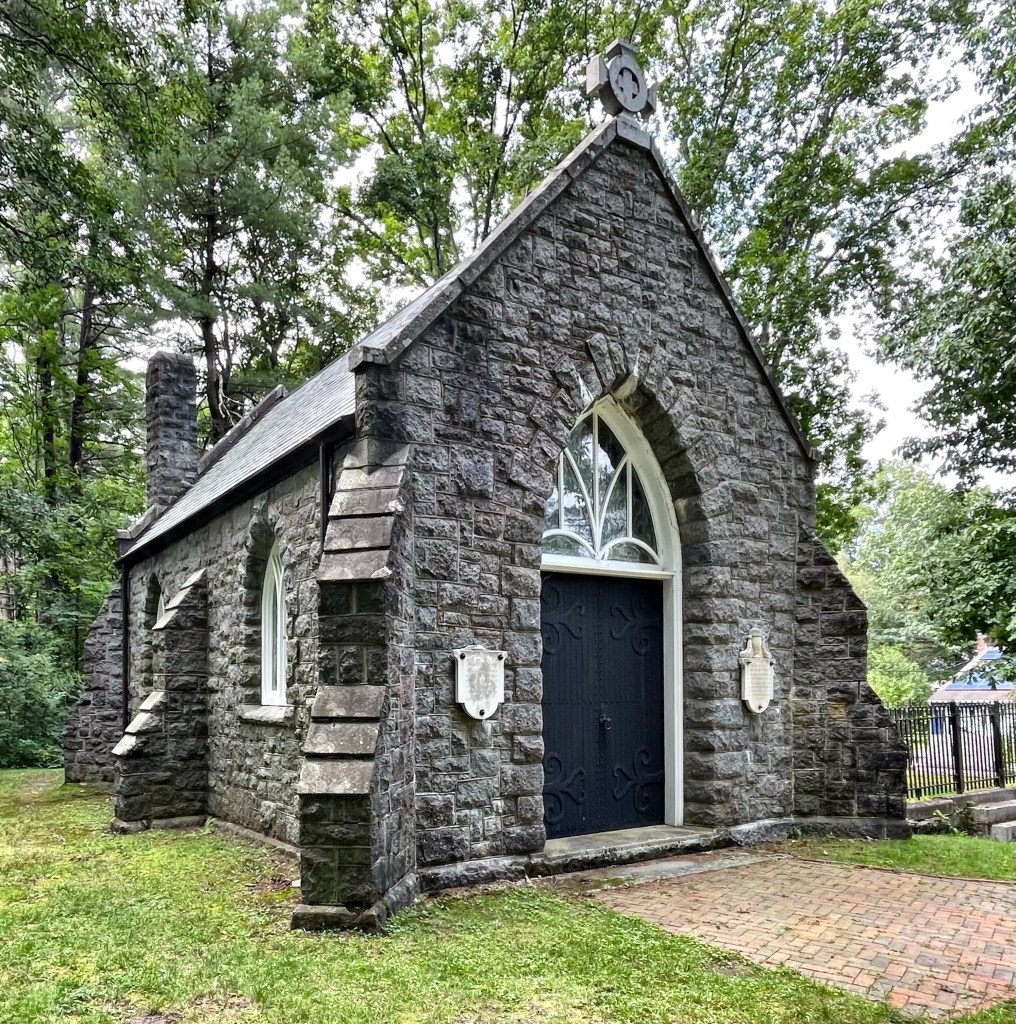
The Smith Memorial Chapel, located in Durham, NH, was built for and named after Hamilton Smith by his wife, Alice Congreve, in 1900. From their marriage in 1886, Hamilton and Alice Smith lived in England for ten years, where Hamilton worked and lived in mining operations in South Africa. He had a home in New York and by the end of 1895, Hamilton acquired property in Durham to create a country estate (next post). On the Fourth of July in 1900, Hamilton and a family friend went boating downriver on the Oyster River, in Durham along with his two dogs Hana and Joy. While attempting to free the boat after it ran aground, he suffered a fatal heart attack at just 59 years old. Almost immediately, his widow Alice funded a memorial chapel to her late husband on the family cemetery. The Gothic Revival chapel features amazing lancet stained glass windows and stone buttresses resembling old English chapels. Also on the grounds of the cemetery are the burials of Mr. and Mrs. Smith and their beloved dogs, marked by small gravestones. The property, including the small cemetery in which both family members and pets are interred, remained in the family until 1979, when it was donated to the town.

First Universalist Church, Marion // 1830

I do love a good adaptive reuse story! This Marion, Massachusetts church building was constructed in 1830 for the town’s growing Universalist congregation. Architect Seth Eaton was hired and furnished plans, likely relying on neighbor, Warren Blankinship, a carpenter and congregant, to construct the building. It blends together the Greek and Gothic Revival styles well, but in a less sophisticated form. By the mid 20th century, membership of the church dwindled, and it finally shuttered its doors. With the building’s future uncertain, at a time where demolition for surface parking lots was the go-to solution, Marion residents Andrew and Dorothy Patterson, purchased the building and soon after worked with local artists in town to restore the building for use as an art space. The Marion Art Center was thus founded in 1957, and to this day, serves as a non-profit community cultural organization dedicated to promoting the visual and performing arts.

Grace Church // 1835-1966

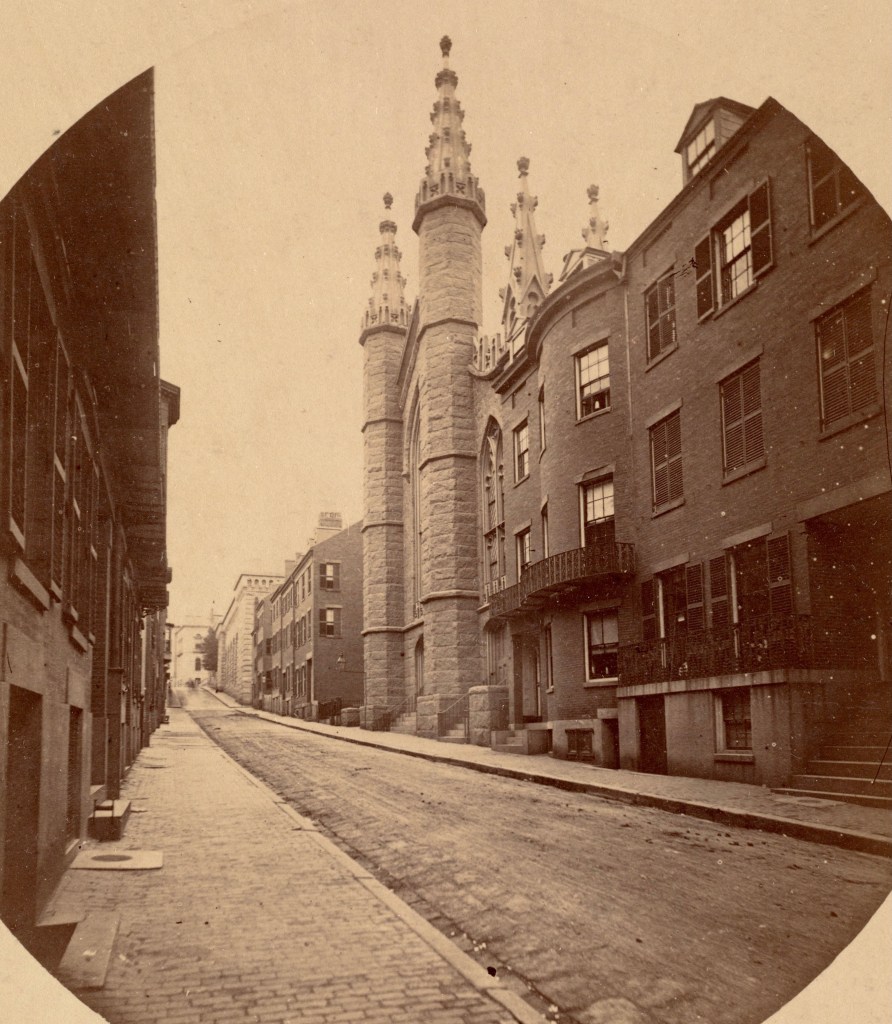
Grace Church was built in 1835 for a growing congregation in Beacon Hill. The absolutely stunning Gothic style church was designed by William Washburn (1808–1890), an architect and city councilor in Boston. The church was constructed of granite and had massive stained glass windows and soaring towers with decorative embellishments. Inside, a massive central window flooded the interior with natural light, and illuminated paintings from Mario Bragaldi, a Milan artist. In 1865, the building was sold to the Methodist Episcopal Society. 1873, it merged with Hanover Street, and took the name First Methodist. The church was variously referred to as First, Grace, or Temple Street, sometimes all at once! This church was occupied until 1962, when it merged with Copley to form First-Copley, which appears to have then occupied the Old West Church. The building was soon after acquired by Boston University and demolished for the building on the site today, a true loss to one of Boston’s most beautiful buildings.

Christ Episcopal Church, Gardiner // 1820

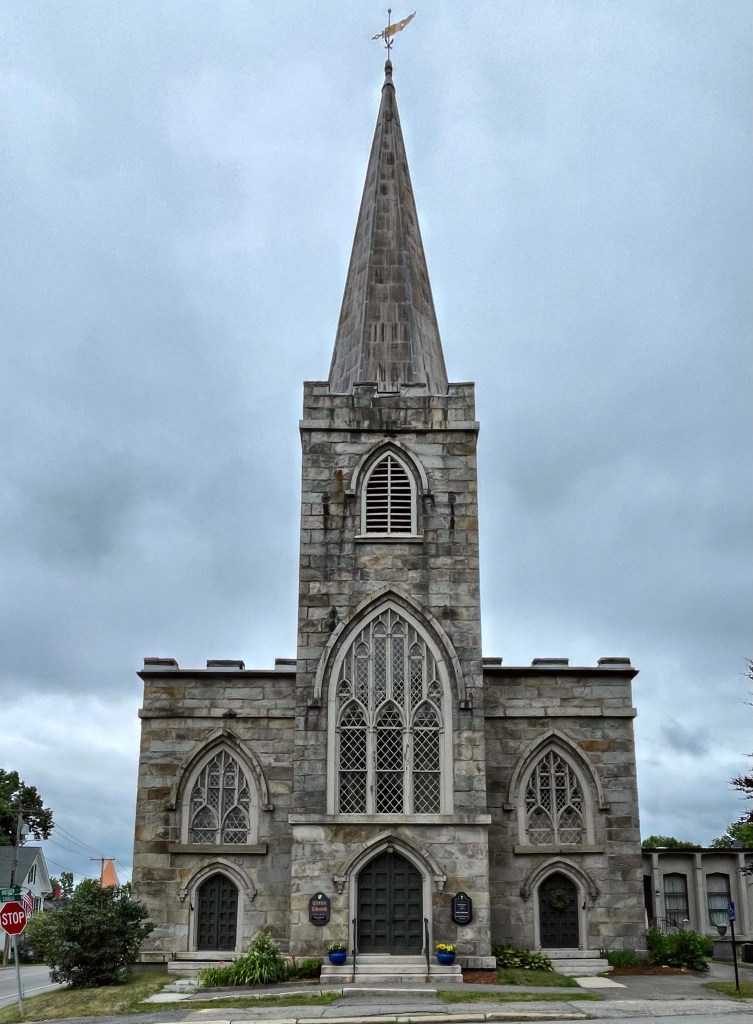
The oldest known example of ecclesiastical Gothic Revival architecture in New England is surprisingly located right in Gardiner, Maine, the Christ Episcopal Church. The Episcopal Church in Gardiner was organized in 1772 by Sylvester Gardiner, a major landowner for whom the city is named as the town’s main church. Two more vernacular buildings were constructed as houses of worship until a new, fireproof structure was desired. Built in 1820, the stone church was designed by the Reverend Samuel Farmer Jarvis, who was likely heavily inspired by the stone churches found in England. The church has massive lancet Gothic windows with tracery, that in the tower considerably larger.