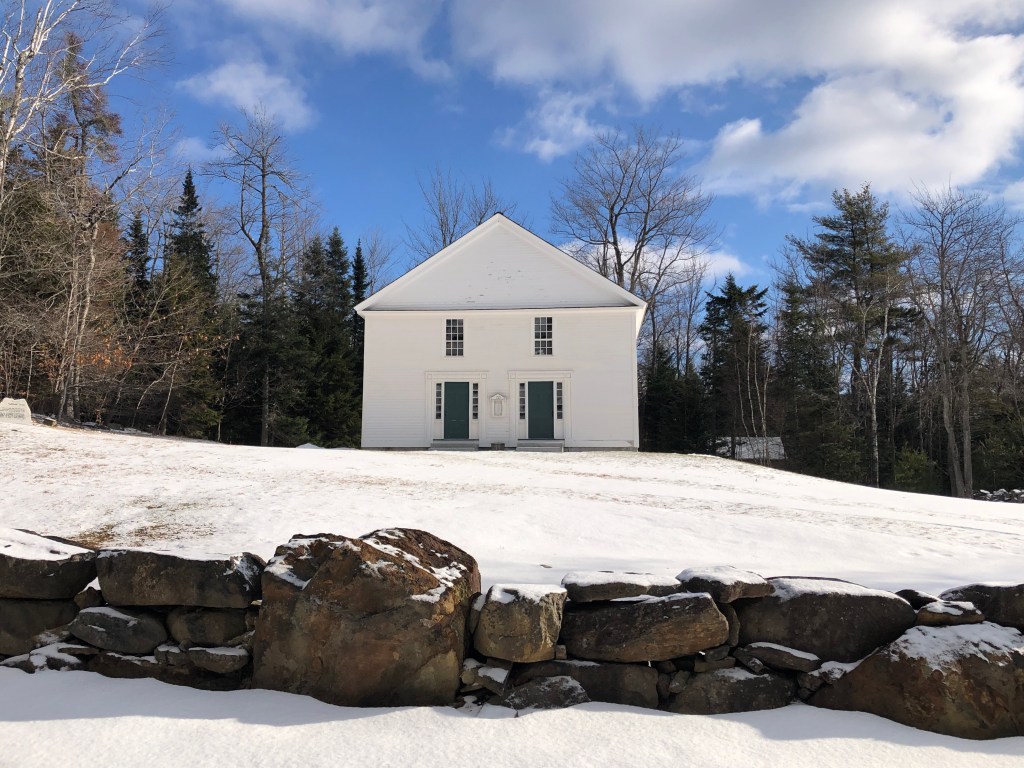
East Washington Baptist Church // 1877

Residents in the eastern portion of the rural town of Washington, NH found it very inconvenient to attend church at the center of town. In 1800, a group of residents on the east side of town banded together to create a new congregation, building a church perched on a low hill soon by 1826. The church was used for decades until it burned in 1844, it was replaced a year later, but that burned as well. Undeterred, the small congregation had yet another church built in 1877. The church remains in great condition, and is still active.

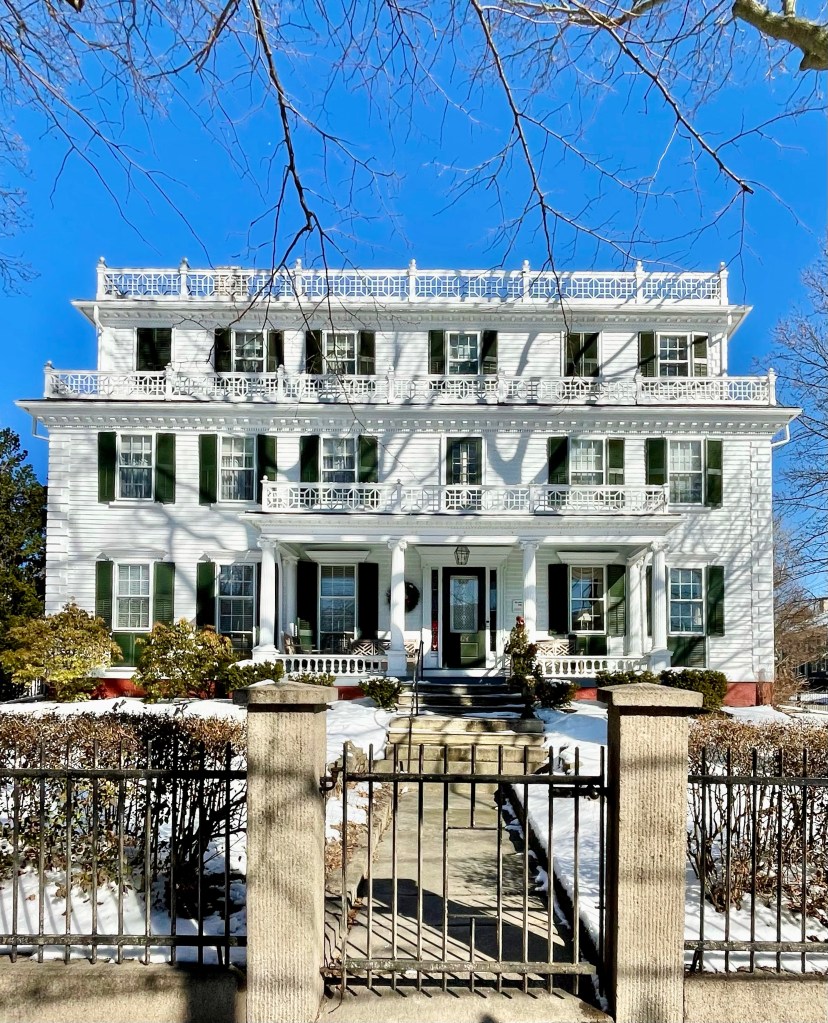
Nettleton House // c.1835

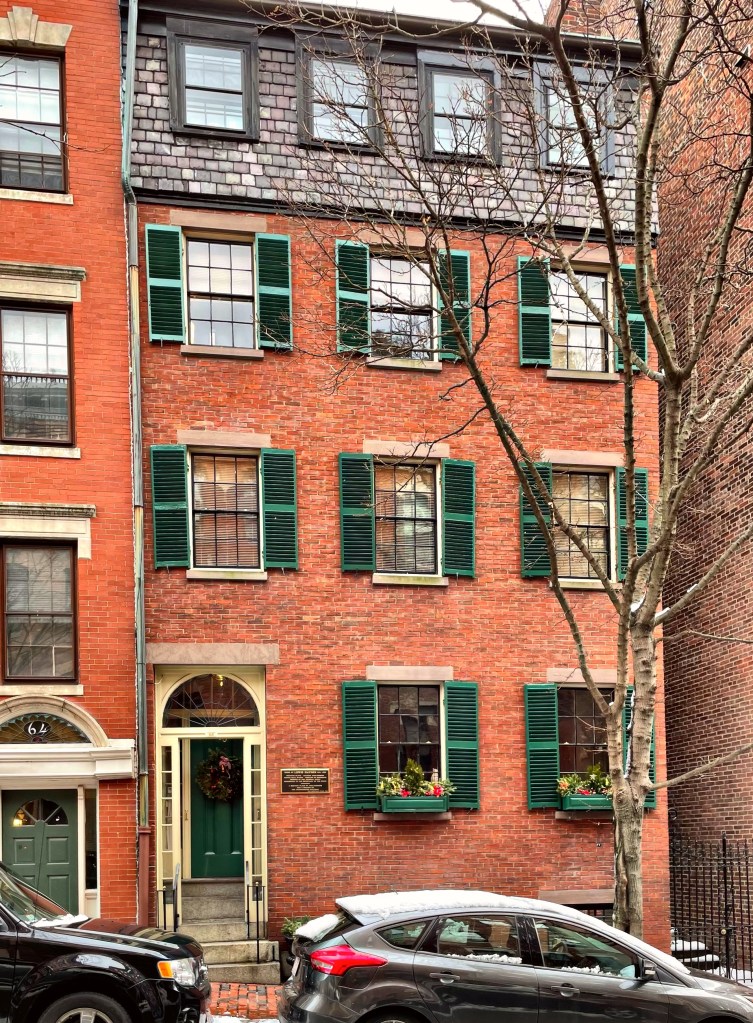
Located just off Main Street in Newport, NH, this stunning 1830s brick house shows an elegant blending of Federal and Greek Revival styles prominent at the time. The home was built for Joel Nettleton, a local hotel and stage coach owner, either by Nettleton himself, or by Samuel George, a local cabinetmaker and painter. The home is a great vernacular example of early-mid 19th century architecture in developing parts of inland New Hampshire and showcases a modest design, though with a use of brick showcasing some wealth. The town acquired the home in 2011 and it has since been occupied and preserved by the Newport Historical Society.

First Stockbridge Town Hall // 1840

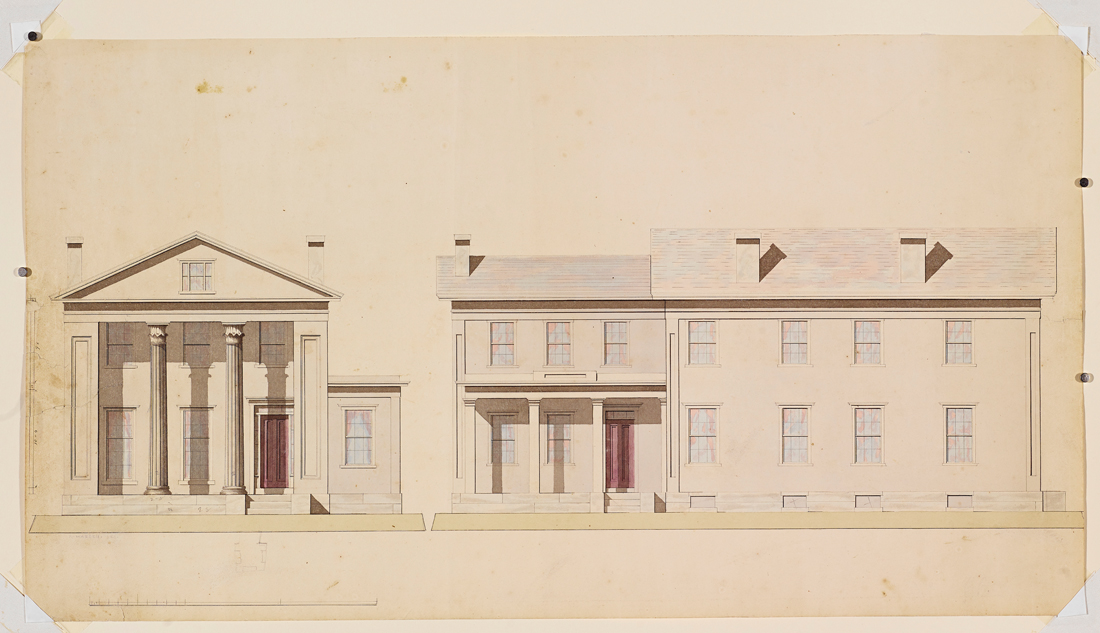
The Town of Stockbridge, MA was incorporated on June 22, 1739. After that time the town held meetings and conducted business in the First Congregational Meeting House until 1840 when this Greek Revival town hall building was erected on the church’s property as a gift. A stipulation was made that if the Town government constructed or moved to a new town hall building, the property ownership would revert to the Church. The town outgrew the building and constructed a new building toward the center of town, but named it Town Offices, a cheeky way to retain ownership of this building. Eventually, that building too was outgrown, and the town hired Pittsfield-based architect Harry E. Weeks to modify and enlarge the building in 1903, in the Neo-Classical style to compliment the original Greek detailing. As expected, the town moved again in the 2000s to a former school, on Main Street, but again retained the building.

Always Ready Engine House // 1859

Located in a triangular island at the corner of Main Street and Monument Square in the charming town of Hollis, NH, the Always Ready Engine House is a two-story clapboarded building with a lower level exposed on the east end due to the sloping site. The simple Greek Revival-style building is capped by a low-pitched gable roof and is outlined by simple pilaster cornerboards. The building was constructed in 1859 by the Town and furnished by the local fire company. Initially the building was kept for the exclusive use of the engine company but in 1862 the Soldiers’ Aid Society was granted permission to meet here. In 1877 the building was altered to accommodate the Town Hearse and in 1878 part of the basement was fitted as a local police lock-up and tramp shelter. The fire department finally vacated the structure in 1950 and the building served as the police station from 1971 to 1987. It was given to the Hollis Historical Society shortly after who hold documents, objects and photos which display the history of the town inside.

Smith House // c.1847

This home on Hollis’ town green was built around 1840, seemingly for a member of the Smith Family. The family was well-known in town as the patriarch, Rev. Eli Smith, took over as minister of the Congregational Church in town after the death of Reverend Emerson (last post). It appears that after Elias Smith’s death, the home was constructed by a member of the family who then used the land for agricultural purposes, adjacent to the former family home. The home does not face the Green or the street, but faces eastward, and features a symmetrical, five-bay facade with a modest Classically inspired door surround. The home retains its agricultural use today since the property was purchased by Robert and Martha Valicenti. The property is now known best as the Valicenti Pasta Farm, who make some of the best home-made pastas, stuffed ravioli and sauces. I even bought some for Christmas gifts. Shop Local!

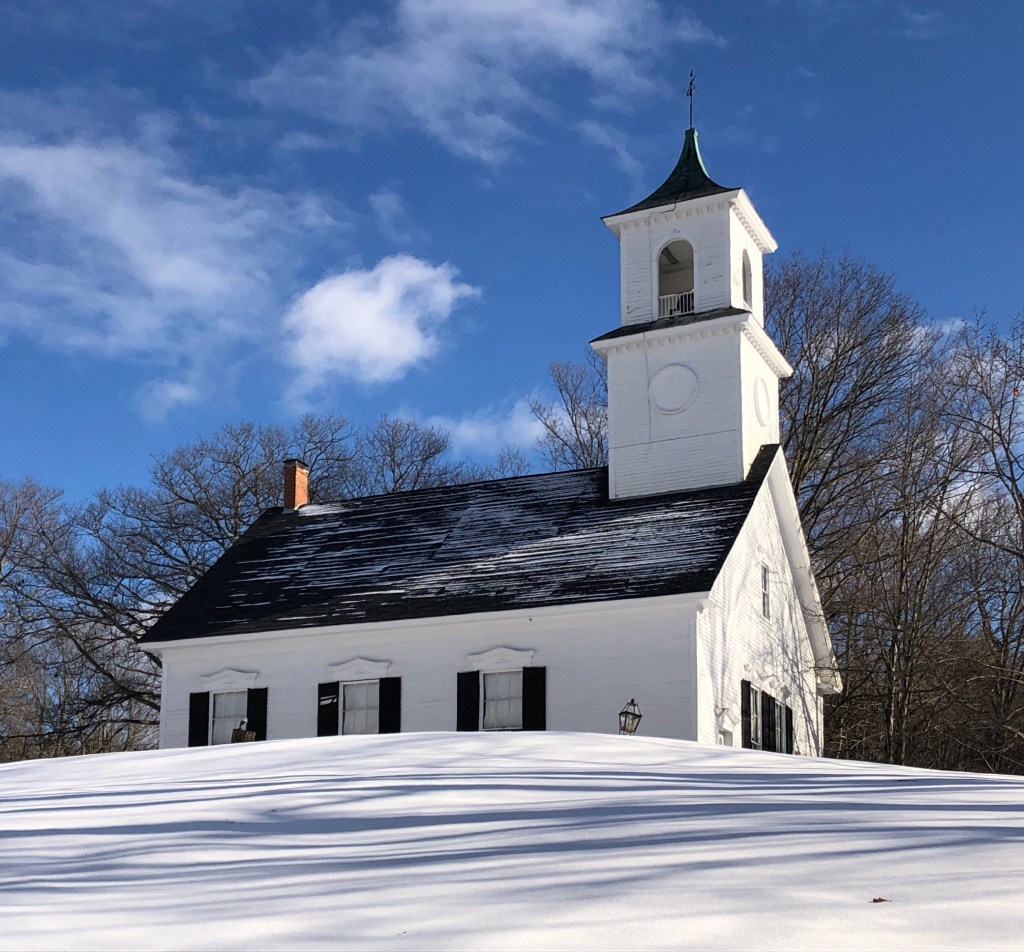
Universalist Church of Strafford // 1833

The Universalist Society of Strafford, founded in 1798, is the second oldest in Vermont and fourth oldest in the nation. In the early years, Universalists met in Strafford’s Town House, sharing the building with other denominations. Eventually the Universalists, Baptists, and Congregationalists all built their own churches, with the Universalists building a structure in 1833 in South Strafford Village. The white clapboarded church sits high on a hill with a gorgeous belfry and large stained glass windows.

Harris Store // 1834

In 1833, Jedediah H. Harris, who had run a general store in Strafford village since 1803, commissioned a local contractor to build a new brick and granite store. Harris and his then-partner, Justin Morrill, opened the store in late fall 1834, selling provisions to locals and visitors to the small town. Morrill would later go on to construct a stunning Gothic home nearby and become a leading U.S. Senator. For more than one hundred years the store passed through a succession of owners, until C. William Berghorn Jr. closed it in 1951 to make it his residence. The building has since been converted to the local post office branch, with a residential unit likely above.

Charles Perry House // c.1830

Charles C. Perry (1795-1870) was a wealthy nineteenth-century shipowner and sea captain and a prominent figure within Southport’s community. After his father’s death in 1814, when Charles was just 25, he inherited a large sum of money from his father’s will and followed his footsteps as a career. Miah Perry’s will stipulated that in order to keep the family together, members were to reside at the family home for five years from his death if neither of the daughters married; “but in case they remain unmarried at the expiration of five years…my estate shall not be divided until eight years from my decease unless one of the said daughters should marry…partition may be immediately thereafter made.” Talk about pressure to get married!

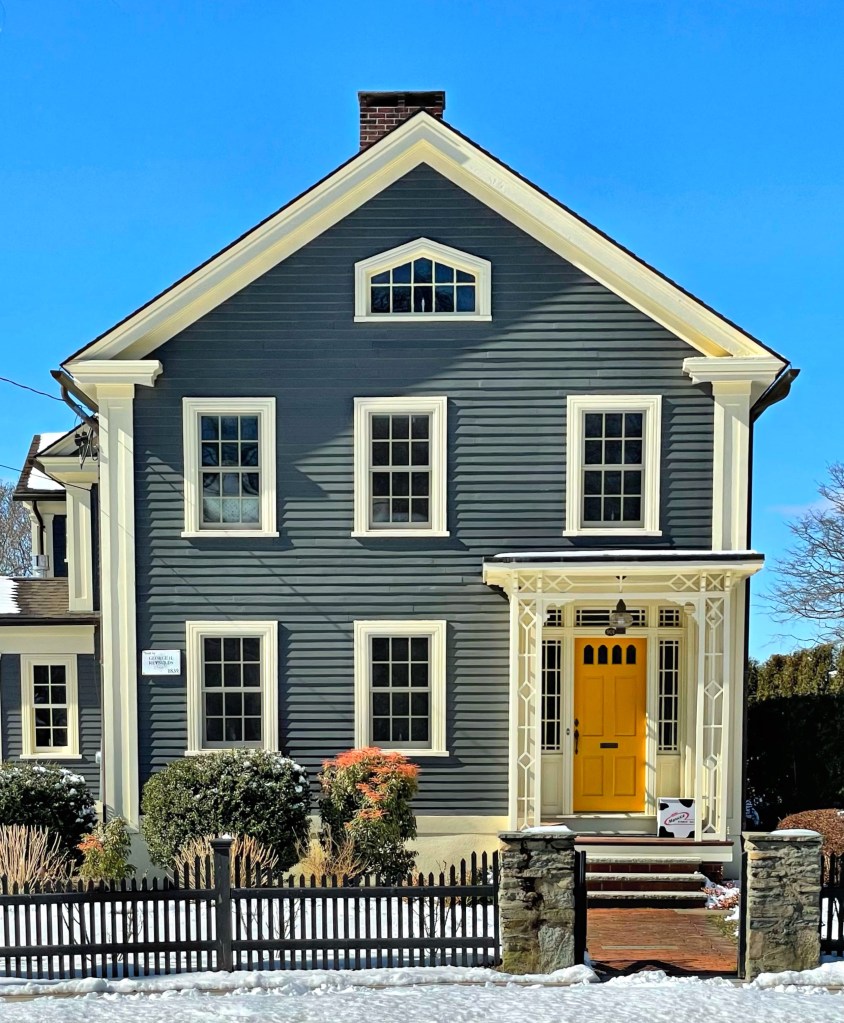
It is unclear if any daughters got married before, (Julia, one daughter died in 1821 at 22 years old). That same year, Charles Perry seemingly got his part of the inheritance and acquired the land upon which this house stands. He was then twenty-six years old and unmarried. He appears to have built it later as a blending of the Federal and Greek Revival styles, perfectly complimenting each other.

Austin Perry House // c.1830

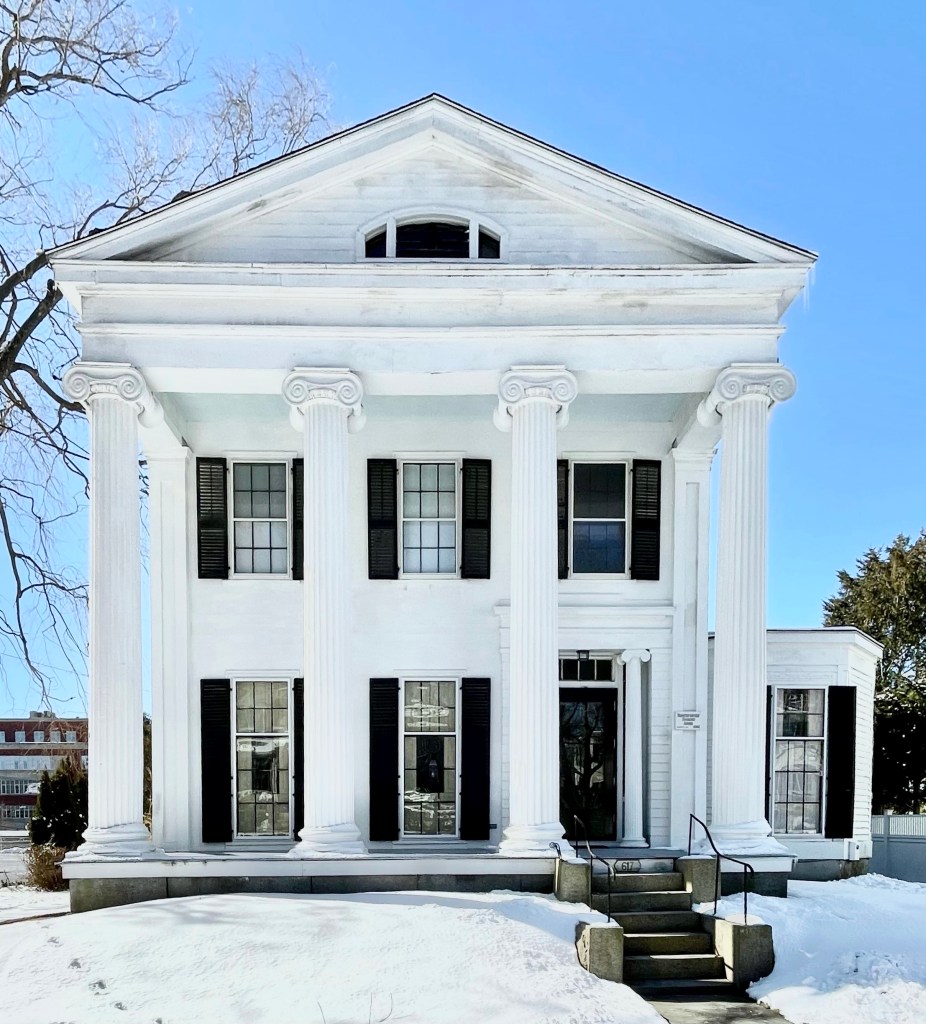
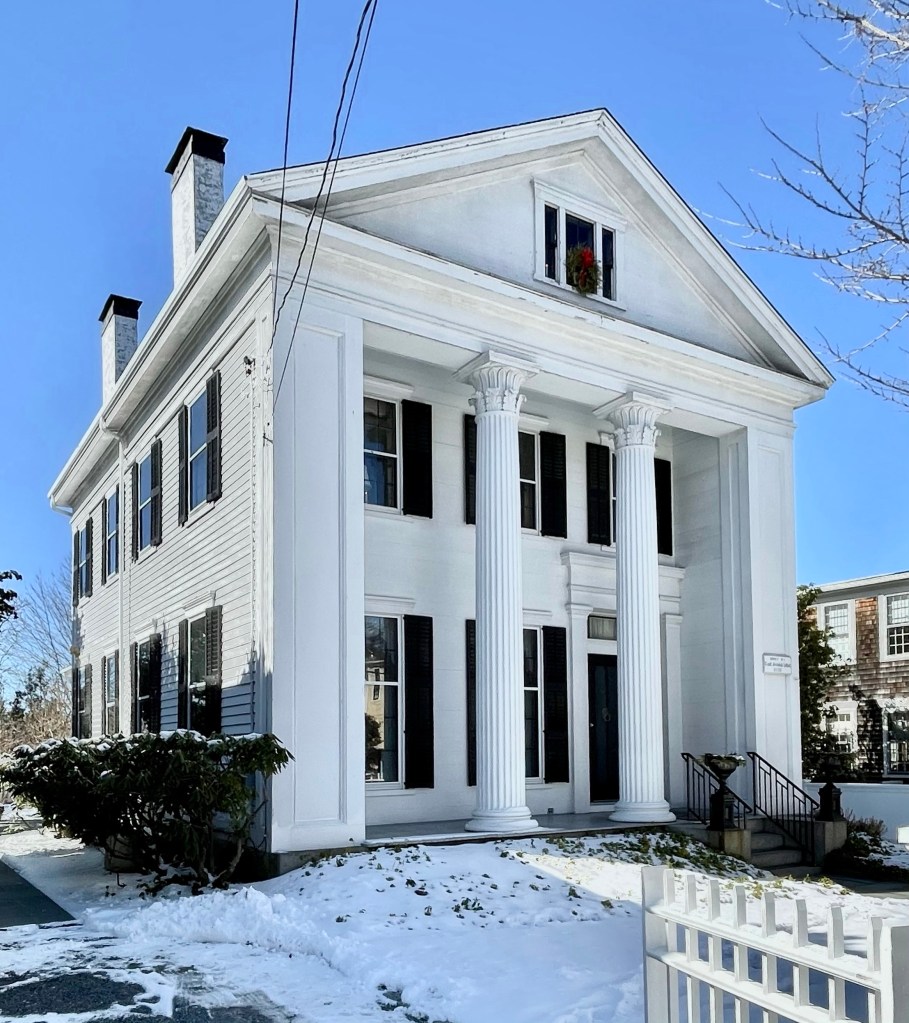
One of the nicest examples of residential Greek Revival architecture I have ever seen is the Austin Perry House (c.1830) in the Southport area of Fairfield, CT. Austin Perry (1798-1864) was a member of a prominent merchant family, holding businesses in Fredericksburg, Virginia, before returning to Southport to manage a general store. He retired in his forties and resided at this home until his death. His home is a balanced, symmetrical design with massive Corinthian columns surmounted by a carved anthemion motif ornamenting the gable pediment.

Paschal Sheffield House // c.1826

This Greek Revival home built c.1826, is perfectly articulated in the classical temple form. It was built for Paschal Sheffield, a well-respected member of the Southport community throughout the nineteenth century. His father was a privateer during the Revolutionary War, and moved to Southport to settle and enter in the mercantile trade business. Paschal appears to have been involved in business and local politics until his death. After his death, the home was marketed as a tear down for a new summer resort, but it was retained by future owners.