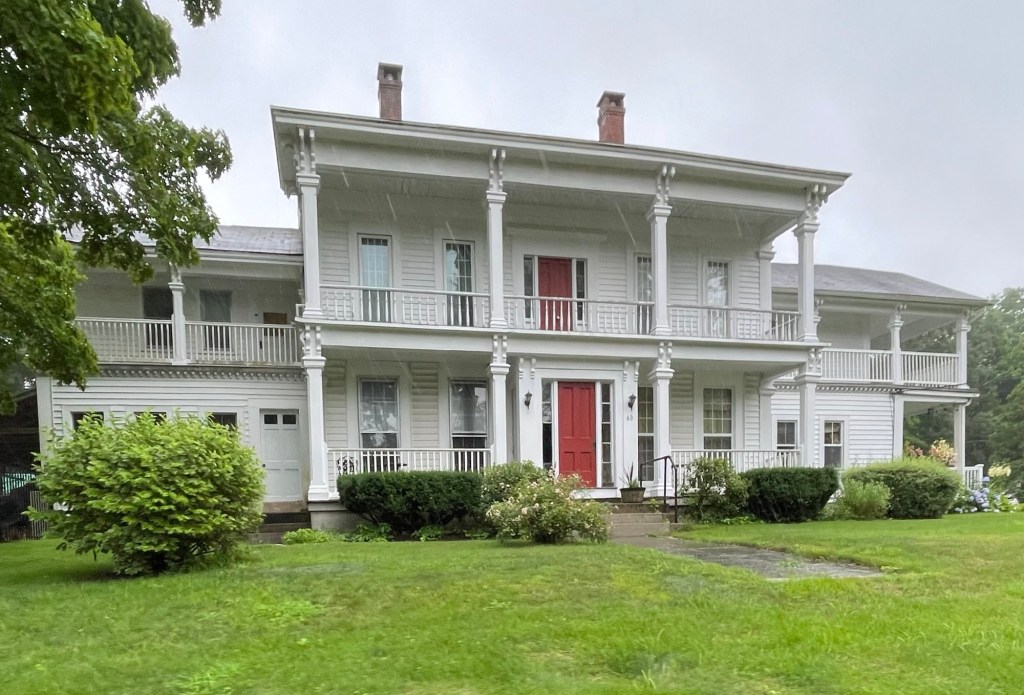
This handsome Italianate style house is located on Dog Hill Road in Killingly Center, Connecticut. The house appears to date to the years just before the Civil War and historic maps show that the property was owned by Harris Sayles, a co-owner of the large woolen mill in nearby Dayville. The home was built for Harris and his wife, Phebe. The house stands out for its two-tiered gallery of porches with large chamfered posts and paired brackets and has some Classical corner pilasters and door surrounds noting the transitional period from Classical Greek Revival style to the romantic Italianate style.
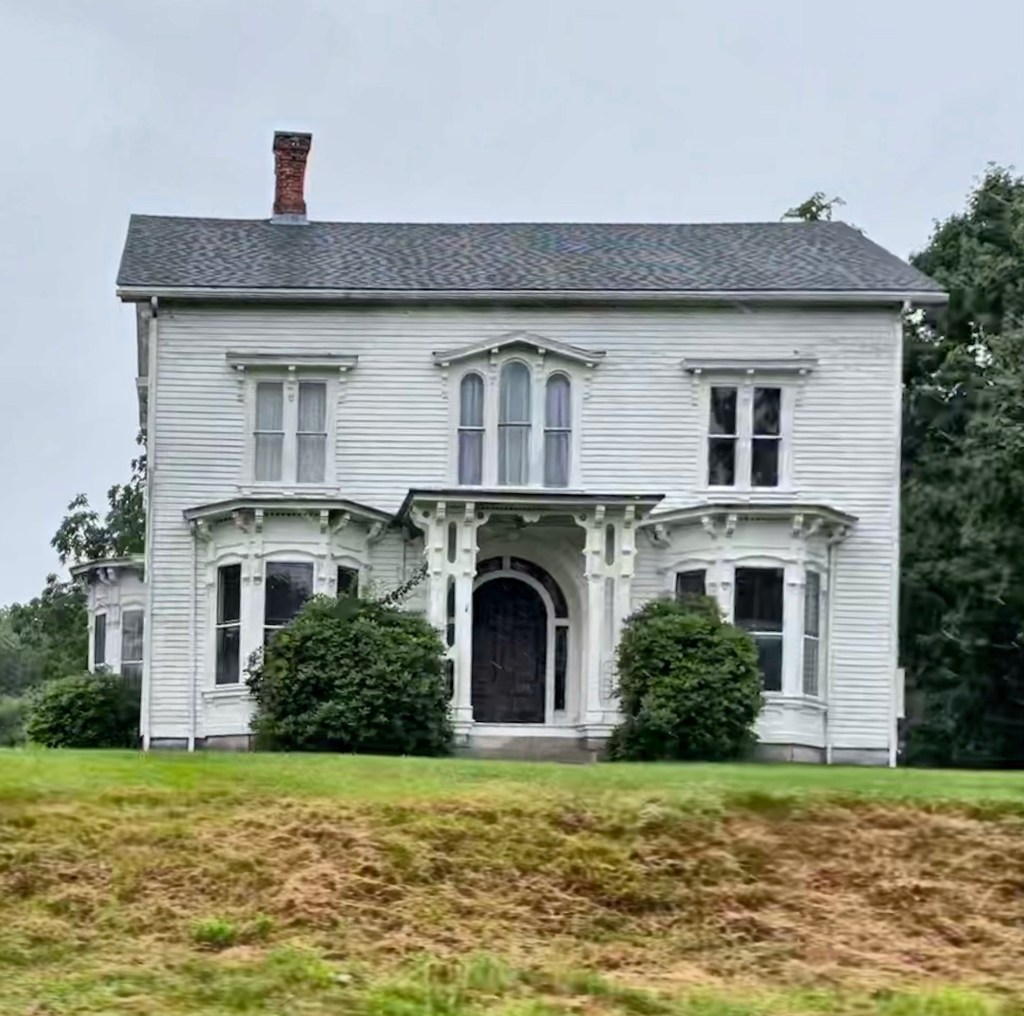
In 1865, Warren Potter, a Rhode Island-based manufacturer, built this Italianate style mansion in the Dayville section of Killingly, Connecticut for his family. Potter was employed at the Sayles Woolen Mill in a manager role and clearly did well for himself to afford such a home. Characteristic of the style, the Potter mansion features bracketed eaves and window lintels and round-arched tripartite windows over the center entrance. At the entry, the original round-arched doorway with glazed surround has survived in good condition and is a showstopper!
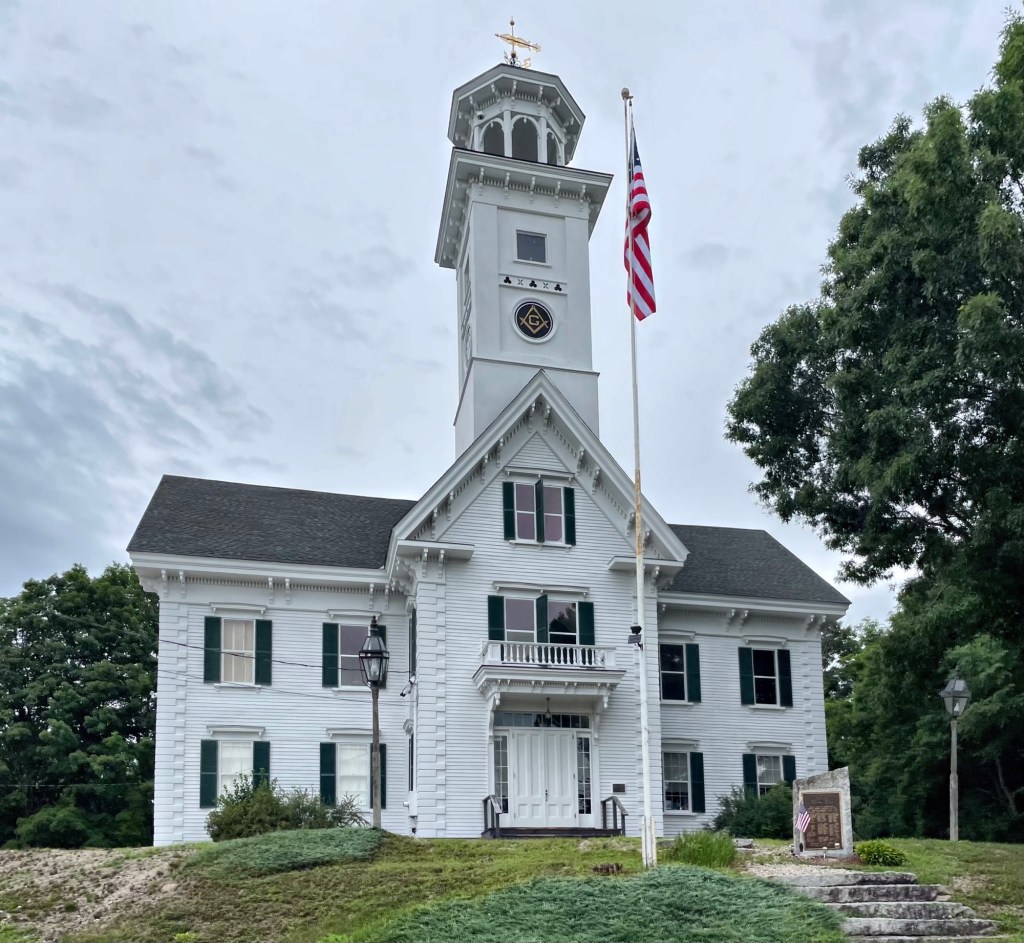
The New England Masonic Charitable Institute building is located in Center Effingham, New Hampshire, and is among the rural town’s most impressive structures. The structure was built in 1858 by the Charter Oak Lodge No. 58 of Free and Accepted Masons as a school to educate orphans of Masonic members, but they also admitted local students. It is the only known school building purposely constructed by Masons in the United States. Classes were conducted from 1861 to roughly 1882 with students boarding with local families. The impressive Italianate style building is dominated by a six-story bell tower supporting an octagonal cupola, and exhibits many architectural details including the corner quoins, paired eave brackets, and dentilled cornice. Charter Oak Lodge No. 58 sold the building to the Town of Effingham in 1891 for one dollar but retained rights to the second floor temple room in perpetuity. The walls and ceilings of the Lodge’s temple space are covered with trompe l’oeil murals attributed to Massachusetts painter Philip A. Butler. Images of classic sculptures, architectural details and Masonic symbols, including the All-Seeing Eye, are incorporated into the paintings. Heavily water-damaged in the late 1980s, they have since been restored. The building remains occupied by the Effingham Public Library, what a library building for a town of just 1,700 residents!
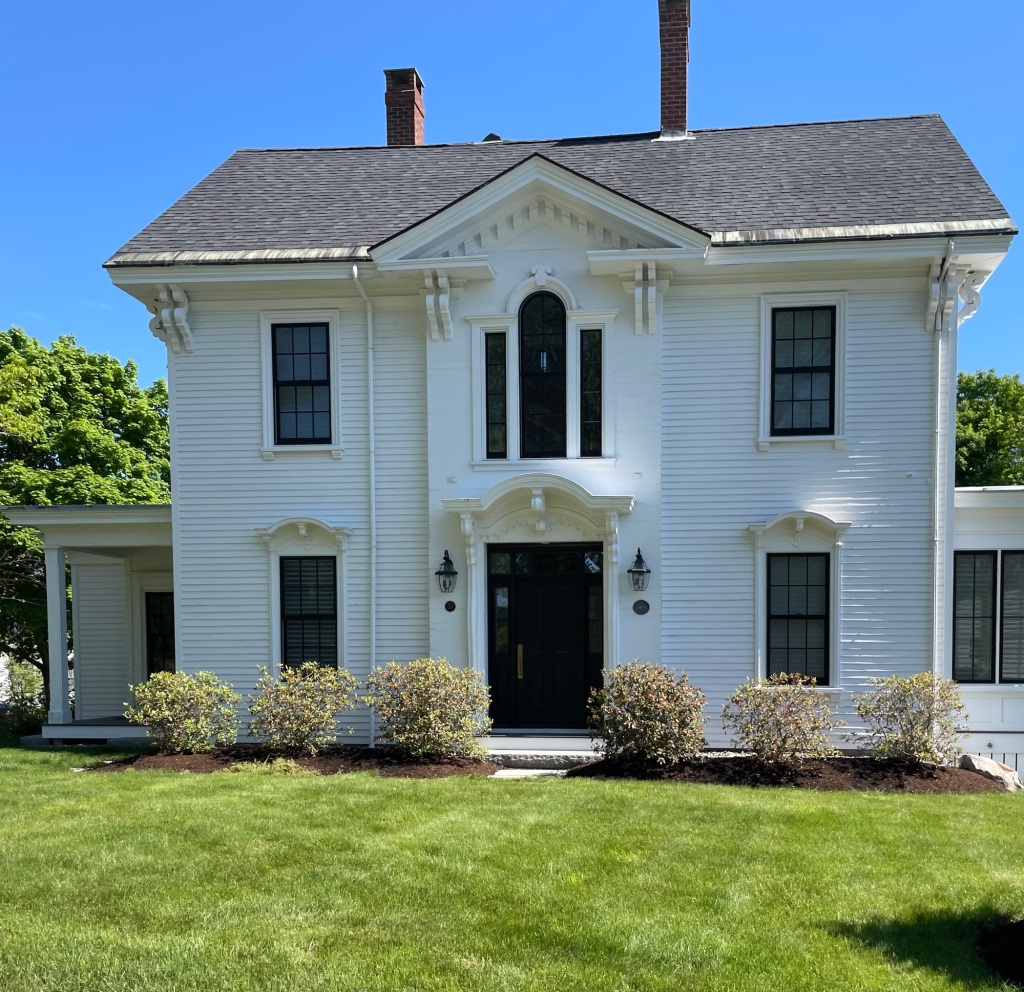
This stately Italianate style house is located at 46 Pascal Avenue in the quaint coastal town of Rockport, Maine. Built around 1855 by and for John Achorn (1825-1898) a ship-joiner and carpenter in town. Due to his profession in carpentry, Achorn is the likely culprit as the builder who designed the house and detailed the delicate pendant brackets, Palladianesque window, and the addition of the flushboard center bay.
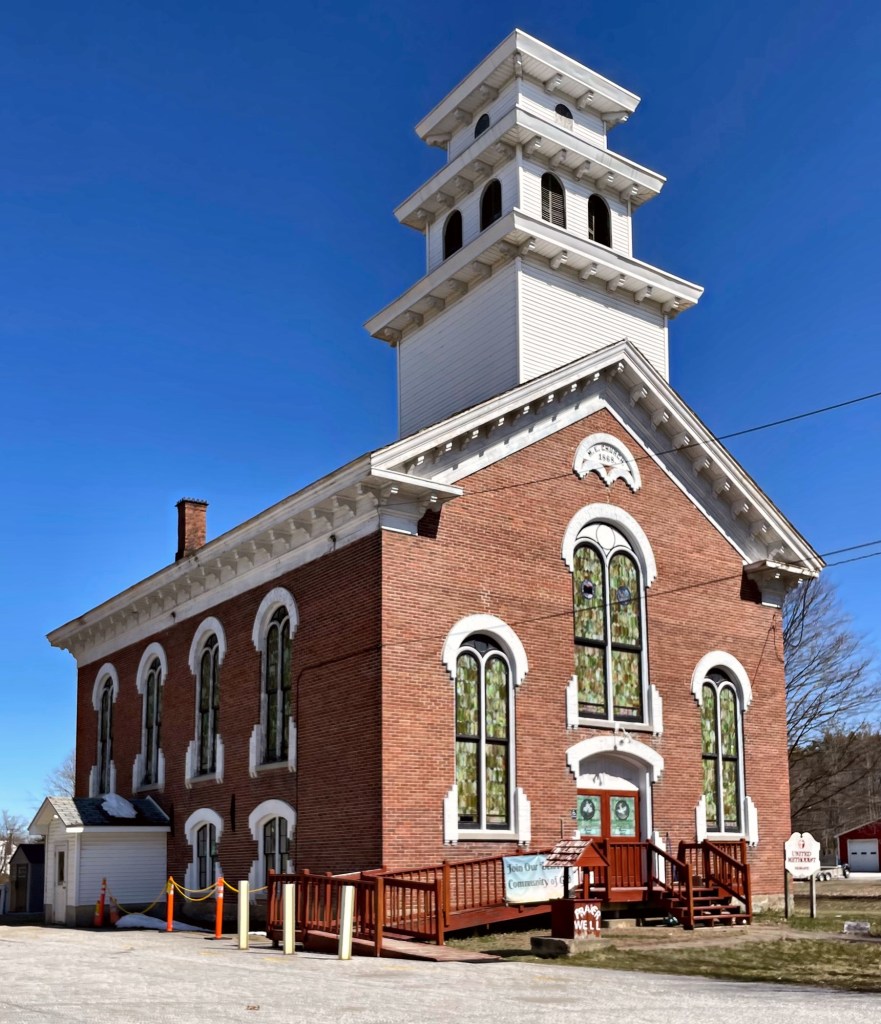
The Highgate Union Methodist Church in Highgate, Vermont was built in 1868 and is a high-style example of the Italianate architecture style in a relatively quiet part of the state. Built of brick, the church’s form is typical for small Vermont churches in the third quarter of the nineteenth century. Here, however, the builders were conscious of Italianate fashion, and they applied its round and segmental arches, corbels, and brackets, painted in a lighter color, with consistency and to remarkable effect.
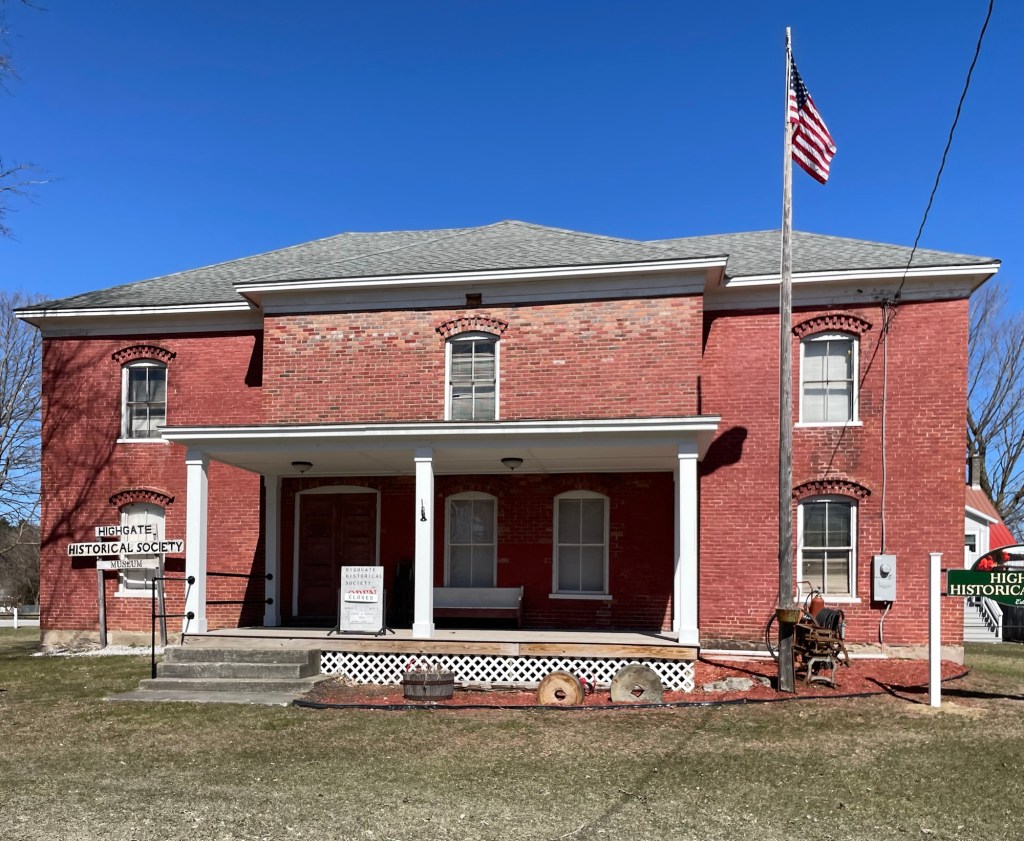
Highgate, Vermont sits at the Canadian border and first white settlement occurred in the 1780s. The new town of Highgate was named after the London suburb of the same name. The town grew in population and was largely a farming town with small industry along the the Missisquoi river. Most houses in town were built in the second half of the 19th century and into the 20th century, like this brick building in Highgate Center. The structure was originally built as a residence for James P. Place (1822-1888), who was employed as Sheriff beginning in 1868. The building may have even included a jail cell! After his death, the building became a catholic school and later became the home of the local Independent Order of Odd Fellows (IOOF) Hall. Today, the former Place House is home to the Highgate Historical Society and used as the town’s museum.
One of the earlier cottages built in the Oceanview summer colony of Rockport, Massachusetts is this charming example of a late-Italianate style residence on Phillips Avenue. Local lore states that the cottage was owned by Lucy Canney, the wife of Edwin Canney, who operated multiple granite quarries in town. Oak Knoll was possibly used as a boarding house for visiting guests of the quarries to stay at when inspecting the quality of the granite. The Canney’s sold off much of their property in the area by the end of the 19th century, and the cottage was later owned or occupied by Dr. Helen Morton (1834-1916), a Boston-based obstetrician and one of the early generation of women physicians practicing in Boston in the nineteenth century. Dr. Morton spent most of her time in a townhouse on Marlborough Street in Boston’s Back Bay with her possible partner, another obstetrician, Mary Forrester Hobart, but likely escaped to this cottage for some rest and relaxation for the summers.
Another of the more stately institutional buildings in the small village of Derby Line, Vermont, the Derby Line National Bank stands out as an uncommon brick structure on the town’s Main Street. The bank was founded in 1851, as the People’s Bank in Derby Line and in 1865, it converted to a national charter and became National Bank of Derby Line. The bank provided citizens access to credit and as a result several small-scale manufacturing businesses were started in town. This brick banking structure was built in 1874 in the Italianate style with round arched windows, bracketed eaves, and granite block quoins at the corners. The bank was absorbed into the Community National Bank, who occupy the building to this day.
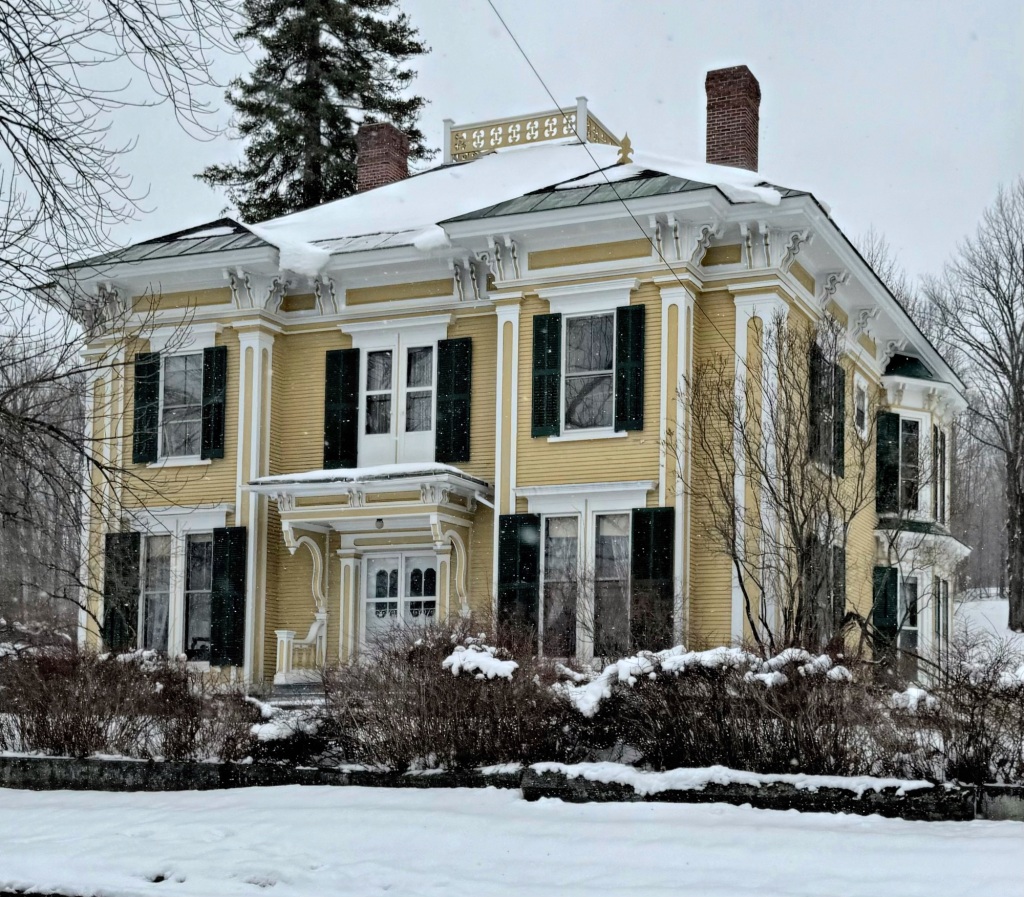
The Northeast Kingdom of Vermont is not necessarily known for stately houses, but no matter where you go in New England, you can always find interesting old buildings. This is the Cobb-Foster House of Derby Line, Vermont. The house was built in 1861 for Walter B. Cobb, a director of the People’s Bank of Derby Line. After later owners bought and sold the property in quick succession, the house was purchased by Stephen A. Foster, a lawyer and judge who would eventually move out of town, selling the property to Austin Theophilius Foster, a nephew. As architectural styles were later to arrive to rural parts of the country, this house expresses the Italianate style, but with holdover features from the Greek Revival style, which was already a decade out of style in 1861 around Boston and other well-connected areas.



 Buildings of New England