Lowney Chocolate Factory // 1903

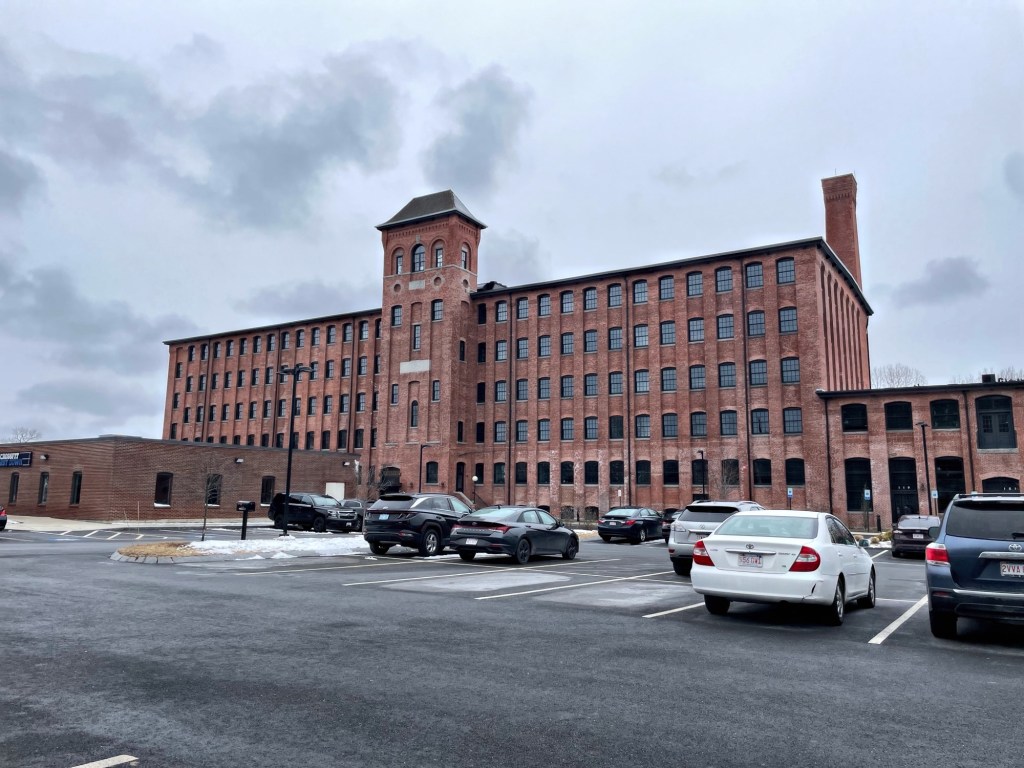
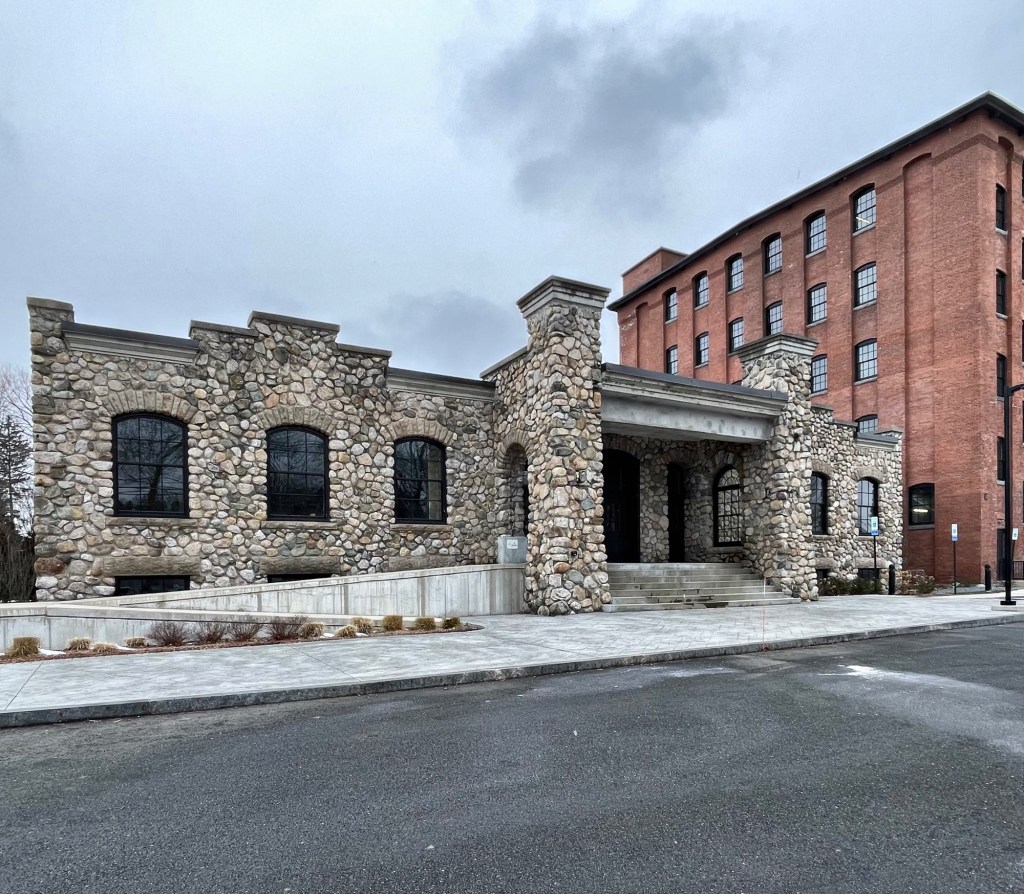
The Lowney Chocolate Factory is a historic industrial complex in Mansfield, Massachusetts and was established there after town officials took advantage of rail access provided by the Boston and Providence Railroad and enticed businesses to establish themselves in Mansfield. The Walter M. Lowney Company was a chocolate and candy business founded in Boston in the early 1880s by Walter M. Lowney, who started his business by manufacturing chocolate bonbons. The company built offices and factories in Boston, Montreal and here in Mansfield, where they would ship out boxed sweets to stores all over the country. The Mansfield factory was designed by the architectural and engineering firm of Dean & Main in 1903. The firm was
comprised of partners Francis W. Dean and Charles T. Main, who had offices in Boston and specialized in mill design and engineering from 1893 to 1907, originally designing Lowney’s Boston factory in the North End. A later fieldstone addition was added in 1910 and housed the company’s office and shipping facilities. After Walter Lowney died in 1921, the Walter M. Lowney Company continued to operate under the ownership of Lowney’s wife. In the 1930s the factory property was wholly purchased by the Rexall Drug Company, who renamed the Lowney company, United Chocolate Refiners. The Mansfield factory was later owned by Nabisco to make chocolate for oreo cookies for a number of years until it again changed hands. The factory had been largely empty since 2010 until it was recently converted to mixed-income housing (the best kind of redevelopment)! Who doesn’t love a happy ending?
Dorchester Pottery Works // 1896

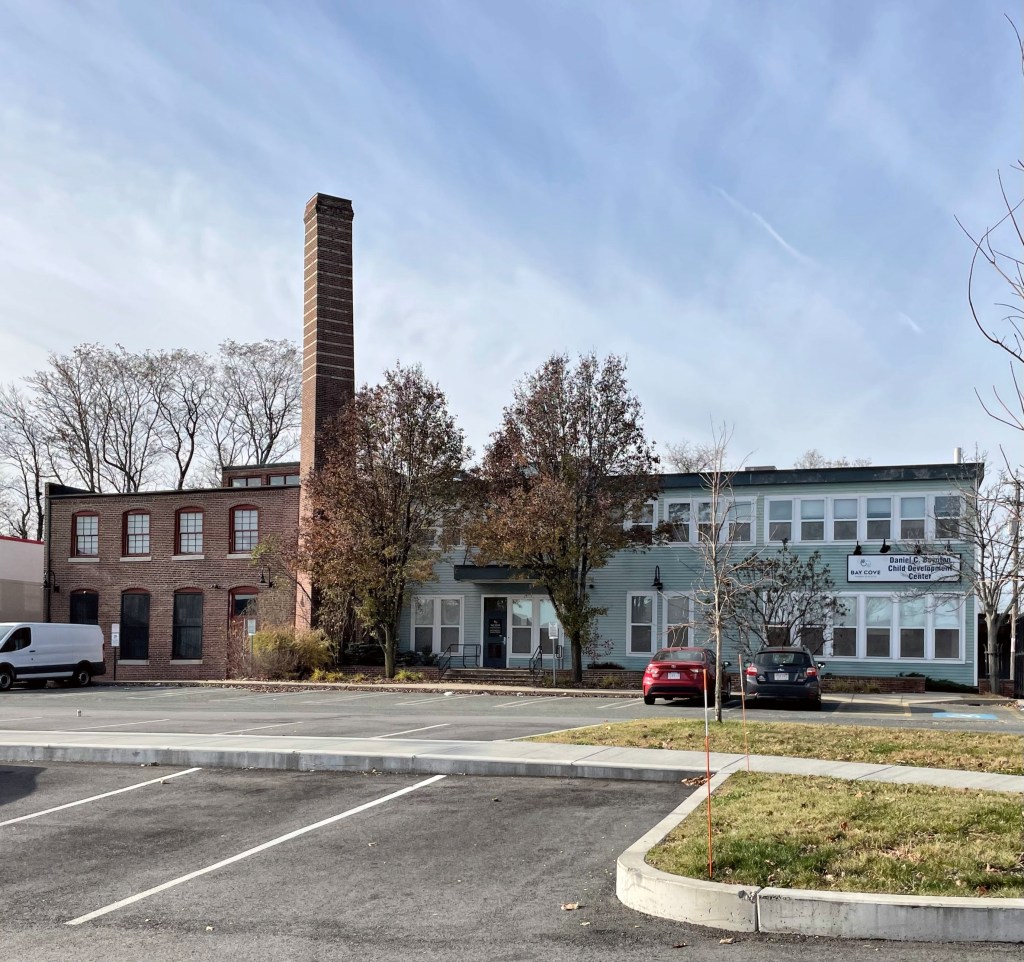
Founded in 1895 by George Henderson, the Dorchester Pottery Works successfully produced commercial and industrial stoneware for many years and its building is a significant piece of Dorchester’s industrial heritage. Located in the Harrison Square/Clam Point area of Dorchester, the building began as a two-story wood-frame industrial structure for the young company. It saw immediate success and Henderson oversaw the construction of a large, brick addition which housed an enormous beehive kiln 28-feet in diameter of his own design made of bricks. Here he could fire pottery and other clay goods from his modern facility. Besides clay pots, tableware, and jugs, the company became known for the production of foot warmers, which became known as the ‘Porcelain Pig’ or ‘Piggy’. Foot warmers were widely used in the days before central heating. These clay vessels would be filled with hot water and placed under bedding for overnight warmth. The company made foot warmers until 1939. The company saw dwindling sales after WWII, and eventually closed in 1979. The structures began to decay and the towering smokestack and brick structure was open to the elements. The local neighborhood advocated for its preservation, listing it on the National Register of Historic Places and protecting it as a City of Boston Landmark. After decades of neglect, Bay Cove Human Services acquired the property in 2001 and renovated the building for its own use, keeping the kiln room and the kiln itself intact for community exhibitions. Today, it provides an important historic survivor of Dorchester’s industrial past.

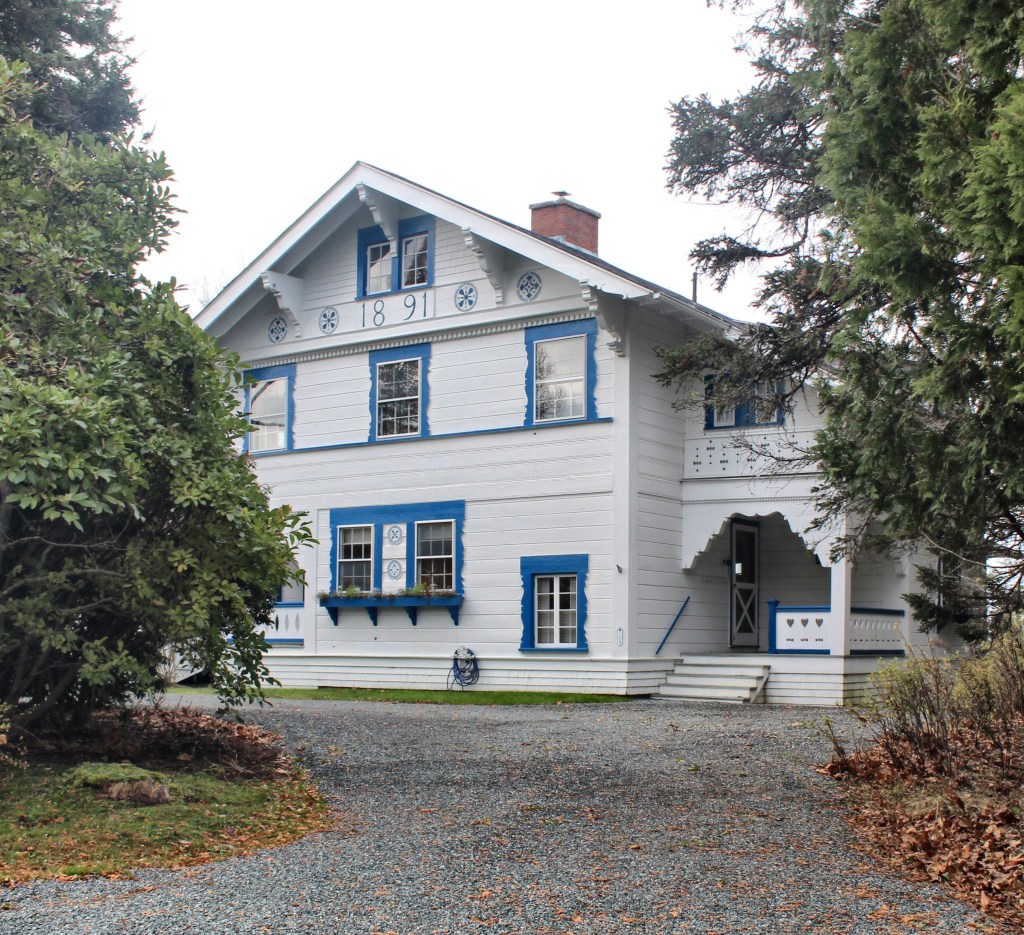
Red Chalet // 1891

Philadelphia-based architect Lindley Johnson was hired as the official company architect by the Gouldsboro Land Improvement Company’s Grindstone Neck summer colony. As a result, he became the chief tastemaker for the bucolic neighborhood of summer cottages, chapels, and an inn (since demolished). Johnson would design a majority of the cottages in the Shingle style, taking cues from the natural topography and rugged coastlines, but he did deviate from that style a couple times; most notably for his own cottage, “Red Chalet”. While no longer red, the cottage stands out as an extremely rare example of a Swiss Chalet, with its sloping gable roof with wide eaves, exposed stickwork and oversized brackets, decorative carving, and shiplap siding.

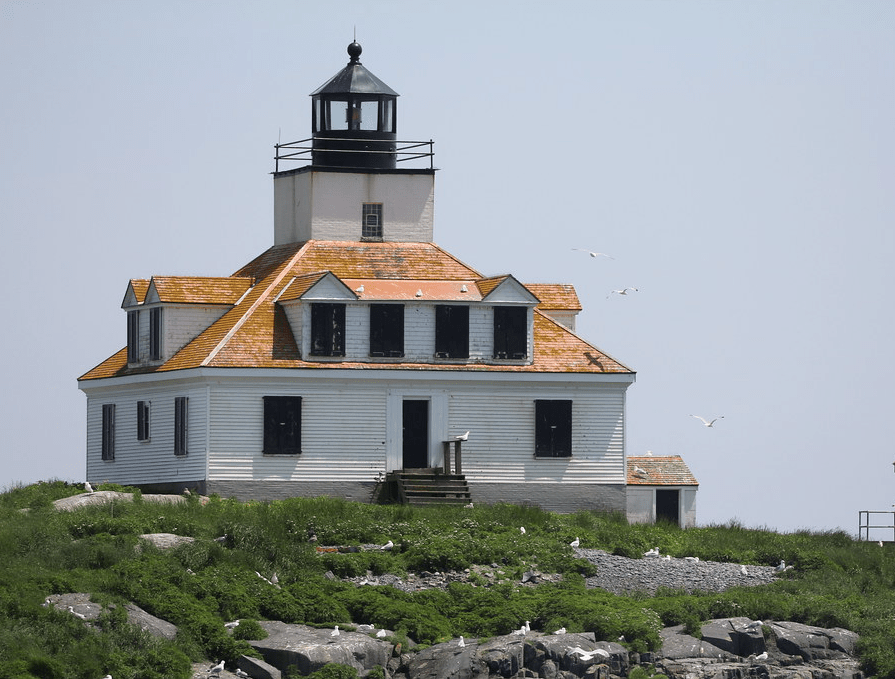
Egg Rock Lighthouse // 1875

The Egg Rock Lighthouse sits in the middle of the Mt. Desert Narrows of Frenchman Bay between Bar Harbor and Winter Harbor. The lighthouse was constructed in 1875 to assist the already built Winter Harbor Lighthouse a short distance away, to provide guidance for the increased ferry traffic to Bar Harbor, which was quickly becoming a prominent summer colony. The architecturally unique lighthouse is comprised of a square tower projecting through the center of the square lighthouse keeper’s house, its unlike anything I have seen before. The station was automated by the United States Coast Guard in 1976, at which time its ancillary structures except the fog station were torn down. The light continues to be managed by the Coast Guard, and is not open to the public; the island and buildings are owned by the United States Fish and Wildlife Service.

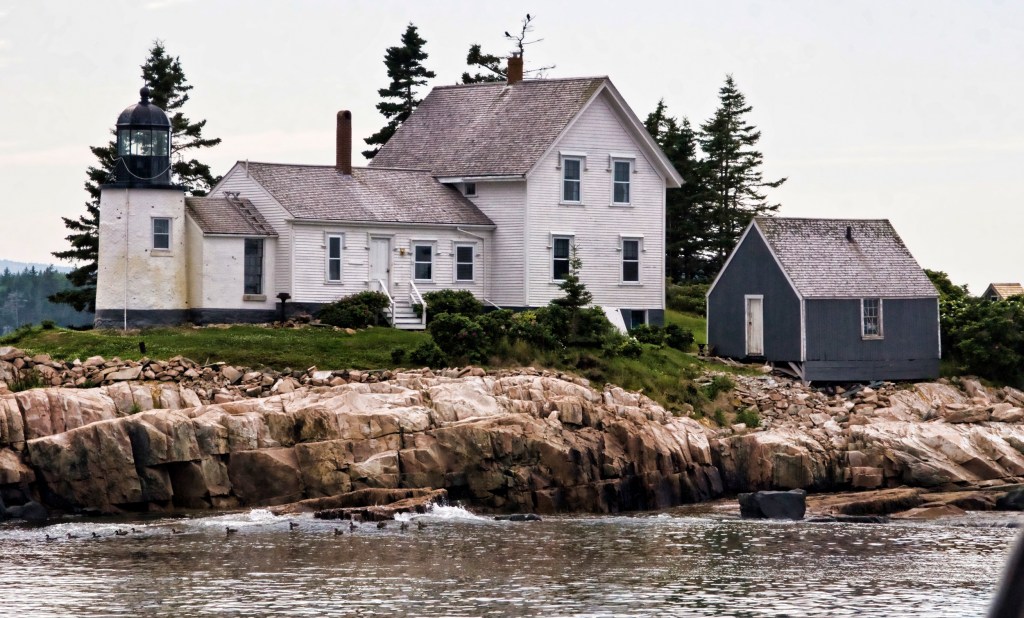
Winter Harbor Lighthouse // 1856

Built in 1857, Winter Harbor Light is one of Maine’s enchanting historic lighthouses dotting the rugged coastline. The lighthouse was built by the United States government to aid navigation for the local fishing fleet, an important piece of the local economy there. The light tower, built in 1856, is a round brick structure topped by an original octagonal lantern house with an iron walkway and railing around it. A brick single-story workroom projects from the tower. The keeper’s house is a two-story wood-frame structure, which was built in 1876 (along with the ell) to replace the original keeper’s house. The light was decommissioned in 1934 and sold into private hands, but in its seventy-six years of service, nine keepers and their families lived on the island. It remains a visual landmark on its small island in Mt. Desert Narrows on the drive along the Schoodic Peninsula in Acadia National Park (Winter Harbor side). What are your favorite lighthouses in Maine?

St. Sergius Chapel // 1932

Formerly known as “Churaevka,” the community known today as Russian Village in Southbury, Connecticut, was established in 1925 as an artistic community for Russians who fled to America after the Russian Revolution of 1917. The village was created by two Russian writers, Count Ilya Tolstoy, the son of Leo Tolstoy (the author of War and Peace and Anna Karenina), and the famous Siberian novelist George Grebenstchikoff. Although Tolstoy was first to discover the area while visiting his translator in Southbury, it was Grebenstchikoff who dreamed of establishing a cultural center and planned to create a rural community of cottages where Russian writers, artists, musicians and scientists could live and flourish statestide. The village was named after a mythical Siberian village mentioned in the works of Grebenstchikoff and the centerpiece is this chapel, St. Sergius Chapel, which was built in 1932-33 from plans by Nicholas Roerich. The small square-plan chapel was likely built of stone gathered from the neighborhood.

Adin Wheeler House // 1790

The Adin Wheeler House is significant as a rare house form found in this part of New England. Located in Southbury, Connecticut, the property includes the main house, a barn, and the wheelwright shop, a barn-like structure. The house is a 1-1/2-story Cape style wood-frame structure, with a front porch across the front that is sheltered by a bell-cast extension of the main roof. This type of porch roof is uncommon in Connecticut, being reminiscent of Dutch rather than English construction methods. The dwelling was built for Adin Wheeler, who owned the millworks on the nearby falls with business partner Enos Candee, a business partner (and brother-in-law) whose house also stands nearby. Theodore Wheeler, Adin’s great-grandson, built the wheelwright shop in the late 19th century, as well as the major addition to the house, which served as a tap room and public meeting space. The property is a well-preserved collection of 18th and 19th century structures.

Clements Apartment Building // c.1885

Brookline is pretty great as you can find unique and well-preserved examples of nearly every type of building in almost every architectural style! Staying in Brookline Village, this apartment building stands out as one of the best panel-brick apartments I have seen. The property was developed in the mid-1880s by Thomas W. Clements, who served in the Army during the American Civil War and later settled in the Boston area working as a dentist. Thomas married Lydia R. Clements, who is much more interesting than her husband! She was a graduate of the Boston University School of Medicine and worked locally for years, but wanted more. In the spring of 1898, she set out with a party of men and women, determined to make their fortune in the gold fields of the Klondike. During the months long trek, all of the other women and some of the men in her party left the expedition before reaching their goal, but Lydia Clements persevered and became one of the first white women — possibly the first from the East — to cross the Chilkoot Pass into the Klondike region. She never made a fortune, but upon returning, she was more spiritual, and got involved in the occult philosophy of Prof. Charles H. Mackay and his West Gate School of Philosophy in Boston. She used her new learnings to go back to Alaska to make her fortune, but there is no indication that Clements ever did make her fortune. She did however, remain in Nome and elsewhere in Alaska for more than a decade, hiring men and mining tin and gold. She retained her Brookline residence here on Davis Avenue and travelled back and forth across the continent many times before returning to Brookline, before dying there in February 1927.

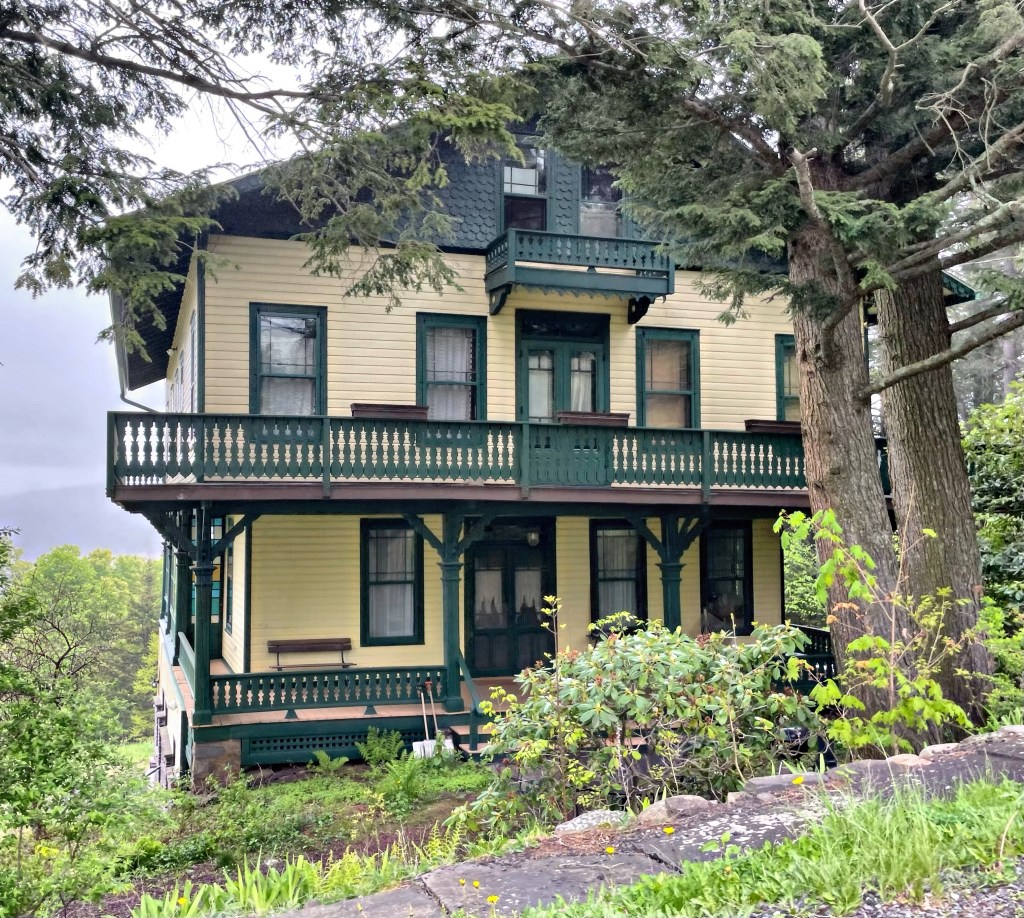
Keller Cottage // 1896

It wouldn’t be a German-developed summer colony with at least one Chalet-style summer cottage, would it? The Keller Cottage in Elka Park, New York, was built in 1896 for John Keller (1867-1924) and his German wife, Caroline Goehring (1866-1917) who summered in the colony for a few months of the year from Brooklyn, N.Y. The 3,500-square-foot, 6-bedroom “cottage” includes a sunroom with stained glass, original unpainted wood-paneled walls and oh, just some jaw-dropping views of the Catskill Mountains for good measure!

Tamsen Cottage // 1893

Photo from 2017 real estate listing

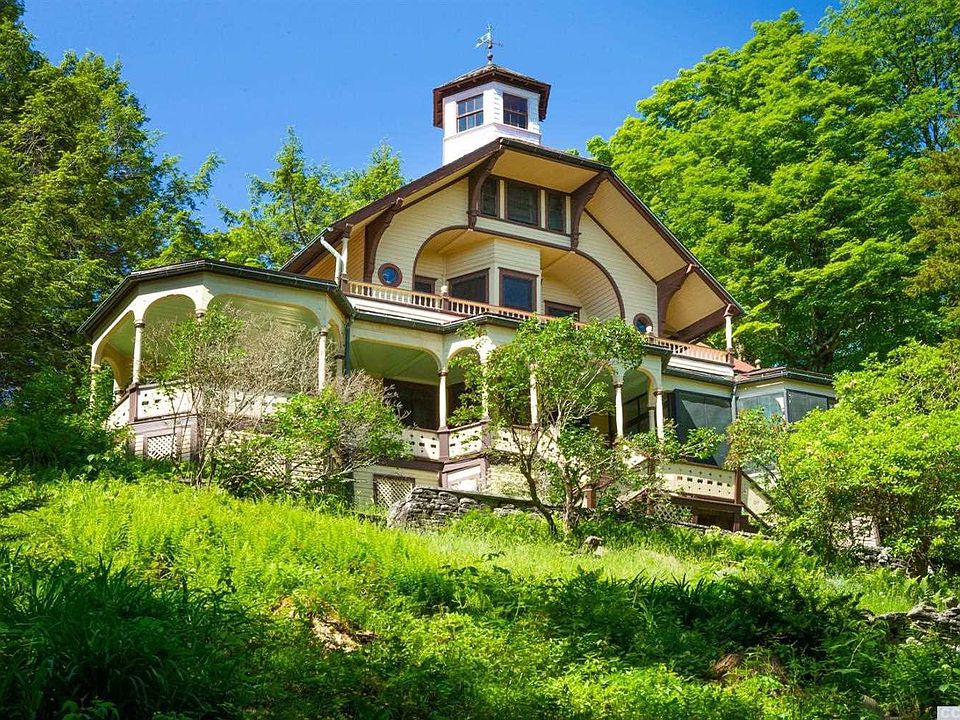
One of the more unique cottages in New York’s Elka Park summer colony in the Catskill Mountains is this charmer, the Tamsen Cottage. The cottage was built in 1893 for Edward Tamsen (1849-1907), the Sheriff of New York County from 1895-96 until Governor (and later Vice-President) Levi Parsons Morton removed him from office. The former Sheriff purchased this home and summered here with other German-American wealthy New Yorkers until his death in 1907. The chalet-style house has been exceptionally preserved since, and was listed for sale in 2017 for a mere $425,000. Wow!