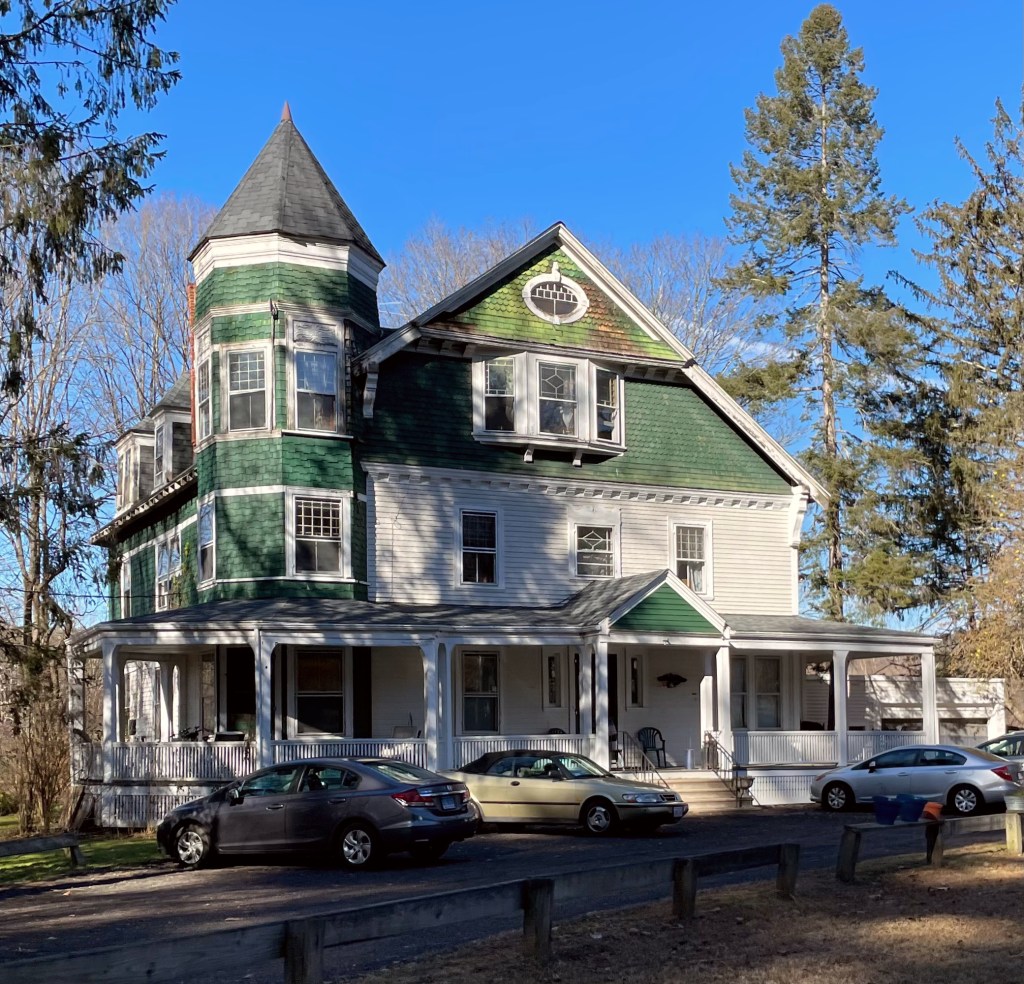
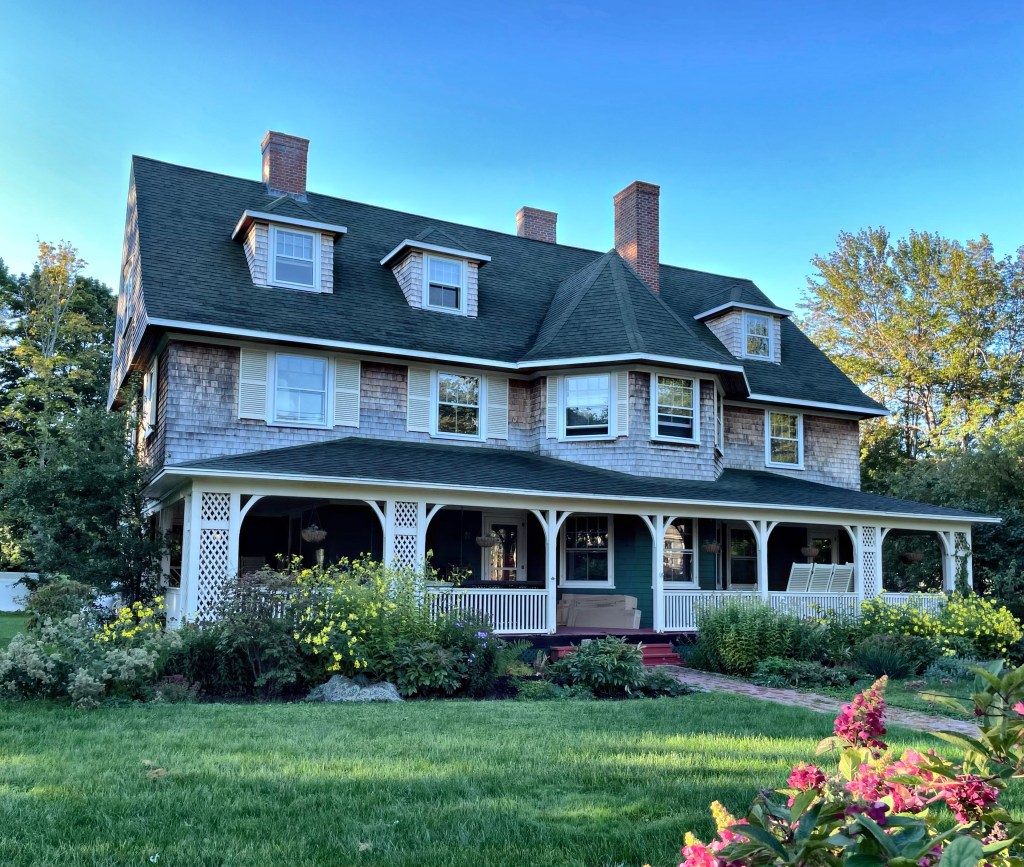
This large Queen Anne Victorian house in Canton Center was built for Benjamin Franklin Case (1861-1931), a banker and businessman who incorporated the town creamery. He made his fortune harnessing the rural character of the village, creating the Canton Creamery, where farmers could package and sell their dairy products to the rapidly growing communities nearby. Case was credited as bringing the telephone to town, with his office in his home serving as a switchboard room. He is also known as the first person in town to own an automobile. After his death, the property was used by his daughter Ruby as a vacation house. After WWII, she realized it was too much house for her to upkeep, and she converted the single family home into apartments.
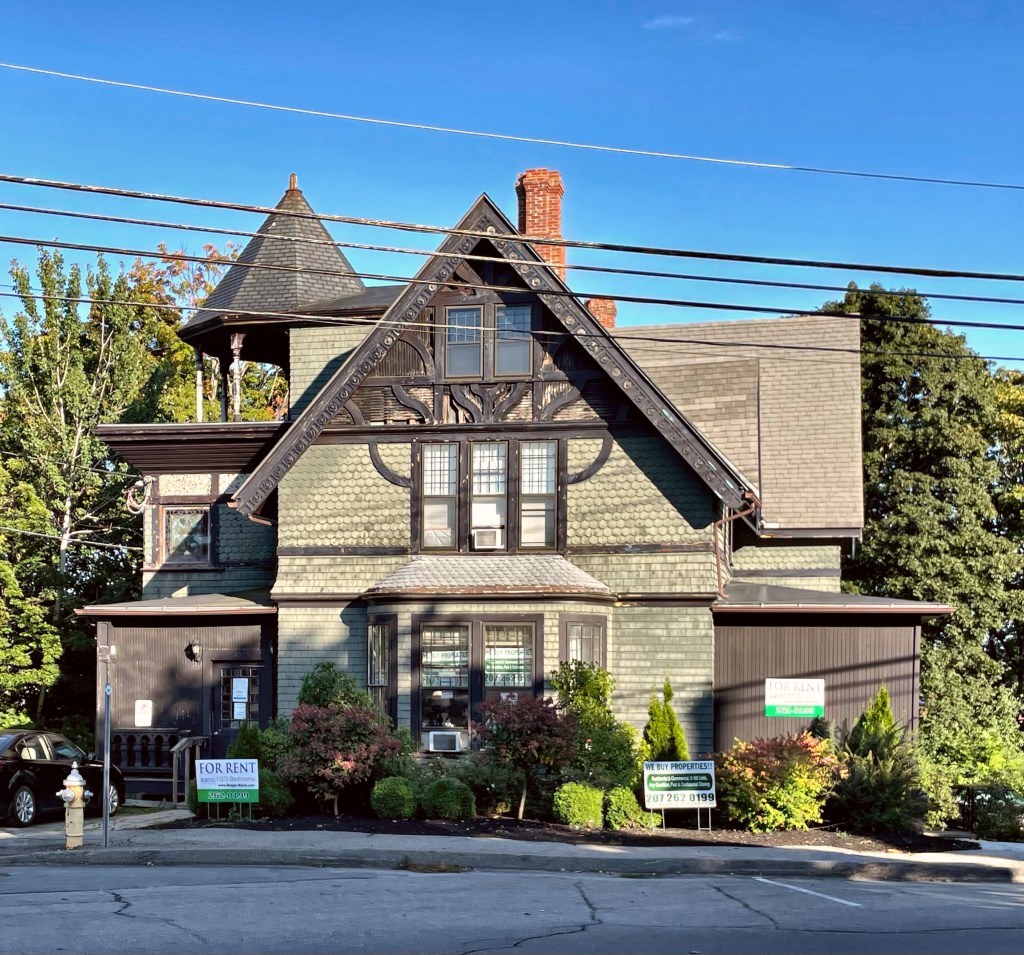
One of the largest homes I found in Bangor, Maine, was this Queen Anne stunner on High Street, just outside Downtown. After doing some research, I learned that the house was built in 1847 for Oliver Frost, a businessman involved in the lumber business. The home was likely Greek Revival in style based on the time period of the home and nearby houses. Frost is probably best known for his 1869 quote “The time may soon arrive when the three great cities of North America — Bangor, New York, and San Francisco — shall be representatives of the wealth, population, intelligence, and enterprise of the eastern, central and western divisions of our country.” He believed that the lucrative timber industry which led Bangor to become known as the “lumber capital of the world.” The city was home to numerous “lumber barons” and the river was often “jam packed with timber and lumber”. Even the nickname “Queen City of the East” evoked the era’s prosperity. Henry David Thoreau remarked, in 1846, that Bangor was “overflowing with the luxuries and refinement of Europe.” After his quote, the city began a period of decline, when the timber industry moved westward to the Great Lakes region and later, the Pacific Northwest. Frost’s home was later purchased by Egerton R Burpee, an engineer who worked in railroads. He hired Boston architect Arthur H. Vinal, to upgrade and enlarge the house in the then fashionable Queen Anne style we see today. The home has since been converted to commercial use with apartments inside.
Located on stunning West Broadway in Bangor, Maine, the Smith-Miller House stands out as a beautiful blending of the Shingle and Queen Anne styles. Built in 1893 from the designs of Connecticut architectural firm Cook, Hapgood, and Company, the home was featured in The American Architect and Building News journal for its design success. The home is clad with continuous cedar shingle siding, with a prominent corner tower, wrap-around porch, and porte-cochere, all together provide complexity and intrigue on the street of large homes. What do you think of this home?
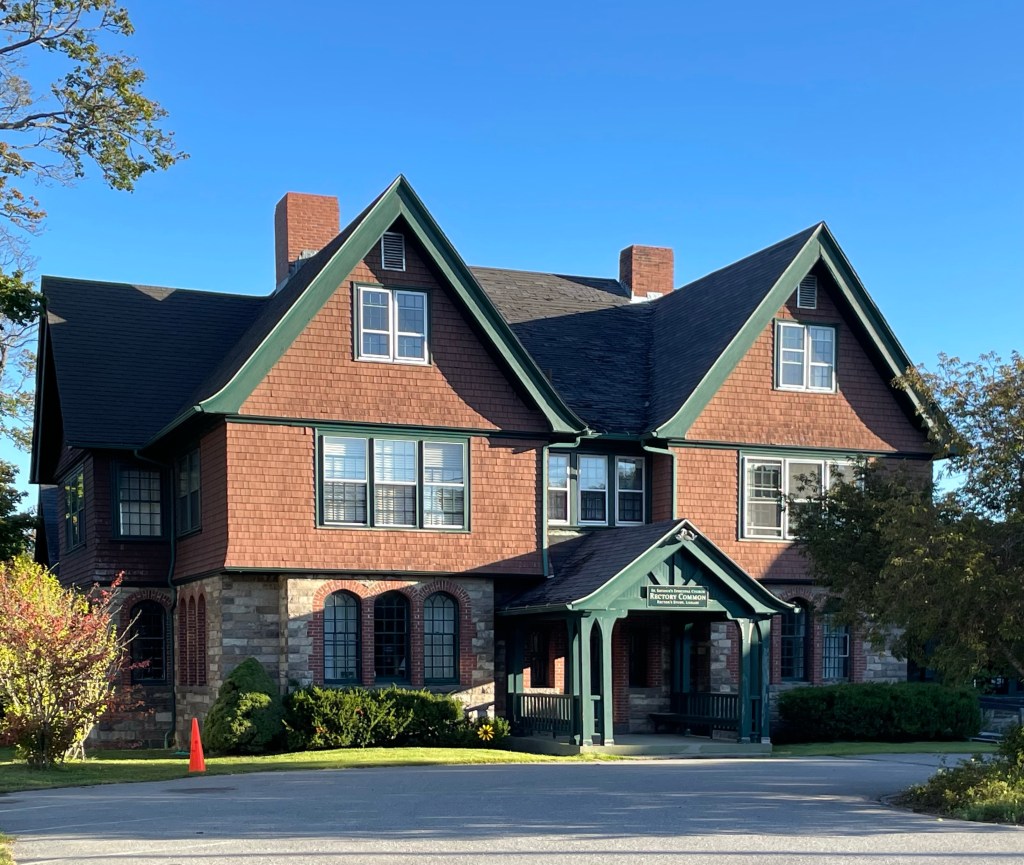
Standing adjacent to the beautiful St. Saviour’s Episcopal Church in Bar Harbor (last post), the church’s Rectory building fits very well into the landscape here. Built in 1898, the rectory is a two-and-a-half-story stone and frame home with a projecting entrance porch at the facade framed by a pair of steeply pitched gables. The Rectory was designed by Westray Ladd who grew up in the area, and worked in the office of Wheelwright & Haven in Boston, Massachusetts as well as with William Emerson and Peabody & Stearns before opening up a firm in Pennsylvania.
Built in 1901, “The Crossways” is one of Bar Harbor’s most stunning summer cottages built in the 20th century. The home was designed by the illustrious Boston architectural firm of Andrews, Jaques and Rantoul, possibly as part of the of the William B. Rice estate. The home appears to have been rented in early years until it was occupied by Edward and Esther Mears. Edward ran a hotel in town during the summer months before getting involved in real estate, where he made much more money. The home blends together the best of architectural styles of the time from Queen Anne to Shingle Style, and remains in an excellent state of preservation.
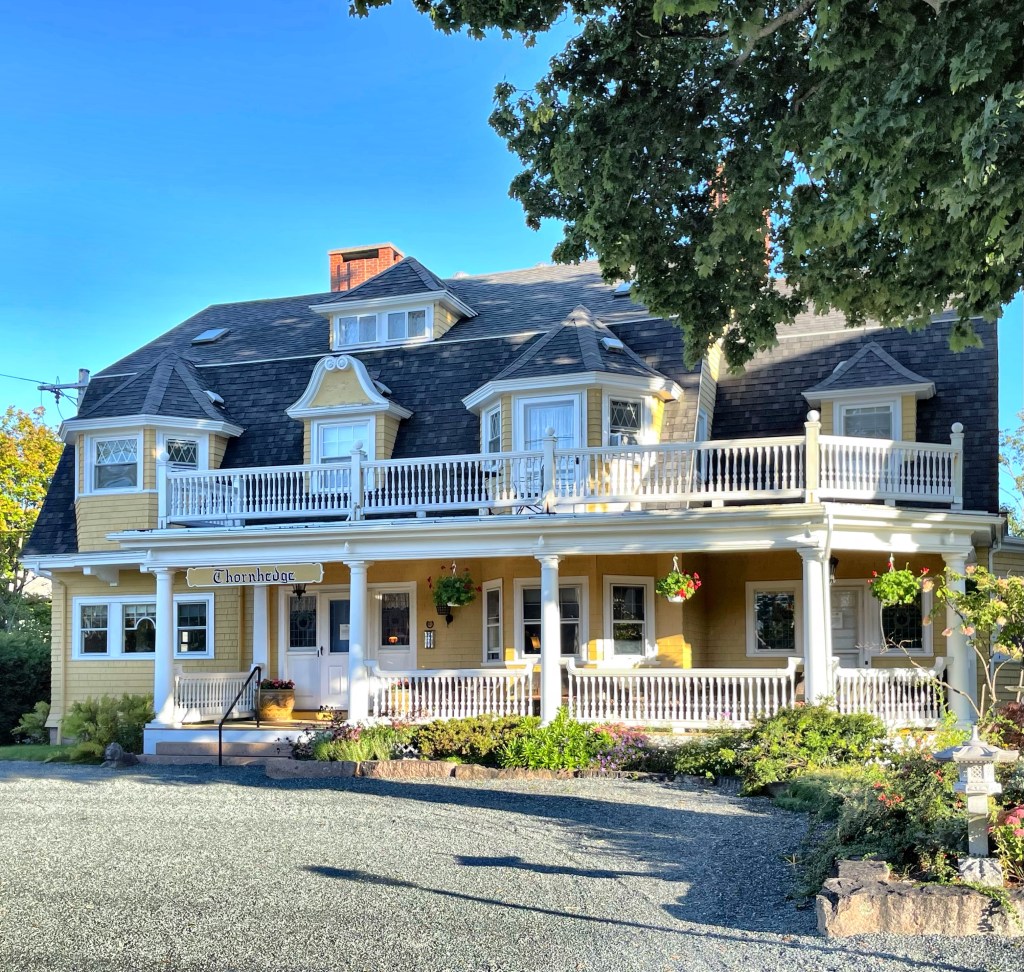
Located next door to “The Poplars” (last post), another summer cottage Thornhedge, stands out for its architectural splendor and great state of preservation. Similar to “The Poplars”, the home was built in 1900 for Lewis A. Roberts, a retired book publisher from Boston. Roberts ran the publishing house with his brothers, and they published work by authors including Emily Dickinson, Fyodor Dostoyevsky and George Sand, the first American edition of Treasure Island by Robert Louis Stevenson, and had their greatest commercial success with Little Women by Louisa May Alcott. The business was purchased by Little and Brown Publishing in 1898. Lewis Roberts died in 1901, only a year after completing Thornhedge, and the house came under the care of his son, Lewis Niles Roberts. Mr. Roberts kept the house as a summer residence until 1920, then sold it to the family of William F. Frick, a prominent judge from Baltimore. The home became an inn by the 1970s. Thornhedge is a Queen Anne style cottage which was originally organized with the first and second floor serving as the living quarters and the top and bottom floors for the servants. The laundry, servants dining hall, and kitchen were out of sight in the finished basement, with a dumb-waiter to bring hot food to the butler’s pantry. The third floor was the servants’ living quarters.
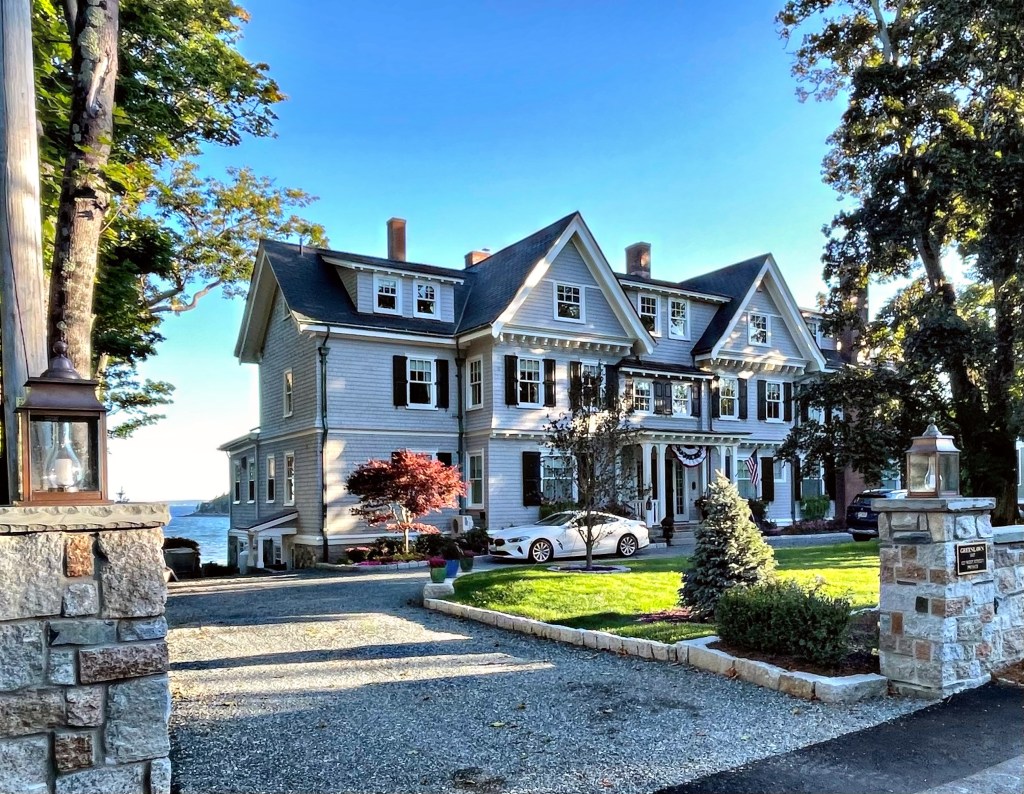
West Street in Bar Harbor was laid out in 1886, and developers laid out house lots on both sides, with larger, more expensive land right on the water. One of the earliest homes built on the street is Greenlawn, constructed in 1887 for William Rice, an industrialist who co-founded Rice & Hutchins, a shoe manufacturing company with main offices in Boston. The architectural firm of Rotch and Tilden, comprised of partners Arthur Rotch and George Thomas Tilden. Both had studied at the Massachusetts Institute of Technology and at École des Beaux-Arts in Paris. Both had worked at the architectural firm of Ware and Van Brunt, and would be best known for their Gilded age mansions in New England. By 1896, the cottage was owned by William L. Green, which is likely when the cottage’s name “Greenlawn” stuck. The house recently sold for $4.25 Million and the interiors are gorgeous!
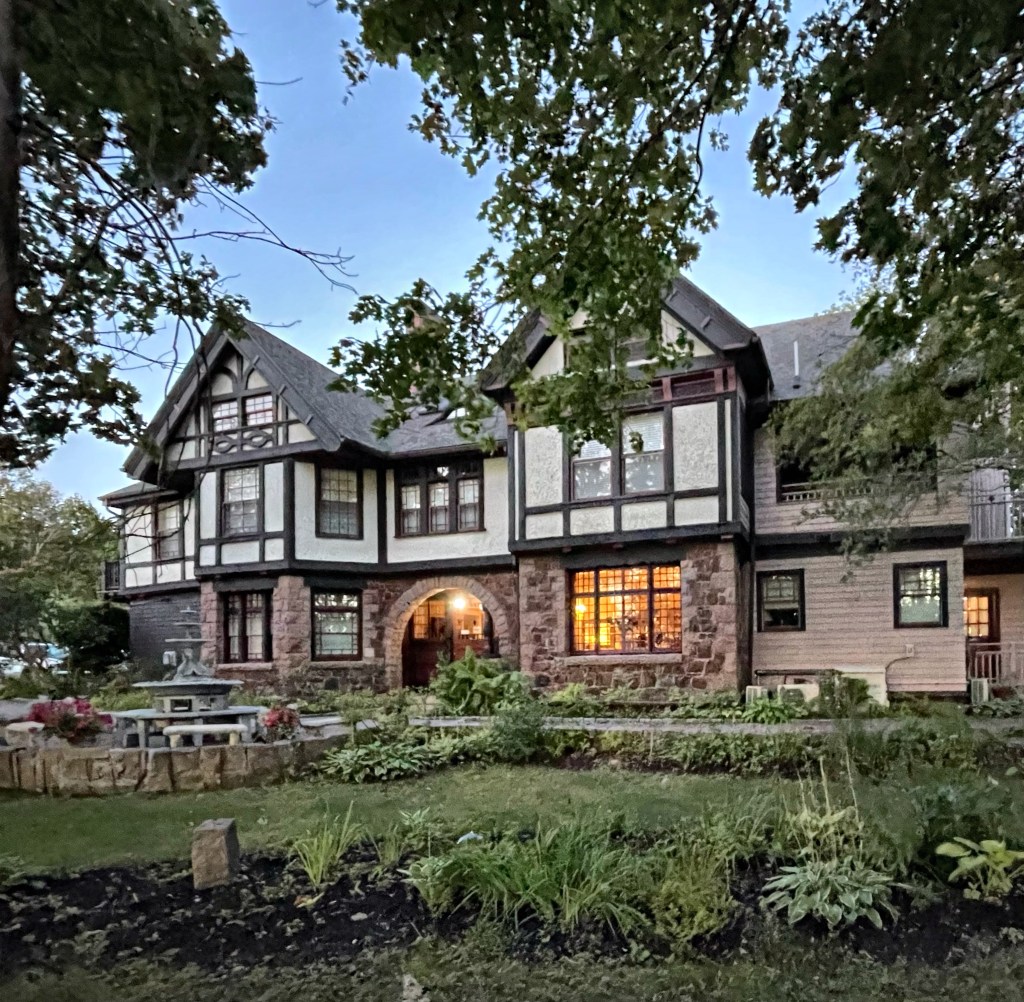
One of the earlier summer cottages in Bar Harbor is Ullikana, a Queen Anne style cottage, verging on Tudor Revival style. The cottage was built in 1885 for Alpheus Hardy (1815-1887) a trader in Boston. Hardy gained his wealth in shipping. He got his start by buying a small and fast ship that could make the voyage to the Mediterranean and back so quickly that he and his other investors captured much of the fruit importing business. His company would grow to have over 15 ships going as far as China. Hardy hired the Boston architectural firm of Cummings & Sears to design a new summer cottage in Bar Harbor, Maine, an ever-growing rival to Newport. He could only enjoy the cottage for two years, when in 1887, while cutting coupons, he dropped the scissors, the sharp points piercing his leg. Blood poisoning followed and death resulted. The summer cottage was owned by his family as a rental cottage for a number of years until it was purchased by the Maine Central Railroad, and rented to the recently widowed Princess Miguel de Bragança of Portugal, the former Anita Rhinelander Stewart. The cottage is now an inn.
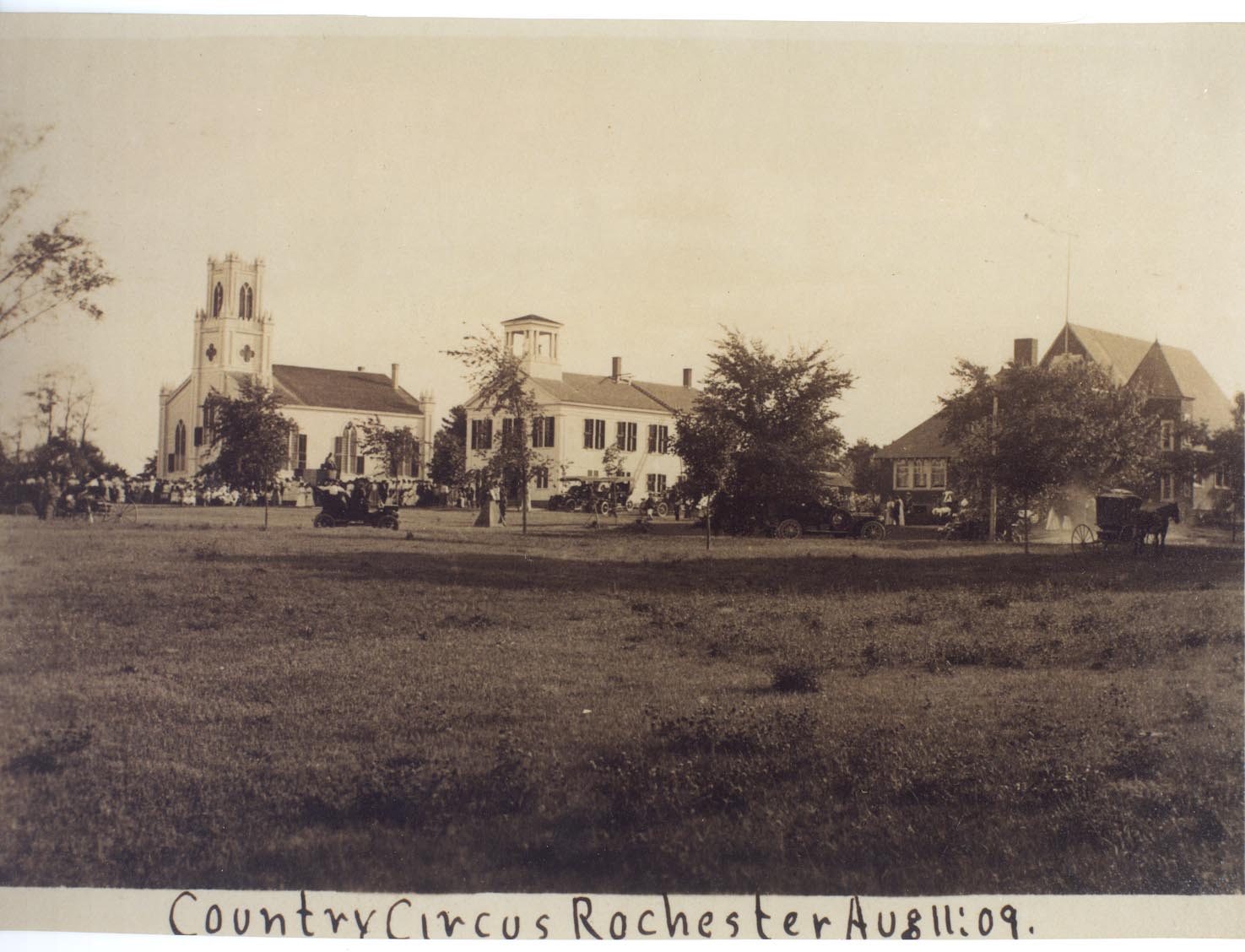
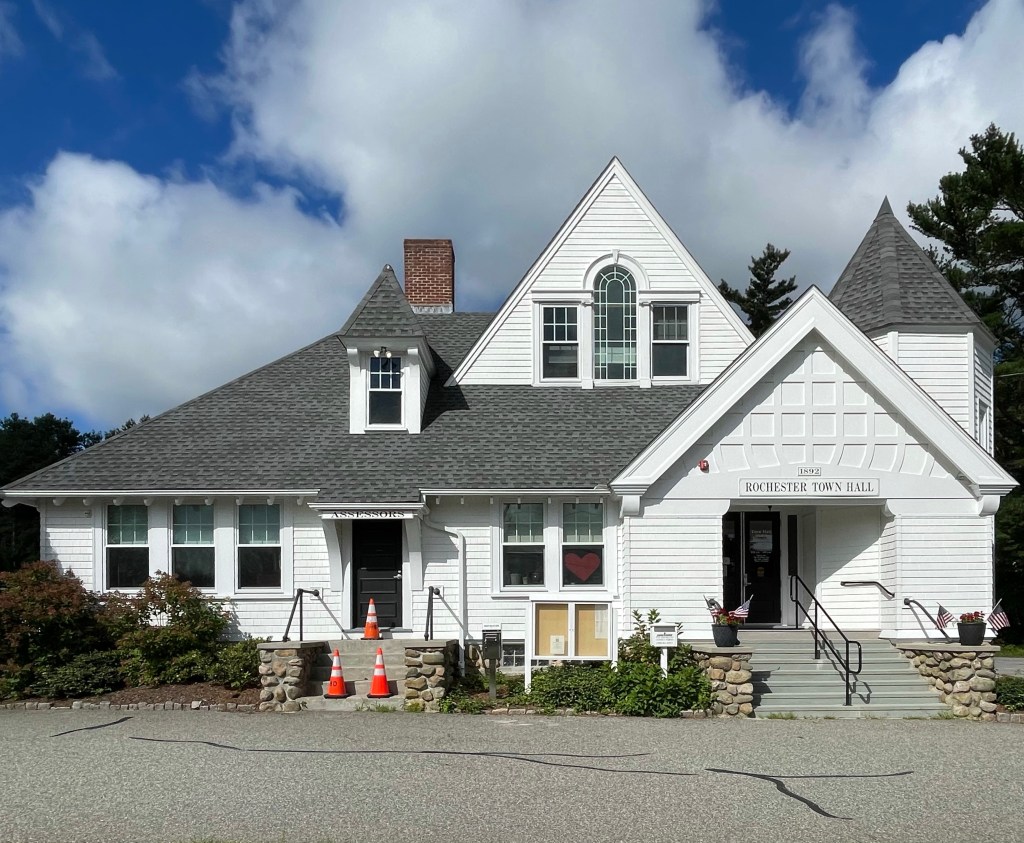
In 1679, three years after the end of King Phillip’s War, an armed conflict in 1675–1678 between indigenous inhabitants of New England and New England colonists, land that would become Rochester, Mattapoisett, Marion, and Wareham was purchased from King Phillip, and immediately divided among 32 proprietors of “Old Rochester.” The first white settlers took up residence in 1680, and the Town of Rochester was incorporated in 1686. Rochester town center was formally established in 1697 when land was set aside for a meetinghouse, burying ground and training field. Rochester’s first meetinghouse, built in 1699, served as a church and town building. A larger meetinghouse was built in 1717, and a third in 1760, doubling in size every time as the town’s population grew. The old buildings were insufficient for the growing farming town, and wealthy widow Elizabeth Leonard funded half the cost of a new town hall building. The current structure on the town green was built in 1892 and is an uncommon example of a Queen Anne style town hall in Massachusetts. The building originally was painted a darker color, common in the style, but was given a bright white paint scheme to blend in with the older buildings on the Green.
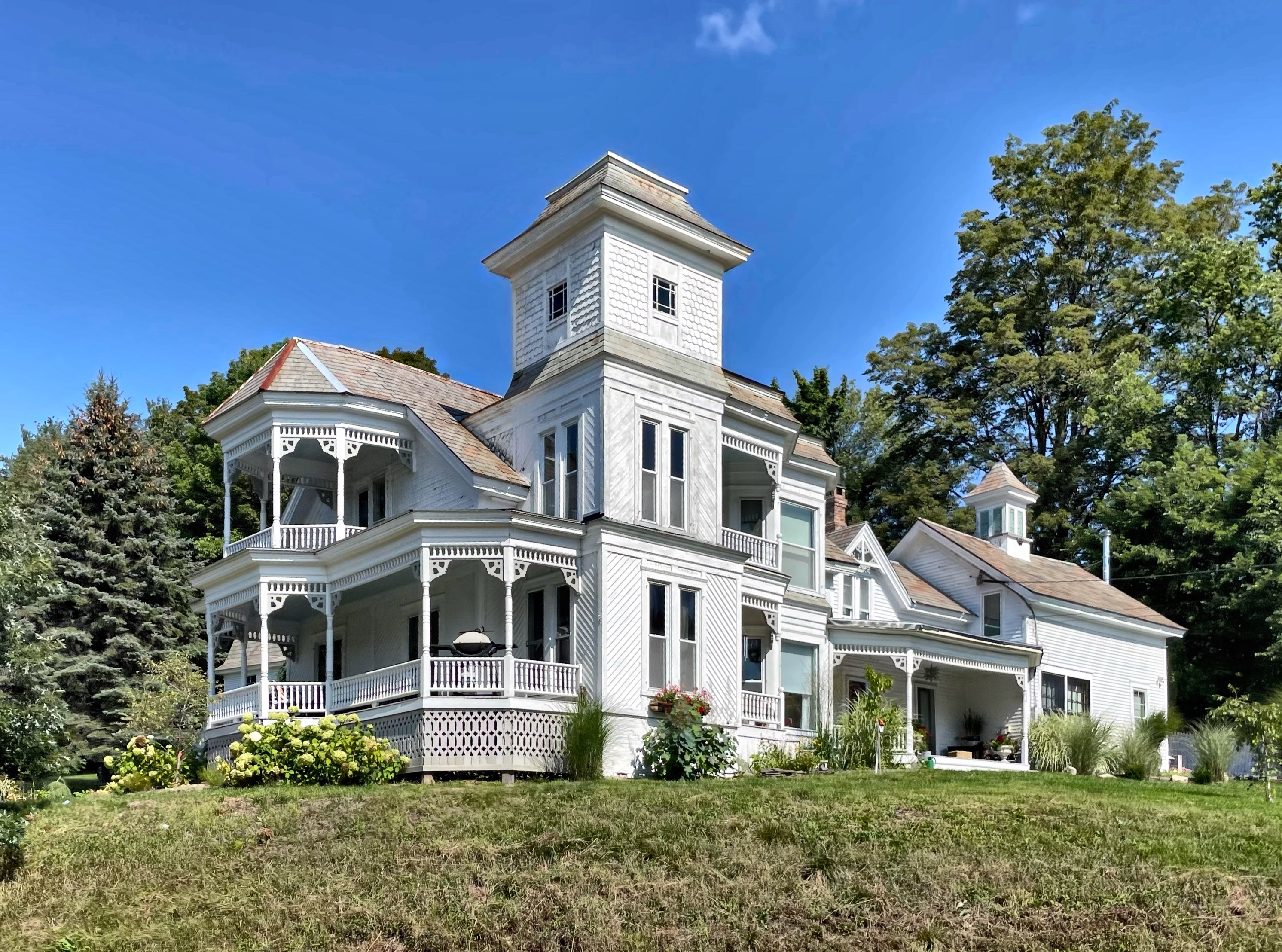
One of the most visually striking homes in little Chester, Vermont, is the Durand House. Sited prominently on a hill, the 1861 home resembles a wedding dress in bright white with intricate spindles that look like lace. The house was seemingly built for Urban Durand, one of the proprietors of the successful Durand Brothers Market in Chester village. The home has an elaborately trimmed full-front porch with a second-story polygonal balcony, and a three-story corner tower with a shallow mansard roof, all possibly later additions. The house stands out in the village, which is largely dominated by classical Federal and Greek Revival houses.

 Buildings of New England