Sturges Cottage // 1840

In the 1840s in New England, one architectural style commanded a large majority of all new house styles, Greek Revival. A divergence from the Classical designs of the Georgian, Federal and Greek Revival styles which dominated at the time, the Romantic movement began its first true breaths across New England. The Gothic Revival and Italianate styles are often thought to be the first couple styles which brought the frills and detailing personified by Victorian-era architecture.

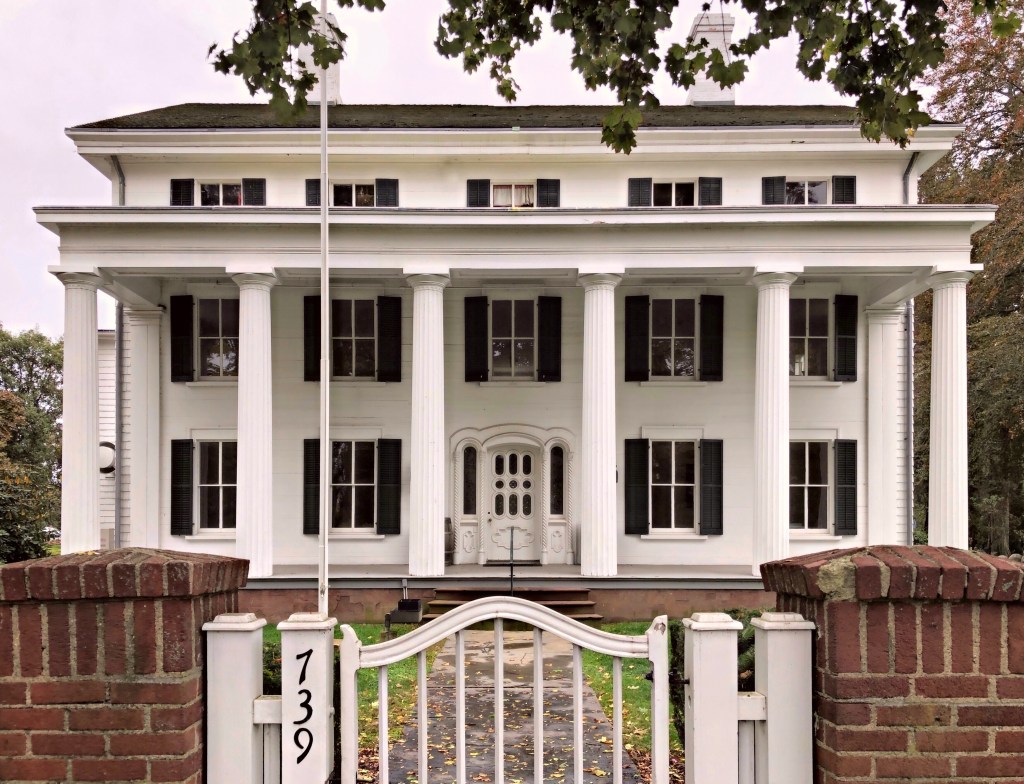
This home in Fairfield, Connecticut was built in 1840 to a design by Joseph Collins Wells, it is one of the oldest-known and best-documented examples of architect-designed Gothic Revival architecture. The home was built for for Jonathan Sturges (1802–1874), a businessman and patron of the arts. It is one of the earliest known examples of architect-designed Gothic Revival architecture, a style more often taken by local builders from pattern books published by the style’s proponents. The home was likely a pre-cursor to architect Joseph Wells later commission, the famous Roseland Cottage.
Southport Railroad Stations // 1884 & 1895

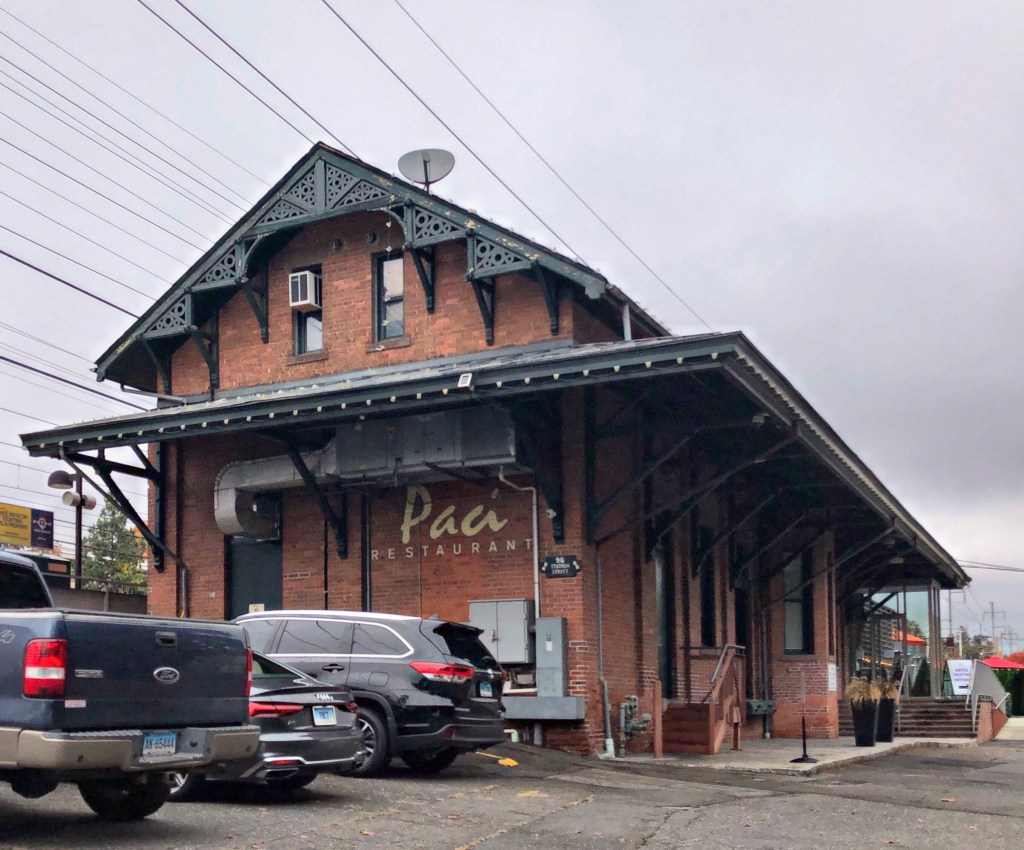
The Southport railroad stations in Fairfield, Connecticut, are reminders of the important role of railroad passenger service in the historical development of the town which continues to this day. In Southport, there are two stations, an east-bound and west-bound, one on either side of the tracks. The older east-bound station was built in 1884 to replace a depot destroyed by fire. It is typical of the substantial brick stations built at small-town stops throughout the state in the period. The use of brick was likely to prevent fire destroying yet another station. The stations were commonly large enough to accommodate spacious waiting rooms, ticket counters, offices, restrooms, and a baggage area. The brick station was converted to a restaurant, with a modern addition by Roger Ferris + Partners completed by 2017.

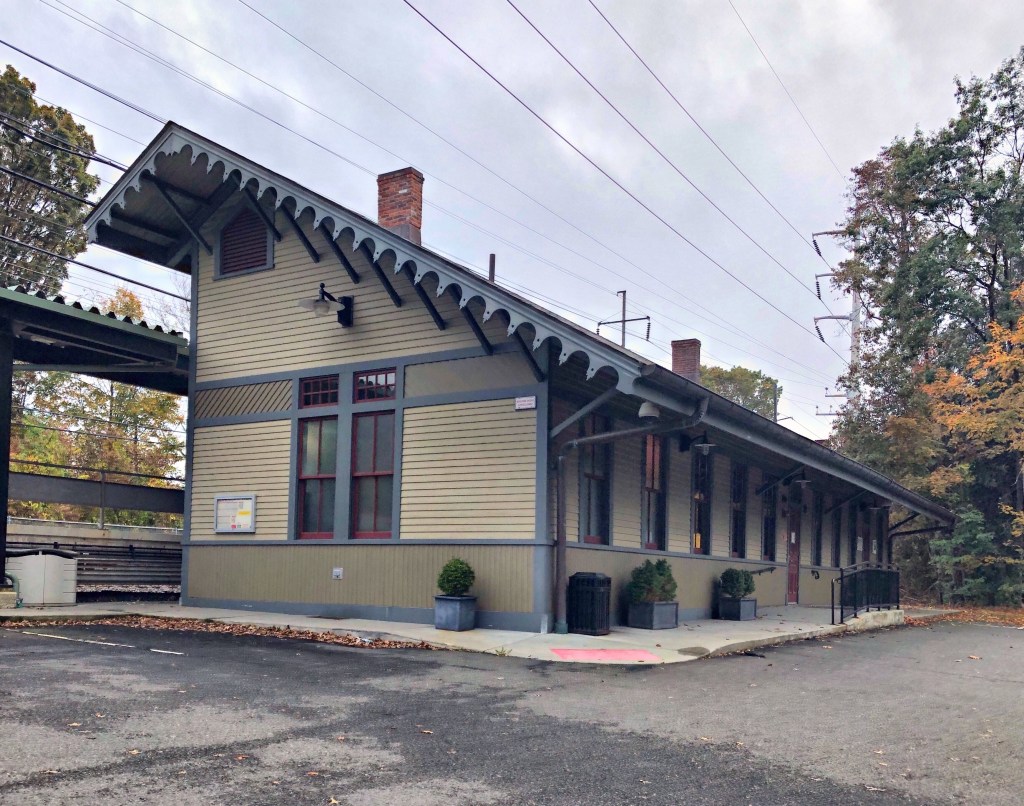
The wooden west-bound station was built around 1895 as part of a massive rebuilding of the New York, New Haven and Hartford Railroad’s main line. At this time, the railroad adopted a single design-concept for all the stations, reverting to wood construction, and limited the stylistic details. The Southport station has an interesting design however; with its saltbox-like roofline, bargeboards, and stick detailing. Imagine all the people and stories that passed through these buildings. Parents saying goodbye to children going off to college or war, businessmen and women commuting to and from work, or people like me who took it to Manhattan!

Osborn House // 1772

This homestead in Fairfield, Connecticut is situated on the edge of what was formerly called Pequot Swamp, and was originally built by Stephen Osborn in 1772. It is said to be the third Colonial dwelling erected in this part of the town and was left undisturbed by the British when they burned Fairfield in 1779 and raided various sections of the country along the shore. The home was originally located a few blocks away, but was moved in the 1950s when the highway (I-95) was routed through this part of Fairfield. The saltbox Georgian home was documented prior to the move by the Historic American Buildings Survey (HABS).

David Ogden House // c.1750

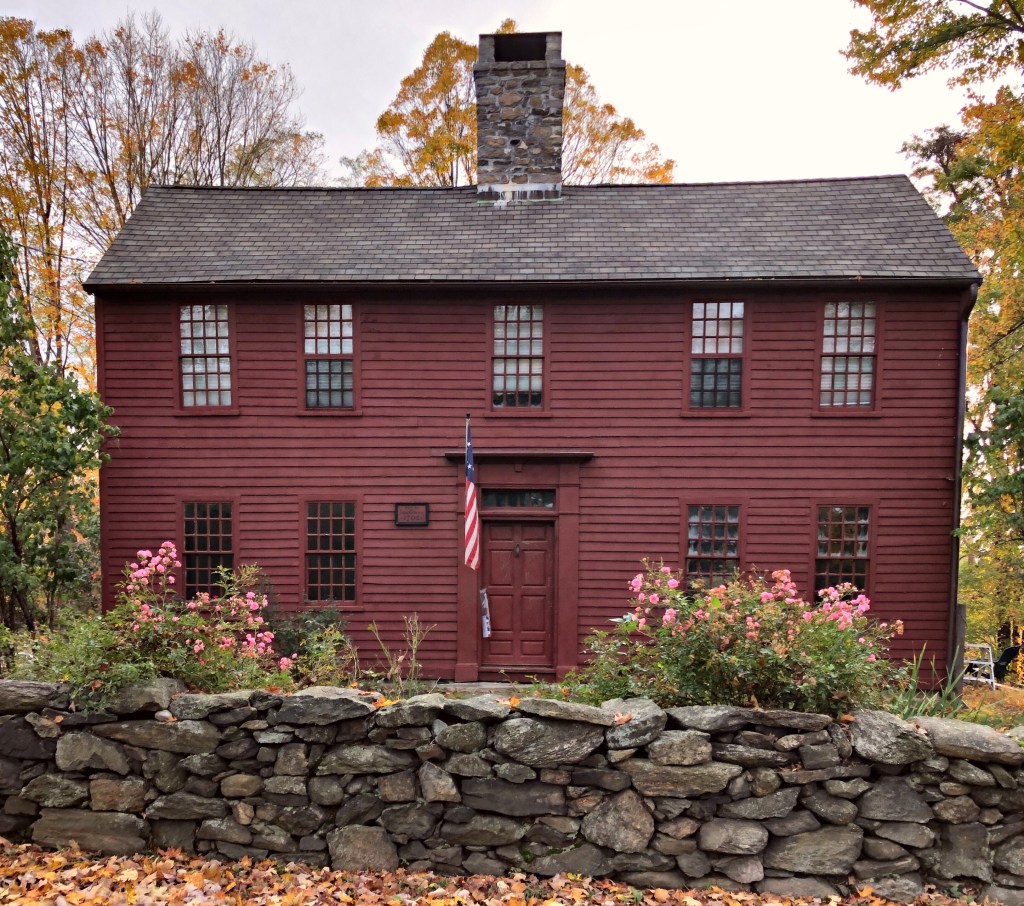
This saltbox house was built by 1750 for David Ogden at the time of his marriage to Jane Sturges. For the next 125 years it was home for the Ogden family in the farming and coastal shipping town of Fairfield. The home was sold out of the family in 1839 to Henry W. Banks, who continued to farm on the nearly 75 acres of farmland. By the 1920s, the home was suffering from deferred maintenance and was at risk of demolition. Luckily, Annie Burr Jennings (1855-1939), a philanthropist who was born into a wealthy family, sought to give back to her town. Jennings was instrumental in establishing and supporting a number of important community institutions, including the Fairfield Historical Society (now the Fairfield Museum) and the Fairfield Public Library. In 1931, she purchased the old Ogden Farmhouse from absentee owners and helped fund its restoration. The early saltbox vernacular Georgian home today is maintained by the Fairfield Museum and the Greenfield Hill Village Improvement Society.

Verna Farm // 1892

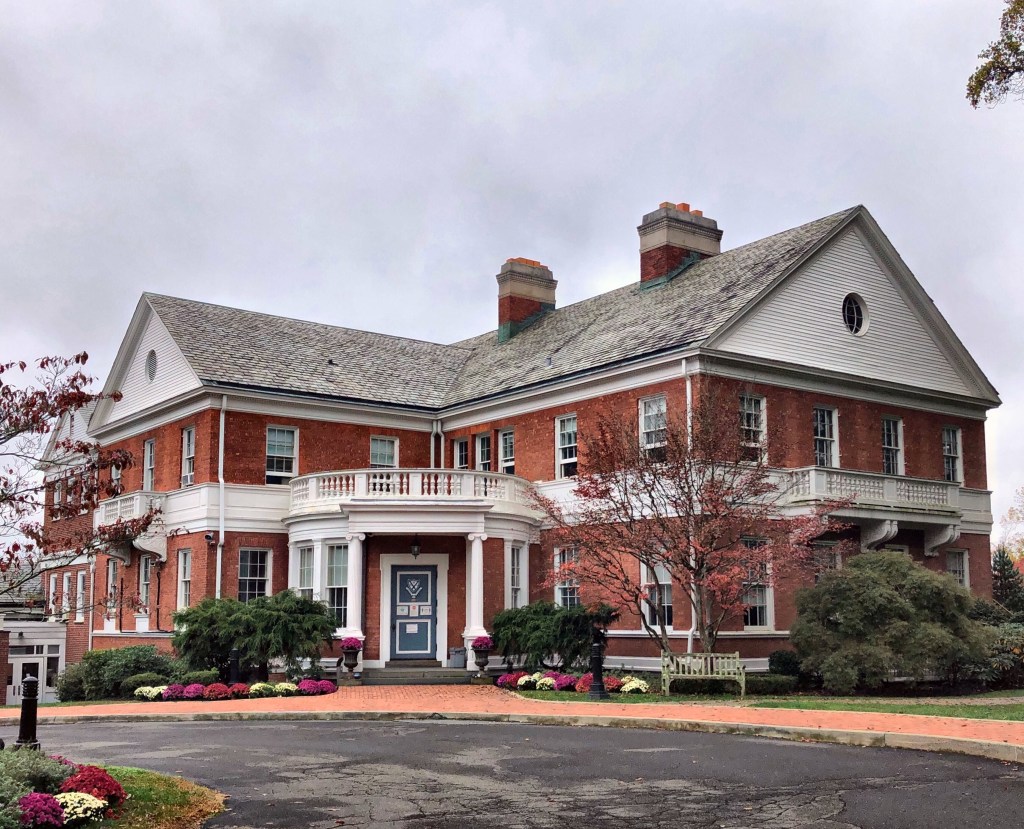
In Fairfield, Connecticut, land owned by Timothy Dwight, a minister and eighth President of Yale, a large farm once stood. The year after he was appointed to his position at Yale, he sold his farm Verna Farm, in 1796 to Isaac Bronson. The farm was eventually inherited by his grandson, Frederic Bronson. Dwight’s eighteenth-century house was eventually torn down in 1891 by Frederic’s son, Frederic Bronson, a wealthy New York City lawyer and socialite, who was included in Ward McAllister‘s “Four Hundred“, purported to be an index of New York’s best families, published in The New York Times. In 1892, Bronson hired starchitect Richard Morris Hunt, one of the greatest American architects of all time, to design a new country estate here. In 1933, the Bronson estate was acquired by W. A. Morschhauser, who had the house remodeled and made smaller in 1900; removing the third story and reducing the number of rooms from 42 to 13! Since 1949, the property has been occupied by the Fairfield Country Day School. The windmill as part of the estate was eventually gifted to the Town of Fairfield.

Bronson Windmill // 1894

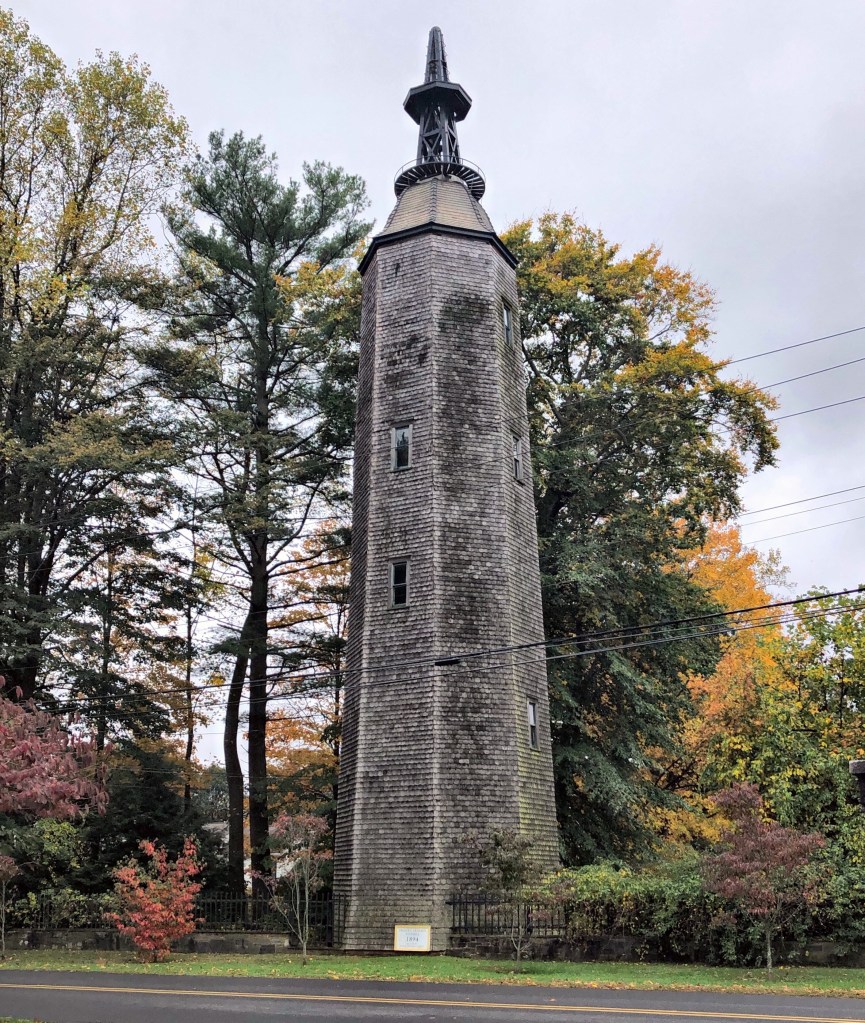
Located in a more rural part of Fairfield, Connecticut, I drove past this massive tower just off the road. Intrigued, I doubled back to find out what it was, and learned it was once a windmill! The over eighty-foot tall shingled tower was constructed in 1894 as part of a large country estate. Frederic Bronson (1851-1900) was a prominent, gilded age lawyer in New York City. He accumulated massive wealth representing many elite families, eventually becoming a member of the “Four Hundred”, a list of the 400 most powerful (rich and connected) people of New York society. In the early 1890s, Bronson constructed a summer estate in Fairfield, CT, known as Verna Farm. A part of this estate the windmill which pumped water from a well 75 feet below ground into a 7,500-gallon wooden storage tank inside the tower. The estate eventually became the Fairfield Country Day School, and the windmill (no longer in use) was gifted to the town. Eventually, it was leased by Sprint, and the telecommunications firm restored the windmill and installed a cellphone tower in its interior.

Farist House // 1894

Joel Farist (1832-1904) emigrated to America with his family by the way of Sheffield, England, working originally as a laborer as a child. By his thirties, he formed the Farist Steel Company in Springfield, MA, later relocating to Bridgeport, CT in 1872. Due to his prestigious role and success, he became well-connected in Bridgeport, later becoming the first President of the Bridgeport Electric Light Company and Vice President of Bridgeport Hospital. He built this massive home in nearby Fairfield, CT, likely to get away from the polluted Bridgeport air, for a more bucolic area. The massive Queen Anne home he had built (likely as a second home) features prominent towers, a full-length porch, and a porte-cochere off the side. The home has been restored a few times recently, and a new (hopefully not final) paint scheme in yellow was recently painted on the front facade.

Chaffee House // 1931

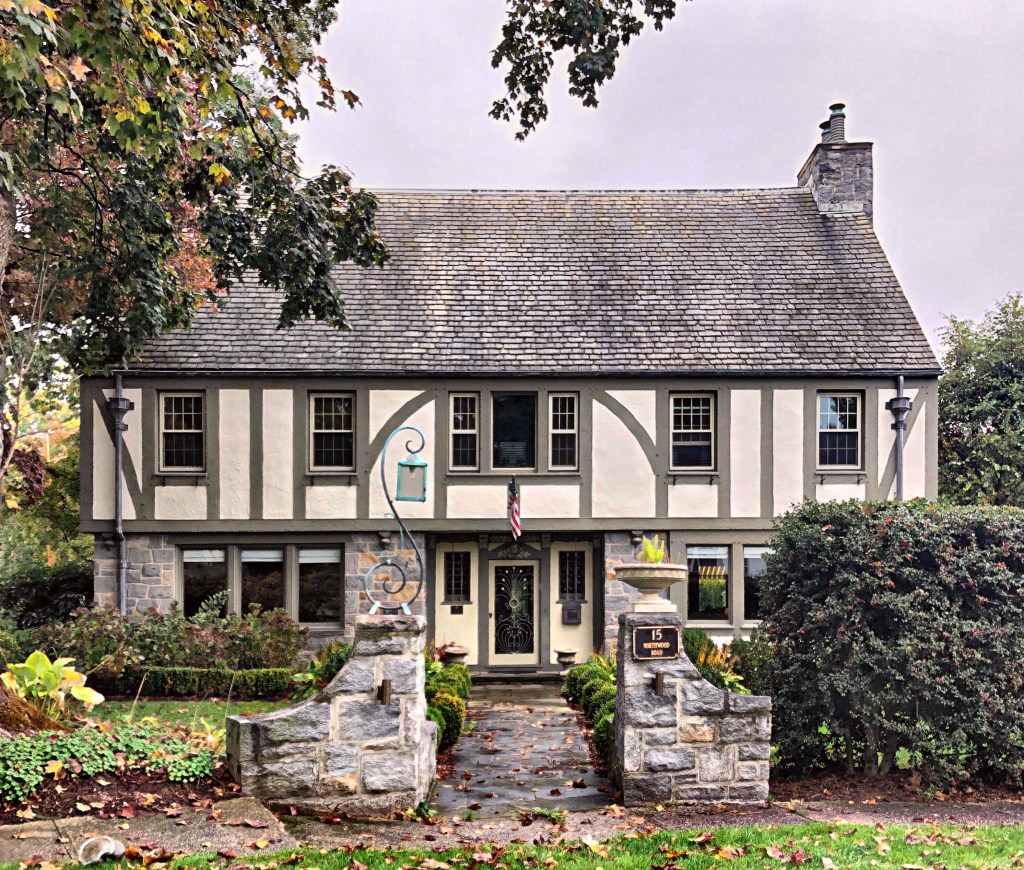
Herbert Almon Chaffee and Irma Chaffee had this Tudor home built by 1931 for their family in Fairfield, Connecticut. Mr. Chaffee was the Vice President and Assistant Treasurer of the City Savings Bank of nearby Bridgeport. Chaffee also at that time worked as Vice President of the A.W. Burritt Company, a lumber mill that produced building supplies and also operated as a real estate company that bought land and constructed on it. The home he had built clearly showcased the company’s work and features hallmarks of the English Tudor Revival style, with half-timbering, slate roof, and jettying (upper floor slightly overhanging the first).

Howard Lee House // c.1928

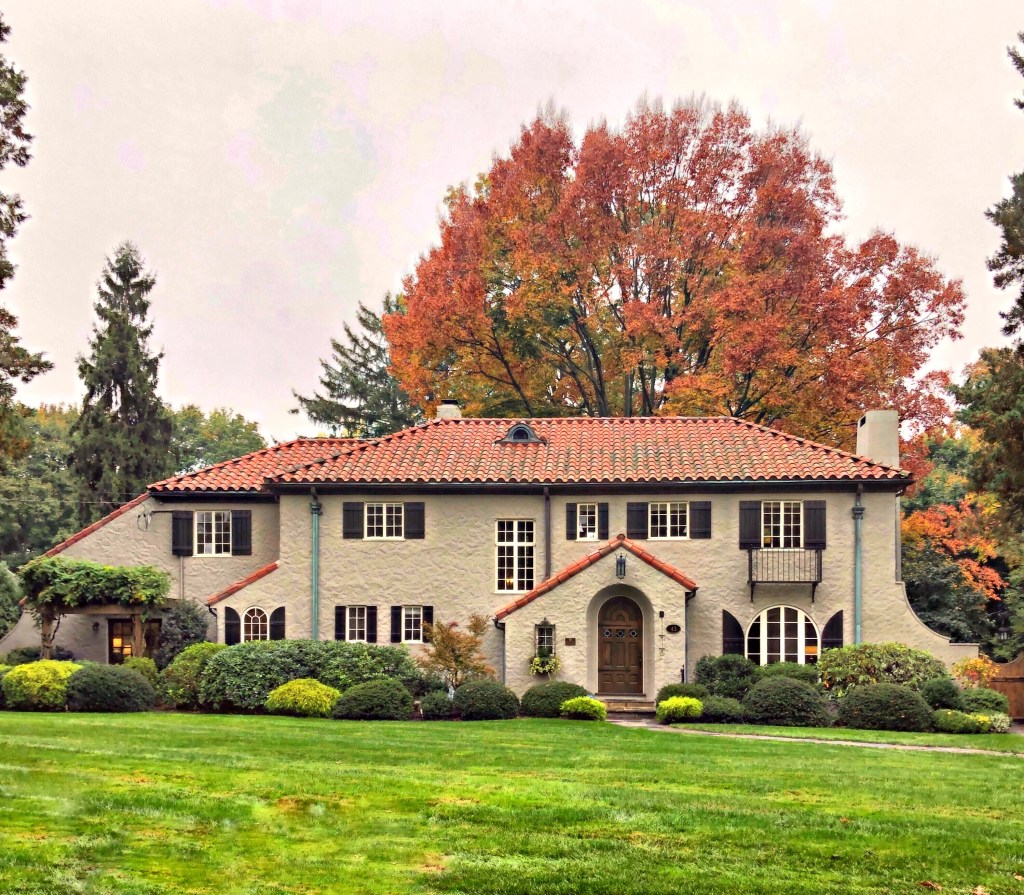
Fairfield in the early 20th century began to shift as a suburban town with neighborhoods of large homes in planned districts. The proliferation of the personal automobile led to the “suburbanization” past streetcar suburbs closer to downtowns. Howard Greeley Lee (1893-1965) worked as Vice President of the Lee Brothers Furniture Co. based out of nearby Bridgeport. The company clearly did well as Howard had this large home built in the fairly uncommon (in New England) Spanish Revival style. It features a red tile roof, stuccoed siding, metal casement windows, and arched windows and front door, all commonly found in the style.

Burr Mansion // 1794

Originally built in 1775, the first iteration of the Burr Homestead, home of Thaddeus and Eunice Burr, which actually saw the marriage of John Hancock, President of the Continental Congress, to Dorothy Quincy. Thaddeus was the cousin of the famous Aaron Burr, Jr., who was the 3rd vice-president of the United States alongside Thomas Jefferson as President. Aaron Burr Jr. is best-known today through his portrayal in the popular play “Hamilton,” where he shoots Alexander Hamilton in a duel. The house was rebuilt in 1794 in its former location in Fairfield, Connecticut after a fire by the British in Fairfield destroyed the first. The home was willed to Thaddeus’ son General Gershom Burr, who eventually sold the mansion to Obadiah Jones. Mr. Jones updated the home by, ““taking out the dormer windows and lifting the roof, taking away the porch and building the broad veranda with its lofty massive fluted columns”. The home was eventually gifted to the Town of Fairfield and is presently maintained by the Fairfield Museum and History Center.