George Robert White Health Unit No. 2 // 1923

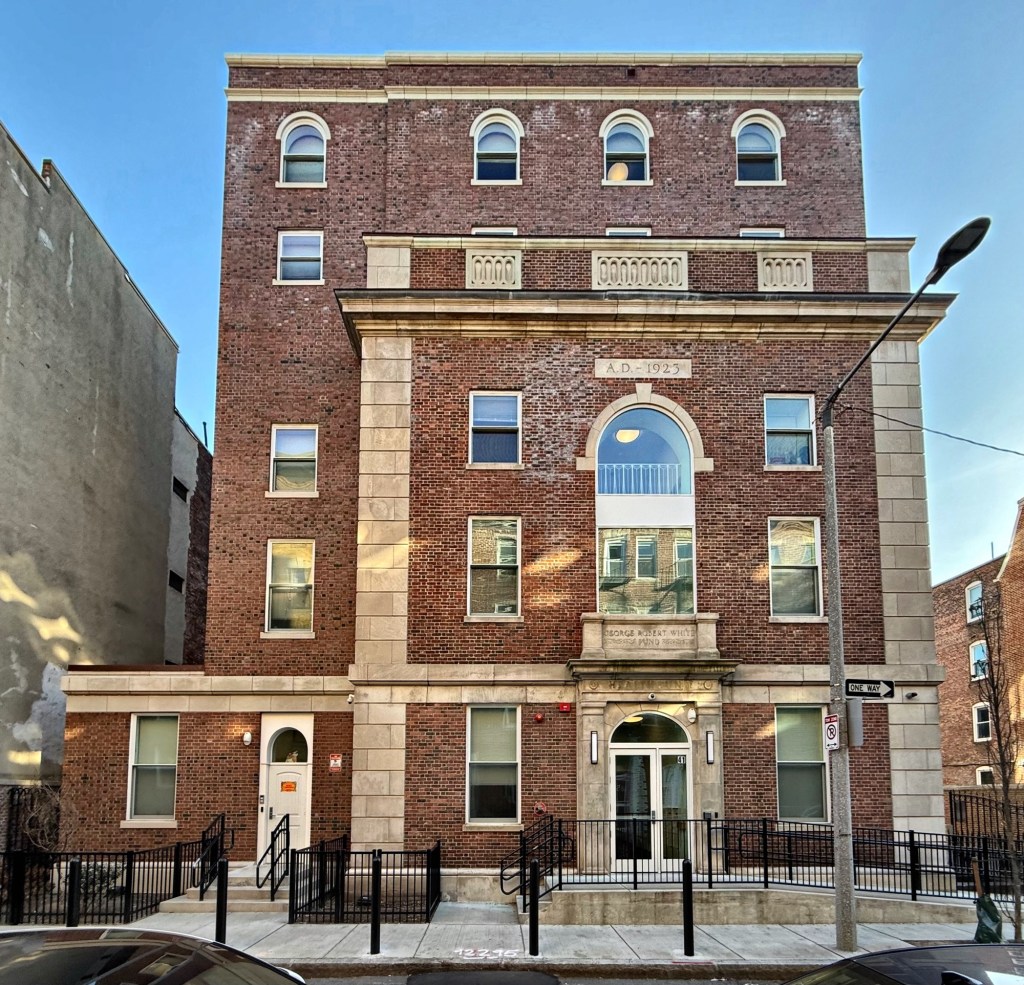
Originally known as the George Robert White Health Unit Number 2, this Colonial Revival style building is located on North Margin Street in the North End of Boston, and is significant as an early health center providing health and education services for some of Boston’s most underserved residents. The building was constructed in 1923 as one of the neighborhood-based health centers built in Boston in the 1920s and early 1930s from funding by the George Robert White charitable trust. George Robert White (1847-1922), a longtime resident of Boston, worked in the office of the Potter Drug and Chemical Company as a boy, eventually becoming president and an owner of the corporation. He was an investor in real estate and reportedly was known for many years as the largest individual taxpayer in Boston. Upon his death, his will specified that his bequest to the city, about $5 million in 1922 (approximately $93 Million valued today), would be held in a permanent charitable fund “to be used for creating public utility and beauty and for the use and enjoyment of the inhabitants of Boston.” The North End Health Unit was the second built (the first was in the West End), and designed in the Colonial Revival style from plans by Coolidge and Shattuck, later known as Coolidge, Shepley, Bulfinch & Abbott. Since the 1970s, the building was occupied by the Knights of Columbus, a fraternal organization, until 2020, when the building was renovated and converted into housing with 23 units for elderly residents.
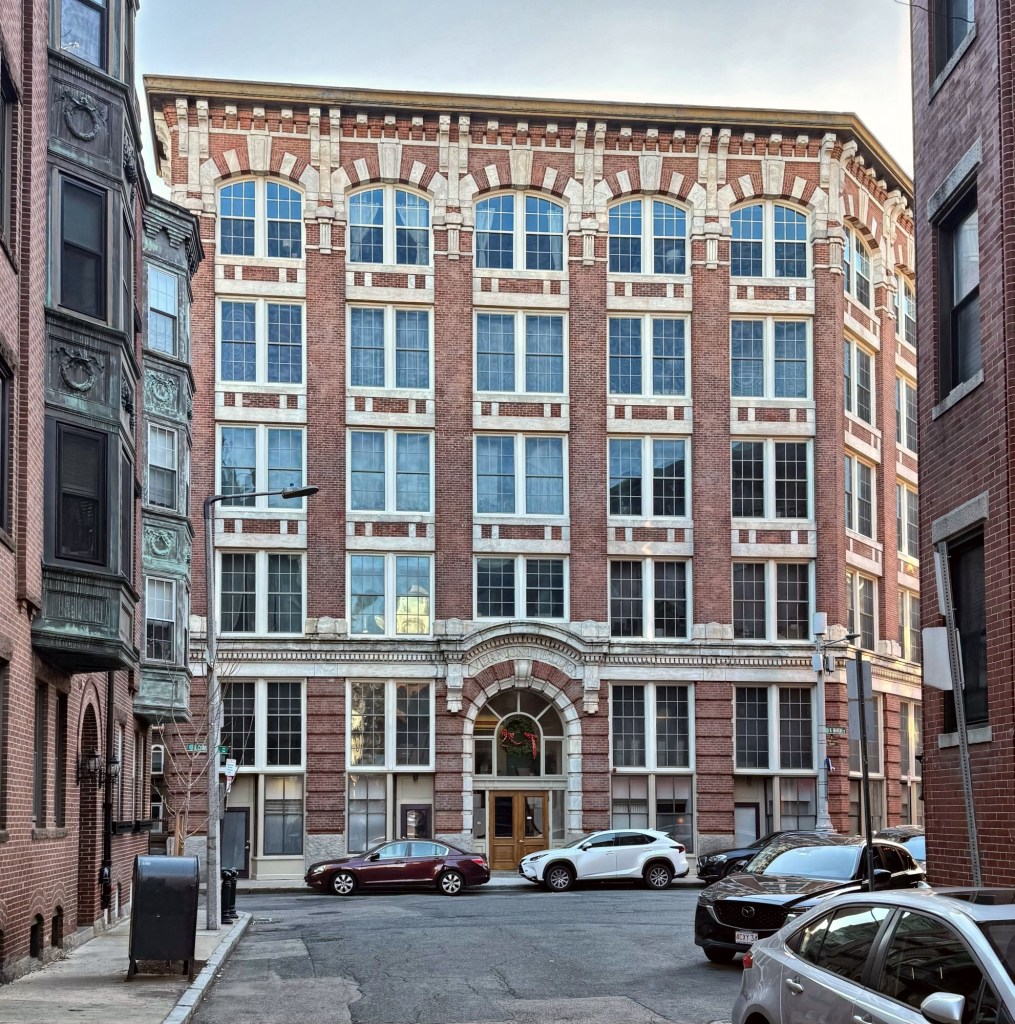
Waitt and Bond Building // 1891

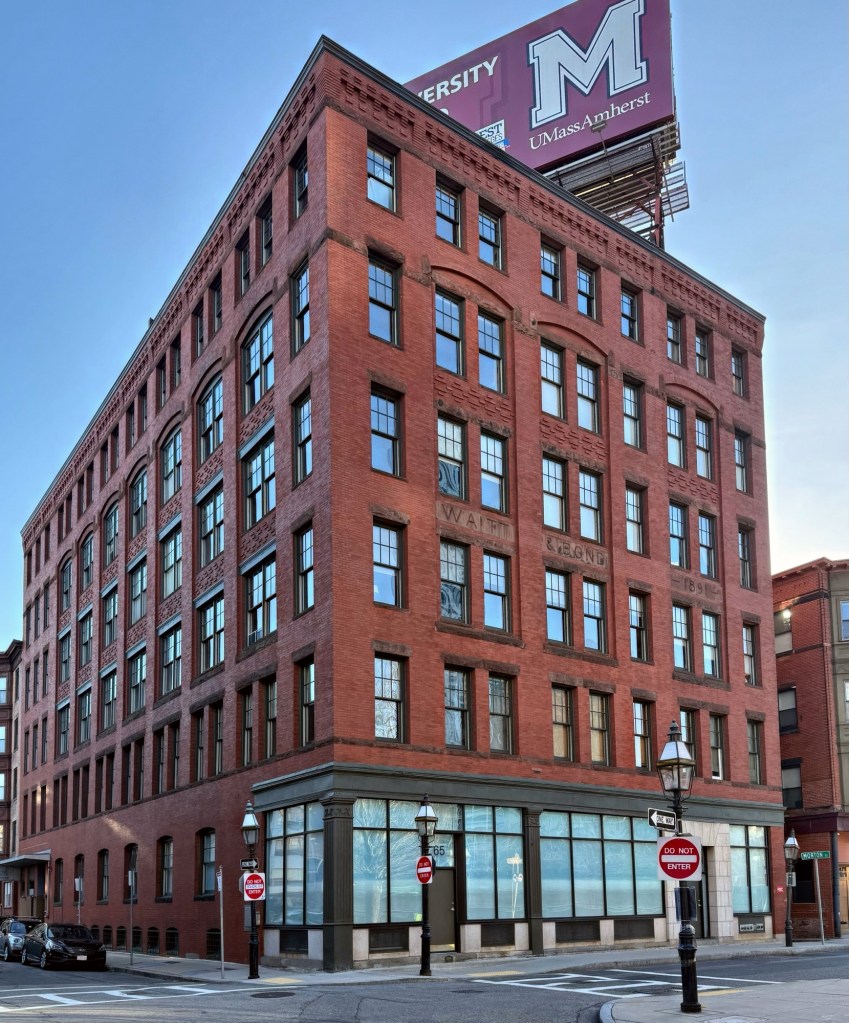
One of several late 19th-century industrial buildings in the North End, the Waitt & Bond Building stands on Endicott Street, looking over the scar on the landscape that is I-93. This six-story building was constructed in 1891 and is the oldest extant building in Boston associated with cigar manufacturers Henry Waitt (1842-1902) and Charles H. Bond (1846-1908), who started business in 1870. The business relocated from Saugus to Boston in 1873 and moved into this building upon its completion. Waitt & Bond produced handmade cigars with each employee hand-rolling over 300-a-day. The architect, Ernest N. Boyden, designed the building in the Panel-Brick and Romanesque styles with decorative brick panels, cornice, and arched detailing. Rooftop billboard signage (blight) was first added to the building in 1956, with increased visibility via the elevated John Fitzgerald Expressway (the Central Artery). By the early 1960s, Joseph Castignetti moved his men’s clothing store, Castignetti Brothers, to this location. In 2001, the building was converted into 28 loft-style condos, an early sign of the gentrification to come to the North End.

William Slattery Tenements // c.1893

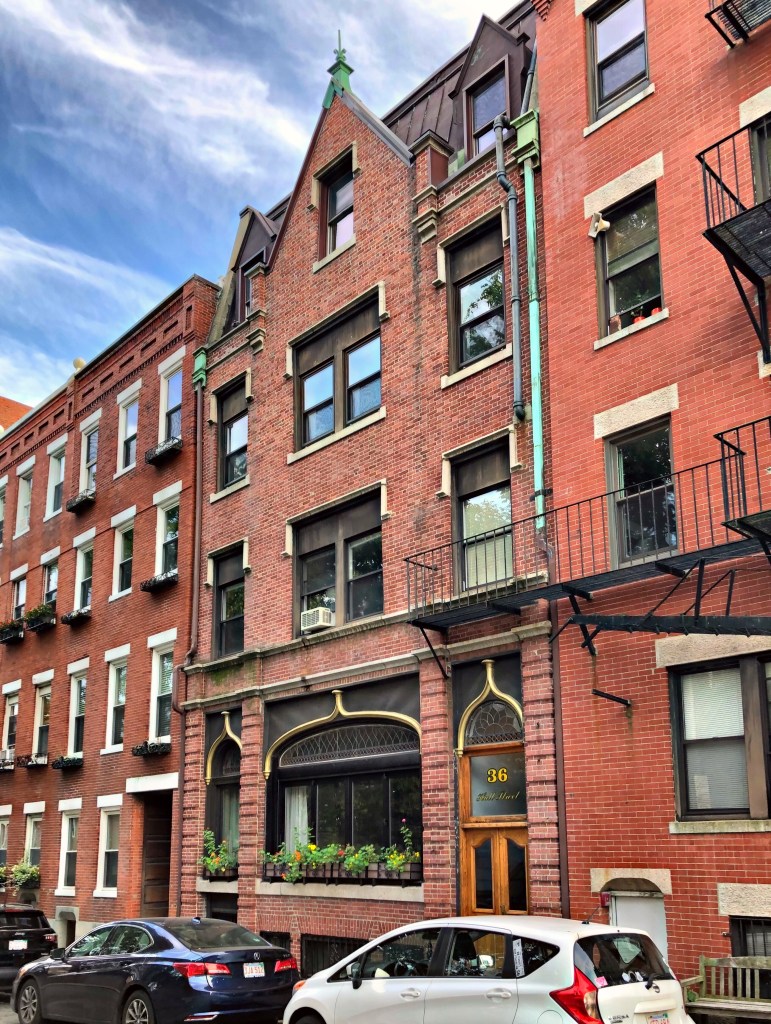
It is not always the architect-designed, high-style buildings that give a place character. The North End is a neighborhood almost entirely built of working-class tenement housing, but its density, immigrant history, and vernacular, make it one of the most visited and unique in the city. Michael Slattery, an Irish-born teamster, and his son, William, a grocer, developed this handsome block of tenement housing on North Margin Street in the North End neighborhood of Boston. The row of apartments stands out for its elevated design elements, including the projecting metal oriels with decorative wreath and swag motifs, arched openings, and brick corbeling at the cornice. The apartments here were rented by the Slattery family until the mid-1920s when the buildings were sold to Italian-Americans who continued to rent the buildings to lower-income residents. There is something about the North End’s vernacular that is so charming.

Vermont Marble Building // 1904

Located across the street from Regina Pizza in Boston’s North End, the Vermont Building stands as one of the most ornate and decorated buildings in the neighborhood. Designed by Boston architects Arthur H. Bowditch and Edward B. Stratton and constructed in 1904, the Vermont Building is a six-story brick commercial building with marble detailing. The building was erected as a personal investment by Redfield Proctor, U. S. Senator from Vermont and partner in his family’s marble company based in Proctor, VT, with the building used for light manufacturing, a warehouse, and storefronts. The building has since been converted to housing as lofts.

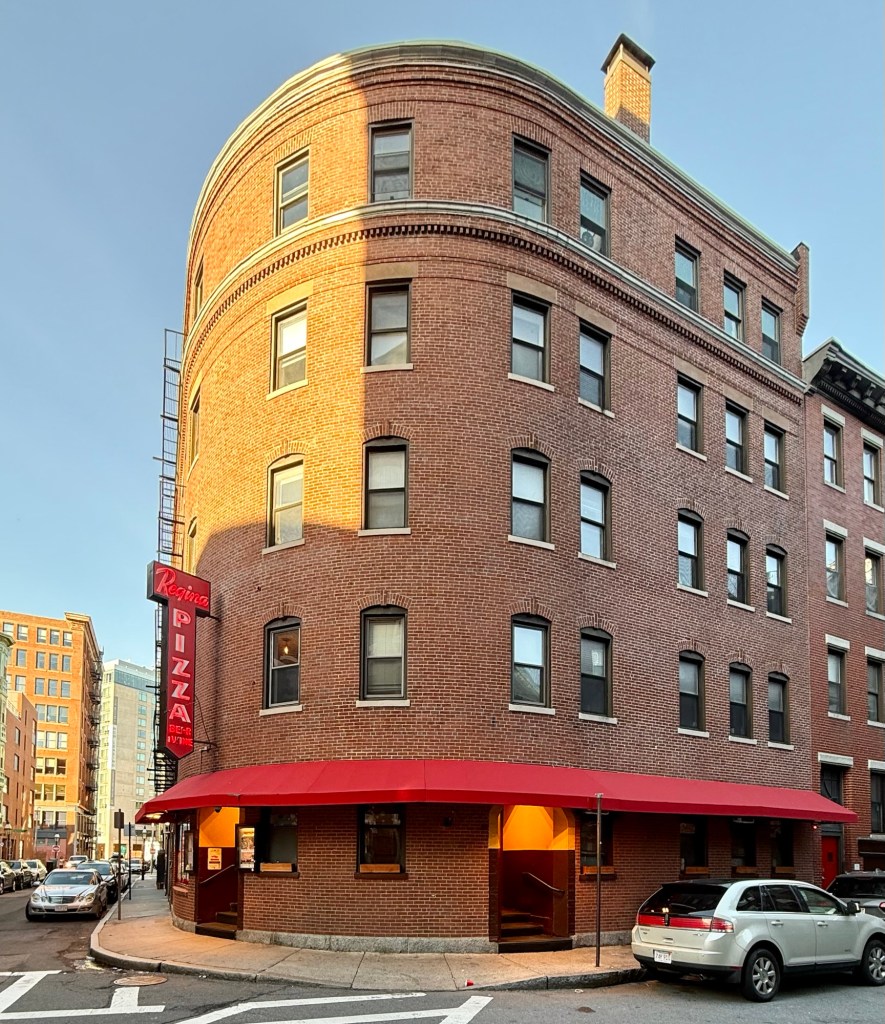
Boston Cooperative Building Company Tenements – Regina Pizzeria // 1886

What is your favorite pizzeria in the Boston area? For many, it is likely to be Regina Pizzeria, but specifically this location in Boston’s North End. The building was originally constructed in 1886 for the Boston Cooperative Building Company, a charitable organization which built and rented tenement housing for low-income residents in the city. Many recently arrived immigrants would have lived in the building and paid a nominal rent, giving them the opportunity to work and grow their savings to move into better, more permanent housing. The Association was incorporated in 1871 and its original stockholders represented the financial elite of Boston. As a result of their financial backing, the association was able to hire the white-shoe architectural firm of Cabot & Chandler to design this tenement block in 1886. While not ornate, the building fits within the late 19th century vernacular of brick tenements of the North End. The building is now best known as the home to Regina Pizza, which was founded in 1926 by Luigi D’Auria, who was born in Campania, Italy, who purchased the building around that time. Regina Pizza (translated to “Queen Pizza” in Italian), was sold to the Polcari family in 1956, who have operated the restaurant since. The pizzeria with its prominent blade sign is one of the best landmarks in the North End.

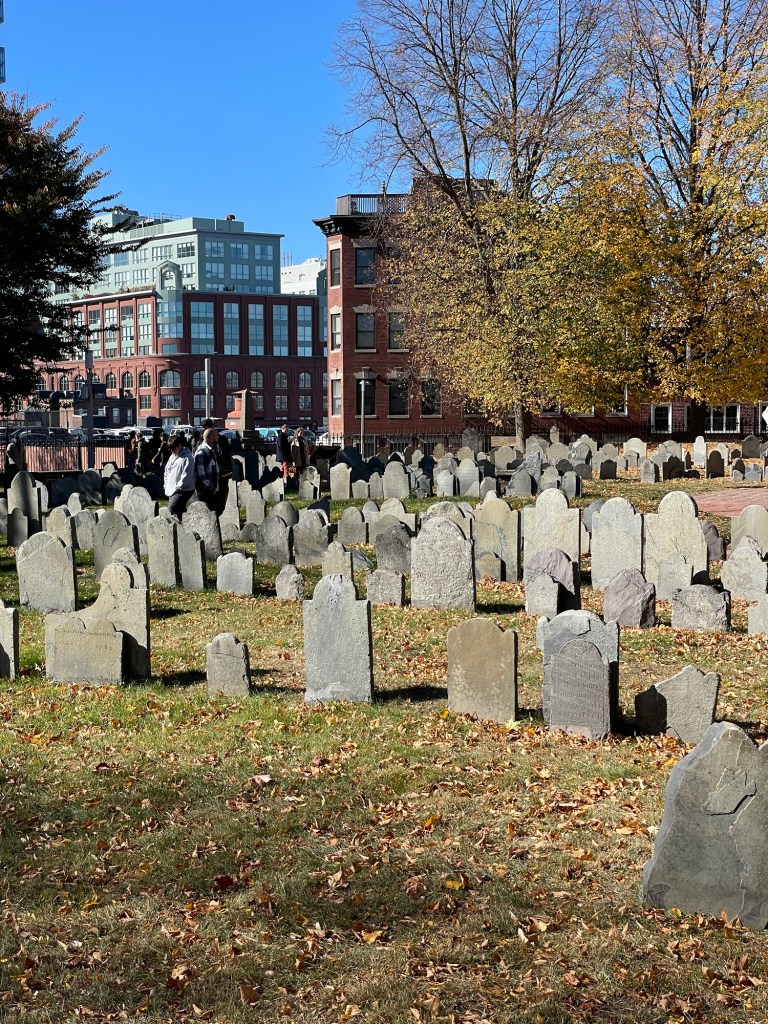
Copp’s Hill Burying Ground // 1659

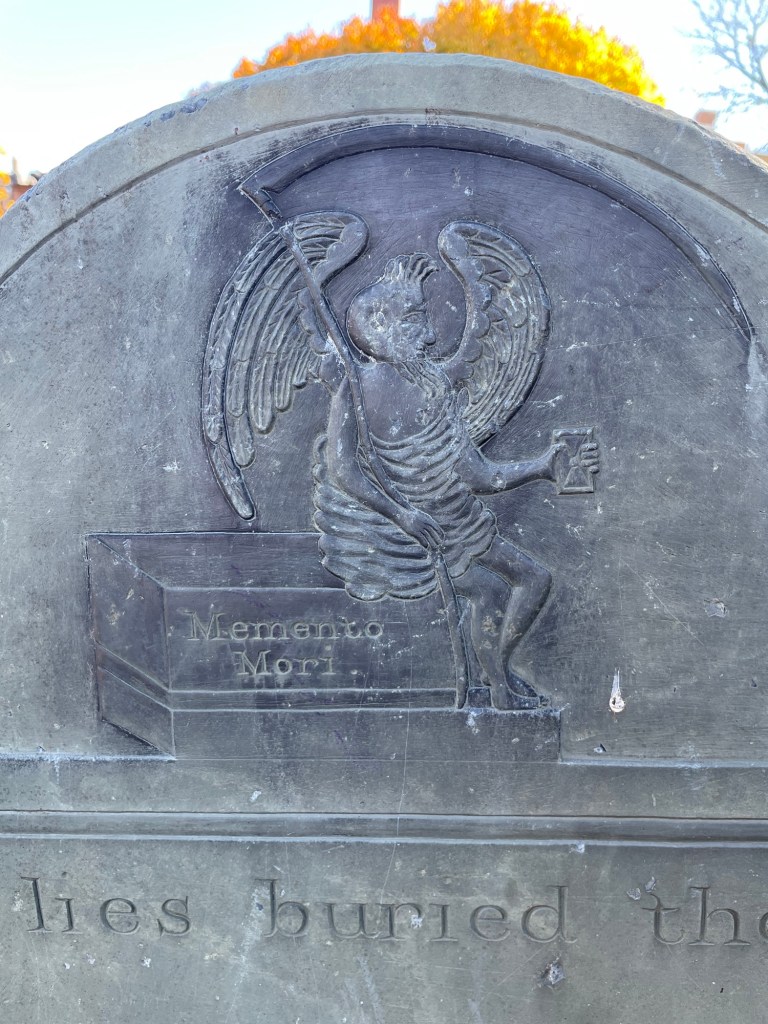
Happy Halloween! Welcome to Copp’s Hill Burying Ground, a historic cemetery nestled in Boston’s historic North End. Established in 1659, it served as a burial site for some of Boston’s earliest settlers and notable figures, including craftsmen, merchants, and members of the influential Mather family. Also burie here is abolitionist and leader in the free black community in Boston, Prince Hall. Originally called North Burying Ground, Copp’s Hill was the second place of interment on the Boston peninsula and was laid out in 1659. The area acquired its present name through its association with William Copp (1589-1670), a shoemaker and early settler who lived near today’s Prince Street; ironically, his stone is no longer standing.

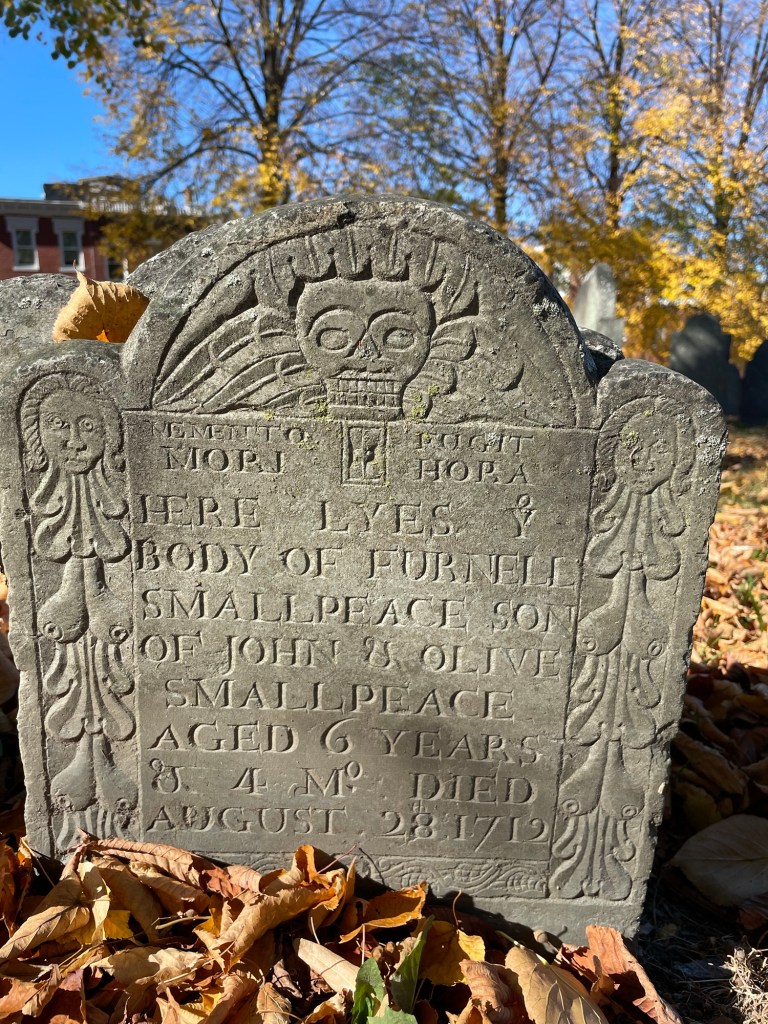
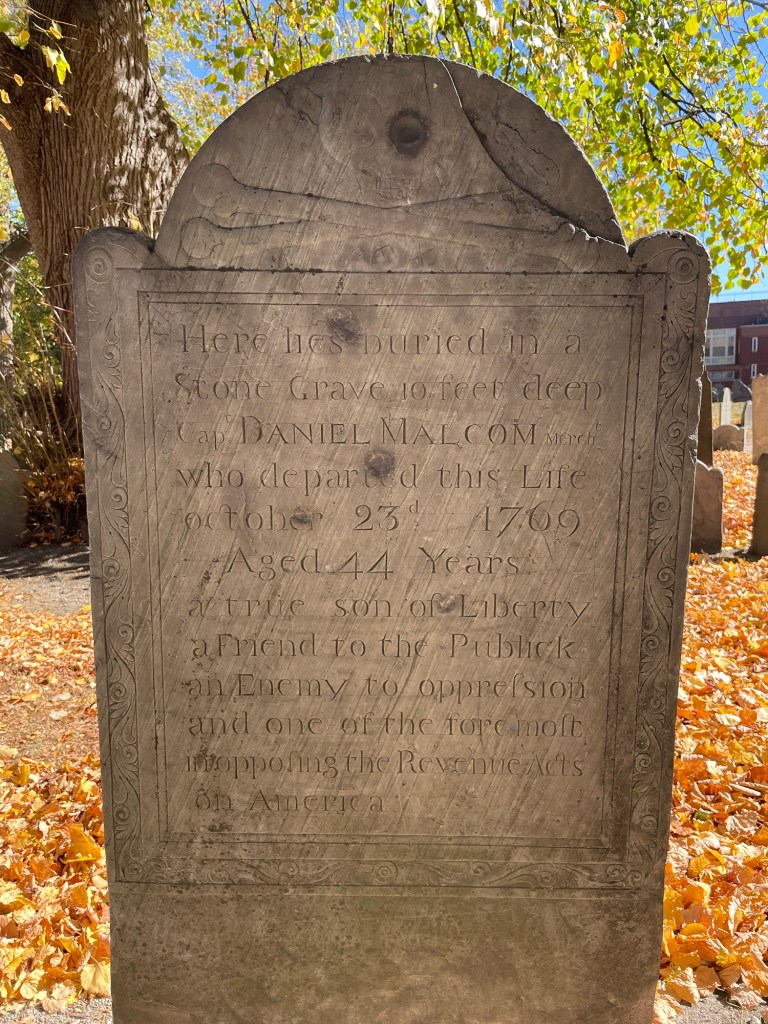
The cemetery is particularly known for its distinct slate gravestones, many adorned with intricate carvings that reflect the artistry of the era. Over the centuries, it has witnessed significant events, including the American Revolution, when it was used as a lookout point for British troops. During the Revolution, the burying ground’s prominent location overlooking the harbor gave it strategic military importance. At its southwest side the British established their North Battery and an earthworks from which they directed the shelling of Bunker Hill and ultimately the torching of Charlestown. Legend has it that British troops used gravestones for target practice. Many have interpreted the round scars on the gravestone of Captain Daniel Malcolm, an ardent son of liberty who spoke against Britain, as the result of musketballs shot at close range. The cemetery was used continually until the 1850s and is today, an evocative reminder of Boston’s early days, drawing visitors who seek to connect with the city’s storied history amidst its tranquil surroundings while the city stretches upwards around it. The cemetery is open and free to visit most of the year and is a great place to stroll and learn about Boston’s early history and see amazing stone carving!

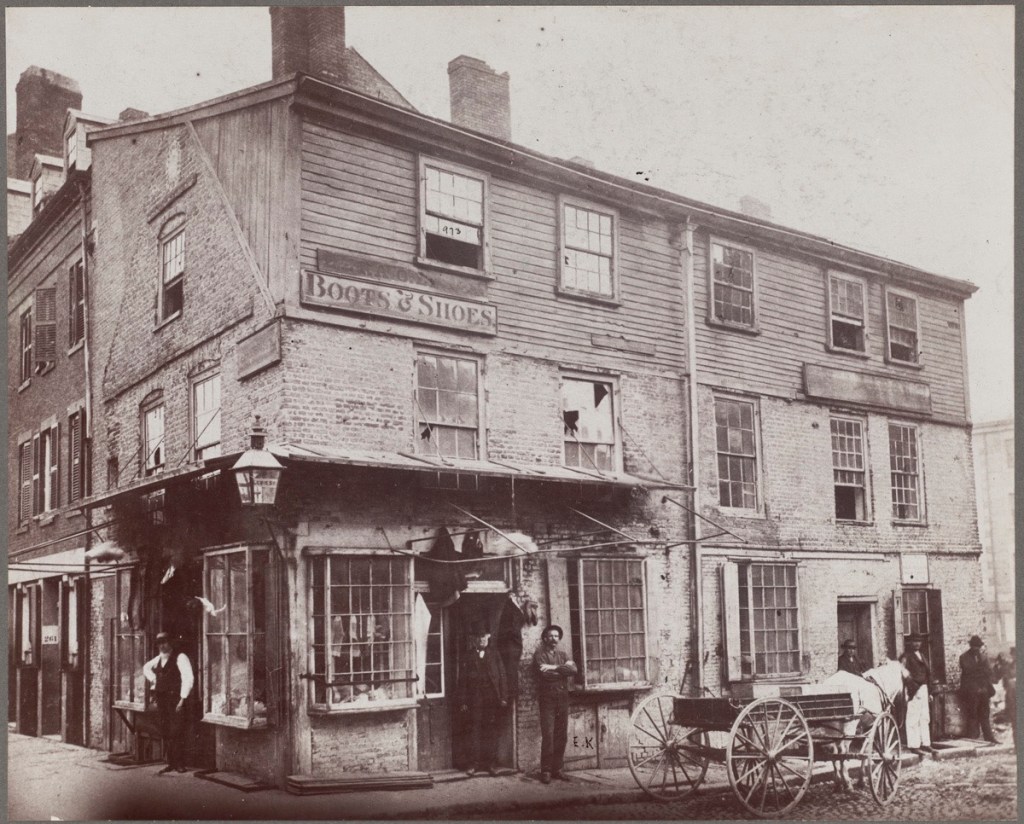
King’s Head Tavern // 1691-1870

Another of Boston’s Lost buildings is the King’s Head Tavern, an old establishment that was built in the early days of Boston and rebuilt following a fire in 1691. It stood on the corner of Lewis and North Streets, in the North End near Scarlett’s Wharf. Due to its proximity to the harbor and wharfs, it became the first place weary sailors stopped to get a drink on solid ground. The two-story, brick tavern was capped with a gambrel roof, which was later filled with wooden additions giving the structure a boxy look. The establishment was named the King’s Head Tavern after a popular London tavern of the same name. Like much of the North End, surging immigrant populations put immense strain on the built environment and many older buildings were demolished in the late 19th and early 20th centuries for tenement housing. The old King’s Head Tavern was demolished in 1870, just two years after the photo was taken.

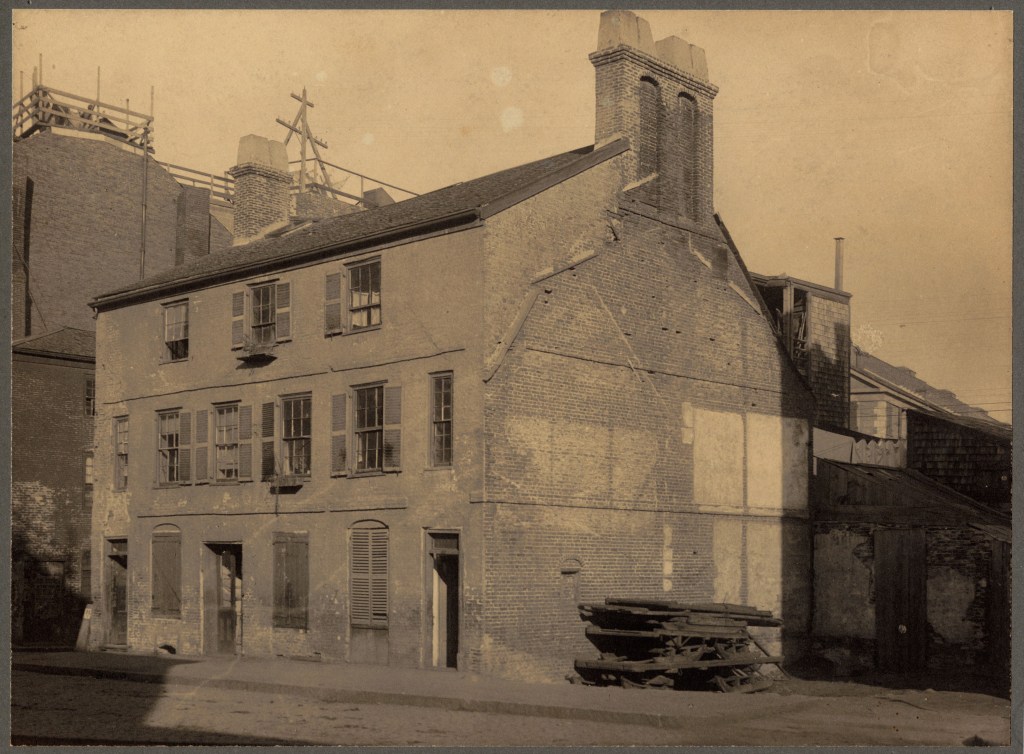
Downe-Tremere House // c.1674-1896

Image c.1896 courtesy of Boston Public Library.

One of the finest First Period Houses to have been built in New England was this brick mansion, formerly on North Street in Boston’s North End. On December 29, 1674, John Paine conveyed his property including a dwelling house to William Downe his new son-in-law. It is unclear when the house was built, but it was completed by the time of sale to William. Luckily, the house was constructed of brick, which likely saved it from the Fire of 1676. In later centuries, the building was converted to commercial use. After the Civil War, the property was owned by the Tremere Family, who rented out commercial space and held tenements in the floors above (the third floor was added, filling in the space between the two end chimneys which were added in the early-19th century. The property was razed in 1896 for the present tenement building on the site.

Hull Street Medical Mission // 1901

Constructed for the Woman’s Home Missionary Society of the Methodist Church of New England, this building was associated with the Hull Street Medical Mission from the time of its construction, in 1901, to about 1950. The mission was one of a number of church-related social service programs established in the North End in the late 19th and early 20th centuries to address the needs of recent immigrants, namely the Russian Jews, Italians, and Portuguese residing in this area of the neighborhood. In 1909-1910 alone, 14,574 treatments were given in the clinic, providing a huge medical service to the widely low-income immigrant community of the North End [29th Annual Report, 154]. The Medical Mission closed in the early 1950s and the property was later sold and converted to apartments. It was designed by architect Walter Forbush, who utilized ogee arches and leaded glass windows, adding much flair to the building’s design.

Old North Church // 1723

One of the most visited buildings in New England is the stunning Old North Church in the North End of Boston. Old North Church (originally Christ Church in the City of Boston) was established when the cramped original King’s Chapel, then a small wooden structure near Boston Common, proved inadequate for the growing number of Anglicans in the former Puritan stronghold. Subscriptions for a new church were invited in 1722. The sea captains, merchants, and artisans who had settled in Boston’s North End contributed generously to the building fund, and construction began in April, 1723. The church was designed by William Price, though heavily influenced by Christopher Wren’s English churches.

Before the American Revolution, both Patriots and Tories were members of the church, and often sat near each-other in pews, clearly adding to bubbling tensions. The enduring fame of the Old North began on the evening of April 18, 1775, when the church sexton, Robert Newman, and Vestryman Capt. John Pulling, Jr. climbed the steeple and held high two lanterns as a signal from Paul Revere that the British were marching to Lexington and Concord by sea across the Charles River and not by land. This fateful event ignited the American Revolution.

A full scale restoration of Old North was carried out in 1912-14 under the direction of architect R. Clipson Sturgis and a number of 19th century alterations were then eliminated. In this work, floor timbers and gallery stairs were replaced, the original arched window in the apse at the east end was replaced, and the old square box pews and raised pulpit were reconstructed. Additionally, the interior woodwork was incorrectly repainted white rather than the rich variety of original colors described in the early documents of the church, clearly submitting to Colonial Revival sensibilities. The iconic white steeple is also not original. The original steeple of the Old North Church was destroyed by the 1804 Snow hurricane. A replacement steeple, designed by Charles Bulfinch, was toppled by a hurricane in 1954. The current steeple uses design elements from the original and the Bulfinch version. Even with all these differences, Old North lives up to her name and stands proudly as a symbol of freedom and revolution.