Third Congregational Church of Chicopee // 1868

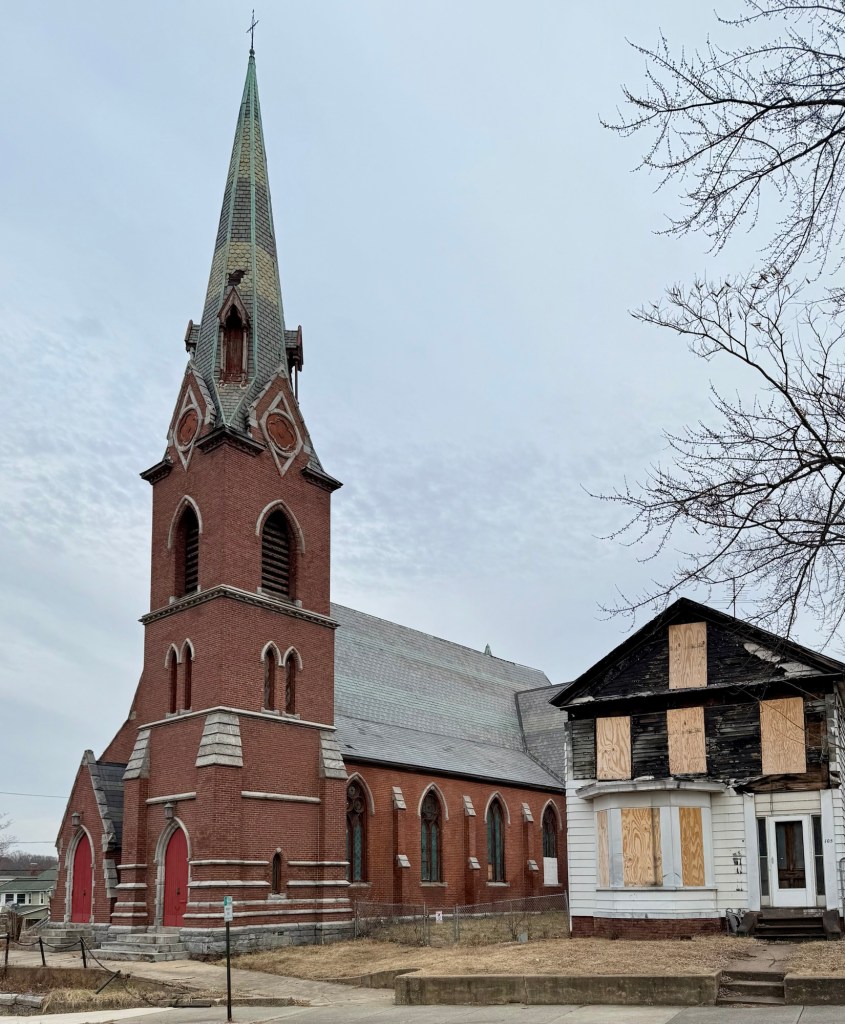
The Third Congregational Church of Chicopee was built on a prominent lot on Springfield Street in 1868, replacing the congregation’s first church there, which was outgrown. The present building was designed by Charles Edward Parker, a Boston-based architect, who was an expert in Gothic architecture. He would design the Chicopee City Hall just years later. The building is constructed of brick and atop a granite base and features lancet (pointed arch) doors and windows, a corner steeple, and steep gable end with large rose stained glass window. The interior is preserved as well. Due to shifting demographics in Chicopee in the early 20th century, the church merged in 1925 with the Central Methodist Episcopal Church, forming the Federated Church of Chicopee. The congregation eventually closed and the church has sat vacant in recent years, and was briefly listed for sale in 2024, 9,339 square feet for just $200,000.
Church of the Holy Name of Jesus, Chicopee // 1857

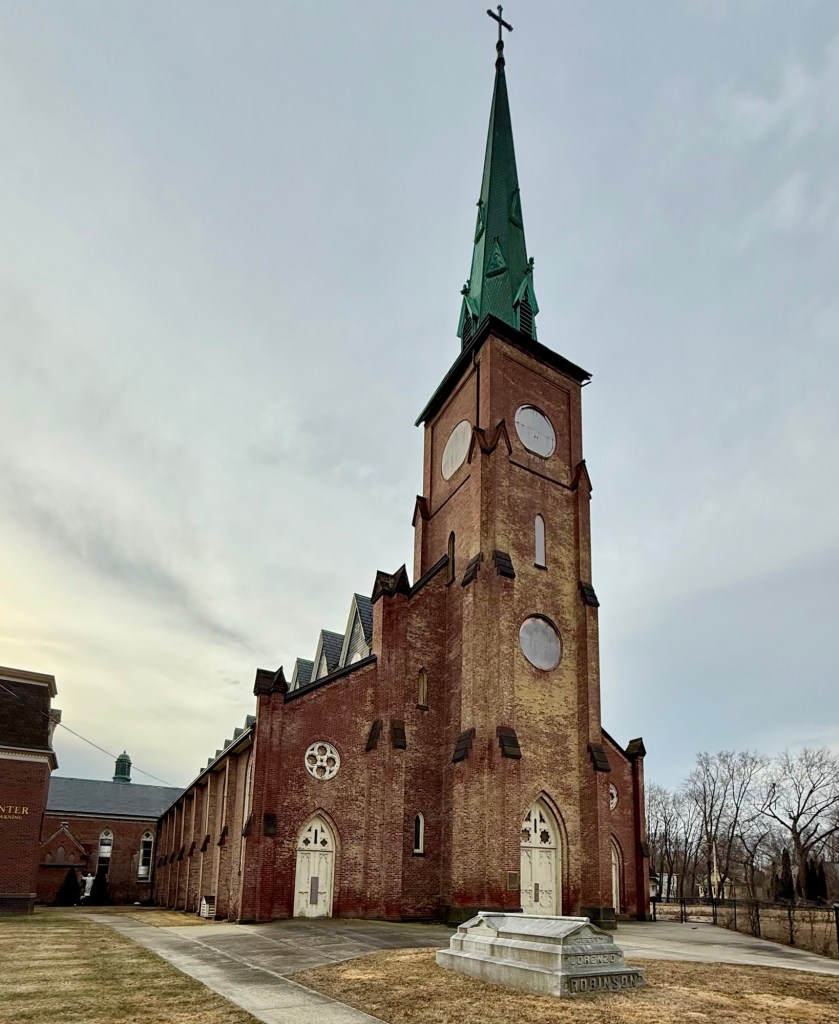
With crop failure a common occurrence in 1830s Ireland, immigration from Irish to New England surged with workers and families looking for a better life. Labor opportunities were abundant in the newly established mill town of Chicopee, with the Irish flocking here to dig canals, build dams and mills and later work in those same buildings. Their wives and daughters would work as cooks and maids, but later as operatives in those same mills. As many Irish were Catholic, it became apparent that a Catholic congregation should be established, St. Matthew’s was first organized in Chicopee in 1838. An earlier wood-frame church was built and used for a number of years until a large site on South Street was purchased by the Diocese for a new campus. Irish-born ecclesiastical architect Patrick Keely designed the church building which was constructed between 1857-1859 in the Gothic Revival style. The church was dedicated the “Holy Name of Jesus” church and exhibited sandstone-topped buttresses, rows of pointed dormers running down the clerestory on the sides, and a prominent central steeple. In 1910, the present copper spire replaced the original steeple which was damaged and burned in a lightning strike. The complex grew throughout the 19th and 20th centuries, with a rectory, schools, convent and monastery built on the site. Sadly, due to dwindling membership and fiscal considerations, many of these buildings were demolished in the past decades. The church appears now to be closed and is still owned by the Archdiocese of Springfield. I hope something can be done to preserve this landmark structure and the remaining buildings on the site.

Newburgh Center Union Church // 1878

Image courtesy of Amy Higgins

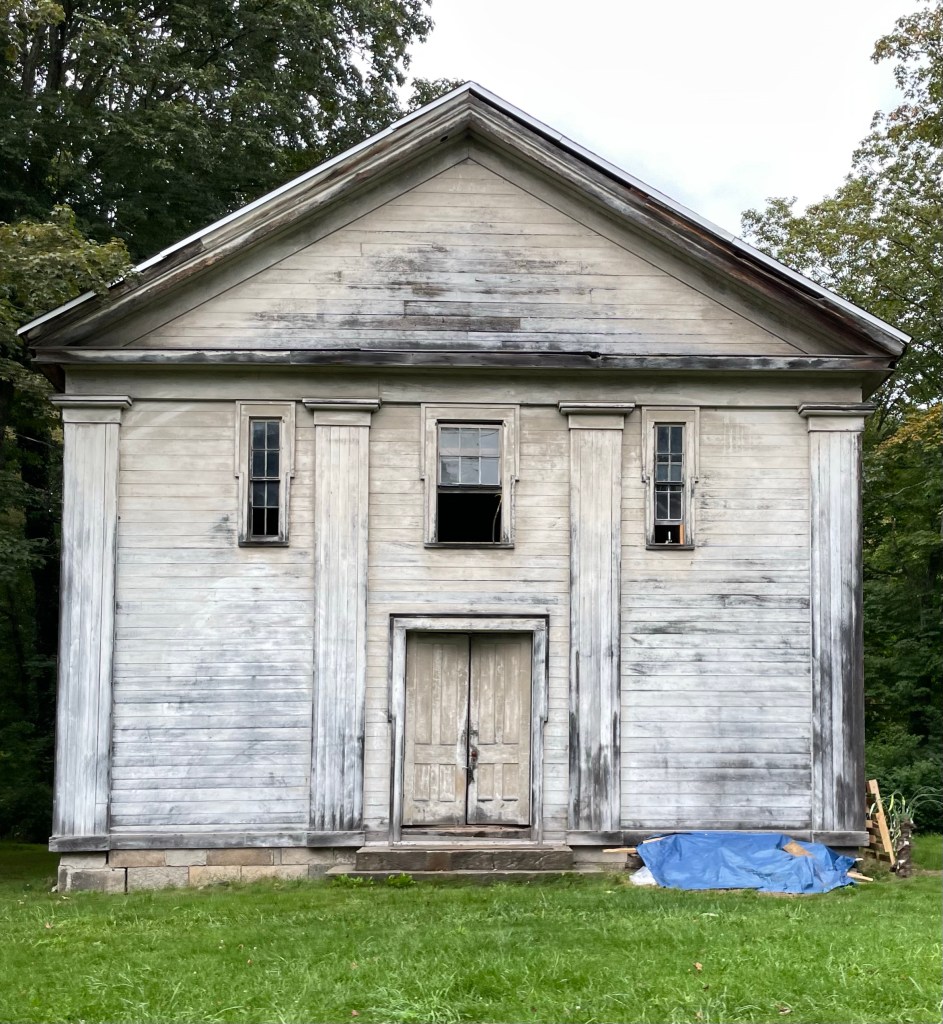
The Newburgh Center Union Church was built in 1878 as a non-denominational religious building for the small, rural town of Newburgh, Maine. At this time, the small town had just over 1,000 residents and it was not economically feasible for each congregation to build its own meeting house. The vernacular Greek Revival/Italianate style church building was eventually the house of worship of a local Pentecostal congregation, but that too appears to have disbanded. The building has been falling into disrepair, so hopefully it will be preserved.

South Britain Methodist Episcopal Church // 1839

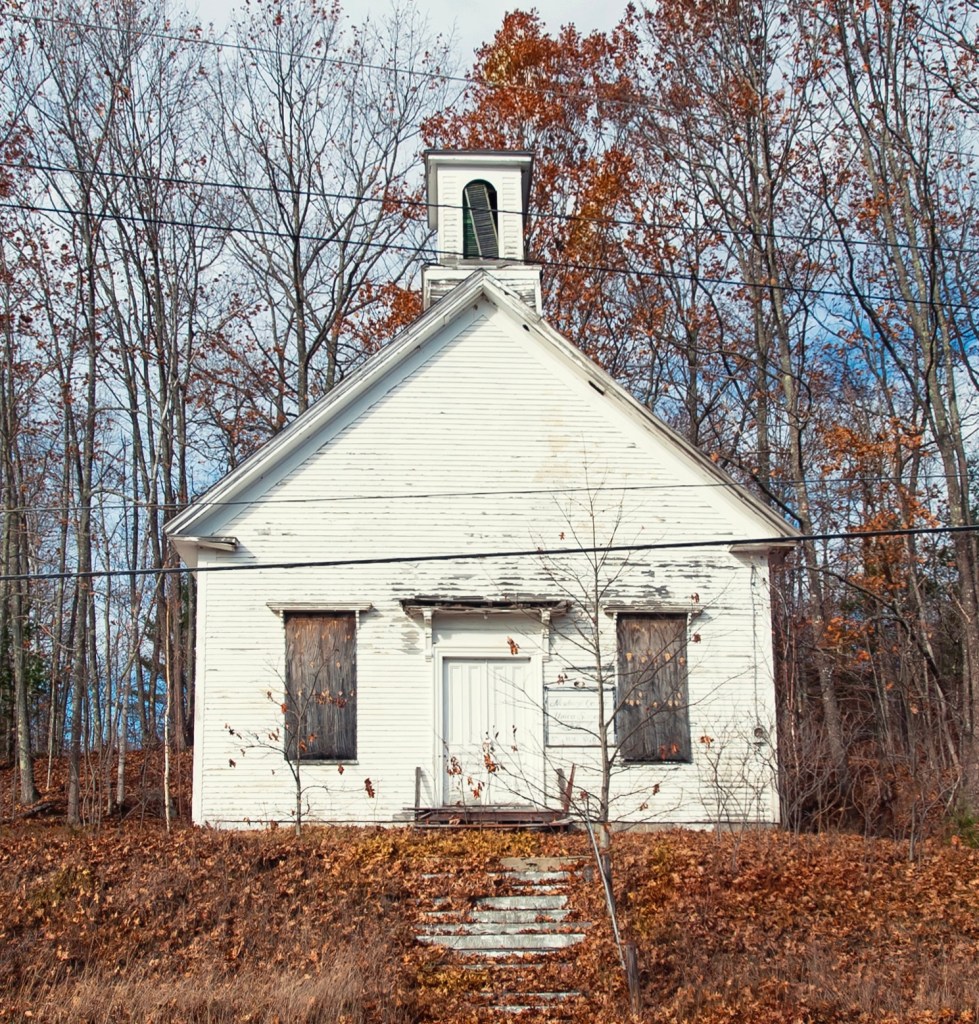
Constructed in 1839 by the Methodist Society of South Britain, Connecticut, this dilapidated old church has classic Greek Revival features including a flush sided facade divided into bays by Doric pilasters, a central double-leaf four-panel door, and high narrow windows. The church sits in the South Britain National Register District, which sadly does not provide any tangible protections for the building, which has been decaying for years. The square belfry was removed (or collapsed) a couple years ago and I would imagine there is some water damage from openings in the roof. What would you like to see this old church converted into?

Notre Dame Roman Catholic Church // 1875

Built in 1875, this large Gothic Revival church was built specifically to serve as a place of worship for the French Roman Catholic immigrants from Canada who began moving northern Berkshire County, Massachusetts, who were arriving to work in North Adams’ brickyards and textile factories. Before 1875, the Catholic community in the region had to make due with only occasional visits from a Vermont missionary. In 1871, Father Charles Crevier arrived in North Adams to take charge of the French flock and officially form the parish of Notre Dame du Sacre Coeur, with 750 new parishioners. Funding was acquired to purchase a property in town and erect a suitable church for the large (and growing) congregation. Architect James Murphy, a relatively unknown architect who specialized in ecclesiastical designs, furnished the plans for the church. After loss of industry and a declining population, the church closed in 2005, and the property was sold to the city of North Adams in 2008. The city faced repairing the church building as recently as 2016 with about half of the $100,000 budget coming from the city directly. Its future is unknown, but the town hoped to sell it for a renovation into a hotel or other use to activate the downtown area.