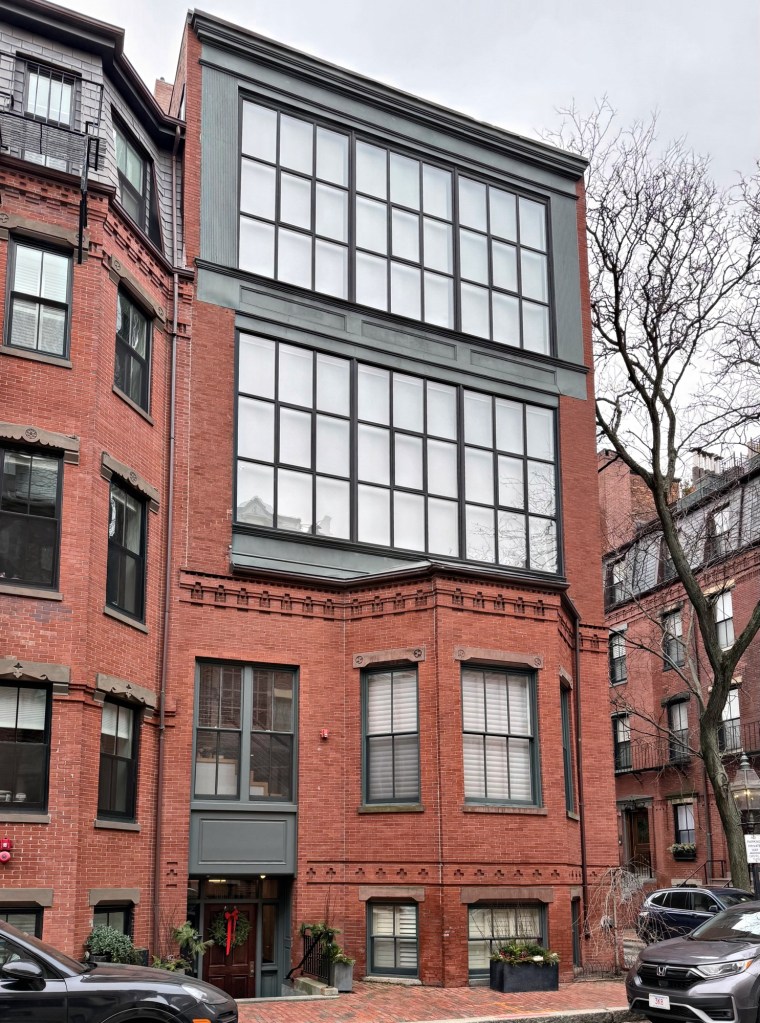
Mrs. Martin’s School – Jenks & Gaugengigl Studio // 1872

This unique three-story building on Otis Place in Beacon Hill, Boston, was actually constructed in 1872 by owner/architect, Abel C. Martin (1831-1879) as a school run by his wife, Clara Barnes Martin (1838-1886). Clara B. Martin was born in Maine to Phineas Barnes, a prominent publisher in Portland, who educated his daughter at the best schools. She in turn, became a writer and educator herself, writing a book about Mount Desert Island in Maine and publishing articles in national papers, along with operating a school in this building, designed and owned by her husband as they lived next door. After Clara died in 1886, the property was sold by the Martin heirs and in 1895, renovated into artist studios with two floors of large windows to provide natural light for the work inside. The building was owned and operated as artist studios by Ignatz M. Gaugengigl (1855-1932), a Bavarian-born artist who spent most of his professional life in Boston and was a prominent member of The Boston School, and Phoebe Jenks (1847 – 1907), a portrait painter who divided her career between New York and Boston. The building, while heavily altered, showcases the history of the Beacon Hill Flat neighborhood, which, during the late 19th and early 20th centuries, became a popular place for artists and Bohemians, who renovated existing houses and stables in the Arts and Crafts, neo-Federal and other fashionable styles into loft spaces and studios. The 1895 renovation was undertaken by architect, Edgar Allen Poe Newcomb, who was the nephew of sculptor, Thomas Ball, likely providing him insight into the design of artist studios.
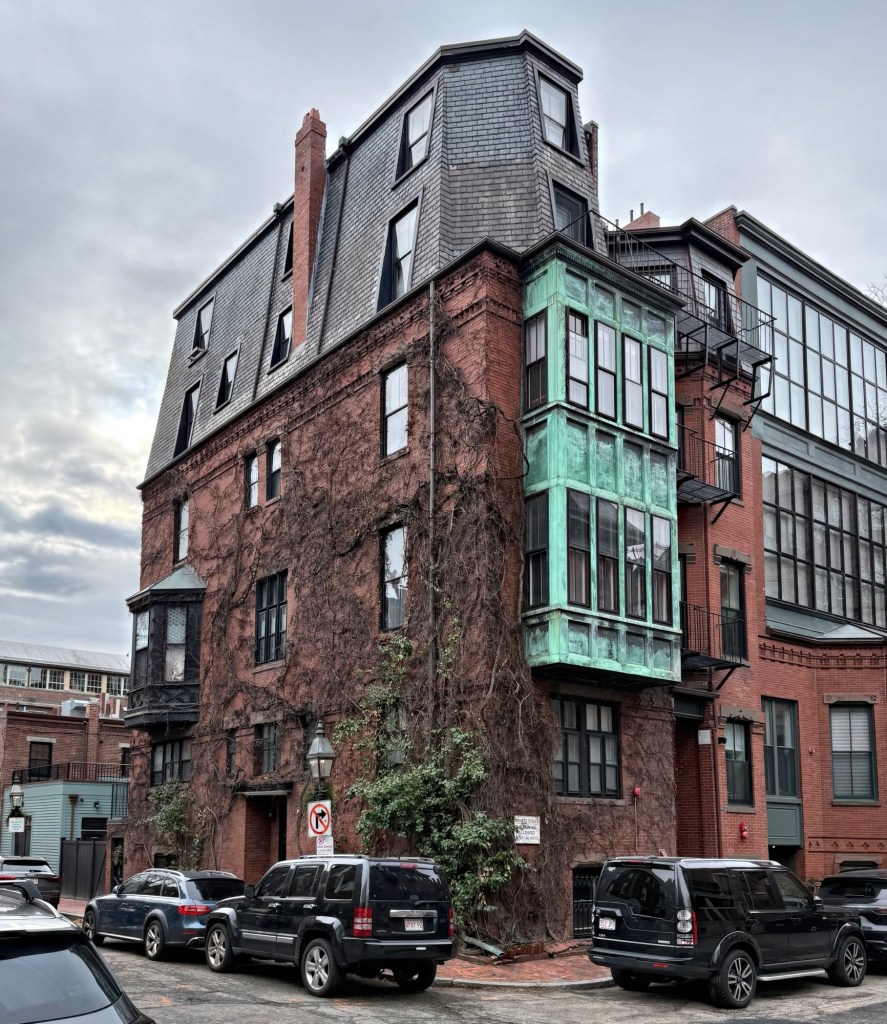
Martin-Ware House // 1872

One of the most interesting houses in Beacon Hill is this unique Second Empire style townhouse with towering two-story mansard roof at 3 Otis Place/49 Brimmer Street. When walking around Boston and exploring other cities, it is always fun to delve into research and learn about the built environment and the stories that brought these places to be! This residence was constructed in 1872 on land that was filled here between 1867 and 1869 formerly occupied by the Charles River. Creating the land at and around Otis Place was one of a series of responses to the need for more physical space in Boston and to cover the pollution of the Charles River along the West End and what would become the Back Bay. The houses at 3-4 Otis Place were originally owned and designed by architect, Abel C. Martin, who resided next door to the topic of this post until his death. In the early 20th century, this house was owned by Charles Eliot Ware Jr. a publisher, who in 1929, hired architect, Charles Greely Loring to add the copper-clad oriel window on the north elevation and elevate the mansard roof to create the unique two-story mansard. The old Martin-Ware house has been apartments since at least the 1960s.

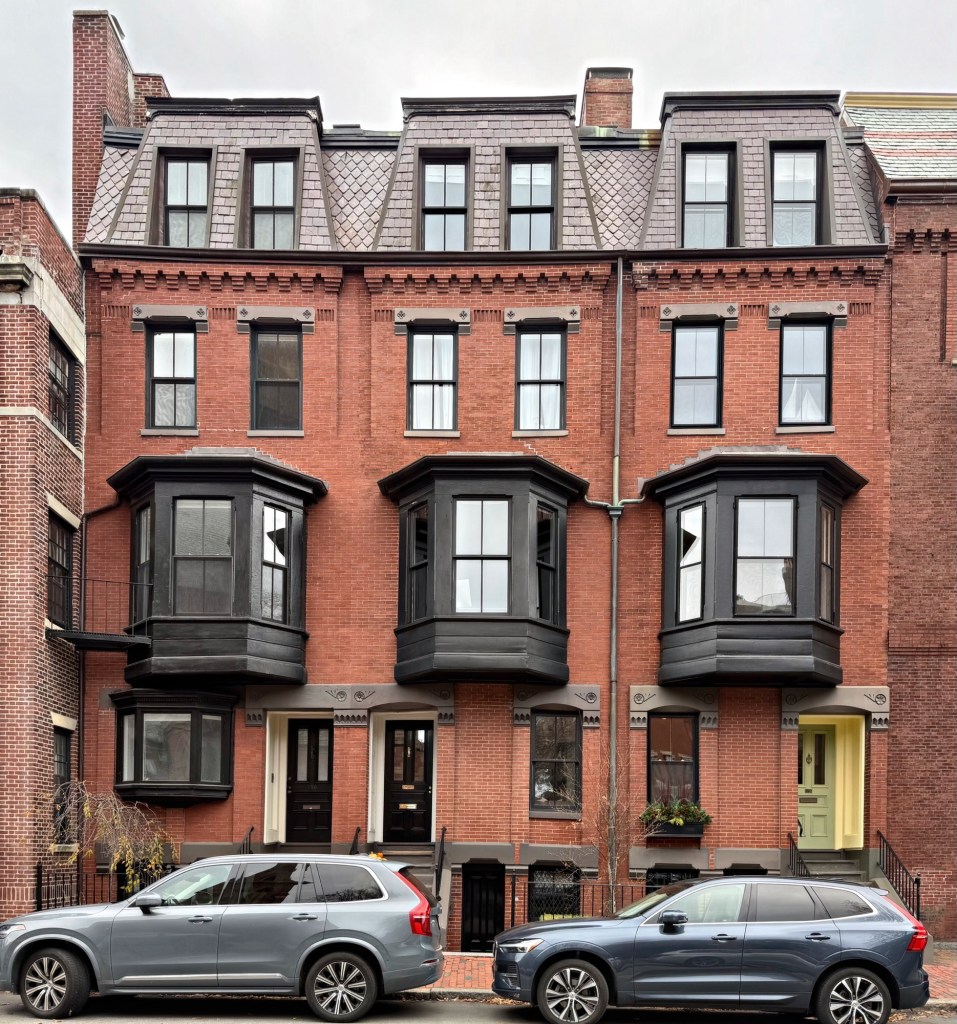
Samuel and Emily Eliot Rowhouses // 1871

These three identical three-story houses at 156, 158 & 160 Mt. Vernon Street in Beacon Hill Flat were built in 1871 as income producing properties for Samuel and Emily Otis Eliot who lived next door on the corner of Brimmer Street. The architect is not evident from my research, but they were likely designed by Abel C. Martin, who furnished speculative housing for the Eliot’s elsewhere in the neighborhood. All three residences feature brick facades with off-center recessed entries on raised stoops. The use of brownstone lintels and sills, decorative brick cornice, and second-story hexagonal oriel windows add intrigue to the design, along with the slate mansard roofs. The three houses were sold or rented and all were owned by various families, but notable owners of the central house include the architect George Russell Shaw (1848-1937) of the firm Shaw and Hunnewell through the early 1900s. Later in the 20th century, the house was owned by Kevin White (1929-2012), who served as the mayor of Boston for four terms from 1968 to 1984.
All three residences are well-preserved and look much as they did when constructed over 150 years ago.