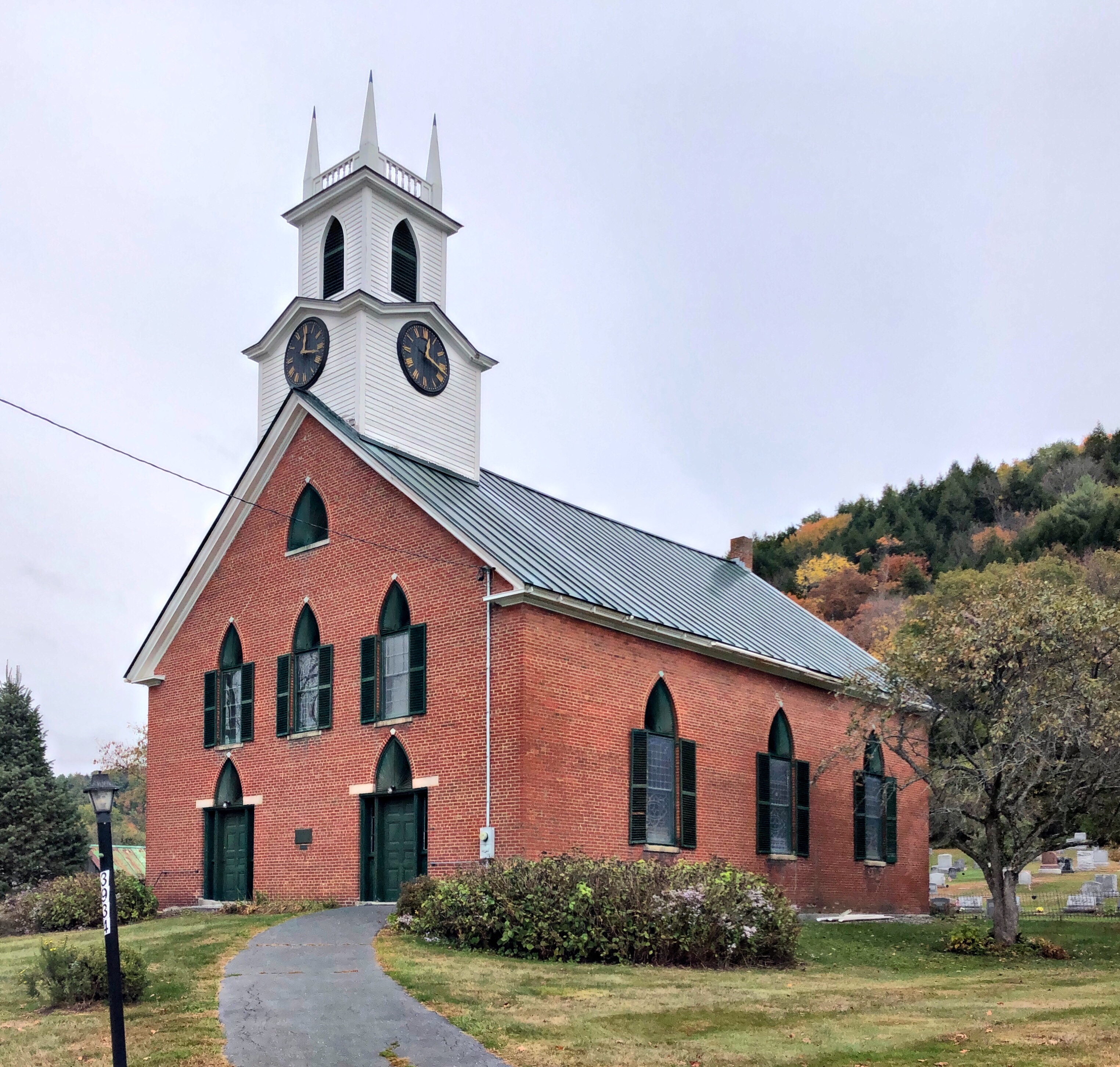
Thetford Center Methodist Church // 1838

An outstanding example of the Gothic Revival style churches in Vermont, this brick, three bay, gable front church was constructed in 1838 in Thetford Center Vermont. The Gothic Revival style is expressed here primarily in the pointed louvered insets above the windows (including the pointed louvers in the steeple) and the finials at the steeple. The church building was constructed using brick made in the local brickyard owned by Hezekiah Porter. Designed to seat 250 people, it was constructed for the cost of a mere $1,400. Behind the church is the Evergreen Rest Cemetery, administered by a Cemetery Association, in which are many of the early residents of Thetford and members of the congregation and its founders.

Hosford Stone House // c.1835

Josiah Hosford of Thetford, Vermont built this stone house for his family in about 1835. Hosford was a stone mason who built a series of stone houses in town, using stone quarried in nearby Lyme, New Hampshire. Josiah Hosford (1802-1883), was the grandson of Aaron Hosford, one of the earliest settlers in the North Thetford area. The distinguished family contributed resided and contributed to the town’s vibrant history, as ministers, teachers, artists, farmers, and tradespeople. A fire at the home in the early 1900s gutted the interior, and the owner at the time, a carpenter, reconstructed the interiors, shingled the side gables, and added on the porches.

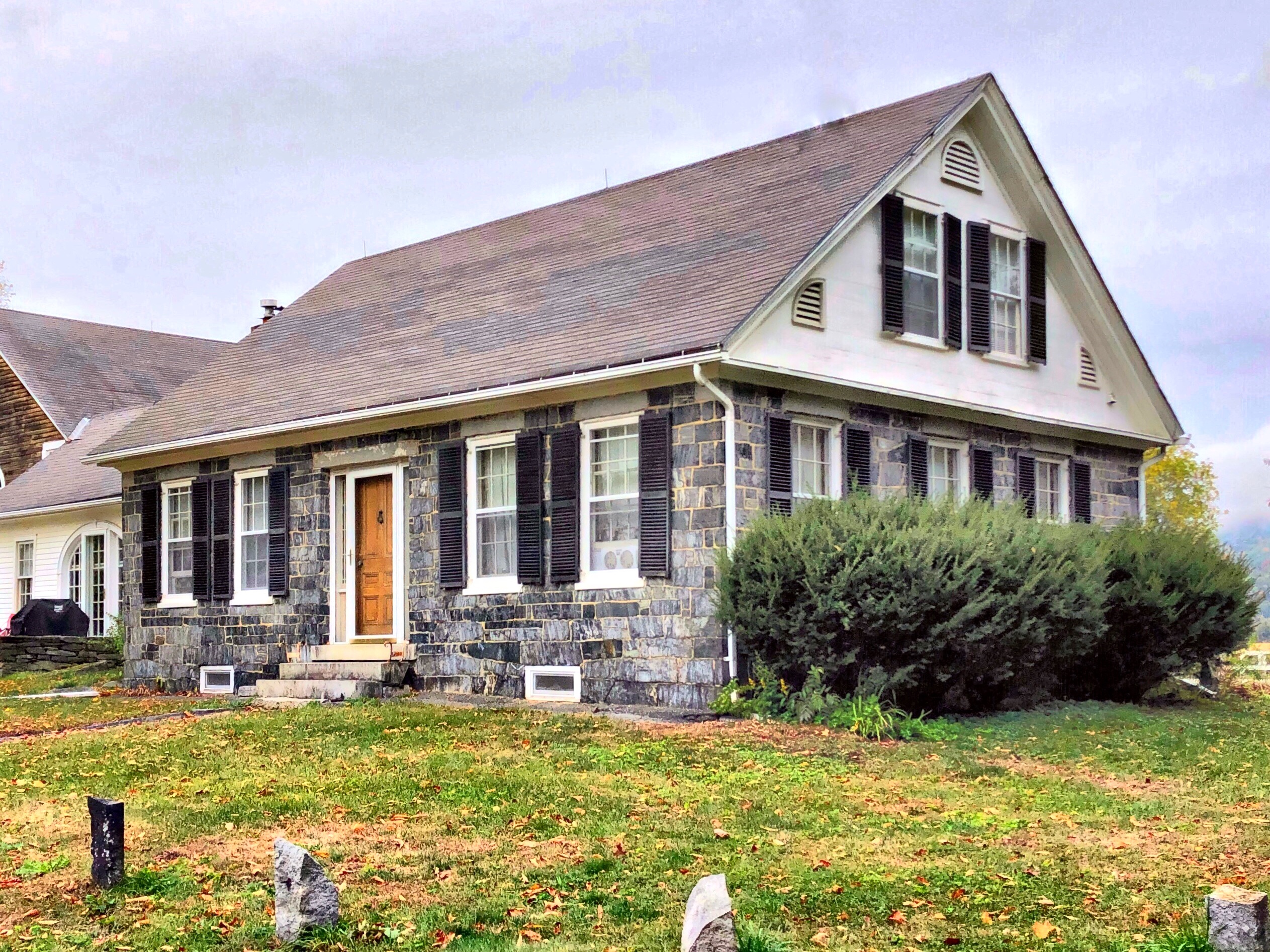
Child Farmhouse // c.1835

Constructed out of stone quarried from nearby Lyme, New Hampshire, the Child Farmhouse is one of a handful of stone houses in East Thetford, Vermont. This house is a particularly fine example of a Cape Cod with Federal detailing, as translated into granite construction. The home features stone lintels over the door and window openings. It was built for Bela Child (1786-1866), likely after the death of his first wife, as a new home for his second. The family operated a massive farm along the Connecticut river.

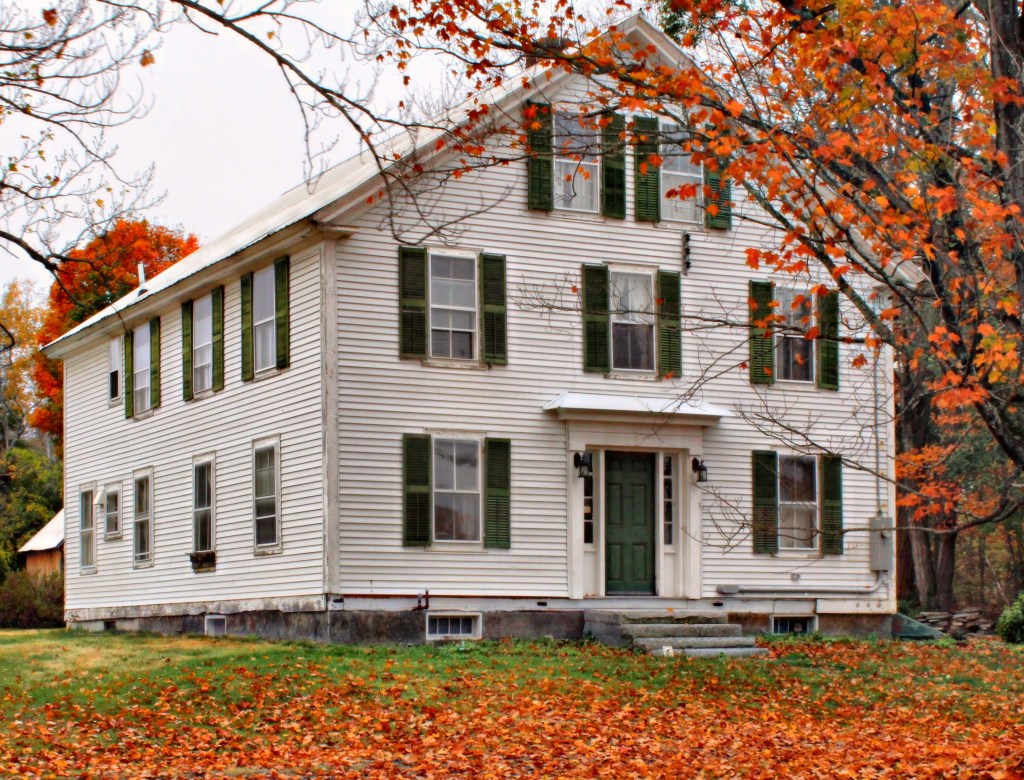
Burton Hall, Thetford Academy // 1845

Burton Hall was constructed in 1845 as a boy’s dormitory for Thetford Academy on a lot given by Orange Heaton (who lived nearby), just north of the original Academy Building. The structure was named Burton Hall in memory of Asa Burton, one of the Academy’s founders. The structure was sold by the Academy by about 1860 for $200, to a J.H. Huntington, who moved it across the street to its present site to replace his house which had burned the year prior. In the late 1930’s, Dwight Goddard, the owner of the home at the time, gifted the building back to the Academy since which time it has been known as Goddard Hall.

Fun Fact: Buildings historically were much more likely to be moved than demolished as the cost of building materials was much more than labor. Today, the opposite is true so many developers and owners prefer to demolish.

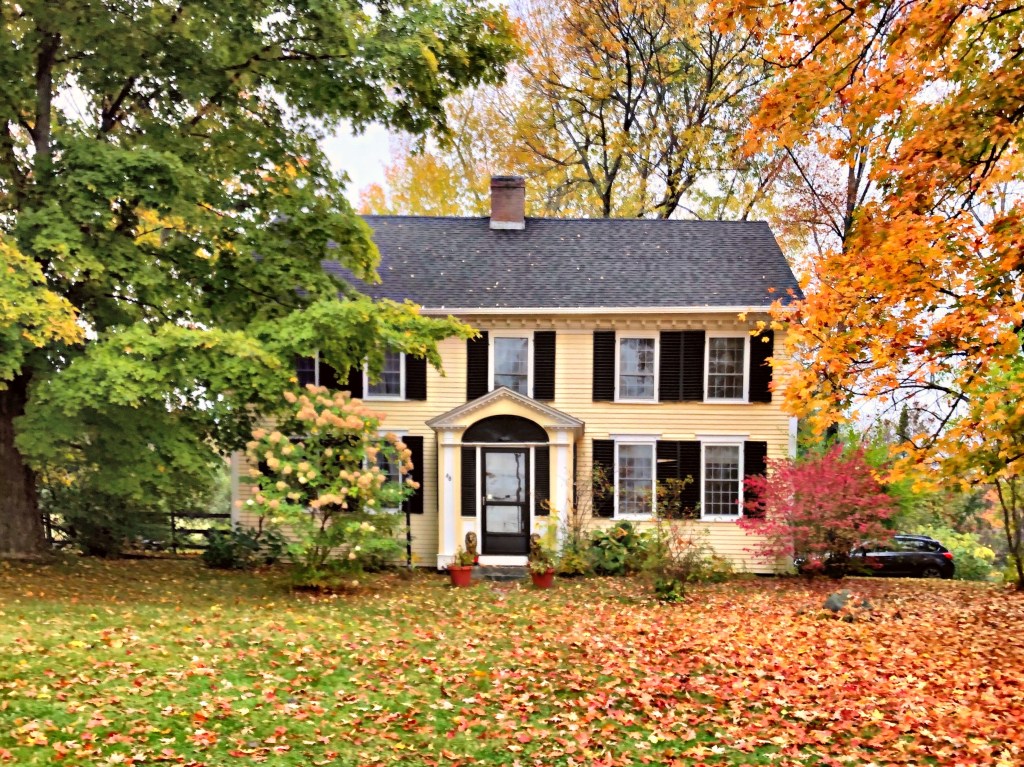
White-Heaton House // 1795

This transitional Federal house in Thetford was built around 1795 for an Isaac White. The house was later owned by Orange Heaton (who’s name perfectly fits the color of the leaves in the photo). The design is refined, yet stately with the enclosed, gabled, projecting entrance porch. Louvered panels and an elliptical louvered fan frame the door.

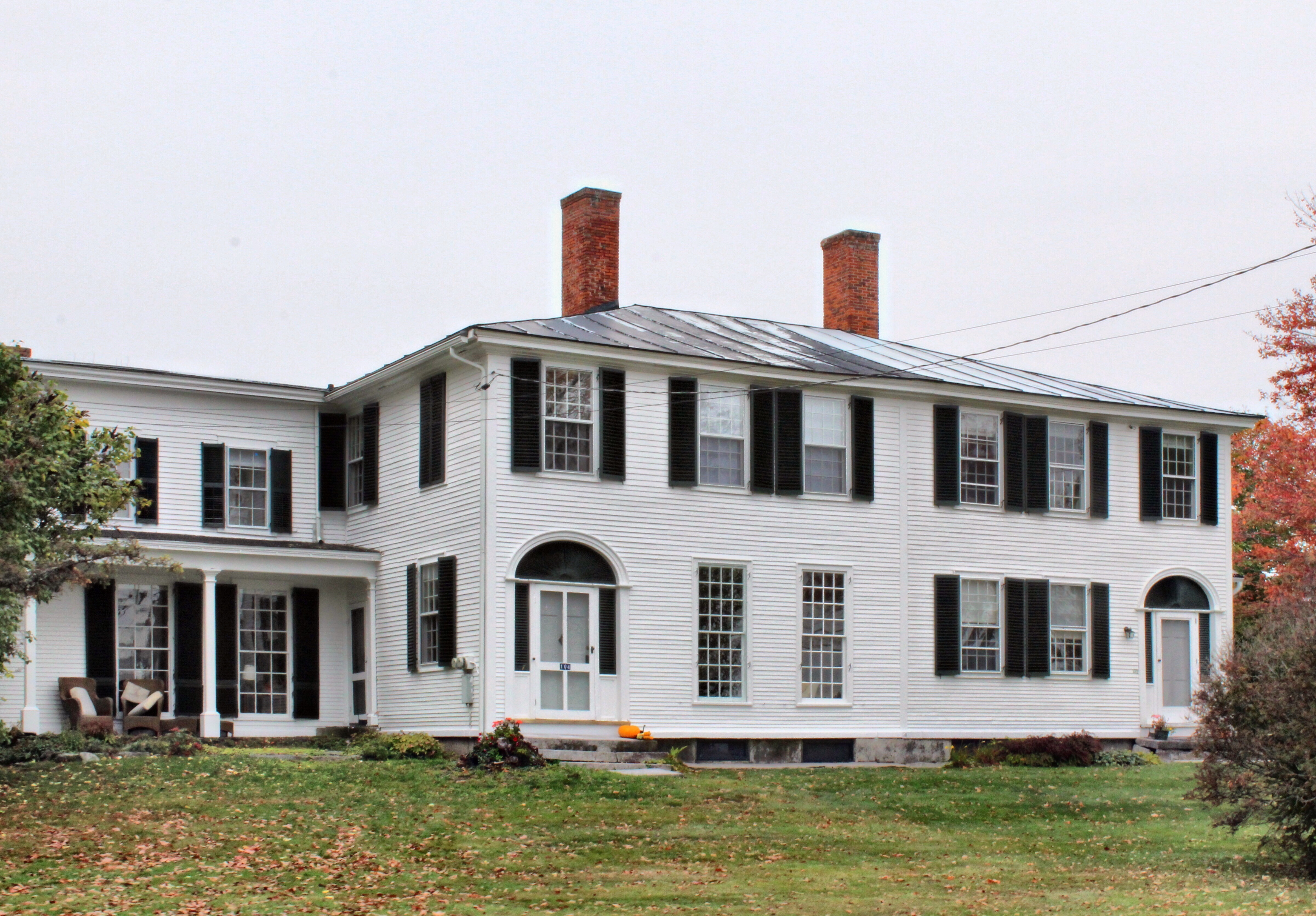
Latham-Kendrick Houses // 1817

This unique double-house was constructed in 1817 for Capt. William Harris Latham and Dr. Thomas Kendrick, brothers-in-law, merchants and partners in a store which stood until it was destroyed by fire about 1845. Latham served as a Captain in the War of 1812, and later was an important benefactor of the nearby Thetford Academy, donating money and building materials for the original construction. Wallpaper from this house depicting the City of Leon was donated by a previous owner, Mrs. Charles Vaughan, to the Currier Gallery in Manchester, NH. The homes are an excellent example of the Federal style with a vertical board at the center of the main house facade demarcating the property line. Blind fan transoms and multi-light double-hung windows add a lot of charm to the historic homes.

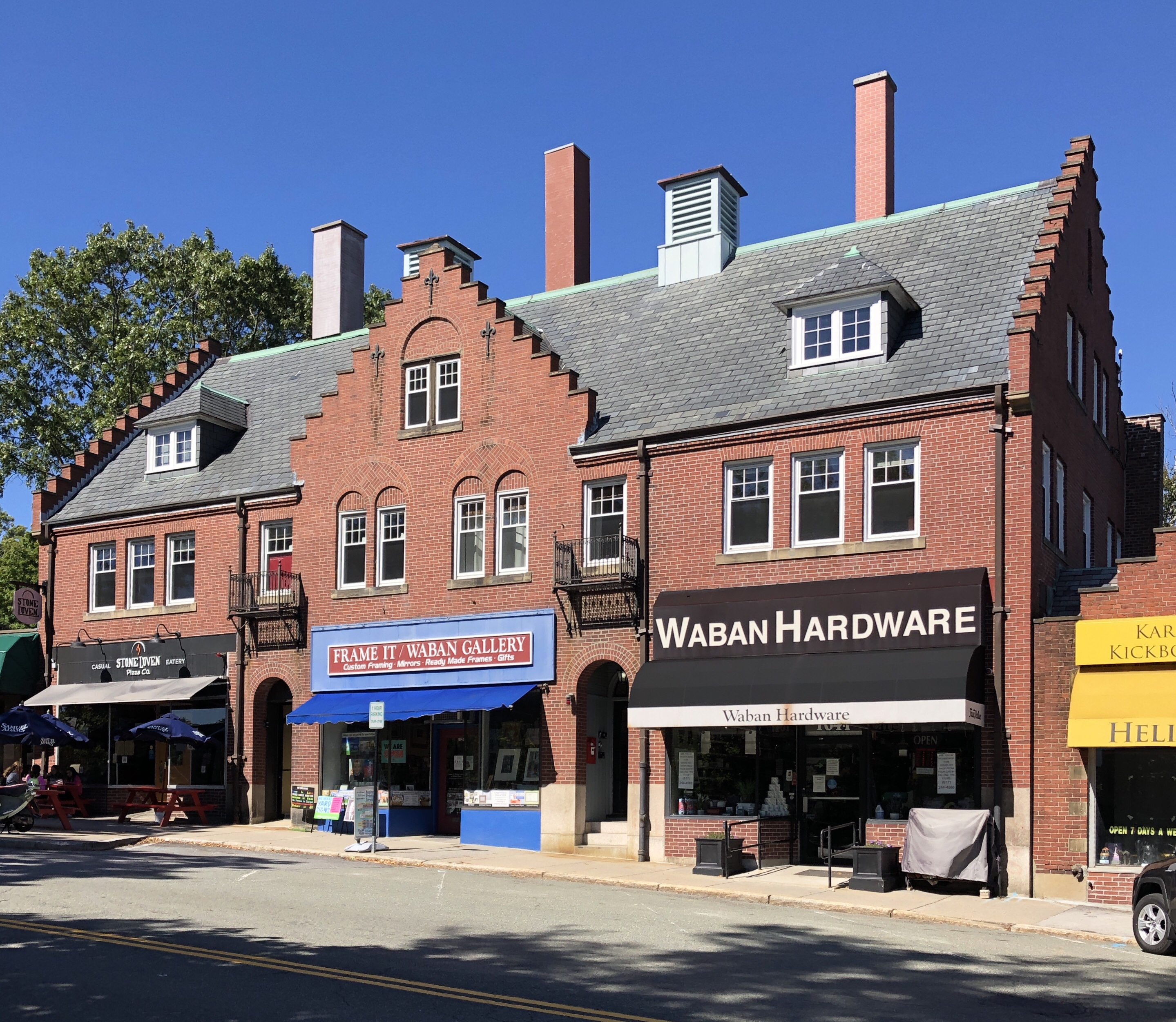
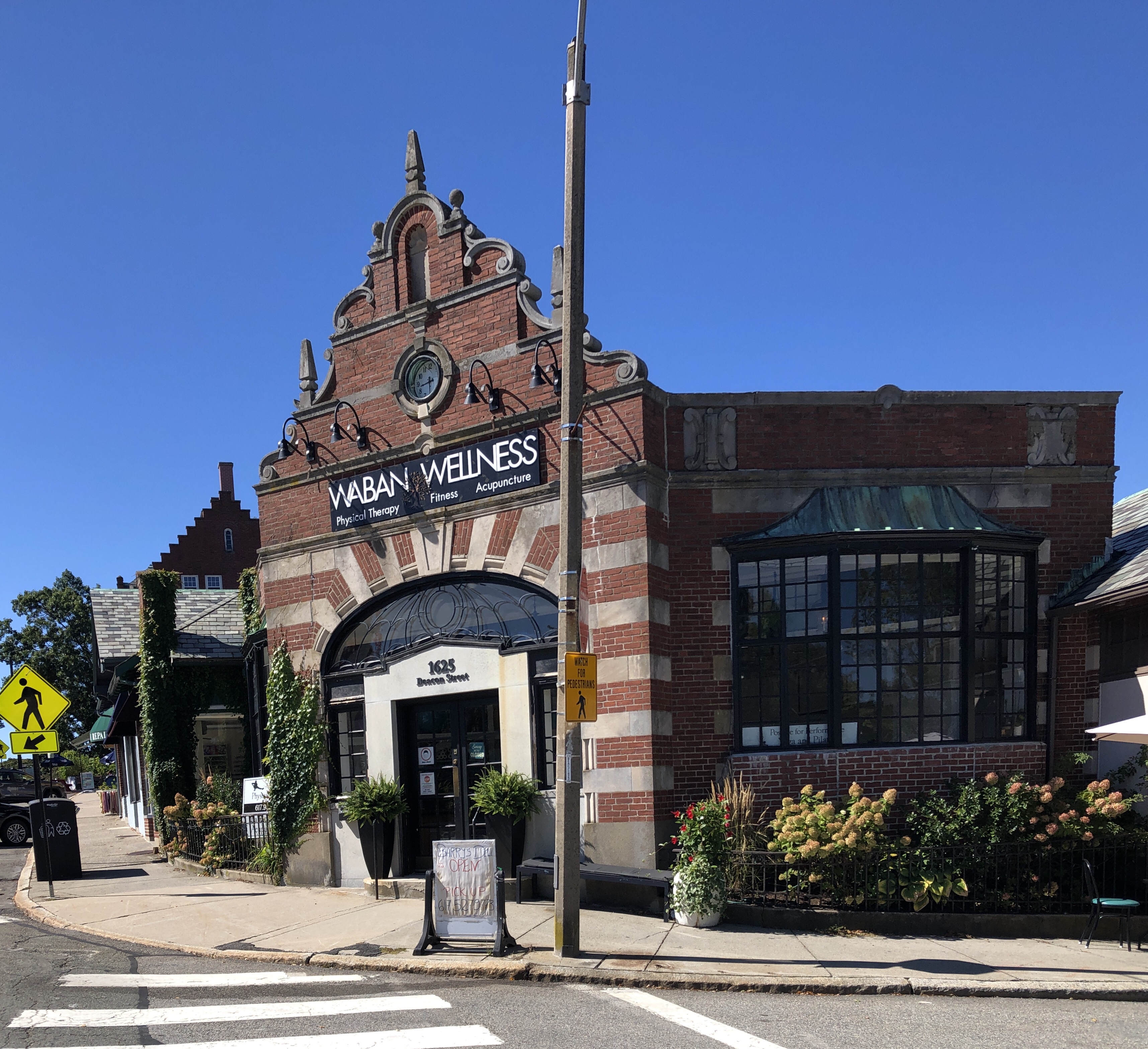
Strong’s Block // 1896

William C. Strong, a prominent local citizen who resided nearby, had this stylish commercial block built to serve the expanding population of the village which eventually became known as Waban. After the completion of the Waban Train Station, the demand for neighborhood retail became apparent and William Strong was an early developer to realize this. He hired Lewis Bacon, an architect who resided nearby, to design the commercial block. The result is a stunning Dutch Revival building with gables showcasing stepped parapets. The upper stories were apparently used as apartments when completed. Notwithstanding Strong’s efforts, the Waban commercial district developed rather slowly. It was not until 1924 that the row of one-story shops was added to its right. The addition was designed by Edward B. Stratton, who followed suit with Tudor and Jacobean motifs, to compliment the Dutch Revival block.

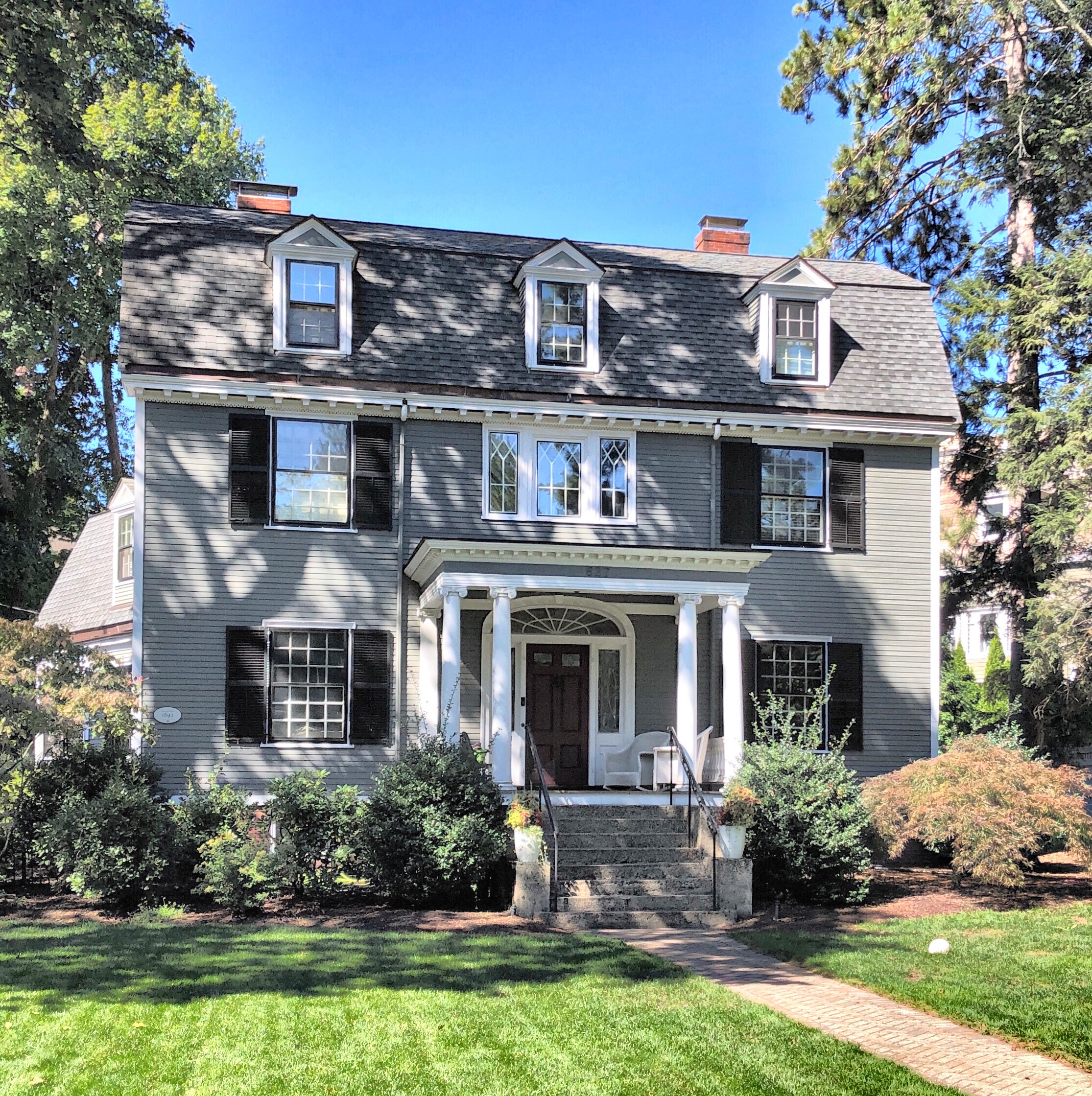
Lewis H. Bacon House // 1892

Another architect-designed home for their own use in Waban Village in Newton, is this house on Chestnut Street. Built in 1892, the Colonial Revival home is set far off the street with a commanding presence and symmetrical facade. The home was designed and occupied by Lewis Howard Bacon (1857-1941), a former chairman of the Newton board of appeals and a member of the school committee and the board of aldermen in Newton, also a practicing architect. He studied architecture in the office of Samuel Lane, architect of Cleveland, 1877-80, when he moved to Boston as a draughtsman and supervisor of construction for the firm of Sturgis & Brigham, 1880-1886. For four years he was a member of the firm of Morrison & Bacon (1888-1892), before embarking on his own practice in an office in Downtown Boston. He resided in this home until his health failed and he moved to a nursing home where he died.

Frederick Henshaw House // 1888

After the completion of the Waban Station, providing opportunity for residential and commercial development due to transit to and from Boston, two men sought to develop the area into attractive housing lots. In 1886, Dr. Morrill Wyman, founder of Mount Auburn Hospital in Cambridge, sold the old Wyman Farmhouse (still extant) and 150 acres of farmland to real estate speculators. The speculators, Charles Page and Frederick Henshaw, proceeded to subdivide the land into 87 house lots, creating this suburban neighborhood in Waban we know today. Frederick Henshaw sought to build his own home adjacent to the old farmhouse and hired H. Langford Warren (who then owned the farmhouse next door), esteemed architect and then Dean of the Harvard School of Architecture to complete designs. The Queen Anne mansion with its bold octagonal bay commands the corner lot and is a well-preserved significant home in the neighborhood.

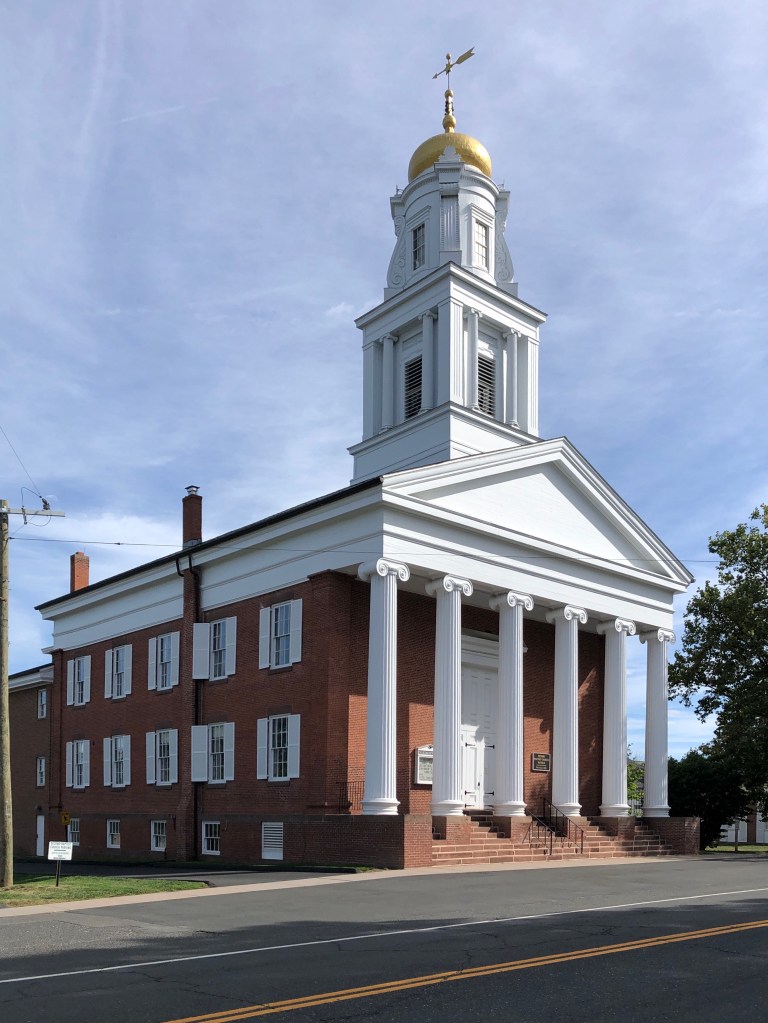
Second Baptist Church, Suffield // 1840

In early New England, the Congregational Church had a near monopoly on churches. Congregational churches had lost much of its hold on its members and on government by 1725. Eventually, some of its ministers decided a religious revival was needed, creating the emergence of new Baptist and Methodist churches all over the region. Baptists erected a church in West Suffield, far from the town center, which began to rapidly develop in the early 19th century. In 1805, they petitioned to create a second Baptist church, and succeeded. By 1840, the members collected funds to erect this stunning Greek Revival church on Main Street. The congregation hired architect Henry Sykes, who had trained under Chauncey Shepherd of Springfield, Mass and Ithiel Town of New Haven, clearly learning a lot on church design.