Ames Memorial Hall // 1881

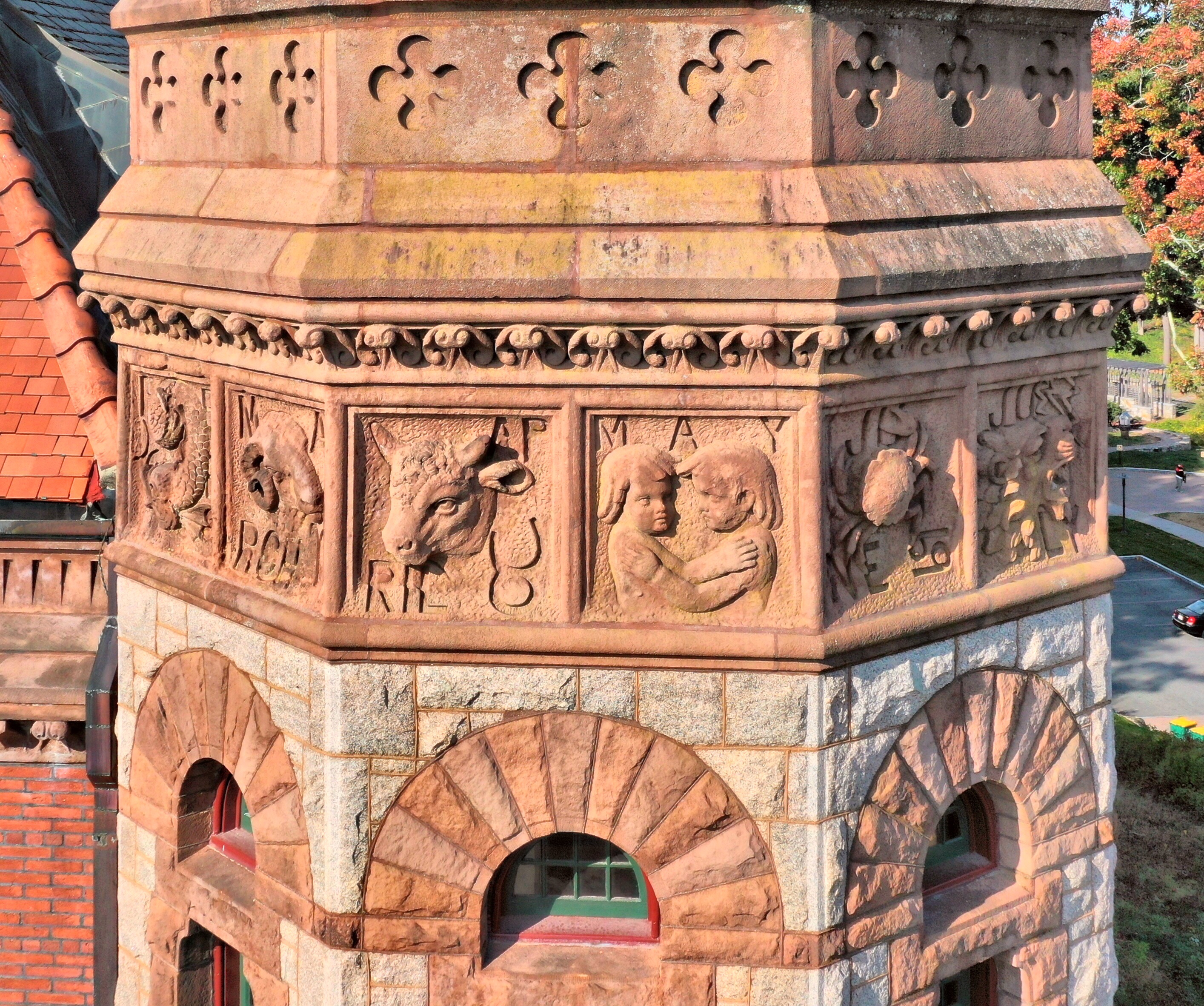
There are few buildings that make you stop and stare in marvel at their perfect architectural proportions, detailing and design, the Ames Memorial Hall in Easton, Massachusetts is one of them for me! In the late 1870s, the children of Oakes Ames commissioned the great American architect Henry Hobson Richardson to design the Memorial Hall as a tribute to their father. Richardson, the architect of Boston’s beloved Trinity Church in Copley Square, responded with a picturesque masterpiece using his signature architectural elements of rounded arches, dramatic roof lines, and heavy masonry adorned with carvings. The building was provided to the inhabitants of Easton “for all the ordinary purposes of a town hall”. Oakes Ames (1804-1873) was partner in the family business, O. Ames & Sons, a U. S. congressman, an early investor in the Central Pacific Railroad, and, at the urging of President Abraham Lincoln, a prominent force in the building of the first transcontinental railroad. The Richardsonian Romanesque building stands on the solid foundation of a natural ledge, from the northeast corner of which rises the beautiful octagonal tower, on whose frieze are carved the twelve signs of the zodiac.
Forest Hills Administration Building & Chapel // 1884

Located adjacent to the Entrance Gate at Forest Hills Cemetery in Boston, the Administration Building and Chapel perfectly compliments the Gothic Revival collection of structures welcoming all visitors to the cemetery. Designed by the firm of Van Brunt & Howe, the building was completed in 1884, when the cemetery’s popularity with visitors (alive and deceased) was at a high. The building is in the Gothic Revival style and is constructed of
Roxbury puddingstone, with sandstone trim on the original parts of the building and yellow freestone trim on the 1921 addition. The building remains as a perfect partner to the entrance gate, serving as a physical portal between metaphorical life and death.

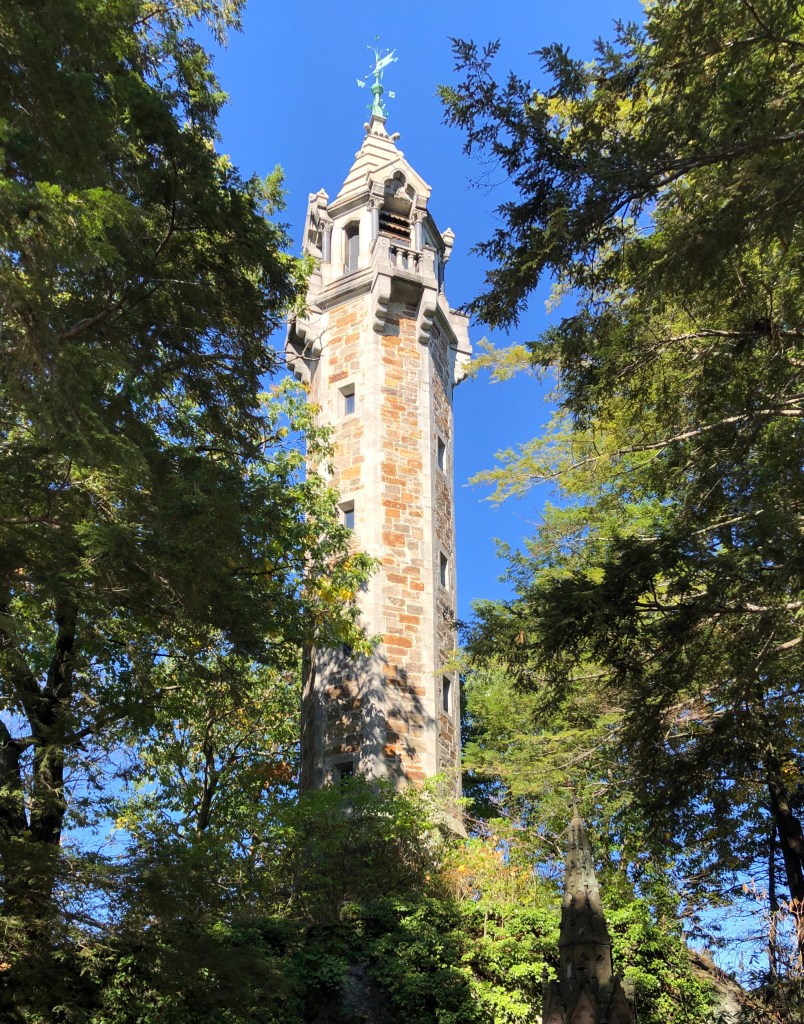
Forest Hills Cemetery Bell Tower // 1876

The bell tower at Forest Hills Cemetery is an octagonal Gothic revival structure located on Snowflake Hill just past the entrance gate and administration building and was completed in 1876. The 100-foot tower is constructed of Roxbury puddingstone and trimmed with granite. The roof is clad with granite tiles and topped with an ornate copper weathervane. Originally its swinging bell tolled, but it has since been replaced with an electronic carillon. The bell tower rises dramatically from massive
outcrop of Roxbury puddingstone known as Snowflake Hill which is offset by smooth lawns and Victorian planting beds. While the large trees surrounding partly obscure the tower, it truly is a stunning building.

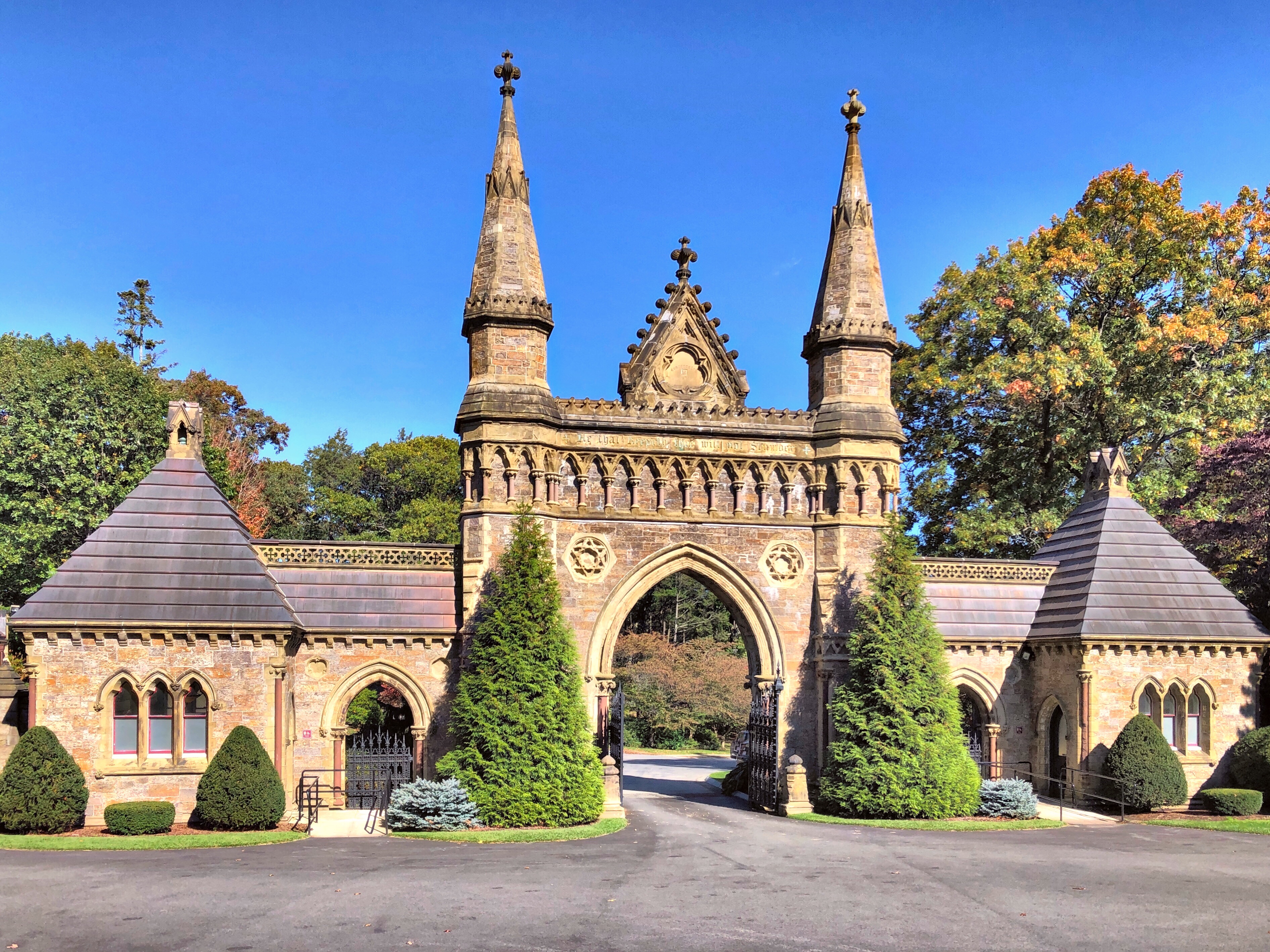
Forest Hills Cemetery, Entrance Gate // 1865

Forest Hills Cemetery was founded in 1848 by Henry A. S. Dearborn, then mayor of Roxbury. He designed this magnificent cemetery to offer the citizens of his community a place to bury and remember friends and family in a tranquil and lovely setting. Forest Hills embodies the ideals of the rural cemetery movement, which begun at nearby Mount Auburn Cemetery, in Cambridge in 1831, which was co-founded by Dearborn. Many rural cemeteries have elaborate entrance gates, possibly serving as a dramatic transition from the secular world to the spiritual realm of the cemetery, and perhaps as a metaphor for the journey from life to death. This entrance gate was built in 1865, replacing an earlier Egyptian Revival gate constructed in 1848. Designed by Charles Panter, the gate is constructed of local Roxbury puddingstone, with three arched openings with ornate iron gates surmounted by decorative scrolled ironwork. The central gateway is
framed by two conical spires and a central stone pediment, all topped with stone crosses.

Pomfret Records Building // 1904

This little brick building may appear like a schoolhouse, but it was actually built to house the 1761 Town Charter for Pomfret, Vermont. The building is believed to have been built in honor of Hosea Doten (1809-1886), who was an engineer, school teacher, and land surveyor in Windsor County Vermont, with his former students constructing the building. It was built nearby the Town Hall and Clerk’s Office and features a fire-proof walk-in vault inside.

Pomfret Town Hall // 1845

The quaint town of Pomfret, Vermont sees flocks of “leaf-peepers” and Instagrammers every Fall who are in awe of the natural scenery and historic farms seen there. The town was first settled in 1770 when Bartholomew Durkee travelled from Pomfret, Connecticut, along with his family and friends and named the town “New Pomfret” at first to show their roots in Connecticut. The tiny town grew to its peak population in 1830 at just under 1,900 residents, declining steadily over time to roughly 900 today, greatly adding to the rural character of the town.

In Pomfret Center, the local Congregationalists sought a new place of worship and had this structure constructed as their church in 1845. Local builder Eli Buch constructed the Greek Revival edifice with its projecting portico, doric columns, and corner pilasters. As nearby Woodstock Vermont grew, many families moved there and the church sold their building to the Town of Pomfret in 1872 and the building has since been used as Pomfret’s Town Hall.

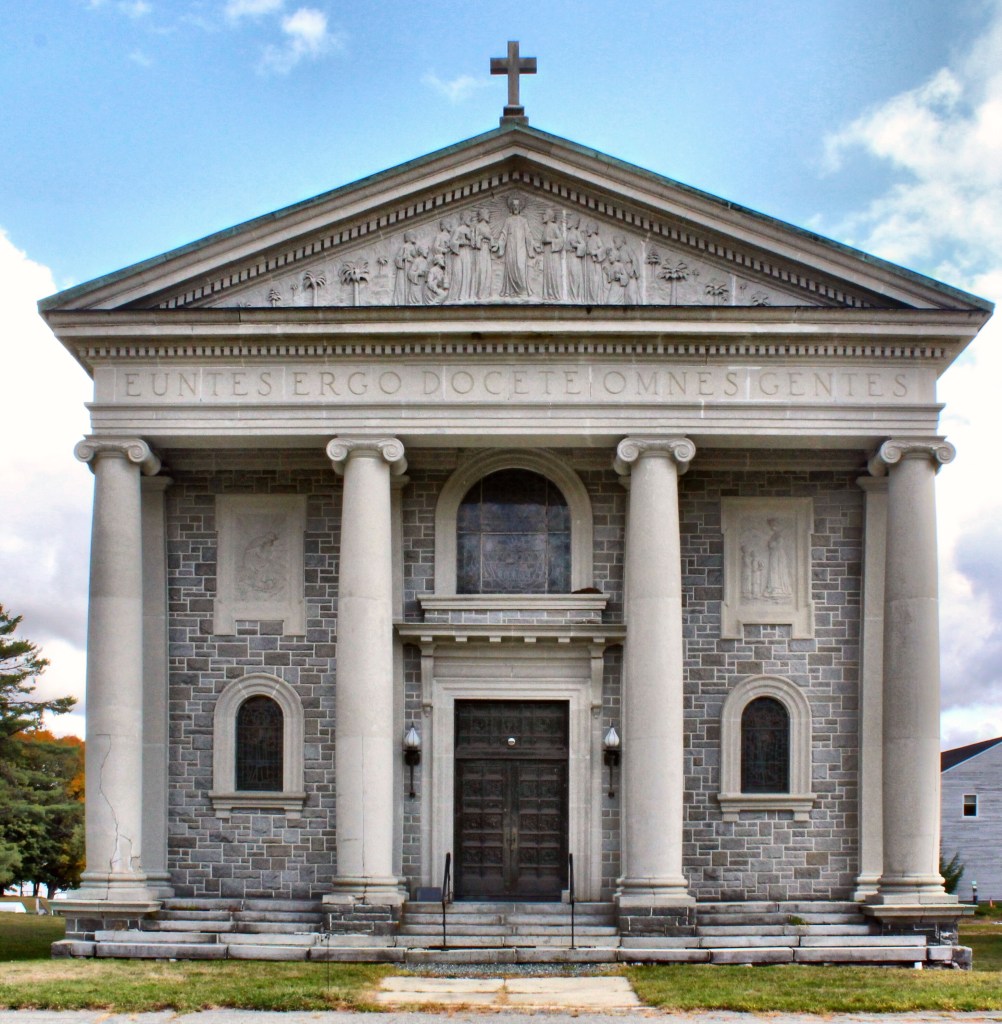
Mary Keane Memorial Chapel // 1930

Located in the Enfield Shaker Village in Enfield, New Hampshire, this stunning chapel building clearly depicts the significance of religion and faith in the Shaker Community. The church structure however, was built after the Shakers sold the property! In 1923, after 130 years of farming, manufacturing, and productive existence, declining membership forced the Shakers to close their community and put it up for sale. In 1927, the Shakers sold the site to the Missionaries of Our Lady of La Salette, an order of Catholic priests, ensuring the continued tradition of spiritual, communal life on the site. The La Salettes also continued the very active agricultural use of the site as well as establishing a seminary and high school here.

The Mary Keane Chapel dates from the post-Shaker era at the Church Family site. Designed by Donat R. Baribault of Springfield, Massachusetts, the chapel was built for the Brothers of the La Salette Order with funds donated by their benefactress, Mary Keane. Ms. Keane, who had inherited a fortune from her uncle, pledged that fortune to assist the La Salette’s in the establishment of a French language seminary in Enfield. Her wealth helped purchase the former Shaker community, renovate the building for La Salette’s use, and build the Mary Keane Chapel.

The property was purchased again in 1985 and has operated as the Enfield Shaker Museum starting in 1986. The museum offers educational exhibits and programs designed to invite active participation in learning about the extraordinary people who once lived and worked here.

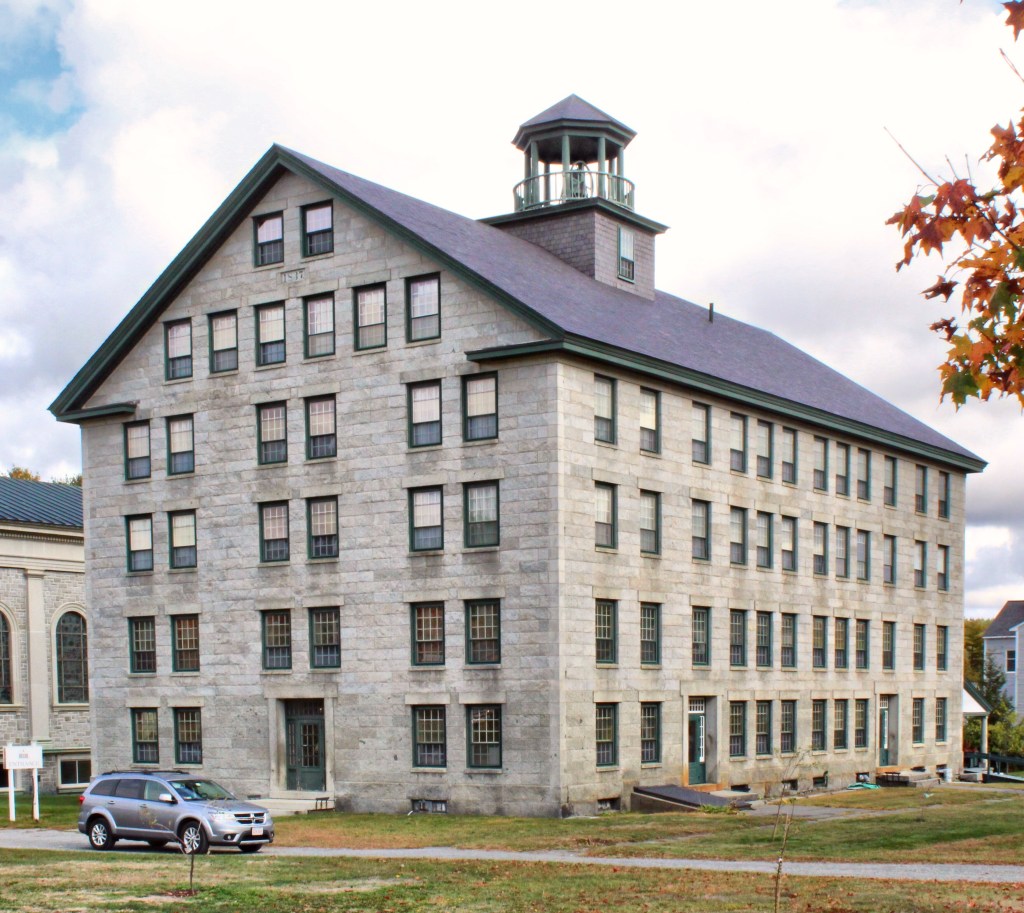
Great Stone Dwelling // 1837

Located on the west bank of Mascoma Lake in Enfield, New Hampshire, an architecturally and historically significant collection of Shaker buildings can be found, all very well maintained. Founded in 1793, this village was the ninth Shaker community to be established in this country. At its peak in the mid 19th century, the community was home to three “Families” of Shakers. Here, they practiced equality of the sexes and races, celibacy, pacifism, and communal ownership of property. There were 132 members of the village by 1803, and by 1840 there were nearly 300 people.

Within the village was the largest Shaker dwelling ever built in the country and the largest residential dwelling north of Boston, the Great Stone Dwelling. The Shakers here hired leading Greek Revival Architect Ammi Young to design the building. Ammi had experience in larger building projects having designed the current Vermont State House and several structures at nearby Dartmouth College. Young would later go on to be the Supervising Architect for the United States Department of the Treasury.

The Enfield Shaker Village in Enfield is open for tours, and you can even spend a night in the 1837 Great Stone Dwelling!

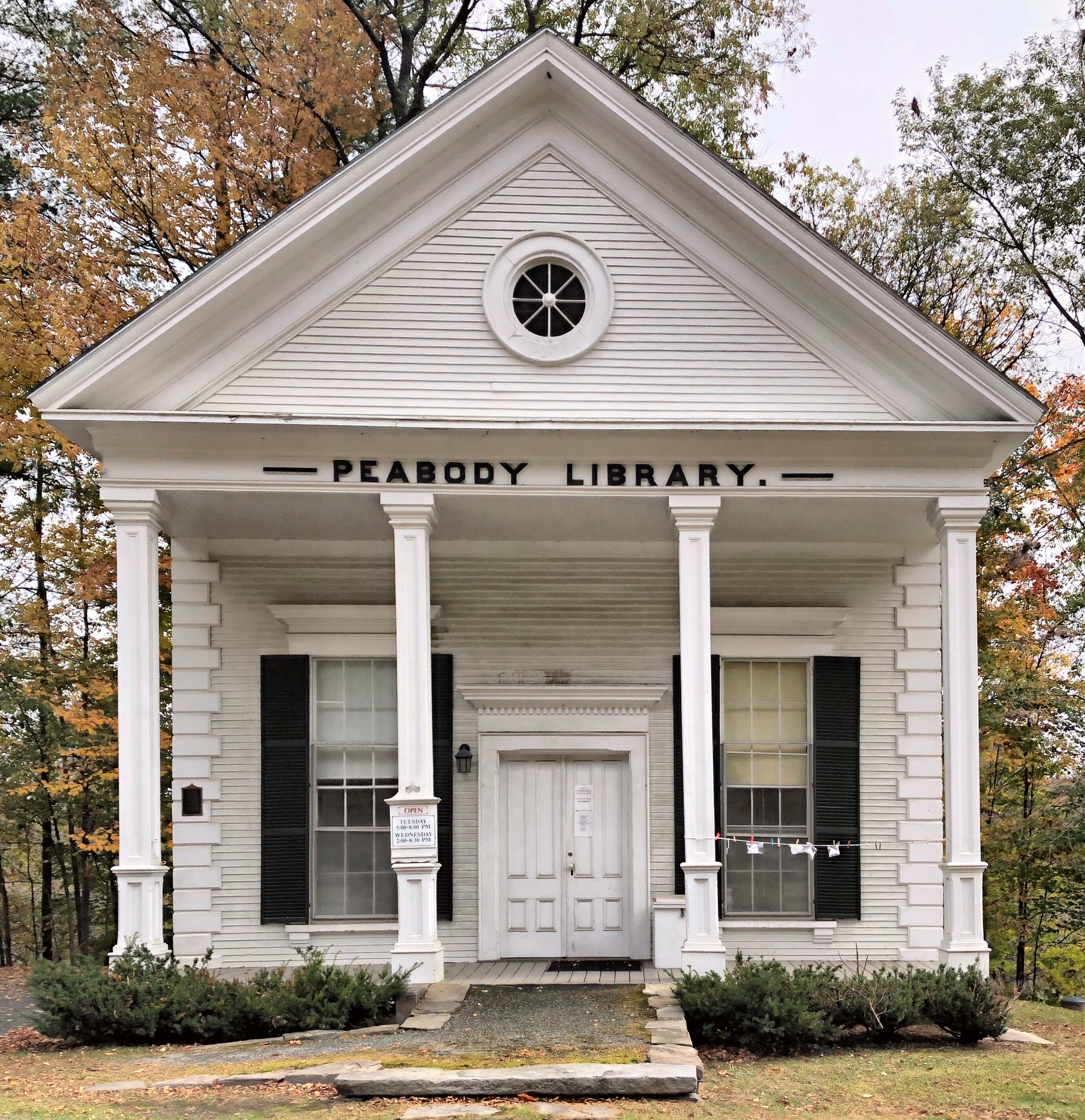
Peabody Library // 1867

Located in the Post Mills Village of Thetford, Vermont, the Peabody Library is one of the cutest library buildings ever! The library was a gift to the community of Post Mills by George Peabody, one of the first great American philanthropists. Peabody spent some time in Post Mills as a teenager, where his maternal grandfather lived. Peabody’s grant of $5,000 paid for purchase of the land, construction of the building, and acquisition of 1,100 volumes. He also donated funds for other libraries including the Peabody Institute Library in Danvers. The library exhibits a unique blend of characteristics from both the Greek Revival and Italianate Revival styles, being an outstanding representative of the mid nineteenth-century transition in architectural fashion. Oh to see inside this little library!

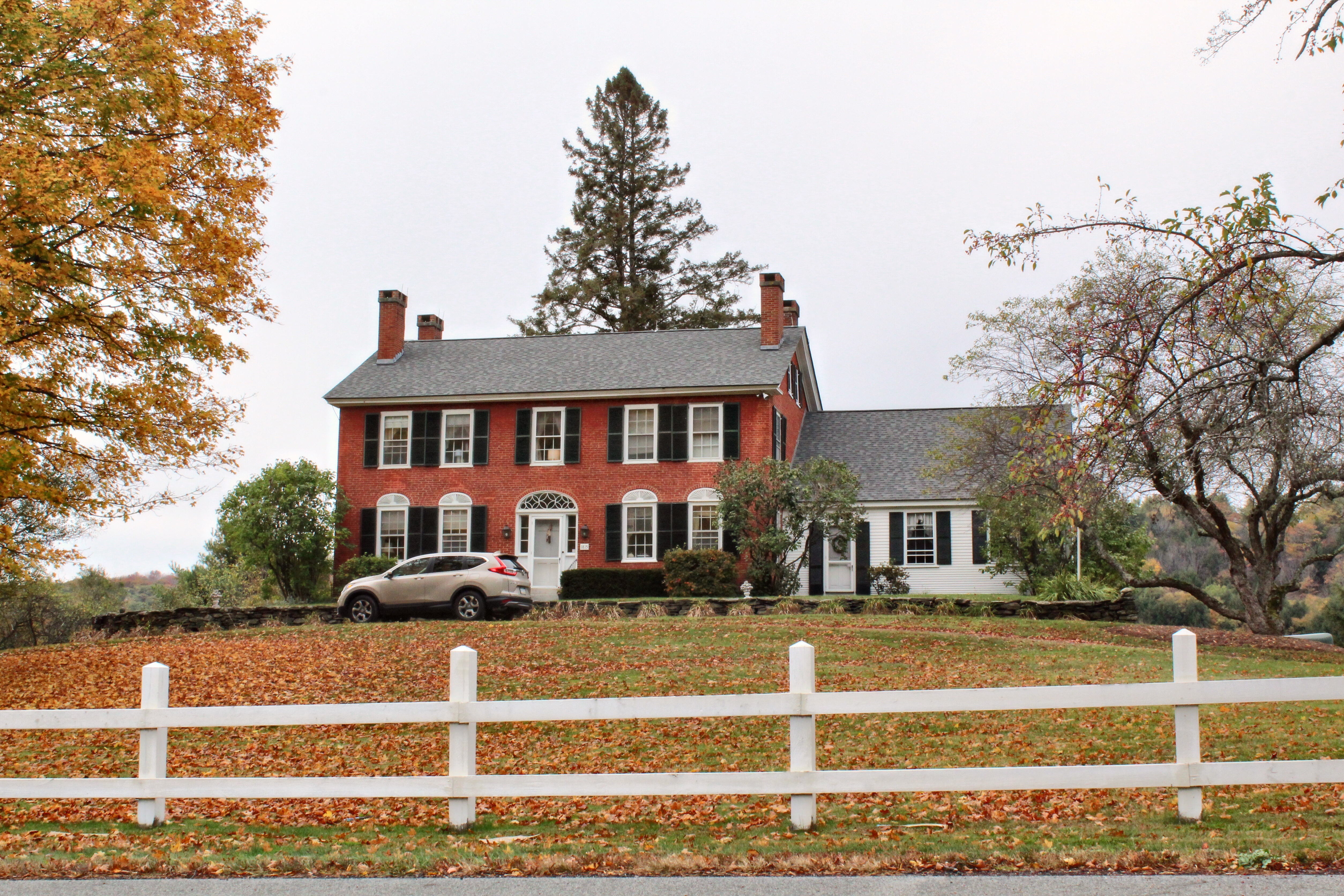
Hezekiah Porter House // 1822

Hezekiah Porter (1783-1851) built this house in 1822 for him and his family, right in Thetford Center, Vermont. Porter was born in 1783 in Hebron, Connecticut, where he presumably learned the clothier trade, before moving to Thetford in 1806. Porter later operated a brickyard, serving as contractor to the Thetford Center Methodist Church, Town Hall and several other brick homes in town dating from the 1820s and 1830s. Porter lived on this large property with his wife and ten children until his death. The property was later occupied by Hezekiah’s son, Amos P. Porter. In 1888, Amos farmed about 200 acres and had 7 cows, 50 Merino sheep and 18 Jersey cattle!