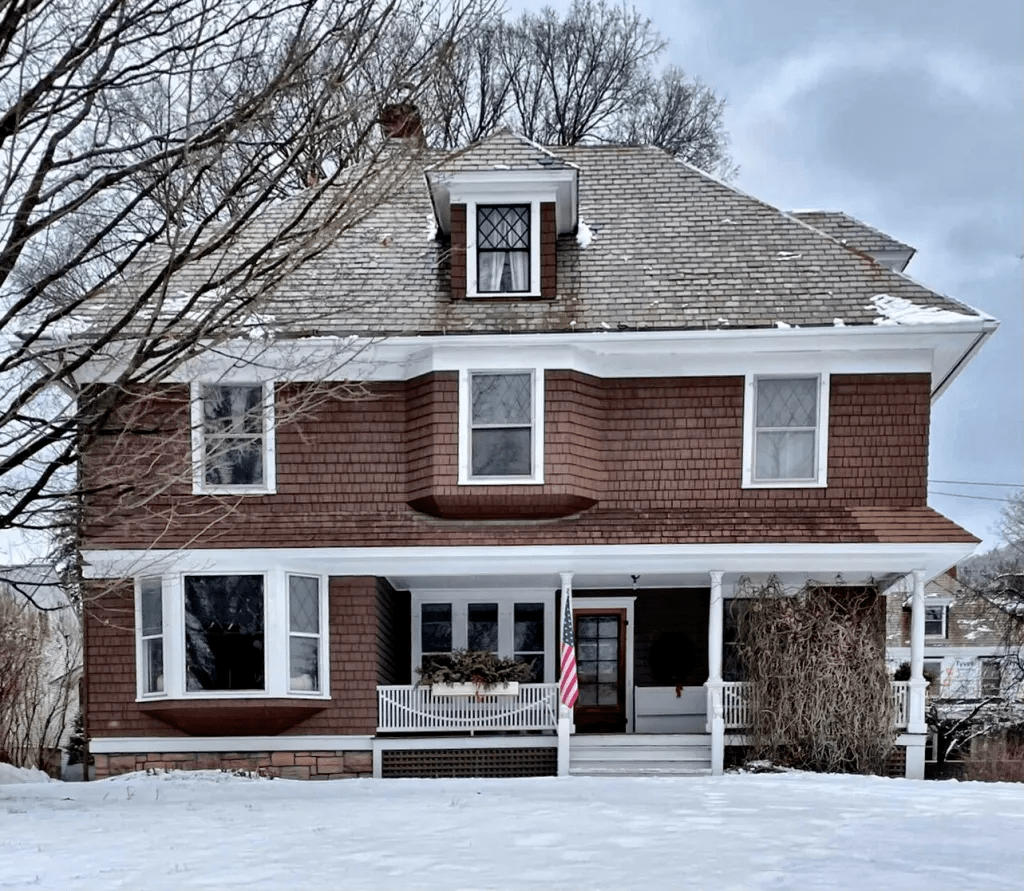
This handsome house in the small town of Richmond, Vermont, was built in 1902 for F. H. Goodwin, a partner of the Richmond Underwear Company, which started in 1900. Goodwin’s brother and his partner were brought from Peekskill, New York to the small town of Richmond to create and manage a new industry to revitalize the town, a program funded by the citizens. F. H. Goodwin was hired as a manager of the company, and built this home in a blending of Shingle and Arts and Crafts styles, common in the early 20th century. The house was unique in that it was the first in town to be electrified as it was directly connected on the grid with the factory next door.
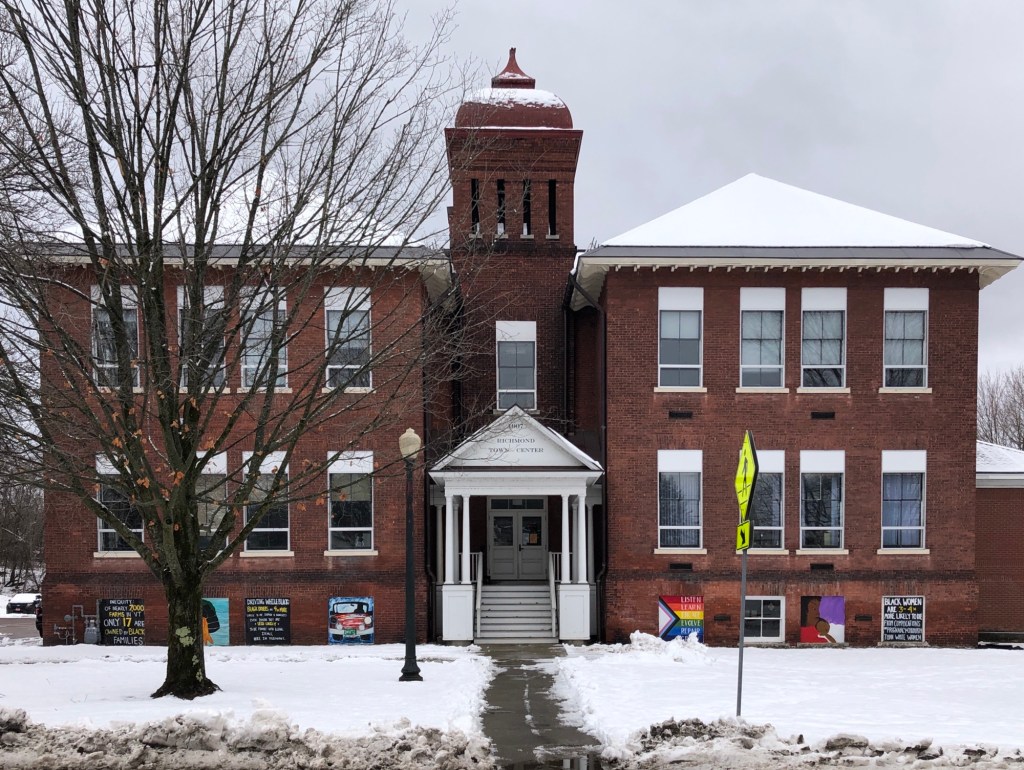
This handsome brick building is located in the historic downtown of Richmond, Vermont, and was built at a time of rapid growth of the small community. Pupils in the town of Richmond originally went to school in small, one-room rural schoolhouses, with the Richmond Academy serving the main village. The old academy building was constructed in 1868 and taught classes from elementary through high school. The building was outgrown as the town grew in the first decade of the 20th century, necessitating a new, larger schoolhouse for the main village. This new school was constructed in 1907, apparently just as the right side and tower, which was expanded with the left half four years later in 1911. Blending Craftsman and Romanesque styles, plans for the school were drawn up by Vermont architect, Frank Lyman Austin. Another rear addition in the 1950s was constructed to meet increased demand until the 1980s when a new elementary school was built in town. Since 1989, the former Richmond School has been home to Richmond town offices. The building, while altered, is an important landmark of the town, showcasing a blending of architectural styles popular in the early 20th century.
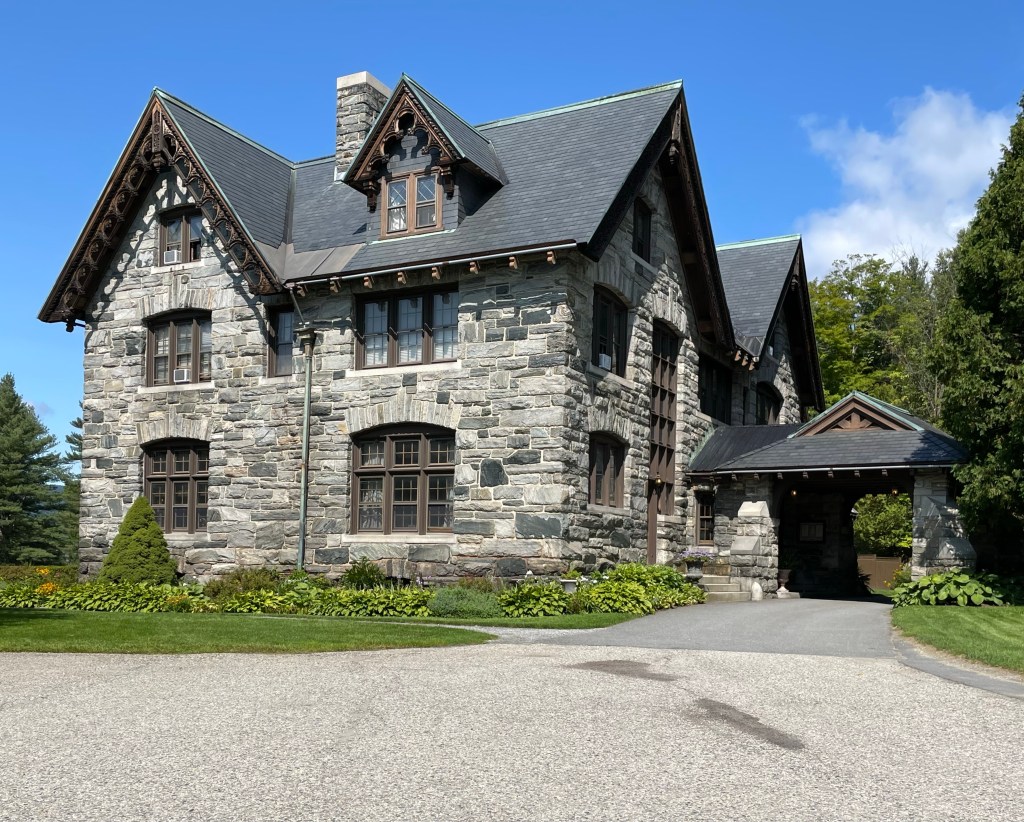
As Cavendish and other rural towns of Vermont became summer destinations for the rich of the urban centers of the northeast, large estates began to sprout up, replacing old family homesteads. Allen Miller Fletcher was born in Indianapolis, Indiana, the grandnephew of Josiah Fletcher, one of the original settlers of Cavendish in September 1853. He was the son of a successful banker and became a banker himself, building homes in Indianapolis and New York City. In 1881, he built a summer home in his ancestral home of Cavendish, taking the train up to relax and breathe in the clean air. While living most of the year in New York, Fletcher became involved in Vermont politics, winning the Republican nomination to serve in both the Vermont House of Representatives and the Vermont Senate in the early 1900s. During his time as a Vermont state senator, Fletcher commissioned architect Samuel Francis Page of the Boston-based firm, Fehmer and Page, to bring his vision to life. Page used English Cotswold-style architecture for his inspiration, and when completed in 1906, the home was the first in Vermont to be fully wired for electricity and equipped with an elevator! Fletcher also hiredFrederick Law Olmsted Jr. to design the landscaping on the property. Fletcher would spend the rest of his life at his country mansion, going on to work as the Governor of Vermont from 1912 to 1915. Today, Fletcher’s beautiful mansion now lives as a magnificent holiday retreat known as the Castle Hill Resort & Spa.
 Buildings of New England