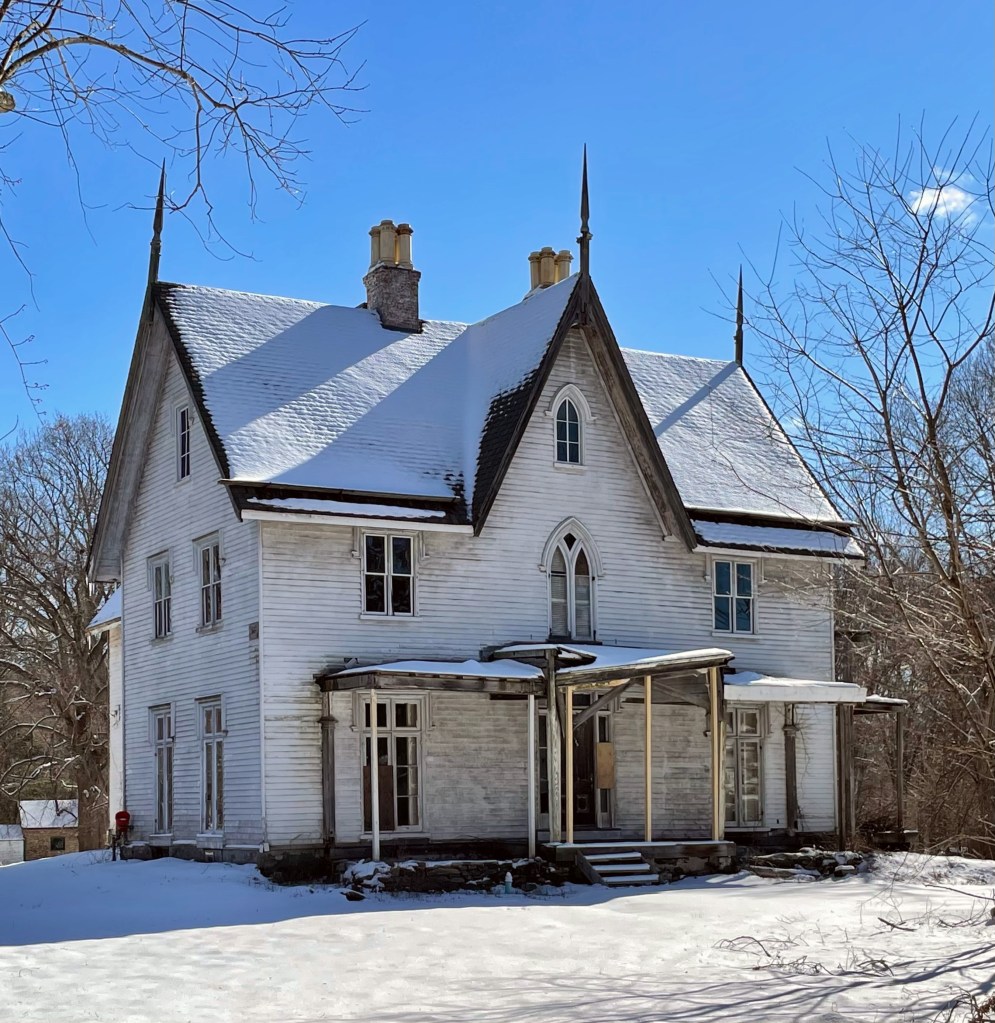
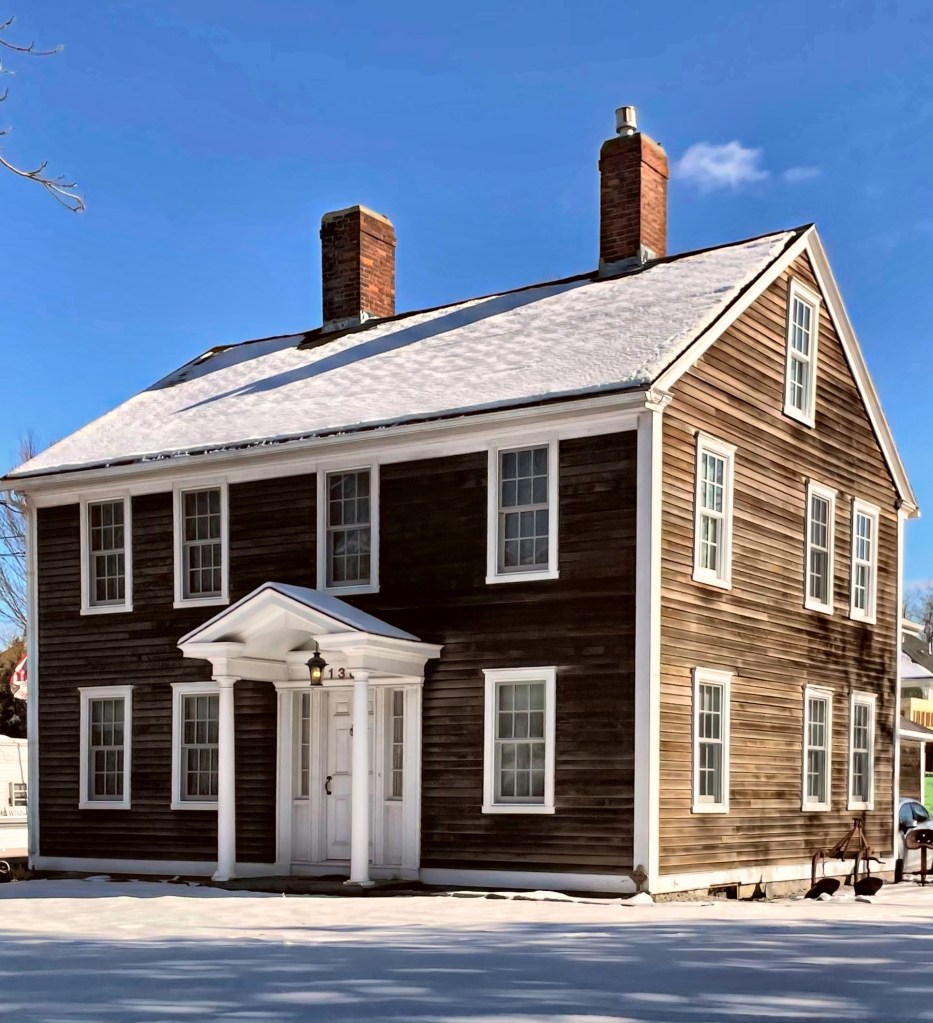
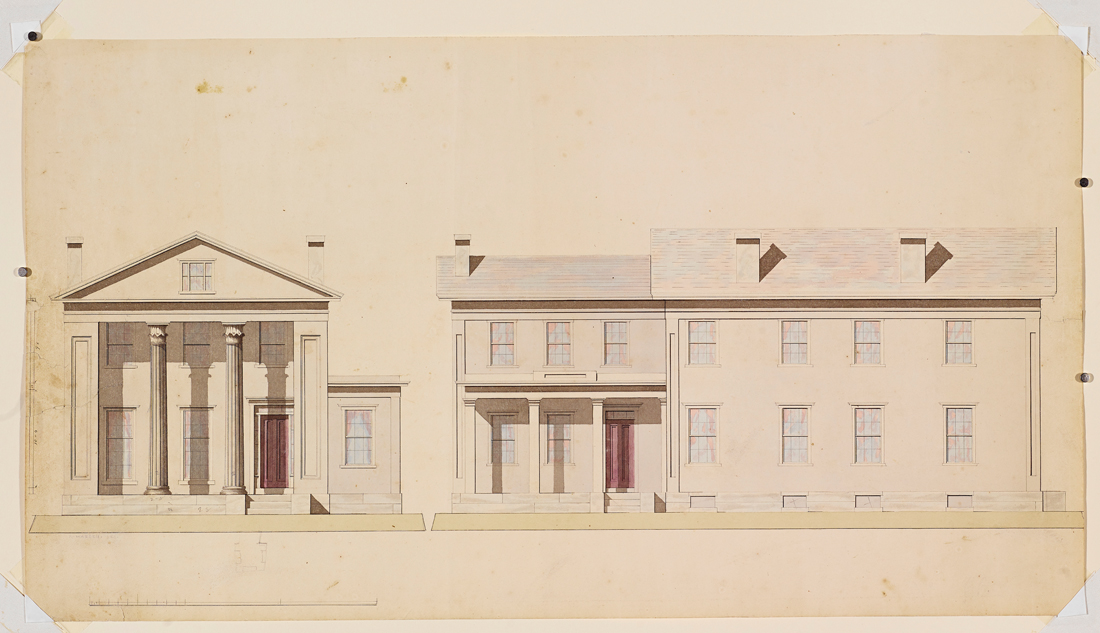
Dr. Skinner “Lottery” House // c.1800

In 1794, four men from Acton, Abel Conant, Dr. Abraham Skinner, John Robbins and Horace Tuttle, jointly purchased a $5.00 ticket in a lottery run by Harvard College to raise funds for the construction of Stoughton Hall in Harvard Yard. This house, built for Dr. Abraham Skinner, is one of the four, and is the most grand of the four. Dr. Skinner was the third physician to practice in Acton and the first to arrive from out of town. He came to Acton in 1781 from Woodstock, Connecticut, and continued in practice until his death in 1810. The Federal style home is nearly square with five bays on all sides, with the facade and rear being slightly less crowded. The main entry includes a pediment with dentils, 4-pane side lights and a 4-panel, wooden door with elongated, rectangular, top panels. A similar entry, without sidelights, centers the south elevation. Time to buy some lottery tickets!
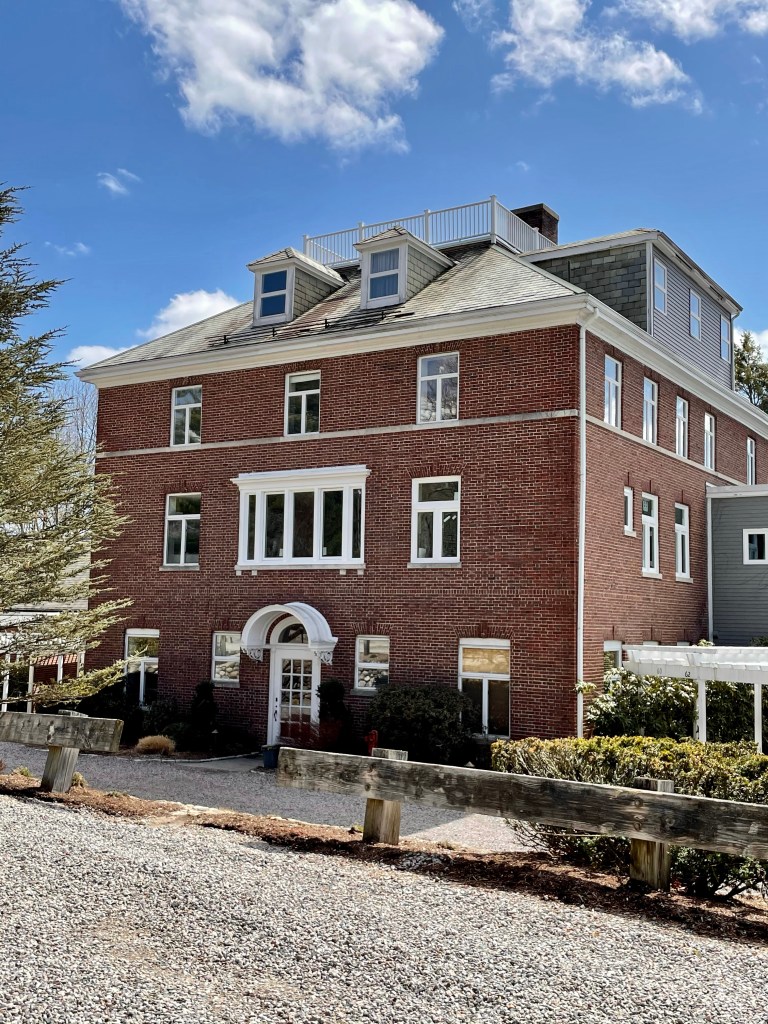
Turner Art Publishing Company Building // 1908

In 1907, the 86-acre Bigelow Estate (featured yesterday), was purchased by Horace K. Turner, owner of an art publishing company founded in Boston about 1904. Turner moved his workshops to the estate so the artists could work in healthy country surroundings. The firm required the long wings contoured into the hillside to provide ample natural light and views to the distance for the workers. In 1920, the entire property, including the Bigelow House and the bungalow workshops, were acquired by the New England Peabody Home, which had been located in Hyde Park for 25 years. It was set up as a school and hospital for “crippled children” and this brick building was added to the center section. Architects for this addition were Coolidge and Shattuck, successors to the firm of Shepley, Rutan, and Coolidge. The Peabody Home was among the first to use sun treatment as a cure for physical ills and the extensive porches were well suited to this purpose. The Peabody Home became obsolete and the property was sold off in the mid-20th century. In 1979, the Peabody Home was sold to Edward Leventhal, who converted the buildings into 22 condominiums. Architects for the project were Jung/Brannen.

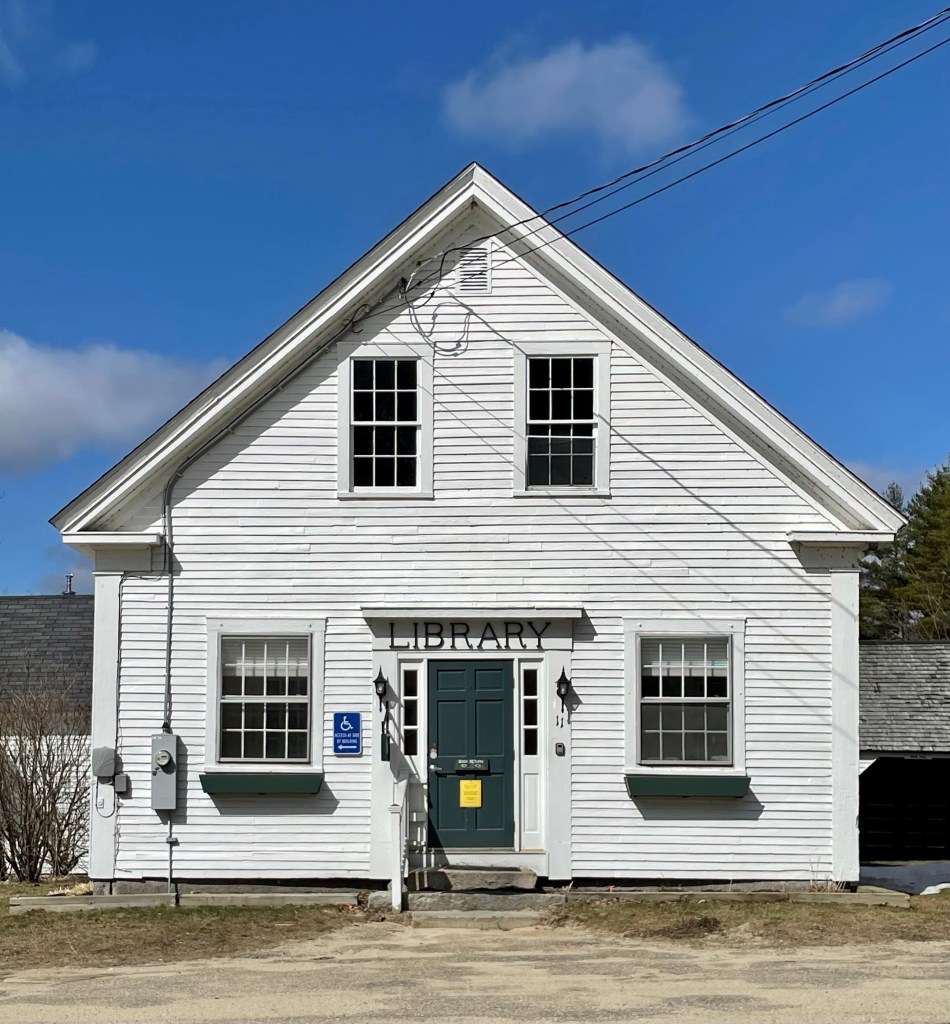
Wilmot Center Schoolhouse // 1854

Driving through the quaint village of Wilmot Center in New Hampshire, I had to pull over to snap a photo of this little library building. When I got home, I learned that the building was constructed in 1854 not as a library, but as a schoolhouse! The vernacular Greek Revival school served as one of many district schoolhouses in the region, dispersed around small towns to be within walking distance of the sparsely developed parts of the state. With population growth in the 20th century and the proliferation of the personal automobile, these small regional schools became obsolete. Many of these buildings were converted to other civic uses or as personal residences, but most were demolished. The Wilmot Public Library located in the former schoolhouse in 1972 and is now connected to the town offices next door.

Russell Warren House // 1807

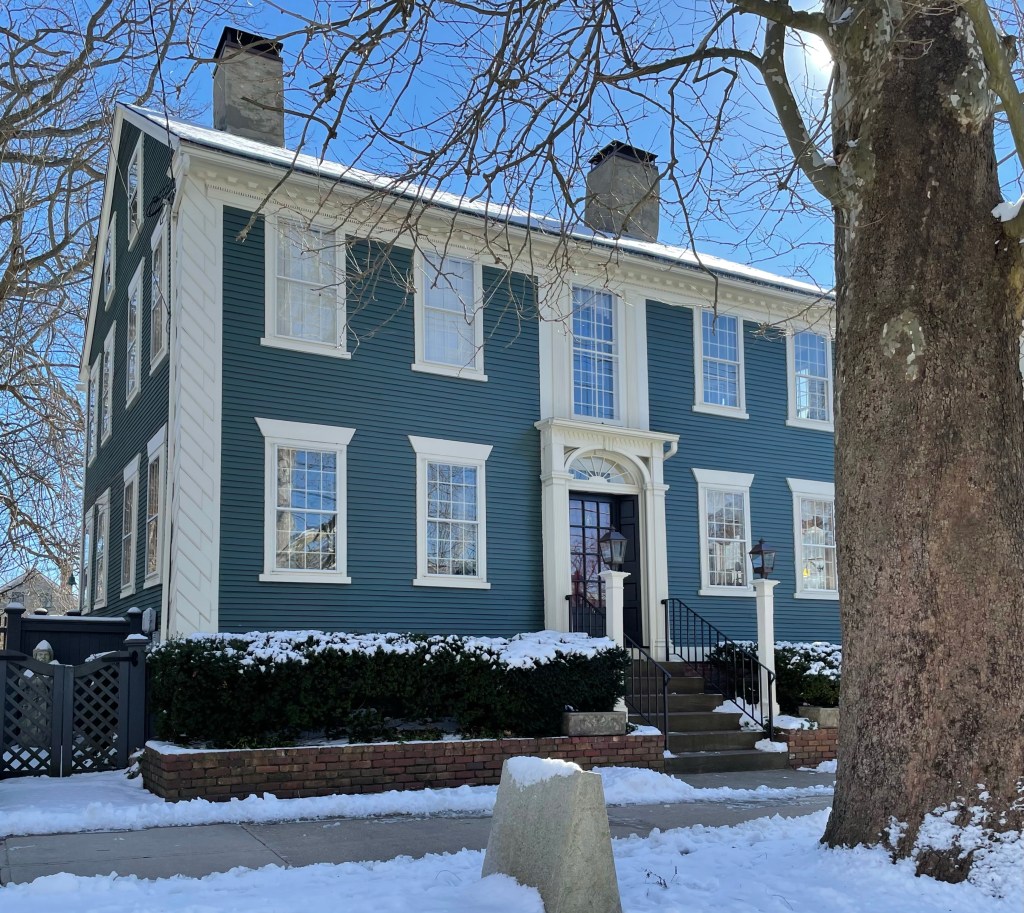
Architect Russell Warren (1783-1860), who I have featured on here numerous times, built this 2-story, 5-bay, hip-roof Federal house in Bristol, Rhode Island. This residence as interpreted by Warren as an example of the Federal style with stylistic features most notably being the angulated quoins (at the corners of the house). The house was designed for William Van Doom, a Bristol tailor of modest means. In 1814, Warren, a young and aspiring architect, saw the significant wealth in Bristol and decided to buy this home he designed. Siting himself in the vicinity of the extremely wealthy DeWolf family, he gained recognition and success by designing three expensive and elaborately crafted houses for them at this time, only Linden Place remaining. Warren lived in this house from 1814 until 1823.

Bristol County Courthouse // 1816

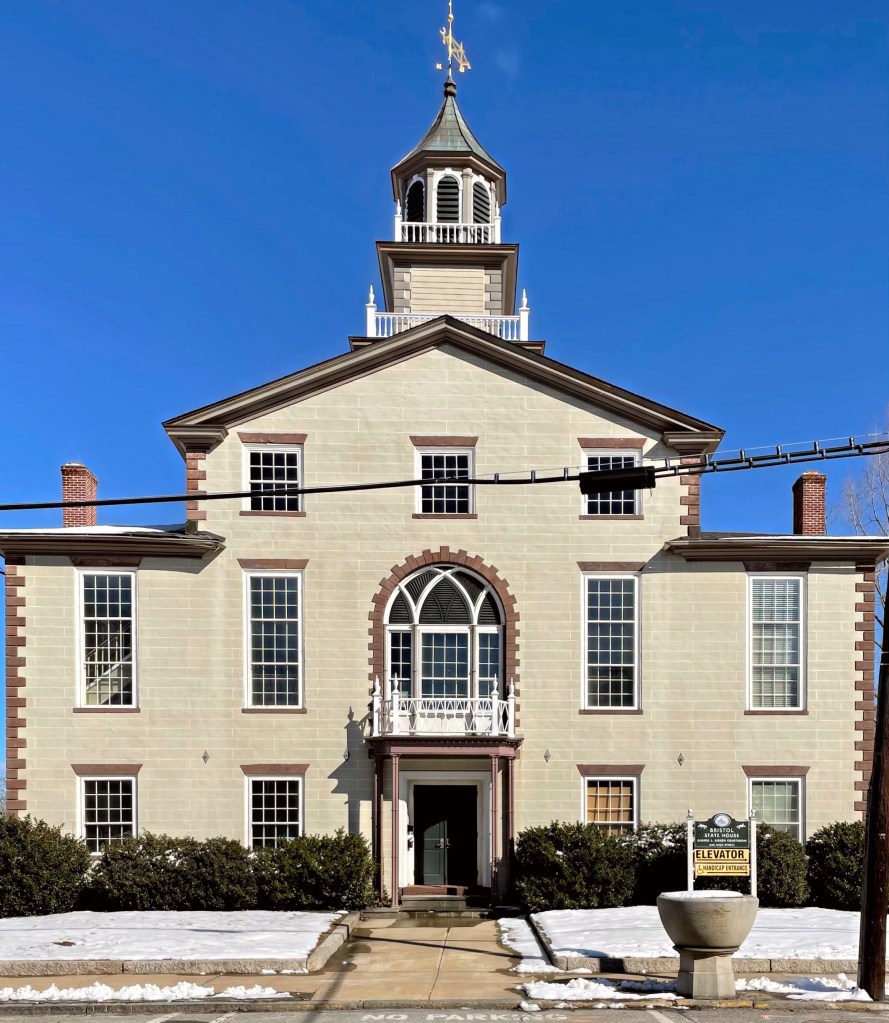
Located on the Bristol Town Green, facing the main commercial area and harbor, the old Bristol County Courthouse is a well-preserved example of a building for civic use in town, at the height of its growth. It is believed that the courthouse is the work of architect Russell Warren, who lived in a home he designed just blocks away. This Federal-style stone building is faced with brick and subsequently stuccoed, giving it the unique composition it has today. The focus of the symmetrical facade is the large central arched window with granite quoins, and Y-tracery that echos Gothic design. As part of the 1836 state Bicentennial, the stucco facing was added over the original brick facing, and the exterior was painted a Gothic Revival sand color with darker trim, replicated in a 1976 restoration. From 1819, the courthouse served as one of the five state houses used in rotation by the Rhode Island General Assembly (in 1854, the General Assembly decided to meet only in Providence or Newport). In 1853, it reverted to courthouse use, a function which ceased in the early 1980s. The Bristol County Sheriff maintained offices there until 1997, when the building was purchased from the state for $1 by the Bristol Statehouse Foundation. The nonprofit foundation has worked to restore and maintain the building. Today, the building is used for education, community programs, meetings, and events.

Herreshoff Manufacturing Complex // 1853+

In 1859, 18 year old John Brown Herreshoff (1841-1915) of Bristol, accepted his first commission to design and build a yacht. The fact that he was blind, having completely lost his sight at 15, didn’t seem to slow him down. He became known as the “blind boat builder.” In his early years, John Herreshoff had acquired such a keen knowledge and “feel” of boats that his blindness was no obstacle. The handwork however, was done by his brother, Nathanael Greene Herreshoff, later known as “the Wizard of Bristol.” His skill in shipbuilding became well-known; so in 1863, John took on space in an old rifleworks, hired a crew of shipwrights and established what would become the Herreshoff Manufacturing Company. From 1864 to 1869, the boatworks built forty-three steam yachts, including Seven Brothers, the first steam-powered fishing boat in America. In 1876, Lightning, the first United States Navy torpedo boat, was completed. Construction of larger craft soon followed, including the 94-foot Stiletto, considered the fastest boat in the world, and was later purchased by the Navy, and was its first torpedo boat capable of launching self-propelled torpedoes. J.B. Herreshoff died in 1915 and the company continued under his brother Nathanael, until it was taken over by a syndicate of New York and Boston yachtsmen. Business stagnated after WWI and the business closed after WWII. Today, Burnside Street in Bristol showcases the lasting legacy of the Herreshoff Manufacturing Company and their impact. Also, the Herreshoff Marine Museum sits at the end of the street, continuing that legacy.

John Brown Herreshoff House // c.1870

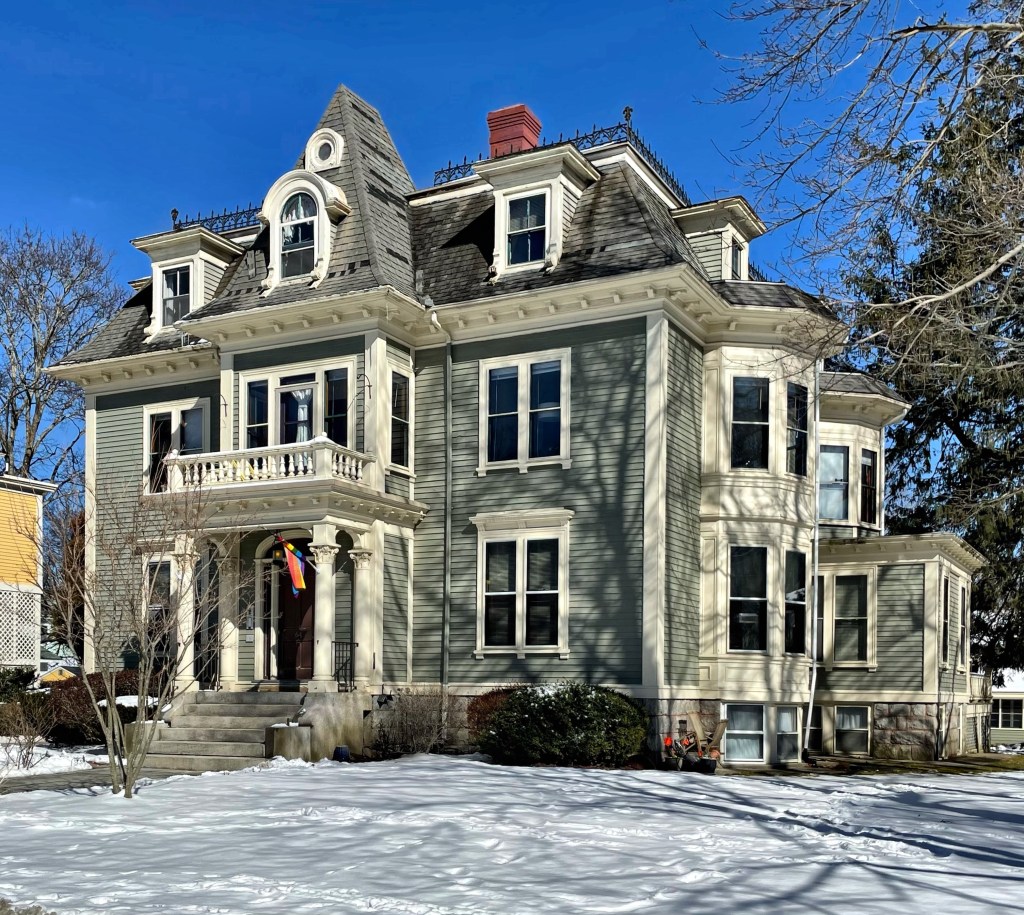
John Brown Herreshoff, a fully-blind ship-builder, and later Founder and President of the Herreshoff Manufacturing Company in Bristol, built this house at the head of Burnside Street, overlooking his boat works (no pun intended). The home sits next to the stunning Codman Place mansion, featured previously, and takes architectural cues from its neighbor. The home is reported to have been built by J.B. Herreshoff, who despite being completely blind, developed his other senses to a high degree to overcome the handicap of sightlessness, and became renowned for his design skills in his ships. The home has a mansard roof with a central projecting entrance bay, capped with a steeply pitched roof, and a barrel-vaulted dormer and ocular window inset. While the house is now condo units, it retains its architectural integrity at the exterior.

Josiah Talbot House // 1835

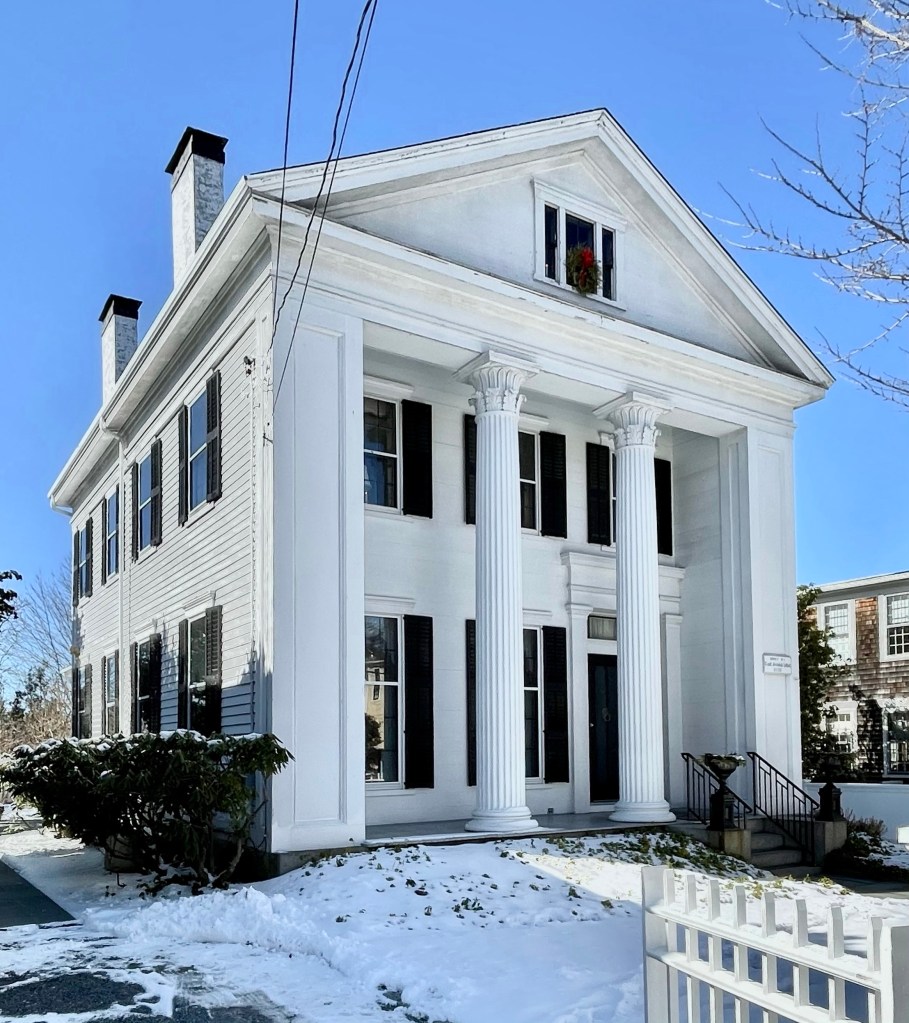
Anyone that has followed this account for a while knows at least one thing, I LOVE Greek temple-front homes. Designed by famed architect, and Bristol-native, Russell Warren, this 2-story, 3-bay, gable-roof Greek Revival house is one of the finest in the state. Its facade has a pair of fluted Corinthian columns, set in antis (where the side walls extend to the front of the porch). A simple side-hall entrance is framed by heavy Doric pilasters, supporting a broad, plain entablature, making this such a head-turning Greek Revival home. The walls are sheathed with horizontal flush boarding at the facade to give a smoother look and clapboards on the side and rear. The home was built for Josiah Talbot, a sea captain. The house is excellently preserved to this day, almost 200 years later.

“Longfield” // 1848

“Longfield”, aka the Abby DeWolf House was built in 1848 and is one of the finest homes in Bristol, Rhode Island. The home was completed from designs by Providence architect Russell Warren, who also designed other mansions in town (I’ll post those later on in this series), the Westminster Arcade in Providence, and “Hey Bonnie Hall” a since demolished Federal style home I featured a couple days ago. Longfield’s name derives from the 60-acre meadow, part of the 300-acre Henry DeWolf farm, given to Abby DeWolf when she married Charles Dana Gibson at just 21 years of age. The DeWolf Family paid for the home as a gift to Abby. The DeWolf Family is infamous for being highly active in the slave trade, and was believed to have transported over 11,000 enslaved people from Africa to the Americas before congress abolished the African Slave Trade in 1808, which “prohibited the importation of slaves into any port or place within the jurisdiction of the United States…from any foreign kingdom, place, or country.” This policy did little as many owners of slaves just kept children born into slavery and also opened plantations in the Caribbean and South America. After Abby died in 1901, the home went to her granddaughter who maintained the home. By the 1970s, the home was sold out of the family and began a period of decades of deterioration to its current state. The interior is effectively gutted, but some original woodwork and fireplaces remain. Recent calls for a townhouse development with ample parking was proposed and approved by the town a couple years ago, but would greatly diminish its siting and architectural integrity. Nothing has happened on the site, but here’s to an appropriate restoration!

Throope Place // 1760

In 1687, William Throope 1637-1704, who migrated to Bristol from Barnstable, Massachusetts by way of England, purchased land in Bristol, Rhode Island. On it, he constructed a small, one-room deep, two-story house. Throope’s grandson, Thomas, Jr. (1710-1771), enlarged the house about 1760, when he constructed this four-bay Georgian home, adding the old 1687 Throope house to the rear. Interestingly, house moves were very common in America to the early 20th century, as materials such as glass, nails, and brick were more expensive while labor was much cheaper, making the reuse of original structures and materials common. The farm eventually passed to Isaiah Drown Simmons (1810-1882), a dairy farmer, in 1830, and remained in the Simmons family until 1922. Records show that the original 1687 house that was moved to the rear of the 1760 house was replaced in the 1830s by Simmons. The home remained in the Simmons Family until after the death of their only daughter Elizabeth, who died in 1914. It appears that the existing front portico was added after that time, which appears more Colonial Revival.