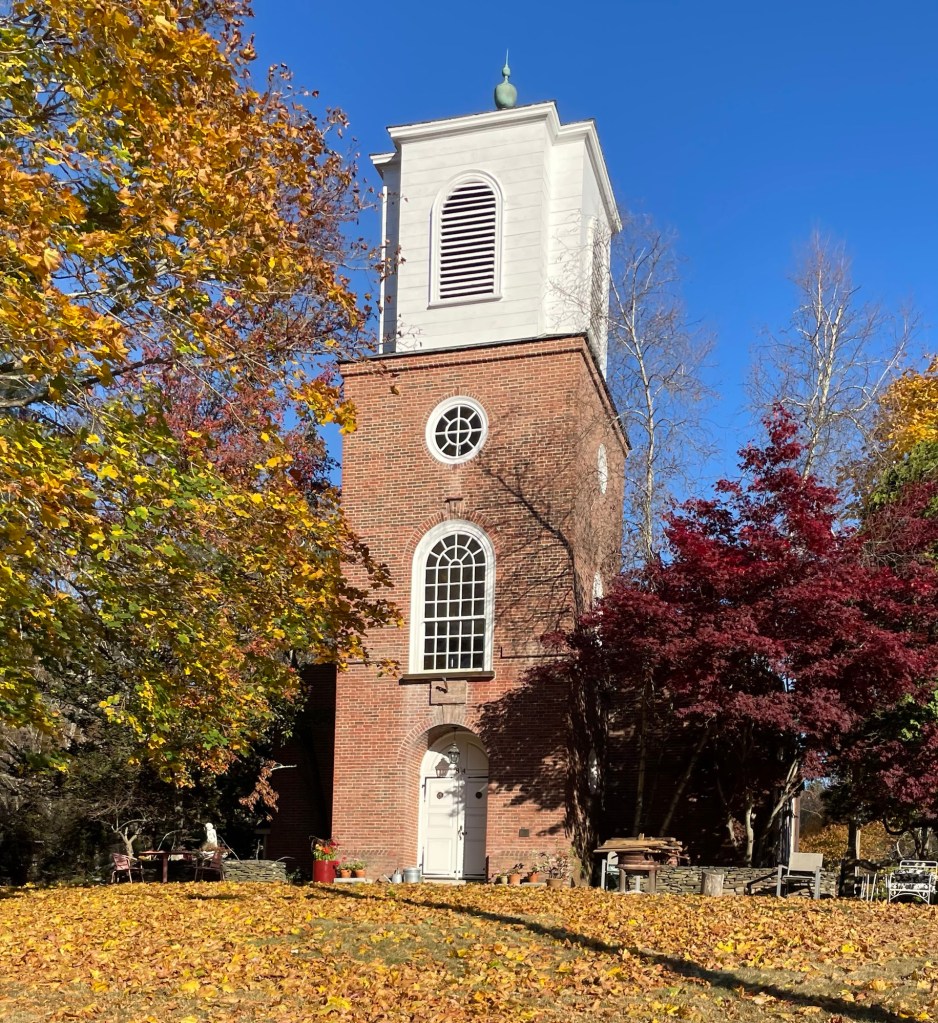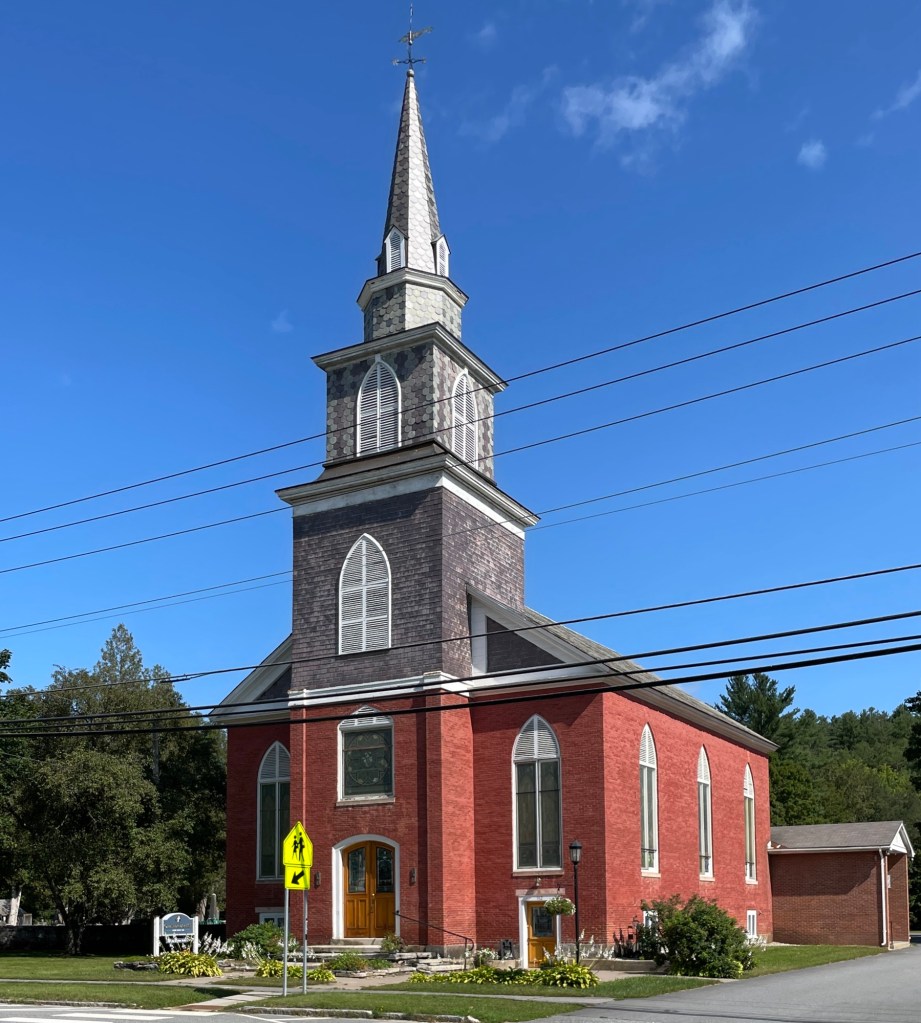
Chester Baptist Church // 1835

The Baptists of Chester, Vermont, first built a wood-frame meetinghouse in 1788 for meetings and worship. The congregation here was established a year prior by Aaron Leland (1761-1832), a successful pastor and preacher, who settled in town with the task of building up a church there. Active in politics, Leland served in local offices including Town Clerk and Selectman, and was Windsor County Assistant Judge for eighteen years, he was later elected into the Vermont House of Representatives and served as Lt. Governor. After his death, the Federal style building was outgrown and sold by the 1830s. The original meetinghouse was moved to its current location across from the town’s Congregational Church and planning began for a new house of worship. The current Baptist Church, an impressive brick edifice in the Gothic Revival style, features a high slated spire that was likely added in the early 1870s, replacing a more traditional wooden crenelated tower. The 1870s spire was destroyed in 1953 and reproduced in 1999. The congregation here remains active and maintains the church well.
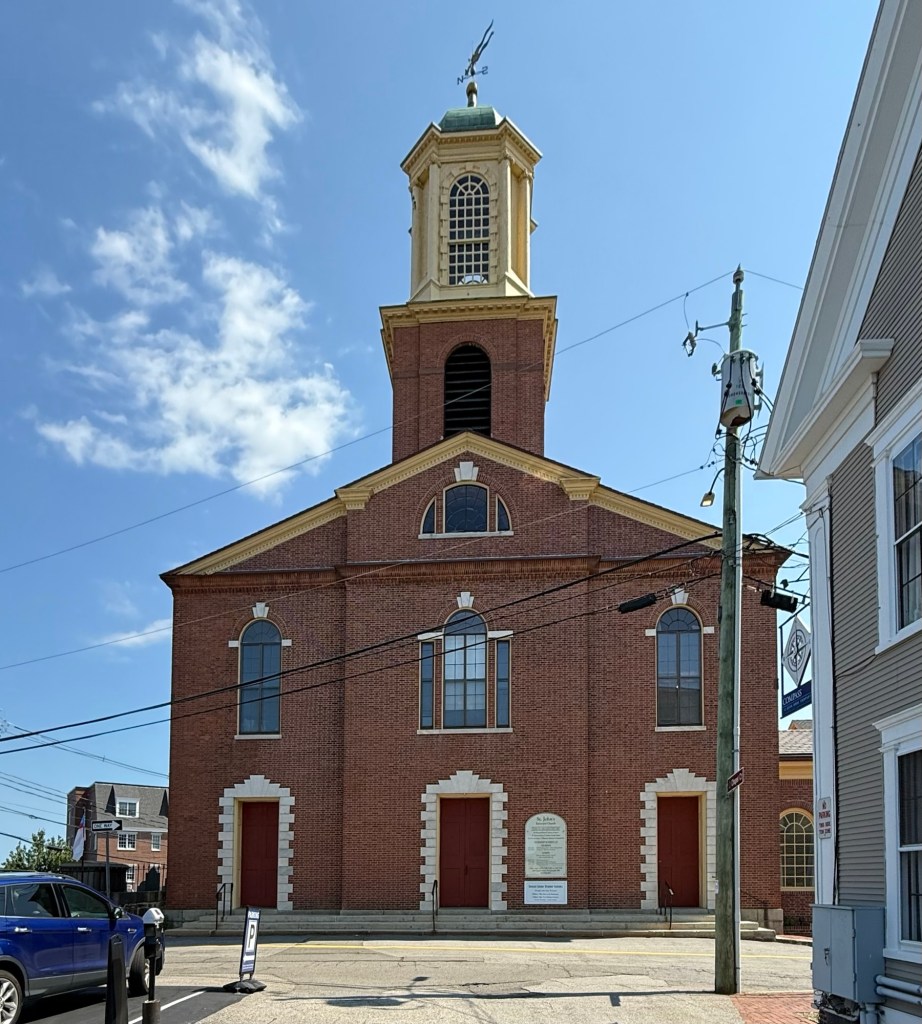
St. John’s Church, Portsmouth // 1807

St. John’s Episcopal Church is located on Chapel Street, atop Church Hill near the historic commercial center of Portsmouth, New Hampshire. A church has been located on this site since 1732, when British Anglicans built Queen’s Chapel here. It was named “Queen’s Chapel” after King George II’s wife, Queen Caroline, who donated many fine gifts to help the new parish. The congregation increased in growth alongside the community until a tragic fire on Christmas Eve in 1806, which destroyed over 300 buildings in Portsmouth including the original wooden structure of St. John’s and most of its contents. The parishioners immediately began to raise funds to erect the present brick church, with its cornerstone laid in June 1807. The Federal style church was one of the first known buildings by architect-engineer, Alexander Parris, in the time before he moved to Boston, designing many iconic buildings there. St. John’s Church of Portsmouth stands as the oldest Episcopal Parish in New Hampshire and was individually listed on the National Register of Historic Places in 1978.

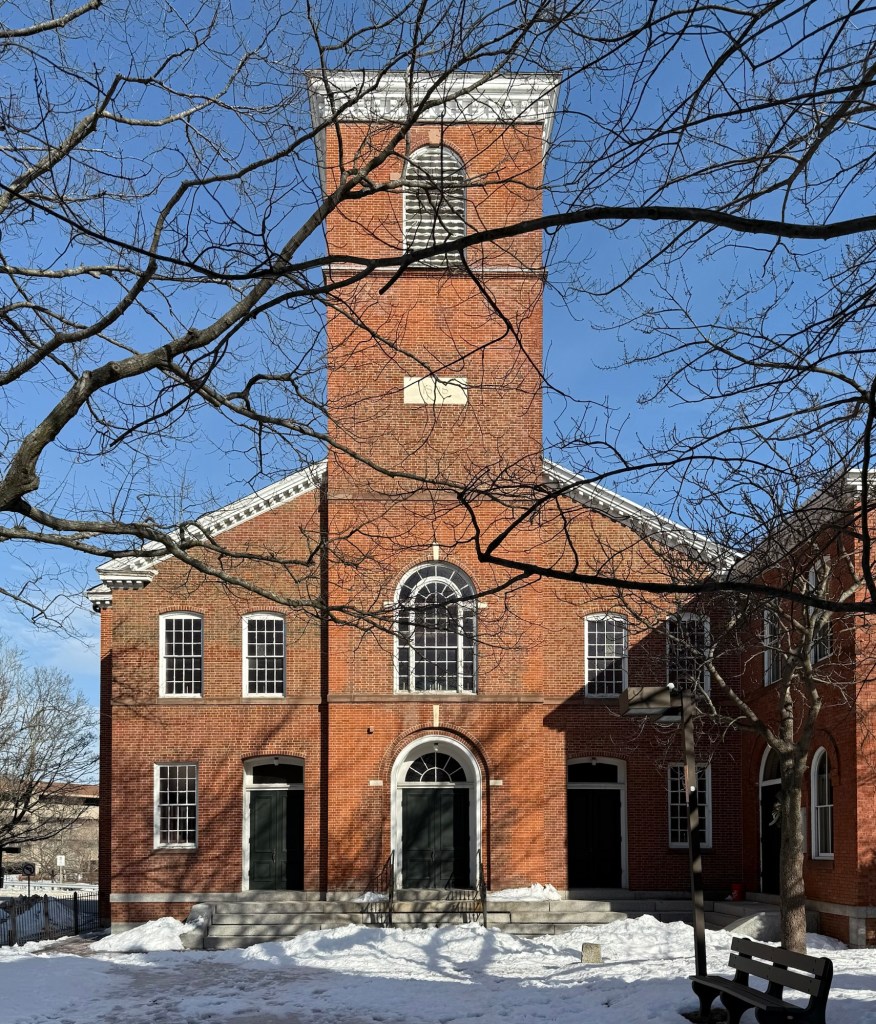
First Universalist Church of Salem // 1808

The First Universalist Church of Salem, Massachusetts, is a landmark example of a brick, Federal style church in New England. Tucked away within a network of Urban Renewal-era townhomes and backing up into a busy thoroughfare, the church is overlooked by many who pass behind its rear elevation, not knowing how special the building’s primary facade truly is! The church was constructed between 1808-1809 with early Church records showing that the interior carvings were done by Samuel McIntire, a Salem native, who was trained as a wood carver and later became an architect. It is unclear if any of McIntire’s work remains as numerous building modifications were completed throughout the 1800s; including a major exterior remodel in 1855 by architect Enoch Fullerchanging the appearance from Federal to Italianate. The church would again fall back to changing tastes in 1924, when they restored to an approximation of its original appearance by the office of R. Clipston Sturgis, a prominent Boston architect who specialized in Colonial Revival architecture. While the building’s significance is lessened by the urban renewal infill and streets surrounding it, the building remains one of the oldest in Salem and a significant architectural landmark in the city. 

Fourth Byfield Parish Church // 1931

The Byfield Parish Church at 84 Warren Street in Georgetown, Massachusetts, was built in 1931 and is the fourth meetinghouse to occupy the site. The congregation dates to 1701, when sixteen families in this section of Rowley (now Georgetown) near Newbury were set off separate from the Rowley First Parish. Travel for religious services became too arduous, so the local residents petitioned to create their own parish, Byfield. Some accounts state that the first meetinghouse was built in 1702 and it is said to have been razed by 1746 to make way for a new wood frame church with a steeple, a spire, and a weathervane. This church burned in 1833, and it was replaced by a new meetinghouse soon after. The 1833 church was used for almost a century until, in March 1930, it was struck by lightning and burned to the ground. The congregation banded together and had this brick church built, its fourth. Completed in 1931, the Colonial Revival style building was designed by architect, George M. Champney, partner in the Boston office of Derby, Barnes & Champney. The church is sited within a historic cemetery containing the remains of many of the churches members, dating back to 1670. The Byfield Parish Church moved to a new building (its fifth) nearby in 1987, and in 1993, sold this church building to a private owner (retaining and maintaining the cemetery themselves) with the 1931 church converted to a single-family dwelling. How cool!

Brookline Baptist Church // 1836

Brookline, Vermont is home to just 540 people but has one of the most beautiful brick churches in the state! The Brookline Baptist Church sits along a quiet road in town and is an excellent example of vernacular Gothic Revival architecture in the Vermont. Brookline’s first organized church congregation were Baptists, who established a formal organization in 1785 out of local homes and barns. By 1836, enough funds were gathered to erect a church, but of brick, a more substantial building material than traditional wood-frame buildings. The church remained active throughout the nineteenth century, and the vestry addition was constructed off the rear in 1895 to provide space for community gatherings and meals. Dwindling membership led the church to become mostly used for weddings, funerals, graduation ceremonies, and craft fairs by the second half of the 20th century. The Town of Brookline presently owns the significant structure, and while preserved, it does not appear to get much use.