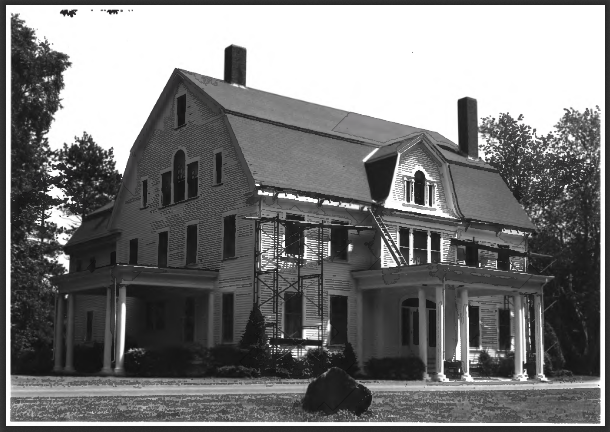
Dr. F. W. Jackson House // 1903

One of the largest Colonial Revival style homes I have ever seen is located in the unassuming small town of Jefferson, Maine. Built in 1903 on the northern shore of Damariscotta Lake, the house stands three-and-a-half stories tall with a broad gambrel roof and clapboard walls. The house was built for Dr. Fred W. Jackson in the Colonial Revival style by relatively unknown Waltham, Massachusetts-based architect Samuel Patch. Dr. Jackson studied medicine and for several years practiced his profession in Providence, Rhode Island. There, he built up a large medical practice and accumulated property, later marrying into a wealthy family. This house in Jefferson was the family summer estate, and Frederick was said to have owned 1,000 acres and laid out bridle paths, gardens, and landscapes in the vast estate. Across the street, a massive gambrel-roof barn was built to house his livestock as part of his gentleman’s farm.

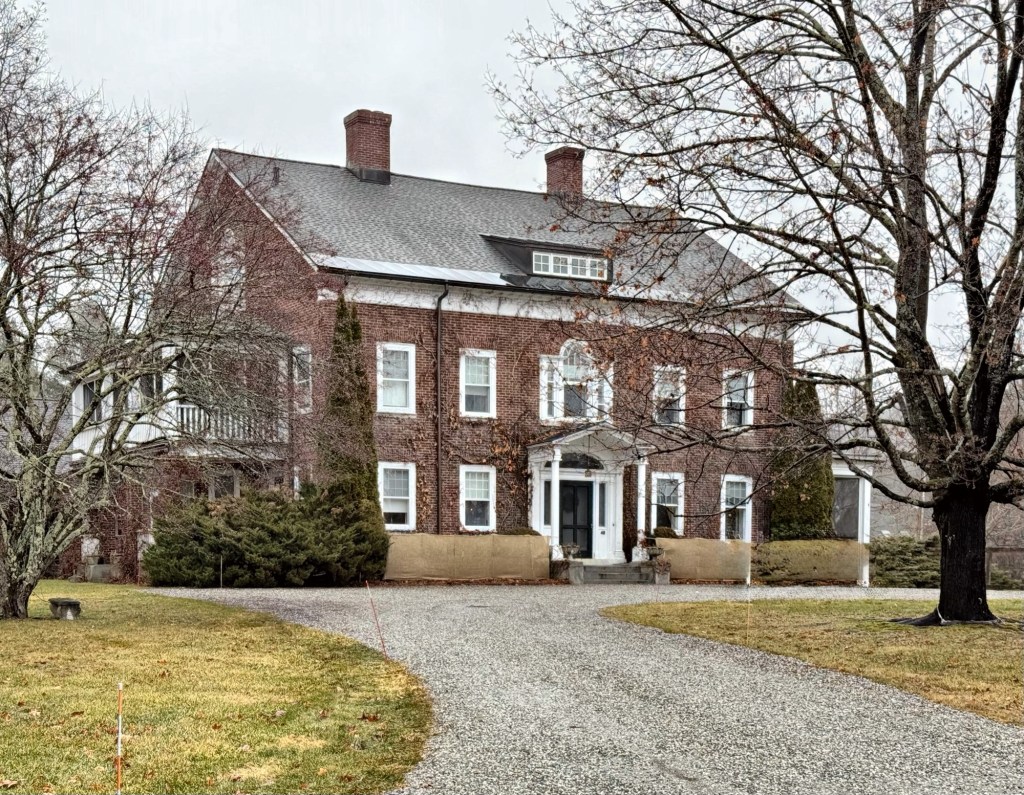
Edward Aldrich House // 1902

Built next door and just a year after the Hidden Family House (last post), the Edmund Aldrich House in Providence’s College Hill neighborhood shows how stately a wood-frame Colonial Revival house can be! The property was purchased by U.S. Congressman and U.S. Senator, Nelson Wilmarth Aldrich (1841-1915) who quickly sold the lot to his son Edward Aldrich, who worked as president of the Times Publishing Company and was very engaged in Republican politics along with members of his family. The Colonial Revival style dwelling was designed by Providence architecture firm, Stone, Carpenter & Willson, who were pretty prolific in this part of the region by this time. It exhibits a gambrel roof punctuated with segmental pedimented dormers along with a segmental pedimented portico over the entrance. Swoon! In his will, Edward left the property to Brown University, who apparently saw no need for the property and eventually sold it to private owners. The owners today maintain the house very well.

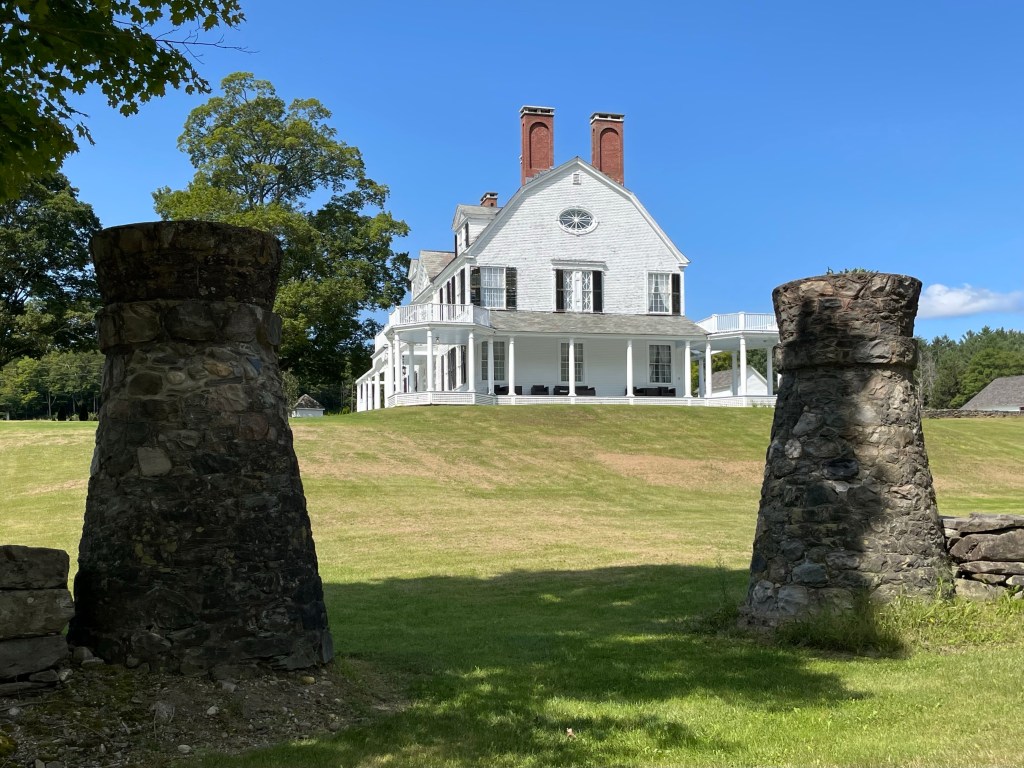
Brook Farm // 1894

By the late 1800s, Vermonters had left the state in high numbers as agriculture began to sharply decline as a career path in New England, with many leaving to urban centers and manufacturing towns. Vermont politicians responded to the de-population with initiatives to encourage the redevelopment of existing farms by seasonal residents with money who could summer there to escape the hustle and bustle (and dirty air) of urban centers. Towns threw events like “Old Home” days with activities to entice affluent family members to return home and bring their money with them. After 1850, railroads made it easier for urban families to trade the heat and congestion of the city for the beauty of Vermont. One of these wealthy expats was James Hale Bates (1826-1901), who was born in Cavendish, Vermont, and moved to New York and worked in advertising, operating a major firm there. He retired in 1895, after the completion of Brook Farm one year earlier, a gentleman’s farm that he had built in his ancestral hometown of Cavendish. This massive Colonial Revival mansion was the centerpiece among sweeping fields and orchards contained by rustic stone walls. It is believed that Vermont architect, Clinton Smith, designed the estate house and many of the out-buildings on the site from the carriage and cow barns to the caretaker’s house and creamery. In recent years, the estate was operated as a vineyard, but it appears to be closed now. This is one of the hidden gems of Vermont and one of the most stunning Colonial Revival homes I have seen!