Partridge House // c.1908

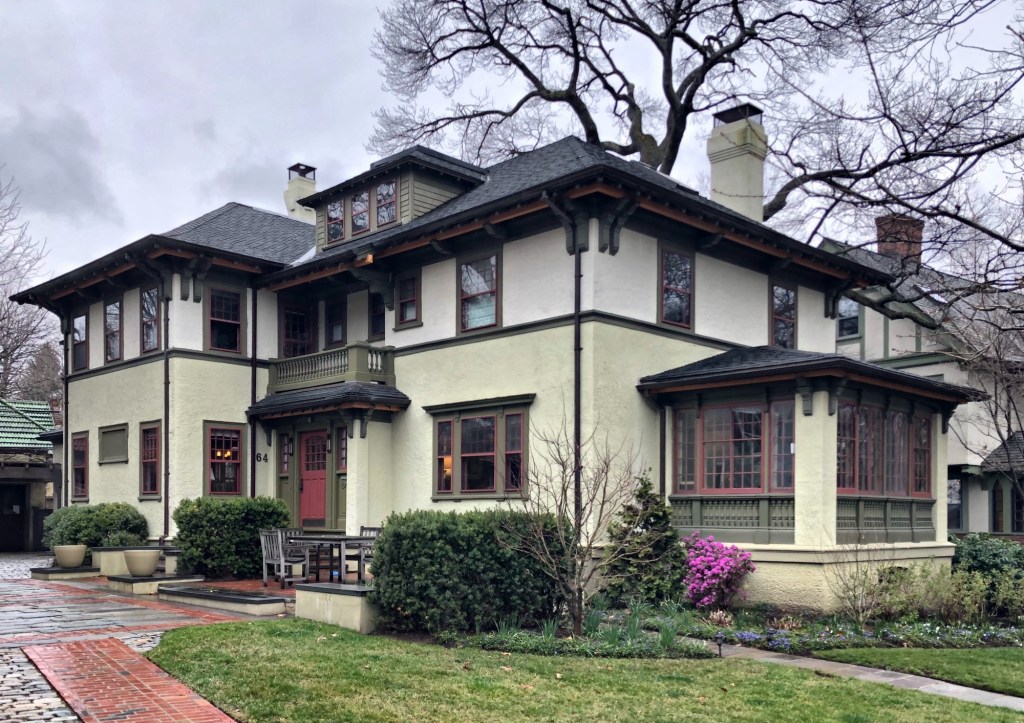
Located on Amory Street in Brookline, this handsome Arts and Crafts style residence dates to about 1908 and while clearly Craftsman in style, does appear to follow the horizontality and form of the Prairie School of architecture, popularized by famed architect, Frank Lloyd Wright. While the architect of this house is unclear, we do know that the first owners were Mr. Frank T. Partridge and his wife, Edith Stevens Partridge. The stucco house features a horizontal belt course, shallow hip roof with broad eaves supported by brackets, and elaborate entry and porches. The colors enhance the architecture of the home perfectly. 
Bayville Post Office // c.1920

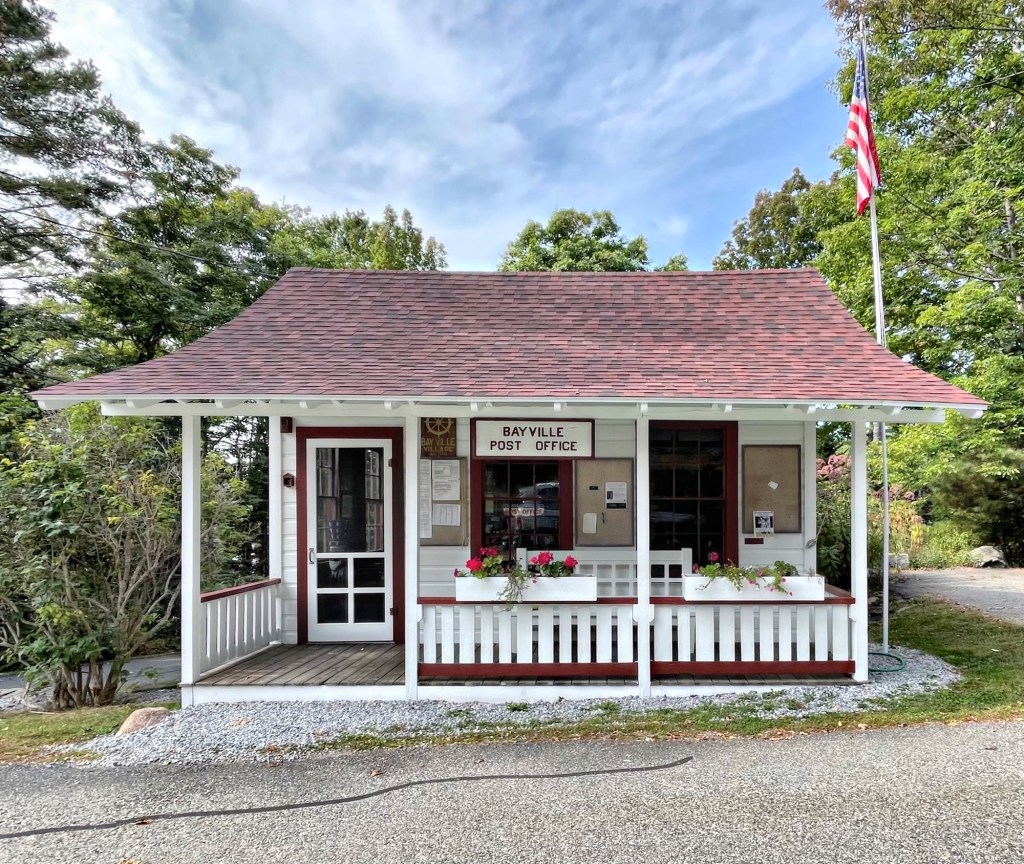
Bayville, is a quiet and picturesque coastal village on Linekin Bay, in the eastern part of Boothbay Harbor, Maine. The small village is comprised of roughly 40 cottages and a small post office. This post office was built around 1920 and has operated here seasonally every summer since. The rustic Craftsman style building features a broad roof with exposed rafter tails, extending to create a sheltered porch off the front.

John Smith House // c.1895

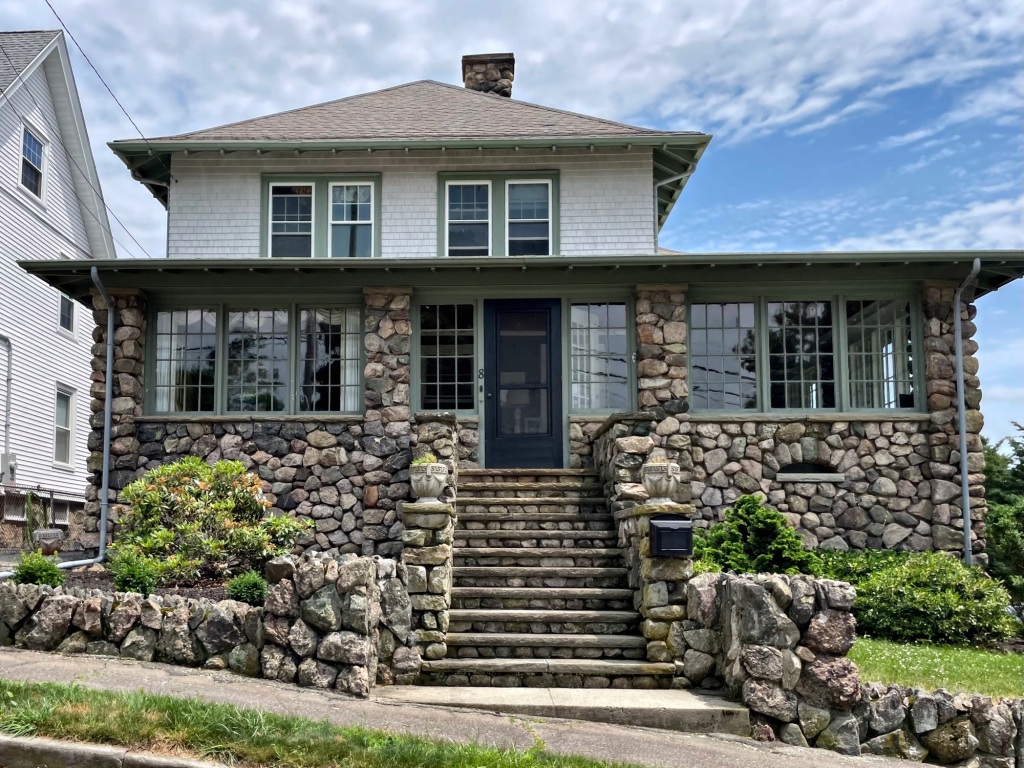
Hull, Massachusetts is an often overlooked town (besides Nantasket Beach Reservation), but there are some really great old houses and buildings to be found in the seaside town. This is the John Smith House on Meade Avenue in the Atlantic Hill neighborhood inland from the peninsular part of town. Development here was fairly slow, but took-off in the late 19th century when cottagers began to develop some house lots here. They were soon joined by year-round residents like John Smith, an ice merchant who built this home around 1895. Craftsman in style, the house exhibits a mix of building materials with a rough fieldstone porch and two matching stone chimneys together with wood shingle siding. The stunning stonework extends from the foundation, uniting the house to its terraced, rocky site. It is one of a handful of homes here that have not yet been altered or covered up by vinyl siding.

Megunticook Clubhouse // 1901

As coastal communities in Maine’s mid-coast began to see more wealthy summer residents, these enclaves of cottages needed clubhouses and spaces to spend their summer days. In 1899, Philadelphian (and Rockport summer resident) Charles Wolcott Henry converted a section of his oceanfront summer estate at Rockport’s Beauchamp Point to a newly established golf club which quickly outcompeted all others nearby. Within a few years, Boston architect Charles H. Brigham, was hired to design this Craftsman style clubhouse that sits on an elevated site with an expansive wraparound veranda providing views of the new course and the Penobscot Bay. The rubble-stone foundation and walls clad in brown-stained shingles are well suited to the rugged coastal Maine site. The golf course, also designed in 1901, was planned by groundskeeper Thomas Grant as a 9-hole course. The recreational complex has been meticulously preserved and is a great example of a turn-of-the-century clubhouse in coastal Maine. The 1901 clubhouse is also said to be the oldest golf building in Maine!