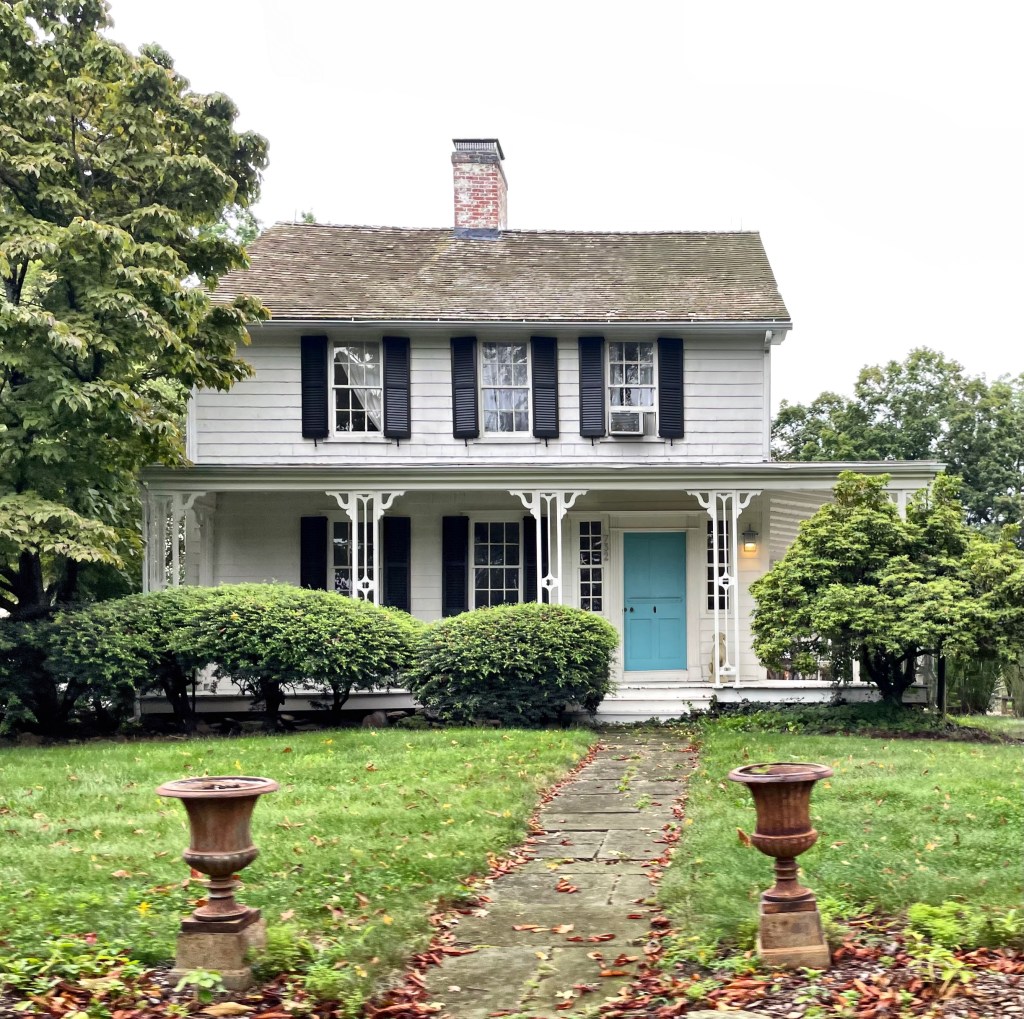
Bradley-Wakeman House // c.1815

While the Greenfield Hill section of Fairfield, Connecticut has some of the grandest houses (old and new) in the state, there are some more average size homes that just ooze charm and curb appeal. This example on Hillside Road, dates to the 1810s and was seemingly built by Alban Bradley (1767-1832) on land inherited by him from his late father, Seth Bradley. The family farmed on the land from this Federal period farmhouse until it sold out of the family by Alban’s only son, Burritt in 1825. Burritt sold the farm to Zalmon Wakeman who farmed on the many acres of valuable land there. Sometime before his death before the Civil War, the house was “modernized” with Italianate-style porch, which is supported by delicate cut trelliswork. This is a great illustration as to how modest renovations which apply up-to-date decorative details can be done to historic properties without compromising the original structure or its architectural integrity.
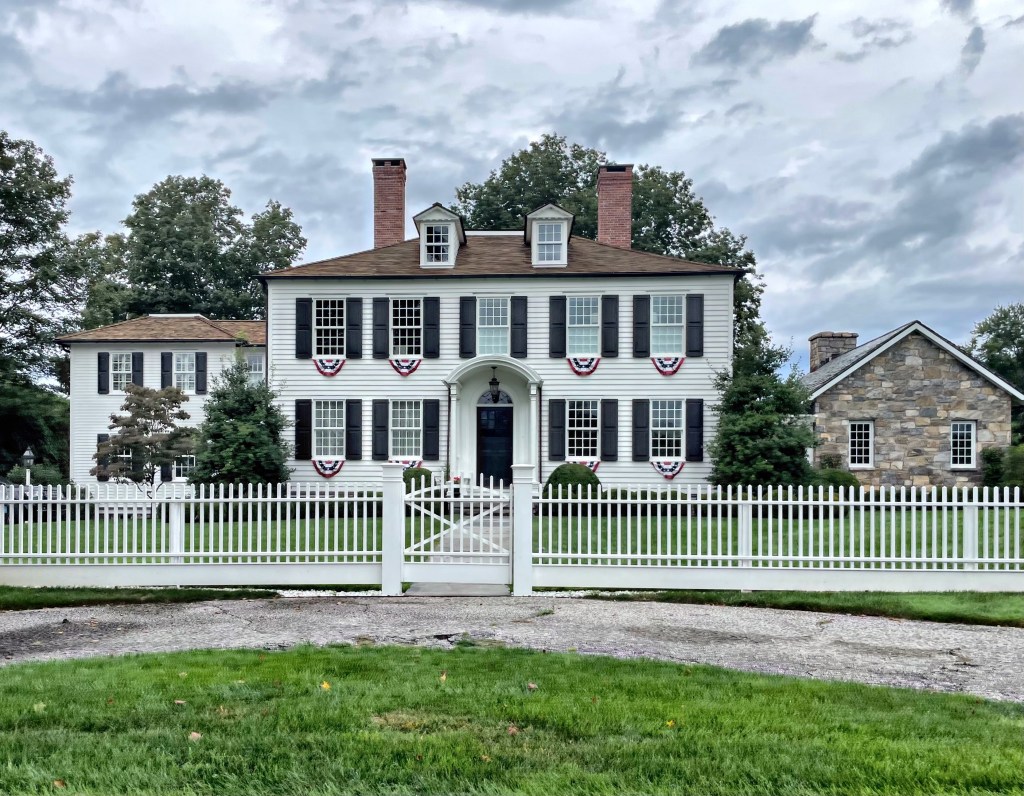
Bradley-Baldwin House // pre-1750

WOW this is an absolute dream home! Tucked away on Meetinghouse Lane in the Greenfield Hill section of Fairfield, CT, you will find the Zalmon Bradley House. It was originally built around 1750 as a modest saltbox and later owned by Zalmon Bradley. The property was inherited by Zalmon’s sister, Sarah, who recently married Dudley Baldwin, an “ardent patriot”. The property was likely updated in appearance by Sarah and Dudley Baldwin giving the house its current four-sided hip roof, chimneys and an exquisite doorway. Dudley and Sarah died young in 1794 and 1795 (at ages 40 and 37 respectively), and the property was inherited by their only child, Abraham Dudley Baldwin. Abraham was watched for years by family, including his namesake, Abraham Baldwin (1754-1807), a senator, congressman, and key figure of the drafting and signing the U.S. Constitution. Abraham stayed in this house often during his time in Connecticut, watching after his nephew along with his sister, Ruth Baldwin Barlow. Abraham Dudley Baldwin as an adult resided in this house with his own family, and was largely engaged in local and state politics and agricultural pursuits. The Bradley-Baldwin House was restored a few years back, and looks amazing!

Reverend Richard and Lavinia Dey House // 1823

Richard Varick Dey (1801-1837) was a young divinity student from New York City, attending the Theological Seminary in New Brunswick, New Jersey, when he met Lavinia Agnes Scott (1805-1886). Dey was the son of prominent New York attorney Anthony Dey and Catharine Laidlie; Catherine’s father, the Rev. Archibald Laidlie, was the first minister called to preach in English in the Dutch Church in New York City. Richard and Lavinia fell in love and became engaged on December 27, 1820. However, Lavinia’s parents were opposed to Richard, and her father even asked Richard’s theology professors at Rutgers to try to discourage his pursuit of Lavinia. It did not work and they married in September 1822. After graduating from the Seminary in 1822, Richard was licensed by the Congregationalists and the young couple moved to Greenfield Hill, in Fairfield, Connecticut, where he preached from 1822-1829. Local history states that it was actually Lavinia who designed this house in 1823 for their family and oversaw the builders during its construction. The Federal style house stands out for its clear Dutch form with its roof projecting to create a recessed verandah, likely influenced by the couple’s New York/New Jersey upbringing.

Reverend Dey, Lavinia, and their children relocated to New York City, and Richard preached at a number of churches the before he died unexpectedly in 1837, leaving his 32-year-old widow with four young children. Lavinia remained in New York, where she served as the manager of The Society for the Relief of Poor Widows with Small Children for over 25 years. She never would remarry and died in 1886.

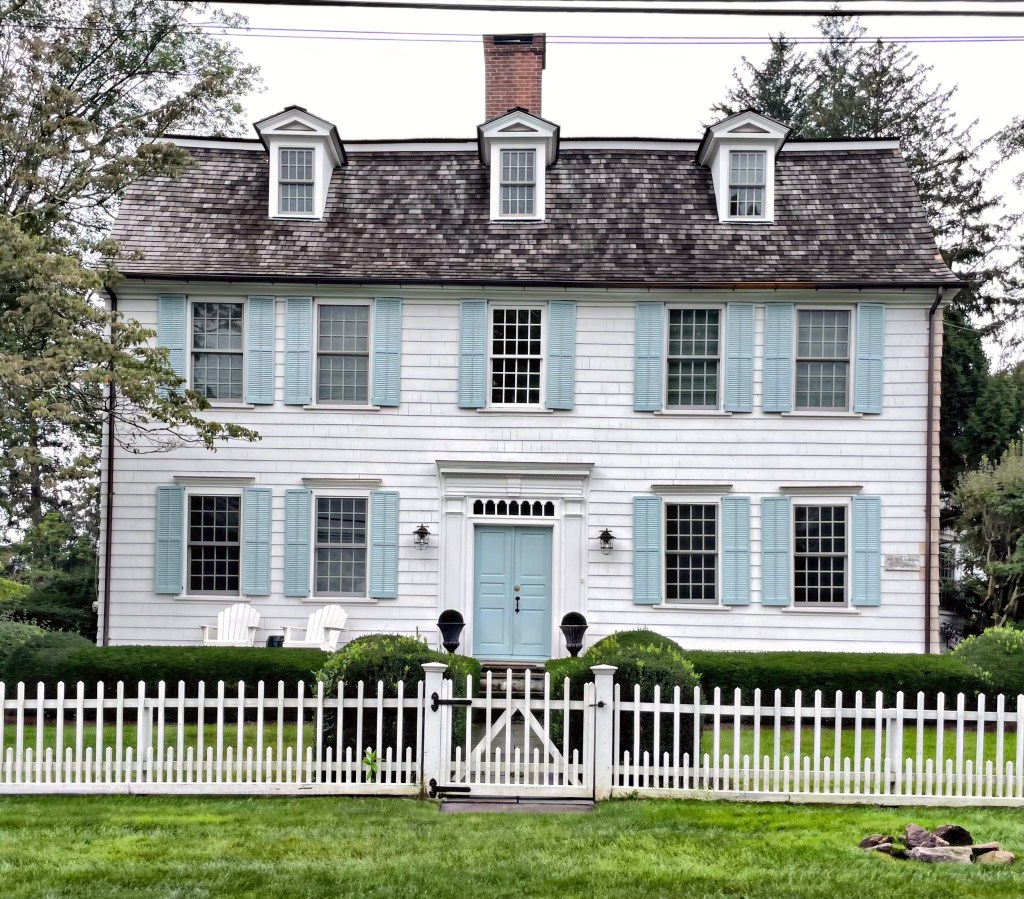
Pomeroy-Belden House // c.1758

This stunning gambrel-roofed Georgian manse is located on Bronson Road in Fairfield’s Greenfield Hill neighborhood, a well-preserved in the northern part of town with large historic homes on large lots. The Pomeroy-Belden House was built in about 1760 for Seth Pomeroy (1733-1770), the son of Seth Pomeroy Sr. (1706-1777) a gunsmith and soldier from Northampton, Massachusetts, who served in King George’s War, the French and Indian War, and the Revolutionary War (at nearly seventy years old). Seth Jr. graduated from Yale in 1753, and would accept the call as the minister of the Greenfield Hill Congregational Church from 1757 until his death in 1770. He had this stately house built for his family during his time as minister. After his death, the house was purchased by Captain David Hubbell who used it as a store until it was purchased by Reverend William Belden, who served as pastor of the Greenfield Hill Congregational Church from 1812-1821. The Georgian mansion features a central double-door entry with traditional door surround, later shingle siding and a gambrel, wood shingle roof punctuated by three small dormers.

Greenfield Hill Congregational Church // 1855

Local residents of northern Fairfield successfully petitioned the General Assembly to establish a Congregational church in 1725 as a new Northwest Parish, a distinct group from the Fairfield Congregational Church. Their first meeting house was erected just years later in 1727. A larger, more substantial meetinghouse was built in 1760. The area of Greenfield Hill has always been remote and more suburban, but became important in the late 18th century when Timothy Dwight became minister of the Greenfield Hill Congregational Church in 1783. Dwight would go on to become the eighth president of Yale College (1795–1817). With increased funds and affluent members, another church was built in 1850 from plans by esteemed architect Richard Upjohn, in the Gothic style. Sadly, just years after it was completed, a fire from a furnace inside destroyed the church. So again, they rebuilt in 1855 with the building we see today, sort of. Architect Alfred Nash furnished plans for the building which was more Italianate in design. The church would be modernized in the 1940s in the Colonial Revival style, from plans by local architect Cameron Clark, likely inspired by the collection of Colonial-era homes nearby, including his own home in Greenfield Hill. The church remains a visual anchor for the affluent neighborhood.

Peter Parley Schoolhouse // 1756

The Peter Parley Schoolhouse (also known as the West Lane Schoolhouse) in Ridgefield, CT, is an excellent example of a well-preserved one-room school building in Fairfield County. The little red schoolhouse was originally built in 1756 and either replaced or enlarged in the early 1800s. As Ridgefield in the early days was primarily an agricultural community, many children split their time either helping family on the farm or in school, with work almost always coming before education. The school is named for its most famous student, Samuel Griswold Goodrich. Goodrich went by the alias Peter Parley and was born in Ridgefield, attending the school between 1799-1803. He was a prolific writer, with over 170 books to his credit, and is believed by many to have written the first American textbooks. Samuel wrote about his experiences as a student there, giving locals and historians a look into early life in the town. In the early 1900s, the town consolidated schools and this building was closed. The town seemed to simply close the building and it saw some neglect over time until the Ridgefield Historical Society assumed a lease of the property, recently restoring it.

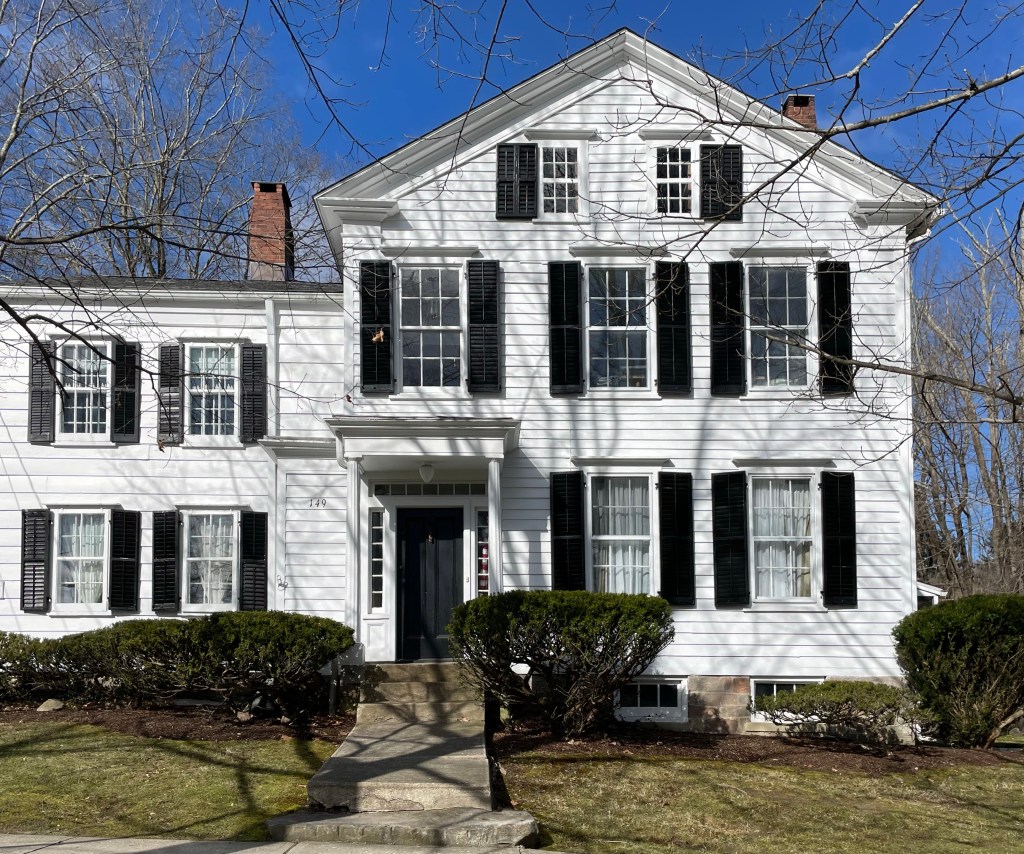
Seymour House // 1760

While this house appears to have been built in the mid-1800s as a Greek Revival home, it was actually built nearly a century earlier as one of the oldest extant properties on Main Street in Ridgefield, CT! Located on proprietors lot #20, the original building lots laid out for the new town of Ridgefield, this house appears to have been constructed in 1760 for Matthew Seymour (Seamore) and consisted of what is now the ell of the home (left side). Seymour operated one of the trade posts in town that engaged in trade with a nearby native Ramapo Tribe. The home was likely re-oriented and added onto with a more formal Greek Revival wing with its gable roof facing the street before the Civil War, a configuration it retains to this day.

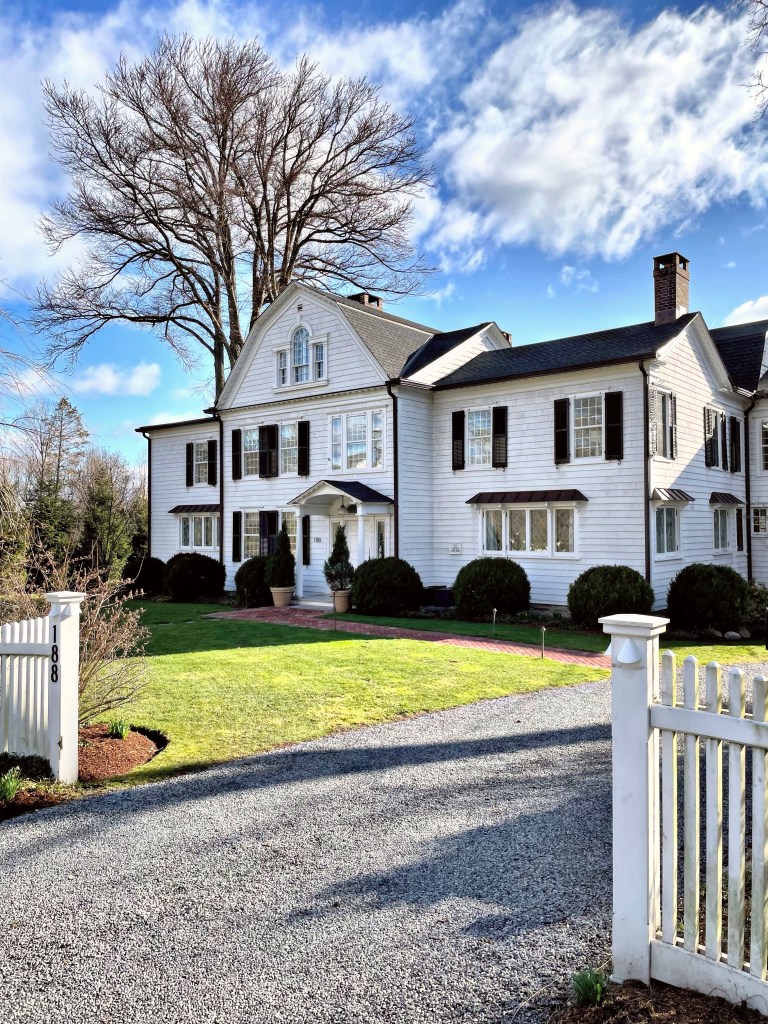
Czar Jones House // c.1787

Czar Jones (1789-1869), a woodworker and a justice of the peace, served in the War of 1812 and later was a partner in the local carriage manufacturing company in Ridgefield, CT. Jones bought a circa 1787 house on Main Street in 1818 and modernized it to serve as his family’s residence. The modest late-Georgian house was updated in the Federal style. Not long after Czar’s death (his only wife died 1851) the home was then purchased by New York City publisher, Albert H. Storer and his wife Sophie, the latter was the founder and first president of the local Ridgefield Garden Club. The couple divorced in 1915, and Sophie moved to Europe before remarrying and settling in California. The home that was intended as a summer getaway for the family, became Mr. Storer’s primary residence as he remained in Ridgefield with his son Francis, daughter-in-law, and grandchildren, until his death in 1933.

Rockwell House // c.1850

Built in 1850, likely as a late-Greek Revival or Italianate style home, this property on Main Street in Ridgefield was completely “modernized” in the 1880s in the Queen Anne style popular at the time. The home was originally built for Francis Asbury Rockwell (1818-1881), a tin-smith, wine-maker and inventor who married Mary Lee Everest, who also had deep roots in the community and was a daughter of a local Revolutionary War captain. The couple built a home on Main Street and raised their children there until Francis and Mary died in 1881 and 1883 respectively. The family home was inherited by their eldest son, Charles Lee Rockwell, who became the director of the First National Bank in town. Charles updated the house to give it the Queen Anne Victorian flair we see today.

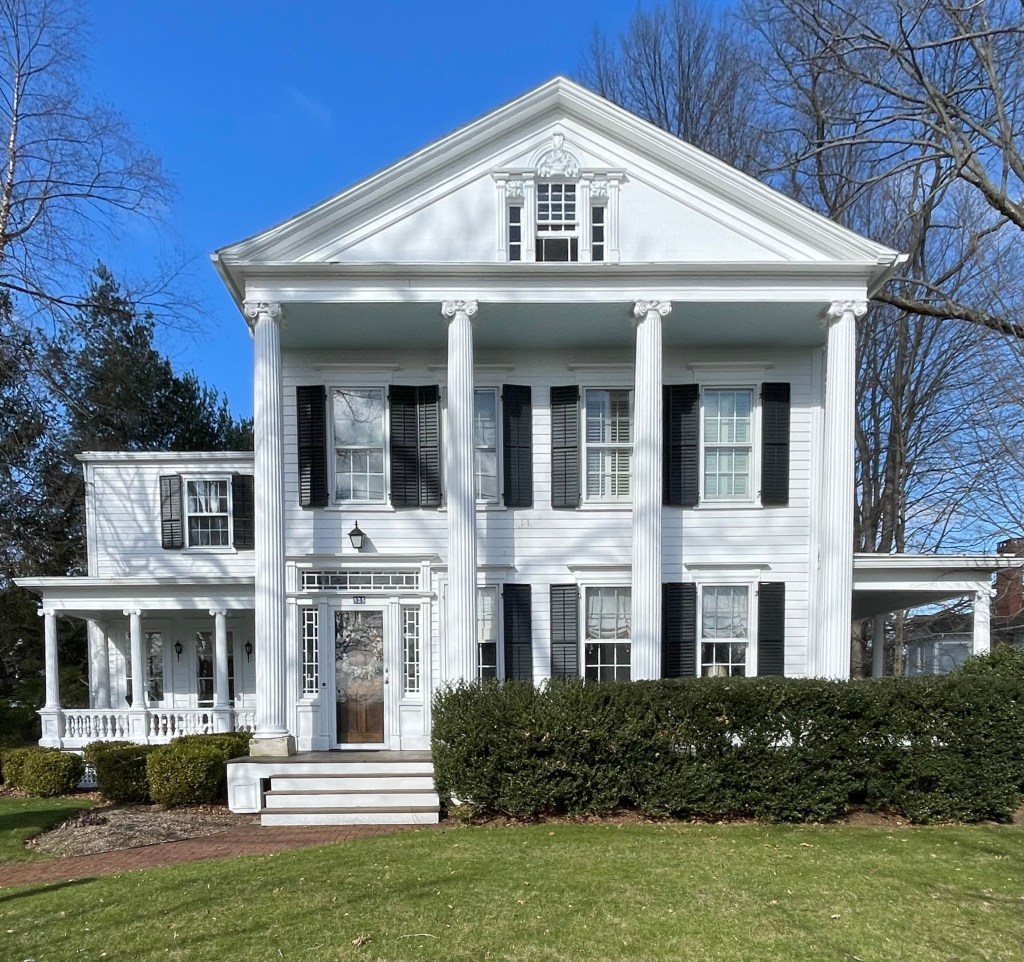
Henry Smith House // c.1845

This stunning temple-front Greek Revival home on Main Street in Ridgefield, Connecticut is an absolute dream! The home was built in the mid-19th century for Henry Smith, who operated a shirt factory in town with his father. The house’s gable roof facing the street completes a pediment, which is supported by a projecting portico of four colossal Ionic columns. In the pediment, a gorgeous Palladian window adds so much character to the facade. I love a good temple-front classical home!