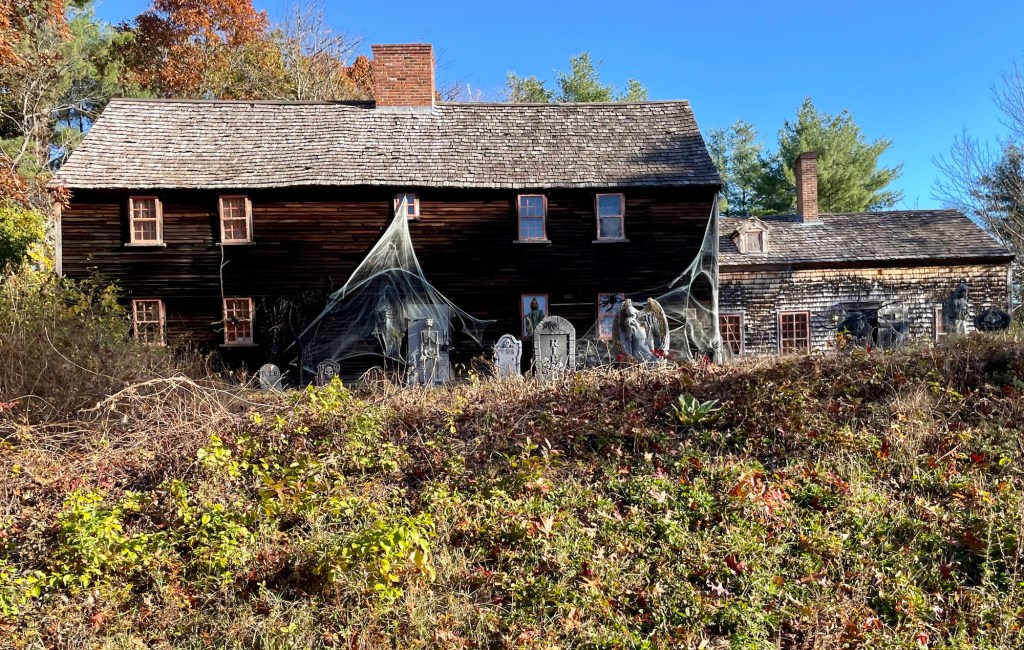
Dickinson–Pillsbury House // c.1700

The Dickinson-Pillsbury House is believed to be over 320 years old and is significant as a well-preserved example of a First Period house in good condition. Located on Jewett Street in Georgetown, Massachusetts, the house was seemingly built before 1700 by James Dickinson Sr. or James Dickinson Jr. and was inherited by Samuel Dickinson (1754-1841). The house is notable for being the home of War of 1812 veteran and inventor Paul Pillsbury, who purchased the property about 1801. His inventions included devices for pegging shoes, milling bark off tree sections, and stripping kernels from ears of corn. Paul Pillsbury and his wife Elisabeth Frink had a family of seven sons and one daughter. Paul Pillsbury was also the uncle of abolitionist Parker Pillsbury and the great-uncle of attorney Albert E. Pillsbury who drafted the bylaws of the NAACP. What an incredible family! The house is well-preserved and a great example of a First Period residence from the 17th century.

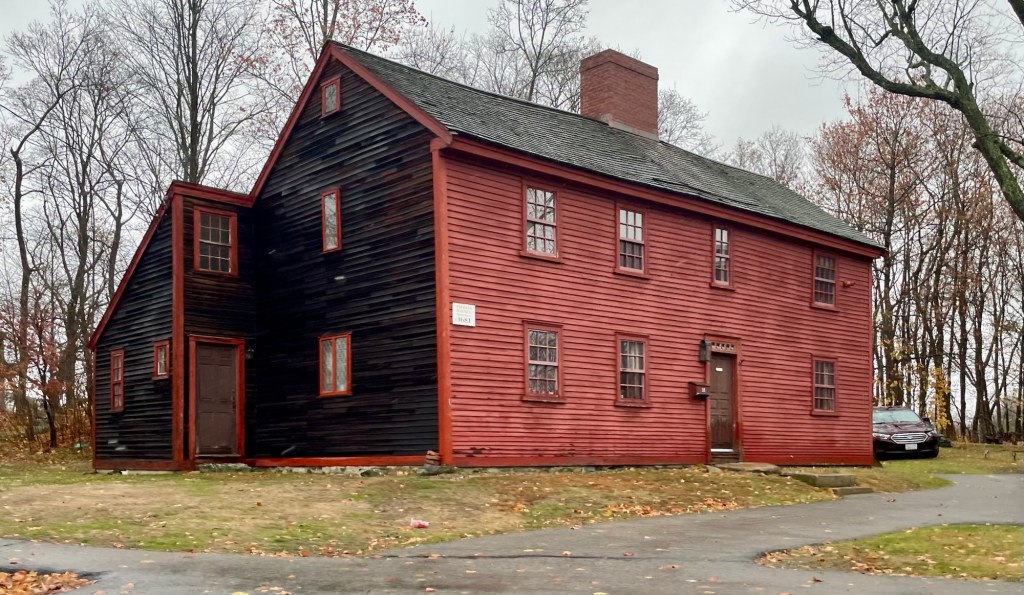
“The Old Castle” // c.1712

Located in Pigeon Cove, the northern section of Rockport, Massachusetts, the “Old Castle” is an iconic landmark in the charming coastal town. The exact year it was built is not known, but it is believed to have been built in 1712 by Jethro Wheeler (1692-1755), a shoemaker who settled here from nearby Rowley. In 1724, Jethro deeded the property to his son Benjamin, and he moved out of town. Benjamin, is turn sold the property to his son Benjamin in 1769. Benjamin Jr.’s son, John D. Wheeler in 1792 inherited the property and added the lean-to/kitchen room to the rear to create the present saltbox roof form. Various Wheelers continued to own the Old Castle for another hundred years. The property was gifted in 1929 to the Pigeon Cove Village Improvement Society, and is presently under ownership of the Sandy Bay Historical Society, who manage the property as a house museum. The house with its overhanging second story reads like a garrison, a common element in First Period houses in Essex County.

Samuel Bradley House // 1715

Welcome to Southport, one of the most walkable and charming seaside villages in all of Connecticut, and it’s also in Fairfield! Southport became a leading coastal port on Long Island Sound, its ships carrying produce and goods back and forth to New York City. Sea captains houses, historic banks, and stunning churches line the streets in the village and are all in a great state of preservation. This is because much of the old village area is part of a local historic district, first established in 1967, where buildings from three centuries are protected for future generations. This house was built in East Haven, Connecticut by Samuel Bradley in 1715. The saltbox house is evocative of many early Colonial homes of Connecticut built at the time with a large central chimney and symmetrical facade. The house remained in the family until the mid-1940s when it was purchased, disassembled, shipped and reconstructed on this site on Harbor Road in Southport.

Sgt. John Smith House // c.1690

According to local historians, this historic saltbox house was built around 1690 by John Smith, a volunteer Sargent in the Fairfield Trainband (a band of citizens trained as soldiers to supplement the regular army) or Militia. The position involved training, strategizing, storing military weaponry of the town, and being responsible for the preparedness of the community in the event of an attack by Native tribes, Dutch, or French forces. The house was later renovated in the Colonial Revival style, but has since been restored closer to its original design as an early First Period saltbox.

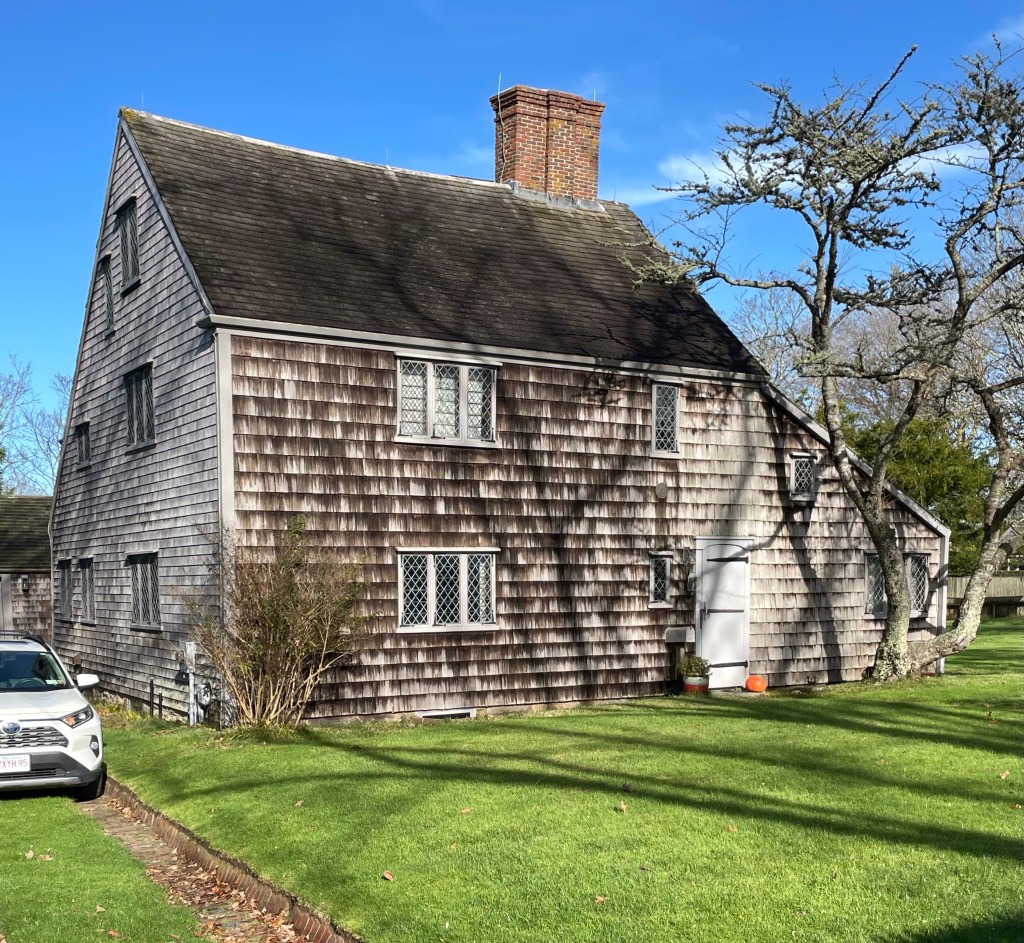
Richard Gardner Homestead // pre-1688

In 1690, Richard Gardner Jr. (1653-1728) received the land and dwelling house from his late father Richard Gardner (1622-1688) who was born in England and settled in Nantucket by way of Salem upon his death. The primitive, First Period home was occupied by subsequent generations of the Gardner family, and altered and expanded to fit the growing needs and wealth of the family. By 1840, the house was owned by George C. Gardner, a whaling captain and descendant of Richard Gardner. The original home was located on what is now Lowell Place, just off Main Street, and the Gardner Homestead was converted to a carriage house for the more modern George Gardner Home. By 1927, Ms. Gladys Wood purchased the deteriorating and heavily altered structure, and moved it to its current location on Main Street. Ms. Wood hired architect Alfred Shurrocks, who summered on the island and was restoring the Jethro Coffin house nearby, to restore the former Gardner Homestead, but this one was all based on conjecture and historical precedent. The home looks much like a 17th century saltbox and has stood the test of time.

Jethro Coffin House // 1686

Here it is… The oldest house in Nantucket! The Jethro Coffin House dates to 1686, and when it was built, Nantucket’s English population totaled several hundred, and the native Wampanoag outnumbered them by at least three to one. The home was built seemingly as a wedding gift from twenty-three-year-old Jethro Coffin (1663–1727) to his new sixteen-year-old wife Mary Gardner (1670–1767). The marriage merged two of the old Nantucket families and was built on Gardner family land out of lumber transported to the island from Exeter, New Hampshire, where Jethro’s father, Peter Coffin, owned timberland and a saw mill. The First Period house has small windows of small panes of glass as the material was shipped from England at high cost. The large central chimney would heat the entire home on cold winter nights. Mary and Jethro sold their Nantucket dwelling to Nathaniel Paddack in 1708 and moved to Mendon, Massachusetts, when Jethro inherited property there. By the late nineteenth century, the house was abandoned (for some time it was used as a barn) and had fallen into disrepair. A Coffin family reunion held on the island in 1881 renewed interest in the property and off-island members of the family bought the old Coffin House. The Nantucket Historical Association acquired the house in 1923, and four years later, Historic New England), commenced an extensive reconstruction in an attempt to return the house to its historic appearance. It remains a location of pride for residents and visitors to the island to this day.