This Greek Revival house in Newport was built in 1845 for the Tew Brothers. The home was likely a double-house with two doors for each family, as the current entry looks to be of a more recent vintage. The house features a full-length columned porch which has small brackets in the eave, an early nod to the emerging Italianate style. The property was recently renovated and sold for just over $1 Million. Talk about a steal!
On Nantucket, even the little houses can pack an architectural punch! This is the George C. Gardner House. The house on Main Street was built in 1834 for sea captain George Gardner, a descendant of Richard Gardner, an early white settler on the island (who’s house stands nextdoor). The house exhibits a five bay facade with Ionic columned portico and balustrade at the roof and widow’s walk. By the end of the 20th century, the house was sitting, decaying after years of deferred maintenance caused by a bitter divorce dispute between the owners. From this, locals told stories about the house being haunted, including stories of a Chinese servant of the Gardner family who was hanged after becoming infatuated with one of George Gardner’s daughters. The body is rumored to have been buried on the grounds of the house. There is not much to substantiate these stories of local lore, but they are always interesting to hear. A truth is that the home was purchased in the early 2000s for millions and restored faithfully before being sold for shy of $10 Million. Now that is really scary!
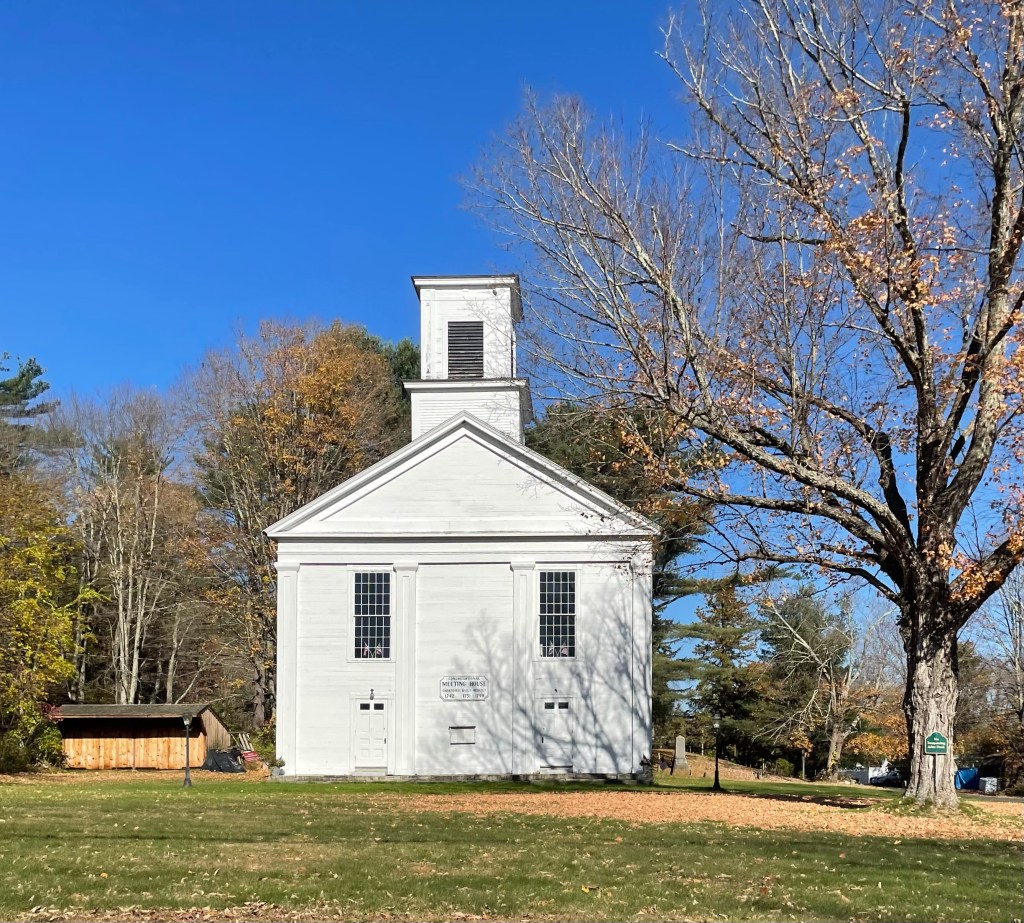
Ware was settled in the 1717 and incorporated in 1775. Its town center was laid out in 1760, on land belonging to one of its early large landowners. The first colonial meeting house was built in that year, near the geographic center of the town, and the road network developed around access to this area from the corners of the town. The Ware Center Meeting House was built in 1799 to replace a previous structure. The Meeting House has served as the first town meeting hall, the parish home of the First Church of Ware and the first school. As the town’s population boomed in the eastern part of town when factories and mills were built along the Ware River. To compete with the growing industrial village, the Ware Center residents sought to “keep up with the Jones'” and renovated the meeting house in 1843 in the Greek Revival style. However the growth of Ware had by passed the old Ware Center and population and in 1847, a new Town Hall was completed on the Main St. closer to industry and the new population center. The building remained as a church, but in 1928, the church ceased having winter services due to the reduced membership, and from that time on services have been held sporadically. The building remains a significant piece of Ware’s history from a sleepy rural town to industrial powerhouse.
This absolutely charming vernacular Greek Revival home was built in the mid-19th century in East Dorset Village. By the end of the 19th century, it was converted to a cheese factory a model in adaptive reuse and historic preservation. In the late 1930s, as Dorset became a popular summer colony for artists and upper-middle class residents of New York and the Mid-Atlantic, the cheese factory was purchased by artists Norman and Silvia Wright. The artists relocated the small building to the Kent Hill neighborhood of town, restoring the home and adding wings onto it. I also love the chocolate color paint!
Yet another of the buildings moved to Dorset Village by Charles A. Wade, this amazing classical building stopped me in my tracks when walking along the town’s marble sidewalks. It turns out this little structure was constructed in Enfield, Massachusetts, a town that was flooded in the 1930s for the filling of the Quabbin Reservoir. The building was likely built in the 1840s as a Congregational chapel, and upon hearing about the demise of the town, Wade drove to Enfield and brought back this charming little chapel for his hometown of Dorset. Upon its arrival to Vermont in 1938, the Greek Revival building was used as the town’s post office until a larger building was constructed in the 1960s. This building was converted to a real estate office and is now home to Flower Brook Pottery.
This stunning Greek Revival house in Dorset Village was built around 1850 and was long the home of Gilbert Mortier Sykes (1834-1920). Gilbert Sykes operated a general store in Dorset and held various public offices in town and later in the Vermont House of Representatives and Senate. The house has fully embellished entrance with paneled pilasters carrying an entablature and an amazing triangular window with diamond panes in the gable.
Just five years after the Congregational Church of Peru was built, the congregation acquired land and built this home as a parsonage for their pastor. The parsonage was designed in the Greek Revival style similar to the church. The home sits amongst beautiful, mature trees and exhibits the best in Classical design with bold corner and entry pilasters and a five bay symmetrical facade. They sure don’t make them like they used to!
Built in 1857 as the Landgrove Methodist Church, this absolutely charming church sits in the middle of Landgrove, a town with a population of just 177. The town’s small population acquired funds to erect a church in their town, opting to not make the trip by horseback or foot to the churches in surrounding towns. The vernacular Greek Revival building was likely constructed by the members of the congregation and possibly the work of a local builder. Methodists commissioned the 30 × 40–foot building to attract a regular circuit rider, and by 1870 it had become a Union church with other denominations. There is something so enchanting about these old white churches in small New England towns!
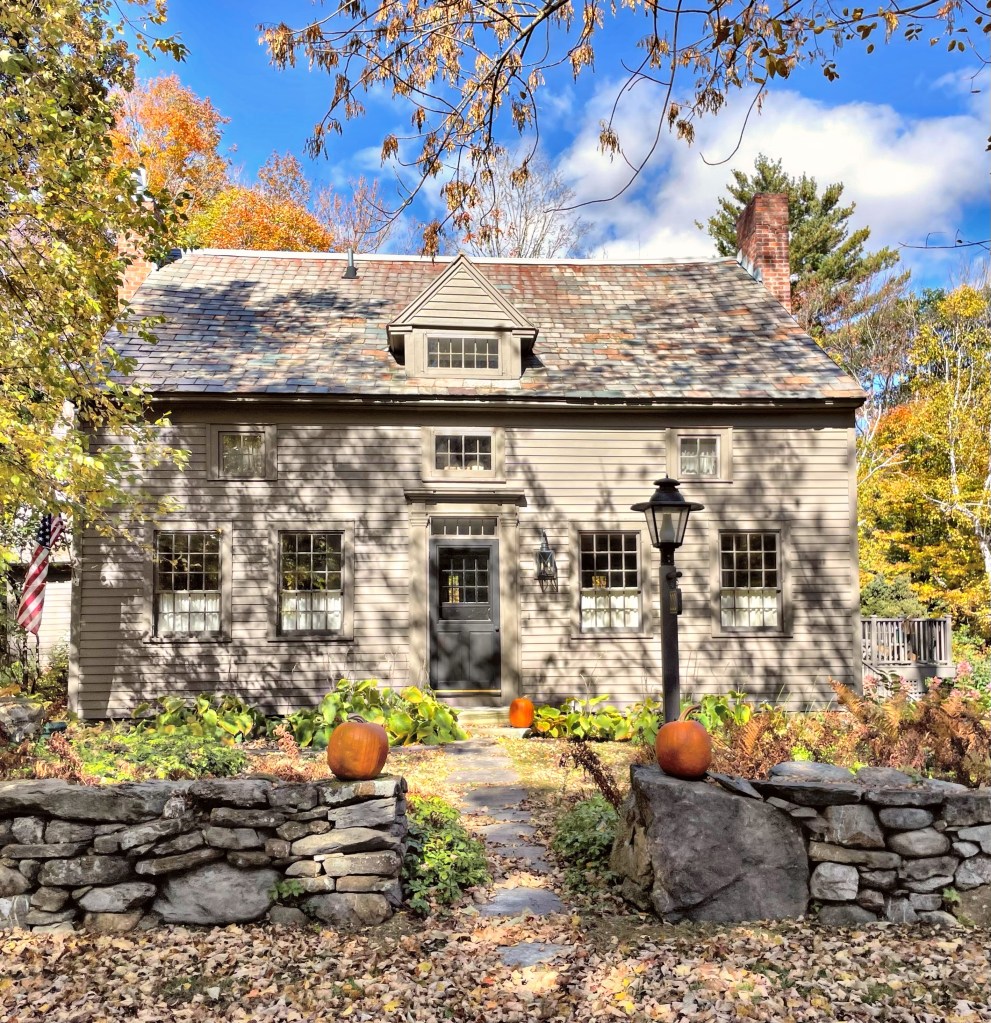
I stumbled upon this Greek Revival farmhouse located on one of many dirt roads in Landgrove, Vermont and had to snap a few photos! I couldn’t find much on the history of the house besides the fact it was listed on an 1869 atlas as the property of an “I. Cory”. The five-bay farmhouse has an elaborate door treatment and bold corner pilasters all perched behind a historic stone wall. The house telescoped outward with additions, eventually connecting it to what is now a garage. This farmhouse purchased in the 20th century by John A. Brown, who worked as Dean of Students at Princeton University.
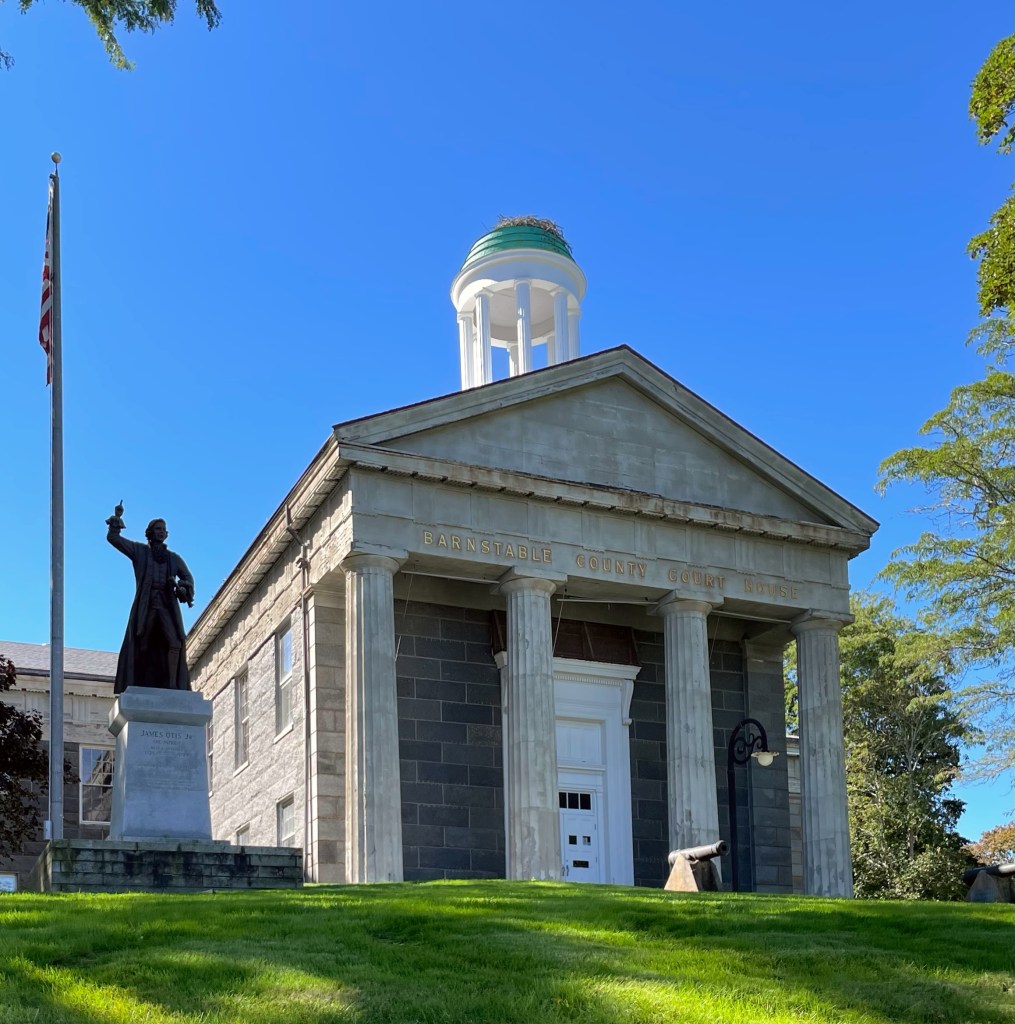
Perched atop a hill in Barnstable Village, the old town center of the historic Cape Cod town, the Barnstable County Courthouse sits proudly as a well-preserved example of the Greek Revival architectural style in a civic building. The building was constructed in 1831 from plans by renowned architect Alexander Parris, who designed the iconic Quincy Market in Boston just years earlier in the same style. Due to its highly visible location along the Old King’s Highway and public function, the courthouse was likely instrumental in popularizing the Greek Revival style on the Cape. The building was constructed of Quincy granite with a portico and fluted Doric columns made of wood fashioned to look like stone (which fooled me from the street). The building has been expanded five times between 1879 and 1971, with each addition made cognizant of the architectural significance of the building. At the front of the building, two bronze statues of Mercy Otis Warren and James Otis, Jr frame the building. The Barnstable Superior Court is located in the building today.




 Buildings of New England