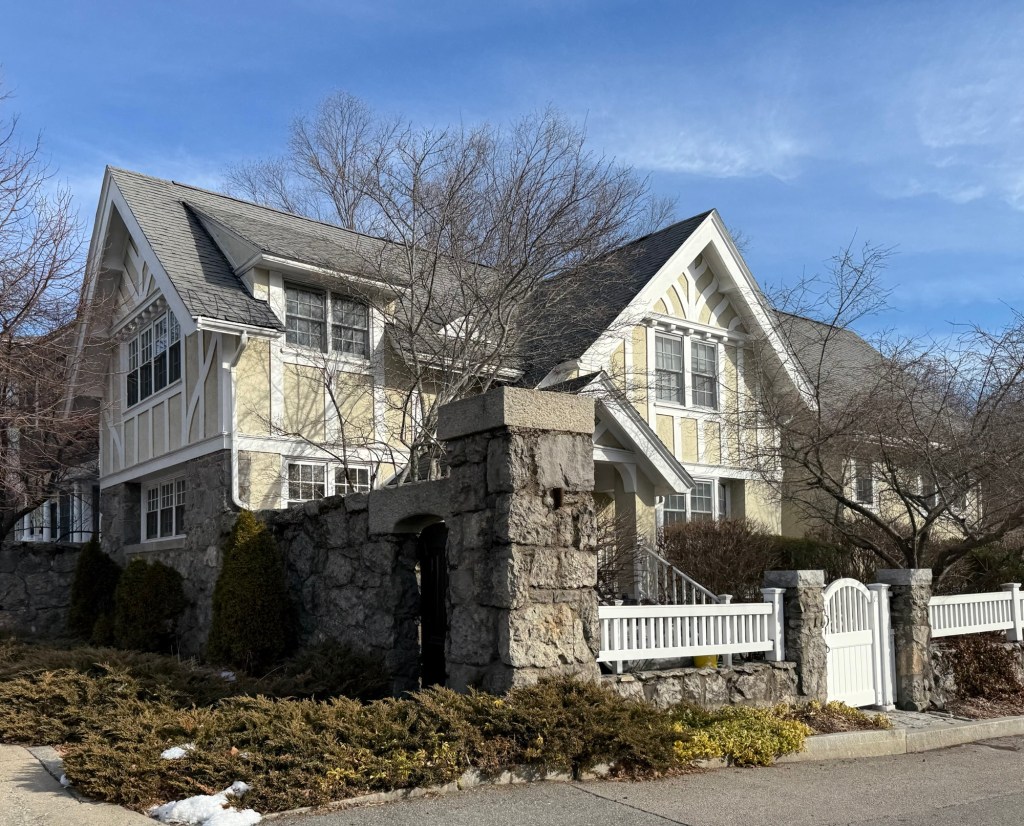
Wright Estate Gatehouse // 1907

Besides the former Wright Carriage House (now the Soule Recreation Center), the only other extant building that was built on the grounds of the former John G. Wright Estate in Brookline, Massachusetts, is this structure, the historic gatehouse to the property. Built in 1907 at the same time as the manor house, the gatehouse was also designed by architects Chapman & Frazer and served as the entry to the expansive grounds with a room for the gatekeeper to sleep in overnight. The Tudor Revival style building is less ornate than the stone mansion, the half timbering and stucco work well to compliment the other buildings. While the formerly dark half timbering has since been painted a white, the building still maintains its character. While the remainder of the Wright Estate was subdivided and sold off by the heirs of next owner, wool merchant, Andrew Adie, the gatehouse remained and survived the destruction that befell the main manor. The old gatehouse was converted to a full-time residence and remains to this day.

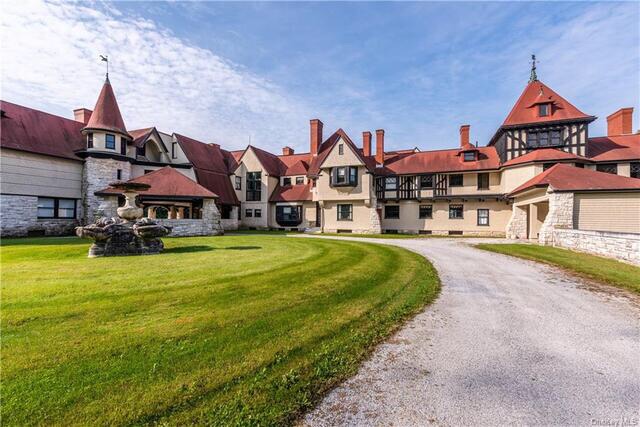
Elm Court // 1886

Real estate listing 11-2020

At 55,000 square feet and 106 rooms, the Elm Court mansion retains the title of the largest American Shingle Style home in the United States. The structure was built for William Douglas Sloane and Emily Thorn Vanderbilt (granddaughter of Cornelius Vanderbilt) as their summer “cottage” in the Berkshires. The home straddles the towns of Stockbridge and Lenox and sits on a massive parcel of land, giving the owners space to breathe the clean countryside air. Emily’s brother, George, built The Biltmore in Asheville, North Carolina and her sister, Eliza (Lila), constructed Shelburne Farms in Shelburne, Vermont. The home was constructed in 1886 from plans by the great Peabody & Stearns architects. Shortly after the turn of the century, ca. 1901, the couple commissioned Peabody and Stearns again, to vastly enlarge their original house. The additions used both Shingle Style and Tudor Revival motifs, and the result is a structure highly reminiscent of an English country house. William Sloane died in 1915, and Emily Vanderbilt continued to use the summer cottage, and in 1921, she married a summertime neighbor, Henry White, a career diplomat. While Henry White died in 1927, Emily retained the house and kept the grounds running until her death in 1946. The property’s use evolved into an inn in the late 1940s. During the 1950s, it embraced the public for dinners, overnight accommodations and events. Eventually Elm Court’s doors closed, and for approximately 50 years the mansion succumbed to significant theft and vandalism. The property has been listed for sale numerous times in the past decades, after a renovation by the last owners in the Sloane family. It is now listed for $12,500,000!