Red Lion Inn // 1897

The largest building on Main Street in Stockbridge has to be the Red Lion Inn, a regional institution and one of the best places to rest your head in New England. The inn got its start just before the Revolutionary War. According to tradition, Silas Pepoon established a small tavern on the corner of Main Street in 1773, under the sign of a red lion. A year later, angry citizens gathered at the tavern to boycott English goods and to pass resolutions protesting the oppressive Acts of Intolerance levied against the colonies. Since its earliest days, the inn was a vital gathering place for locals and has continued to play an important role in the life of the community ever since. In 1862, the inn was owned by Mr. and Mrs. Charles Plumb, avid collectors of rare and fine items, who became renowned for their impressive compilation of colonial antiques. A fire in 1896 destroyed the building but its remarkable array of collectibles was saved and the inn was rebuilt within a year by designs from Harry E. Weeks, a Pittsfield-based architect.
Colony Hotel // 1914

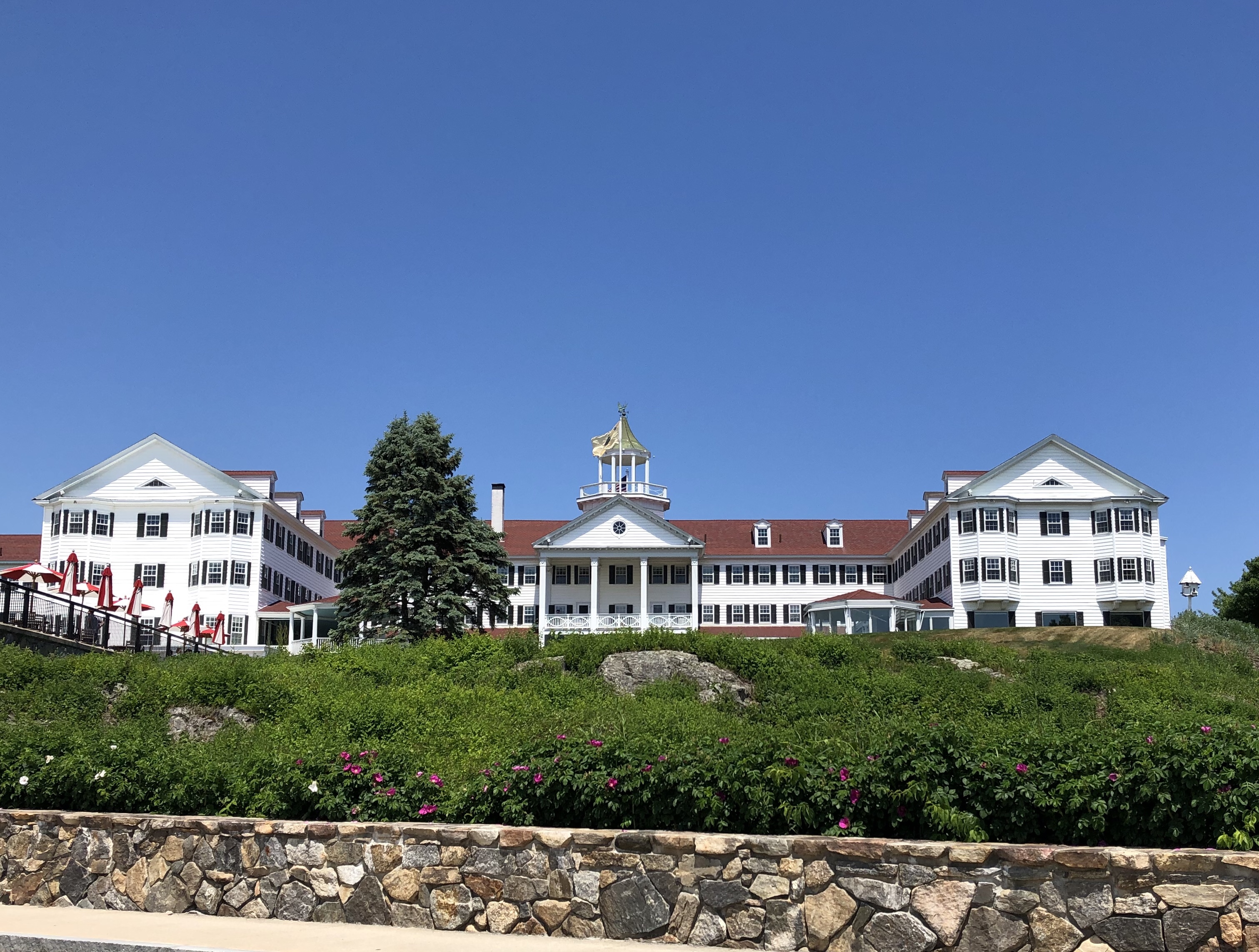
One of the larger hotels in Kennebunkport, the Colonial Revival Colony Hotel, built in 1914, provides historic charm with views of the Kennebunk River and Atlantic Ocean. Owner Ruel W. Norton had the new hotel built on the site of the Ocean Bluff Hotel (1873, burned 1898), to attract summer people, many of which stayed for months at a time. The Colony was originally called Breakwater Court until 1947, when George Boughton purchased Breakwater Court and changed the name to The Colony Hotel to complement their Florida property, The Colony Hotel in Delray Beach Florida. The hotel was designed by John Calvin Stevens, who lived in Maine and designed an estimated 1000+ buildings in the state, many of which in the Shingle or Colonial Revival styles.

Nonantum Resort // 1884

In the late 1800s, many coastal New England communities – including Kennebunkport – became summer resort towns and colonies for upper and middle class families. To accommodate families, who would arrive to these small towns by the train-load, many wealthy citizens constructed luxury hotels which offered longer term stays compared to what we think of hotels today.

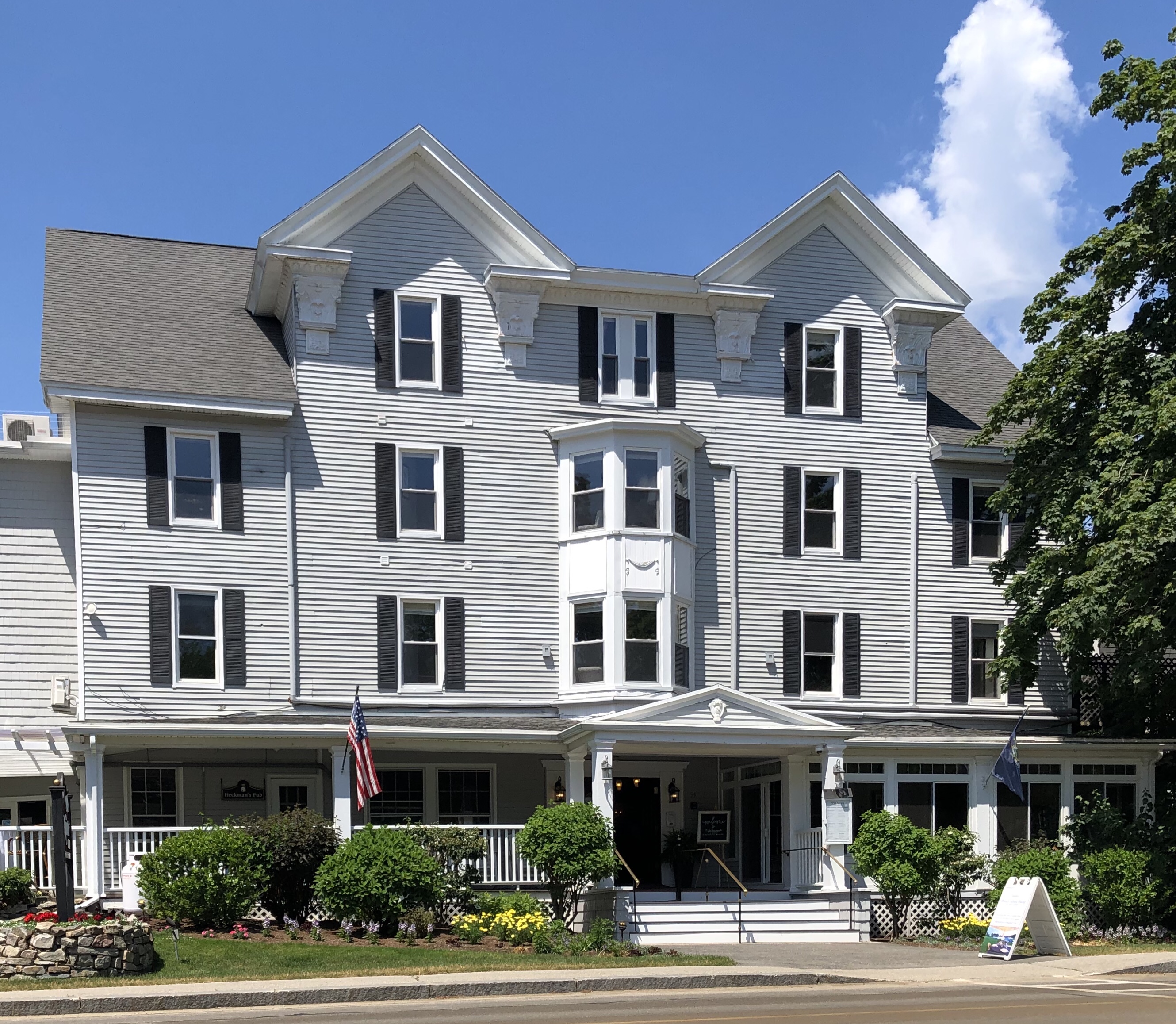
The Nonantum Resort in Kennebunkport was named from a Native American word meaning ‘blessing’ or ‘prayer’, but has become synonymous with ‘family’, the word was chosen as the building was believed to have been constructed on land where Native Americans traded with early settlers. Opened on the Fourth of July in 1884, the hotel was constructed for Captain Henry Heckman, the original owner. The building was a fairly modest, late Italianate design until alterations and additions in the 1890s added a Colonial Revival motif, with pilasters capped with Corinthian capitals and cartouches; however, many features have been removed.

Hotel Touraine // 1897

The Hotel Touraine at the corner of Boylston and Tremont Streets in Boston was built in 1897 as one of the most luxurious hotels in the city. Designed by the local firm of Winslow and Wetherell, the Jacobean Revival style building commands the well-trafficked corner opposite the Boston Common. Early articles described the hotel as “a large and sumptuously equipped house, with internal decorations in the style of the Chateau de Blois (a French chateau). Winslow and Wetherell appeared to have been inspired by the Louis XII wing of the Chateau, as many design elements of the hotel closely resemble it. The hotel was advertised as having 350 rooms valued at $2 a night up to $3 a night for a room with a private bath. Separate men and women’s parlors, a library, and elevator service made the hotel desirable for the upper-class Bostonians and visitors to the bustling Downtown area. The hotel’s rich clientele eventually began frequenting the larger hotels near Copley Square and the stature of the Touraine slipped with a changing Downtown character. By the 1960s, the hotel closed and was converted to apartments.