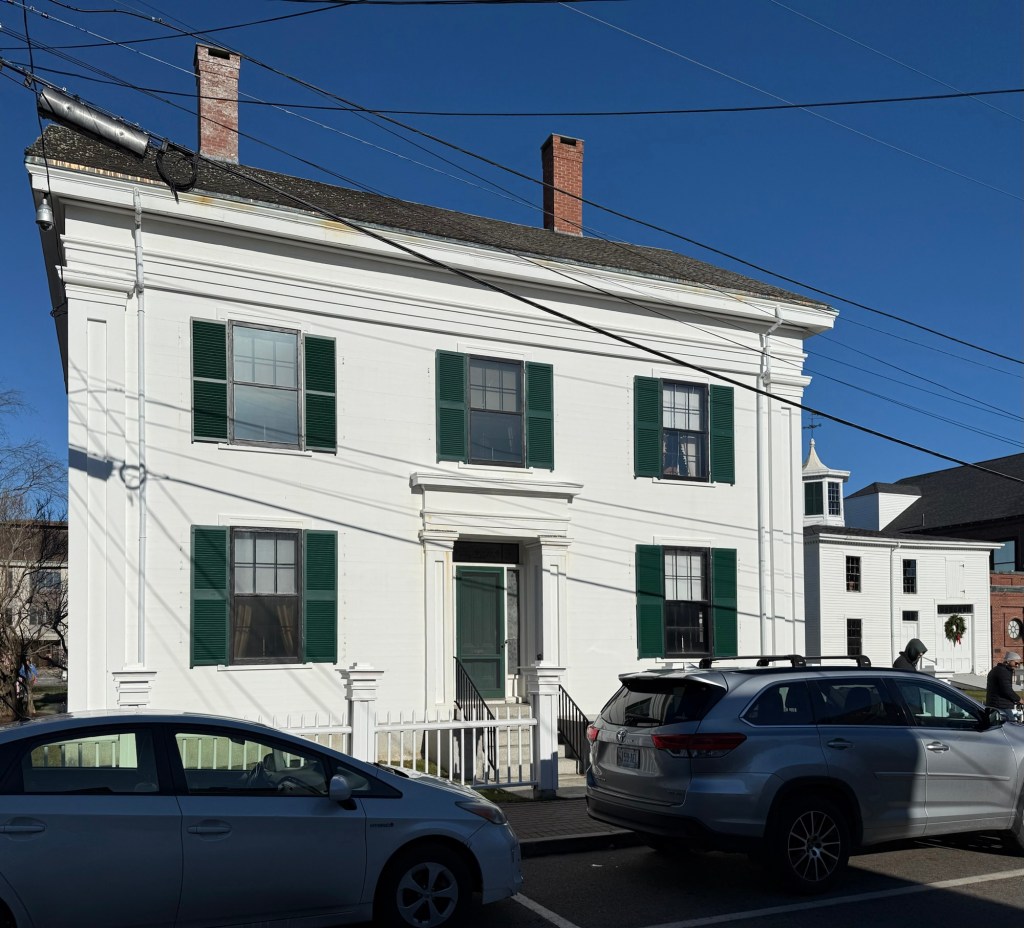
Farnsworth Homestead // 1850

The Farnsworth Homestead is located on Elm Street in Downtown Rockland, Maine, and is an excellent example of a mid-19th century residence in the Greek Revival style. The home was built in 1850 for Rockland businessman William Alden Farnsworth, who gained his income from lime-rock quarries and the Rockland Water Company. Mr. Farnsworth was a leading businessman who helped establish Rockland as the number four port in the United States, largely exporting lime for masonry construction all down the east coast. After William died in 1873, the property was inherited by his heirs, the last of which, Lucy Farnsworth, lived here until her own death in 1935. The 96-year-old Lucy Farnsworth died in the home and in her will, bequeathed the family property and ample funds to establish the Farnsworth Art Museum, and included preservation of the family homestead as a mid-19th century house museum, which it remains to this day. The Greek Revival style house with its flushboard siding and bold pilasters, was recently restored by the museum, along with the carriage house which stands to its east.
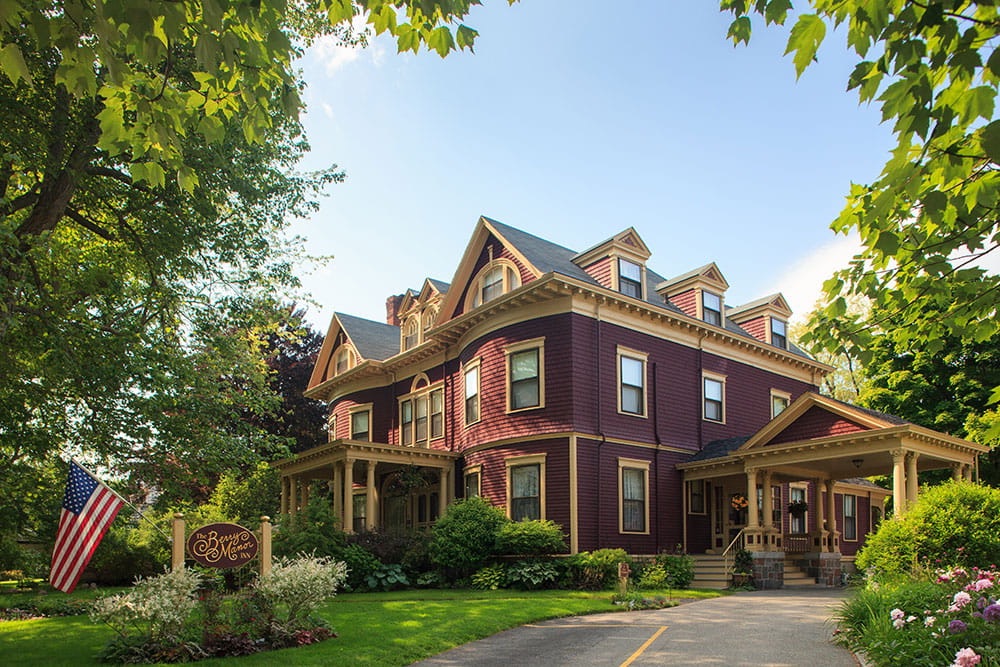
Charles Berry House // 1899

Photo courtesy of Berry Manor Inn

The Charles Berry House is located at 81 Talbot Avenue in Rockland, Maine, and it is one of the town’s finest examples of a residence built in the Colonial Revival style. The house was built for Charles Howard Berry (1849-1909), a businessman who operated a stage route, livery stables, and later entered the hotel business. He would hire Portland-based architect, Austin Pease, to furnish the plans for the house and adjacent carriage house. The residence features a symmetrical façade with front porch and porte-cochere, Palladian window over the entrance, bowed front, and ornate dormers at the roof. The entire property is lovingly maintained and preserved and is now home to the Berry Manor Inn, an up-scale bed & breakfast that maintains the old charm of Rockland, while providing high-class finishes.

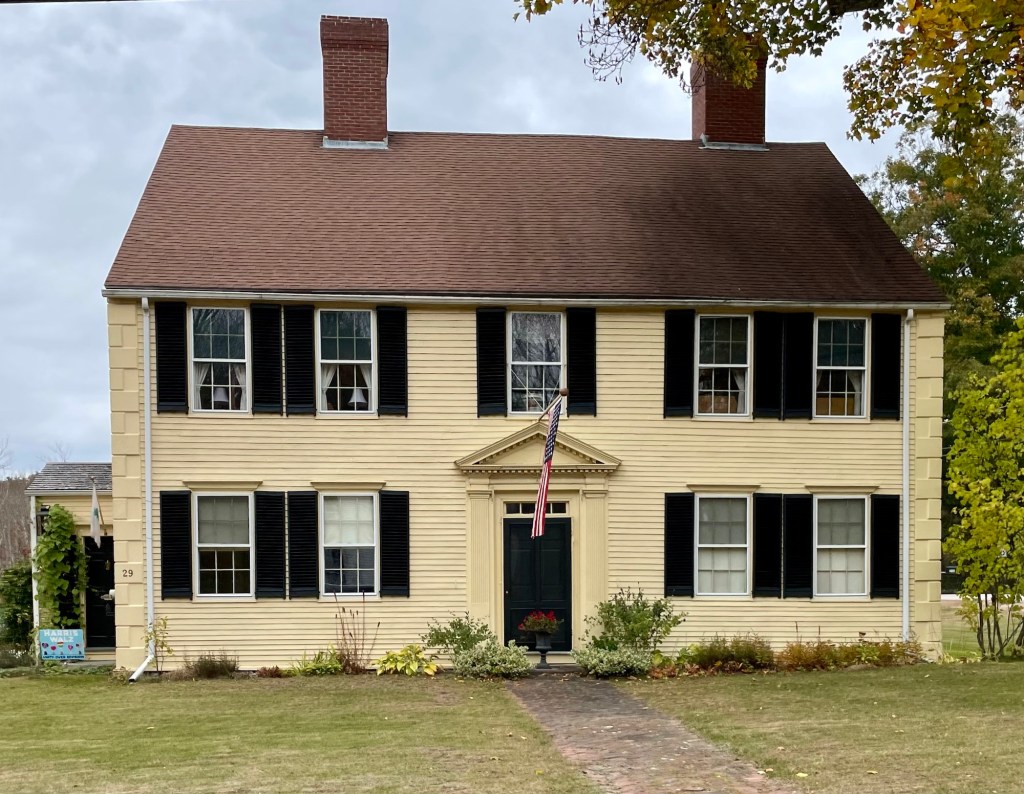
Rev. Samuel Foxcroft House // 1765

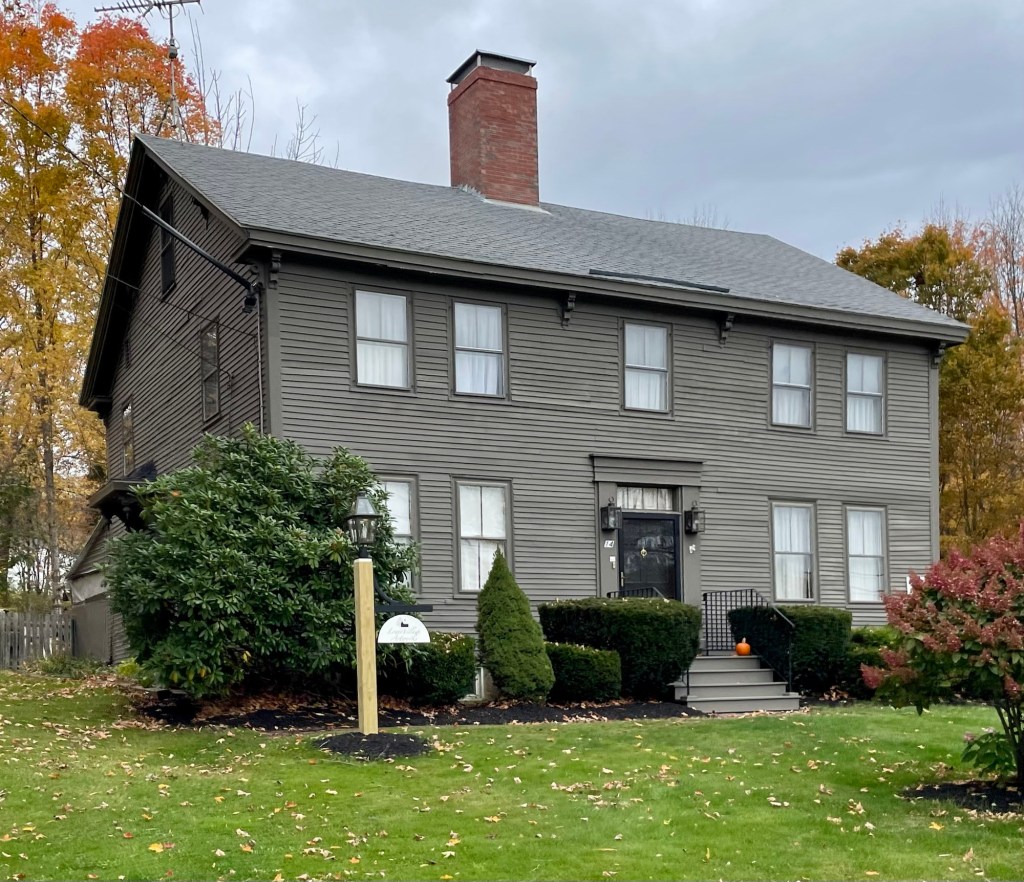
Built in 1765 for Rev. Samuel Foxcroft (1734-1807), this grand two and a half story house was the first major frame dwelling in New Gloucester, Maine. Its large scale and such fine mid-18th century architectural features as the triangular doorway pediment  and quoins at the corners make this a house befitting  the community’s first minister. Born in Boston in 1735, Foxcroft was the son of the Rev. Thomas Foxcroft, pastor of the First Church of Boston from 1717 to 1769. The younger Foxcroft graduated from Harvard in 1754 and answered the call of the New Gloucester Congregationalists ten years later, a brand new town in the wilderness of Maine. He was ordained in the blockhouse, a defensive structure from attacking native peoples, in January of 1765 and continued his ministry in the town until 1793, having the first purpose-built meetinghouse completed in 1773. The last years of his life were spent in poor health and he died at his home in 1807 at the age of 72.

Whitman-Fessenden-Coombs House // c.1800

This important Federal-period house sits in the middle of New Gloucester village in Maine, and dates to the early 19th century with mid-19th century alterations. The original owner was Obediah Whitman, who sold the house soon after to General Samuel Fessenden (1784-1869) lived here while practicing law in New Gloucester. He was an avid abolitionist who served as a congressman and in 1828, he declined the presidency of Dartmouth College. The General’s son, William Pitt Fessenden, resided there from ages three to fourteen. William later became a U.S. Senator and Lincoln’s Secretary of the Treasury. The third notable owner was artist, Delbert Dana “D.D.” Coombs, who used the second floor for his studio for some years. The update from the mid-19th century of the modest bracketed eaves and two-over-one windows showcases how later owners can update a home without diminishing the original design.

Nathaniel C. Allen House // 1793

The Nathaniel C. Allen House is a two-story Federal style residence located in New Gloucester, Maine. The house was built in 1793 by Shubael Marsh, a local builder (and father of Shubael Jr. (1797–1867), who moved to Texas with Stephen F. Austin) and sold to Nathaniel Coit Allen, an early settler in New Gloucester, who served as a General during the American Revolution. The property was purchased by Col. James Madison Thompson, then owner of the Glen House, an early White Mountains hotel in New Hampshire, who renovated the home by replacing the central chimney with two narrow ones and raised the ceilings and introduced Victorian interior woodwork. A subsequent owner added large Colonial Revival porches on the front and side entrances along with a new entry. The house showcases the changing tastes from Federal style to Victorian back to traditional tastes.

Morrill House // c.1830

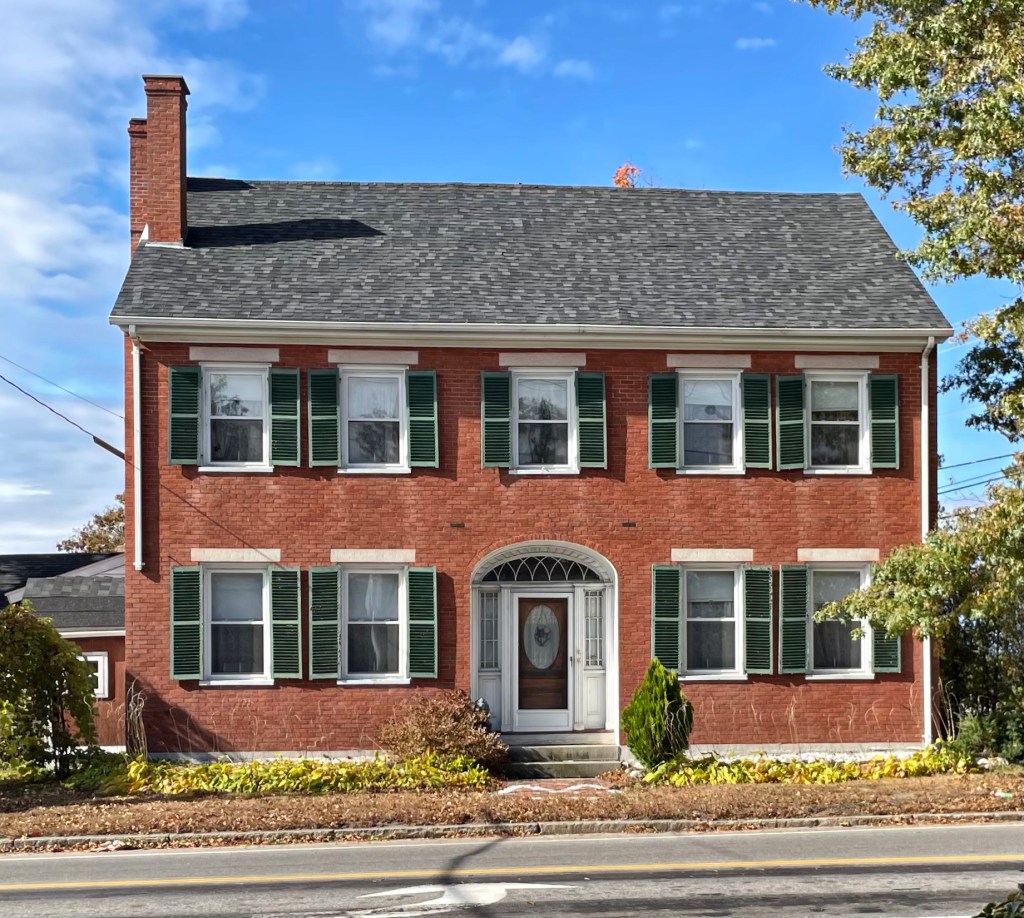
This stunning brick Federal style home sits in the center of Gray Village in Maine. The house dates to the early 19th century and was long-owned by members of the Morrill Family, seemingly first by William C. Morrill and remaining in the family for generations. The residence is a high-style example of the Federal style with recessed elliptical entrance with fanlight transom and sidelights with a Victorian-era front door. The house was likely built by a local mason or housewright who employed the designs of a Federal style plan book for the architectural detailing at the entry.

Samuel Perley House // c.1784

Built around 1784 for Reverend Samuel Perley, this Federal style home is one of the finest in the town of Gray, Maine. Samuel Perley (1742-1830) was educated at Harvard College and while there, met and befriended John Adams, who would later become the second President of the United States. The two maintained a lifelong friendship. Perley came to Gray in 1784 as a pastor of Gray’s first church. He likely had this house built at the time or purchased an existing house and updated it and the house is said to have Moses Eaton stencilling inside. At one point, Rev. Perley and his wife lived on one side of the house while his son Isaac, his wife, and their twelve children lived on the other.

Wadsworth Hall // 1800

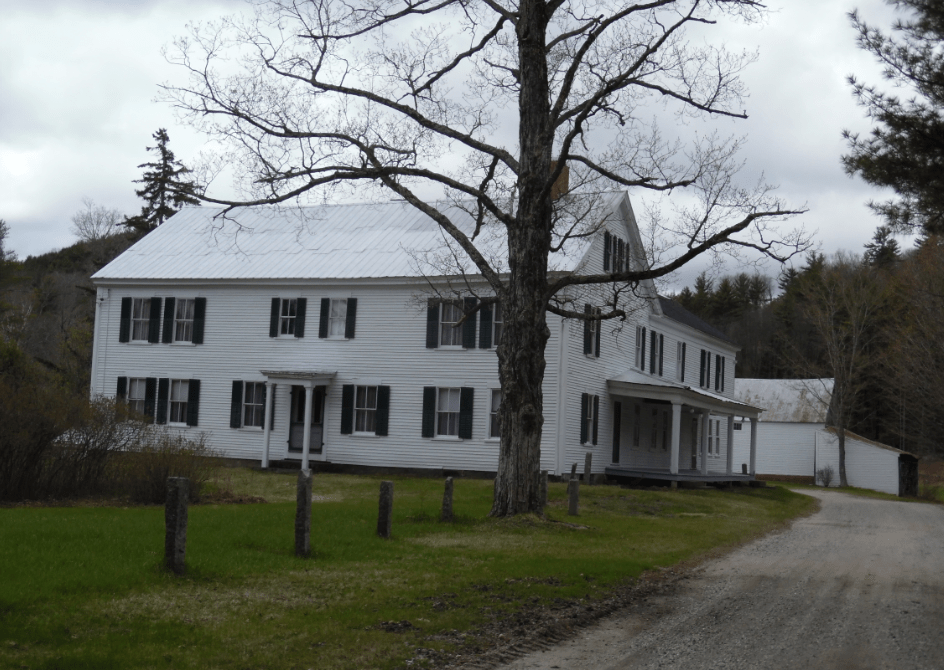
Wadsworth Hall is a significant and hidden estate house located in rural Hiram, Maine. The house was built in 1800 for Peleg Wadsworth (1748-1829), an officer during the American Revolutionary War and a Congressman from Massachusetts representing the District of Maine. He was also grandfather of noted American poet Henry Wadsworth Longfellow. General Wadsworth’s primary residence, now known as the Wadsworth-Longfellow House in Portland, Maine, was built in 1785–86. Following the war, Wadsworth was granted 7,800 acres of land by the state in 1790 for his war service, the land was located here in Hiram. General Wadsworth would build this large Federal period home. After, he gave his Portland home to his daughter Zilpah and her husband Stephen Longfellow, parents of the poet Henry W. Longfellow. Wadsworth, in his role as a leading citizen in Hiram, opened his house for meetings and town functions, and even used the large hall for militia drills during bad weather.

Thorndike-Conway House // 1769

This homestead is one of the earliest homes in the Camden–Rockport area of Maine. Originally built inland from the harbors, the house was a one room cabin with an open sleeping loft above. Allegedly built in 1769 by Robert Thorndike (1734-1834) one of the earliest settlers of Rockport the house has served as a significant piece of the town’s history ever since. There were two additions to the house in 1806 and 1826. The first addition in 1806 consisted of the front door entry and the front parlor, a birthing room and a chamber and loft above. The 1826 addition in the back of the home provided a kitchen area that was later divided to provide a small parlor. In 1826, Frederic Conway bought the property from Robert Thorndike Jr., which remained in the family until 1916. The property is now owned by the Camden-Rockport Historical Society as a house museum and the organization is further documenting the history of this house and the two towns.

Winn House // c.1780

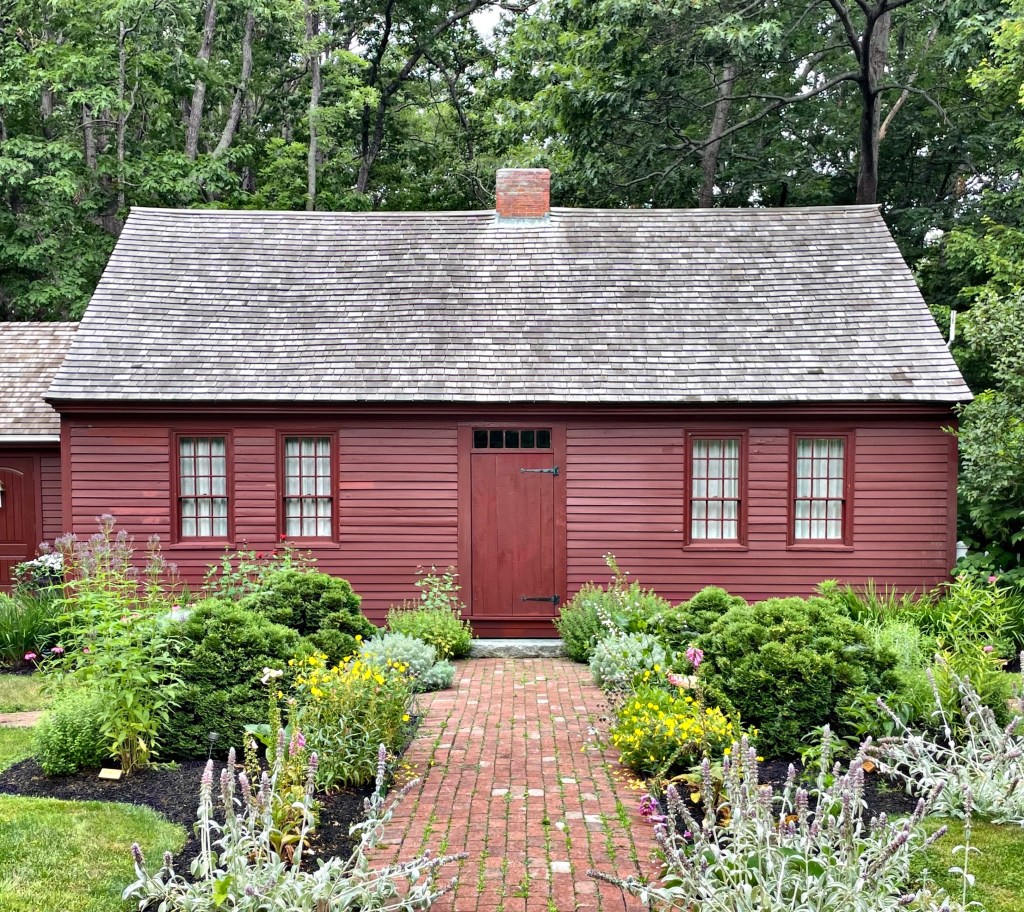
One of the oldest extant houses in the village of Ogunquit Maine is this charming Cape house thought to have been built in the 1780s. The house was later purchased by James Winn (1783-1861) and his wife Philadelphia Maxwell Winn (1785-1855), probably about the same time as the birth of their first child, James Winn Jr. in 1808. Both James Sr. and his son in 1846, launched a 161–ton brig out of Kennebunkport with Captain James at the helm. After several trips James Jr. succumbed to an illness that was aboard the vessel and died at the New York Marine Hospital. Over 150 years later, the house, largely untouched, was seemingly threatened by development pressure on the busy highway. In 1980, the home was donated to the town by then-owner, Phyllis Perkins, and moved nearby to a park on Obed’s Lane. It now houses the Ogunquit Heritage Museum.