Jabez Sargeant Jr. House // 1797

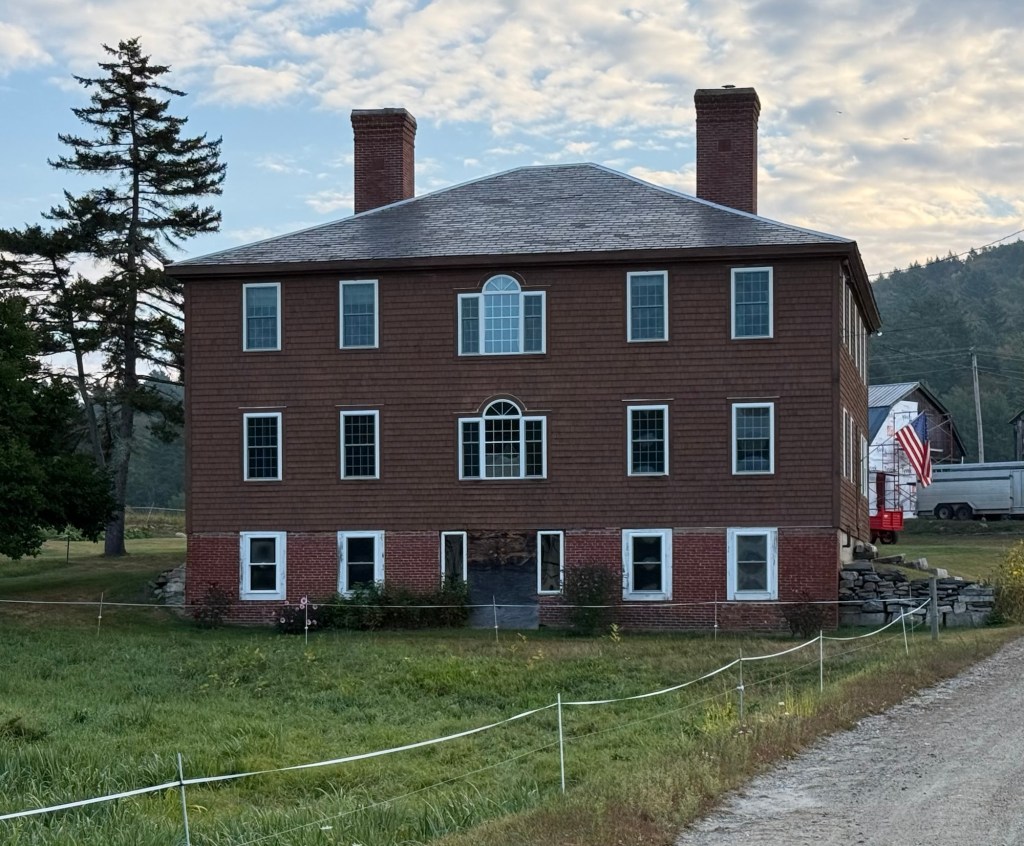
Deacon Jabez Sargeant (1720-1788) was born in Malden, Massachusetts, and later moved to the newly established town of Chester, Vermont in 1763. He is thought to have been the first settler of European ancestry in the town. Upon the outbreak of the Revolution, he served in Captain Little’s Company in 1778, returning home to Chester after. His son, Jabez Sargeant Jr. built this stately three-story late-Georgian residence in 1797 as a tavern along the Green Mountain Turnpike, a highway connecting Boston and Montreal. The dwelling originally fronted directly on the road, but was moved back sometime in the 19th or 20th centuries. The building boasted a large ballroom on the second floor, likely for community and fraternal organizations, and a tavern in the brick first floor. It is likely that Jabez and his family lived on the third floor. Outside, the property contained a large apple orchard and cider house, providing drinks to weary travellers. Although the tavern is built to a large size, it lacks many of the high-style features often found in large Georgian houses, telling for its time of construction in a sparsely developed area without seasoned builders.
Frederick Fullerton House // 1861

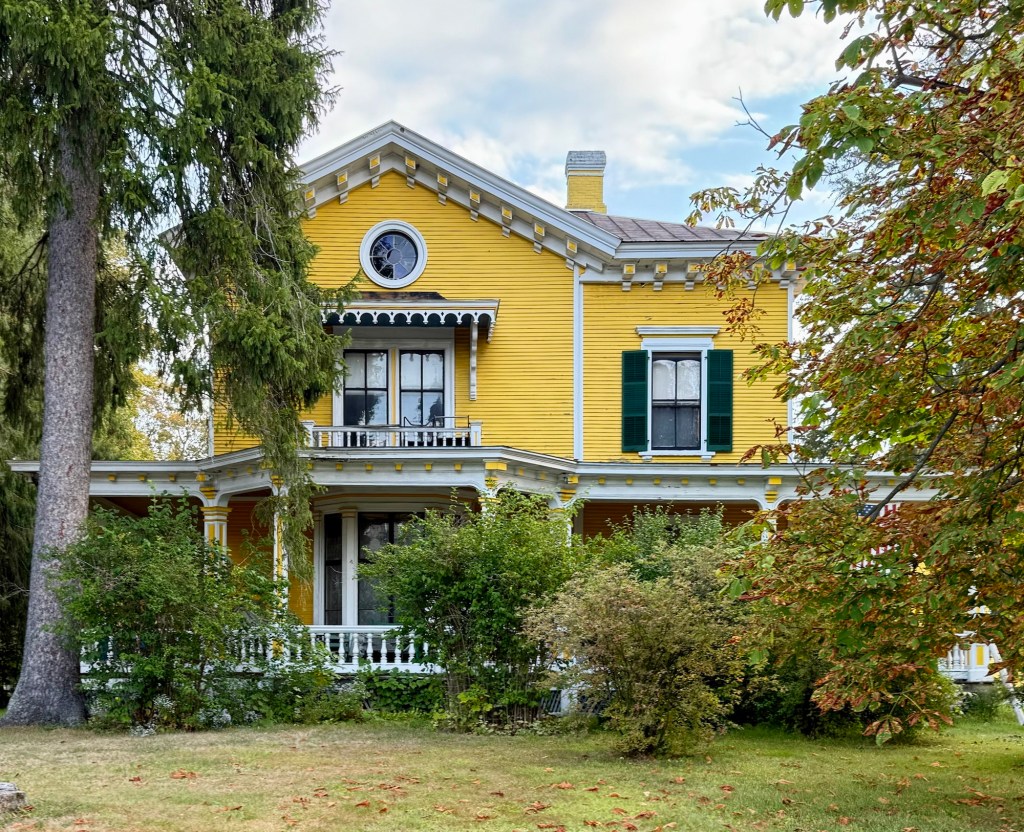
This distinctive Italianate Villa style house in the charming village of Chester, Vermont, was built in 1861 for wealthy merchant, Frederick Fullerton (1817-1869). Mr. Fullerton worked in his family’s mercantile business in Chester, and was involved with cotton manufacture in Springfield and with the Cavendish woolen mill managed by his older brother, Henry, who built an equally distinctive residence in Cavendish called “Glimmerstone“. Basically cubic with asymmetrical gabled corner pavilions, the Fullerton House is an excellent example of an Italianate Villa with bracketed cornice, two-over-two sash windows, a wrap-around porch, and second floor balcony with a bracket-supported hood with decorative valance and an oculus window above. The residence is said to have been designed by architect, William P. Wentworth, who designed the St. Luke’s Episcopal Church across Main Street a decade later.

Charles C. Warren House // c.1880

Located just steps from the former State Hospital of Vermont in Waterbury, the Charles C. Warren House on Main Street stands as an important Victorian-era residence in the town. The late Italianate style residence features a detached carriage house at the rear which was later converted to a auto garage and most recently to office space. Mr. Warren was a businessman in town who owned a tannery and creamery. He built a water system in the town in 1879, making a substantial amount of money in the process. Mr. Warren was a serious auto enthusiast who in addition to purchasing the first automobile in Vermont (a 1899 Haynes Apperson), he held Vermont registrations #1 and #2. He had his carriage house converted to an auto garage equipped with a turntable that obviated forever the tedium of backing down the driveway. The building is now home to a law office.

James Spaulding House // c.1840

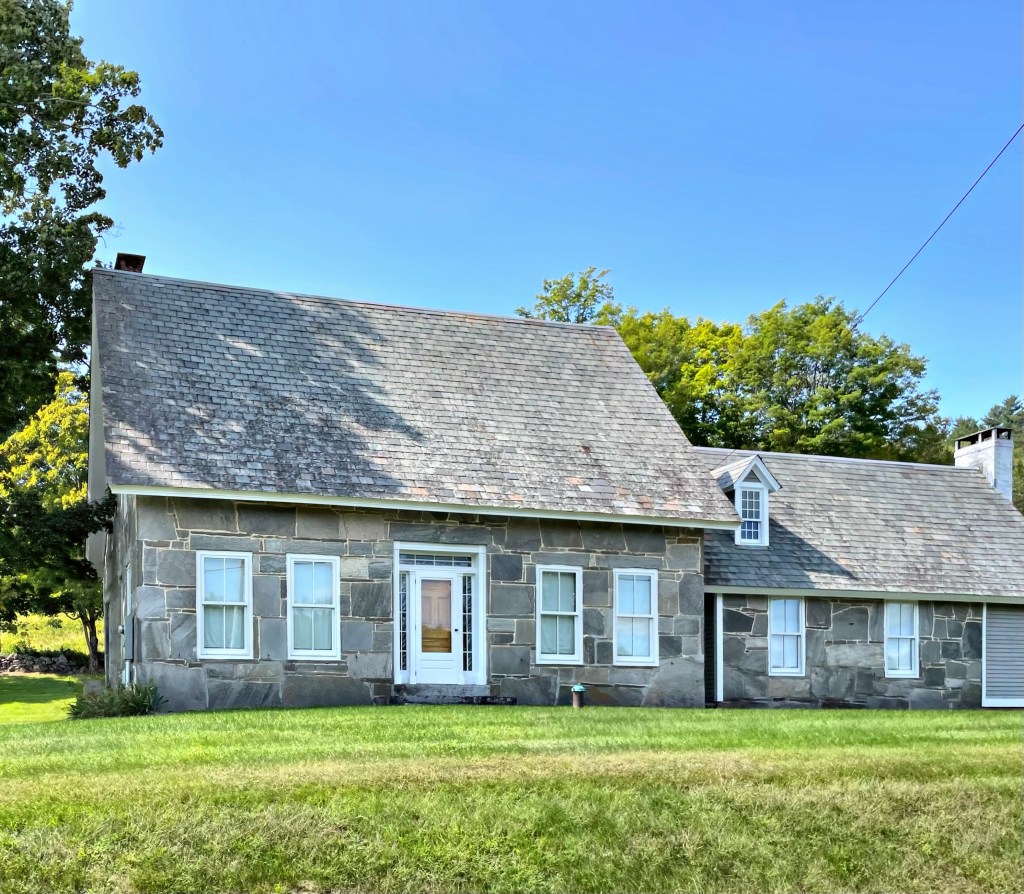
This Greek Revival cape house in Cavendish, Vermont sits along a rural road and is one of the few dozen examples of Snecked Ashlar buildings in this part of the state. In the early 1830s, skilled masons from Scotland settled in central Vermont to work on building projects there. A number of these builders, mainly from the Aberdeen area, were experienced in snecked ashlar construction, in which plates of stone are affixed to a rubblestone wall. This home was built for James Spaulding, and remained in the Spaulding family for generations, lovingly maintained as an excellent example of a Snecked Ashlar home in Vermont.

Naulakha // 1893

Located on a hillside in rural Dummerston, Vermont, you will find Naulakha, one of the most significant properties in the region. Naulakha (pronounced now-LAH-kuh) was built in 1893 for Rudyard Kipling an english journalist and author born in British India, an upbringing which inspired much of his professional work. In 1892, Kipling married Caroline Balestier, who was born into a prominent New England family. The couple honeymooned in Vermont near Carrie’s family home. The couple would settle in Vermont in a cottage which was soon outgrown, leading the couple to buy 10 acres of land from Carrie’s brother Beatty Balestier and built their own house. The new Shingle-style home they had built was named Naulakha after a book written by Rudyard and Caroline’s late-brother Wolcott. Kipling wanted a home that merged the distinctive qualities of the Indian bungalow with those of the American Shingle Style and he worked closely with his architect, Henry Rutgers Marshall of New York City, a Balestier family friend to achieve this.

The rectangular mass of the home parallels the contours the hill upon which its sited, and sits atop a raised fieldstone basement salvaged from stone walls on the property. From the home, Kipling wrote some of his most influential work, including the Jungle Books (1894, 1895), Captains Courageous (1896, The Seven Seas (1896), and The Day’s Work (1898). Sadly, the Kipling’s moved out of Naulakha after just a few years, largely from familial disputes with Caroline’s brother, Beatty. The family removed to England where they settled, though Rudyard always mentioned how much he missed his secluded life in Vermont. The property was then purchased by the Holbrook family, who made slight modifications to the property, but all maintaining the original design and feeling. In 1992, the British-based Landmark Trust acquired Naulakha as its first American building, later creating the Landmark Trust USA to maintain the property and more. The Landmark Trust USA rents out Naulakha and the adjacent carriage house for short-term rentals to provide revenue for maintaining these properties.

For more on my stay at the absolutely stunning Kipling Carriage House, check out my later blog post here.