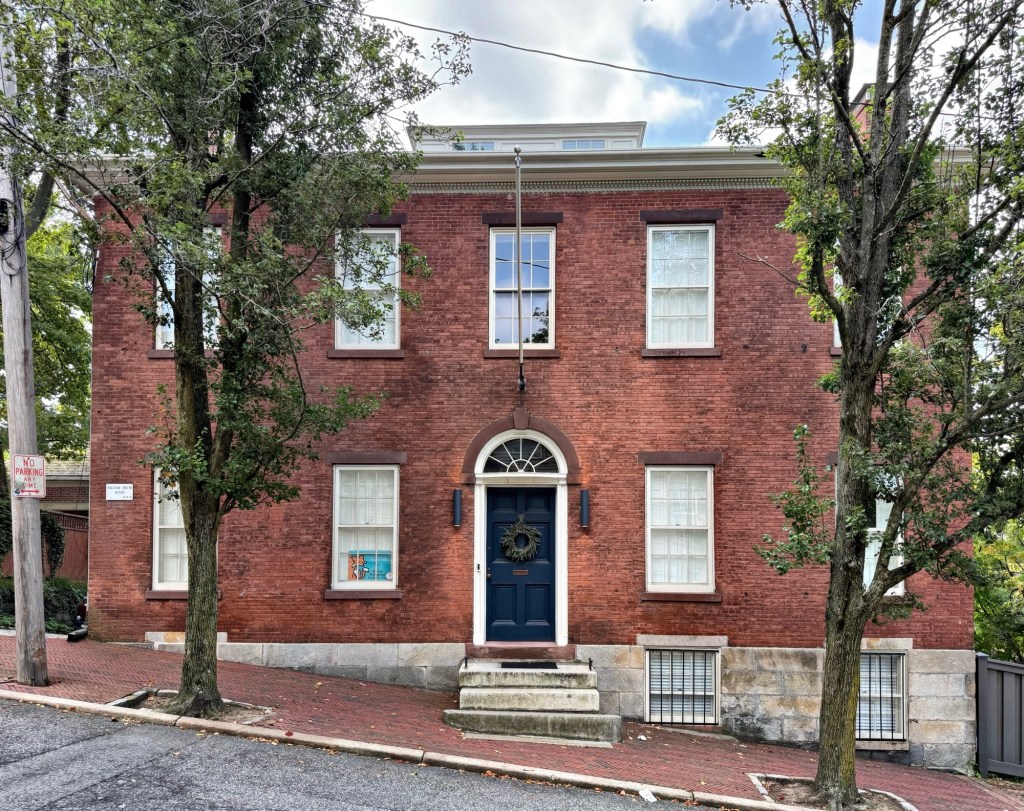
John Larchar House // c.1820

The John Larchar House at 282 Benefit Street in Providence is one of the many stately Federal period homes in the city designed by great architect, John Holden GreeneJohn Larchar (also spelled Larcher), was born in Providence in 1787 and worked in local businesses, eventually becoming a bank director that was involved in many mercantile pursuits. The residence remained in John’s family long after his death in 1863, and has been maintained so well by subsequent owners. The 2½-story, brick Federal house features stone trim, four chimneys, a central elliptical fanlight doorway, modillion cornice and amazing 12-over-12 windows. The cupola at the roof appears to be a is a mid-19th-century addition, possibly after John’s death. The garage and two-story side addition dates to the 1960s but does not detract from the architectural integrity of the home. 
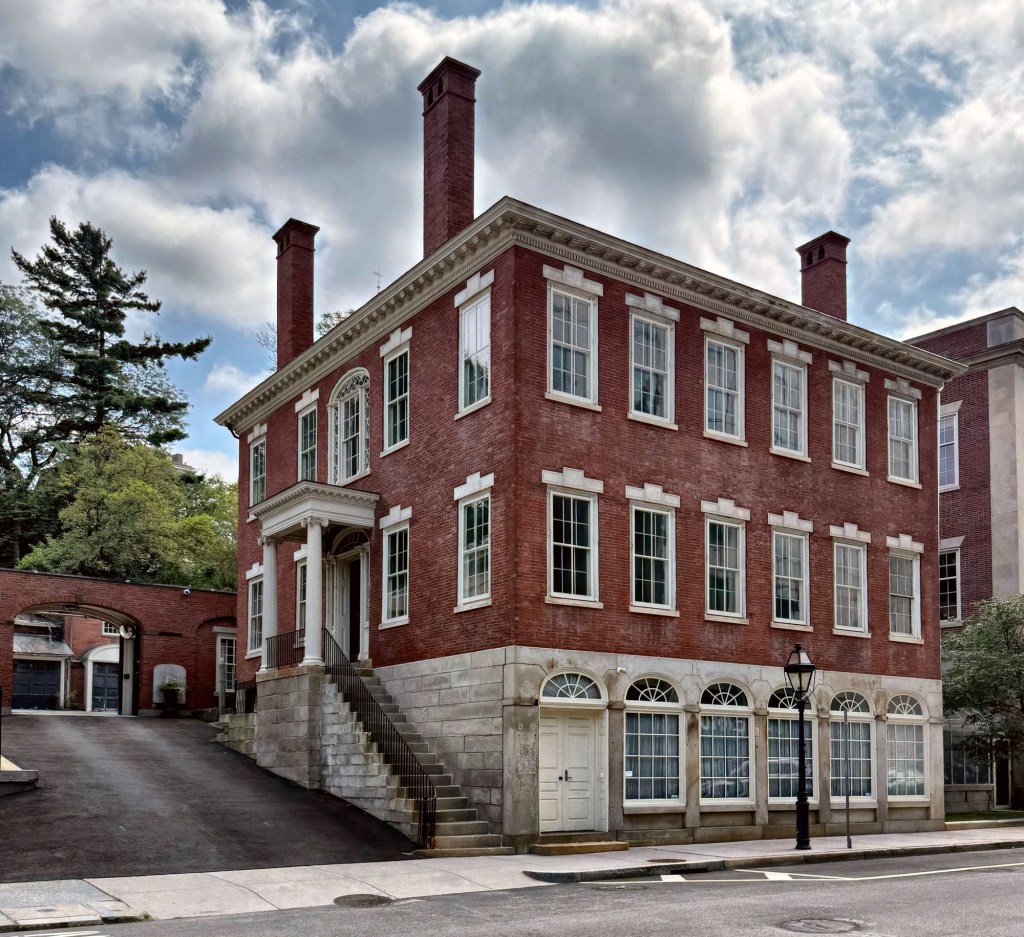
Benoni Cooke House // 1828

The Benoni Cooke House at 110 South Main Street in Providence, Rhode Island, is one of the finest examples of an architect-designed Federal style residence in the state. A fine and somewhat-typical example of architect, John Holden Greene’s 1820s work in the Federal style, the residence is actually the remaining half of what was originally a pair of mirror-image houses, built for two brothers-in-law and business partners, which once faced one another across a driveway leading to a large, well-preserved service court defined by connected stables (most of which remain). The mirror house, built for Rufus Greene, was demolished in 1895 for the expansion of the Old Stone Bank next door. The Benoni Cooke House was built in 1828 and sits atop an arcaded basement on the street elevation, which historically was used for commercial use. The Cooke House retains its iconic hipped roof with monitor (common for John Holden Greene’s works), an Ionic portico sheltering the entry with sidelights and fanlight transom, and elaborate stairhall window above. The building was later occupied as offices for the Old Stone Bank, and along with the Old Stone Bank, was acquired by Brown University, who sold the property in 2009 to an LLC, but its current use is unclear.

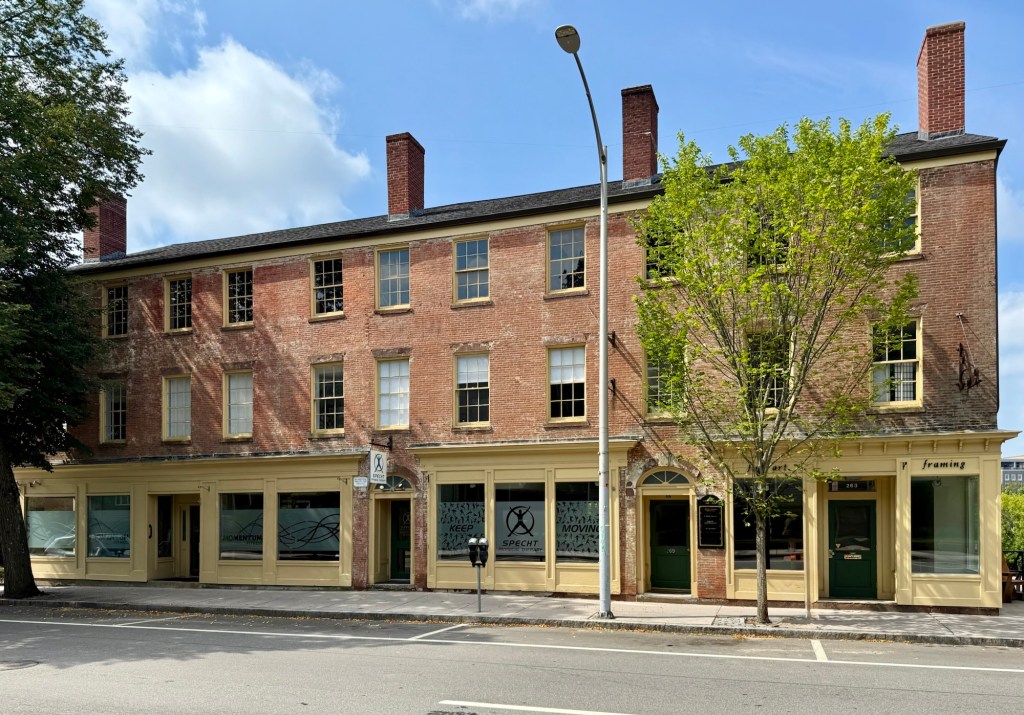
Comstock Block // 1824

Located next to the Clark-Nightingale Block on South Main Street in Providence’s East Side, the Comstock Block echoes the form, materials and rhythm of the older building, but employs some additional architectural detailing courtesy of a local architect. The Comstock Block at 263-273 South Main Street was built in 1824 from plans by architect, John Holden Greene, who designed many stately buildings in Providence during the early 19th century. The typical fanlights over two of the entrances are common in nearly all of Greene’s Providence buildings. Joseph and William Comstock owned the block which seems to have operated as residential rowhouses, possibly with storefronts at the ground floor. This block, like much of the street, was acquired, gutted and rehabilitated as part of the East Side Urban Renewal project of Providence in the 1970s, luckily for us, this handsome block was not demolished like so many other great buildings of the time.

William Smith House // c.1826

The William Smith House at 18 James Street in the Fox Point neighborhood of Providence’s East Side, is similar to its neighbor, the William Woodward House in style and design details. Smith, a carpenter by trade, possibly built this house himself, with inspiration or plans by local architect, John Holden Greene, who designed many similar homes in the city around this time. The residence was built around 1826 and it was built into the steeply sloping hill on its raised granite foundation. Besides its elegant proportions, the house features a shallow hipped roof with monitor, fanlight over the door, and brownstone sills and lintels.

Arnold-Palmer House // 1826

The Arnold-Palmer house (not related to the drink), a handsome brick single residence of the Federal period, was built about 1826 by Daniel Arnold, a wealthy Providence merchant who did well in the economic expansion of the 1820s and 30s. The home is attributed to John Holden Greene, a Providence architect who commonly incorporated a monitor roof in his designs. Daniel Arnold focused his wealth on flour trade, but he speculated in cotton as well, as did many of the merchants in Providence at the time. The connection of Providence with southern states and plantations demonstrate how tightly bound Rhode Island’s industrial economy was with Southern cotton and the enslaved people who produced it, with manufacturing and cotton mills all over Rhode Island. By the 1850s, Arnold’s house was sold to Joseph Palmer, who, through the firm of Palmer & Capron, manufactured gold rings in Providence’s growing jewelry business. The house was built in Cathedral Square a part of Downtown and was moved to its present site when that part of Providence was nearly entirely razed in urban renewal. While the siting is less than desirable, this rare surviving Federal home in downtown shows how the wealth and prosperity of Providence was not only restricted to College Hill.