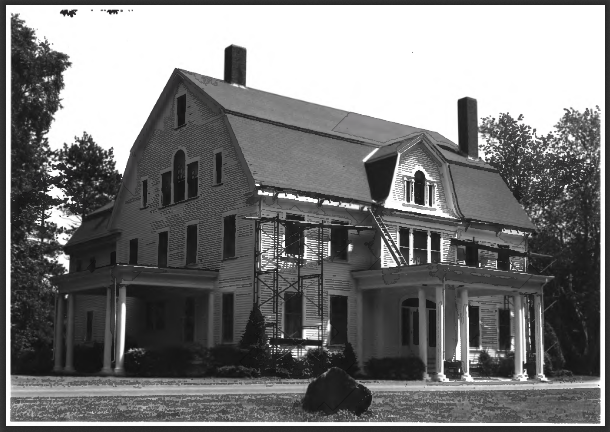
Dr. F. W. Jackson House // 1903

One of the largest Colonial Revival style homes I have ever seen is located in the unassuming small town of Jefferson, Maine. Built in 1903 on the northern shore of Damariscotta Lake, the house stands three-and-a-half stories tall with a broad gambrel roof and clapboard walls. The house was built for Dr. Fred W. Jackson in the Colonial Revival style by relatively unknown Waltham, Massachusetts-based architect Samuel Patch. Dr. Jackson studied medicine and for several years practiced his profession in Providence, Rhode Island. There, he built up a large medical practice and accumulated property, later marrying into a wealthy family. This house in Jefferson was the family summer estate, and Frederick was said to have owned 1,000 acres and laid out bridle paths, gardens, and landscapes in the vast estate. Across the street, a massive gambrel-roof barn was built to house his livestock as part of his gentleman’s farm.
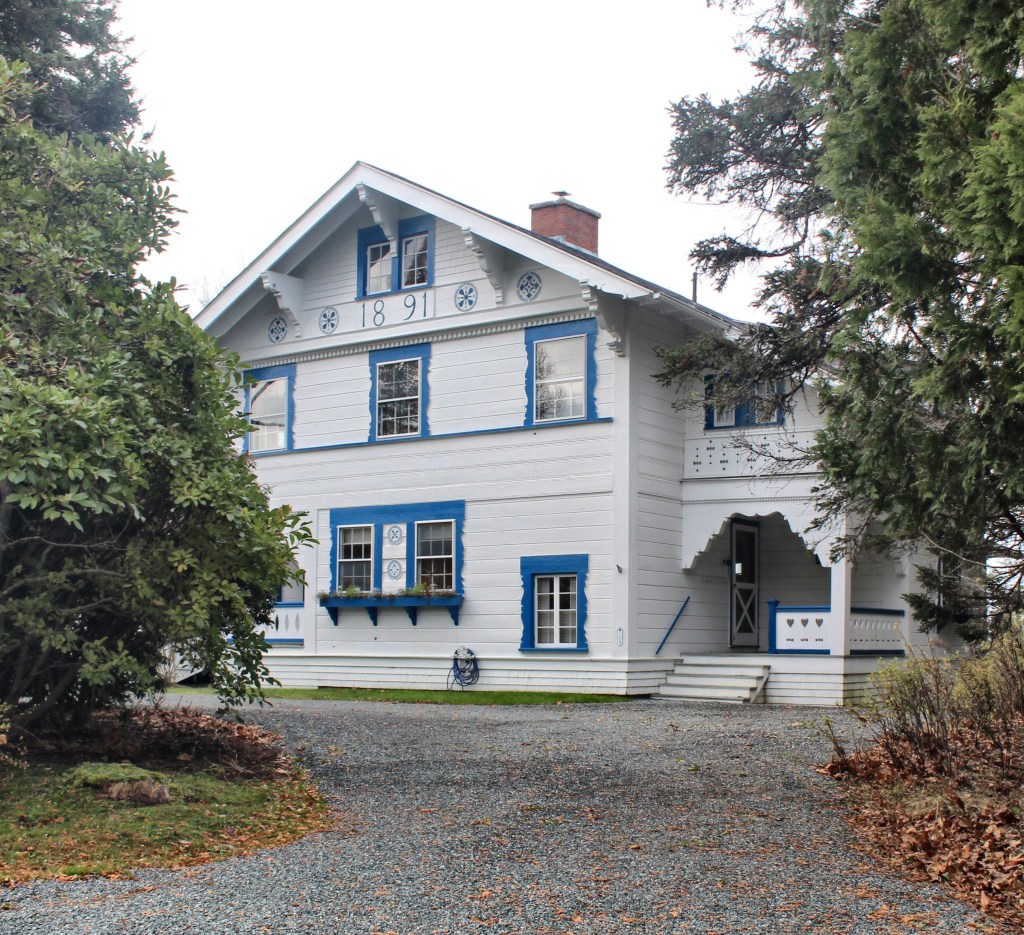
Red Chalet // 1891

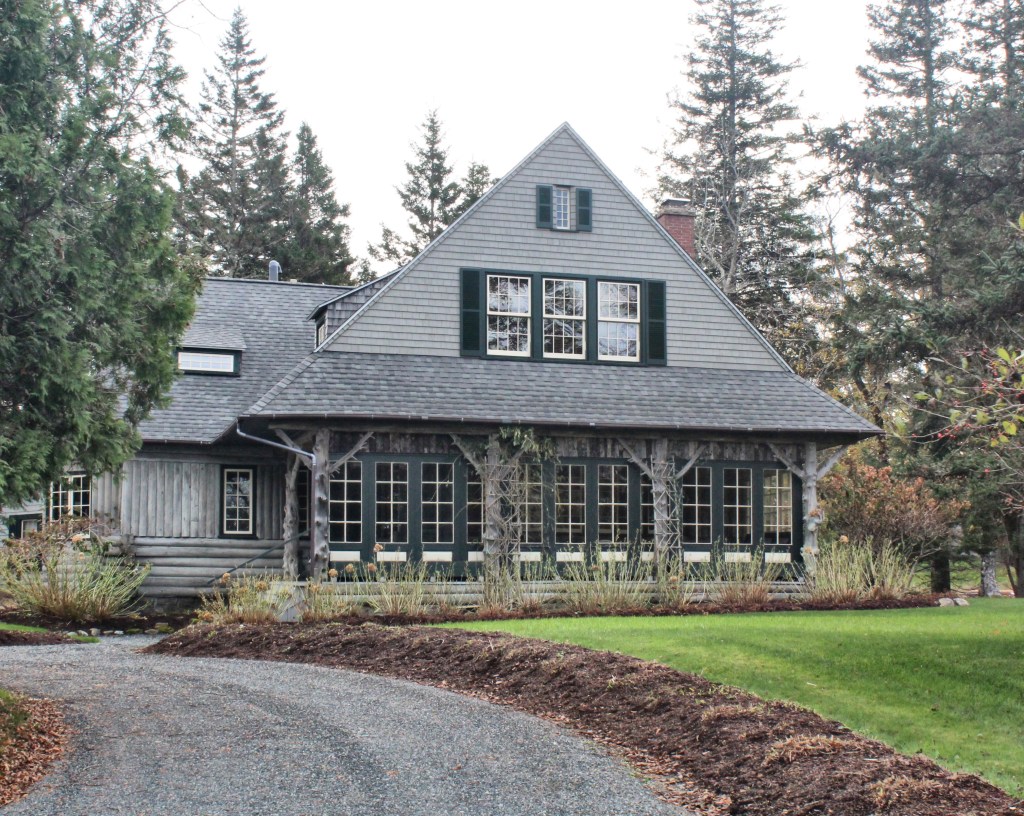
Philadelphia-based architect Lindley Johnson was hired as the official company architect by the Gouldsboro Land Improvement Company’s Grindstone Neck summer colony. As a result, he became the chief tastemaker for the bucolic neighborhood of summer cottages, chapels, and an inn (since demolished). Johnson would design a majority of the cottages in the Shingle style, taking cues from the natural topography and rugged coastlines, but he did deviate from that style a couple times; most notably for his own cottage, “Red Chalet”. While no longer red, the cottage stands out as an extremely rare example of a Swiss Chalet, with its sloping gable roof with wide eaves, exposed stickwork and oversized brackets, decorative carving, and shiplap siding.

Landreth Cottage // c.1892

Lucius S. Landreth, a Philadelphia attorney had this cottage built on Grindstone Neck in Maine around 1892 for his family. The cottage, like so many in the colony, was designed by architect Lindley Johnson in the Shingle style. The house is so perfect with its gambrel roof which is covered with cedar shingles all the way down to the stone foundation.

Angelo T. Freedley Cottage // 1892

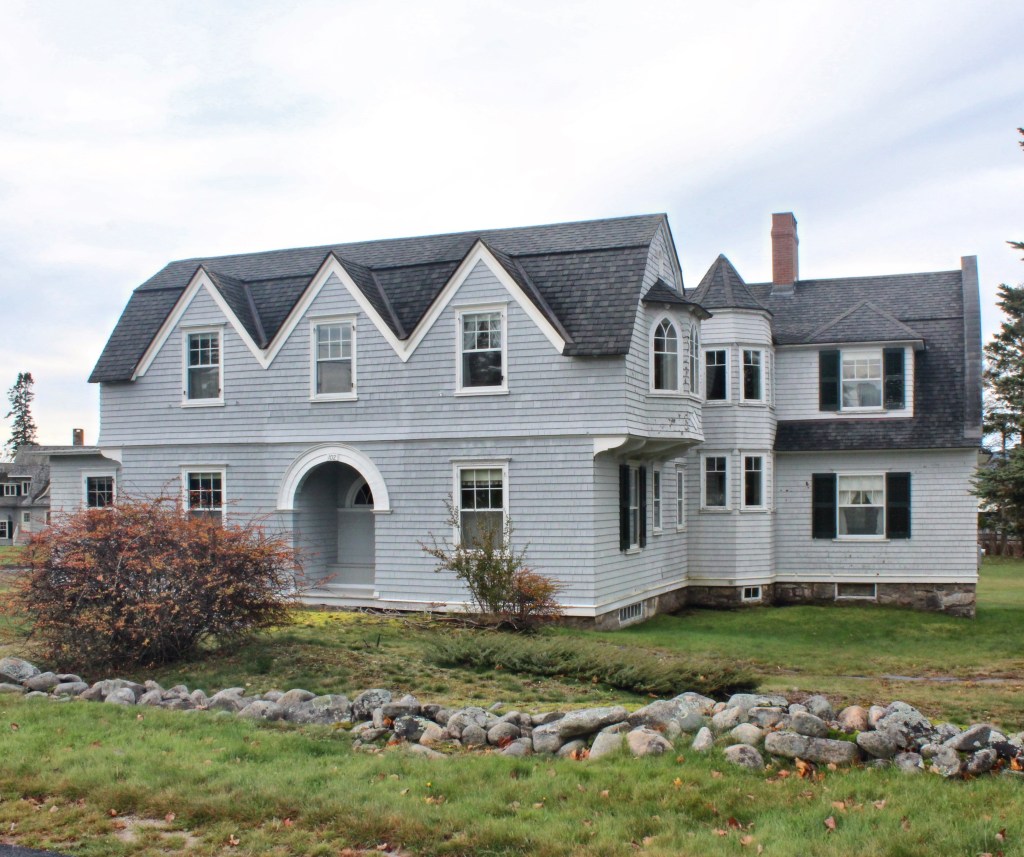
One of the more unique summer cottages on Grindstone Neck is this perfect home built around 1892 for Angelo Tillinghast Freedley. Angelo was one of many Philadelphians who built cottages here on Grindstone Neck, and worked as an attorney there. The house is an excellent example of the Shingle styles under a gross gambrel roof. Houses like this showcase how versatile architect Lindley Johnson was in his many designed cottages here in Maine. The house’s entrance is tucked away on the side of recessed arched opening, how perfect!

J. Bonsall Taylor Cottage // c.1892

John Bonsall Taylor (1854-1929), a Philadelphia patent lawyer and Director of the Gouldsboro Land Improvement Company, charged with developing Grindstone Neck in Maine, built this rustic cottage around 1892 for his family. He hired Lindley Johnson, a Philadelphia-based architect who furnished plans for many other buildings in the summer colony. Johnson trained under renowned architect Frank Furness before opening his own office. The rustic Craftsman house even has a “widows walk” which provides views to Bar Harbor across Frenchman Bay.

C. B. Taylor Cottage // c.1892

Men from Philadelphia and New York gathered to establish the Gouldsboro Land Improvement Company in the late 1880s with the goal to develop an alternative, more quiet summer colony to rival Bar Harbor on Mount Desert Isle. Two of the early investors (and summer residents) were J. Bonsall Taylor and Carter Berkeley Taylor, brothers from Philadelphia. John Bonsall Taylor’s cottage (last post) and this cottage, built for C. B. Taylor, were constructed around 1891-2 and are typical examples of upper-middle-class summer cottages in Winter Harbor. Philadelphia architect Lindley Johnson designed John’s cottage, so it could be hypothesized that he was also architect for C.B. Taylor’s here. The house as originally built was enlarged in the early 20th century, but maintains the rustic quality and charm that so many of these Shingle style cottages possess. And that red trim really pops!

Thompson Cottage // c.1892

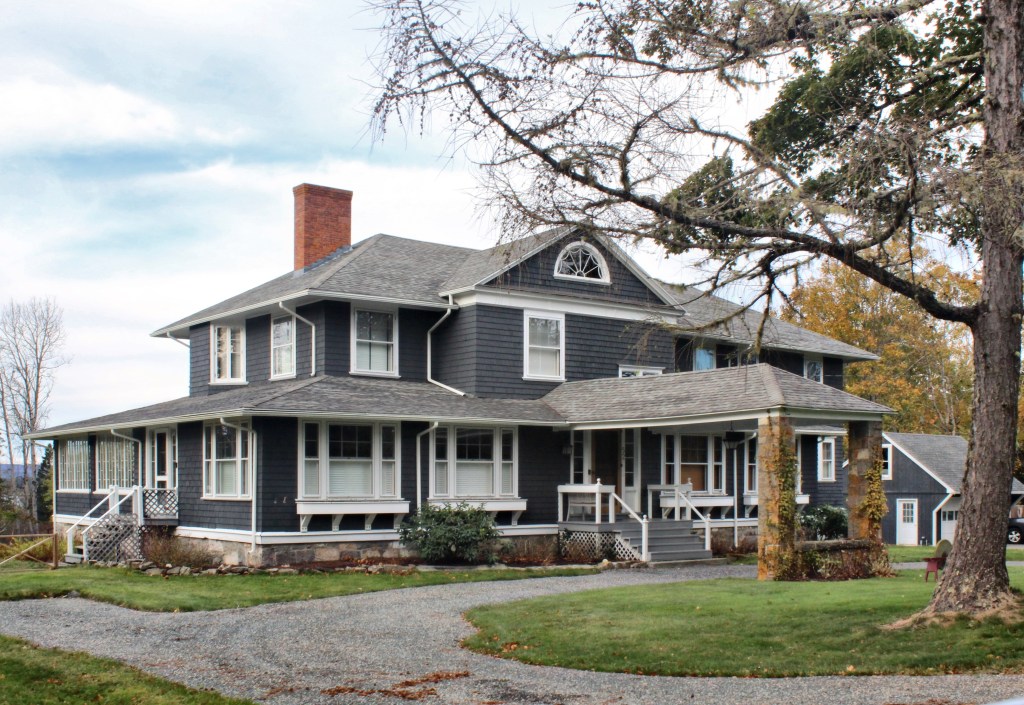
Who doesn’t love a good porte-cochere? In case you don’t know what they are, a porte-cochere is a covered porch-like structure at an entrance to a building where either a horse and carriage (historically) or car (today) can pass under to provide arriving and departing occupants protection from the elements. They are normally found on larger residences and institutional building where the wealthy frequent. The Thompson Cottage on Grindstone Neck in Winter Harbor was built around 1892 for James B. Thompson from Philadelphia. The original cottage was largely updated after Thompson’s death in 1915, the property was owned by Annie Cannell Trotter, who summered at another house in the colony with her husband Nathan Trotter, until his death.

Charles and Elizabeth Doremus Cottage // c.1892

In 1889, the Gouldsboro Land Improvement Company, bought 300 acres of farmland to build a residential summer colony as an alternative to the busy Bar Harbor across the bay. They hired landscape architect Nathan Franklin Barrett to design the subdivision of 198 cottage lots of at least one acre and arranged them on roughly parallel roads, with a primary road (Grindstone Avenue) running the length of the peninsula’s spine through woodlands to dramatic ocean views at the tip. The summer colony has many great cottages and chapels tucked away on rocky outcroppings with towering spruce trees all around. This charming cottage was built for Charles Avery Doremus and his wife Elizabeth Ward Doremus around 1892. Charles was a scientist, the son of chemist and physician Robert Ogden Doremus. He graduated from the College of the City of New York in 1870. He became a professor in chemistry and became a leading specialist on toxicology, often called into court cases to help solve crimes. Elizabeth was a playwright from Kentucky and her father and his brother owned plantations in Mississippi before the American Civil War. The couple summered at this cottage on Grindstone Neck until Charles’ death in 1925. It is a great example of a rustic Shingle style summer cottage.

Elwin Cove // 1908

While Blue Hill has historically been a summer colony for wealthy city-dwellers to escape to experience the beauty of Maine, it has never gotten the coverage as Bar Harbor or the other Mount Desert Island towns. Many of Blue Hill’s summer cottages are more refined and hidden away amongst the trees, and that is how the town likes it, unpretentious. I was lucky enough to take a wrong-turn and stumbled upon this gem of a cottage between the Blue Hill village and East Blue Hill, I had to take a photo! Upon further research, the rambling cottage was built in 1908 for Ellen and Edward J. Brooks of New Jersey. The cottage was named Elwin Cove, possibly as a merge of their children’s names ELinor and WINfred.

Jonathan Fisher House // 1796

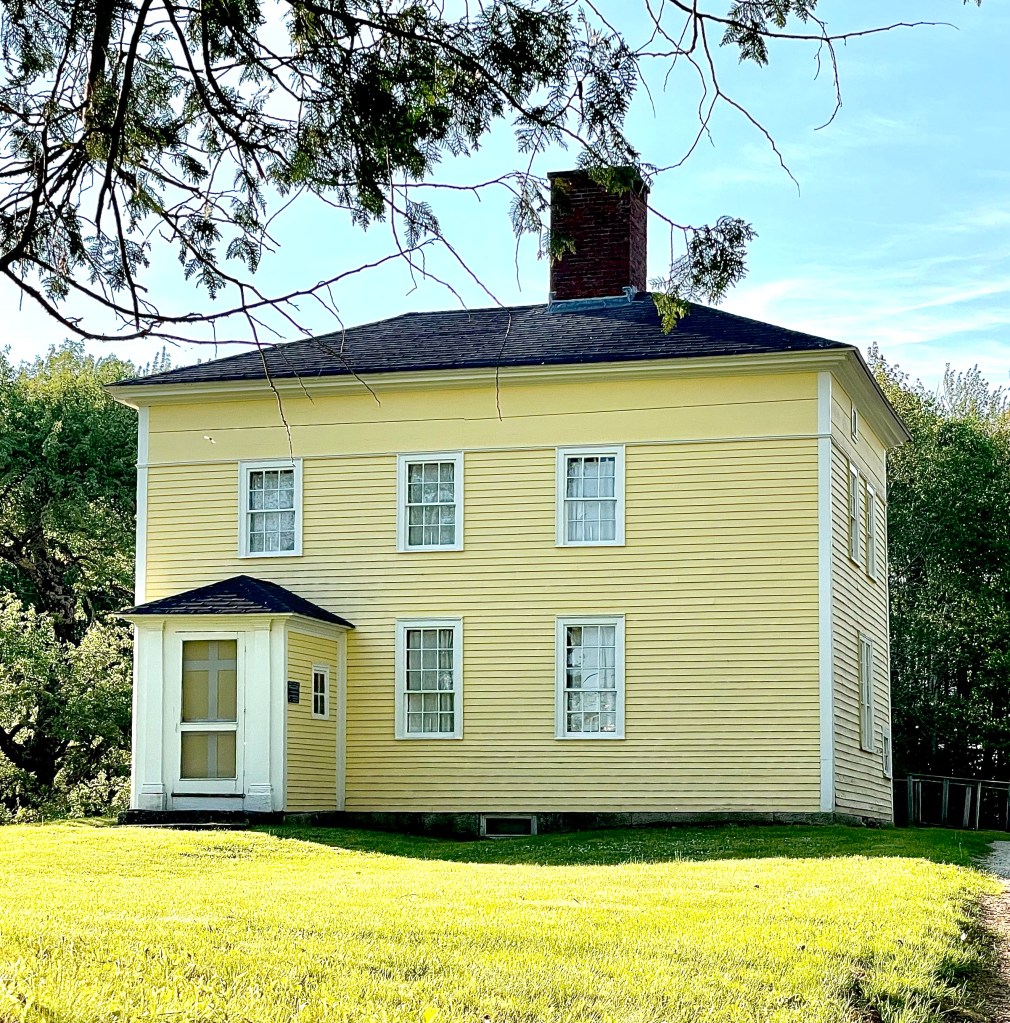
Jonathan Fisher (1768-1847) was born in New Braintree, Massachusetts, and educated at Harvard College Divinity School. In the record of Plantation No. 5, (now Blue Hill), the selectmen voted to invite the Rev. Mr. Fisher to preach for four months in the summer of 1795. After his four month stint, the committee approached him, asking if he would stay and make the town his home, he accepted. He first built a primitive house which was outgrown by the time he had three children growing up in it! He had the current home built in 1814, attaching the original home as a rear ell (addition). Reverend Fisher died in 1847. His wife Dolly, died in 1853. At the end of the nineteenth century, Jonathan Fisher’s grandchildren decided to renovate the house. In 1896, they tore down the original house of 1796 and replaced it with a two-story addition to their grandfather’s 1814, giving it the current configuration. When the Fisher grandchildren who had been living there left Blue Hill, a number of local citizens concerned for the future of the building made arrangements that eventually led to the transfer of ownership of the house to a local non-profit foundation, the Jonathan Fisher Memorial, and made it possible for the house to be opened to the public. The Fisher House is open for tours in the summer.