Portland Mariner’s Church // 1828

Talk about a unique church! The Mariner’s Church in Downtown Portland was built in 1828 and is modeled after Faneuil Hall in Boston and East India Hall, Salem, Massachusetts; and was the first Greek Revival building in Portland (with some lingering Federal flair). It also for many years was Portland’s largest building! Its concept was that of a place of worship and education center for seamen of the port city between their voyages on the open sea. The ground floor was designed to house shops for merchants whose rent would support and maintain the building. The structure is virtually unchanged from how it looked nearly 200 years ago and showcases the importance of the sea to the port towns and cities of New England!
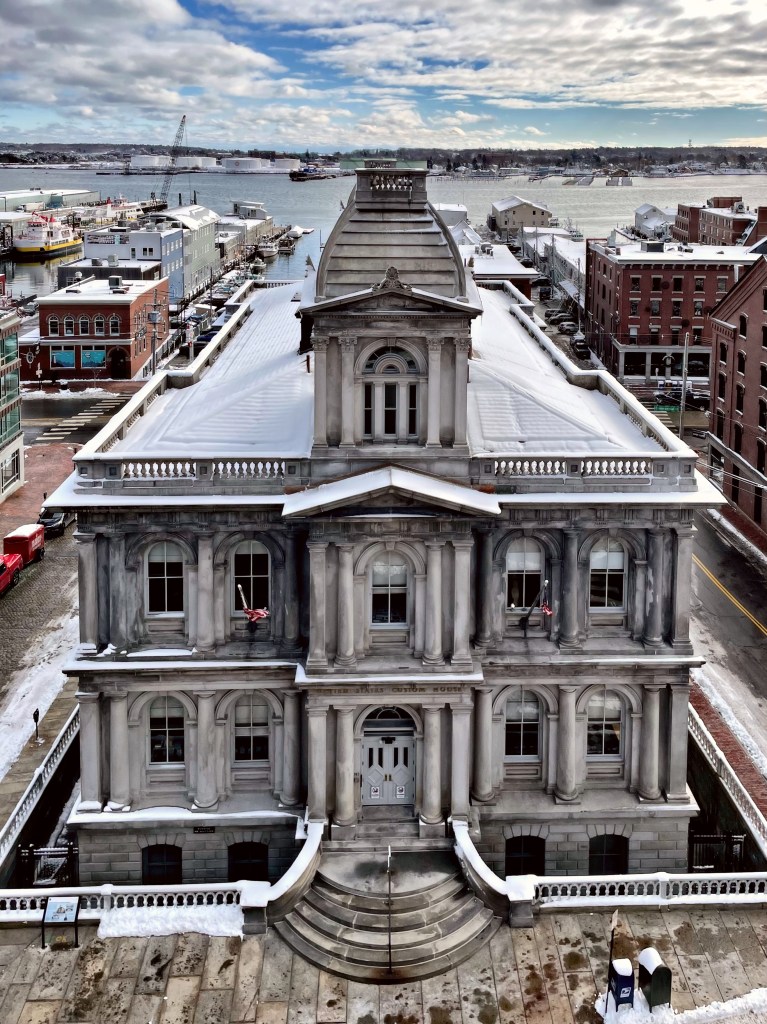
Portland Custom House // 1868

Probably my favorite building in Portland, Maine is the former Custom House building, an imposing granite building located a stone’s throw from the Portland Harbor. It was built to accommodate the city’s growing customs business, which, by 1866, was collecting $900,000 annually in customs duties—making Portland one of the most significant seaports in the country. The building is typical of the notable designs completed under the direction of Alfred B. Mullett, Supervising Architect of the Treasury from 1865 to 1874. Constructed between 1867 and 1872 (due to delays in obtaining granite for the upper stories) the U.S. Custom House combines elements of the Second Empire and Renaissance Revival styles and is one of the best preserved custom houses in New England. The interior custom hall is especially remarkable.

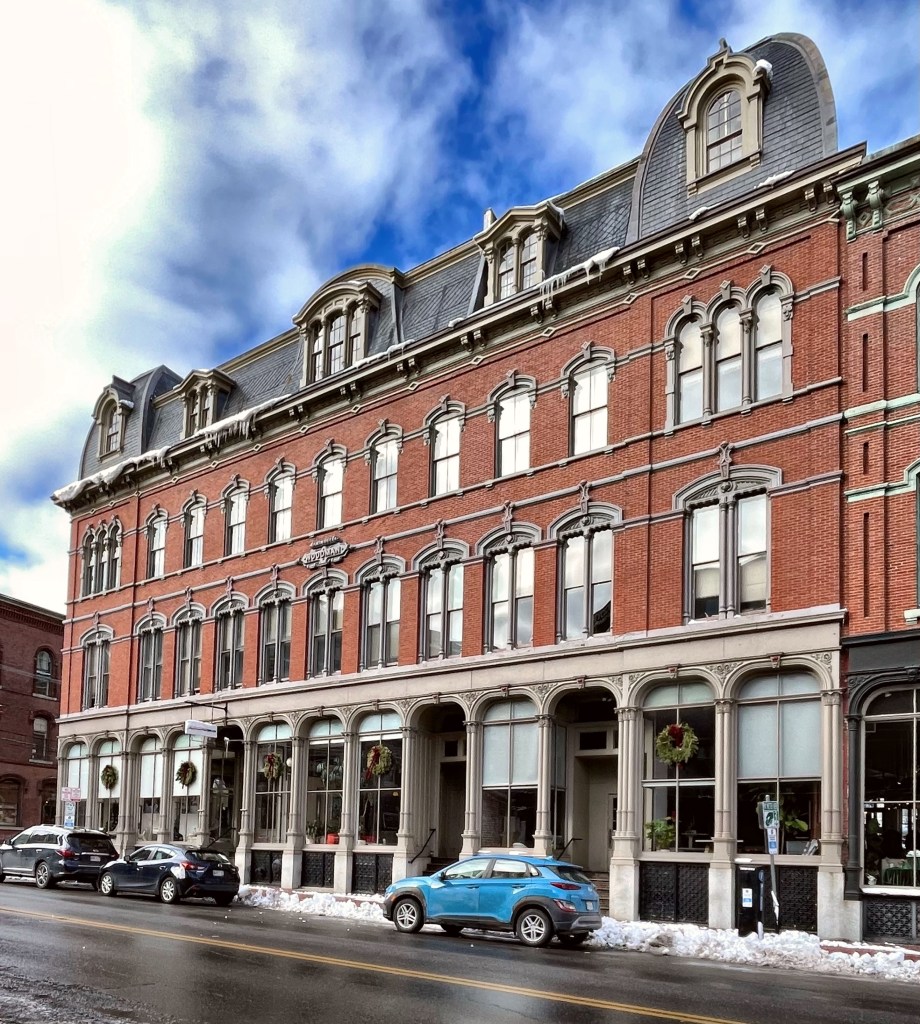
Woodman Block // 1867

Located next-door to the Rackleff Block, this high-style Second Empire commercial block in Downtown Portland, Maine really turns heads. The Woodman Block (like its neighbor) was built in 1867 from plans by architect George M. Harding, who designed the building for George W. Woodman, a drygoods dealer. This stunning commercial block originally housed Woodman’s dry goods firm, Woodman, True, and Company. It later held a druggist and medicine company. The building retains much of its original architectural character minus the iron cresting which once capped the mansard roof. They don’t make them like they used to!

Rackleff Block // 1867

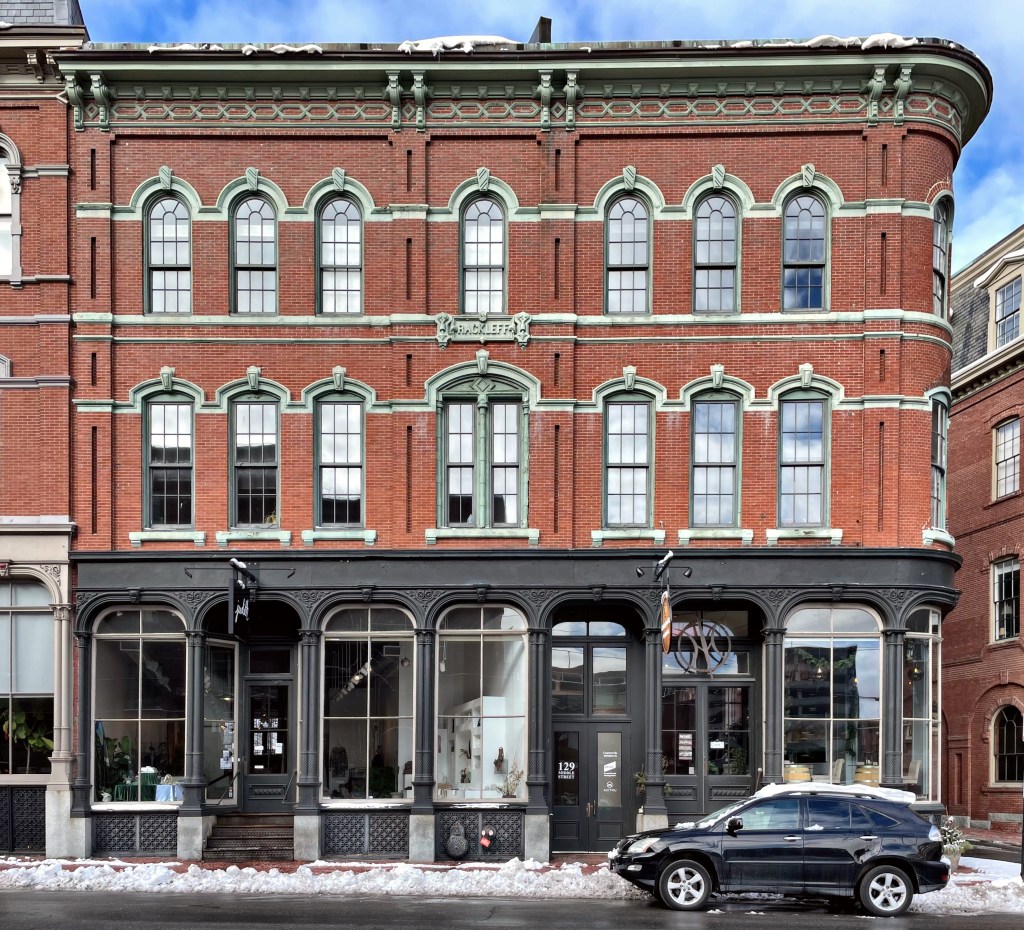
Late 19th century commercial architecture in downtowns all across New England always transport me to the past because they evoke the days of carriages in the streets and the hustle and bustle of post Civil War American cities. After Portland’s Great Fire of 1866, many standing or damaged wooden buildings were replaced with fireproof construction in the event of another conflagration. Five years before the Great Chicago Fire, this was the greatest fire yet seen in an American city. It started in a boat house then spread across the city. Amazingly, only two people died in the fire, but ten thousand people were made homeless and 1,800 buildings were burned to the ground. This is one of the buildings constructed in the rebirth of the downtown/waterfront of Portland. The Rackleff Block was built in 1867 from plans by architect George M. Harding, who designed the building with details reading Italianate and Victorian Gothic. The building retains its original cast iron storefronts and ornate cornice with brackets.

Portland Central Fire Station // 1924

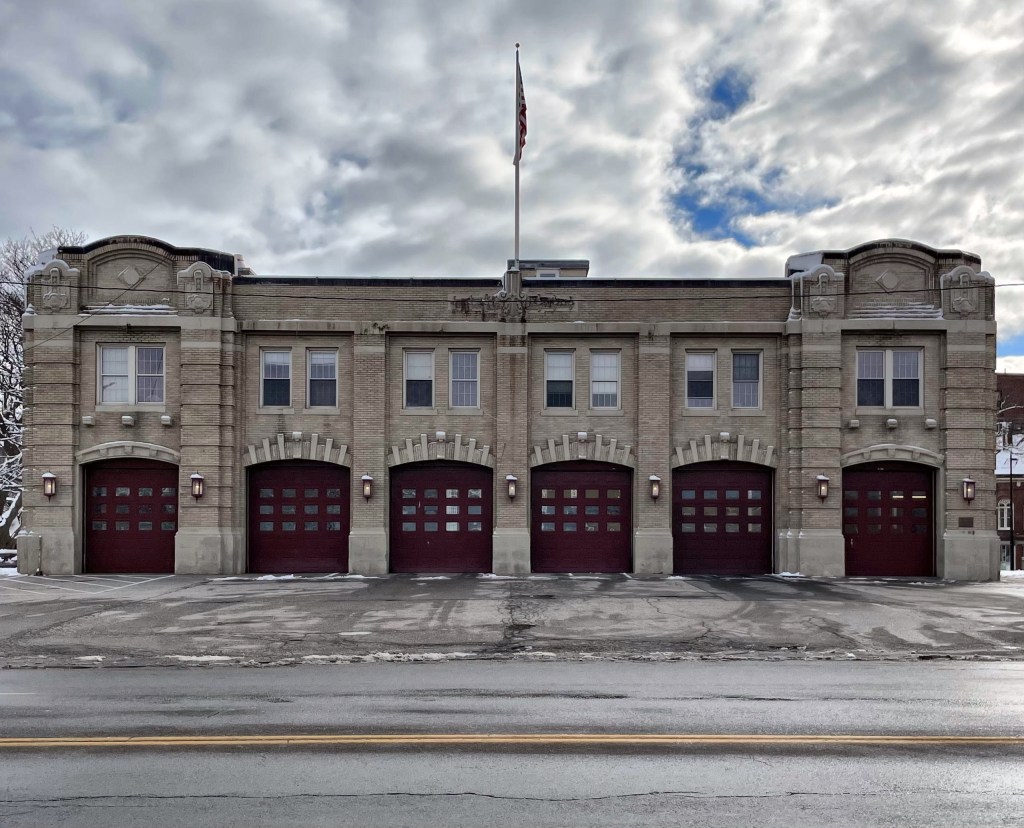
The Central Fire Station in Portland, Maine was built in 1924 and designed by William R. Miller & Raymond J. Mayo, architects located at 465 Congress. Lester I. Beal, a draftsman employed by Miller & Mayo, participated in the design. It was erected to contain the administrative offices of the Portland Fire Department, as well as to house fire engines and other apparatus of the inner city district. Portland has one of the oldest fire departments in the nation, 1768, when Falmouth appointed fire wardens to look for fires at night and alert the residents. In 1786, the citizens of Falmouth formed a separate town in Falmouth Neck and named it Portland, after the isle off the coast of Dorset, England. After the Great Fire of 1866 destroyed much of Downtown Portland, a new central station was built in 1867. The structure was deemed obsolete with new, large ladder trucks replacing smaller engines. The entire downtown block was demolished for the current Central Fire Station for the present building. The small building is at the center of a large lot, which is likely a candidate for redevelopment in the future (after some adjacent surface parking lots are developed).

Portland City Hall // 1909

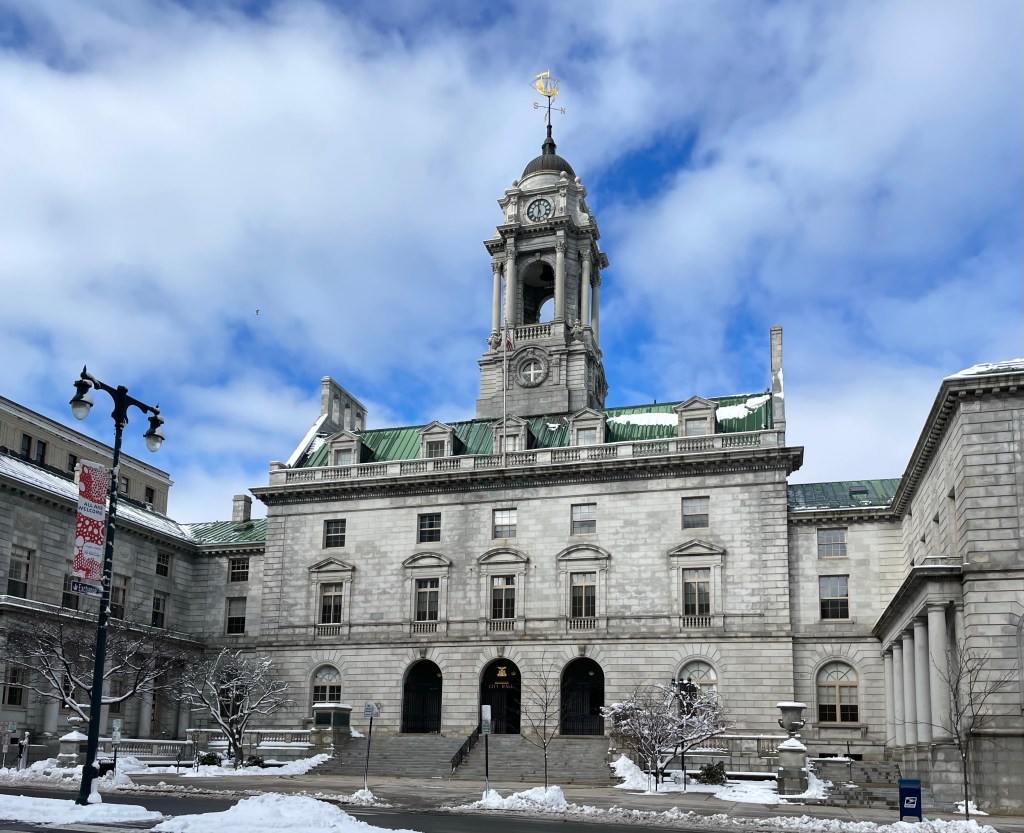
The City Hall in Portland, Maine is among my favorite civic buildings in New England and is the third that was built on this site. The previous city hall on the site of the present City Hall, completed in 1862, burned in Portland’s Great Fire of 1866. It was reconstructed in 1867 by designs of Francis H. Fassett, a Portland-based architect. In 1908, it burned again. So much damage was done that the building had to be removed. The present Portland City Hall was designed by the New York architectural firm of Carrere and Hastings, assisted by local Portland architects John Calvin Stevens and his son, John Howard Stevens who together, oversaw day-to-day changes and work to the building. Interestingly, John Carrere is quoted as saying he would rather have his reputation rest on the Portland City Hall than upon any other building he designed (and he designed MANY great buildings). The impressive structure was inspired by the New York City Hall, which was built about 100 years prior in 1803-1812. The Portland City Hall remains today as a great visual anchor for the revitalizing downtown area of Portland.

Lobster Point Lighthouse // 1948

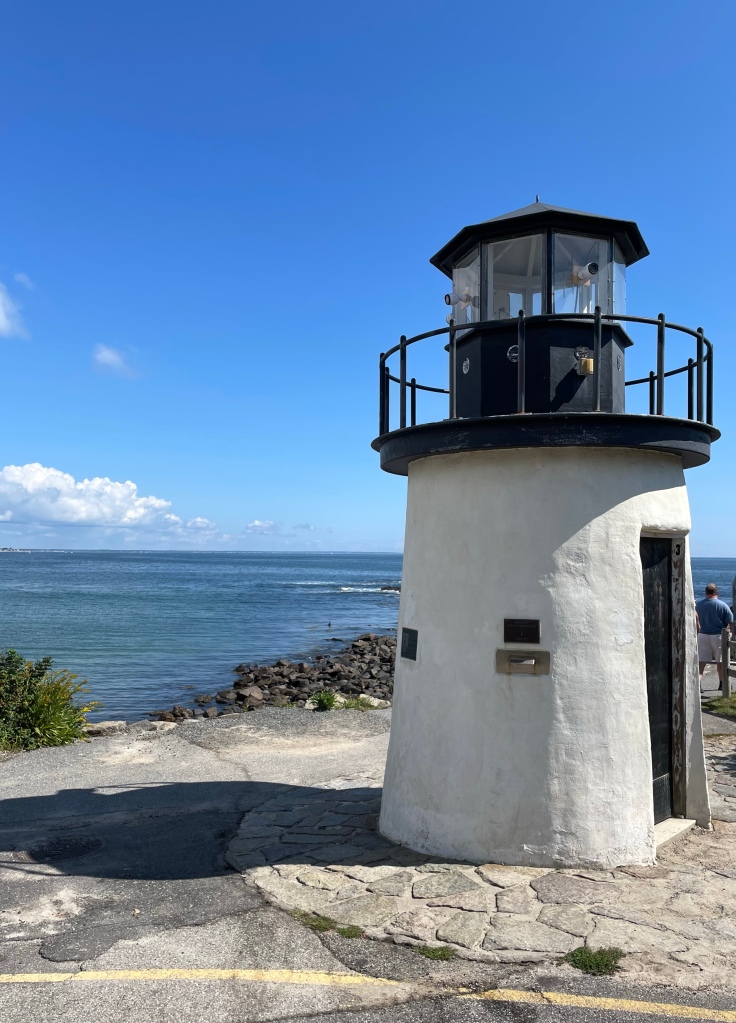
When you walk along Ogunquit’s Marginal Way cliff walk, it is missing one thing, an iconic Maine lighthouse… or is it? This mini lighthouse on the route always has people lining up to snap a picture and its quirky roadside attraction appeal is undeniable. The original Lobster Point Lighthouse was constructed in 1948 by Winfield C. Littlefield of the local family who first settled in the town. The “lighthouse” was designed by Grover S. Perkins. Much like the real lighthouses on the coast, the original structure was badly beaten by the salt air and high winds and parts of the structure were replaced. Notably, in 1993, the top (lantern) was replaced with fiberglass. Additionally, in 2009 the structure was upgraded, all from donations. The iconic roadside lighthouse will continue to ‘light the way’ for the droves of tourists and locals alike who navigate Marginal Way.

Ogunquit Public Library // 1897

One of Maine’s most charming libraries is right in the coastal village of Ogunquit, and like many of the greatest, it was built as a memorial to someone. George Mecum Conarroe was born Nov. 9, 1831. His father, George Washington Conarroe, was an accomplished Philadelphia portrait artist who provided his family with every advantage mostly from an inherited family fortune. The Conarroes and their cousins, the Trotters, who summered at Cape Arundel, had been associated in a very successful steel venture for several previous generations. George M. Conarroe apprenticed in a Philadelphia law firm and was admitted to the Bar in 1853. He ran a successful probate law practice and his prudent real estate development investments enhanced his formidable fortune. Nannie Dunlap, daughter of another leading Philadelphia lawyer married George M. Conarroe in 1868, they were inseparable. He built a summer estate in York Cliffs, a burgeoning Summer colony just south of Ogunquit (then a part of Wells). George died in 1896, and Nannie fought to keep her late husband’s legacy living in the coastal area he loved so much. She hired Philadelphia architect Charles M. Burns to design a new summer chapel in York and this beautiful village library in Ogunquit. The library was constructed of fieldstone taken from the site and is a lovely example of the Romanesque Revival and Queen Anne architectural styles in Maine.

Perkins Cove Drawbridge // c.1941

The Perkins Cove wooden footbridge in Ogunquit, overlooks one of the loveliest little harbors in the Maine coast and spans the narrow entrance to the port. The iconic bridge is perhaps the only double-leaf draw-footbridge in the United States and luckily for us, is right here in Maine! The small channel was once very shallow, but in about 1940, the cove was dredged to make room for larger fishing vessels. A new drawbridge was soon added to allow access to the small peninsula while also permitting fishing vessels to pass underneath. The bridge has been modified a couple times since it was constructed in the early 1940s. The new bridge spurred development of some of the area which was already a mix of fishing shacks and artist studios. Since then, many of the original fish shacks have been converted to restaurants or shops due to the high value of the land now. It was also announced this year that the bridge would soon be demolished and replicated with Federal funds with a new harbormaster building. Hopefully the replacement will closely match the existing, which is a huge draw (pun intended) for the tourists who flock to the area.

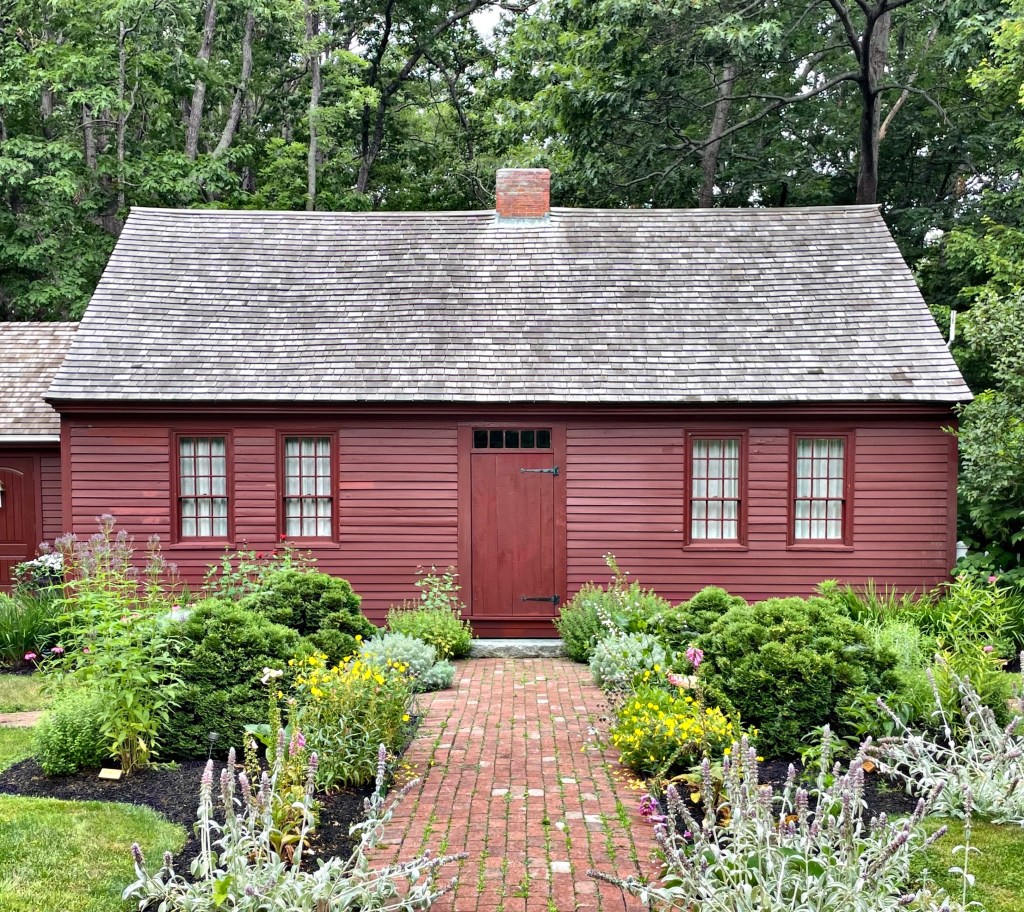
Winn House // c.1780

One of the oldest extant houses in the village of Ogunquit Maine is this charming Cape house thought to have been built in the 1780s. The house was later purchased by James Winn (1783-1861) and his wife Philadelphia Maxwell Winn (1785-1855), probably about the same time as the birth of their first child, James Winn Jr. in 1808. Both James Sr. and his son in 1846, launched a 161–ton brig out of Kennebunkport with Captain James at the helm. After several trips James Jr. succumbed to an illness that was aboard the vessel and died at the New York Marine Hospital. Over 150 years later, the house, largely untouched, was seemingly threatened by development pressure on the busy highway. In 1980, the home was donated to the town by then-owner, Phyllis Perkins, and moved nearby to a park on Obed’s Lane. It now houses the Ogunquit Heritage Museum.