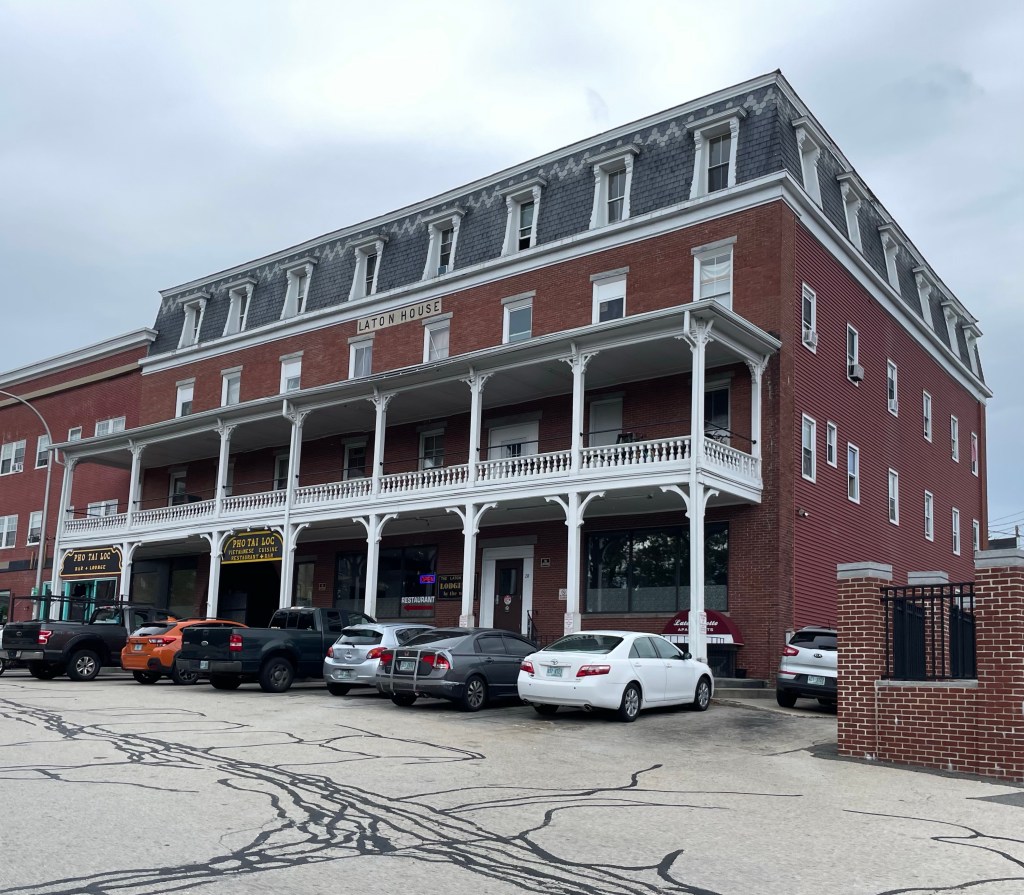
A late example of Second Empire style architecture, the Laton House in Nashua, New Hampshire, is a 3 ½ -story brick hotel building with a slate-covered mansard roof pierced by regularly spaced dormers. The facade is dominated by a two-story porch with decorative railings and brackets. The hotel was developed between 1878-1881 when Railroad Squareserved as the central square in town. The hotel thrived, allowing visitors cheap rooms while doing business in the manufacturing hub of Nashua. Eventually, the hotel closed and was converted to housing. Today, it houses commercial space on the ground floor with low-income housing above.
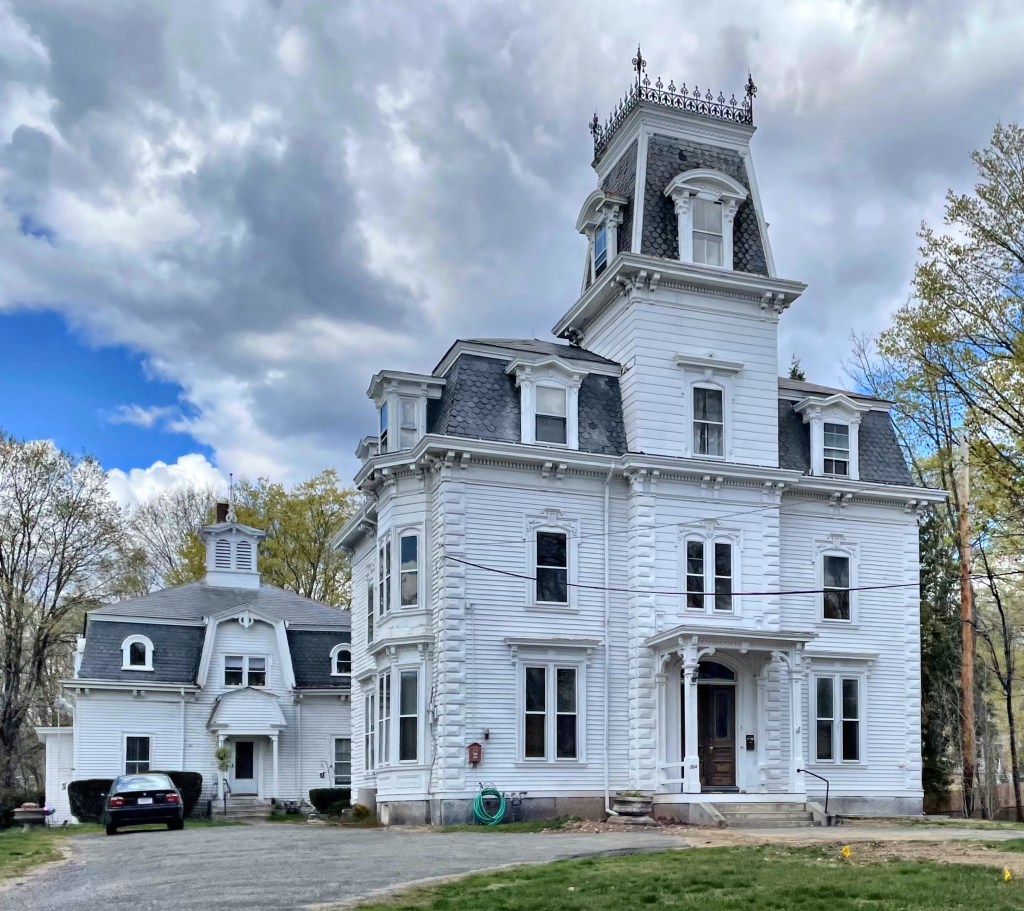
Acton, Massachusetts is one of the more underrated Massachusetts towns for great old buildings, many of which are well-preserved and taken care of by their owners. The Oliver Mead Mansion in West Acton Village is among the largest in this part of town and is a stellar example of the Second Empire style. The house and adjacent carriage house was built around 1870 for Oliver Mead (1823-1912), who co-owned the A. O. W. Mead Company with his two brothers, a successful produce marketing company where they sold poultry, eggs, cheese, fruit, and other goods from farms in Acton and Boxborough to their shop on Market Street in Downtown Boston. The company did well, and Oliver and his brother Adelbert built matching mansions in West Acton after the Civil War and business picked up. The house exhibits a central projecting tower bordered by quoins and topped by a mansard roof with iron cresting on top. The original carriage house remains in a great state of preservation as well. The Adelbert House and Carriage house nextdoor were demolished in the 1950s for the fire station on the site.
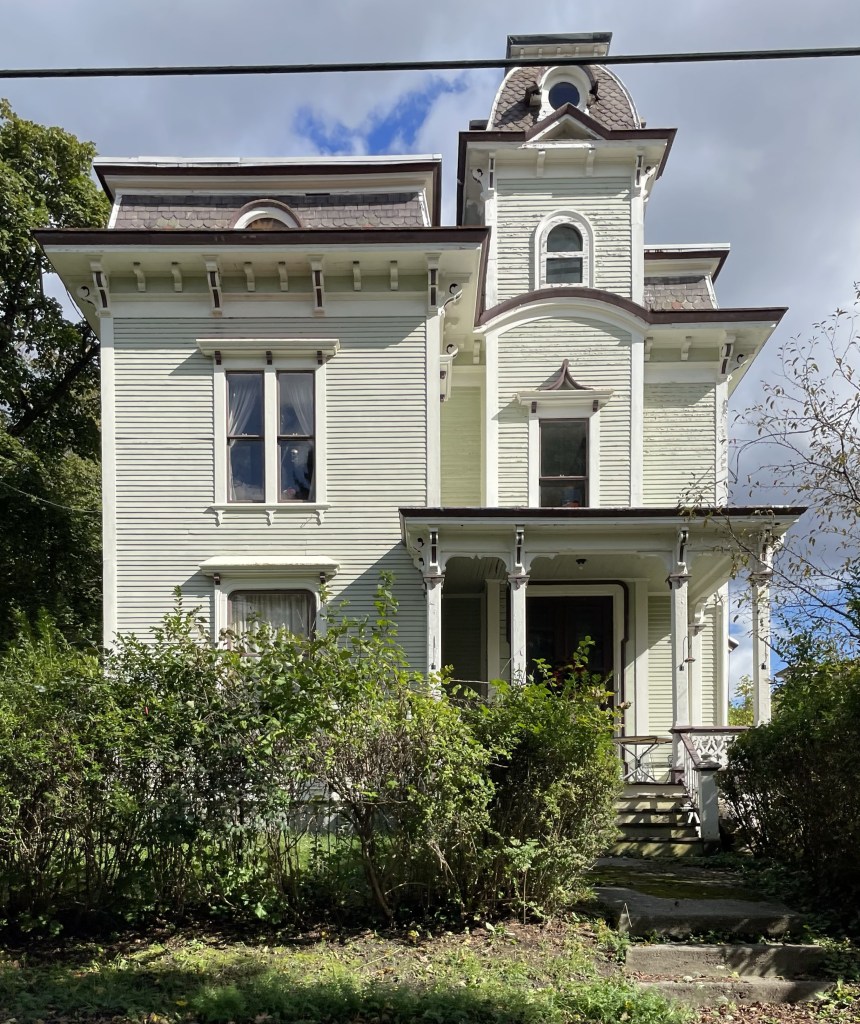
Would you just look at this house?! Massachusetts may have the most Second Empire/Mansard style houses in the United States, but some really stand out. This home in Stoneham, Massachusetts was built around 1870 for local shoe dealerErastus A. Durgin. The mini mansard home is pretty typical besides the prominent square tower with a steeply pitched gable roof that stands over the entrance. Charming!
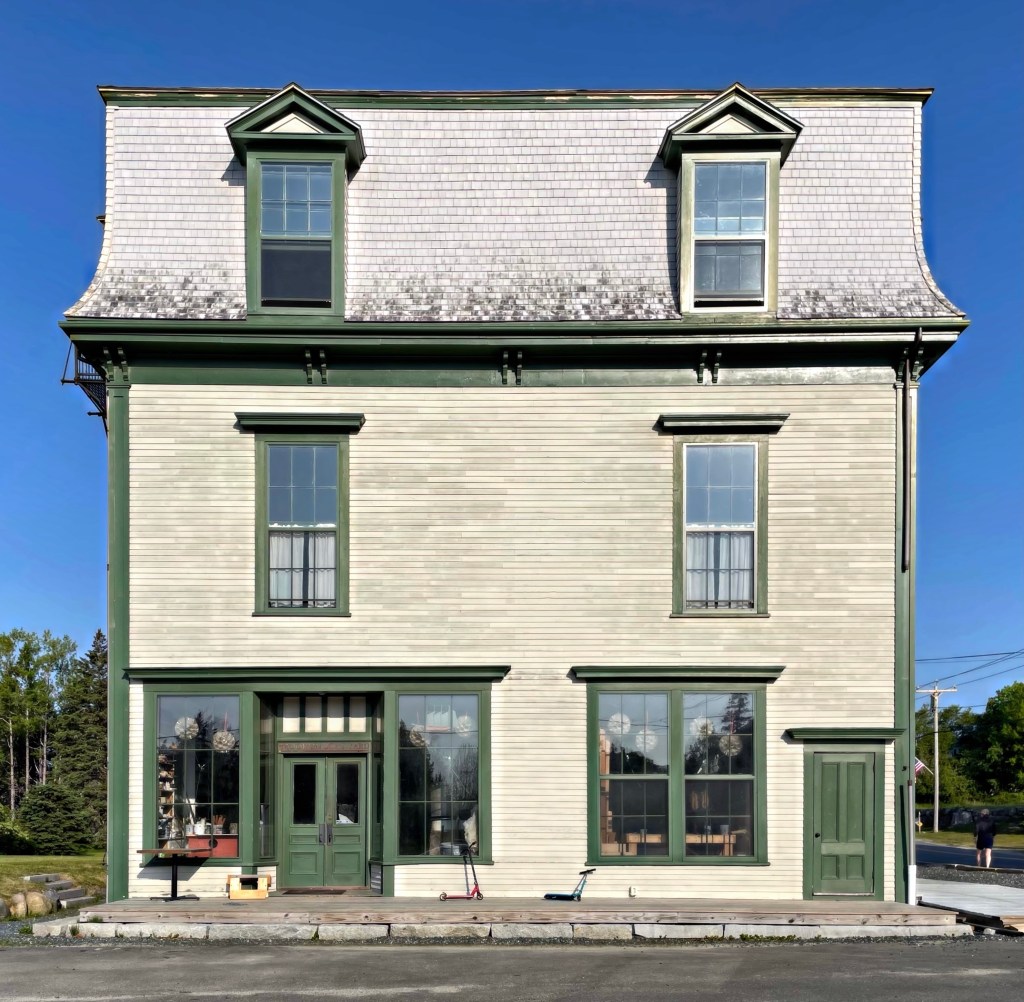
Welcome to Brooklin, Maine! Constructed in 1896 by local builder Ralph E. Bent, the coastal town’s I.O.O.F. Hall is one of Brooklin’s largest and most architecturally significant nineteenth century buildings. The Independent Order of Odd Fellows is a historic and long-running (somewhat secret) fraternal organization which has branches all over the world. In Brooklin, this building was designed to accommodate commercial uses on the first floor, community functions and theatrical productions on the second floor and lodge meetings in the upper/mansard story. The building saw disinvestment by the turn of the 21st century, and by the time the building came on the market in 2017, the hall had languished for years, and the structure was in a serious state of disrepair. The building needed new plumbing and electrical wiring, a new foundation and roof, foundation repairs, and heat; its roughly $270,000 price tag reflected the amount of work it would need to be rehabilitated. John Ike, an esteemed architect, and frequent visitor to Brooklin, formerly of Ike Kligerman Barkley and now of Ike Baker Velten, had long been enamored by the decaying building, and felt compelled to act. With his two friends, Robert Baird and Steve White, the trio restored the old building which continues its connection to the small town’s history and became a vibrant contributor to its present. The upstairs space can be rented short-term, which helps sustain the maintenance of the old building.
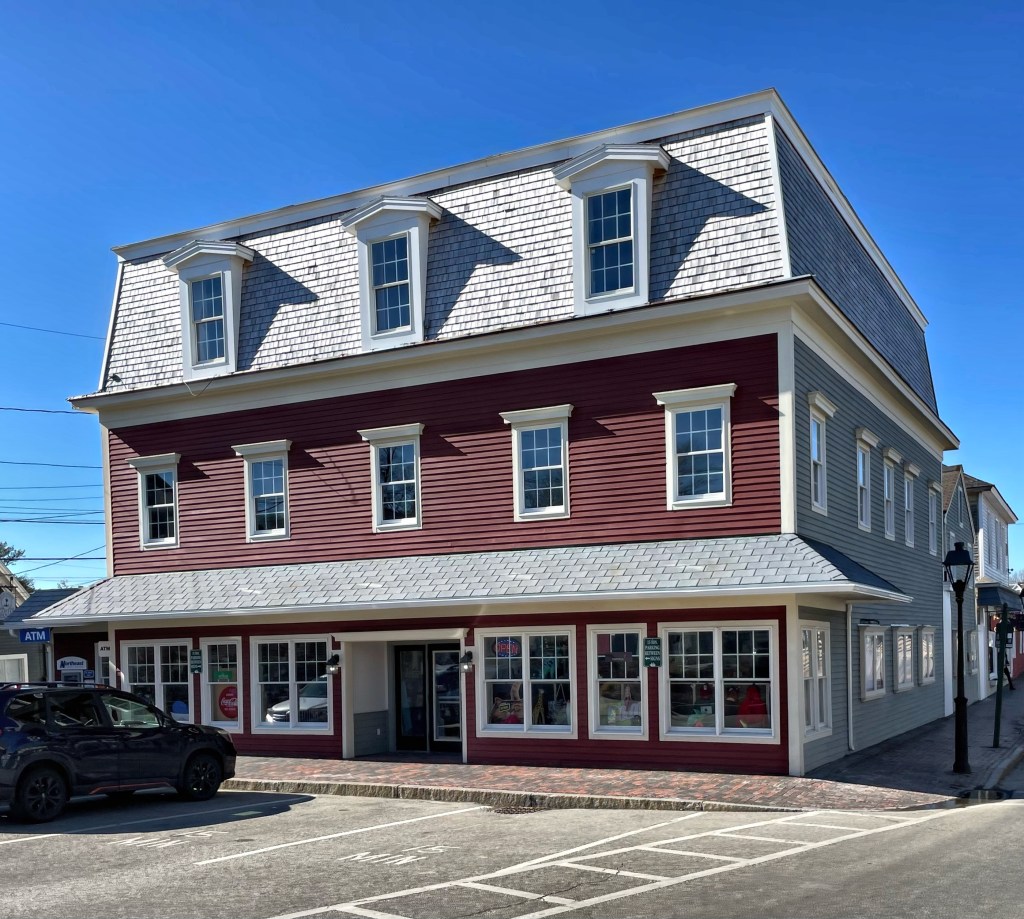
In 1827, a young Andrew Luques (1791-1873) built a store in the village of Kennebunkport, Maine where he sold dry goods, hardware, and fancy goods to the area’s citizens. As the village grew around him, the store grew and occupied the entire block near a drawbridge, which spanned the Kennebunk River to Harbor Village in adjacent Kennebunk. The business did well and the store was eventually inherited by Anthony Luques in the late 1850s. Anthony expanded the store, modernizing it and added a Mansard roof for an additional floor. Anthony continued operating the store until his death in 1890, when it was sold to a member of the Dennett Family. Around 1900, the building was occupied by a few businesses, with one taking advantage of the town’s recent desirability as a summer resort colony by selling bathing suits and hammocks. The building remains a visual and important anchor to the human-scaled and walkable village of Kennebunkport.
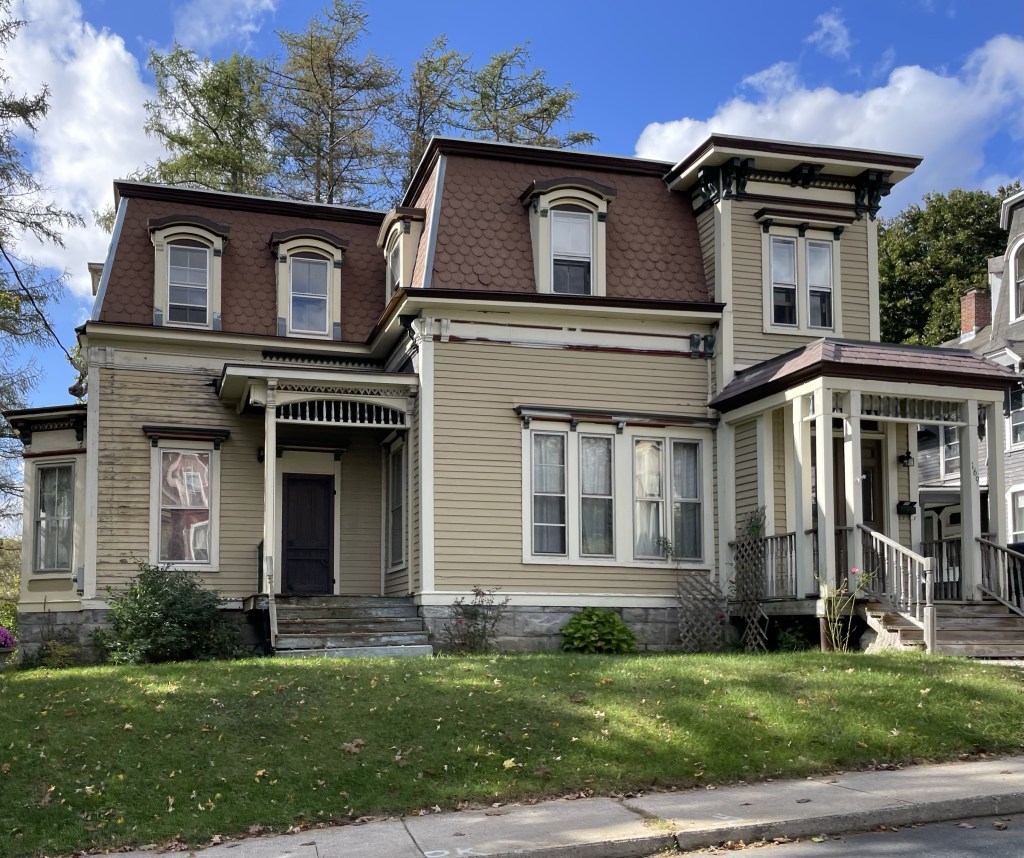
The College Hill neighborhood of Providence has some of the finest residential architecture in New England, and some really fun stories of those who built these grand homes. In 1859, the house was built with a concave mansard roof punctuated with dormers and a bold bracketed cornice below. The use of round headed windows on the second floor is a really great design detail. The residence was first owned by Eliza Talbot Almy (1808-1886), who held the title to the property. Wives holding the title of properties in this period was fairly common as it would protect their personal property and residence from financial risk if the husband was met with lawsuits or financial hardship. Eliza’s husband was cotton broker and manufacturer Samson Almy (1795-1876), who had already been sued in a case heard before the United States Supreme Court in 1851. After Eliza’s death in 1886, her daughter, Susan Smith (1837-1917) and husband, Amos Denison Smith (1835-1912), a Civil War veteran, occupied the house into the early 20th century.
People don’t explore Roxbury enough! The neighborhood is full of amazing architecture with buildings in a great state of preservation and some waiting for the overlapping vinyl siding to be removed. This restored beauty sits perched above the road and is one of the best examples of a Second Empire merchant’s home in Roxbury. The house was built around 1870, within a year of owner Henry A. Thomas purchasing the lot here for $4,800. Mr. Thomas owned a boot and shoe retail store in Downtown Boston for years. The lot was later subdivided and stucco apartments were built to the side, notable at the time when Roxbury began to really densify with housing construction in the early 1900s.
Boston’s many unique neighborhoods have some amazing hidden architectural gems. It always helps to get out and explore by walking or biking your city to see things from a different perspective than a car or bus. This brick mansard house sits on a quiet dead-end street in the Stonybrook section of Jamaica Plain and was built in the mid-1870s for Joseph A. Dadmund, a coppersmith. From the 1880s-1920s, the house was occupied by the Glennon Family, who built two large wooden stables in the rear yard, both of which remain to this day.
Italianate style houses dominate the Deering Street area of Portland architecturally, but there are definitely some great Second Empire residences and other styles seen here. This house (like seemingly every building in Portland in the 1860s) was designed by architect George M. Harding for William Allen Jr. The house would soon be Harding’s neighbor, so he made an effort to site and design this residence with care. The brick building is capped by a slate mansard roof and it has a beautiful projecting door hood with pendants carved of grapes. Sadly, like some others on the street, the belvedere was removed in the mid-20th century.
Another of Portland’s stunning mid-19th century commercial blocks is the Thompson Block, built in 1868. The structure is one of the most high-style commercial buildings in Maine and is in a great state of preservation. The building was designed by George M. Harding, a VERY busyarchitect after the disastrous Great Fire of 1866, which destroyed much of Downtown Portland. The building stands three-stories tall with a polychrome slate mansard roof providing a full fourth floor, a subtle and great way to get extra height without making a building too overbearing. The mansard is broken up at the facade by dormers with round-arch windows and keystoned and eared hoods. If only all cities held off urban renewal, we would have so many more structures like this!