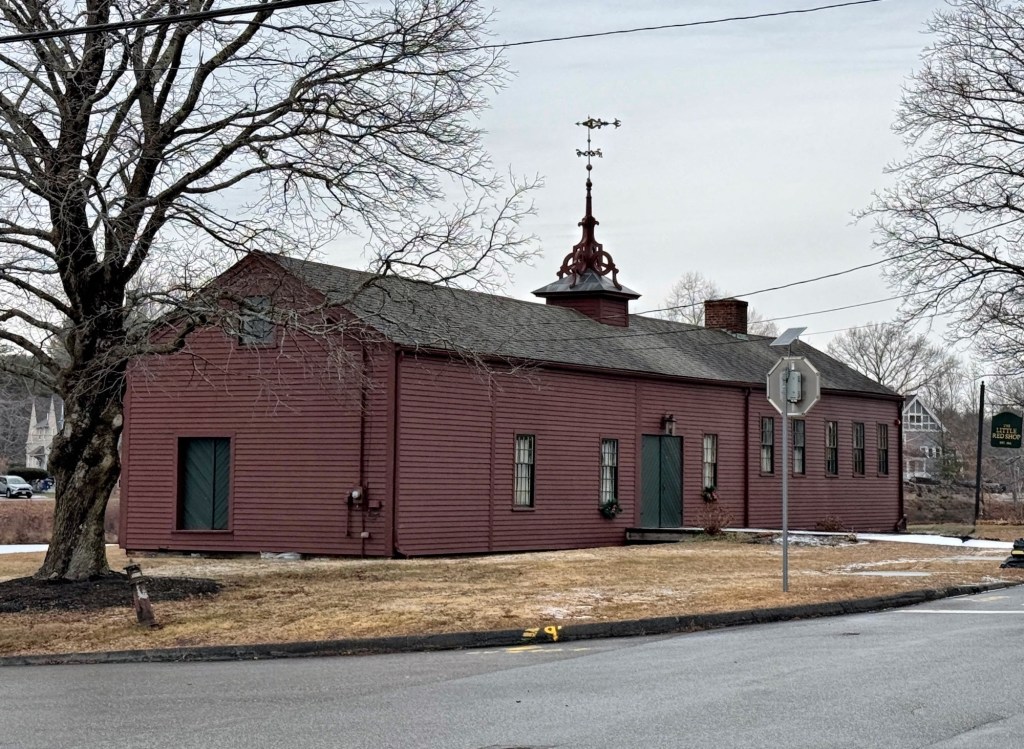
The area that is now the town of Hopedale, Massachusetts, was originally known simply as the “Dale,” a small, secluded agricultural area between Mendon and Milford, that beginning in 1842, was home to a communal Christian society called “Hopedale Community.” The communal agricultural and manufacturing society that eventually acquired over 600 acres and numbered more than 300 members at its peak before ultimately failing in 1856 due to socioeconomic inequalities and bankruptcy resulting from conflicts between its ideology and business organization. In that same year, the assets of Hopedale Community were purchased by the E.D. and G. Draper Company, led by Ebenezer and George Draper, who were the operators of Hopedale Community’s most successful manufacturing enterprise, textile machinery manufacturing. The Drapers had previously shared space in this old machine shop, which dates to around 1843, alongside fellow community workers who made hat and shoe boxes, sawed lumber, and ran an iron forge. As the Drapers founded the Draper Corporation, which became the largest maker of power looms for the textile industry in the United States, they never lost sight of their beginnings and preserved this building, which became known as the Little Red Shop. To preserve the building, it was moved four times in its life, to allow for the growth of the company factories, eventually being placed in its current location on town parkland, where it now houses a collection of Draper textile machinery as the Little Red Shop Museum. The Little Red Stop is just one story with nine bays and is vernacular in style, with its notable decorative feature being the metal weathervane mounted at the roof over an elaborate saw-cut wooden base.
 Buildings of New England