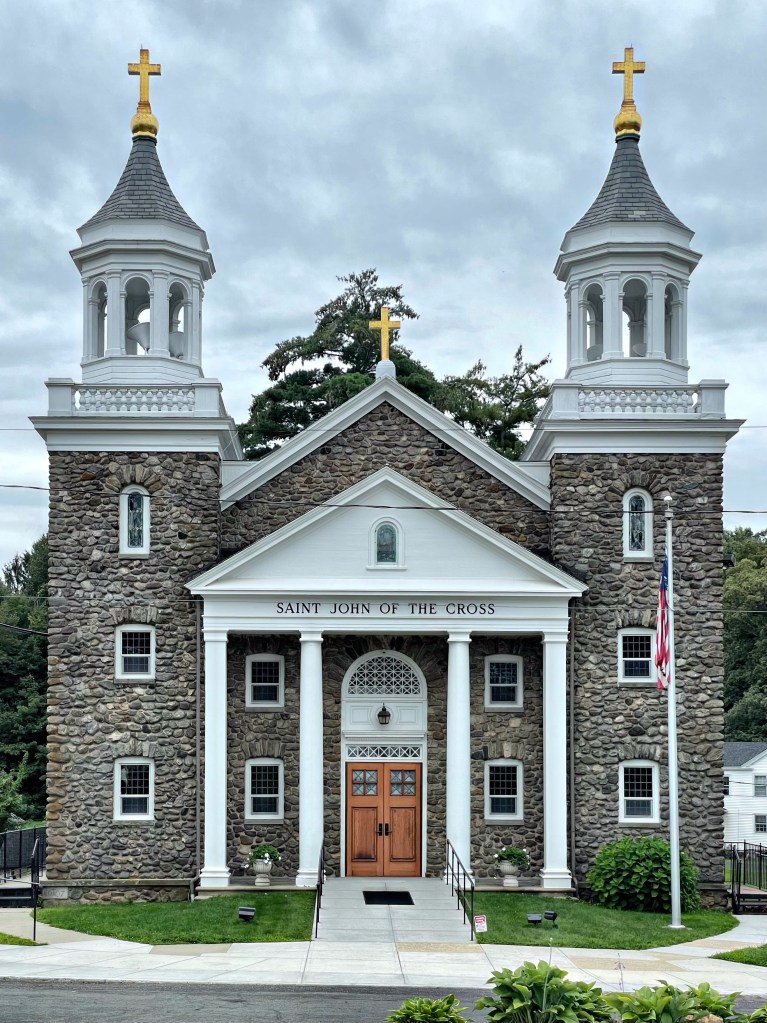
One of the more substantial buildings in the small town of Middlebury, Connecticut is this large church which faces the town green. In 1904 St. John of the Cross Parish was granted ecclesiastical status however, a decade would pass before the newly constructed stone church on the Middlebury Green was dedicated on November 22, 1914. The building was constructed in rubblestone with a Classical Revival temple-front pavillion and two Renaissance Revival square towers with open belfries. Reports stated that the building took over five years to construct, which was almost entirely built with volunteer labor and built with stones taken from parishioners fields. The architect of the church is unknown.
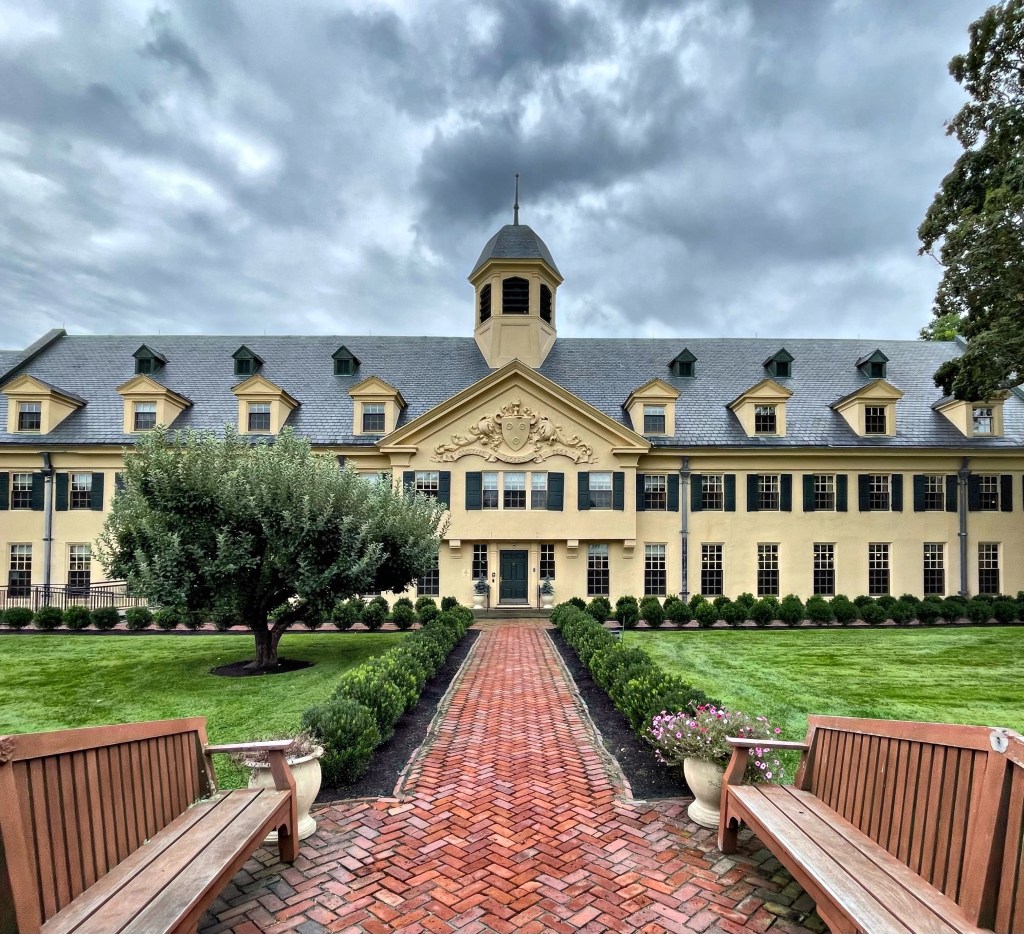
At the heart of the rural community of Middlebury, comprised largely of Connecticut farmers, far from the hustle and bustle of the world, Mary Robbins Hillard (1862-1932) sought to create a girls school to “provide young women with a liberal education in a community which would contribute to the development of their character, independence and sense of responsibility.” To accomplish this, they needed a school, and Mary hired her good friend (and architect) Theodate Pope Riddle to design the private girl’s school campus and main buildings on a site fronting the town green. The school opened in 1909 with125 pupils, slightly over capacity. For the design Theodate Pope Riddle – who was one of the first American women architects and a survivor of the sinking of the RMS Lusitania – took inspiration from English Arts and Crafts and historical precedence in English schools with large open courtyard plans. Originally finished in a gray stucco, the building enclosed a quadrangle at the rear. Inside, administration offices, reception rooms, living rooms, a library, gymnasium, chapel, dining rooms, infirmary, and (of course) classrooms lined the interiors on a closed loop to allow students and teachers access to all parts of the building without ever stepping outside in the cold New England winters. The Westover School remains active and one of the highest ranked private schools in the area today, and with a more cheery yellow coat!
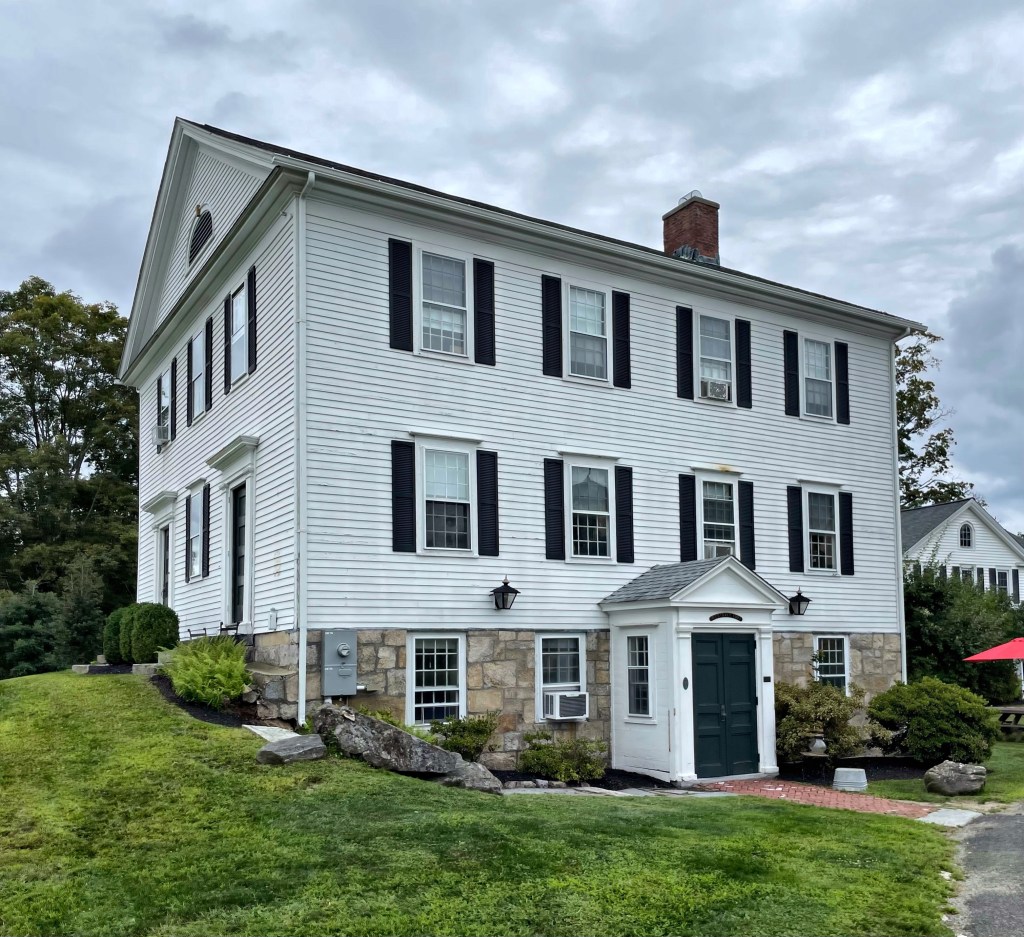
The oldest extant church building in Middlebury, Connecticut is a church that no longer is, the former Middlebury Methodist Church. Built in 1832, this building sits across from the Town Hall and Congregational Church and together, they form the eastern edge of the town green. The building is a more refined example of the Greek Revival style with paired entrances, corner pilasters, and a pediment facing the street with blind fan within. By the early 20th century, the church had a dwindling membership and sold the building in 1923 to the Westover School which opened just over a decade earlier. The building was used as a library for the school for some time and still is under the ownership of the esteemed private institution to this day, who maintain the former church very well.
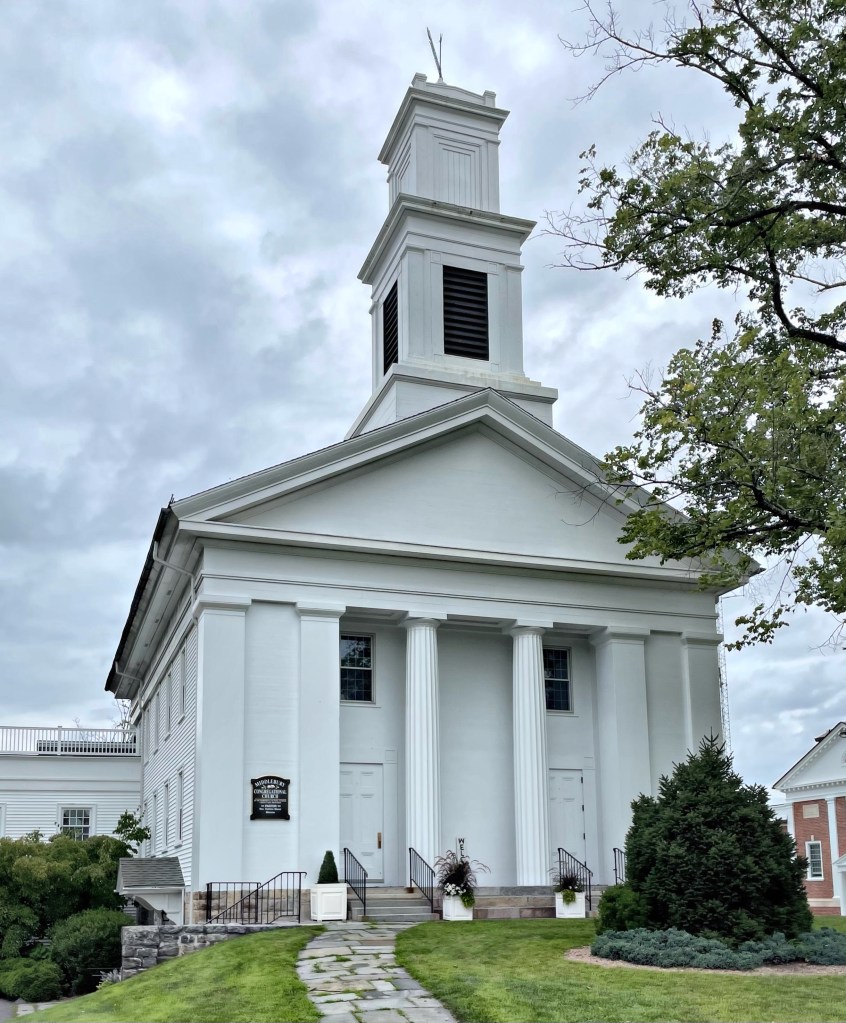
Located next door to the Middlebury Town Hall, the Middlebury Congregational Church has a very similar history to its Classically inspired counterpart. The congregational church here was established in 1791, less than a year after a separate Middlebury ecclesiastical society was granted and the first church here was erected in 1794. Decades later, a more traditional and larger church was desired by the congregation, so they had a Greek Revival style church built in 1839. Nearly 100 years later, the church (and adjacent original town hall building) burned in a large fire in April 1935. Undeterred, the congregation hired architect Elbert G. Richmond, AIA (1886-1965), who as a young man worked in the New Haven office of J. Frederick Kelly, Connecticut’s first and most famous restoration architect. The present building is a near-replica of the mid-19th century church building, and even has a bell that was recast from pieces of the old bell that crashed through the building during the earlier fire. Talk about rebirth!
The first white settlers arrived in what is now the Town of Middlebury, Connecticut in the early 1700s, displacing Algonquin people who lived there long before. By the late 1700s, there was sufficient population to justify a petition to the General Assembly for establishment of a separate Middlebury ecclesiastical society, and such action was taken by the legislature December 29, 1790. They named the new town Middlebury due to its location between the existing towns of Waterbury, Woodbury and Southbury. The first church edifice was completed four years later, on the town green in the center of the new town. Other buildings normally found in a village center followed, including store, tavern, school, blacksmith shop and other churches. The town grew organically as a more agricultural center and saw some suburban development due to the proximity to larger population centers. In 1935, a fire destroyed the existing 1840s church and 1890s town hall, forcing the town to rebuilt. They hired J. Frederick Kelly, who was not only an architect but a historian who restored many significant buildings all over the state, to furnish plans for a new town hall. The present Classical/Colonial Revival building features two columns in antis and recessed pediment that echoes the adjoining Greek Revival church, but the Town Hall is executed in brick instead of wood (to give it more fireproofing than the last building). On the sides, the building has elliptical and round-headed windows and other elaborate details that suggest the Federal style.
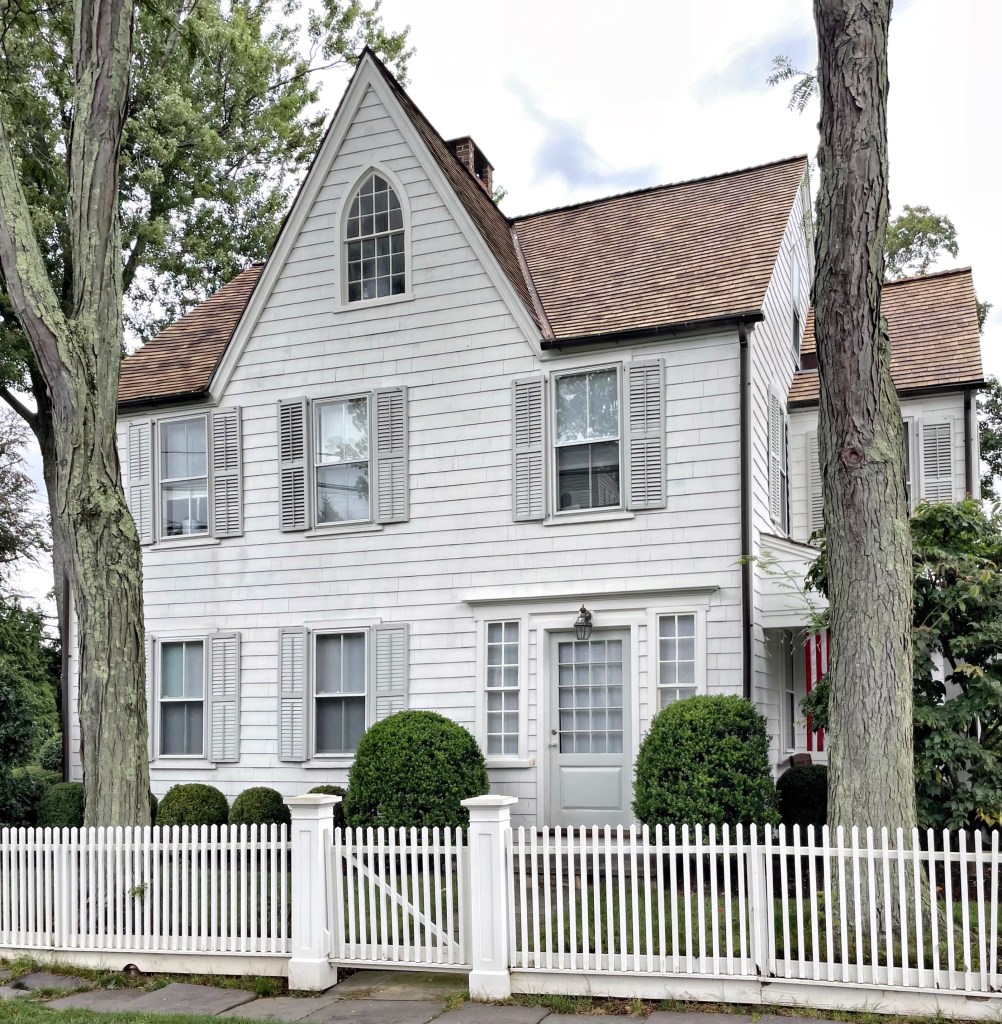
According to a dated board in the attic, this house was built c.1803! The David Bradley House on Old South Road in Southport, Connecticut is a great example of a traditionally designed house that does not need all the bells and whistles to stand out! The house was owned for a number of years by David Bradley, who worked as the village’s postmaster. It was David who likely added the Gothic Revival gable with lancet window and a (since removed) front porch.
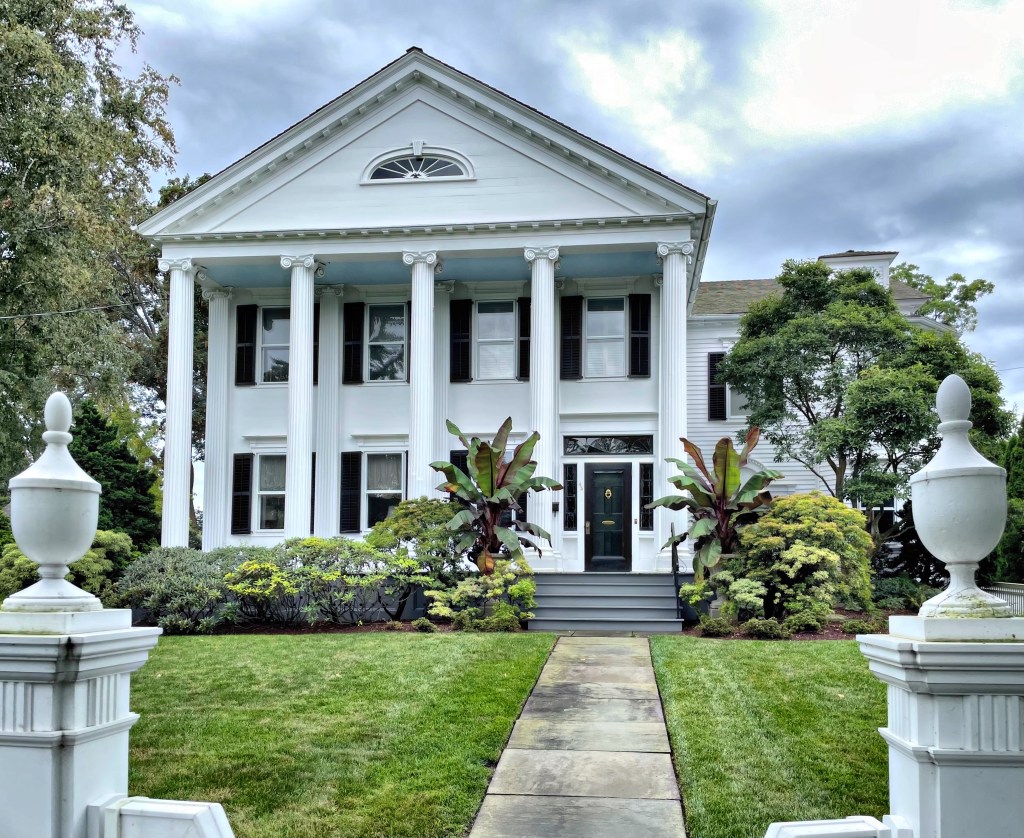
The Henry Perry house was erected in 1832, and is one of the two Greek Revival style structures in Southport which was designed with a five-columned front portico. The other, the Francis D. Perry House, was his brother’s and was built that same year. The house is a temple-front with a fan-light in the pediment and large sidelights and transom at the entry.
In the mid-1830s, Henry Sturges, the eldest (and only) son of Jeremiah Sturges, built what just may be my favorite house in all of Southport, Connecticut, this transitional Federal/Greek Revival style manse on Harbor Road. It may have been owned by Jeremiah and updated later by Henry. The house features a symmetrical, five-bay facade with central entry. A gabled pediment extends the roof and includes a leaded-glass oval window and the absolutely stunning full-length front porch and second floor balcony is supported by slender Ionic columns.
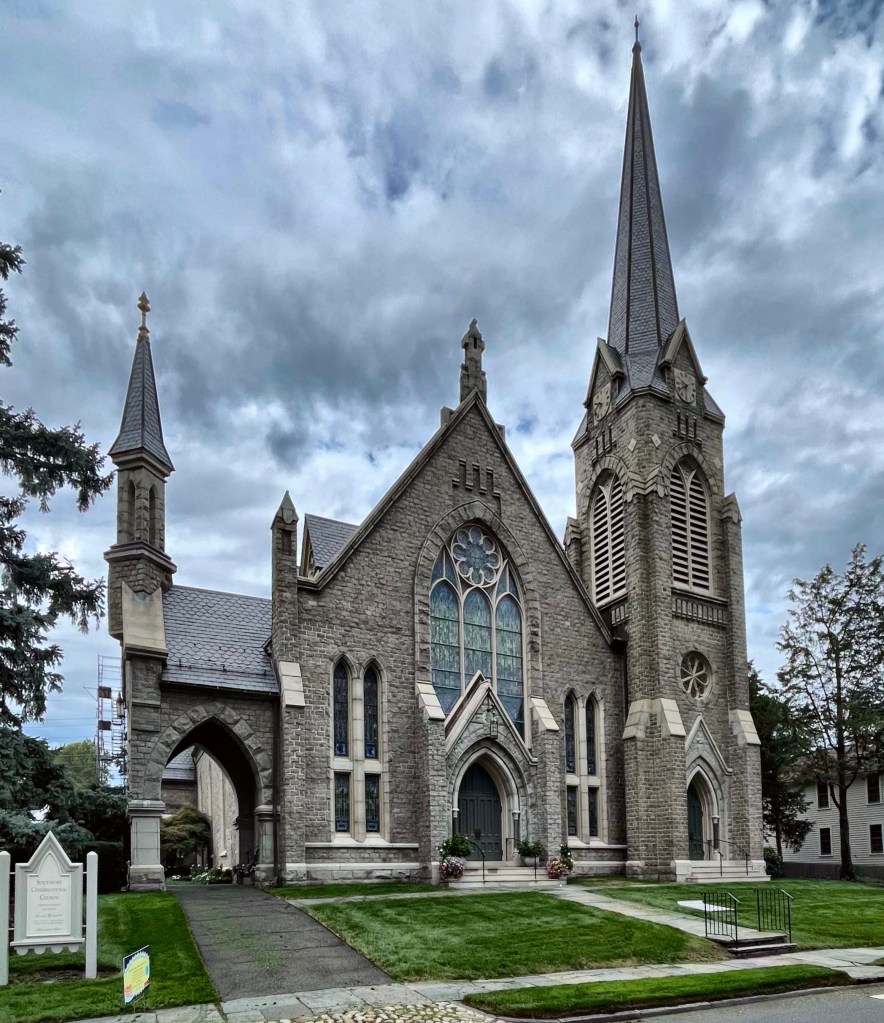
Southport was and still is a part of Fairfield, Connecticut, but it has long been very different from the geographic center of town. Largely due to distance, Fairfield Congregationalists in the Southport area of town sought to establish a new parish to worship closer to home. By the 1840s, their request was granted and a small wood-frame Greek Revival house of worship was built in 1843. By 1871, the increase in population and wealth in the village necessitated a new, larger church. The congregation hired the architectural team of Lambert and Bunnell who made a huge statement here! It is constructed of granite ashlar masonry with a steeply pitched roof and soaring spires.
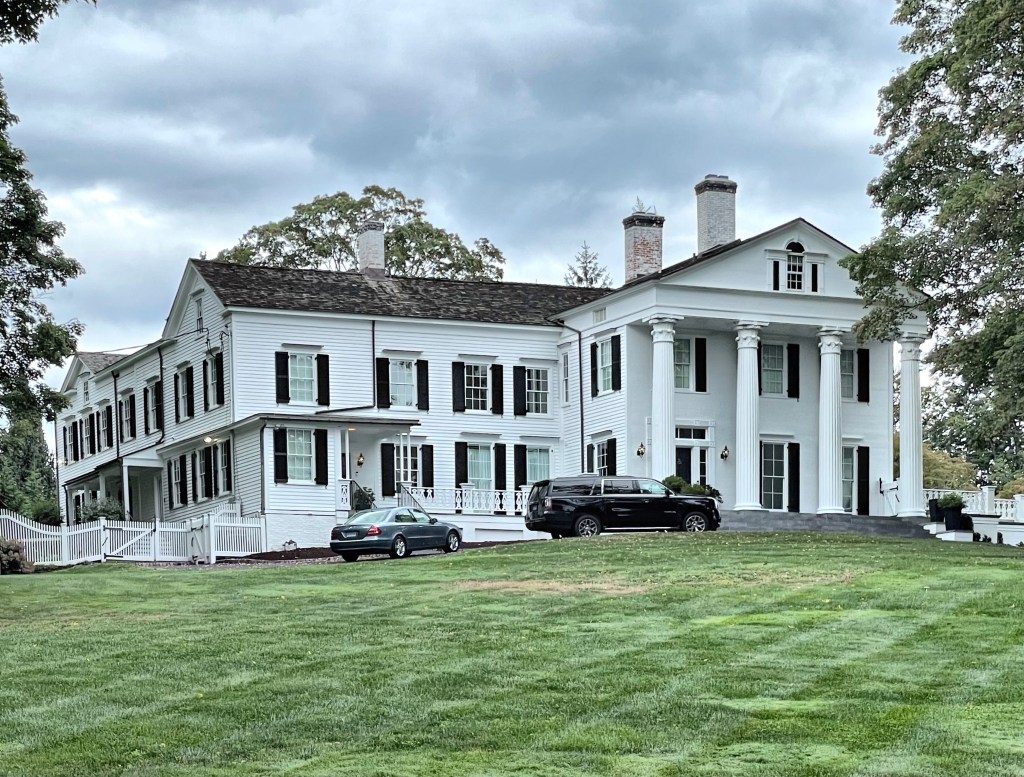
William Webb Wakeman was born in Southport, Connecticut on June 19, 1799, the son of Jesup Wakeman, an eminent citizen of the community. As a young man, William worked with his father in his commercial and trade enterprises. He acquired his own vessel early in his career, and gradually accumulated a line of trade vessels, sailing to New York, Savannah, Georgia and Galveston, Texas. By mid-century he was involved in the East Indian and China trade under the firm name of Wakeman, Dimon & Co. He built and owned a line of steamships during the late 50s, and was commissioned by the Federal government during the Civil War to transport troops and equipment. His massive Greek Revival mansion was built around 1833 on one of the largest house lots in the village, perched high on a hill overlooking the harbor. The three-bayed facade is framed by a two-story portico. Supported by four fluted columns, the capitals and entablature are similar to the “composed” order of Minard Lafever and the “composite” order of Asher Benjamin, popularized in the 1830s and 40s in their pattern books for architects and builders. After William died in 1869, it was likely his widow, Mary Catherine (who lived to be 99 years old, outliving all of her six children) who enlarged the home with massive two-story ells.



 Buildings of New England