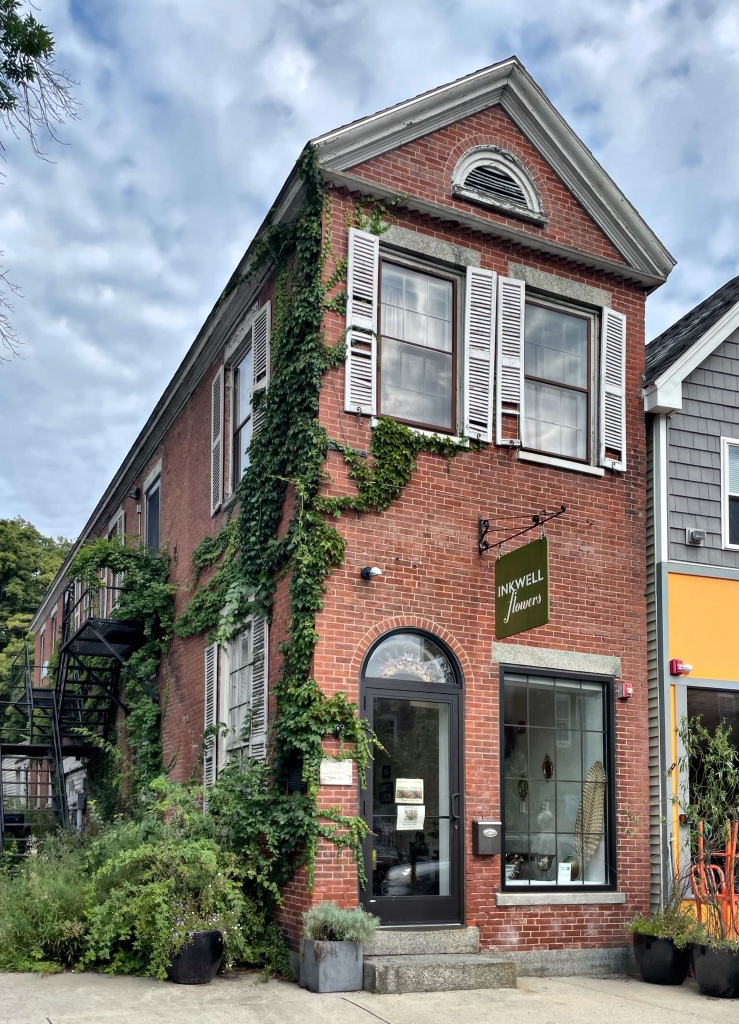
Arguably the cutest little store in Newmarket is the Murray Store, right on the town’s vibrant Main Street. The brick building is one of the earliest such structures on the street and is a great example of a narrow Federal style building with a lunette in the gable end. The structure was built before 1830 and was occupied by a Ms. Charlotte Murray as a millinery (women’s hat store). Main Street USA! What is your favorite Main Street in New England?
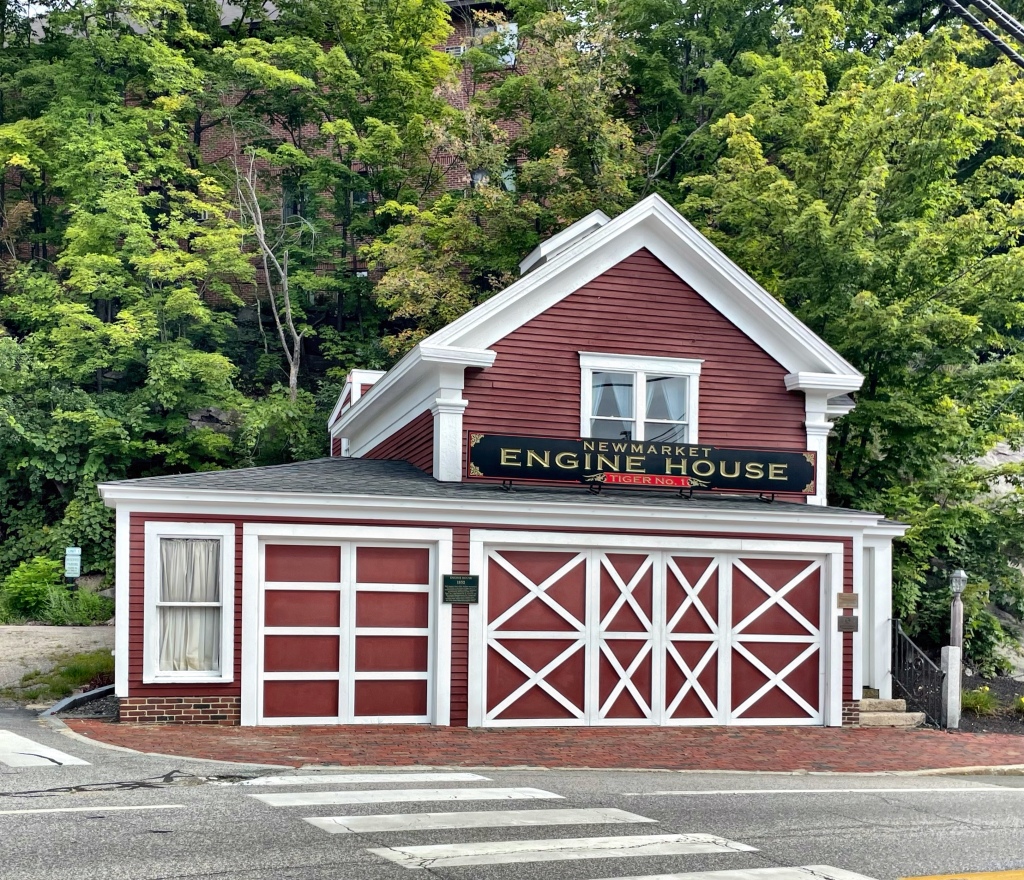
In 1852, the Newmarket Manufacturing Company, who operated a massive mill complex along the Lamprey River in Newmarket, realized the need of adequate fire service to protect their investments and goods. They leased land on Main Street to the town and funded a new fire station, providing engines as well that could be pulled by horse to fires in town. The old station is a surviving landmark in town and retains much of its architectural integrity.
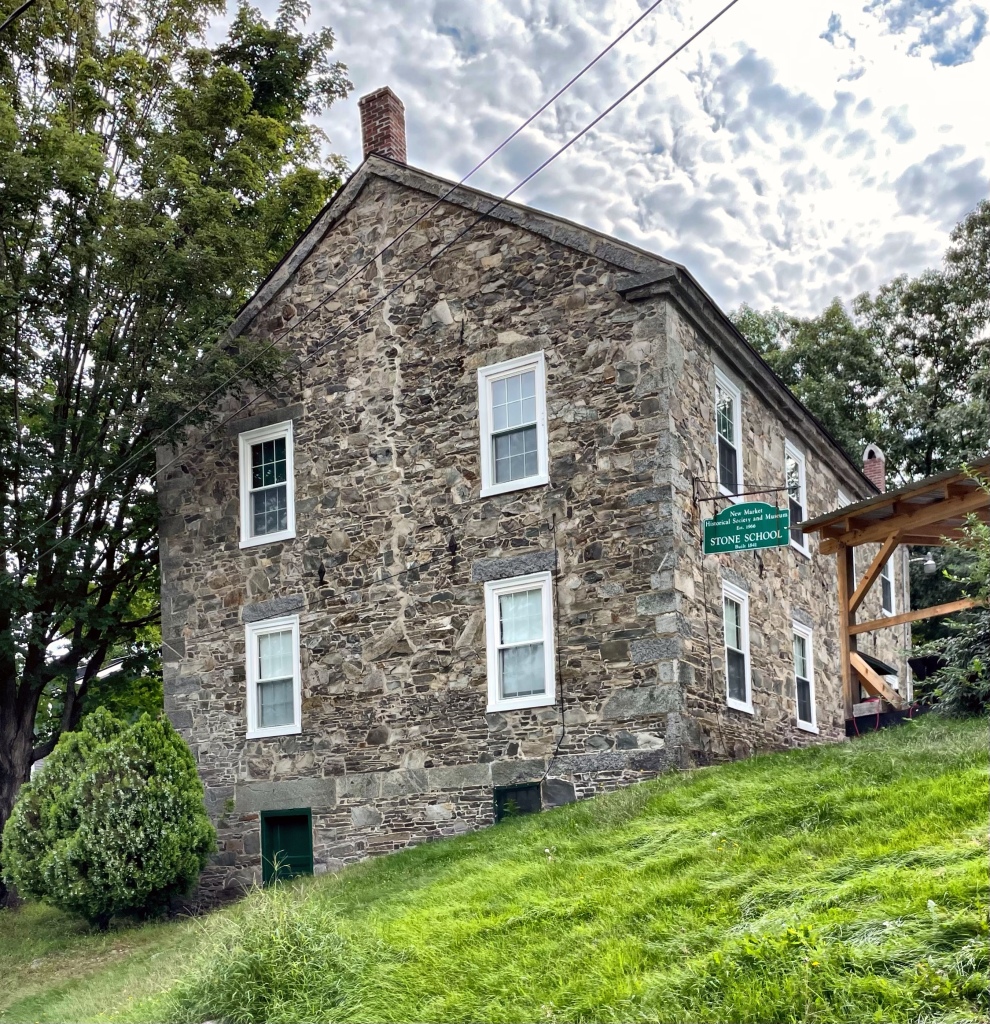
Perched high on a hill, next to the Stone Church (featured previously), the old Stone School in Newmarket is one of a handful of iconic stone buildings in the town. Built in 1841, its stonework executed by William and Robert Channel, local farmers and stonemasons, who likely got their skill from building stone walls on farms. The building was used continuously as a school until 1966, when it was given to the Newmarket Historical Society, which now operates it as a local history museum.
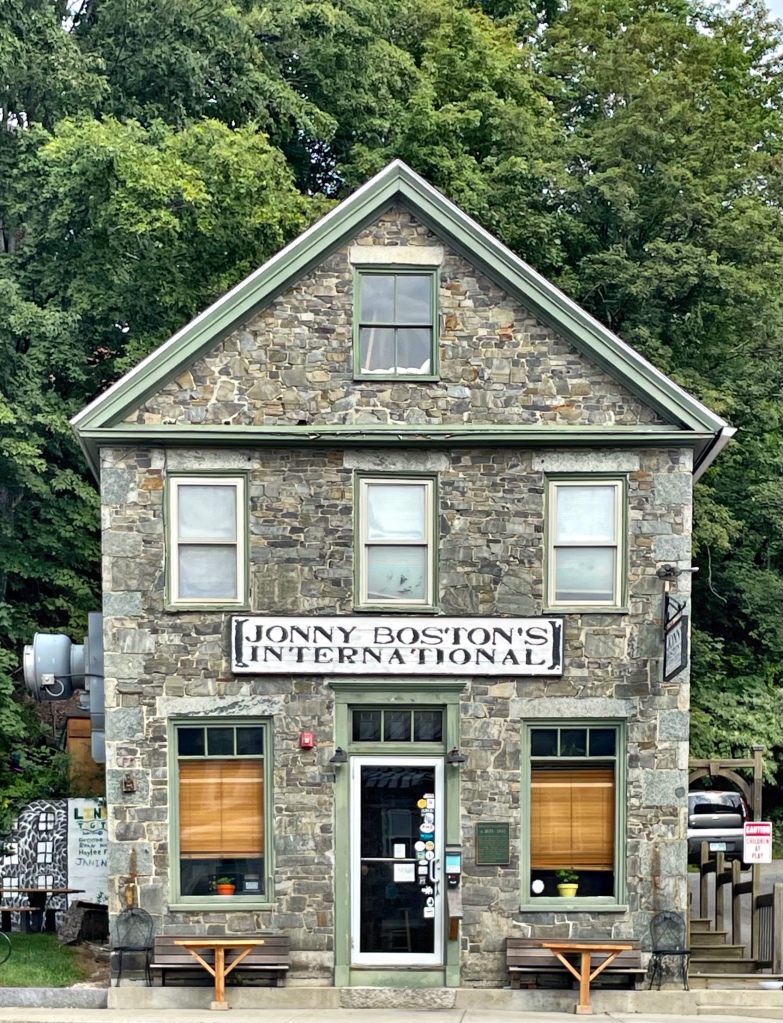
Next door to the Mathes Block (previously featured) this stone commercial building is one of many such buildings that make Newmarket so beautiful and unique. Stone was harvested from the shores of the Lamprey River nearby and the beautiful coloring made them perfect for buildings in town. This building was constructed in the 1830s for Benjamin Mathes, a developer and businessman in town. The structure was occupied by the town post office in the early years, and now houses a restaurant.
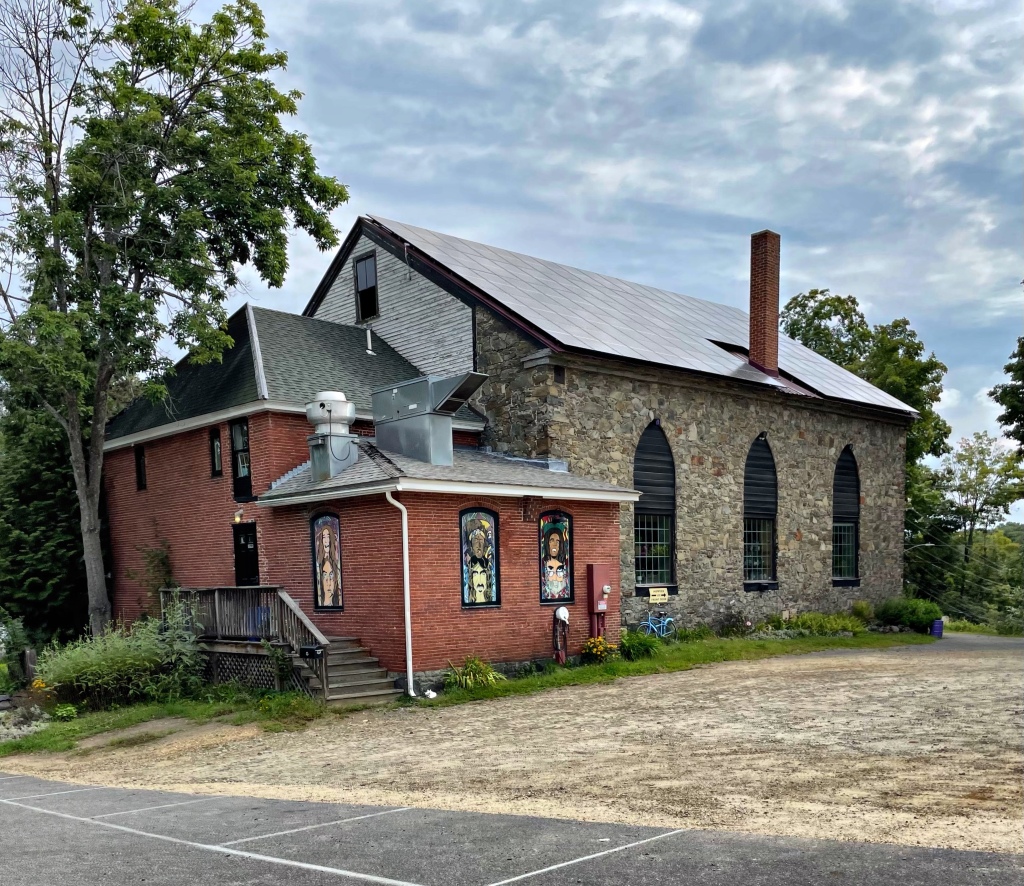
Erected in 1832, the iconic Stone Church building in Newmarket, NH, first served as a Universalist Meeting House before shifting to Unitarian twenty years later. In 1865, it was sold to the Roman Catholic Church, thus establishing the first Catholic Church in Newmarket, NH. In 1890, the congregation moved down to Main Street into a new church next to the town hall, and the Catholics then used the Stone Church as a school for teaching French to children, likely due to the influx of French-Canadian immigrants working at the mills in town at the time. After use as a church, the building was used as a roller-skating rink, playhouse, and VFW hall. In the 1950s, The Newmarket Heel Factory inhabited the building, a shoe manufacturing company. In 1968 the building was ravaged by a fire, and according to legend, the firefighters were reluctant to break the historic windows of the church to vent the fire. In 1970, the building was sold to two UNH students and another, who planned to open a coffee house, but quickly realized they couldn’t sell enough coffee to pay the bills. They decided to sell beer, but weren’t old enough to drink…legally. So one of the boy’s mom’s got the liquor license in her name. Since then, the Stone Church has been one of the most important cultural institutions in the state, providing arts and music space for local musicians and artists to gather and share ideas, over beer. What could be better?!
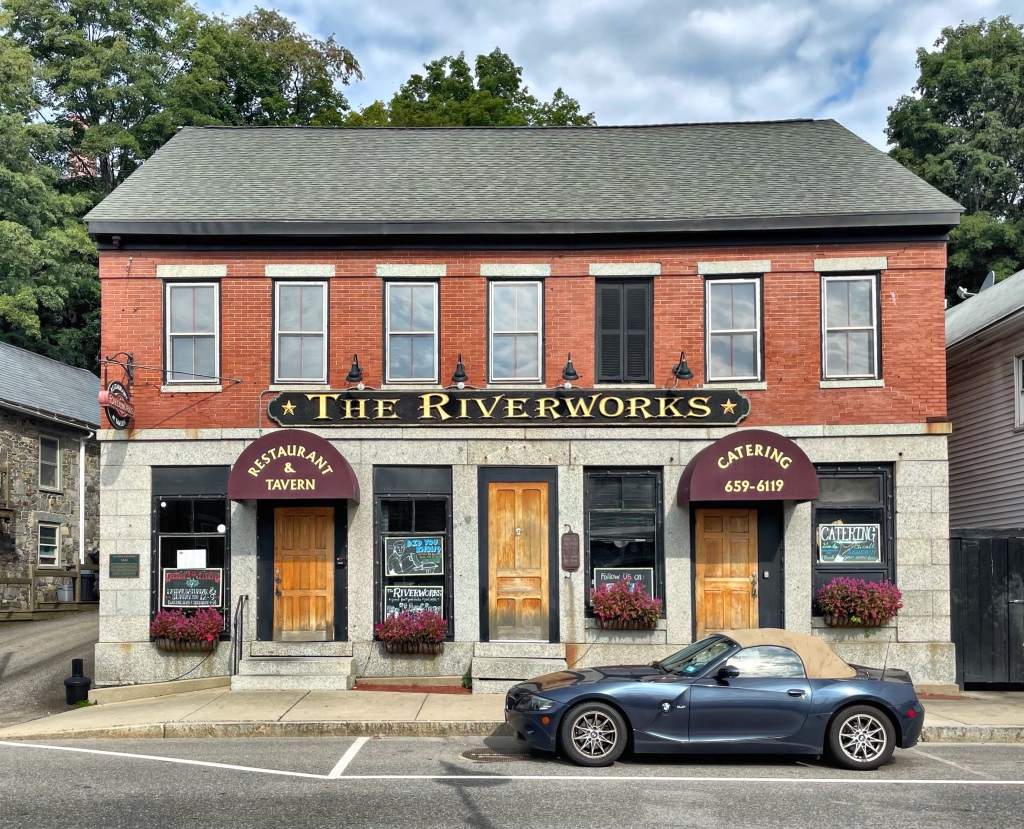
Right on Main Street in Newmarket, the Mathes Block is one of the best-preserved examples of a brick commercial building in town. The structure was seemingly built for Benjamin W. Mathes, who operated a grocery and dry goods store out of the storefronts. Above, he likely had offices or a dwelling for workers. The building stands out for the contrast of granite at the storefront with the brick elsewhere. The building is now home to The Riverworks, an aptly named restaurant/pub with great food.
Incorporated in 1727, Newmarket, New Hampshire, is one of six towns granted by Massachusetts in the last year of the reign of King George I (when it was a part of the Massachusetts Bay Colony). Newmarket started as a parish of nearby Exeter, and was granted full town privileges by the legislature in 1737. Newmarket was a center of the New England shipping trade with the West Indies and also saw financial success as a shipbuilding center for the Royal Navy. By the 19th century, the town thrived as a mill town with great water power from the Lamprey River. With the growth of industry and immigrant population increasing due to labor necessity, the town outgrew its older Town Hall. In 1847, the town purchased land adjacent to a prominent mill site on Main Street, and built this beautiful Greek Revival building. The building was updated in the late 19th century with a tower and additional detailing. A massive fire gutted the old building in 1987. Two years later, the building was demolished and town offices moved to a former school building. The site today is a surface parking lot.
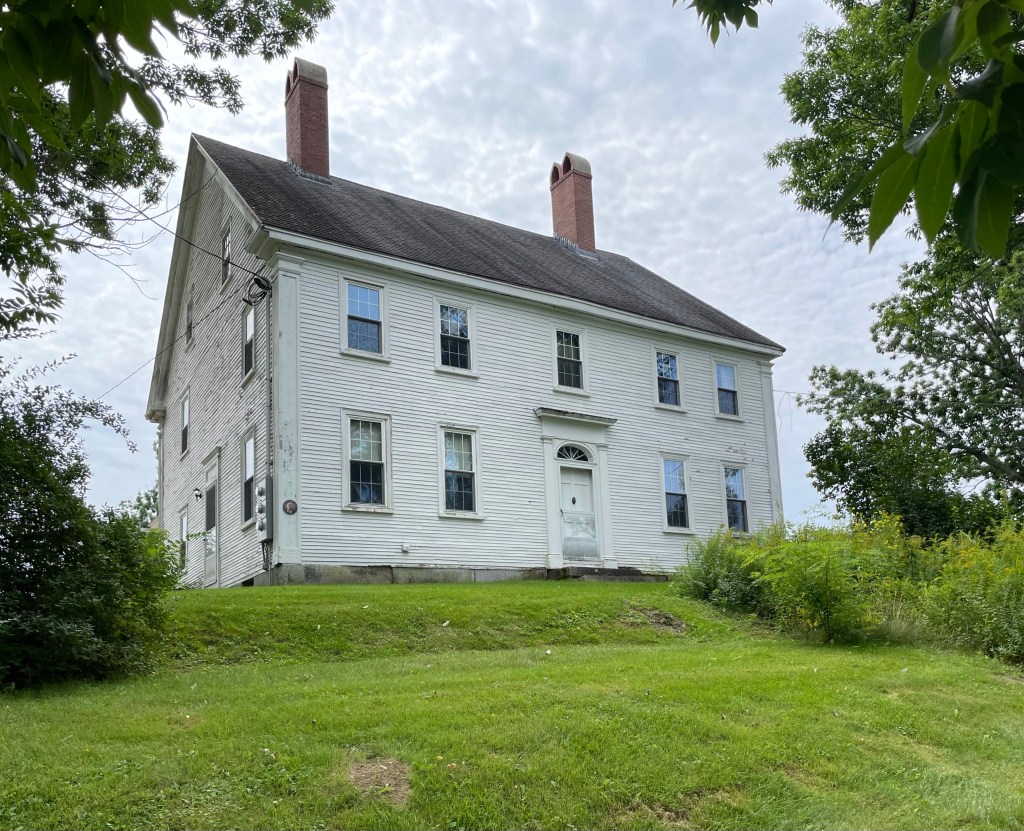
Beginning in 1798, sea captain John Bickford (1765-1813), purchased a 127-acre farm which extended from the newly laid turnpike to the Oyster River. Bickford was a resident of Salem, Massachusetts, but owned his family’s homestead across the river on Durham Point and also purchased five other farms in the area but did not live on any of them. The Wagon Hill farmhouse was built in 1804 and is a great example of a vernacular Federal style house. In 1814 while on a voyage to the southern tip of Africa, Captain Bickford died. All of his New Hampshire property was sold except for this Durham farm which remained under the management of his widow, Mary Bickford. She worked as a housekeeper for Captain Joseph White in Salem, and rented out the Durham farm. In 1830, the farm was sold to Samuel Chesley, and it remained in the ownership of four generations of the Chesley family. Here, the family ran a diversified farm, from sheep, to ducks, to apple orchards. In 1960, the farm was sold to Loring and Mary Tirrell. Farming had ceased entirely by the time the Tirrells moved into the house but the fields were kept open and it’s agricultural past was honored by the placement of an old wagon on the crest of the hill. Over the years, the farm has become known to local residents as Wagon Hill Farm. It was purchased by the town in 1989, and serves as a lasting remnant of agricultural history and an amazing preserved open space in the town.
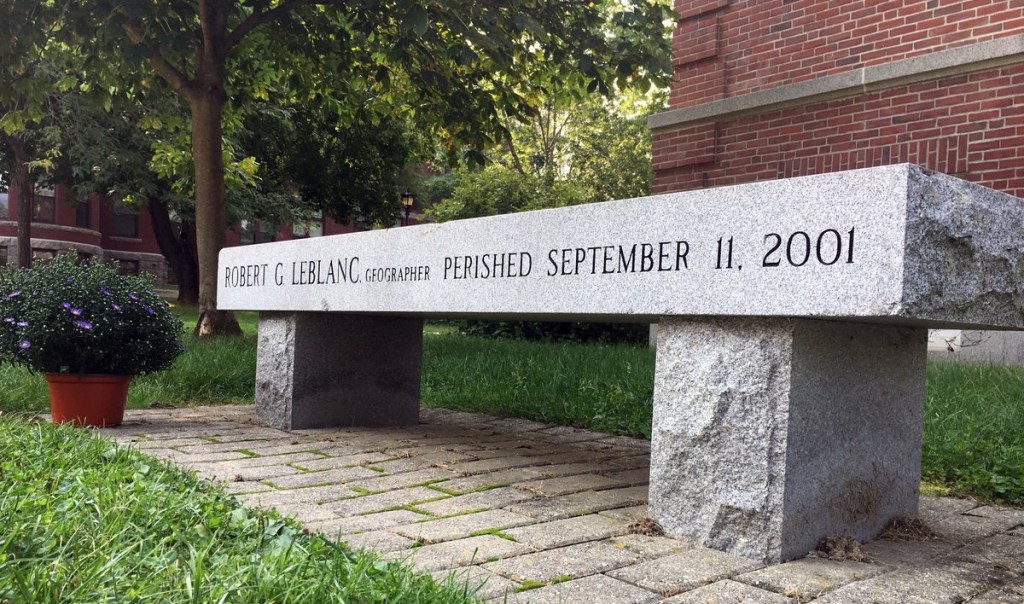
Today is the 20th anniversary of September 11, 2001, a tragic day that will never be forgotten. 2,977 innocent civilians perished that day, and tens of thousands more lost close family members, friends, mentors, and co-workers. Robert LeBlanc (1930-2001), was born in Nashua, New Hampshire, and was always fascinated with learning about and visiting foreign places. After graduating from high school in 1949, Bob enlisted in the Air Force, which offered him a ticket to adventure and see places all over the globe. Bob left the Air Force in 1953 and entered the University of New Hampshire in the fall of that year. He graduated with a degree in History, later graduating with a Master’s degree in Geography. He accepted a professorship at UNH and helped shape the minds of thousands in his 36 year tenure at the University. He perished on 9/11, aboard Flight 175, headed to a geography conference in California, but his legacy lives on in the hearts and minds of his students, and a memorial bench outside Murkland Hall, where he spent much of his time.
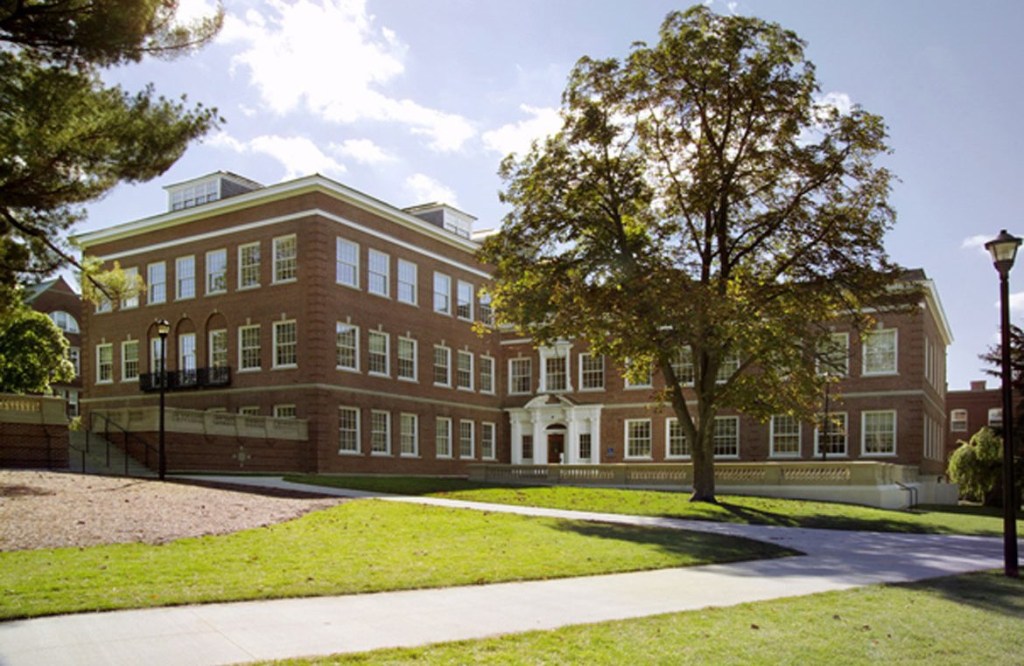
Named for Charles Sumner Murkland (1856-1926), the first president of New Hampshire College (later UNH) after its establishment in Durham, Murkland Hall was designed by Professor Eric T. Huddleston in 1927. Huddleston’s design for a liberal arts building suitable of Murkland’s name, features a Colonial Revival building set into the hill with classical detailing.
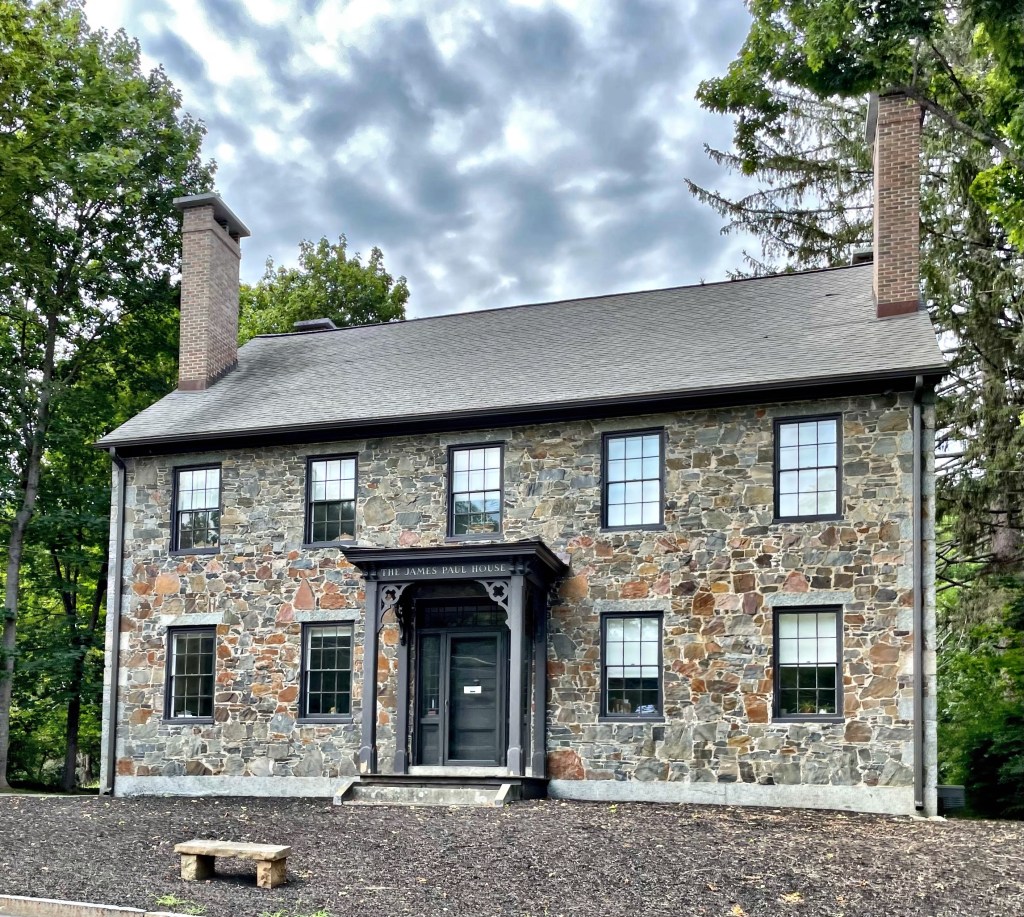
The James Paul House in Durham, NH, stands out as a rare example of stone construction in town. The house was built between 1830 and 1840, and is transitional Federal/Greek Revival in style. It has four tall chimneys (two on each slope of the roof), granite lintels over the windows, and granite quoins at the corners which together, create an elegant composition. Tragically, James Paul died unexpectedly when removing the staging on this house, he was never able to live in this beauty. The home was occupied by two reverends of a local church.

 Buildings of New England