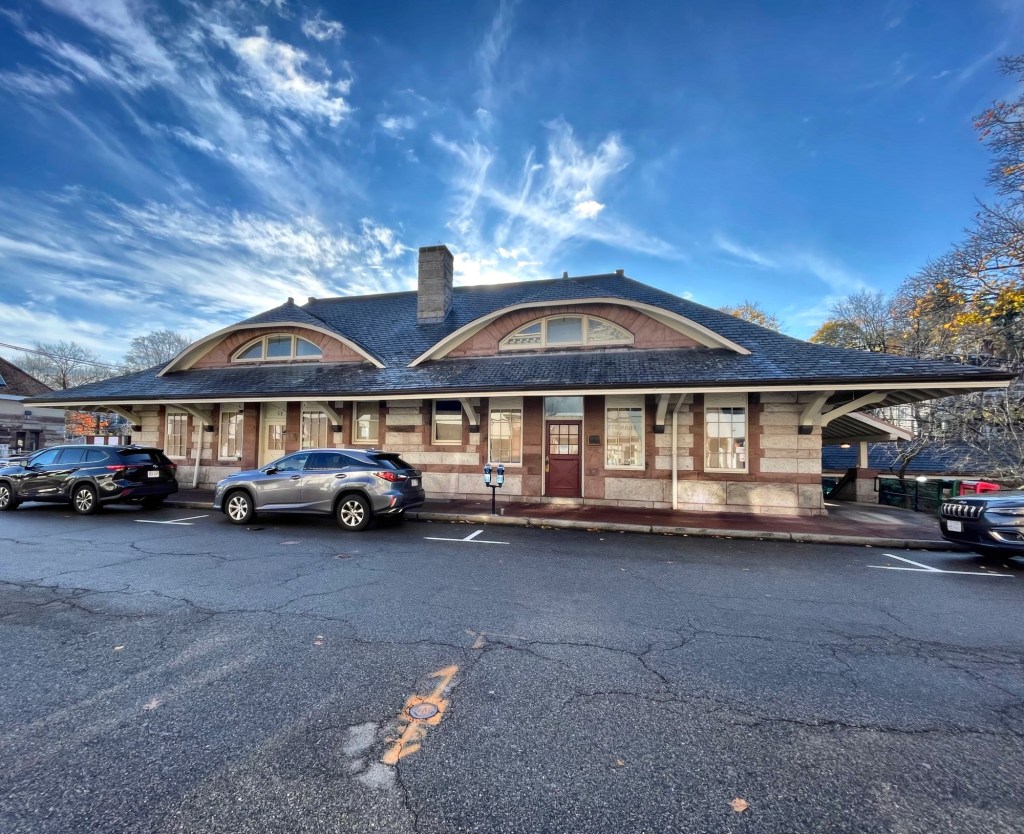
Newton Centre Railroad Station // 1890

All aboard! Next Stop… Newton Centre! The Newton Centre station was originally commissioned by the Boston and Albany Railroad in 1884 as one of a series of new, highly designed stations in the Boston suburbs. Architect, H. H. Richardson designed five passenger stations for the Boston & Albany Railroad in Newton, and of which, only one survives. After his death in 1886, Richardson’s successor firm, Shepley, Rutan and Coolidge, followed the design vocabulary of Richardson for the remainder of the stations outstanding. The new station, built by the Norcross Brothers firm of Worcester, opened in 1891. The station was heavily modified in 1905–07 when the line was lowered below grade to eliminate street crossings. The Highland branch was closed in 1958 and quickly converted for streetcar use; streetcar service began in July 1959, with this station being located on the MBTA Green Line D. The station has long been leased to commercial stores and coffee shops but has been unused since 2022. Here’s to hoping the building can be used again in the future!
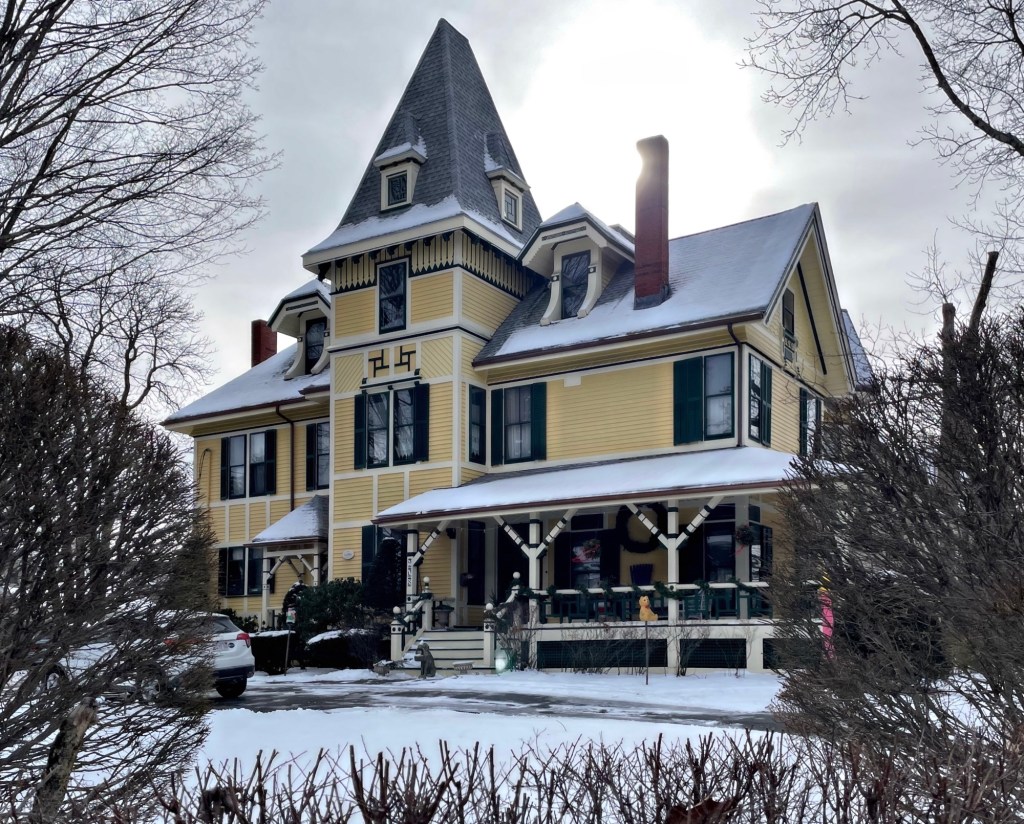
Leatherbee House // c.1870

Andrew F. Leatherbee (1842-1920), a wealthy lumber dealer in Boston, built this large Stick style victorian house in Newton Center around 1870, likely using his own lumber products! The large frame house is prominently sited on a corner lot on Beacon Street, a short walk to Crystal Lake, a natural pond in the center of town. I could not find information as to who the architect was, but it was likely a notable local firm. As Andrew got older, he downsized and relocated to a smaller apartment in Cambridge. Upon his death in 1920, the property was sold by his heirs to Mae Van Dusen. The house is a high-style example of the Stick style of architecture, with large half-timbers, heavy porch bracing, and a central tower with pyramidal roof. Swoon!!!

First Baptist Church in Newton // 1888

The Boston area has an embarrassment of riches when it comes to Richardsonian Romanesque style buildings, due in part to its namesake, Henry Hobson Richardson lived and worked locally. One of my all-time favorites is the First Baptist Church in Newton Centre. The church was designed by architect John Lyman Faxon, who was clearly influenced by Richardson. The First Baptist Church in Newton is among the oldest Baptist congregations in the state. Baptists were recorded as living in Newton as early as the 1720’s, but growth was slow and marked by persecution. In 1780, a congregation was assembled and the next year a rough, unplastered barn like meeting house was begun alongside Baptist Pond (now Crystal Lake). Fifteen years later, the congregation was finally able to afford a stove; twenty one years later, in 1802, the structure was enlarged. In 1836, the congregation constructed a larger meeting house in a more convenient location, the corner of Beacon and Center Streets. The second building was remodelled in 1856 and 1869 and finally was moved from the site to make way for the present church, the third meeting house, dedicated in November 1888. The First Baptist Church is undergoing some work at the exterior at the time of the photo, but the amazing brownstone trim and the winged creatures on four sides of the octagonal tower still shine!