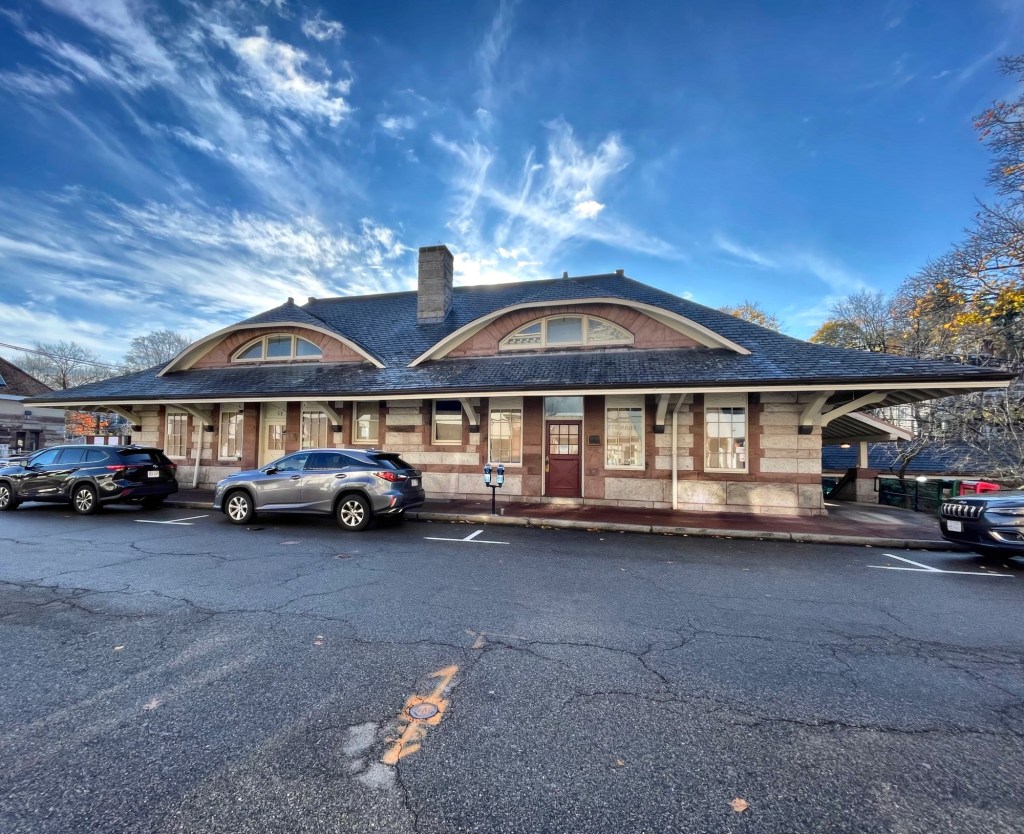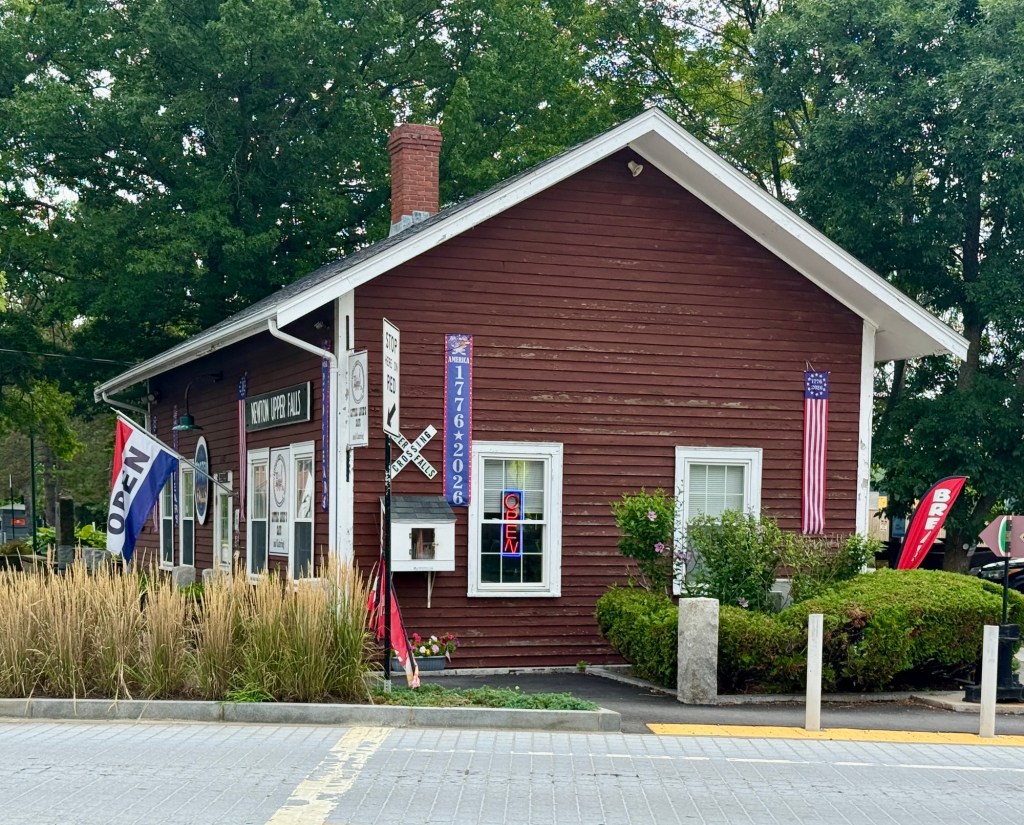
When the short-lived Charles River Railroad opened in 1852, first connecting the Boston and Worcester Railroad in Brookline to Newton’s Upper Falls village, the small community here saw immediate prosperity and turned into a thriving industrial village. In 1847, a petition was filed with the Legislature of Massachusetts to build a rail line linking greater Boston to the Rhode Island border. While a more direct route was easier, Otis Pettee (1795-1853), who owned an iron foundry called Pettee Works where he manufactured cotton machinery, seems to have been the principal promoter for the line to pass through the village of his factory. Pettee died soon-after the line was finished, but his persistence for this track served two additional benefits. Firstly, it opened up development into other Newton villages for early suburban development, and secondly, it served as a major line to bring gravel from Needham to fill the Back Bay, opening that iconic Boston neighborhood to development. The Upper Falls Depot dates to about the time that the initial line opened in 1852 and is a typical, vernacular train depot in New England from this period. The Charles River Railroad merged with the New York and Boston Railroad in 1855 and was later sold to the Boston and Albany Railroad. Following the near death of the railroad system in the United States in the latter half of the 20th century, much of the former Charles River Railroad today has survived despite the abandonment of much of the rest of the former New York and New England Railroad lines. This section is currently a part of the D-Branch of the MBTA’s Green Line.