When wealthy Boston manufacturer Charles S. Davis began subdividing his suburban Newton Centre estate, “Mount Pleasant”(last post) in the 1860s he was extremely particular on the dwellings and residents that would be his new neighbors. He sold off some parcels to friends and affluent members of the community and he also built some small gingerbread cottages – like the house seen here – for rent. This Victorian Gothic gingerbread house was rented to provide Mr. Davis with some additional income. It was eventually sold off to a private owner and has been meticulously preserved ever since.
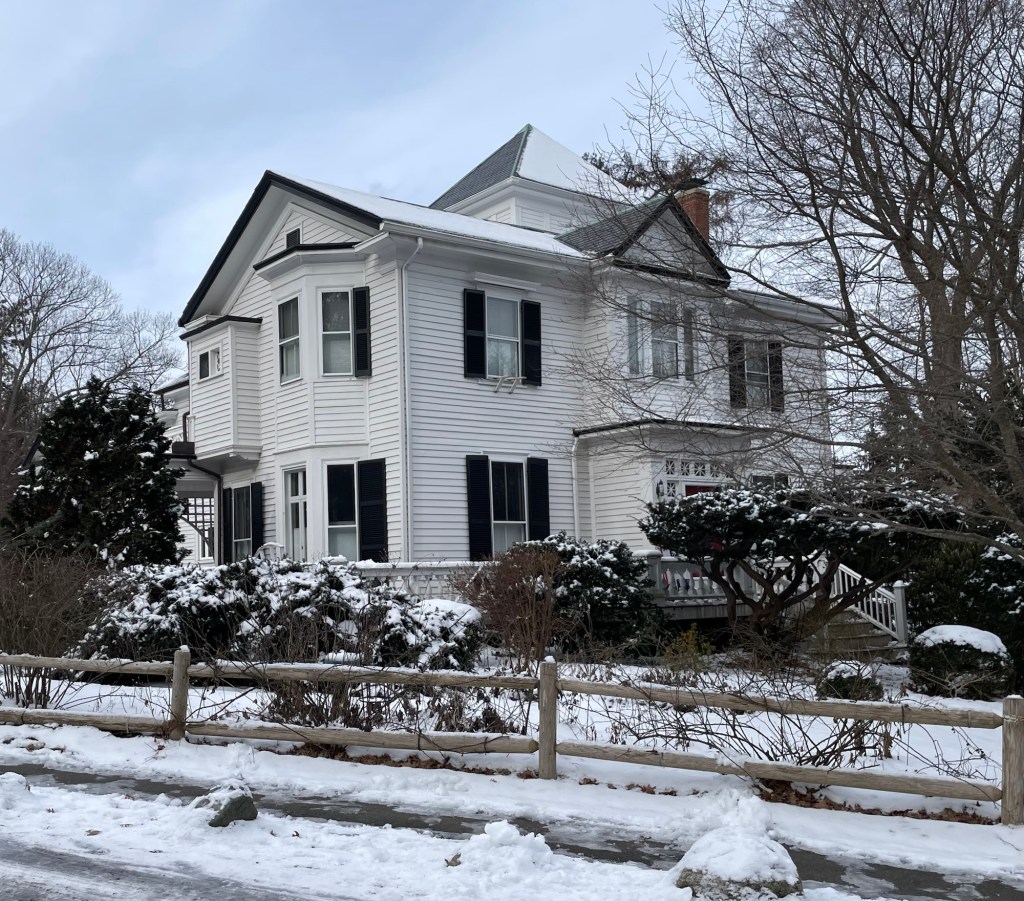
One of the surviving old estates in Newton is Mount Pleasant, one of the oldest in Newton Centre. The home was originally built in the 1850s by Roswell Willard Turner, who acquired large land holdings in Newton Centre. The large property was eventually purchased by Charles S. Davis, an associate of the Boston piano manufacturing firm of Hallett & Davis. As Newton Centre developed, he enlarged his own home in the 1860s, and sold off his holdings, developing the surrounding area with charming Gothic Revival cottages on Mount Pleasant, the hill upon which his property gained its name. His own home was enlarged and includes elongated additions, a tower with hipped roof, and arched windows.
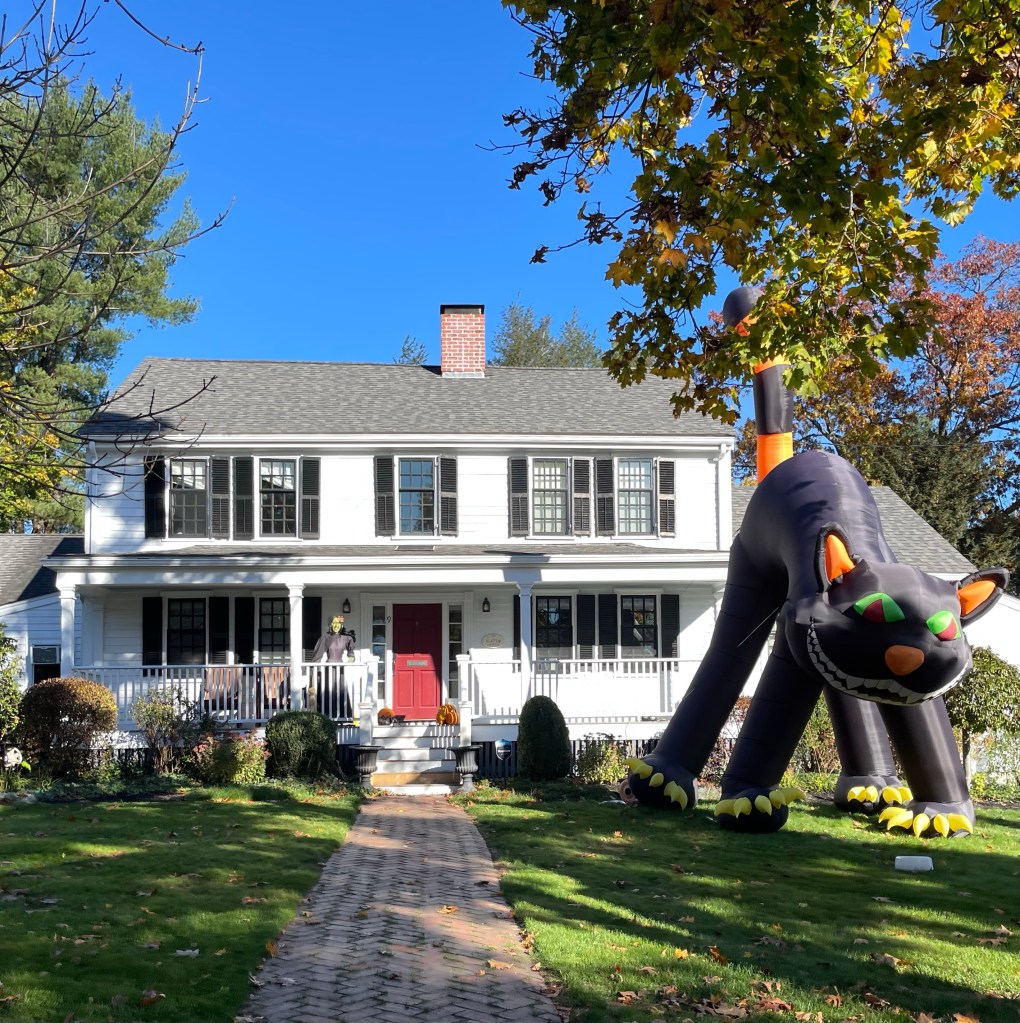
The Hyde-Richardson House is one of roughly twenty remaining pre-Revolutionary War homes in Newton. The home was built for Timothy Hyde (1689-1756) after he inherited the property including 36 acres and a house from his father John Hyde. Timothy had two wives: Rebecca Davis who he married in 1718 and died in 1724 (seemingly in childbirth); and his second wife Sarah Whitmore, whom he married in 1727. The home was likely built soon after his second marriage. It is possible that parts of the original home on the site were reused for this structure. He served as Surveyor of Highways and Constable and in 1710 was drafted to serve with the militia in the successful siege of Port Royal in Canada. In 1761, Jeremiah Richardson bought the property and married his wife Dorcas Hall that same year. Richardson was a deacon and like Timothy, served as Surveyor of Highways. The property remained a farm until the 1930s when the automobile and suburban expansion reached the Oak Hill section of Newton. The farmland was ultimately was subdivided to create the surrounding neighborhood in the mid 20th century.
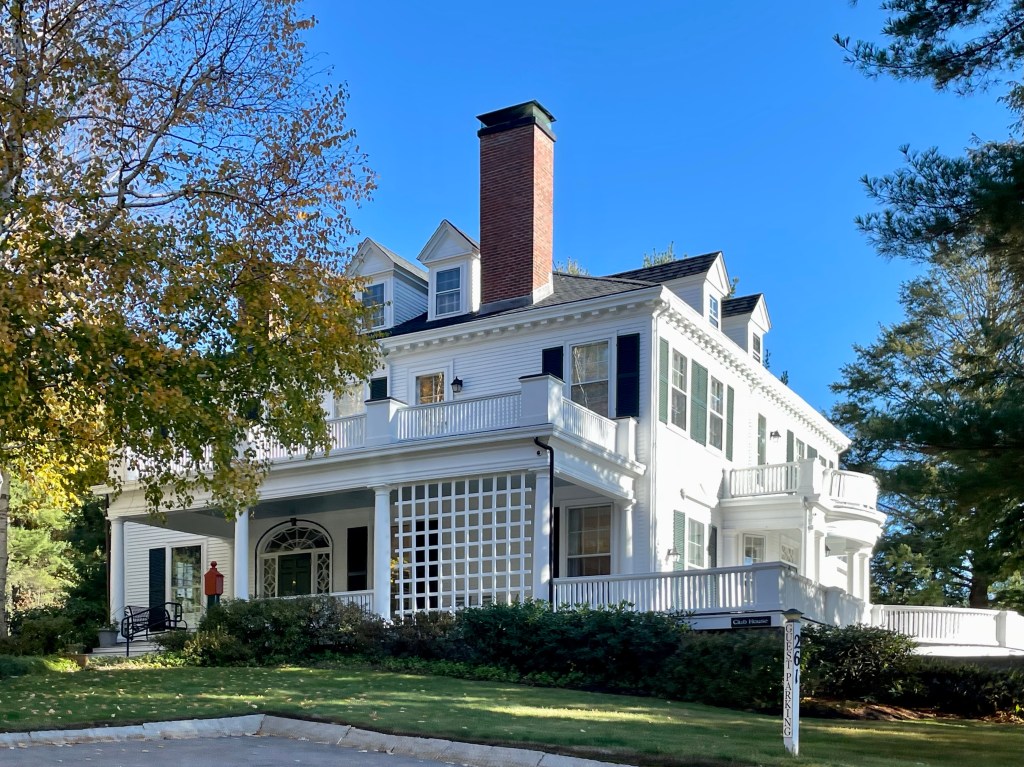
Ellen Banning Ayer (1853-1918) of Minnesota married Frederick Ayer in 1884 and her life completely changed. Frederick Ayer was one of the richest men in New England and he was involved in the patent medicine business, but is better known for his work in the textile industry. After buying the Tremont and Suffolk mills in Lowell, Massachusetts, he bought up many textile operations in nearby Lawrence, combining them in 1899 into the American Woolen Company, of which he was the first president. The couple had at least three houses in Lowell, Boston, Pride’s Crossing and had three children (one of whom Beatrice, later married the famed general George Patton). As the Ayer Mansion on Commonwealth Avenue was being built, the family was looking for a country house near the city. One year, Frederick asked Ellen what she wanted for a gift and she said “roses”. Frederick purchased an old farmhouse on Nahanton Street in Newton and had greenhouses and a stable built immediately, followed by a Colonial Revival country house for his wife Ellen. The mansion held lavish parties for the Ayers, who loved to entertain and it was passed down to their eldest daughter Katharine Ayer Merrill. The property was purchased in the 1920s by Clive and Mona Lacy for decades until it sold in the 1980s. The large site was eyed for redevelopment. The architectural firm of Dimella Shaffer was hired, and they restored the Ayer House, and designed forty residential units on the site, all tucked into the woods gently peering out here and there. The old Ayer House remains as the clubhouse of the Ledgebrook Condominiums Association.
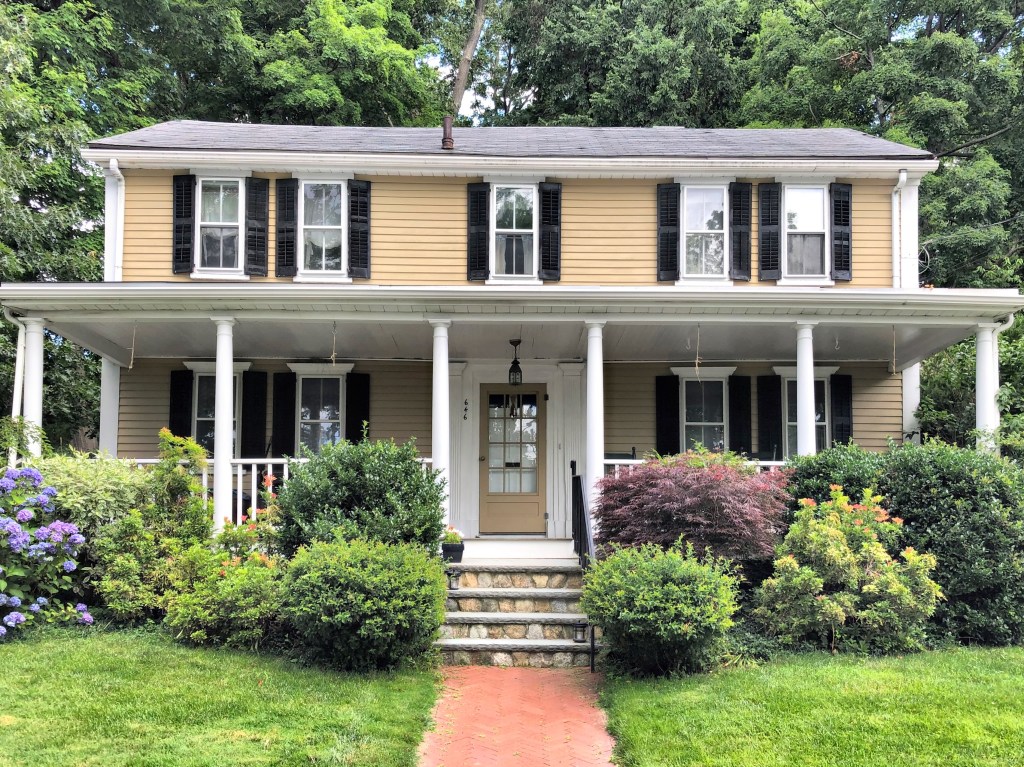
In 1852, Beacon Street in Newton was extended westward from Chestnut Hill through Newton Centre. The village’s suburban development accelerated through the activities of real estate developers as the city became connected to Downtown Boston by roadways and rail. This home was built in 1893 for Andrew and Ann Kistler. Andrew Kistler worked as a leather dealer in Boston, and commuted into the city daily. The Kistler House is an excellent example of Colonial Revival with some added oomph.
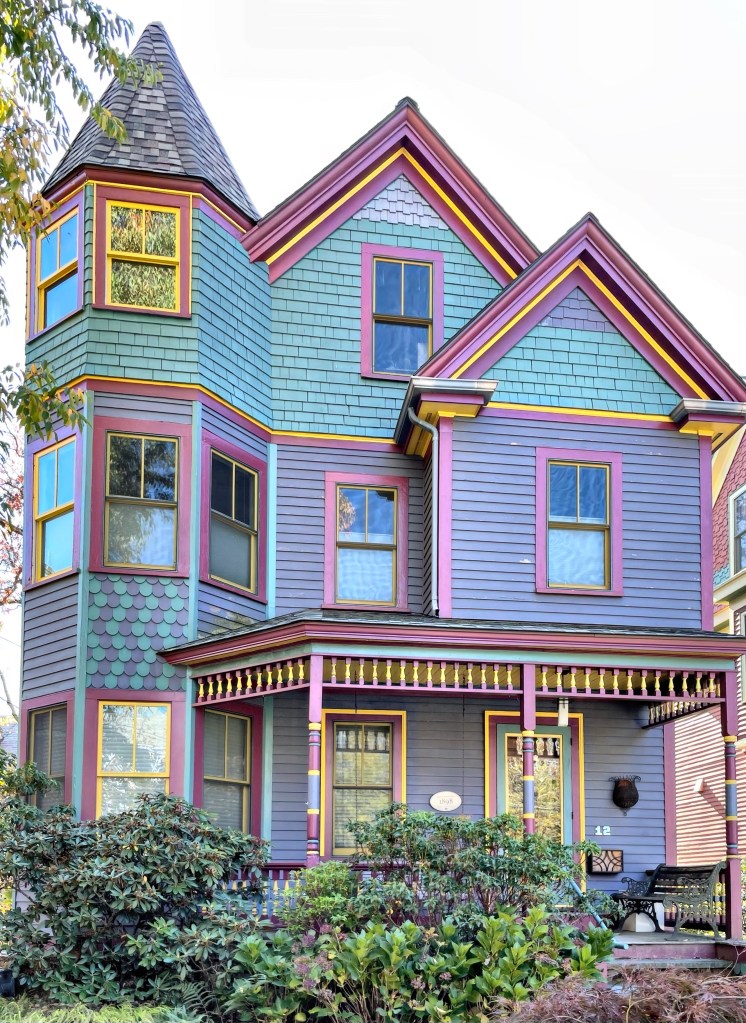
Behold this Queen Anne painted lady in all her glory! This home was constructed in 1898 as a late Victorian addition to Newton’s built landscape. The home’s earliest known owner was a T. C. Sullivan, who left the property to his family upon his death. The house is painted some pretty bold colors, which does an effective job at highlighting the many architectural details and intricacies in the design, but the home would have never been painted like this historically. A little history lesson: the “painted lady” trend took off in San Francisco when after WWII, disinvestment in the urban core led many Victorian homes there to be demolished, altered and covered with siding, and many were painted gray with war-surplus Navy paint (battleship gray). In 1963, San Francisco artist Butch Kardum began combining intense blues and greens on the exterior of his Italianate-style Victorian house. His house was criticized by some, but other neighbors began to copy the bright colors on their own houses. Kardum became a color designer, and he and other artists / colorists began to transform dozens of gray houses into Painted Ladies. By the 1970s, the colorist movement, as it was called, had changed entire streets and neighborhoods. This process continues to this day. The trend took off all over the United States as urban centers saw re-investment and gentrification. While not historically appropriate, the Painted Ladies can really make people happy and show pride in ownership.
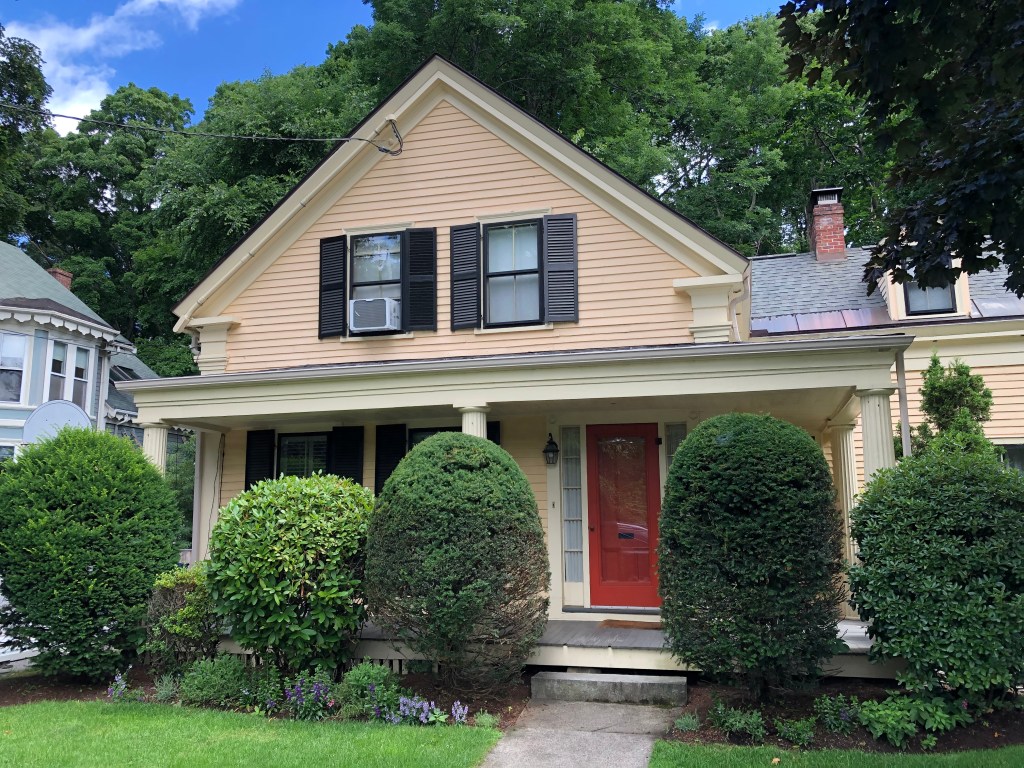
My favorite of all workers cottages/houses in Newton’s Lower Falls village is this home, a c.1840 dwelling which is a vernacular Greek Revival style home with excellent proportions and design. Toward the middle of the 19th-century, the Newton Lower Falls Village developed into a premier paper-manufacturing center of eastern Massachusetts, largely due to the water power supplied by the Charles River. One of the most successful paper mills in the area was owned by Lemuel Crehore (1791-1868), who with his success, built workers cottages for his employees and their families! This home was occupied by Nathaniel Wales and his wife Abigail (Jackson). Nathaniel was from Watertown and came to Newton to work in the paper industry. He left and went to Canada in 1802 to create a paper mill there, soon after returning to marry Abigail. The home features a full-length front porch with tapered columns, pilasters at the entry, and Victorian-era windows in a 2-over-2 configuration.
Toward the middle of the 19th-century, the Newton Lower Falls Village developed into a premier paper-manufacturing center of eastern Massachusetts, largely due to the forests and water power supplied by the Charles River. One of the most successful paper mills in the area was owned by Lemuel Crehore (1791-1868), who with his success, built workers cottages for his employees and their families (imagine if businesses did that today)! This Greek Revival workers cottage was occupied by employees of the mill before it was sold when the mill closed, to a house painter. The modest house stands out for the gorgeous wrap-around porch supported by fluted Doric columns, an off-center entrance with sidelights, and corner pilasters.
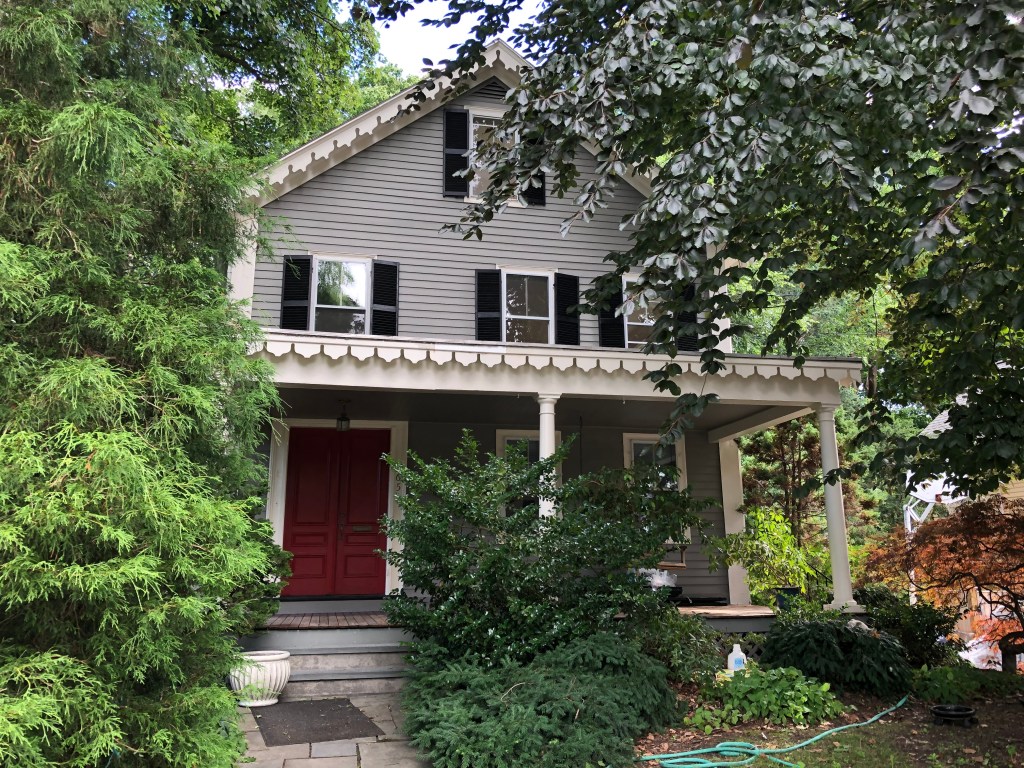
Toward the middle of the 19th-century, the Newton Lower Falls Village developed into a premier paper-manufacturing center of eastern Massachusetts, largely due water power supplied by the Charles River. One of the most successful paper mills in the area was owned by Lemuel Crehore (1791-1868), who with his success, built workers cottages for his employees and their families (imagine if businesses did that today)! This Greek Revival workers cottage was occupied by employees of the mill, and was sold off after the mill shut down. The house features a deep piazza with three Tuscan columns across the front and scroll-sawn bargeboards at the porch and hanging along the roof, giving it a slight Gothic Revival element.
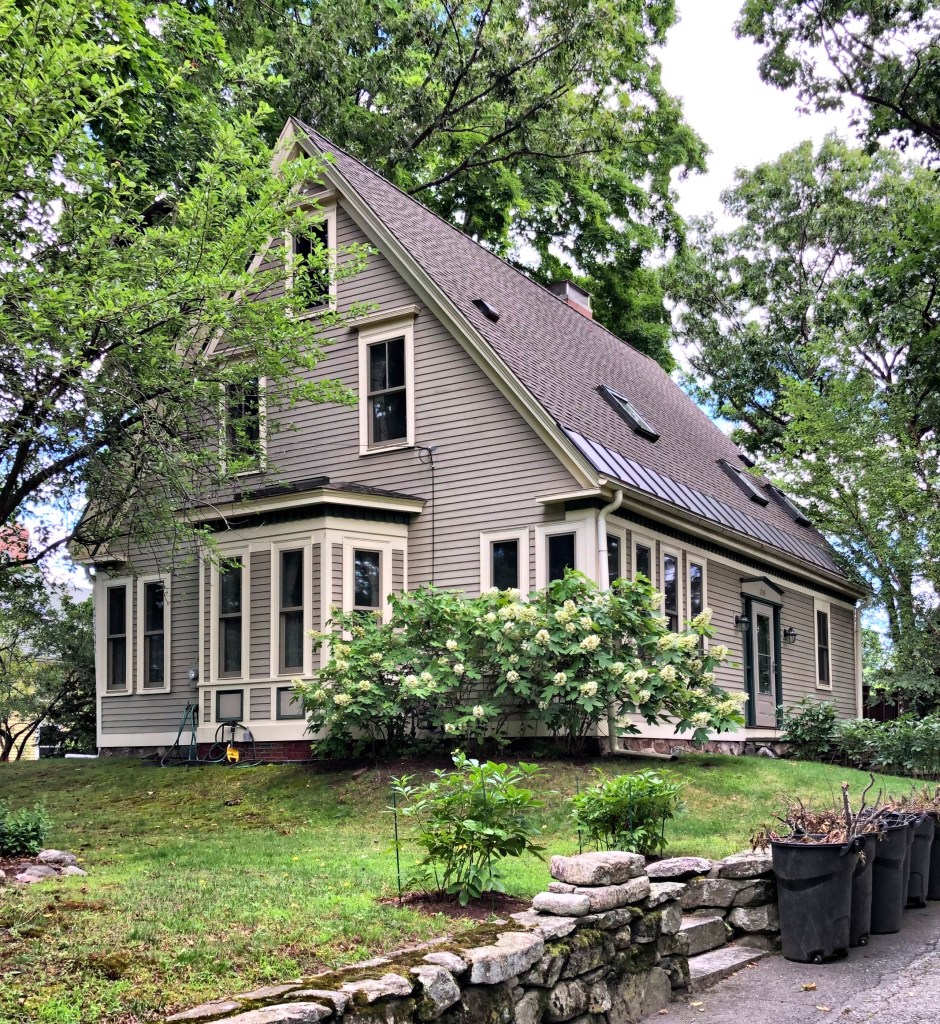
In 1841, Dr. Edward Warren (1805-1878) purchased land, a dwelling house, and outbuildings in the Lower Mills village of Newton for his own property. Edward was the son of Dr. John Warren, a Continental Army surgeon during the American Revolutionary War, founder of the Harvard Medical School, and the younger brother of Dr. Joseph Warren, also a physician and Patriot during the early days of the American Revolution, eventually serving as President of the revolutionary Massachusetts Provincial Congress and dying at the Battle of Bunker Hill. Edward, a much less renowned figure practiced medicine in Boston and Newton and married Caroline Rebecca Ware, the half-sister of Henry Ware, a prominent Harvard professor. The house was likely modernized during Warren’s ownership and is largely Greek Revival in style, but much more modest than one would think given the family connections of the two owners!


 Buildings of New England