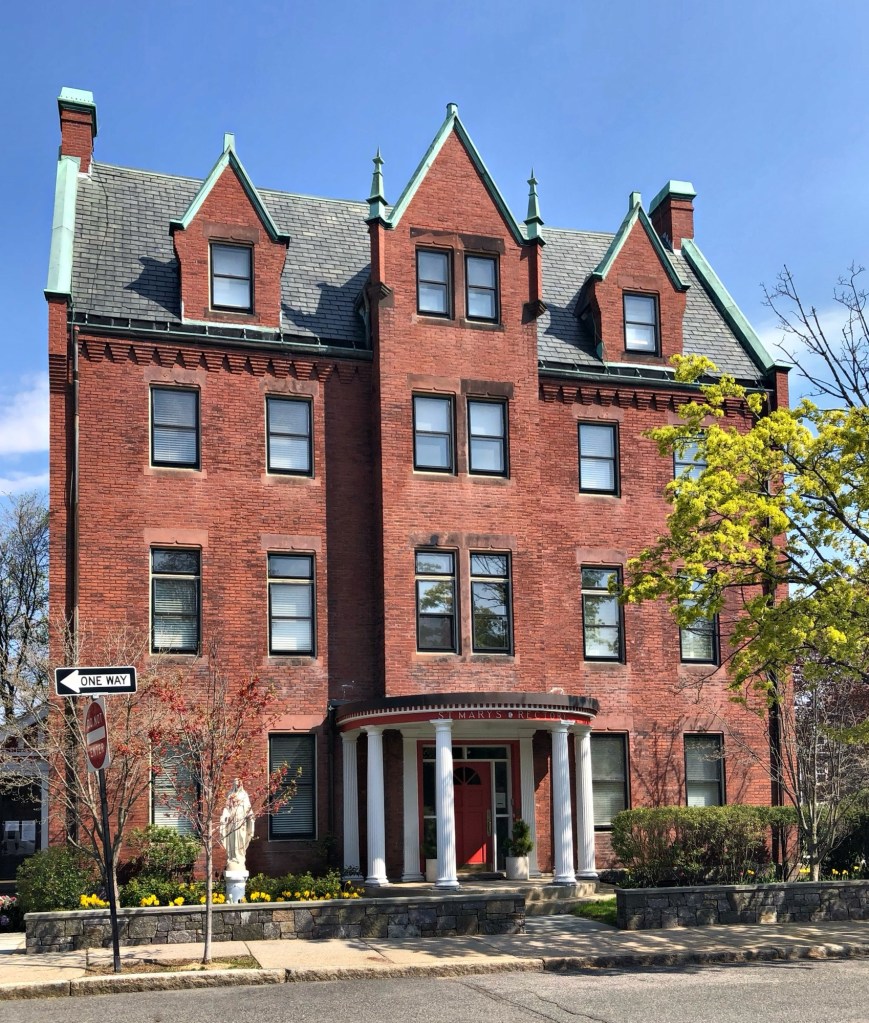
Located adjacent to the St. Mary of the Assumption Catholic Church in Brookline Village, this handsome three-and-a-half-story brick structure has served as the Rectory of the congregation since it was built in 1882. Complimenting the Victorian Gothic style of the church next door, the Rectory was also designed by the firm of Peabody and Stearns, and was the home of the priest and other high-ranking clergy men. The rectory stands out architecturally for its panel brick corbelling at the eaves, steeply pitched slate roof and copper-coated gables.
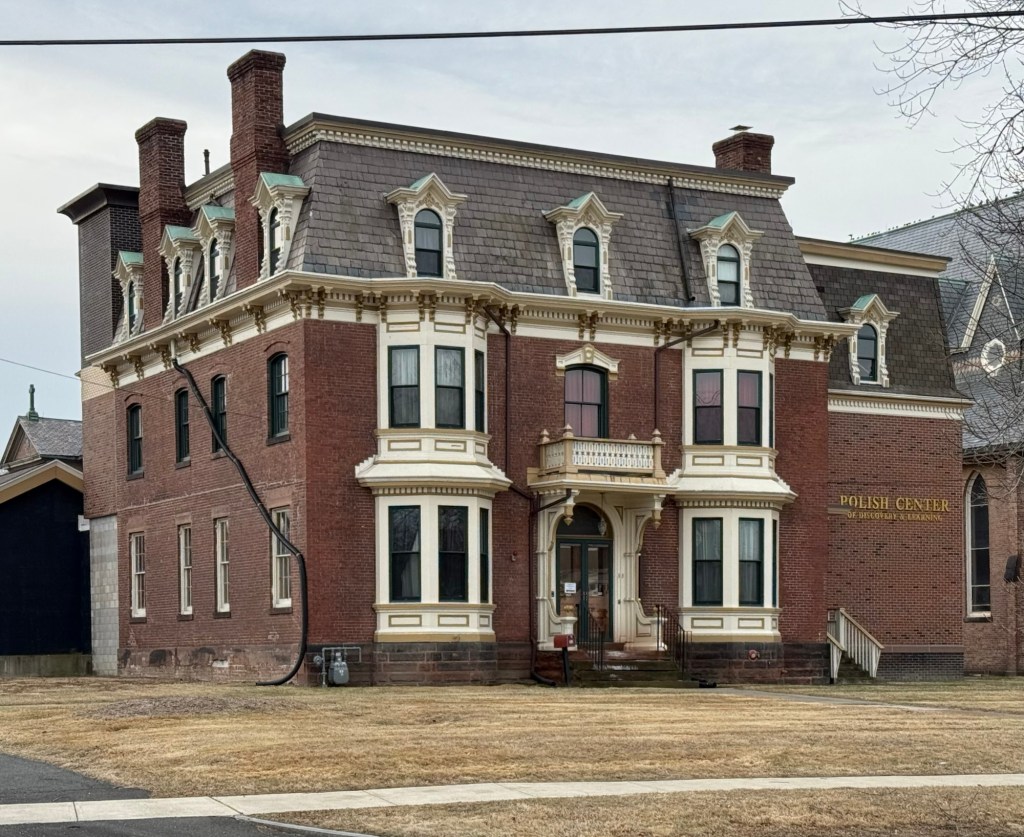
In 1857, the same year that the Diocese of Springfield built the Church of the Holy Name of Jesus in Chicopee, they also broke ground on an adjacent rectory, a residence for its priest. Like the church, the brick rectory was possibly designed by Irish-born architect, Patrick Keely. The Italianate style building originally was capped by a shallow hipped roof, but a renovation in 1871 added the mansard roof, two-story bays, and the portico at the entrance. The building served as the church rectory for over a century but eventually closed by 2011, and the future of the site was uncertain. Luckily, the Polish Center of Discovery and Learning have rented and occupied the rectory, serving as an important cultural institution educating and collecting to tell the story of Polish history in Chicopee and beyond. Fitting that many early-arriving Poles in the late 19th century to Chicopee attended this church before establishing their own.
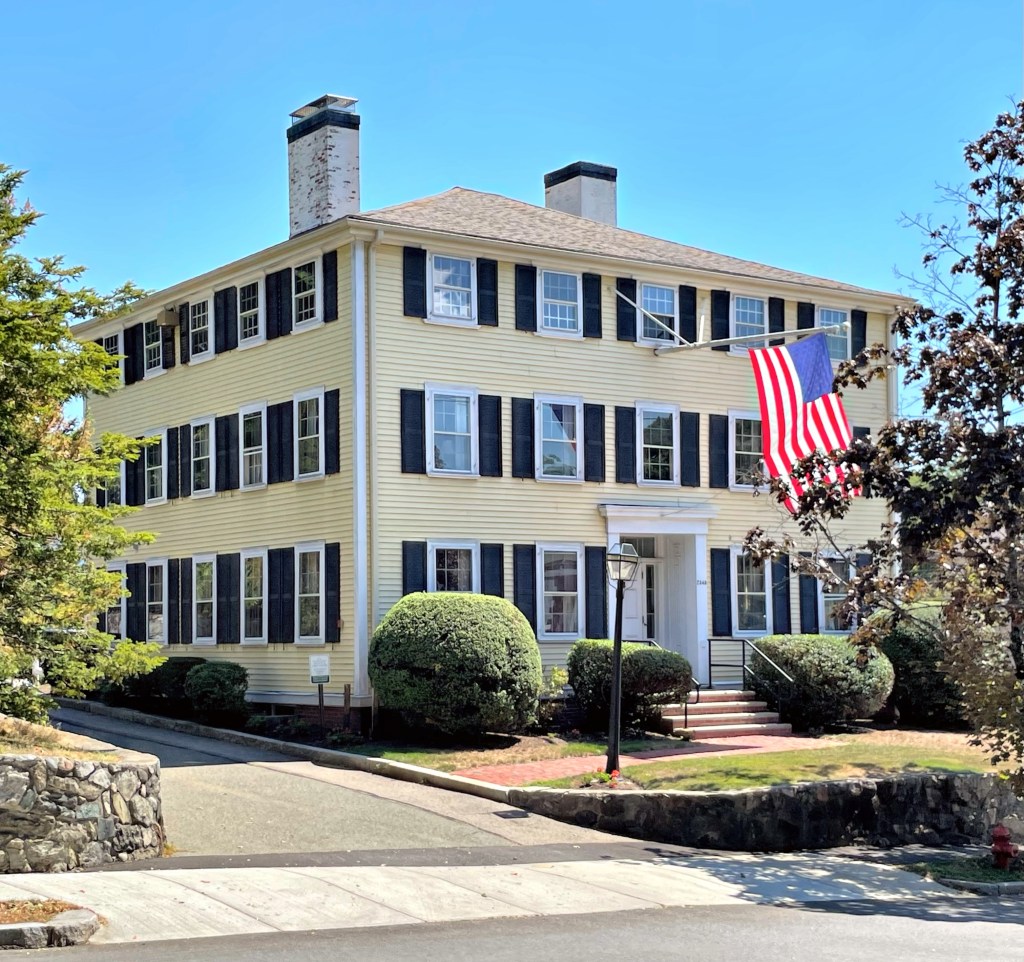
Thought to be the oldest extant house in Newton Lower Falls, this historic mansion has seen a lot of change over its nearly 300 years in the village. The house believed to have been built around 1755 by John Parker (1687-1761) for his son Ezra (b. 1731) after his marriage. William Hoogs, a ship carpenter from Boston, took ownership of the house in 1781 from his father-in-law (and boss), Aster Stoddard, who had bought it from the Parker family. William Hoogs was a sole-owner of a paper mill in the village and made a good name for himself. The house was likely modified during this period in the Federal style, with a third floor added. The home was possibly passed to his son, also William, who was written about in papers as fleeing town to Canada with the family maid, who was late in her pregnancy and their two-year-old child together. Hoogs had debtors looking for him. Hoogs had a change of heart and sent for his eight children to live with him in Quebec that same year. Sadly, the ship bringing them up sunk on Lake Champlain and all perished. By 1813, the property was purchased by Samuel Brown of Boston, a wealthy merchant who was a strong financial supporter of Saint Mary’s Church. By 1825, he officially bequeathed the property to Dr. Alfred Louis Baury (1764-1865) rector of Saint Mary’s Church. By 1917, the Lucy Jackson Chapter of the Daughters of the American Revolution operated it as a chapter house and a museum for antiques. In 1971, the Newton Redevelopment Authority bought the property and sold it to a developer for conversion into office space, it was rotated 90 degrees to face Concord Street at this time.
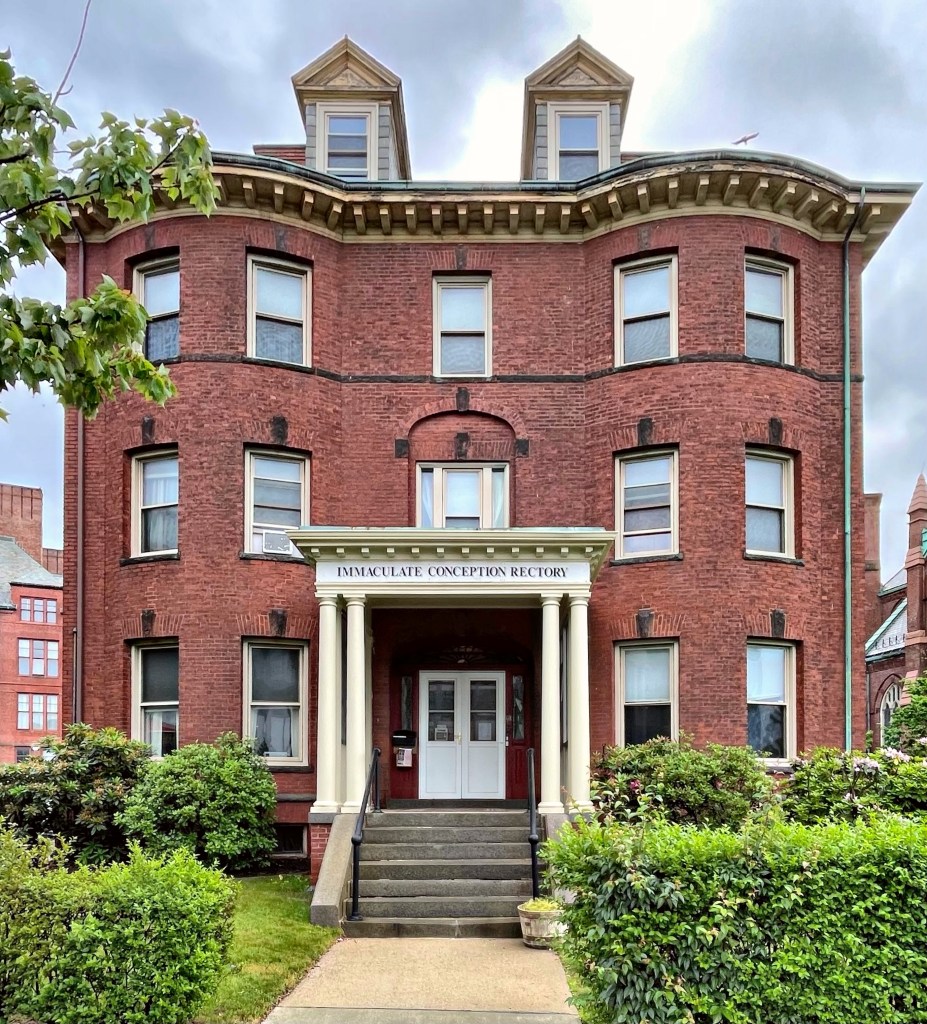
Next door to the Immaculate Conception Roman Catholic Church (last post) in Everett, you will find the church rectory, which completes the city block. Though very different in architectural style, the building is compatible with its more grand neighbor with the use of materials and setbacks. The rectory was built in 1904 in the Colonial Revival style, which was very popular at the time in New England. The three-story, hip-roofed building has bowed bays that flank a single-story porch with Doric columns that shelters a central entrance with fanlight and sidelights. Other Colonial-inspired details include the tripartite window set into the recessed arch above the porch, modillion cornices and splayed brick lintels with keystones. It is not clear who designed the rectory, but they did a great job at it! Rectories served as the residence of the priest of the church. Not bad digs if you ask me!
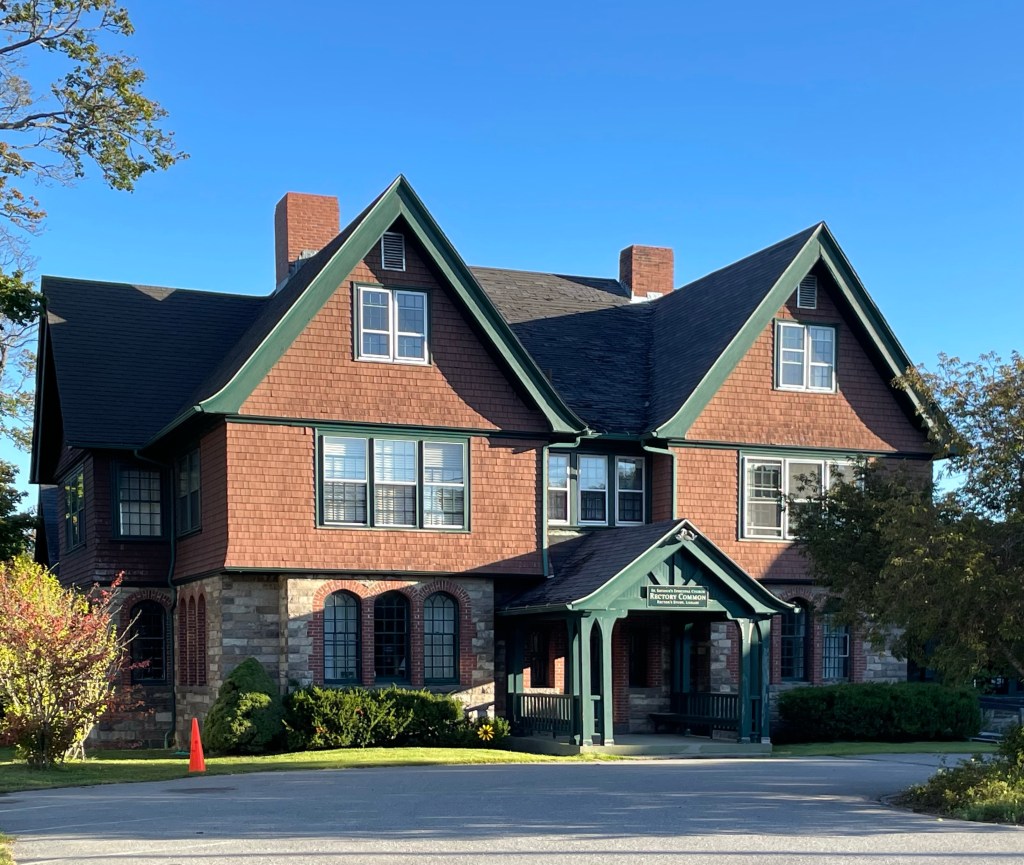
Standing adjacent to the beautiful St. Saviour’s Episcopal Church in Bar Harbor (last post), the church’s Rectory building fits very well into the landscape here. Built in 1898, the rectory is a two-and-a-half-story stone and frame home with a projecting entrance porch at the facade framed by a pair of steeply pitched gables. The Rectory was designed by Westray Ladd who grew up in the area, and worked in the office of Wheelwright & Haven in Boston, Massachusetts as well as with William Emerson and Peabody & Stearns before opening up a firm in Pennsylvania.
 Buildings of New England