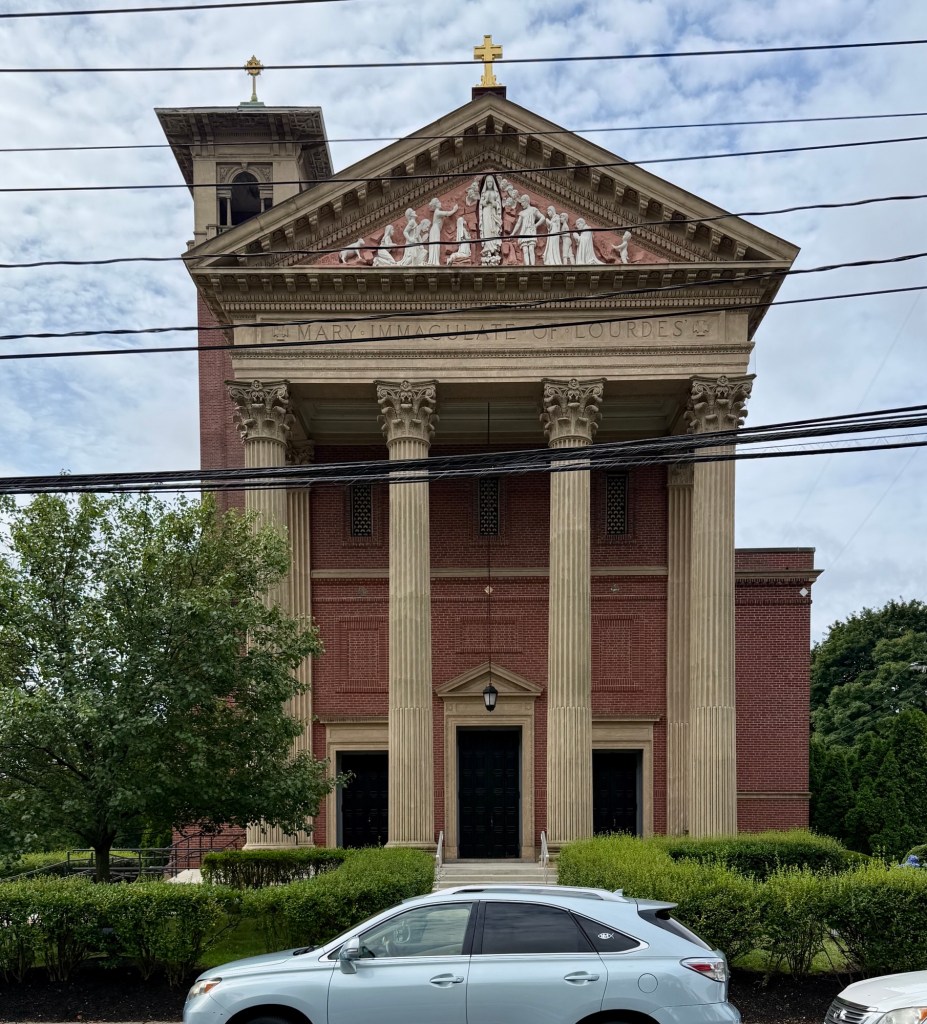
Mary Immaculate of Lourdes Catholic Church and Rectory // 1909 & 1938

At the turn of the 20th century, Newton’s Upper Falls village was an industrial center in the region, with factories employing hundreds of workers, primarily recent immigrants from Ireland and Italy. A Catholic parish in Newton was originally established in the 1840s and within decades, the Roman Catholic church here included between 1,000-1,200 Catholics as far as Needham and Newton Centre. Originally known as St. Mary’s Catholic Church, the former structure was located on Chestnut Street in the village, but was eventually outgrown by the congregation. Ecclesiastical architect from Boston, Edward T. P. Graham, drew plans for the new church, which is unlike the typical Neo-Gothic edifices built in the early 20th century around Boston. The blending of Classical and Renaissance Revival styles works well with the design of Mary Immaculate of Lourdes in Newton, with its monumental classical portico and tympanum with figures in a bas-relief in the Classical style and the Italian Renaissance campanile with balconies and hipped roof towering over the structure. Inside, the sanctuary is illuminated by stained glass windows by Franz Xaver Zettler of Munich, Germany, which were custom-made for the church. On an adjoining lot, Timorthy G. O’Connell, a prominent Boston-area ecclesiastical architect, designed the parish rectory in 1938 in the Colonial Revival style.

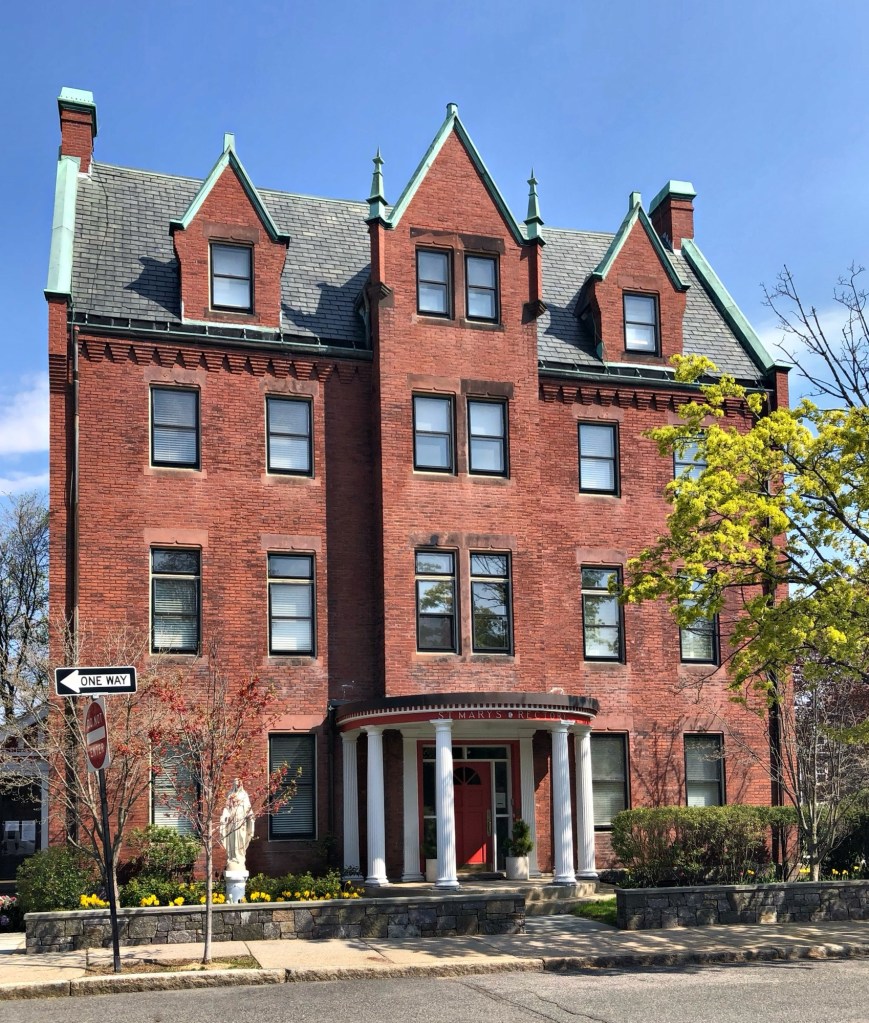
Saint Mary of the Assumption Rectory // 1882

Located adjacent to the St. Mary of the Assumption Catholic Church in Brookline Village, this handsome three-and-a-half-story brick structure has served as the Rectory of the congregation since it was built in 1882. Complimenting the Victorian Gothic style of the church next door, the Rectory was also designed by the firm of Peabody and Stearns, and was the home of the priest and other high-ranking clergy men. The rectory stands out architecturally for its panel brick corbelling at the eaves, steeply pitched slate roof and copper-coated gables.