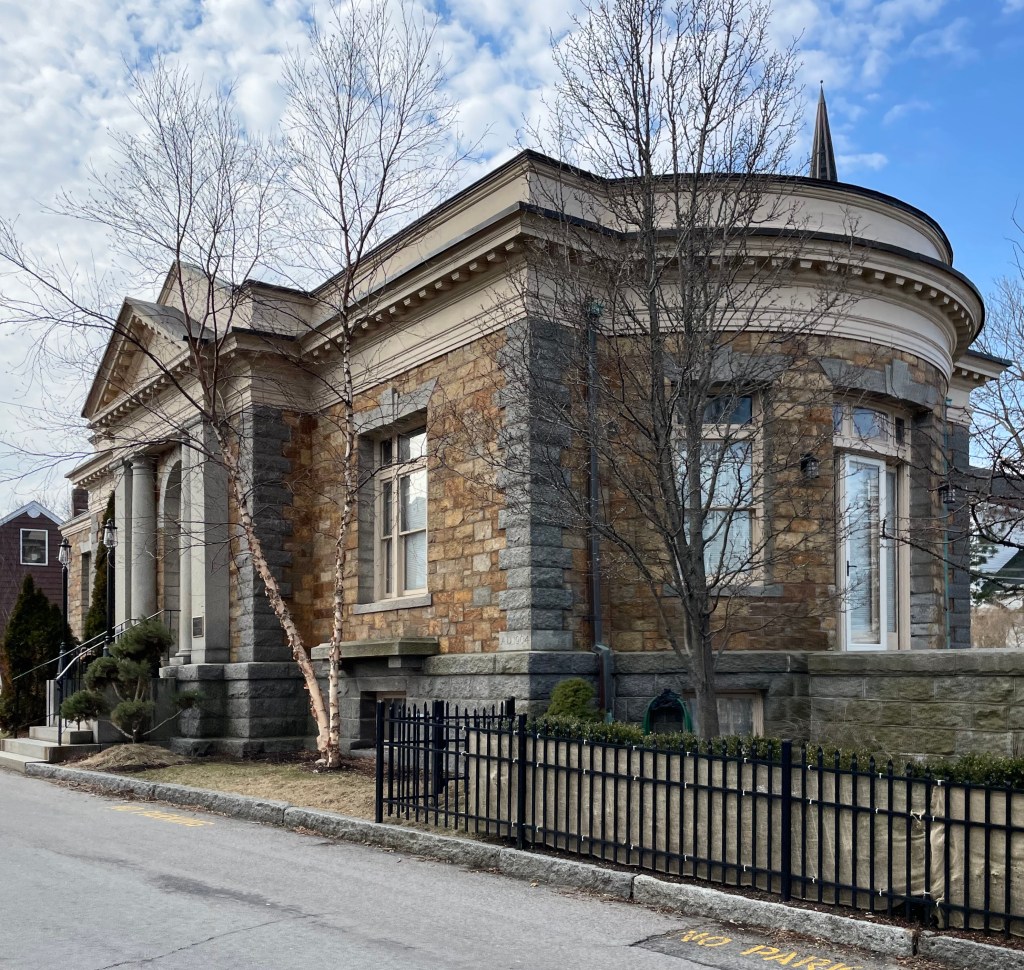
Rockport Carnegie Library // 1907

Rockport’s Town Hall opened in 1869. In the year that followed, a series of concerts and lectures—including one by Mark Twain—raised $250 to establish a town library. The town members accepted the donation and approved matching funds for the project in 1871, and a space was allocated in the town hall for the library. This space was quickly outgrown as the town continued to grow, and the townspeople clamored for more books. In the early 1900s, members of the town began negotiating with Andrew Carnegie, who was giving libraries to towns that could not afford them. In 1903, a town meeting accepted Carnegie’s offer to provide $10,000 to build a free public library building for Rockport and the town acquired a lot for the new building. Rockport’s Carnegie Library was built in 1907. The structure is built of locally quarried granite with Classical Revival detailing. The building functioned as a library until the fall of 1993, when additional space was needed and the town converted an old school to serve as the new building. The old Carnegie Library in Rockport was converted to a private home.
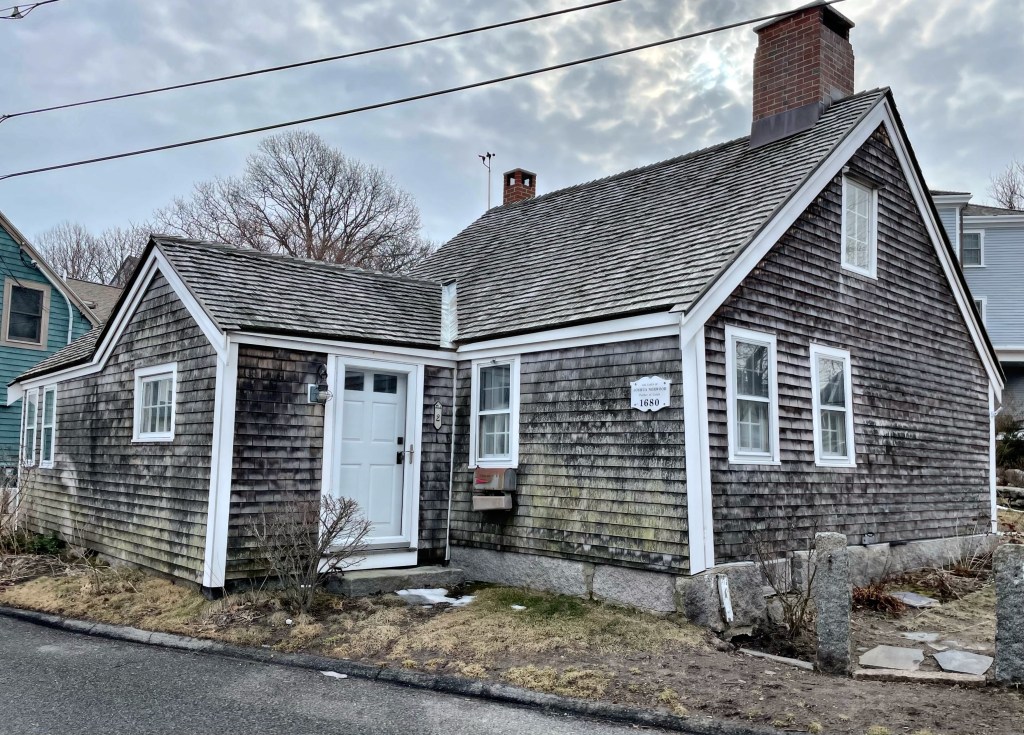
Joshua Norwood Cabin // c.1680

This old, leaning home sits just outside downtown Rockport and is said to be the oldest house in Rockport. The plaque on the house says it was built in 1680 by Joshua Norwood, the son of Caleb. Joshua Norwood (1682-1775) was born in Gloucester nearly 100 years before the United States was a country, but the plaque on the house means the home was built two years before Joshua was born. I would estimate the home was built in the early-mid 1700s. Joshua married Elizabeth Andrews and they had 16 children. The family apparently resided in the northern part of modern-day Rockport, in this small home for some years until it was moved by wooden barge to the current site, when Sandy Bay (downtown Rockport) saw a huge population surge with the harbor in the early 19th century. The tiny half-cape home was added onto once with the entry room at the front, but besides that, it looks much like it would have hundreds of years ago. There are a lot of mysteries about this home, so if anyone knows more, please share!

Whitman House // c.1870

In 1870, the Annisquam Cotton Mill in Rockport, Massachusetts was sold at auction and acquired by a group of local investors and businessmen. One of those men was G. P. Whitman, who served as a local agent for the reorganized firm. Whitman built this home just a short walk to the mill, which stands prominently in the village. The home is a great example of the Stick style, using some Italianate forms and detailing. The Annisquam Mill saw less than ideal revenue as in 1877, it was announced that the workers would get a cut in pay to avoid closing the mill. G. P. Whitman realized the threat of fire to woolen mills, and operated a fire station nearby. Sadly, in 1883, a fire destroyed much of the mill, even with local fire companies doing their best. A portion of the mill and the old Whitman House stand as lasting remnants of the Annisquam Cotton Mill Company in Rockport.

Rev. David Jewett House // 1806

About the time that the First Congregational Church (featured previously) in Rockport, Mass. was built, the congregation began construction on a home for their pastor, David Jewett. The home was built in 1806 and sits right next to the old church. David Jewett (1773-1841) was born in Hollis, NH., and graduated from Dartmouth College in 1801. He was ordained pastor at the Congregational Church of Rockport on October 30, 1805, a position he held for more than 30 years The Federal style home features a central doorway with a fanlight above and it is flanked by pilasters topped with an entablature.

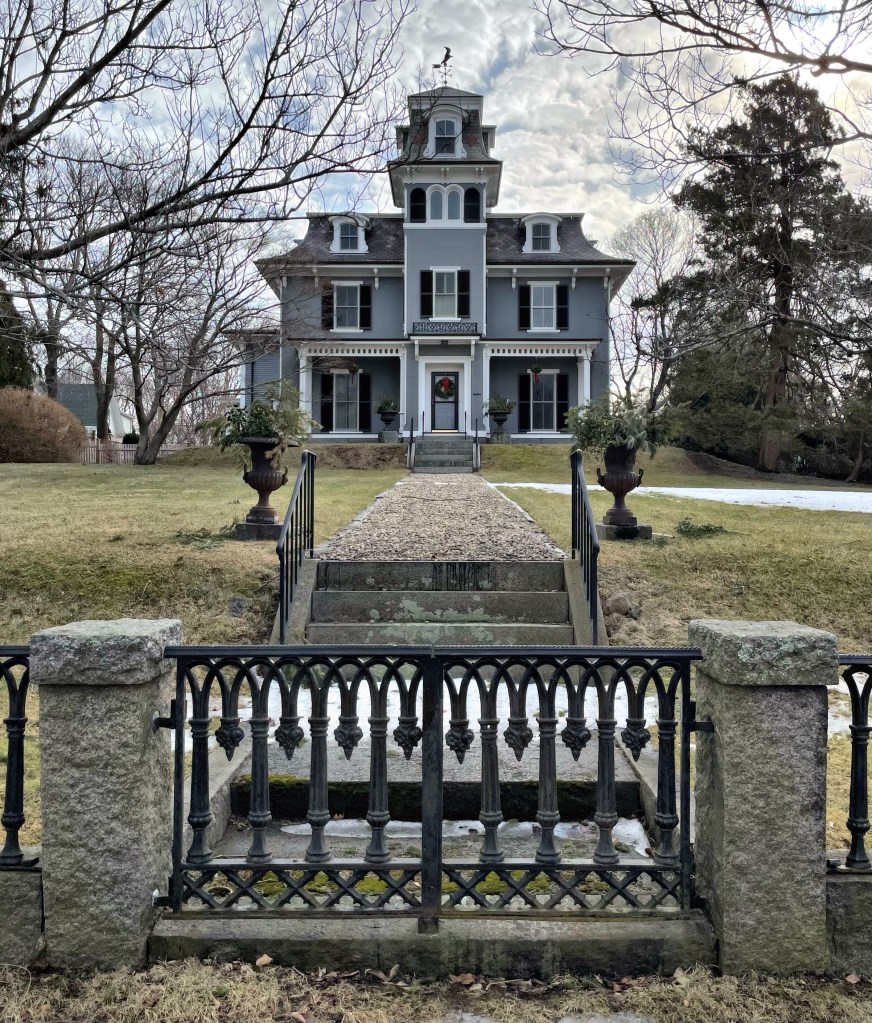
John D. Sanborn Mansion // c.1865

One of my absolute favorite homes in Rockport (there are many) is this mansion, which sits away from busy Bearskin Neck and the hustle-and-bustle of the village. The John Dearborn Sanborn Mansion was built around 1865 and is an elegant example of the Second Empire style of architecture in Rockport. John Sanborn was born in Hampton, NH, and eventually moved to present-day Rockport, marrying Laura Tarr of a prominent local family. Sanborn appears to have been a merchant and ship-owner. It appears that Sanborn was involved with the California Gold Rush, and is thought to have been one of the first men to send gold via the Pony Express, a mail service delivering messages, newspapers, and mail using relays of horse-mounted riders that operated from 1860 to 1861. It is possible that his investments with gold allowed Sanborn to build this stunning estate in Rockport, set behind an iron gate and perched upon a hill. I like to think that his wife Laura would sit in the tower and look towards the sea from the windows.

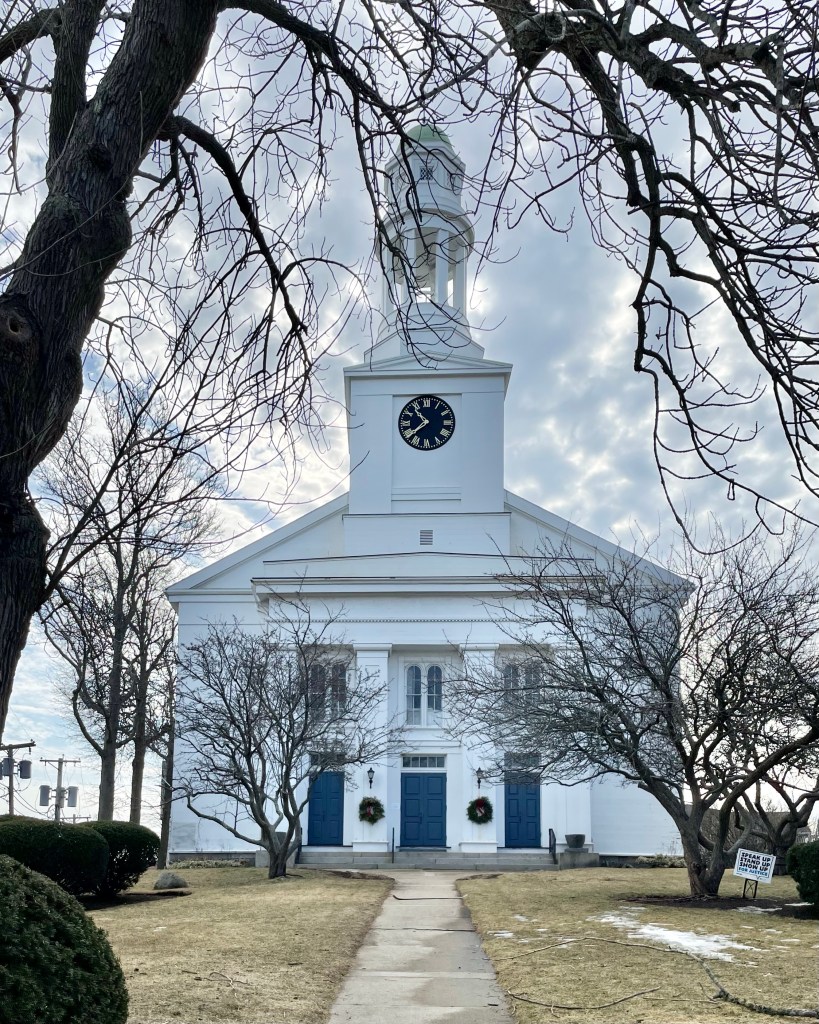
First Congregational Church of Rockport // 1805

Fondly referred to as the “Old Sloop” in town (a name conferred by local fishermen in the 1800s), the First Congregational Church of Rockport stands as one of the most prominent landmarks in the old village. The village of Sandy Bay (now downtown Rockport) had a growing population since the 1700s. Prior to 1755, churchgoers from Sandy Bay made the journey every Sunday by horse or foot in good weather to the parish in Annisquam or the First Parish in Gloucester, and in poor weather, met in a small log schoolhouse on this site. Eventually, a church building was erected in town, which was used until after the Revolutionary War. In 1805, a new meetinghouse was built where it stands today. In 1814, the British invaded Sandy Bay colony and residents rang the Old Sloop’s bell to sound the alarm. British forces fired a cannon at the bell to silence it, but hit the steeple instead. A replica cannonball can be seen to this day in the steeple as a nod to that historic event. In 1840, the people of Sandy Bay voted to establish the Town of Rockport. At that time, the meetinghouse was completely redecorated and the steeple enlarged. After the Civil War, the church was outgrown, and in 1872, the Old Sloop building was cut in half and separated by about twenty feet with an addition built in the middle. At that time the steeple was enlarged and strengthened to accommodate a new and heavier bell and the Town Clock. In 2015, the church began a campaign to replace the deteriorated steeple, which was rebuilt, faux cannonball and all!

Rockport Sail Loft // c.1840

Bearskin Neck in Rockport, Massachusetts is such a magical place, and a place I visit at least once a year. The narrow peninsula is lined by modest wooden buildings that were built when the village was a thriving fishing village. Fast forward to the mid-20th century, the neighborhood became an established artist colony, with many of these buildings converted to studios, shops, or restaurants. This charming old building was constructed by 1845 as a sail loft, where workers would lay out cloth and make sails for ships. The building was known to have been used as a sail loft up to about 1942. Like everything else on the Neck, the building has been faithfully restored and converted to commercial use by small business artisans, including Bearskin Neck Leathers. This is why historic preservation is so important. These buildings connect us to the past, but can be adaptively reused into modern uses.