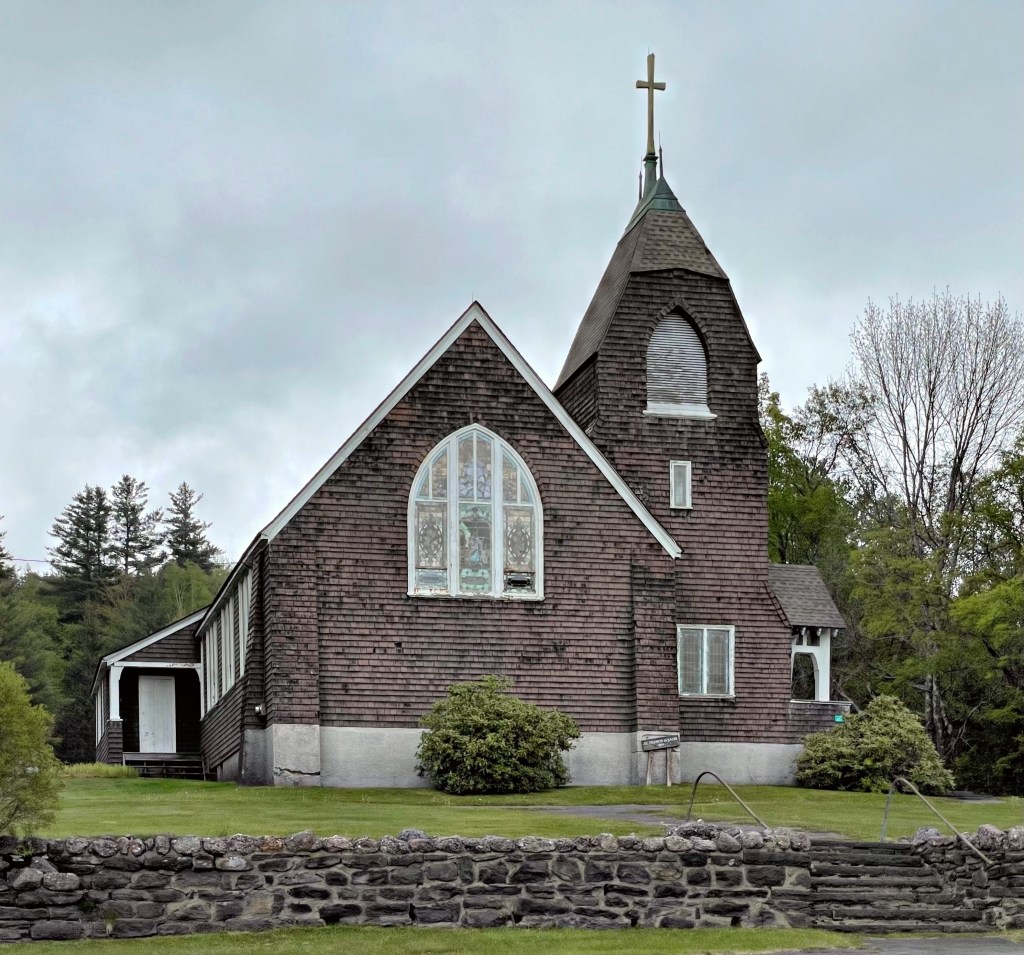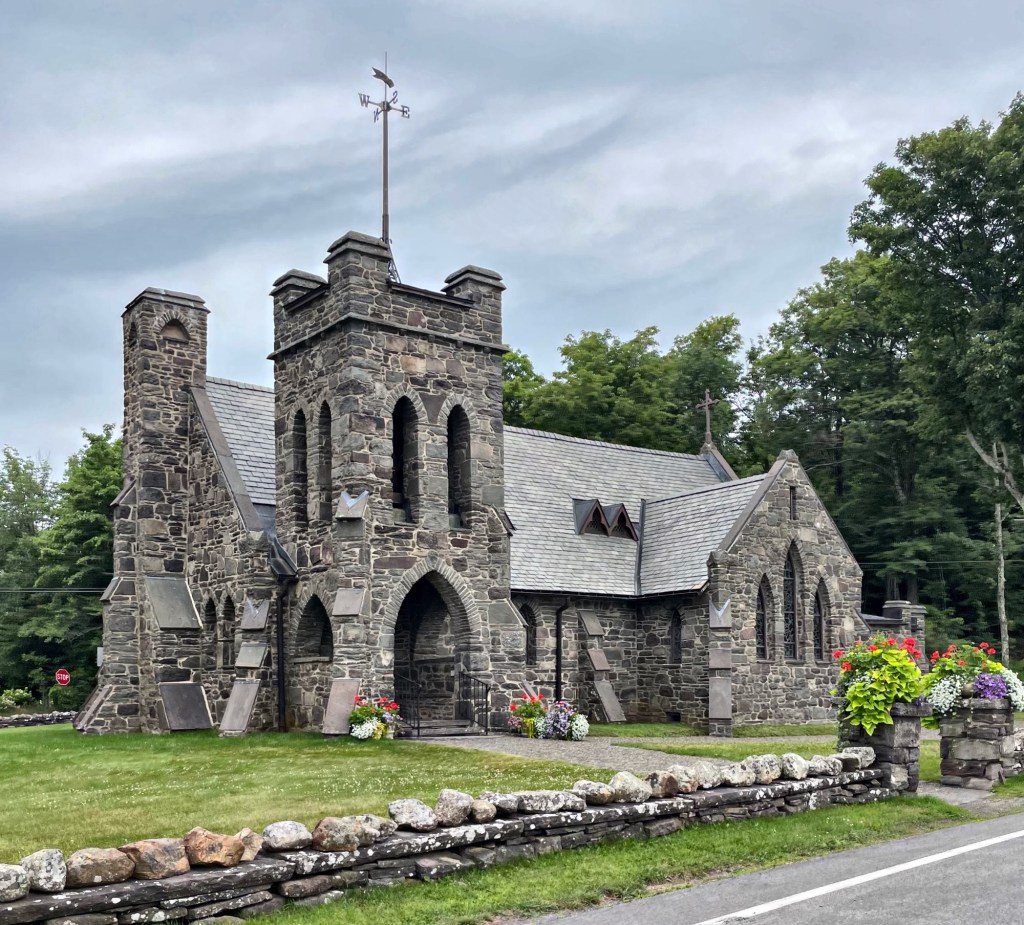
All Souls Church, Onteora Park // 1894

Onteora Park is one of many notable summer colonies in the Catskill Mountains that were developed in the late 19th and early 20th century. Onteora Park is located in Hunter, New York, and is comprised of a development of over 100 residential properties along with club buildings and the All Souls Church. The development of Onteora Park is largely credited to Ms. Candace (Thurber) Wheeler, one of America’s first woman interior and textile designers and co-founder of the Society of Decorative Art in New York City. In 1883, she and her wealthy brother, Francis Beattie Thurber, purchased land here with sweeping views of the Catskill Mountains, and built two summer houses for their respective families. By 1887, Candace Wheeler and her sister-in-law, Jeannette (Mrs. Francis B.) Thurber, decided to expand and develop their property as a vacation community of like-minded people dedicated to the arts. Years after the first cottages were built, Candace asked her son, Dunham Walker, an architect, to furnish designs for a community summer chapel. After the site had been secured, Canadian architect (and summer resident of Onteora) George Agnew Reid, was asked to put Mr. Wheeler’s plan into acceptable form and to supervise construction. The original wooden church was changed over to stone, all in a Victorian Gothic style. By 1910, the building was enlarged with the addition of the chancel and addition of transepts and possibly the square bell tower. At this time, the church was also electrified. Today, the church is lovingly maintained and open for the summer season and special ceremonies.
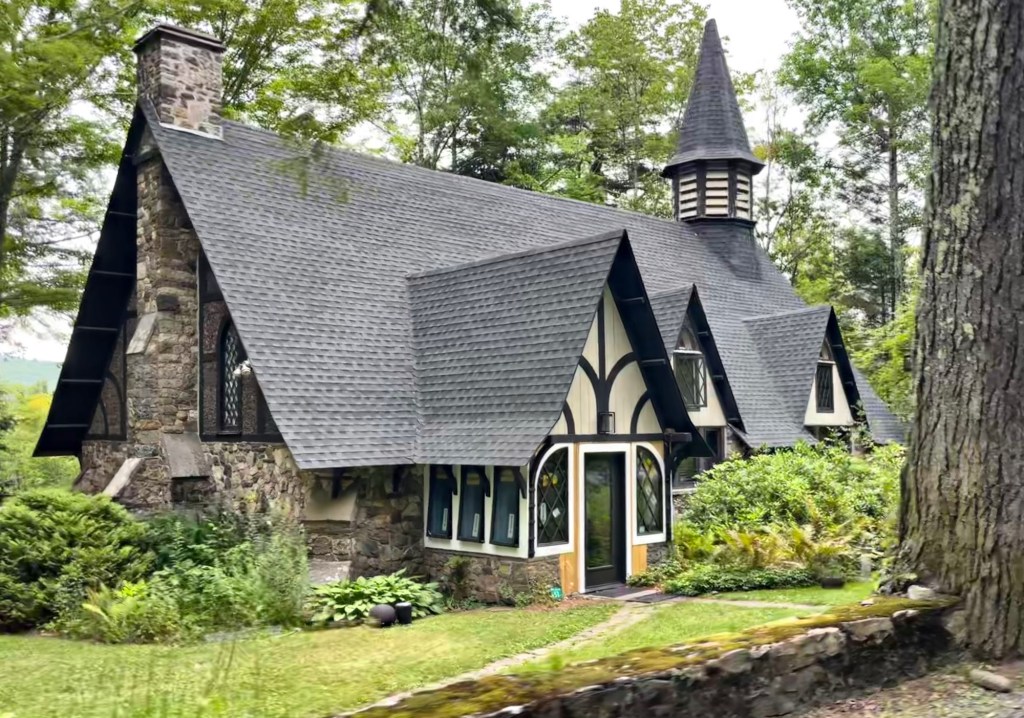
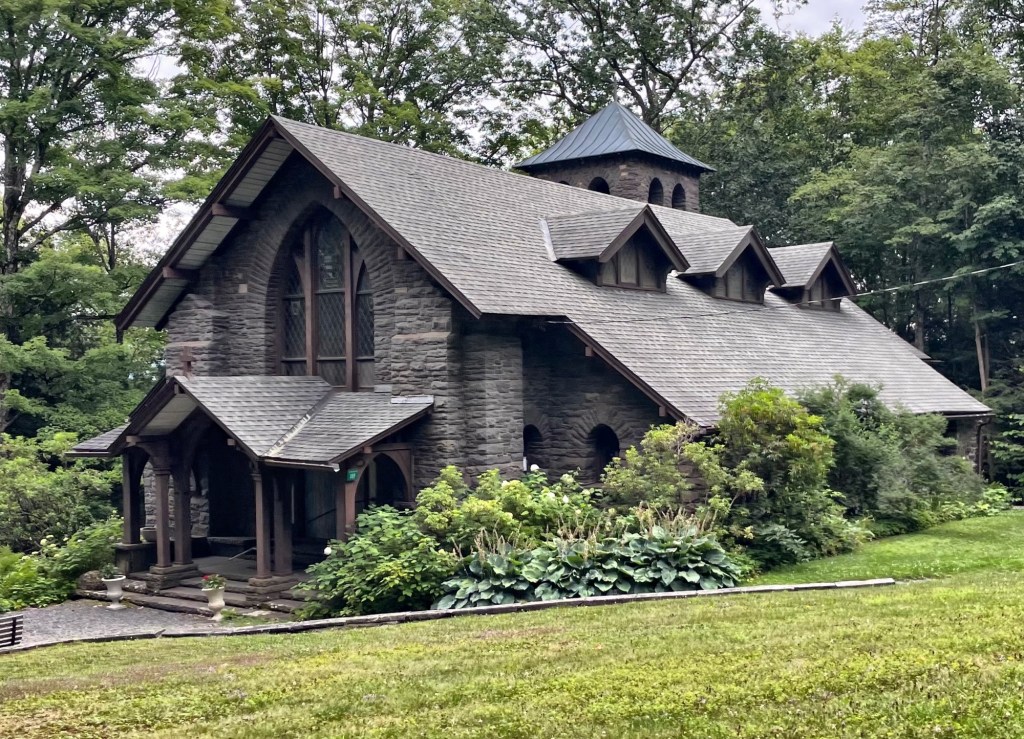
Union Chapel, Twilight Park // 1897

The Union Chapel in the summer colony of Twilight Park in the Catskill Mountains of New York, is one of the finest late Victorian chapels in the region. The edifice was built in 1897, a year following the erection of the All Angels Episcopal Church, in Twilight Park, and was designed to complement the rustic character of the surrounding cottages. The chapel was built as a non-denominational, or Union church, for summer residents of the colony who preferred an alternative to Episcopal sermons down the dirt road. The church was designed by Alice Hands, of the New York firm Gannon & Hands, the first all-female architectural firm in the United States. The chapel was eventually closed in 1970 and converted to a private residence, with some stained glass windows donated to the Episcopal Church in Twilight Park.

Memorial Church of All Angels, Twilight Park // 1896

The Memorial Church of All Angels is located in the center of the summer colony of Twilight Park, found in the town of Hunter in the Catskill Mountains. The founding of the church began shortly after the colony was established in 1888, when two years later, the Rev. H. M. Baum from Evanston, Pa., an early visitor to the Park, realized the need for an Episcopal Church, and funds were raised to build a small chapel, known as the St. Paul’s Church. The church was foreclosed upon in a matter of years. In 1895, church services were again reinvigorated when the Rev. Henry Yates Satterlee, the first bishop of Washington, then the Rector of Calvary Church, New York, had taken the cottage of his cousin, the artist Walter Satterlee, for his summer home. He set out to establish a summer chapel for Episcopalians in Twilight Park, and he hired architect Alexander Mackintosh, to furnish plans for the church. The church opened in 1896, and it would be expanded in 1909 with an addition and porch and again in 1915 with the belltower. The church opens every summer for services and is one of the finest Episcopal chapels in the Northeast.

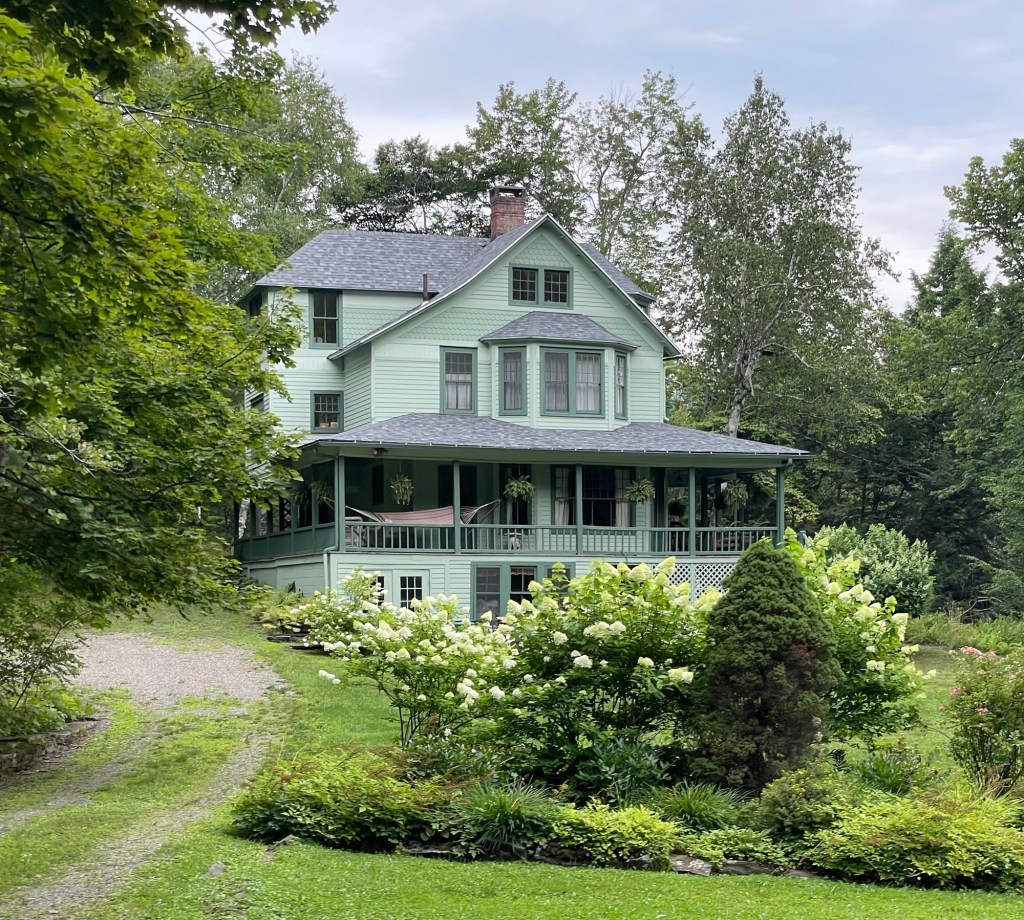
Four Winds Cottage // 1889

Tucked away in the town of Hunter in the Catskill Mountains of New York, the summer colony of Twilight Park has stood as an exclusive and private resort community established in the late 19th century. Twilight Park was born out of the Twilight Club, a Manhattan social club in the late-19th century and brought to life by founder, Charles F. Wingate. Mr. Wingate traveled to the mountaintop in 1887, and became enamored by its natural beauty. He arranged for the purchase of a former sheep meadow and led the construction of the first cluster of cottages in what would become a large community of over 100 summer homes. Cottages were laid out on roughly parallel roads at different elevations and on old connecting paths that later became roads with all lots built on ledges overlooking the Catskills. The first cottages were log cabins, and quickly followed by larger, Queen Anne style “cottages” as others invested in the development. This cottage, known as “Four Winds”, was built in 1889 during the first phase of development in Twilight Park, and it is notable for its varied siding, wrap-around porch, bay window, and elevated siting to provide better views of the landscape.

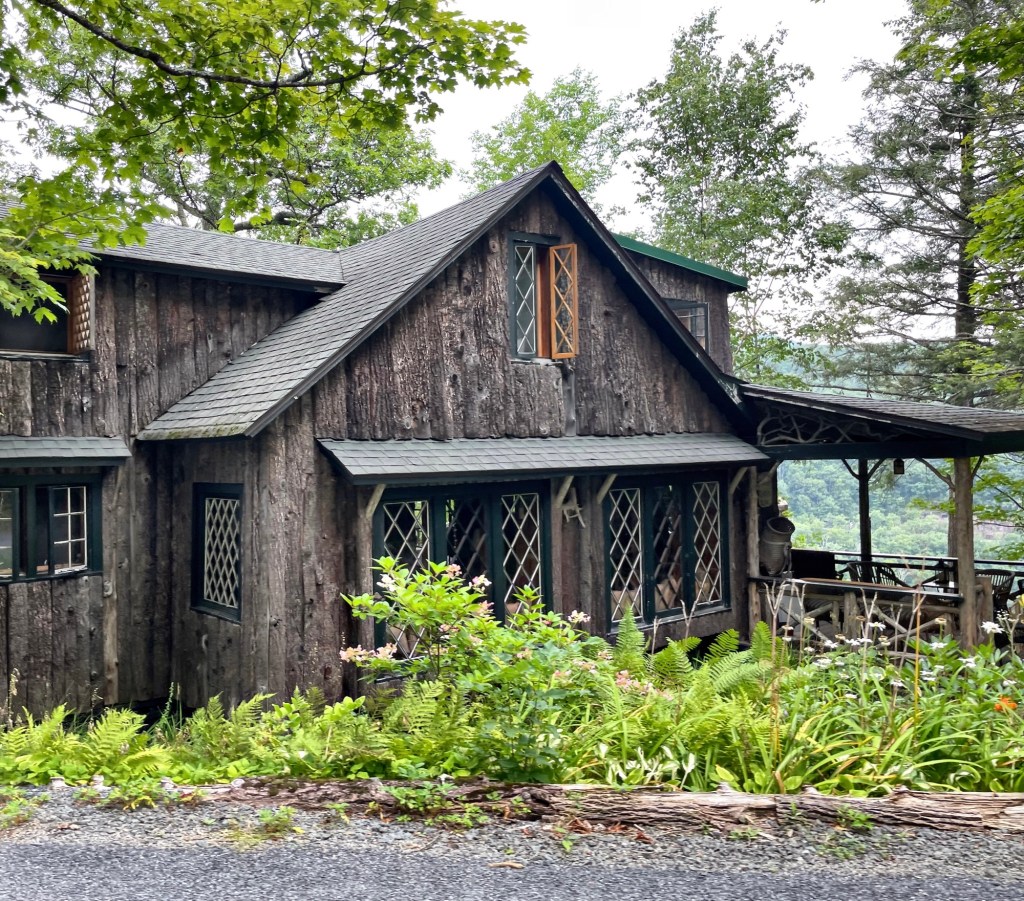
Cosy Cabin // 1887

Tucked away in the town of Hunter in the Catskill Mountains of New York, the summer colony of Twilight Park has stood as an exclusive and private resort community established in the late 19th century. Twilight Park was born out of the Twilight Club, a Manhattan social club in the late-19th century and brought to life by founder, Charles F. Wingate. Mr. Wingate traveled to the mountaintop in 1887, and became enamored by its natural beauty. He arranged for the purchase of a former sheep’s meadow and led the construction of the first cluster of cottages in what would become a large community of over 100 summer homes. Cottages were laid out on roughly parallel roads at different elevations and on old connecting paths that later became roads with all lots built on ledges overlooking the Catskills. The first six cottages were log cabins, with this example, likely in the first batch. From maps and a report on the area, this early cottage appears to have been named “Cosy Cabin” and was first occupied by Mr. Wingate, the founder of the Twilight Club and Twilight Park. The cottage is unique for its vertically laid logs still containing their bark, and the rustic porch balustrade and detailing.

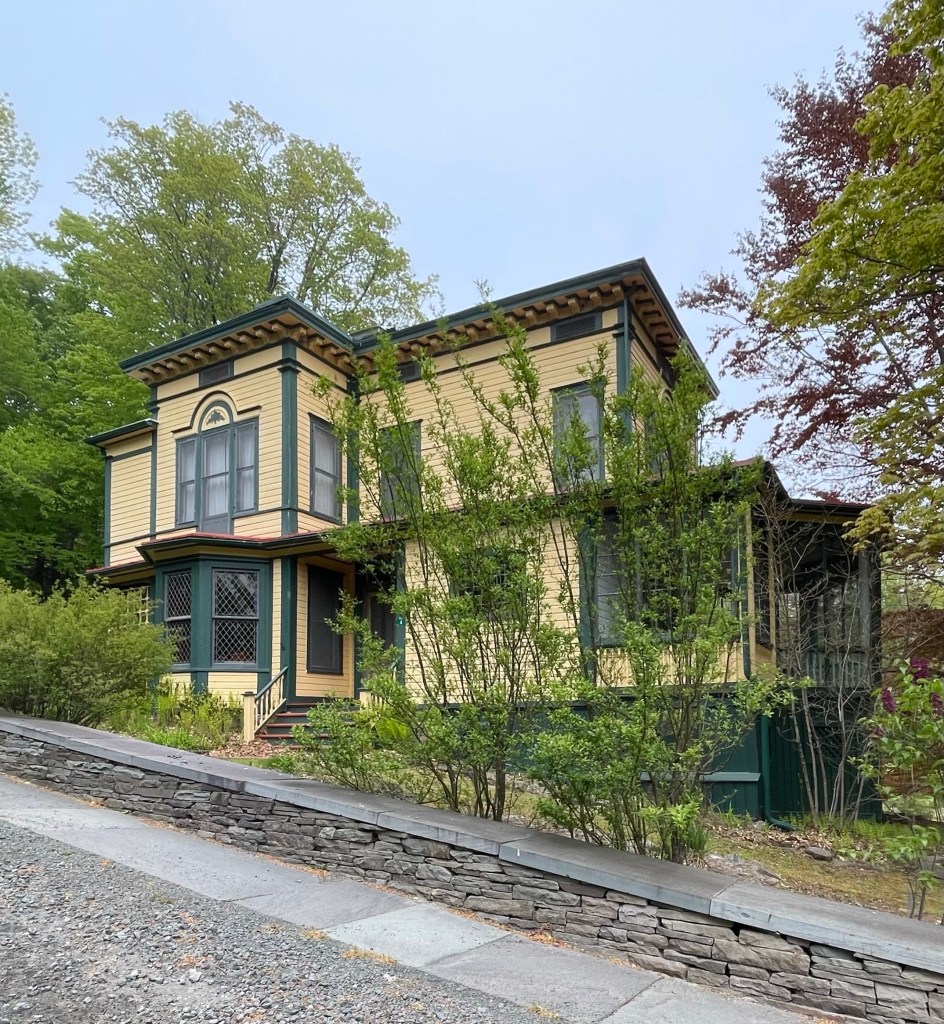
Kurth-Kliegel Cottage // 1896

Elka Park in Hunter, New York, is a really unique summer colony developed in the late 19th century as a country retreat for wealthy German-Americans to escape the woes of city life, primarily from New York City. Between 1890-1896, a total of 21 homes were built as summer cottages, 17 remain to this day. Almost all “cottages” were built with at least 4 bedrooms with space for servants, guests would lodge at the nearby Elka Park Clubhouse, which was destroyed by fire and replaced after WWII. The private community remains a secluded respite and relatively unknown to most. This cottage was built in 1896 for a tax commissioner Mr. Kurth, from plans by Hugo Kafka, a Czech-American architect with an office in New York City. Kafka also had a summer cottage at Elka Park. This cottage was purchased in the 1920s by Johann Kliegl, a German inventor and businessman who settled in New York, developing the “Klieglight”, a carbon arc lamp used heavily in filmmaking at the time. The late-Italianate style cottage remains well preserved to this day and even has a historically appropriate paint scheme!

St. Francis de Sales Church, Elka Park // 1912

Down the street from the Old Platte Clove Post Office in Elka Park, New York, I stumbled across this large, shingled church with few houses nearby. I had to investigate! In 1888 parish lines for the Catholic church were redrawn in the area necessitating a new church near the summer colony of Elka Park. By 1891, a small, shed-like church was built here. By 1911, the small house of worship had outgrown its usefulness and it was considered a blight compared to the high-style homes nearby. A local summer resident, Francis H. Lewis funded $5,000 of the $6,500 cost of the building, and local carpenter Arthur Showers, was commissioned to erect the building. Father Keefe had conveyed to the builder some remembrances he had of a small church in France, and wished for it to be designed that way. Using local building traditions, the church was constructed of local lumber with shingled siding. The building and adjacent cemetery remain active to this day.

Polly Crispell Cottage // c.1700

Another of Hurley’s stone houses is this beauty, known as the Polly Crispel Cottage. The house was built before the American Revolution c.1700 by an Anthony Crispell, a cordwainer. The home was likely a half cape in form with the door and two windows to its right. The other half was added at a lower level later on with the floors uneven, likely in 1735 where a construction date plaque read. The home also features a dutch door, which I wish we had more of in New England.

Half Moon Tavern – Elmendorf House // c.1710

When Pieter Ostrander settled in Hurley, NY with his family in the late 1600s. Being of Dutch descent, he (and other settlers) built their homes and barns in Dutch traditions. This lot along the village’s main street was acquired by Pieter and inherited by his son, Arent in about 1710, about the time the home is estimated to have been built. It was acquired by the Elmendorf Family by the early 19th century. At that time, the property operated as the Half Moon Tavern, after Petrus Elmendorf purchased it in 1804. The addition to the east (right) was built as a weaving room. The property remained in the Elmendorf family until 2008 (that’s almost 300 years in two families!) It was acquired by the new owner who has been restoring and researching the home ever since. He runs a blog documenting the property’s rich history.

The Colony Hotel // 1929

As Woodstock New York surged in popularity as a retreat for American and European artists, savvy businessmen from Manhattan could not help themselves but to envision ways to make a little extra money. Morris Newgold and his son, Gabriel of New York City who purchased the Overlook Mountain House in 1917, sought to expand their upstate lodging empire and built a secondary establishment in the village of Woodstock, the Colony Hotel. The Colony Hotel serve as a more modest establishment to the grand Overlook Mountain House atop Overlook Mountain and would be a staging area and a stopover point for guests coming up the Hudson River by boat or train. Guests would spend the night at the Colony and eat at its fine restaurant before making the arduous trip up the mountain to the Overlook Mountain House the next day. The Colony Hotel appears to have been Gabriel’s idea who prided himself on the new building being “pretentious” as it was much more substantial than the more modest, vernacular buildings around the village. Gerald Betz of nearby Kingston was the architect for the Colony Hotel. Construction began for the Colony Hotel in 1927, and it opened to guests the summer of 1929. Morris died in 1940 and Gabriel continued to manage the Colony until his son took over from 1945 until the 1960 but as event space for arts and antiques fairs. It became known as the Colony Arts Center. The Colony’s website goes on to state that the building sat empty almost entirely through the next forty years. It was recently restored by artists Alexia and Neil Howard who converted it to a music venue and beer garden, it is pretty amazing and a must-see for history buffs visiting Woodstock.