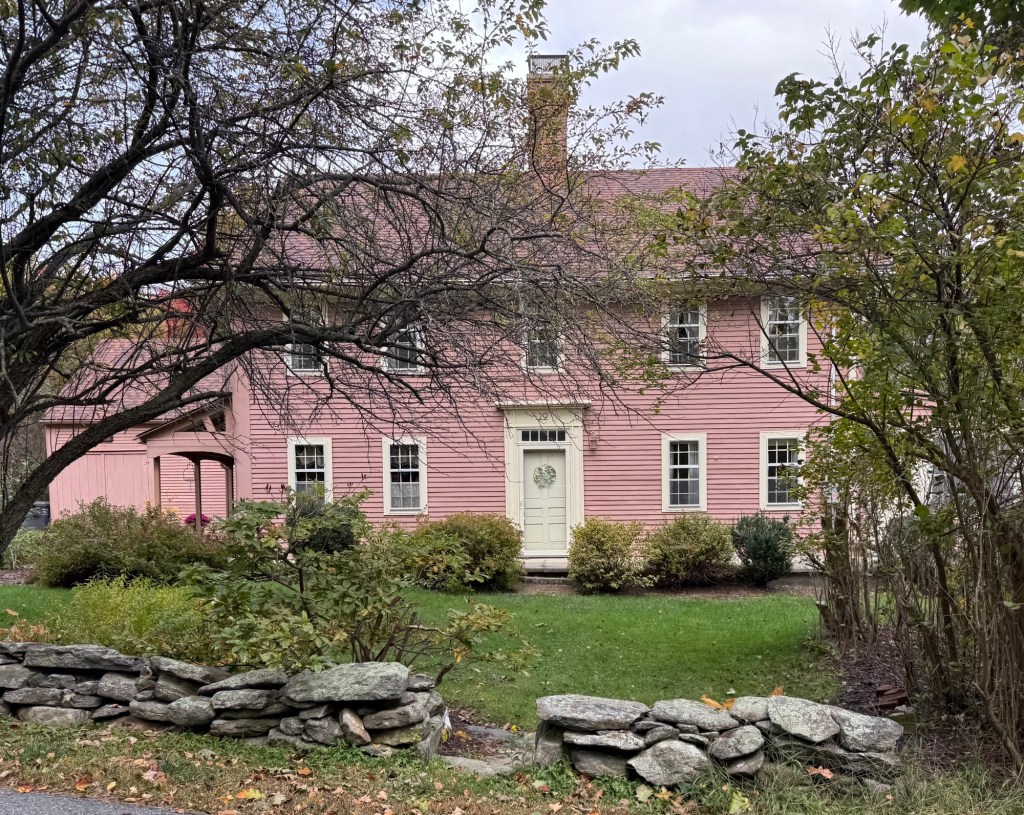
Tucked into the hills below Mount Wachusett, the Keyes Homestead in Princeton, Massachusetts, dates to the colonial era, and is part of a well-known local legend. Robert Keyes, his wife Martha, and their young family settled in present-day Princeton in 1751, and built this home to withstand rough New England winters. Within years of the family settling in Princeton, tragedy struck. Legend states that on April 14, 1755, Martha Keyes sent her two older daughters to collect sand from the banks of Wachusett Lake. Unbeknownst to the sisters, little Lucy, just four years old, followed them. She vanished into the woods and was never seen again, despite search parties combing the forest for years. Mr. Keyes was driven to near poverty in his efforts, selling portions of land and even petitioning the government for financial assistance in 1765. Mrs. Keyes is said to have been driven to near insanity, crying her daughter’s name into the woods for years after her disappearance. Two main theories emerged as to what happened to little Lucy. One grim legend says that the Keyes’ mountainside neighbor, Tilly Littlejohn murdered the young girl. According to a 1827 letter now in possession of Cornell University, a man in the New York area thought to be an elderly Tilly Littlejohn confessed on his deathbed to the brutal murder of the little girl whose father he had quarreled with. The man allegedly said that after the murder, he hid the child’s body in a hollowed-out log. The second theory is that a nearby Native American tribe found, captured and fostered the lost little girl. Reports say that many years later, two travelers came across a white woman living among a tribe near the Canadian border who knew little to no English, but recalled once living near what she called “Chusett Hill”. The old Keyes Homestead remains a well-preserved Colonial residence and tells the story of early heartbreak and the difficulty that was early settlement in New England.

