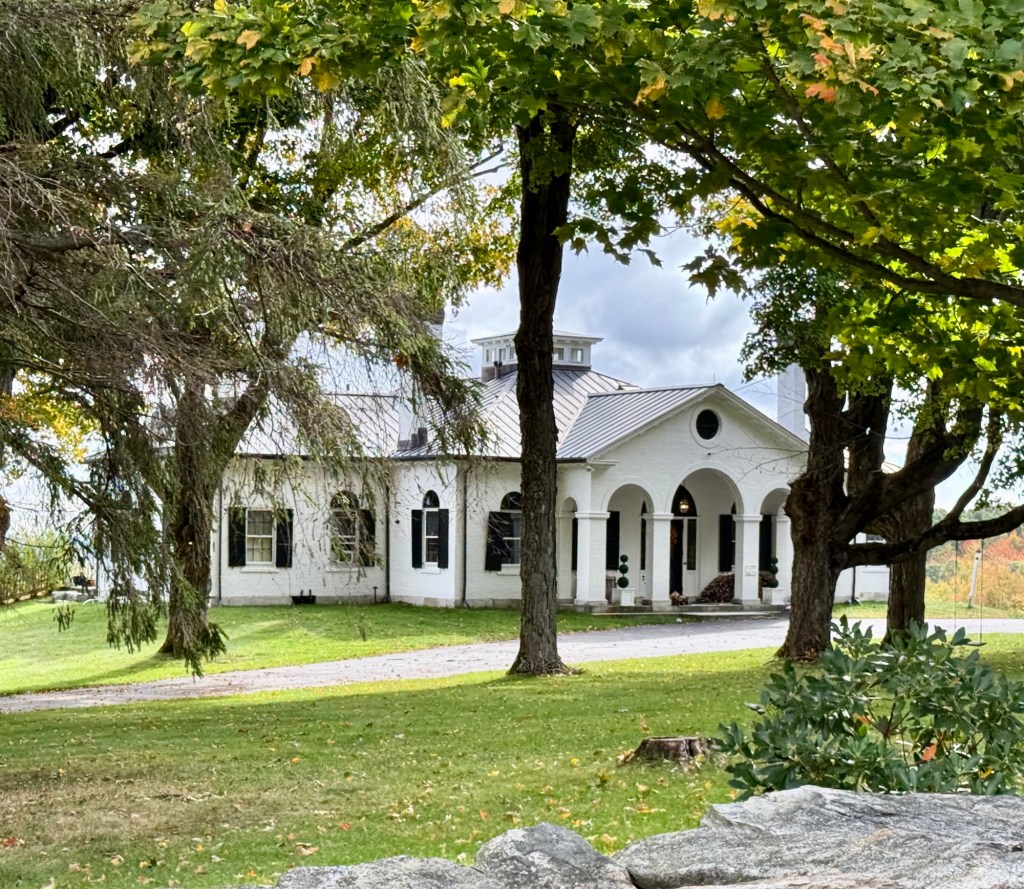
Ward Nicholas Boylston (1747-1828) was born as Ward Hallowell, in Jamaica Plain, Boston. At the age of 21, he took the name of his uncle, Nicholas Boylston, a wealthy Boston merchant who had no direct heir. A year later, he inherited his uncle’s estate and soon thereafter left for the next 27 years, taking up residence in London, and traveling across Europe and the Middle East. In 1800, Ward Nicholas Boylston inherited 3,000 acres of land from his uncle, Moses Gill, a wealthy merchant and acting Governor of Massachusetts from 1799 to 1800, when he died in office. Moses Gill was a slaveowner and when he moved to Princeton in 1767, town records indicate that he brought three “Negro servants” (slaves) with him. Interestingly, Gill thought enough of those whom he enslaved, as he bought expensive gravestones for their burial in the graveyard in Princeton, all three of which remain here to this day. They were: Nero, Flora, and Thomas. Ward Boylston spent summers at his uncle’s country estate until it was eventually demolished for his new Federal style country retreat, said to have been designed by Asher Benjamin, an architect then in the employ of Charles Bulfinch. The small brick villa is notable for its Palladian arches and walls inside lined with French Dufour wallpaper. Ward Nicholas Boylston’s name lives on through the names of Boylston Street in Boston named after him, as is the town of Boylston, Massachusetts, and Boylston Hall at Harvard University. He died in 1828 and was buried in the family tomb in Princeton. After his Nicholas’ widow, Alicia, died in 1843, the estate passed into the possession of Ward’s grandson, Dr. Ward Nicholas Boylston (1816-1870), who practiced medicine in Boston. Within a year after coming into his inheritance, the Dr. Boylston quit his career and settled at Boylston Villa, where he spent the remainder of his life and improved the estate with outbuildings.

