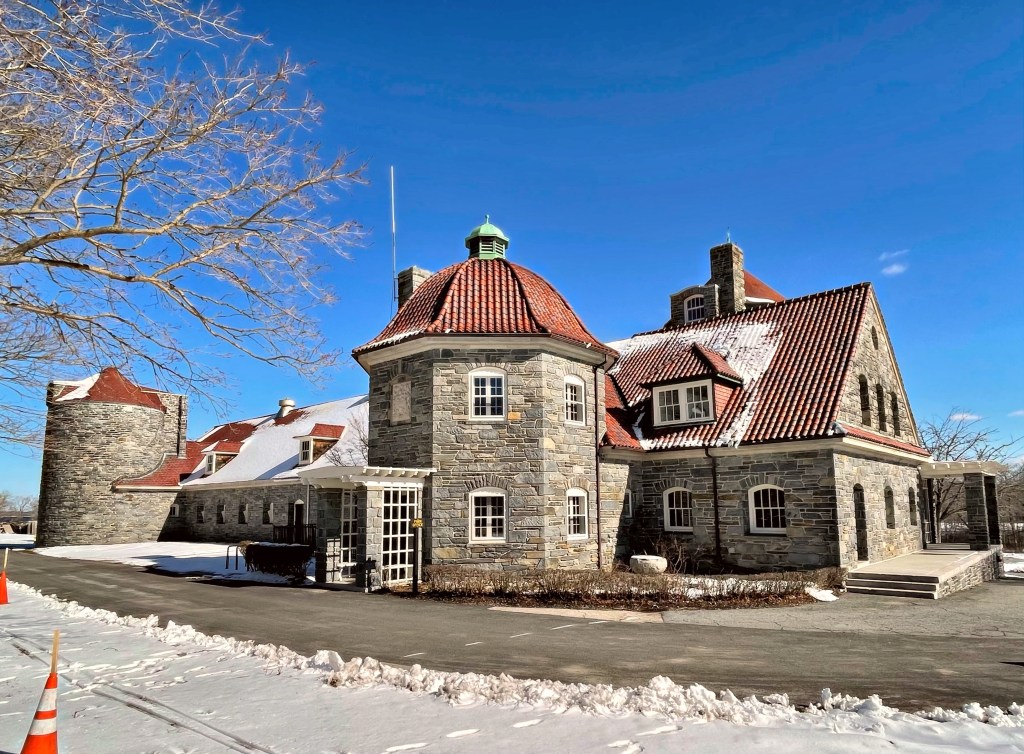
Colt Dairy Barn // 1917

Samuel Pomeroy Colt (1855-1921), a Bristol industrialist, purchased three farms on Poppasquash Neck, in Bristol, Rhode Island in 1905. One of the farms he aquired, Coggeshall Farm, was featured in my last post. On the newly consolidated farmland, just outside the hustle-and-bustle of Bristol’s downtown core, Colt built a large summer dwelling called ‘The Casino’. He lived at his family estate in town a majority of the year, but used ‘The Casino’ as a gentleman’s farm and a space to raise his prize-winning Jersey cattle and Berkshire sows. Colt wished that the citizens of town share his enjoyment of the property and had an open invitation carved onto the marble piers at the estate entrance which reads, “Private Property, Public Welcome”; access was freely allowed at the farm and shoreline. The two marble piers at the entrance to the estate are topped with massive bronze bulls modeled after two of Colt’s bulls, and were cast in Paris by Val d’Onse Company. Colt died in 1921. His will specified that Colt Farm not be sold and that it remain accessible to the public. Though he left a sum to operate the farm, it ran a deficit. The Casino was demolished in the 1960s as it was consistently destroyed by vandals, and became a public safety concern. The lasting cow barn was built in 1917, from designs by architect Wallis E. Howe. The barn utilized field stone from existing stone walls on the property and is capped with a red tile roof. The barn is unlike anything I have ever seen, and now is park offices. In 1965, after approval by Bristol voters, the State of Rhode Island purchased 466 acres of the Colt estate and created the largest public park in the Bristol County, known as Colt State Park.
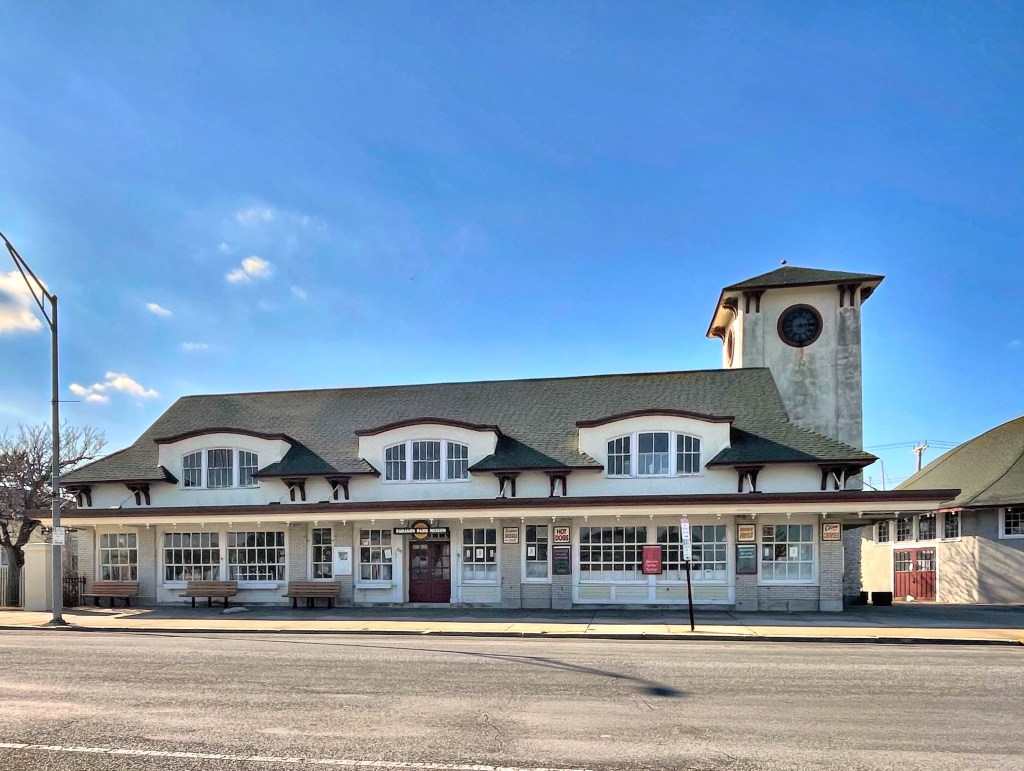
Nantasket Beach Waiting Room // 1903

The area of Nantasket Beach in Hull was in the late 19th century, a hotbed of taverns, thievery, and brothels. To counter this, the Metropolitan Park Commission of Greater Boston acquired about 25 acres at Nantasket, which included roughly one mile of shoreline extending north from Atlantic Hill in 1900. The initial appropriations provided for only minimal facilities, such as a bathhouse and a few incidental buildings, one of which was a waiting room for those arriving or departing from the new railroad station (since demolished) at the beach. The MPC hired the Olmsted Brothers landscape architects to design the paths and landscaping for the new park, and they worked with architects Stickney & Austin who designed many of the early buildings. Stickney & Austin designed this stucco-clad building with clock tower to provide shelter from the elements and summer sun for visitors of the reservation. The building is a blending of the Arts and Crafts and Spanish Revival styles, both common at the beginning of the 20th century. The building now houses the Paragon Park Museum, after they relocated the Paragon Park Carousel next door to this building.

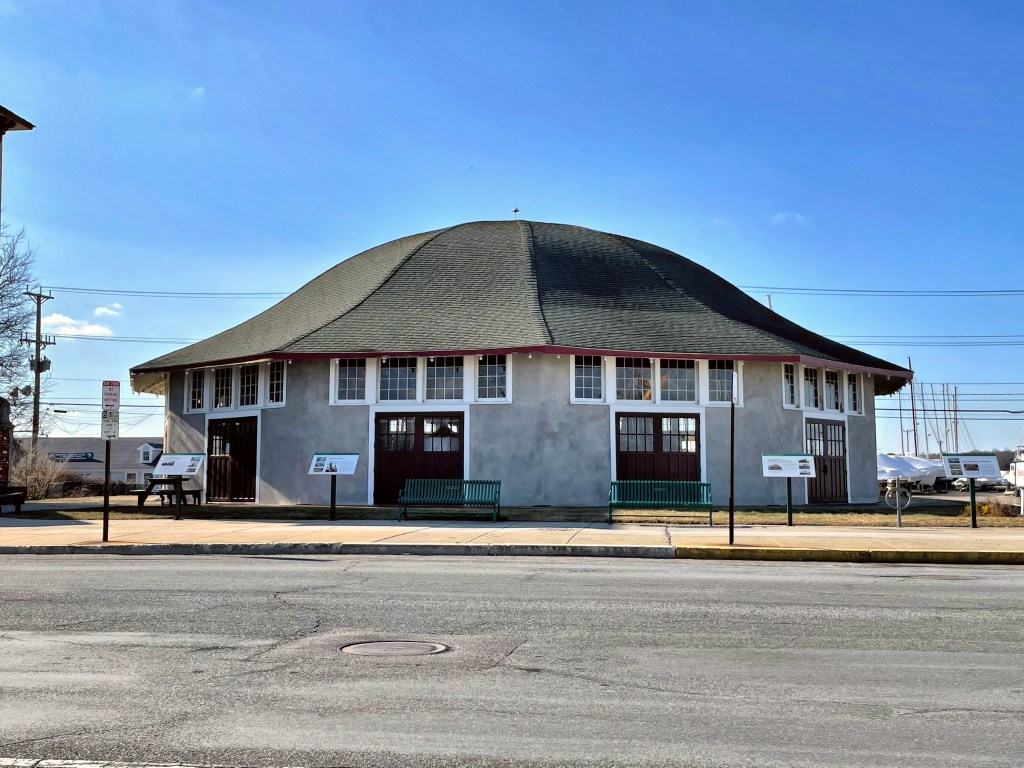
Paragon Park Carousel // 1928

The Paragon Park Carousel at Nantasket Beach in Hull, was built in 1928 for the Paragon Park Amusement Park (featured previously), and is possibly the oldest remaining feature of the old park. When the park was created, many wealthy summer residents clutched their pearls as their quiet, peaceful summers would soon be overrun by those looking for rides and pleasure. From its inception in 1905, Paragon Park placed a carousel at the hub of its amusement attractions, just south of the main entrance gate. While this was just the first of several carousels to be installed in the park, its inclusion in the earliest iteration of Paragon Park shows the importance of the form as an attraction. The current carousel was built in 1928 by the Philadelphia Toboggan Company for Paragon Park, the carousel featured two chariots pulled by two horses each and had four rows of horses (66 in all). One of only 18 four-row carousels ever produced by Philadelphia Toboggan Company it is some forty feet in diameter. Housed in a specially built twelve-sided stucco structure to protect the delicate motor and paint in poor weather. When Paragon Park was sold to developers in 1986, parts of the carousel ride were auctioned off, but most were purchased by a locally organized preservation committee. That same year, it was moved a short distance to its present location to save it from the wrecking ball. It is now operated by the Friends of the Paragon Carousel.

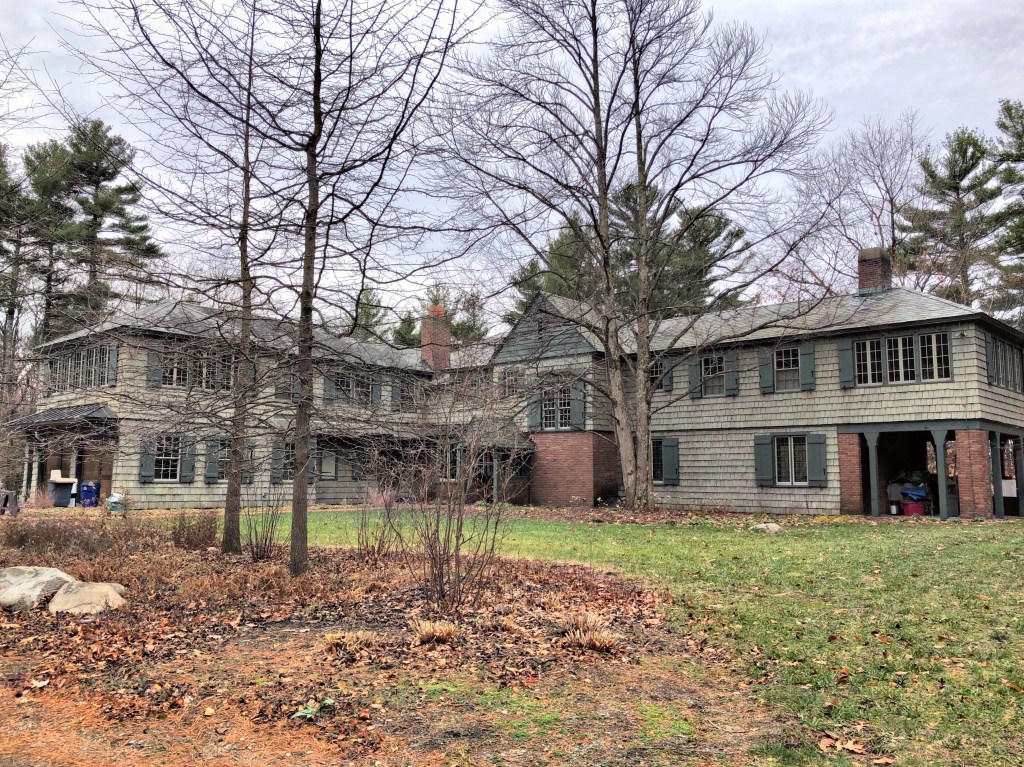
Marion Nichols Summer Home // 1935

This summer estate in Hollis, NH epitomizes the hidden architectural splendor that can be found off the beaten path in many small New England towns. Hollis began serving as a summer destination in the late 1880s and the trend continued until WWII. In many cases, old family homesteads became summer residences for descendants who had moved to the city but desired to return to their “roots” periodically. The Nichols Home is unique in Hollis as it was designed to be a summer retreat for a well-to-do widow and her considerable servant staff, combining all the comforts available with the advantages of a rural retreat. The design of the main house offers separate living spaces for the family and the servants, including a library, living room and dining room for the use of the family. The servants’ wing was designed to include a two-car garage, a butler’s pantry, a manual dumbwaiter connecting the basement and first floor used to transport fireplace wood and a receiving unit for the delivery of milk, groceries and other goods. Sleeping porches, capitalizing on the benefits of the fresh country air, are an integral component of the house design and are included in both the family and servant wings. The home was designed by the Boston architectural firm of Densmore, LeClear & Robbins, who were hired by the 52 year old widow’s children for their mothers’ summer home. It is said that Ms. Nichols never liked the home and decided to summer instead at the old family summer home down the street.

Wheeler House // 1914

The Wheeler House is a 1-1/2-story, Craftsman bungalow home in Hollis, New Hampshire, with near full-length shed dormers at the front and rear sloping roofs. This home was preceded on the site by several earlier buildings including an ice house and a garage. The garage burned in 1912 during a fire which also destroyed the adjacent store. After the fire, a temporary store was erected by Will Gates in 1914, the temporary store was bought by Almond A. Wheeler who remodeled it into the present house for his family. Wheeler occupied the house until his death in 1936 and it was later occupied by his widow, Ruth Hills Wheeler. Mrs. Wheeler died in 1979 and according to the terms of her will, the house became the property of the Hollis Historical Society, which it remains to this day.

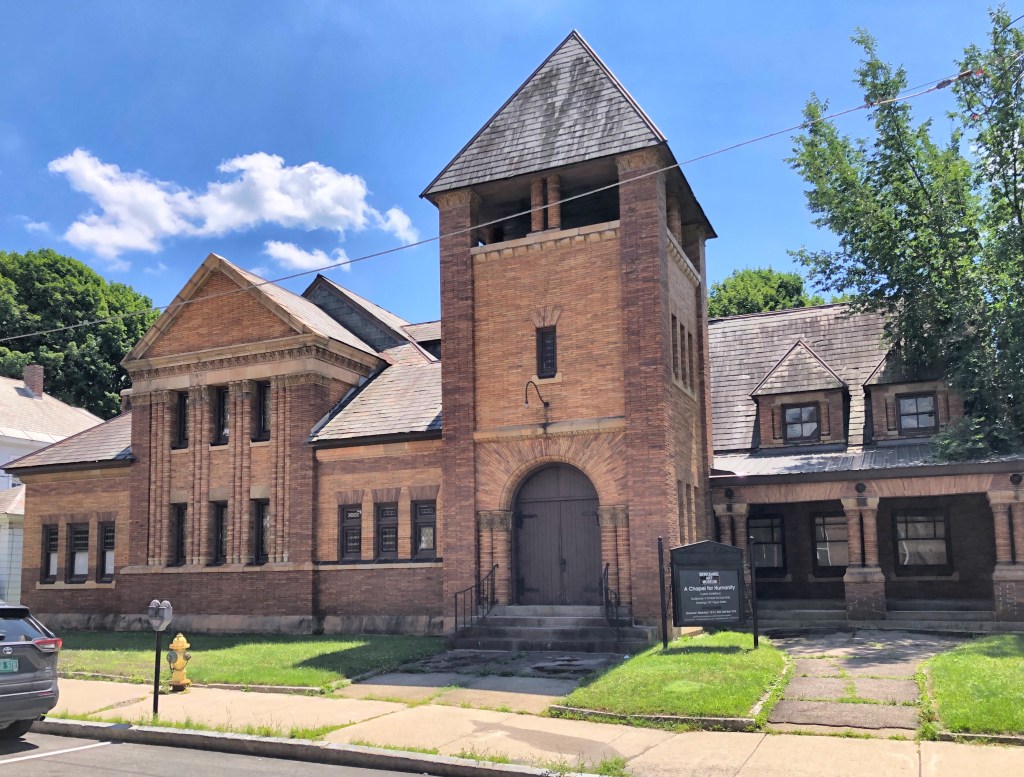
North Adams Universalist Church // 1893

Tucked away off Main Street in North Adams you’ll find this charming little church. The Universalists were organized in North Adams in 1842, restoring an existing church near the Hoosic River. The congregation chose a site for a new church in 1852, and erected a white wooden chapel. It is unclear if the church was outgrown or a fire destroyed it, but the Unitarian society voted to build this church for a cost of approximately $25,000 in 1892. Architect Henry Neill Wilson of Pittsfield drew the plans, and the firm of Porter and Harnam of North Adams constructed the church. Due to the declining population in town in the mid-20th century, the church struggled and was sold to a private owner. The building began to decay by the 1970s and was later sold in 1996 to Barbara and Eric Rudd to house artist Eric Rudd’s installation entitled “A Chapel for Humanity”. The building is currently used as the Berkshire Art Museum Annex.

Bayberry Cove Cottage // 1915

Perched atop a seaside cliff on a neck jutting into the Atlantic ocean, this large summer cottage exhibits the rugged, yet enchanting character of the Maine coast. The house is part of the Cape Arundel Summer Colony and is one of the last built as part of the original period of development. The home was designed by Henry Paston Clark, a Boston architect who previously built a home on Cape Arundel and had summered there for years. His most notable design here is St. Ann’s Church, built for the summer residents of the area. The Bayberry Cove Cottage was built in 1915 for James Harrison and his wife and employed the use of cedar shingles, stone, and slate, to blend in with the rugged plot of land.

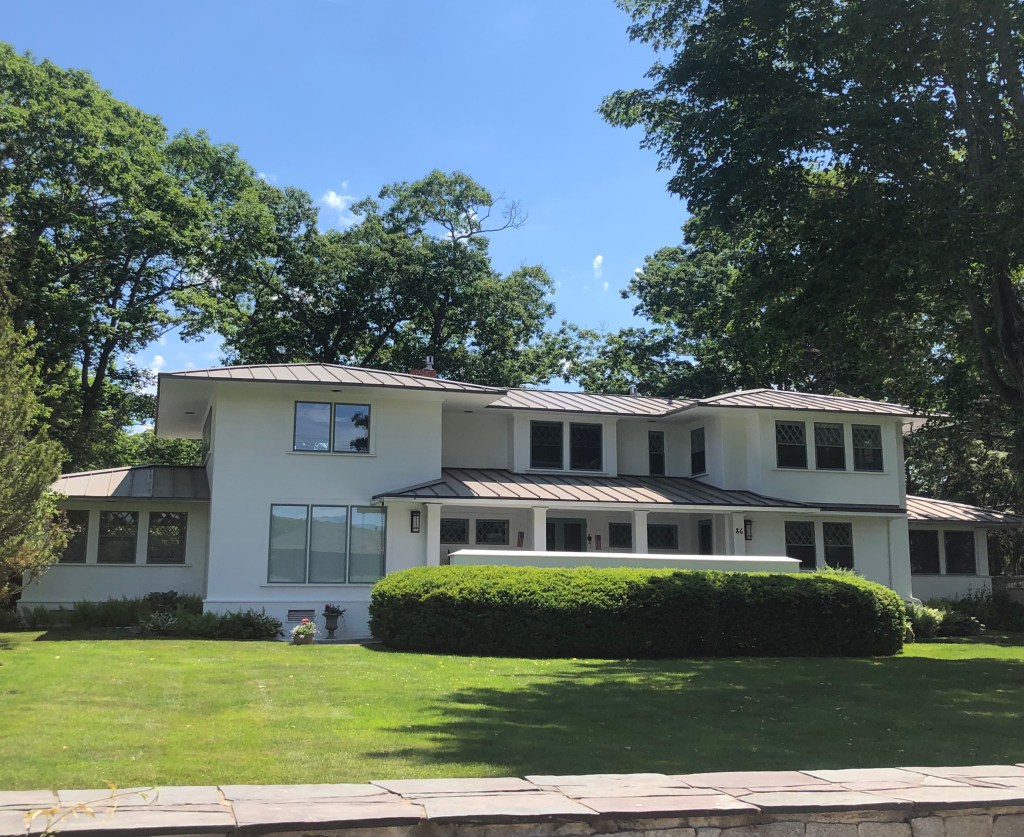
Westlook // 1905

One of a handful of Prairie style homes in Maine, the Abbott Graves House – named ‘Westlook‘ – of Kennebunkport, was designed by Graves himself and built in 1905. The two-story residence is of frame construction with a low-hipped metal roof (originally red tile) and three internal brick chimneys. The exterior is covered with a simulated stucco finish.

Born in Weymouth, Massachusetts in 1859, Graves began architectural studies at the Massachusetts Institute of Technology in 1867 but was forced to leave due to financial problems before completing the program. For a few years he supported himself by working in a florist’s establishment where he earned a reputation as an arranger of flowers for interior decoration. An amateur painter since early youth, he began in earnest to develop this talent, concentrating on floral still life. He was eventually able to support himself in a small Boston studio and in 1884 to 1887 studied in Paris. His work was exhibited in the Paris Salon in 1887 and received the first of five medals he was to be awarded by that illustrious institution. Returning to Boston in 1889, he opened his own school and established himself as a distinguished painter of floral scenes and genre works. He brought his family and some students to Kennebunkport for the first time in the summer of 1891 staying at one of the first hotels in that newly emerging resort community. Graves fell in love with the community spending more and more time there each year until eventually he became a year round resident. In 1905 he designed Westlook, as he named it, and resided there until his death in 1936.