Canterbury Shaker Trustee’s Office // 1831

The only brick building in the Canterbury Shaker Village, the Trustees’ Office, built in 1831, served as the office of the Lead Ministry and also housed a U.S. Post Office for the community beginning in October 1848. The building was made of bricks manufactured by a local family. The building was designed as the hub of the Canterbury Shaker’s considerable commercial enterprises. It housed only those Shakers who had the authority to conduct Village business, and they often hosted guests and clients who arrived from distant places, and met with townspeople and local officials to discuss civic matters impacting the community. Due to the community-facing nature of the building, the community spared no expense inside and out.

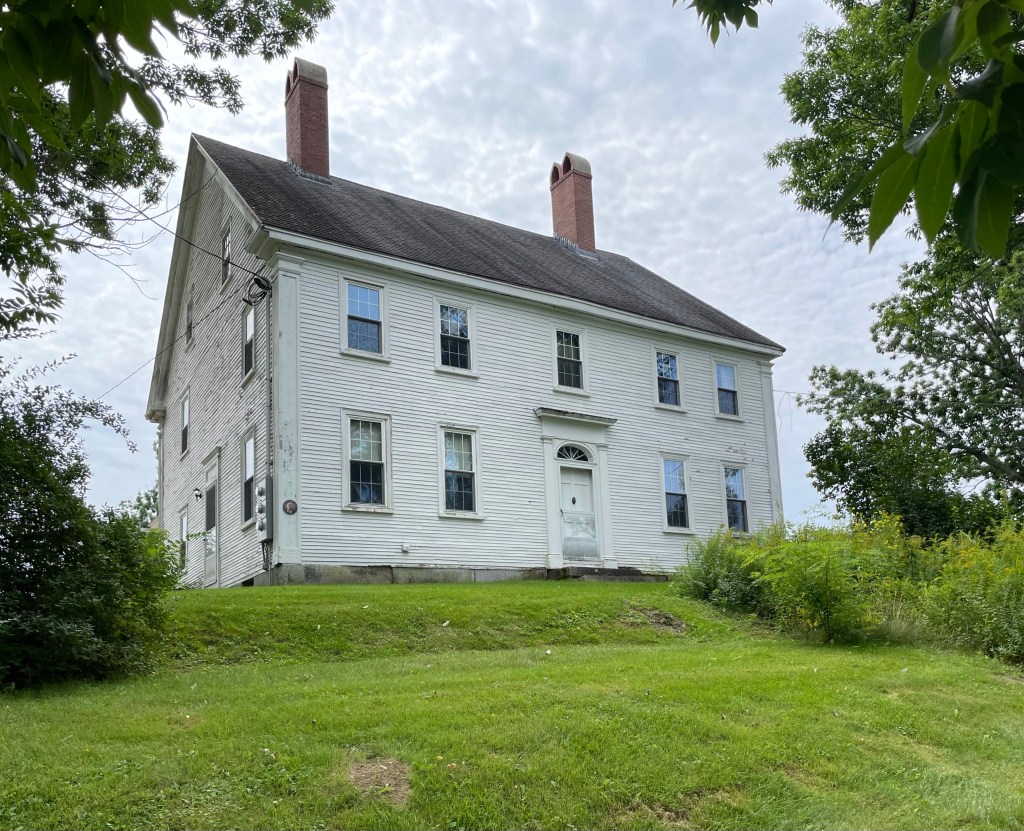
Canterbury Shaker Infirmary // 1811

Constructed in 1811 as a guest house for the Canterbury Shakers, this beautiful structure follows the Georgian, center-hall residential floor plan constructed in the Federal period. Shaker records indicate that in 1849, the building was converted to an infirmary and the next year, the roof was tinned and the portico over the front door, called a “jet” by the Shakers, was added. After 1892, the first floor housed the nurses’ quarters, pharmacy, nurses’ sitting room and office and the dentist’s office. Upstairs, the patients’ rooms were fitted with lavatories and running water. The attic was used to store medical supplies and as a mortuary. All for the growing Shaker community here. Following the death of the last nurse in 1937, the building ceased to be used as an infirmary and was used as living quarters for sisters.

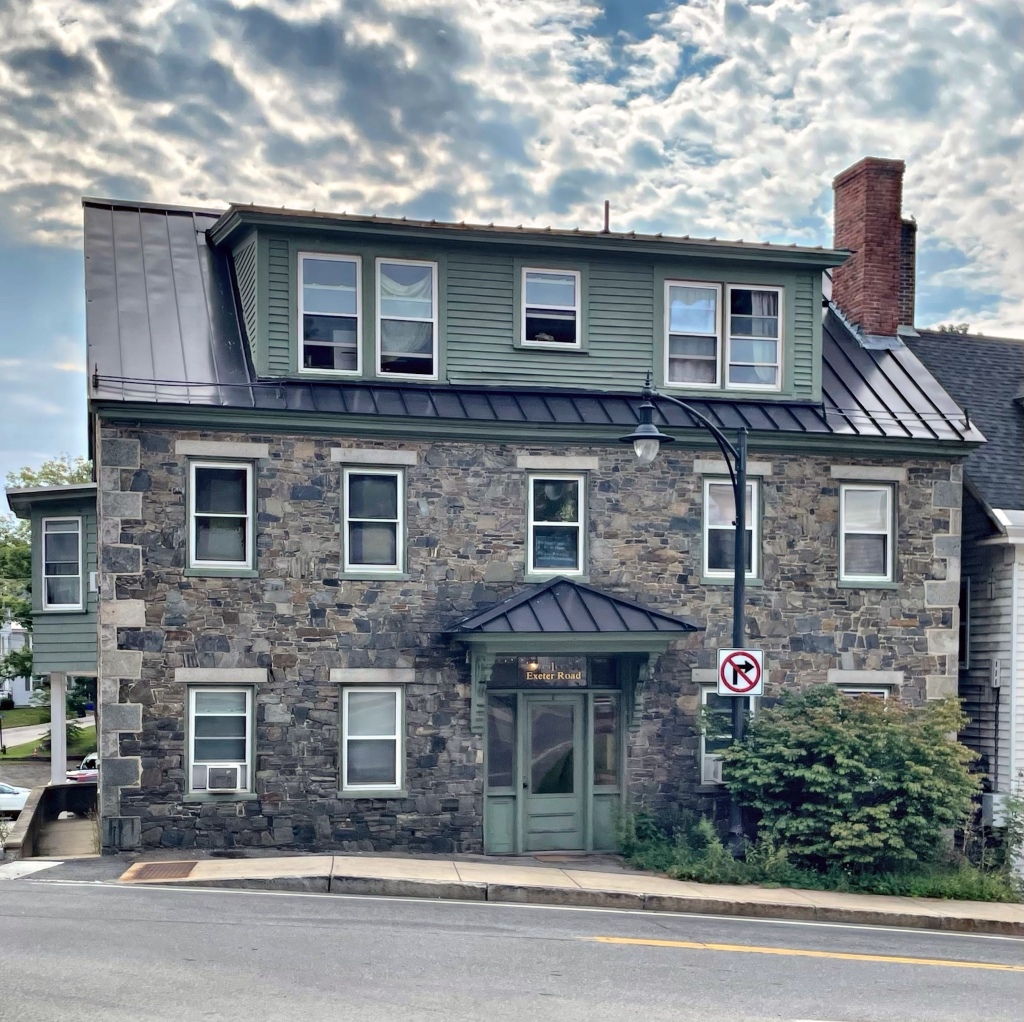
Mathes House // c.1835

Benjamin Mathes built this stone home around 1835 for his family, of the same stone he used to build a store across the street. The Federal/Greek Revival building has amazing granite quoins (stone blocks at the corners) and lintels (blocks above the windows). Even though there are later alterations, including the bracketed door hood and massive central dormer at the roof, the home remains one of the most visually stunning buildings in town.

Newmarket Manufacturing Company Complex // 1823+

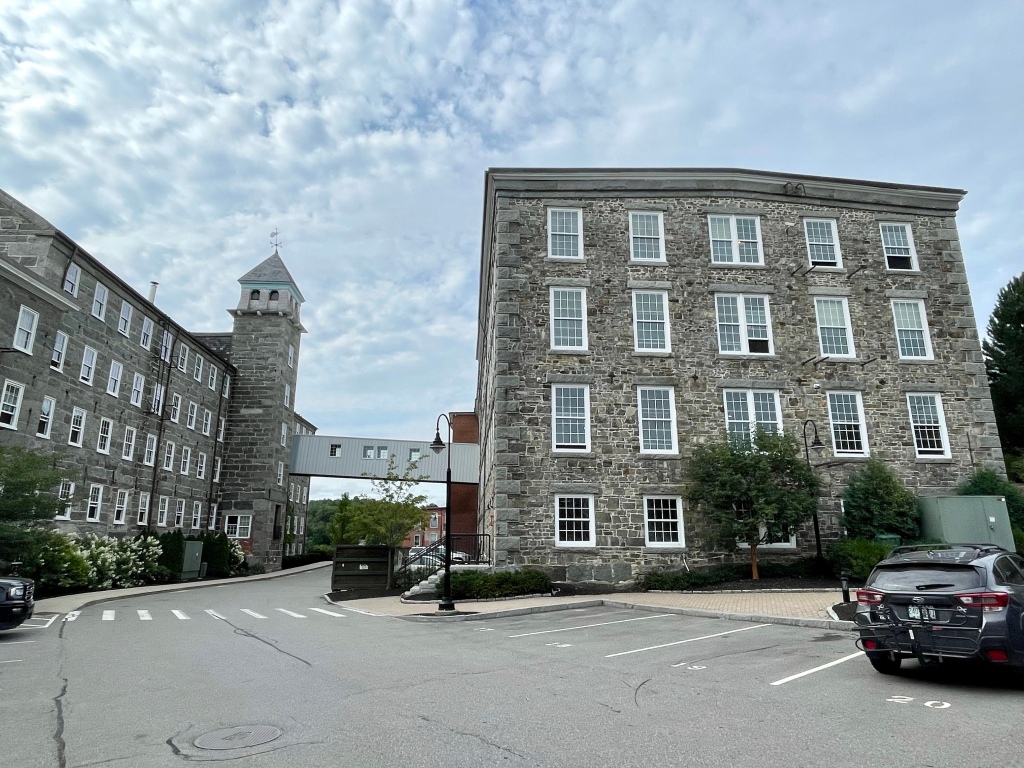
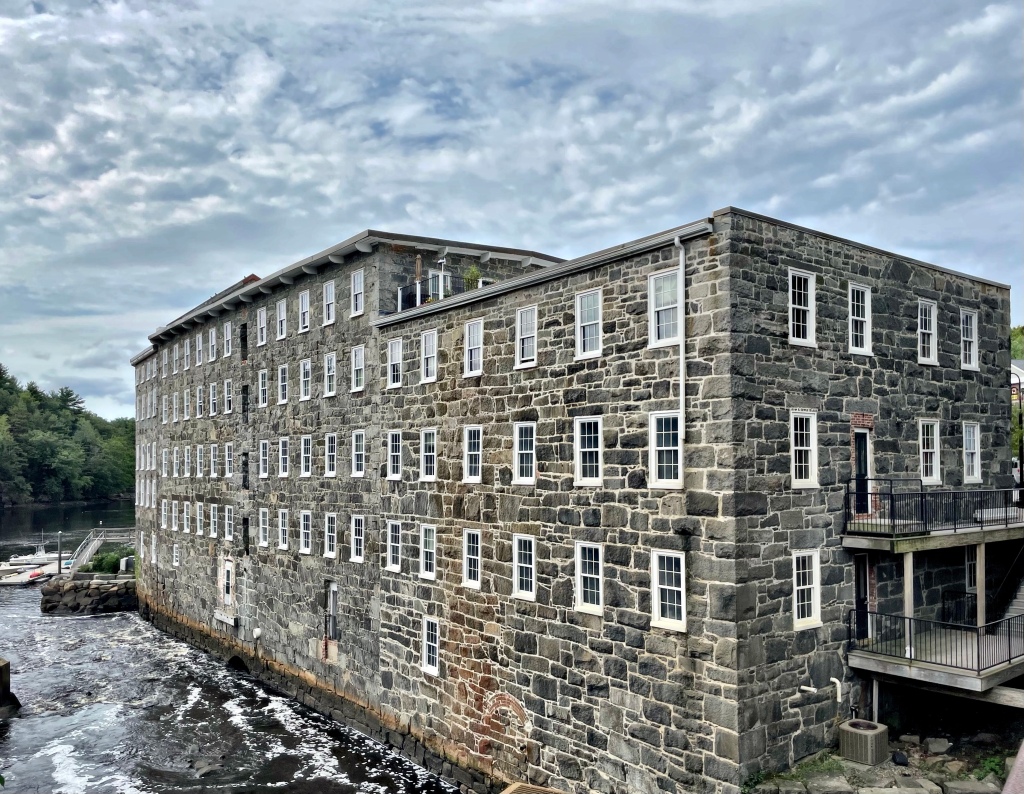
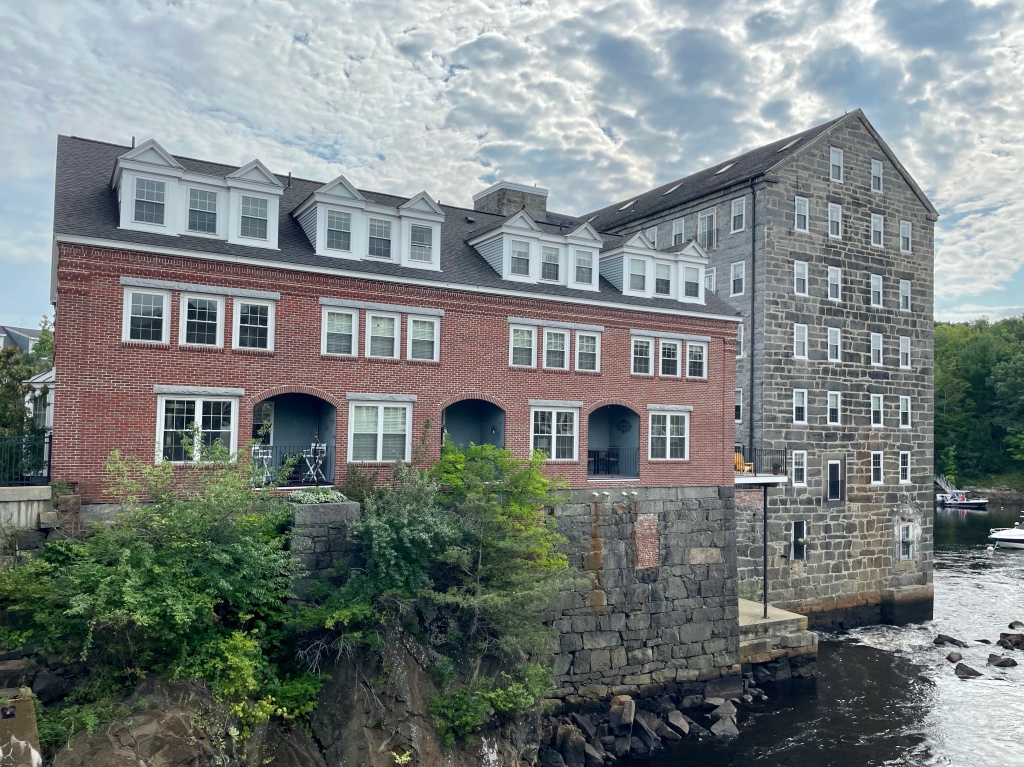
In 1823, the Newmarket Manufacturing Company built its first mill along the Lamprey River, dominating the waterfront and the economy of Newmarket, New Hampshire. Harnessing water power at the base of the falls, the cotton textile manufacturing community grew to include seven textile mills, with factory buildings, a machine shop, office, storage buildings, and corporate boarding houses; totaling some 140 buildings in all. During its peak production, 700 employees made up to 300,000 yards of cotton products each week, and 2.7 million yards of silk cloth each year. The mills operated continuously at this site until 1929 when a dispute between mill owners and workers erupted leading to their closure. Between 2010 and 2012, eight large mill buildings within the Newmarket Manufacturing Company property underwent a conversion to mixed use, including residential, retail, and office units, thanks to Historic Preservation Tax Credits, and many professionals who worked together with the vision to see such a large project through. Today, the complex is a excellent case-study on the power of adaptive reuse and historic preservation.

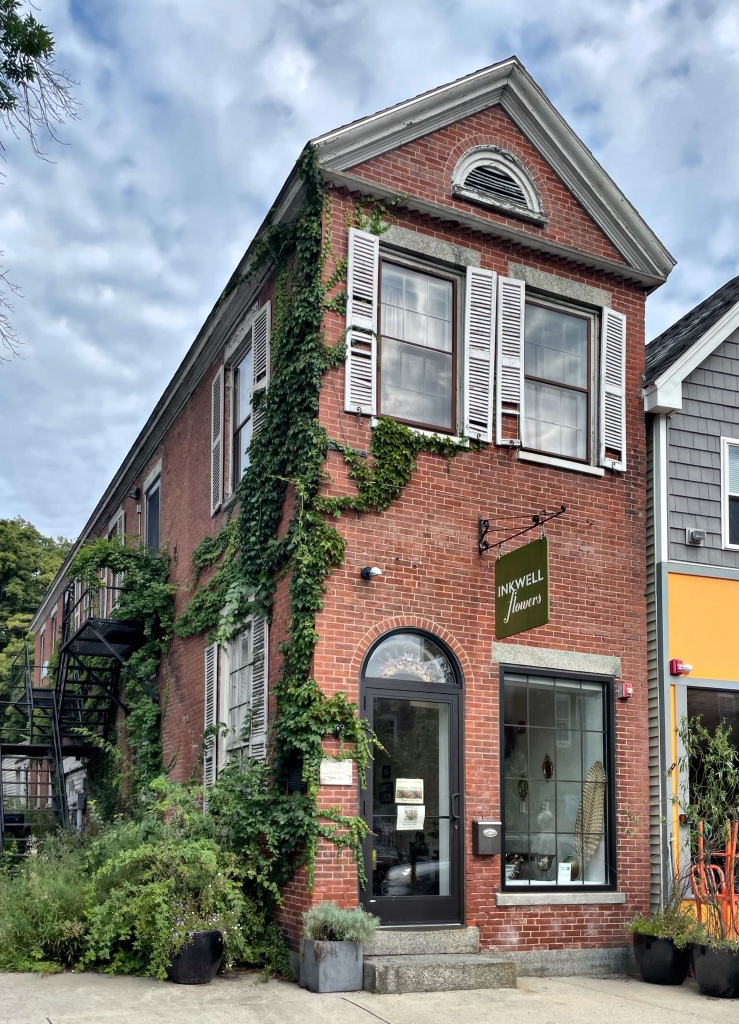
Murray Store // c.1825

Arguably the cutest little store in Newmarket is the Murray Store, right on the town’s vibrant Main Street. The brick building is one of the earliest such structures on the street and is a great example of a narrow Federal style building with a lunette in the gable end. The structure was built before 1830 and was occupied by a Ms. Charlotte Murray as a millinery (women’s hat store). Main Street USA! What is your favorite Main Street in New England?

Chaddock Boarding House // 1799

Calvin Chaddock (1765-1823) graduated from Dartmouth in 1791 and three years later earned a Master of Arts degree from the college. In 1792, he married Meletiah Nye and they settled in Rochester, Massachusetts, where he became pastor of a Congregational parish in the rural northern part of town. In 1798, he opened an academy for boys and girls in the village and built this beautiful Federal style home as a boarding house for students to reside in (the schoolhouse is no longer extant). By 1804, he had “a respectable number of students from different parts of the United States.” The man moved to Ohio before settling in Charlestown, West Virginia, where he lived in a homestead with his family and three enslaved people, Charles, Thomas, and an unnamed woman. Upon his death in 1823, the three people enslaved by Chaddock, were sold at auction. The former boarding house in Rochester was later occupied as a tavern and stagecoach stop, and a store, when it was given some 19th century alterations. It has been a private home for the past hundred years.

Chester Tin Shop // c.1830

Located on the edge of the Chester Town Green, you can find this beautiful Federal style commercial building. The use of blind arches at the facade is a fairly common feature found in brick Federal style buildings in Vermont. The structure was built around 1830 and has served a variety of uses through its existence, the most notable being the tin shop owned by various members of the Miller and Hadley families that sold stoves and hardware during the latter half of the 19th century. The tin business in New England grew rapidly after 1820. Tin shop owners imported tinplated sheet iron from Great Britain, shaped it into a variety of forms, and distributed their finished goods through peddlers and country stores. They also sold tinware in their shops. Colanders, dippers, dish kettles, funnels, measures, and pans were in greatest demand. Other common items included lanterns, foot stoves, teapots, coffeepots, “tin kitchens”, skimmers, and sconces. After its use as a tin shop, the building was occupied as a telephone exchange and electric utility company office. It presently is home to an antique store.

Emery Bolles House // 1841

Next to the Israel Moore house (last post) in Chester, VT, the Emery Bolles house is yet another beautiful example of a snecked ashlar building in central Vermont. The town of Chester has the largest concentration of these buildings in the state in the north village, now known as Stone Village. The building method was so popular that even a couple examples sprouted up in the larger Chester Village nearby. Erected for Emory Bolles (who operated a wagon shop next door), this 1841 house possesses a 5-bay facade and a later, distinguished Victorian-era full-width porch. The porch incorporates turned posts with a central gable above the steps that carries an openwork screen.

Israel Moore Snecked Ashlar House // c.1846

Located on Main Street in Chester, Vermont, you can find this perfect little Snecked Ashlar home. The building technique is very local and can be found in just a handful of towns in central Vermont. Scottish-born masons from Canada introduced the technique to local masons while erecting a mill in nearby Cavendish in 1832, and within a few years, the first stone structure in North Chester village was built by local masons. Soon after, the local school, church and other homes were all constructed the same way. This home outside the Stone Village district was built later than almost all other examples in town. It features Federal and Greek Revival detailing with a central fluted fan at the door and large gable-front roof.

Have you heard of Snecked Ashlar before?

Wagon Hill Farm // 1804

Beginning in 1798, sea captain John Bickford (1765-1813), purchased a 127-acre farm which extended from the newly laid turnpike to the Oyster River. Bickford was a resident of Salem, Massachusetts, but owned his family’s homestead across the river on Durham Point and also purchased five other farms in the area but did not live on any of them. The Wagon Hill farmhouse was built in 1804 and is a great example of a vernacular Federal style house. In 1814 while on a voyage to the southern tip of Africa, Captain Bickford died. All of his New Hampshire property was sold except for this Durham farm which remained under the management of his widow, Mary Bickford. She worked as a housekeeper for Captain Joseph White in Salem, and rented out the Durham farm. In 1830, the farm was sold to Samuel Chesley, and it remained in the ownership of four generations of the Chesley family. Here, the family ran a diversified farm, from sheep, to ducks, to apple orchards. In 1960, the farm was sold to Loring and Mary Tirrell. Farming had ceased entirely by the time the Tirrells moved into the house but the fields were kept open and it’s agricultural past was honored by the placement of an old wagon on the crest of the hill. Over the years, the farm has become known to local residents as Wagon Hill Farm. It was purchased by the town in 1989, and serves as a lasting remnant of agricultural history and an amazing preserved open space in the town.