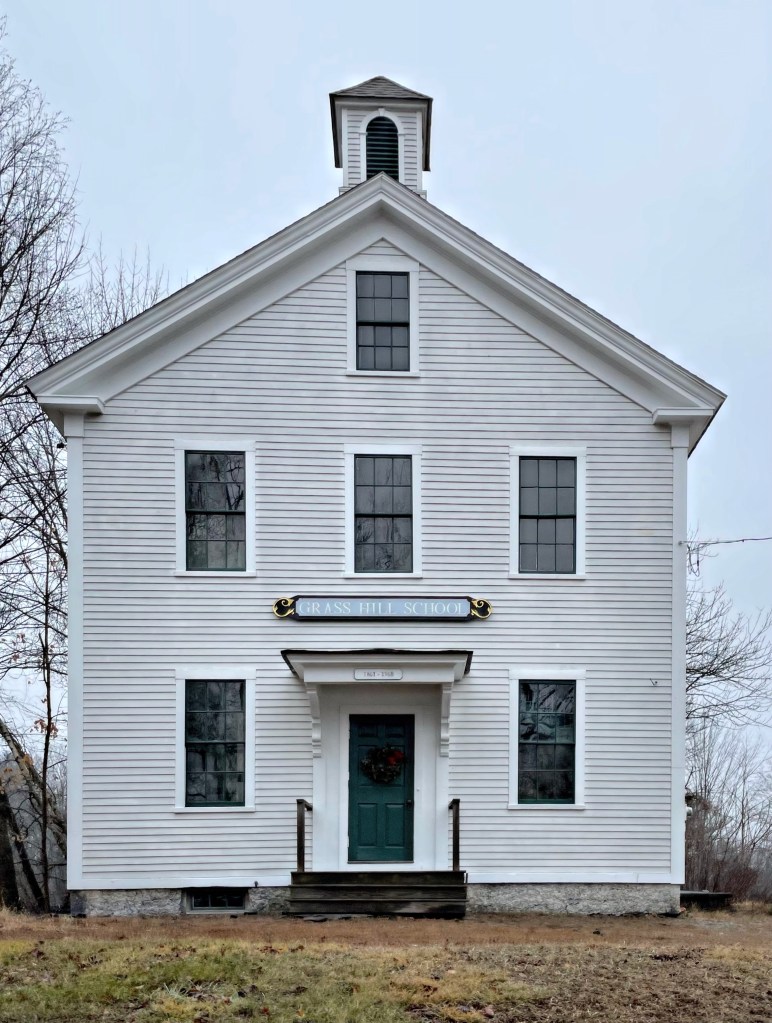
Grass Hill School // 1861

In western Millbury, the Grass Hill school was constructed to provide a place of learning for children in the agricultural section of town. The district school, a remnant of the system of autonomous school districts that characterized the educational system of Massachusetts in the 19th century, this is a larger example of many of them. West Millbury had many wealthy farmers and they financed a district school here as far back as 1814. After two earlier, smaller school buildings, this two-story school was erected and was one of the most substantial. At one time, students in eight grades taught there, all at the same time, with grades 1-4 downstairs and 5-8 upstairs. As there weren’t many students, each grade only took up one or two rows. The building remained as a school for the town until 1968, and the building was leased to the Millbury Historical Society long term. They just completed a massive restoration project for the building, it looks great!
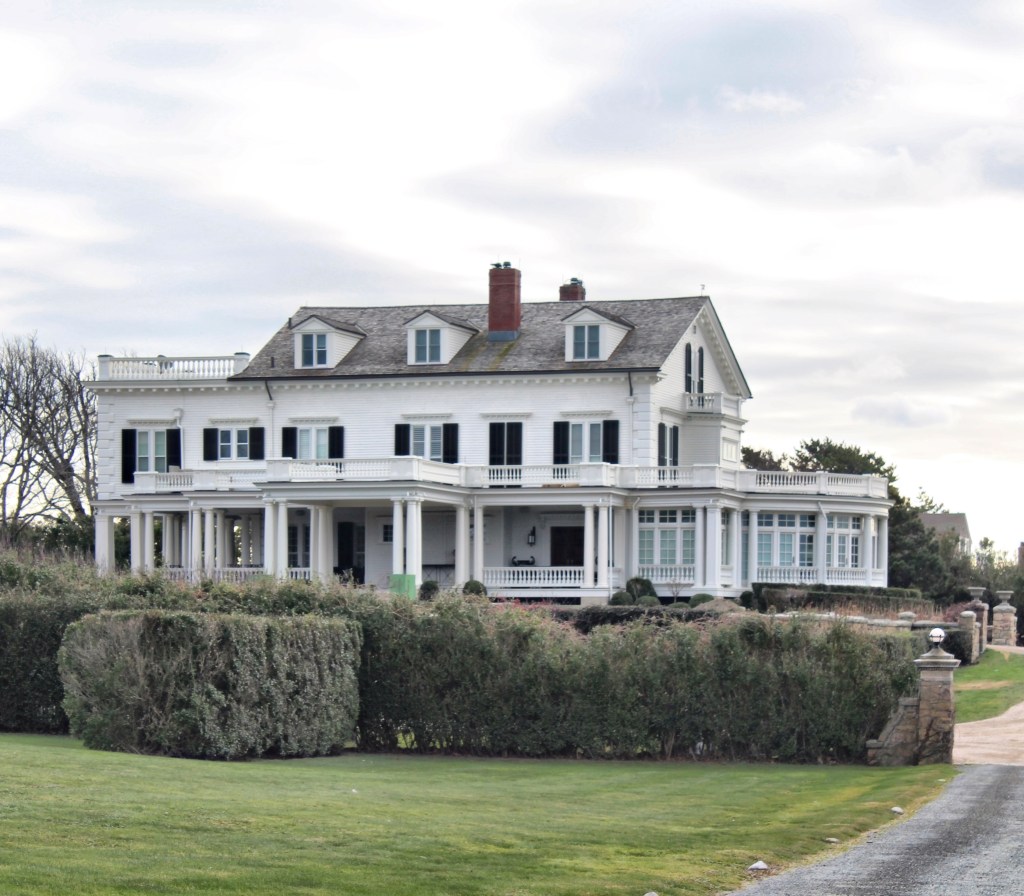
“Seaweed” Cottage // 1860

“Seaweed” is a spectacular oceanfront estate situated on Newport’s famed Cliff Walk and overlooking Bailey’s Beach. This home is three-stories with an enormous enclosed porch that offers sweeping views of the Atlantic from all windows. The house consists of 16 rooms including an inviting foyer, nine bedrooms, seven bathrooms, dining room, and living room, all with original fireplaces, flooring, and detail throughout. Views of the sea are from nearly every room. “Seaweed” was originally built and owned by Mr. Henry Howard in 1860-61. It was altered in 1867 by renowned architect George Champlin Mason. Within a decade it was sold to Mr. C. Davis who passed it on to George T. M. Davis. In the 1880’s the property became a rental property owned by Alfred Smith, a real estate agent who lived near the center of town. In the early 1900’s it was purchased by Thomas Dolan of Philadelphia who re-baptized the home “Seaweed” after having architect Horace Trumbauer bring it to its present Colonial Revival style. The name is one of my favorites! What do you think of the name Seaweed for a home?

Peckham Houses // c.1855

On a little stretch of Kay Street in Newport, you can find four strikingly similar Italianate style houses, all neighbors. Upon further research, it turns out they were designed by the same man, Job Peckham. Job Almy Peckham (1807-1885) was a descendant of one of nearby Middletown’s “founding” families. He ran a lumberyard and began working as a housewright, building homes. He was a believer of the philosophy “if it ain’t broke, don’t fix it”, so he built many of his houses in a sort of cookie-cutter way, but each showcasing slight design changes. One of the most impressive features of these homes is the massive overhanging eaves with scrolled brackets. Peckham’s own house (bottom right) is included in the bunch. What do you think of these homes?

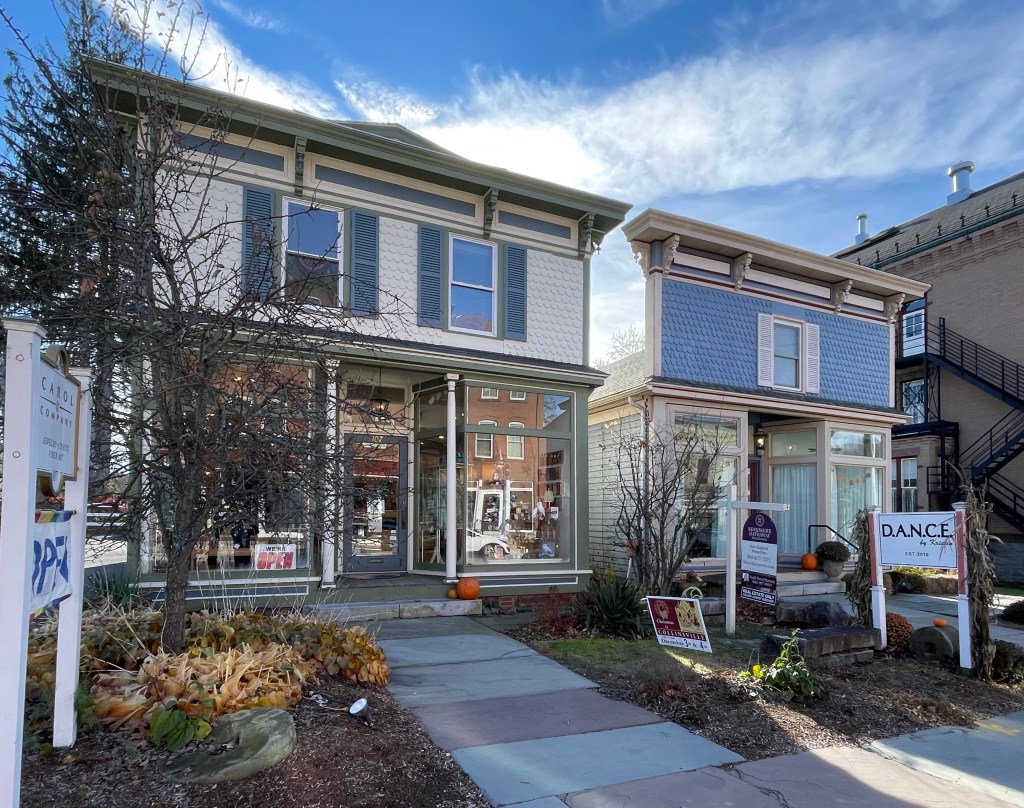
Collinsville Stores // c.1880

These two Italianate-style stores sit on Collinsville’s Main Street, a walkable main street village along the banks of the Farmington River. Each structure has a central, recessed entry with storefront windows meeting the sidewalk. One structure is two stories with a very shallow gable roof and the other is 1 1/2 stories with a false front. These false front facades remind me of old frontier towns in western movies, they are great!

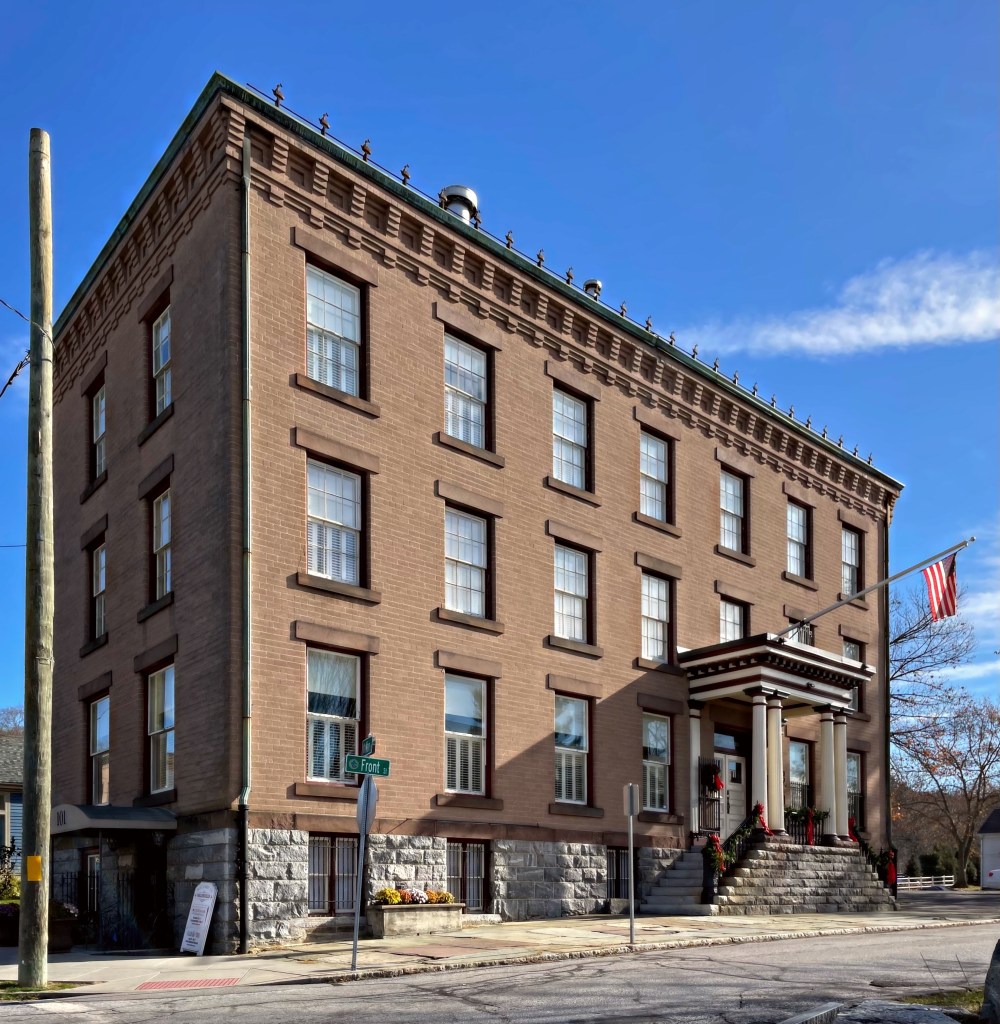
Collins Company Offices // 1868

When the Collins Company built its mill buildings in South Canton Village (later renamed Collinsville), workers housing, schools, businesses, and churches popped up to service the growing immigrant community here. The Company also built an office building for the executives, where they could oversee the business’ growth and balance the books. The original office building from 1830 was eventually outgrown, and after the Civil War, this larger building was constructed. The new building held offices, a post office, library, a third-floor meeting hall for local groups. The masonry building has decorative cornice and a gorgeous raised entry.

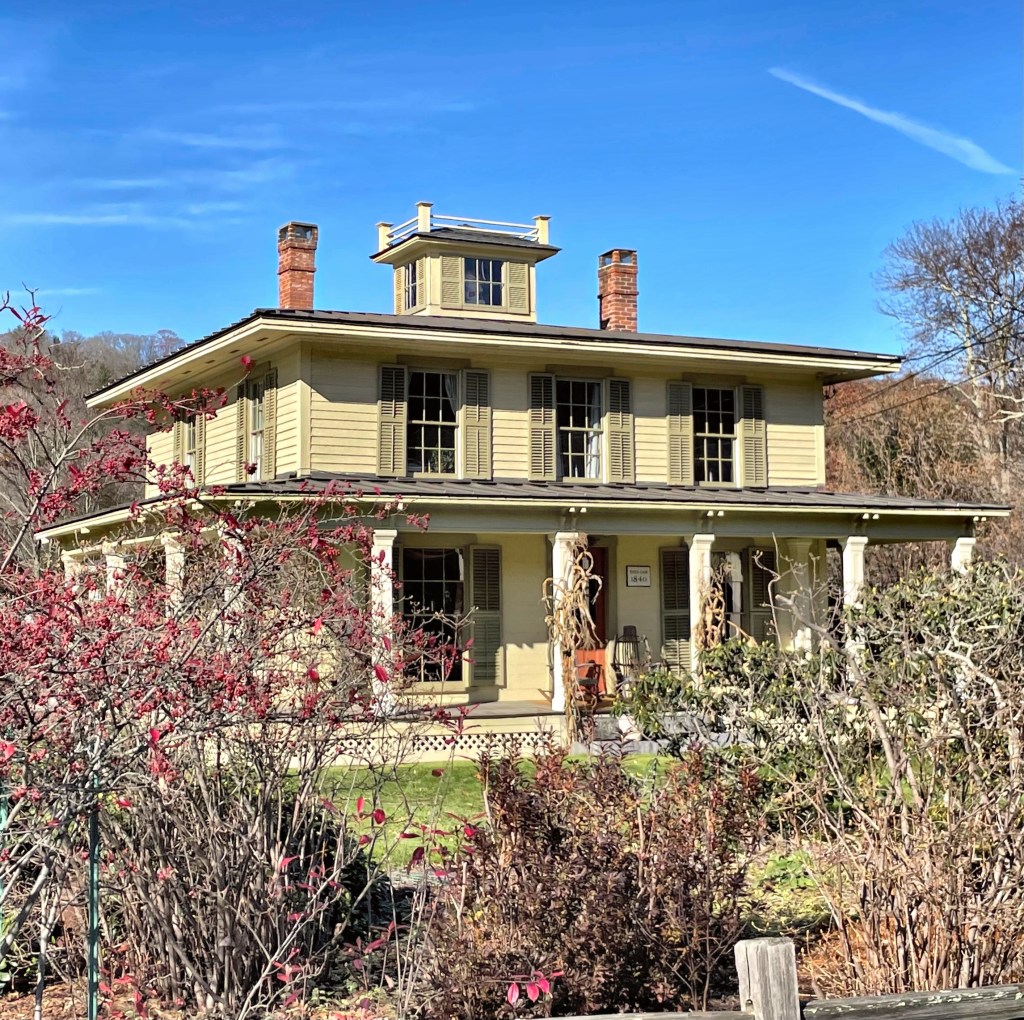
Case-Crowley House // 1840

Built in 1840 for Titus Case, this old house looks very different than it would have been when first constructed. The house was originally Greek Revival in style, probably with a gabled roof, common of the region and style. Case died in 1845, and the home was later purchased by Jeremiah Crowley who ran the Canton Creamery nearby. After the Civil War, he “modernized” the house in the then fashionable Italianate style, with a low-sloped roof with overhanging eaves, large brackets, a cupola, and a wrap-around porch.

North Canton Schoolhouse // 1872

Built in 1872, the old North Canton Schoolhouse really brings us back to how life was like in the 19th century. The saying “when I was a kid, we would have to walk to and from school in the snow, uphill both ways” comes to mind when I think of how students would have to walk long distances to attend rural schools. The school was originally built at a nearby fork in the road, but moved in the 1920s when the street was widened. The building was used as a school until 1942, when a newer, central school was built in the center of town.

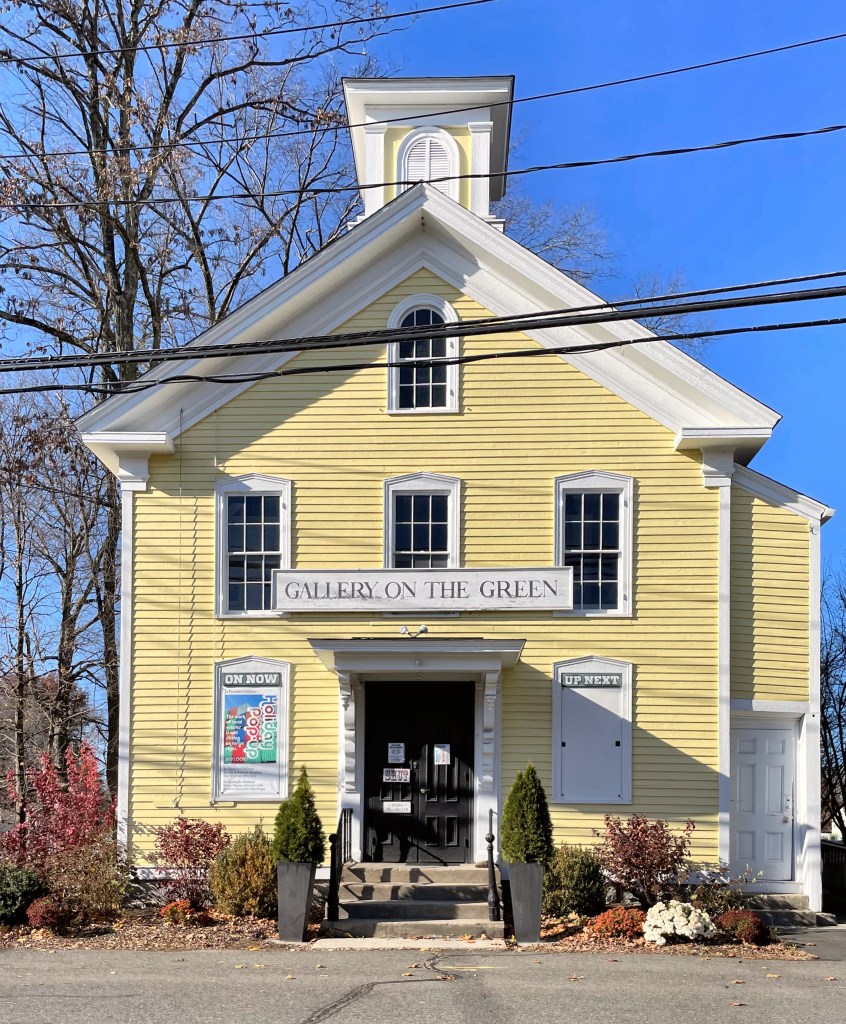
Canton Center Schoolhouse // 1872

Canton, Connecticut, the only town in the state named after a city in China! The land which we now know as Canton had long been inhabited, specifically by the Wappingers, a group in the larger Algonquin speaking tribes. Canton was incorporated out of Simsbury in 1806, and named after the City of Canton in China (now known as Guangzhou), though I am not sure why. The town quickly developed two main villages. Collinsville sits on the Farmington River and its power was harvested for industry; while the center village grew differently as an agricultural village of farms. At the center of town sat a green for civic and town functions and gatherings. The town constructed a school here as far back as 1759, when the rural village was still a part of Simsbury. This is the fourth building on the green and it was built in 1872, and can be classified as Italianate in style. The building was occupied as a school until 1949, and it was used for other city uses until 1971, when the building was rented to the Canton Artist’s Guild and the building was renamed Gallery on the Green. The building remains community-focused and holds exhibits of local artists! Much of the rest of Canton Center lost all of its bucolic charm when the main road became commercialized, prioritizing speeding cars over a walkable village.

Lancaster Industrial School for Girls – Rogers Cottage // 1855

The Lancaster Industrial School for Girls in Lancaster, Massachusetts, was was established in 1854 as one of the most progressive correctional institutions of its day, and the first in the U.S. for girls. Throughout the 19th century, state governments struggled with how to best deal with youthful law-breakers and vagrants. Some states began to provide correctional facilities, often known as “Industrial Schools,” while other states continued to incarcerate “delinquents” in prisons alongside adults who often were charged with much more heinous crimes. Institutions like the Lancaster Industrial School led the way in social reform, copying a cottage system created in France that emphasized a wholesome, family-like atmosphere and the opportunity to rise above the “low life” slums from which Victorians assumed delinquent children came from. All girls who were under 17 years old at the time of commitment, were housed in one of eight “cottages” where they would each have their own rooms and chores. The Rogers Cottage seen here was one of a handful of the earliest cottages, all identical in design. Matrons and teachers taught the girls the domestic arts, including how to cook and sew. The Industrial School closed in the 1970s and has been used in an ever-diminishing role by the State of Massachusetts ever since. There have been talks about this complex being sold for redevelopment with some old buildings saved, but I am not holding my breath.

Penobscot County Jail // 1869

Located just off Main Street in Bangor, the Penobscot County Jail building sits far off the street but stands out for its architectural design. The county jail building was designed in 1869 when the previous prison, built in the 1830s, proved inadequate. Designed by Boston architect Gridley J.F. Bryant, (who designed Charlestown’s prison that same year) the jail has somewhat of a dual personality architecturally speaking. The gracious street-facing section is constructed in the Italianate style, and housed the jail keeper and allowed the building to blend into the stylish and handsome neighborhood of downtown Bangor. The building is constructed of warm red brick with stone embellishments. Behind the jail-keeper’s house, the more severely modeled prison is constructed of granite and is more fortress-like, even though it’s much more appealing than modern prisons. The chronically overcrowded jail will likely be repurposed for a new building, but here is to hoping the county preserves this historic building for other uses!