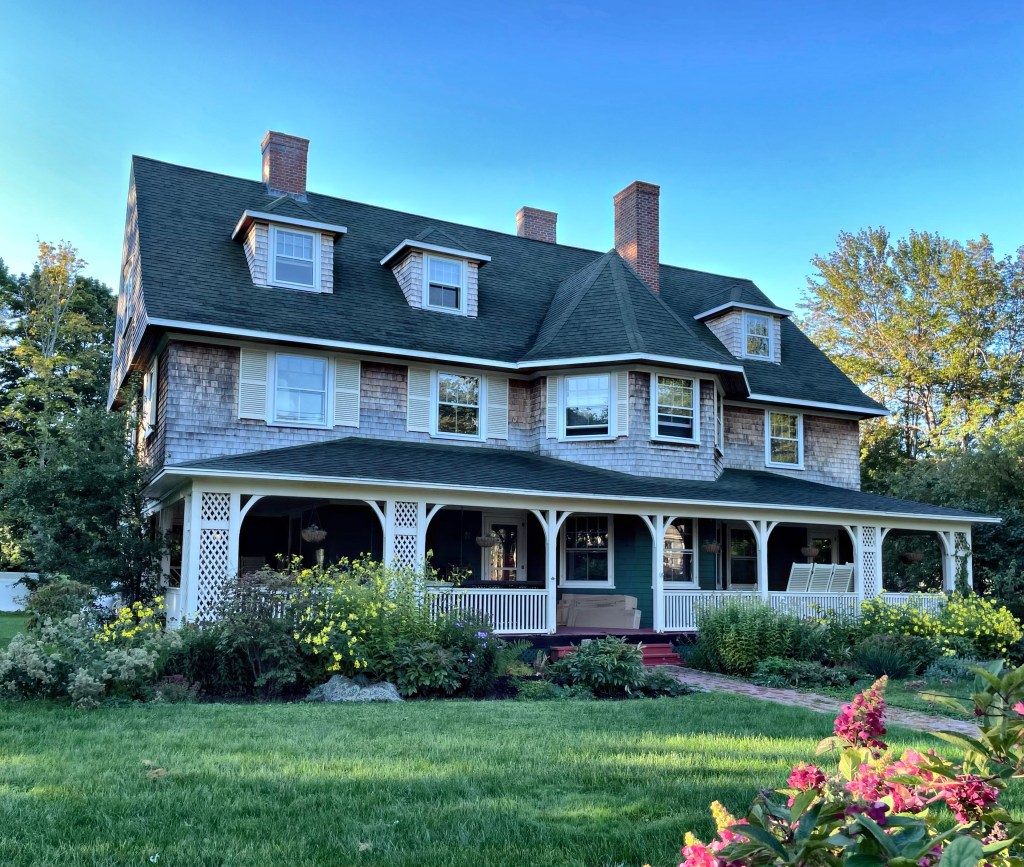
“The Crossways” // 1901

Built in 1901, “The Crossways” is one of Bar Harbor’s most stunning summer cottages built in the 20th century. The home was designed by the illustrious Boston architectural firm of Andrews, Jaques and Rantoul, possibly as part of the of the William B. Rice estate. The home appears to have been rented in early years until it was occupied by Edward and Esther Mears. Edward ran a hotel in town during the summer months before getting involved in real estate, where he made much more money. The home blends together the best of architectural styles of the time from Queen Anne to Shingle Style, and remains in an excellent state of preservation.
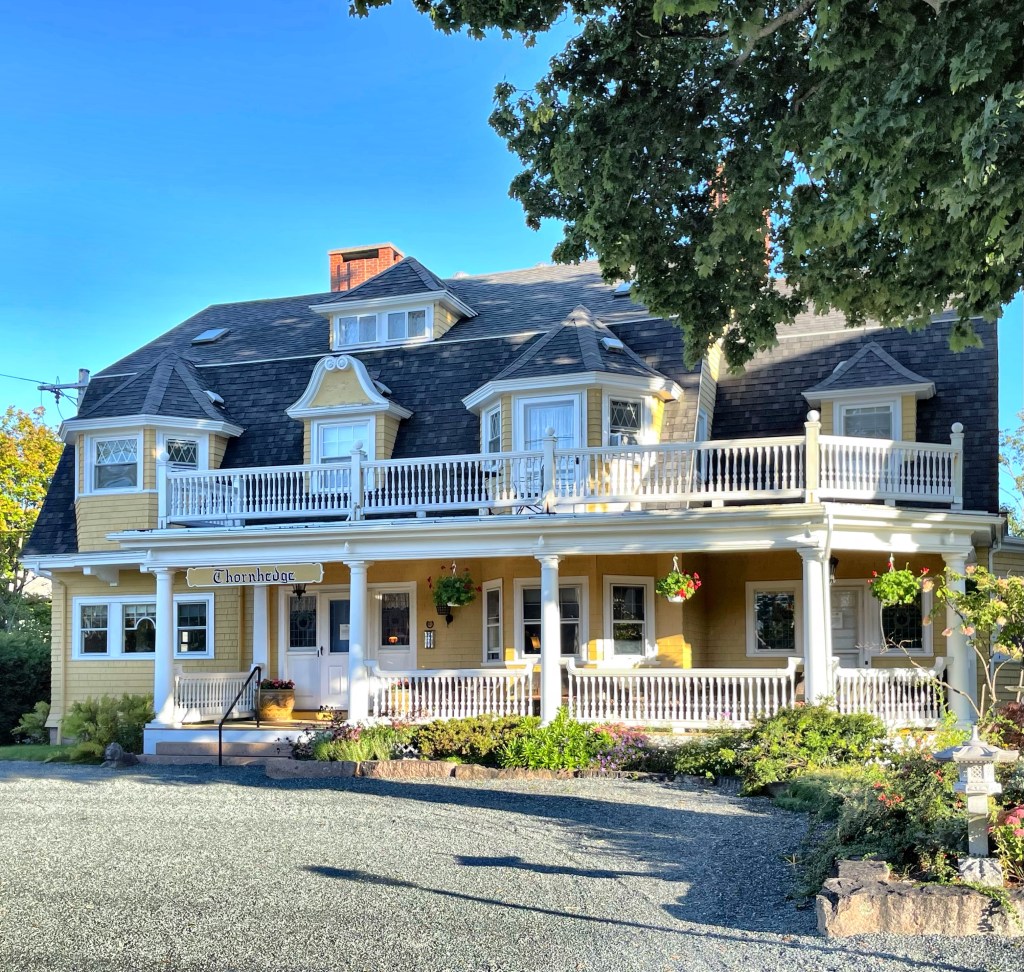
Thornhedge // 1900

Located next door to “The Poplars” (last post), another summer cottage Thornhedge, stands out for its architectural splendor and great state of preservation. Similar to “The Poplars”, the home was built in 1900 for Lewis A. Roberts, a retired book publisher from Boston. Roberts ran the publishing house with his brothers, and they published work by authors including Emily Dickinson, Fyodor Dostoyevsky and George Sand, the first American edition of Treasure Island by Robert Louis Stevenson, and had their greatest commercial success with Little Women by Louisa May Alcott. The business was purchased by Little and Brown Publishing in 1898. Lewis Roberts died in 1901, only a year after completing Thornhedge, and the house came under the care of his son, Lewis Niles Roberts. Mr. Roberts kept the house as a summer residence until 1920, then sold it to the family of William F. Frick, a prominent judge from Baltimore. The home became an inn by the 1970s. Thornhedge is a Queen Anne style cottage which was originally organized with the first and second floor serving as the living quarters and the top and bottom floors for the servants. The laundry, servants dining hall, and kitchen were out of sight in the finished basement, with a dumb-waiter to bring hot food to the butler’s pantry. The third floor was the servants’ living quarters.

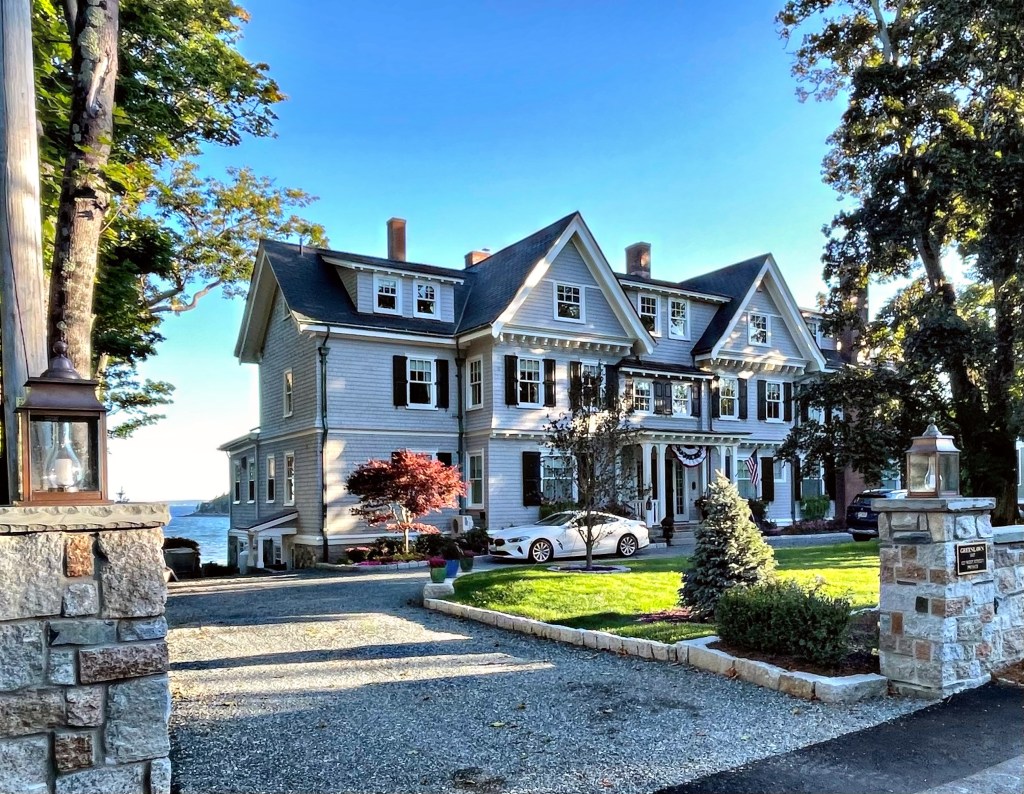
“Greenlawn” // 1887

West Street in Bar Harbor was laid out in 1886, and developers laid out house lots on both sides, with larger, more expensive land right on the water. One of the earliest homes built on the street is Greenlawn, constructed in 1887 for William Rice, an industrialist who co-founded Rice & Hutchins, a shoe manufacturing company with main offices in Boston. The architectural firm of Rotch and Tilden, comprised of partners Arthur Rotch and George Thomas Tilden. Both had studied at the Massachusetts Institute of Technology and at École des Beaux-Arts in Paris. Both had worked at the architectural firm of Ware and Van Brunt, and would be best known for their Gilded age mansions in New England. By 1896, the cottage was owned by William L. Green, which is likely when the cottage’s name “Greenlawn” stuck. The house recently sold for $4.25 Million and the interiors are gorgeous!

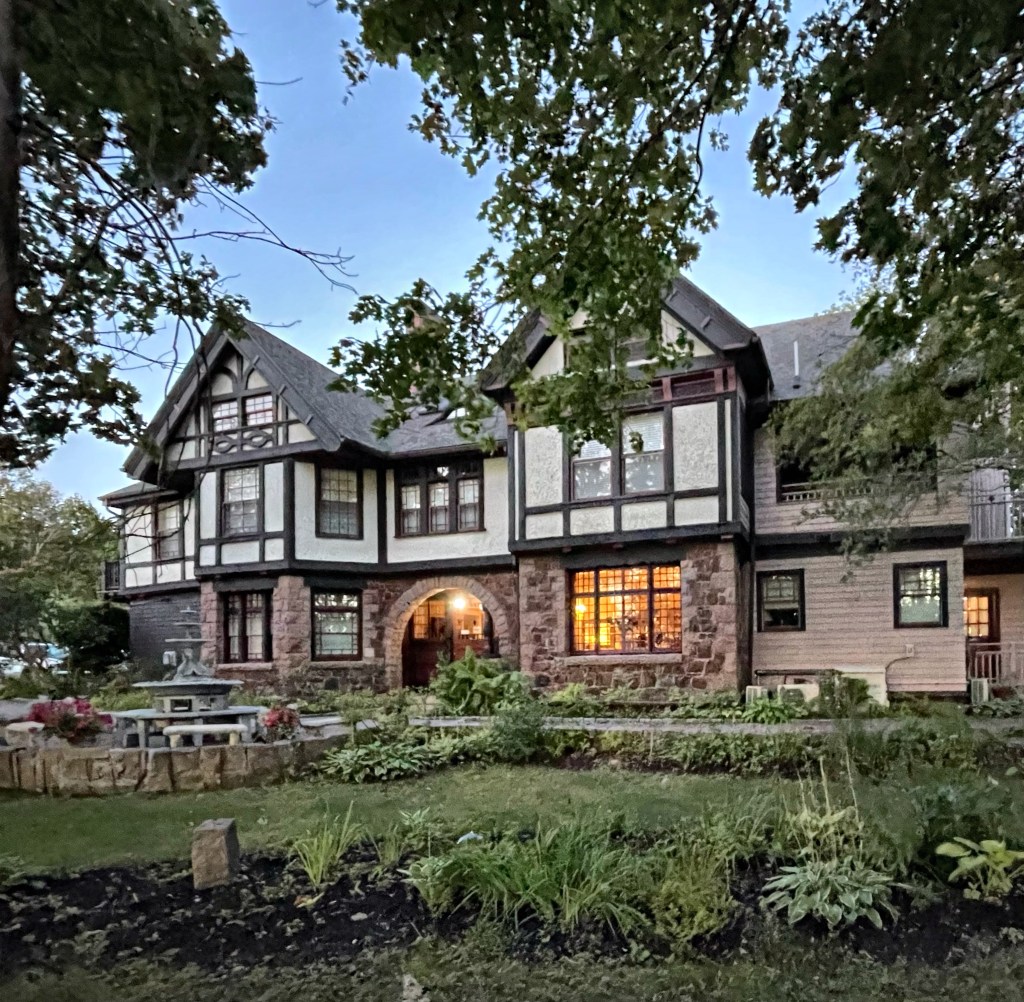
Ullikana // 1885

One of the earlier summer cottages in Bar Harbor is Ullikana, a Queen Anne style cottage, verging on Tudor Revival style. The cottage was built in 1885 for Alpheus Hardy (1815-1887) a trader in Boston. Hardy gained his wealth in shipping. He got his start by buying a small and fast ship that could make the voyage to the Mediterranean and back so quickly that he and his other investors captured much of the fruit importing business. His company would grow to have over 15 ships going as far as China. Hardy hired the Boston architectural firm of Cummings & Sears to design a new summer cottage in Bar Harbor, Maine, an ever-growing rival to Newport. He could only enjoy the cottage for two years, when in 1887, while cutting coupons, he dropped the scissors, the sharp points piercing his leg. Blood poisoning followed and death resulted. The summer cottage was owned by his family as a rental cottage for a number of years until it was purchased by the Maine Central Railroad, and rented to the recently widowed Princess Miguel de Bragança of Portugal, the former Anita Rhinelander Stewart. The cottage is now an inn.

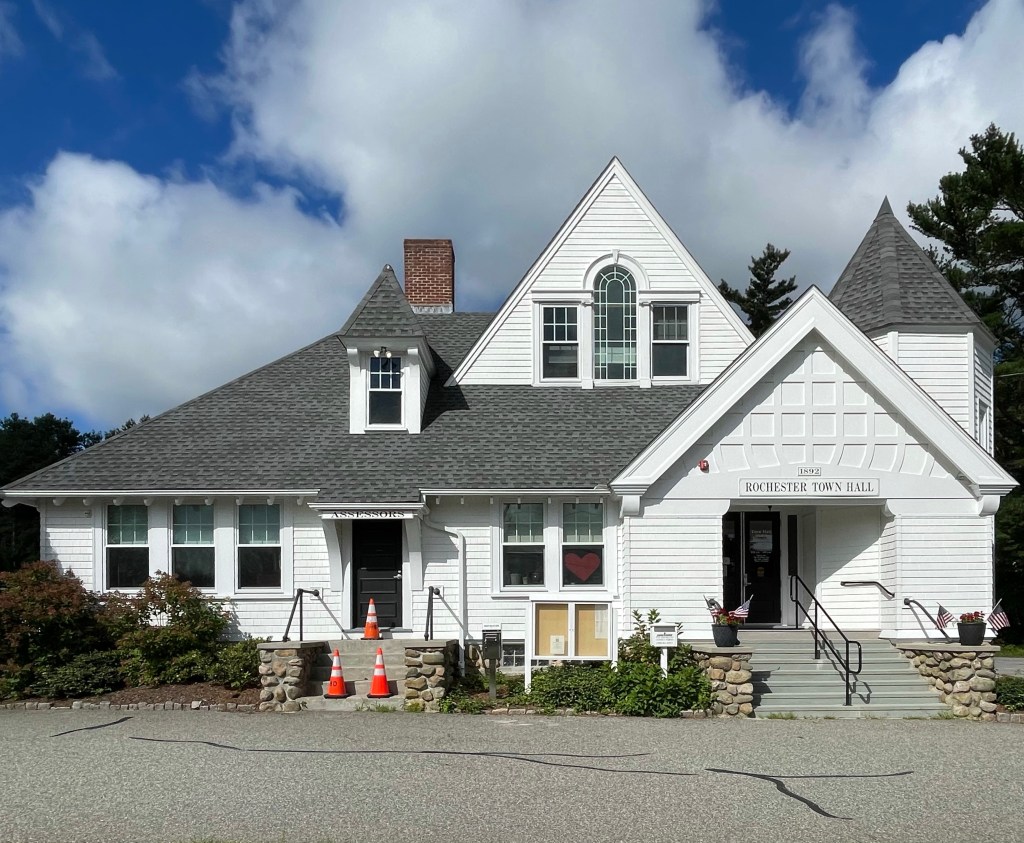
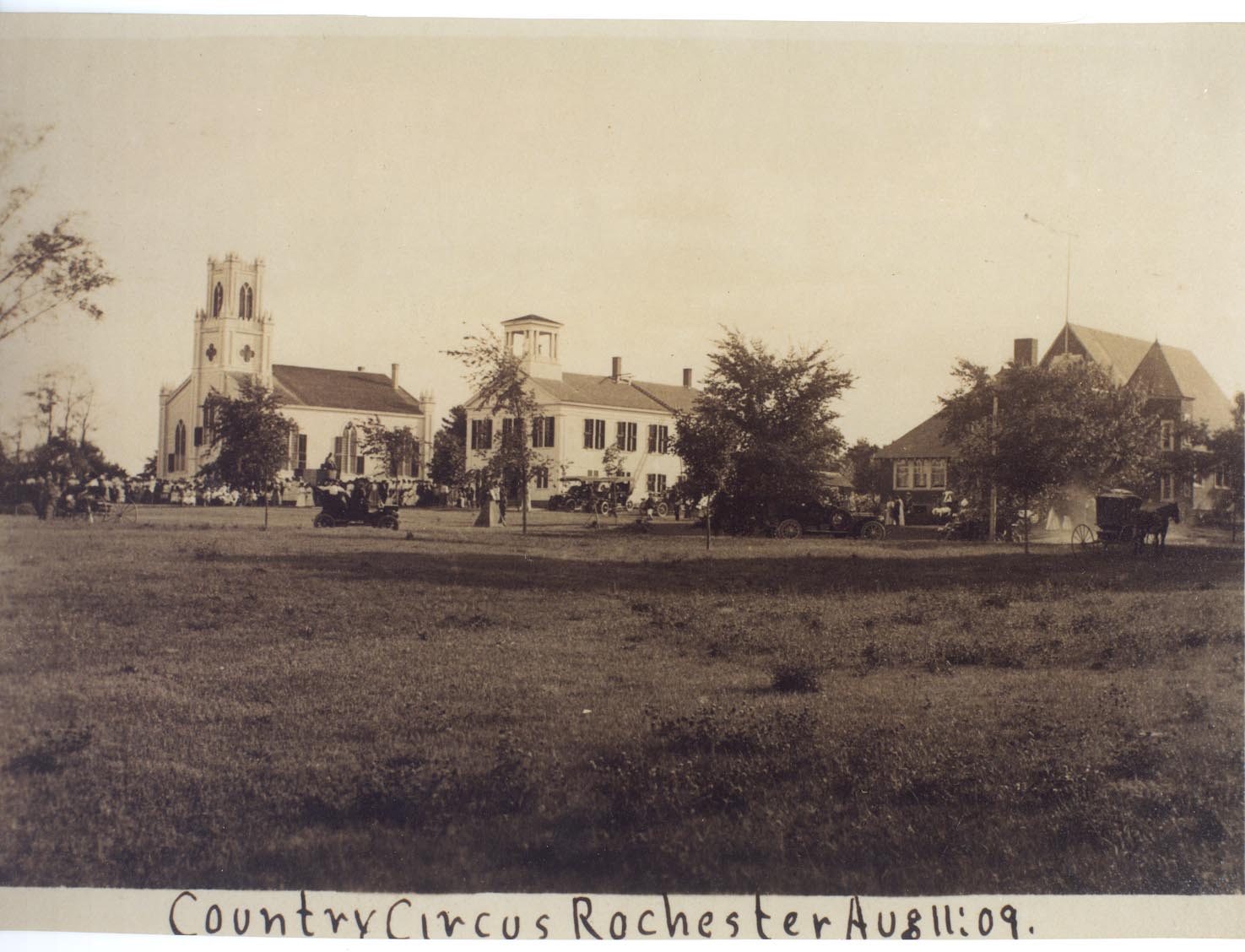
Rochester Town Hall // 1892

In 1679, three years after the end of King Phillip’s War, an armed conflict in 1675–1678 between indigenous inhabitants of New England and New England colonists, land that would become Rochester, Mattapoisett,
Marion, and Wareham was purchased from King Phillip, and immediately divided among 32 proprietors of “Old Rochester.” The first white settlers took up residence in 1680, and the Town of Rochester was incorporated in 1686. Rochester town center was formally established in 1697 when land was set aside for a meetinghouse, burying ground and training field. Rochester’s first meetinghouse, built in 1699, served as a church and town building. A larger meetinghouse was built in 1717, and a third in 1760, doubling in size every time as the town’s population grew. The old buildings were insufficient for the growing farming town, and wealthy widow Elizabeth Leonard funded half the cost of a new town hall building. The current structure on the town green was built in 1892 and is an uncommon example of a Queen Anne style town hall in Massachusetts. The building originally was painted a darker color, common in the style, but was given a bright white paint scheme to blend in with the older buildings on the Green.

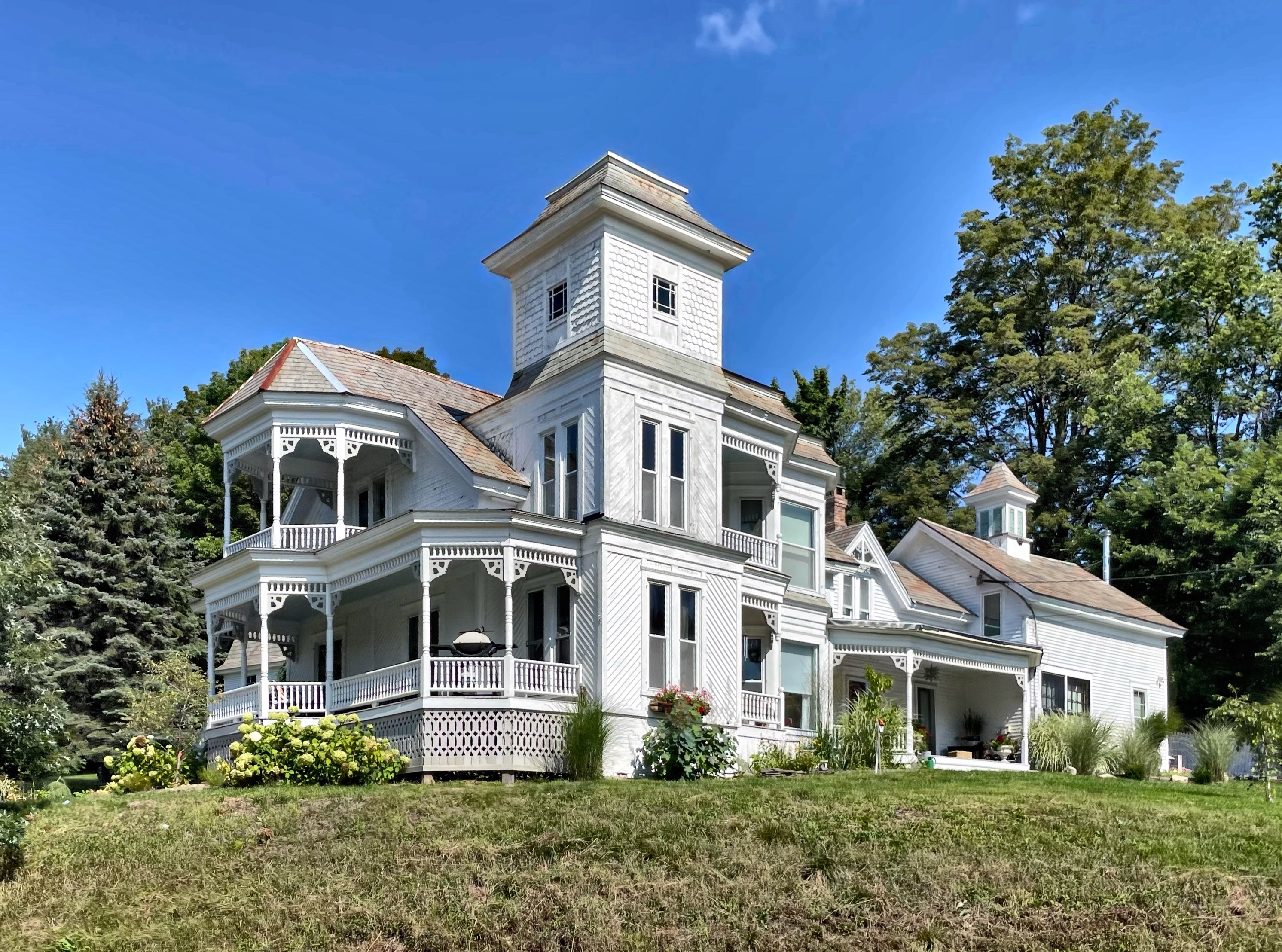
Durand House // 1861

One of the most visually striking homes in little Chester, Vermont, is the Durand House. Sited prominently on a hill, the 1861 home resembles a wedding dress in bright white with intricate spindles that look like lace. The house was seemingly built for Urban Durand, one of the proprietors of the successful Durand Brothers Market in Chester village. The home has an elaborately trimmed full-front porch with a second-story polygonal balcony, and a three-story corner tower with a shallow mansard roof, all possibly later additions. The house stands out in the village, which is largely dominated by classical Federal and Greek Revival houses.

Emery Bolles House // 1841

Next to the Israel Moore house (last post) in Chester, VT, the Emery Bolles house is yet another beautiful example of a snecked ashlar building in central Vermont. The town of Chester has the largest concentration of these buildings in the state in the north village, now known as Stone Village. The building method was so popular that even a couple examples sprouted up in the larger Chester Village nearby. Erected for Emory Bolles (who operated a wagon shop next door), this 1841 house possesses a 5-bay facade and a later, distinguished Victorian-era full-width porch. The porch incorporates turned posts with a central gable above the steps that carries an openwork screen.

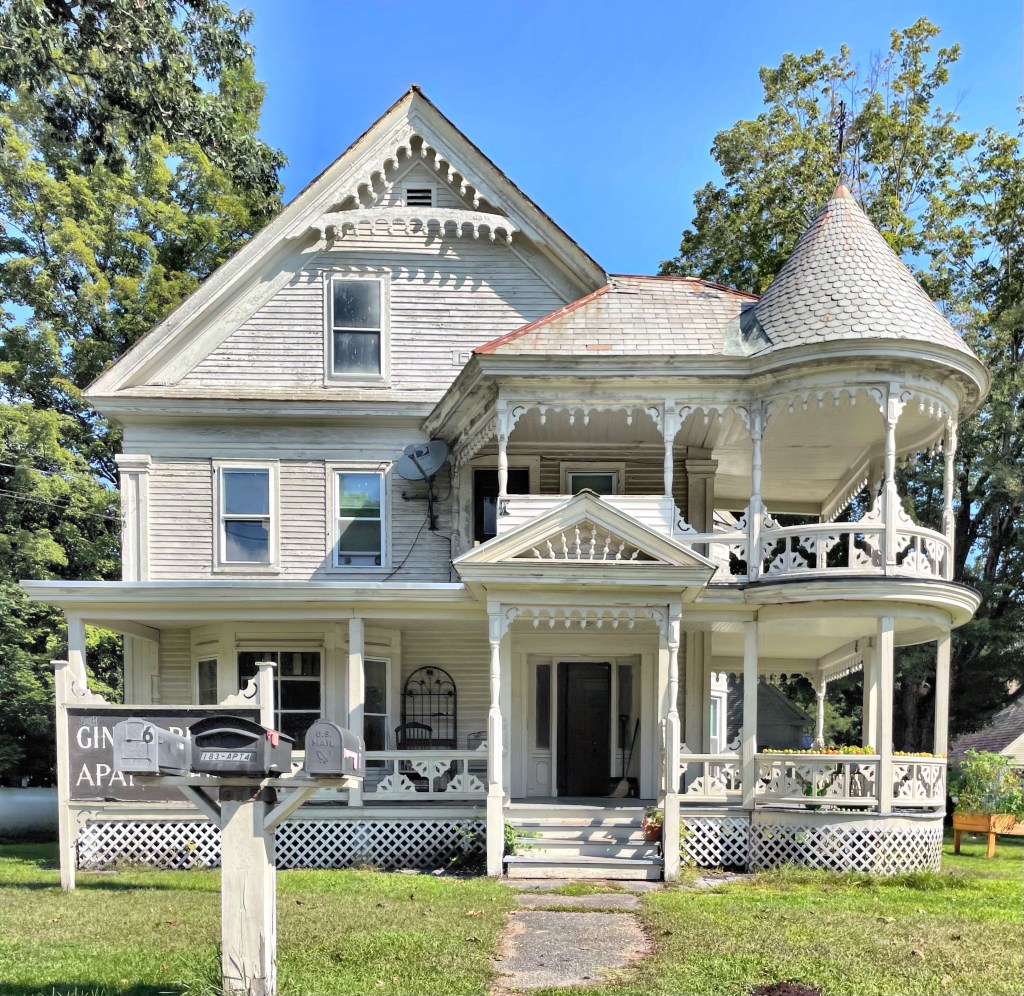
Gingerbread Apartments // c.1850

Built in the mid-19th century this former home in Chester, VT, exhibits the range in tastes seen from the Classically inspired Greek Revival style to the ornate and over-the-top Queen Anne style. The original 1850 Greek Revival design of the house survives in its temple form and classical details, augmented by a visually dominant overlay of Queen Anne features. The house was acquired sometime after 1870 by the Haselton family, whose daughter Hattie married John Greenwood. The Greenwoods undertook a major renovation of the building about 1900, adding the elaborate front porch and other features, giving it the wedding cake or lace-like appearance we see today. The home was converted to apartments in the 1960s, but retains much of its architectural details, it is best known as the Gingerbread Apartments.

Rice-Petersen House // c.1890

Built in the 1890s by Dr. A.W. Rice, the ground floor of this Queen Anne style house served as the physician’s office, and he lived with his family in the upper floors. The home stands out as a fairly uncommon example of the Queen Anne style in Marion, a town dominated by Shingle style homes in that period. An enterprising Danish immigrant named Viggo V. Petersen, purchased the home and adjacent carriage house in 1921 and opened an ice cream parlor in it. When Viggo V. died in 1941, his son, Viggo C., attempted to carry on, until wartime cream shortages and rationing forced him to close for the duration of the conflict. Thereafter, Petersen’s ice cream resumed production and remained a Marion fixture until its final closing in the 1970s. The home is now occupied by two offices, and the former carriage house is home to the Mary Celeste Wine and Whiskey Library, a fun place that educates about wine and whiskey, offering tastings and events.

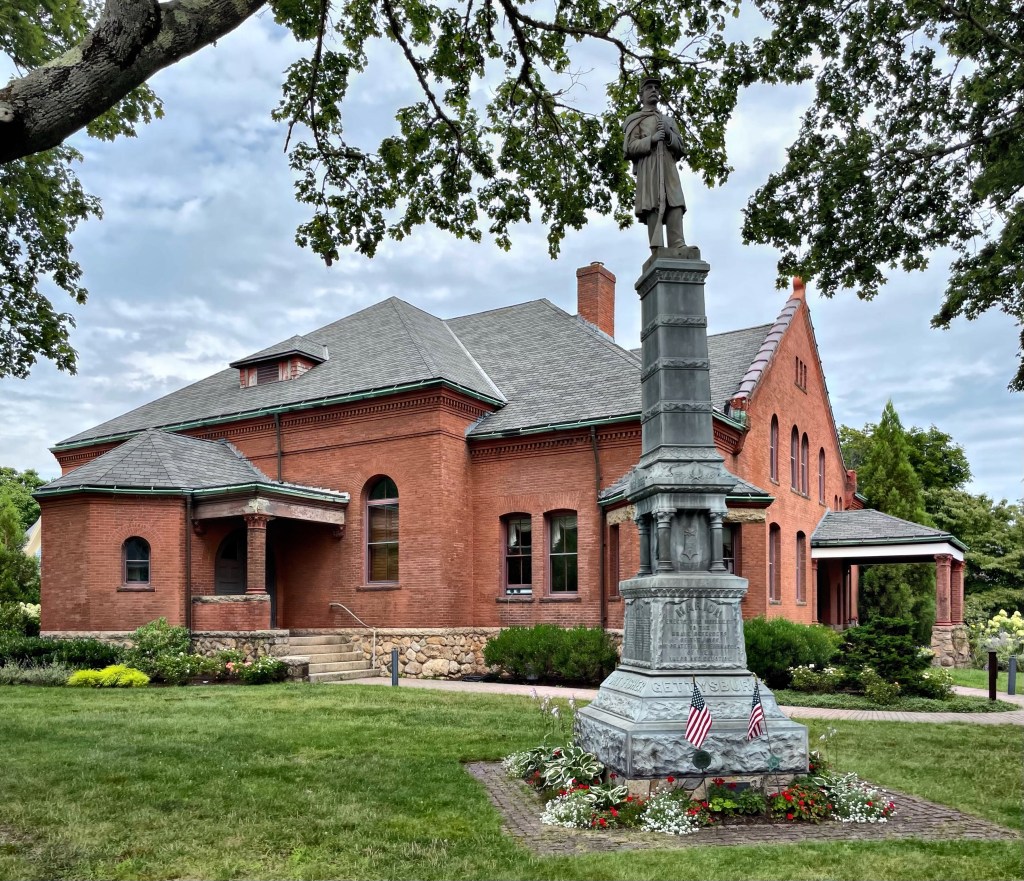
Marion Music Hall // 1891

You know a town is fancy if it has its own music hall! The Marion Music Hall was (you guessed it) largely funded by none other than Elizabeth Taber the prestigious benefactor of Tabor Academy, the Library, and more in her hometown. This building was first envisioned after Ms. Taber was dismayed by the poor quality of “worldy theatricals” that were taking place in the only such venue at the time, the Congregational Chapel. Her last gift to the town via a provision in her will, allotted money for the construction of a “suitable building for a lecture and music hall”, costing a total of $23,000. Her go-to architect, William Gibbons Preston, was hired to design the Music Hall, which is a pleasing late-Victorian, Queen Anne-Romanesque Revival building constructed of brick. The Music Hall’s lawn was deemed worthy as the site of a handsome cast-iron Soldiers Monument which was dedicated during the summer of 1894 and remains on the site today.