First Everett High School // 1893

While Everett’s population had remained small compared to nearby towns throughout much of the nineteenth century, its close proximity to Boston resulted in dramatic population growth between 1885 and 1915. During this late industrial period Everett’s population was one of the fastest growing in the state, doubling between 1870 and 1880, nearly tripling from 1880 to 1890 and doubling again between 1890-1900. The City of Everett immediately went about erecting a new schoolhouse to educate its youth. Architects Loring & Phipps were retained to prepare plans for the new high school. Ground was broken in August 1892 and the building was dedicated just over a year later in September 1893. The school was opened to 175 students on Monday, October 2, 1892 with a capacity of 550 students (as it was realized that the city would continue to grow). The building is high-style Queen Anne with red brick and mortar and light sandstone trimming. In 1905, the capacity of the high school was nearly doubled by the construction of an addition on the west end of the original building. Even doubling the size of the school did not prove adequate as the building was outgrown less than a decade later. From this, the Second Everett High School was built a block away. The First Everett High School is now known as the Whitney Lorenti House, a low income, elderly housing complex.
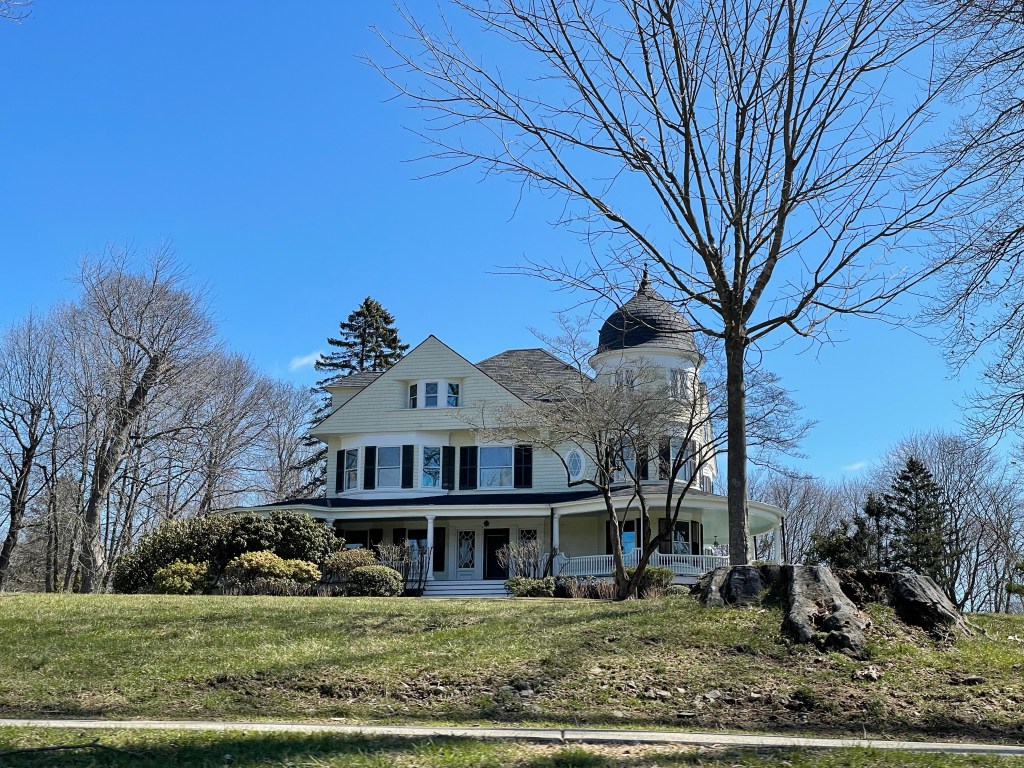
The Tower Cottage // 1880

Tower Cottage was built in 1880 and is one of the best examples of Queen Anne architecture in the town of Ridgefield, CT. The home was designed and built by Charles Betts Northrup, a carpenter and builder who grew up in town. The home was eventually occupied as a summer retreat for Maude Bouvier Davis, who would spend some summers at the house away from the big city. In Ridgefield, Maude was sometimes visited by her niece, Jackie Bouvier, later known as Jackie Kennedy Onassis, First Lady to President John F. Kennedy. Maude owned the property until 1972 and the home has been lovingly preserved since.

Rockwell House // c.1850

Built in 1850, likely as a late-Greek Revival or Italianate style home, this property on Main Street in Ridgefield was completely “modernized” in the 1880s in the Queen Anne style popular at the time. The home was originally built for Francis Asbury Rockwell (1818-1881), a tin-smith, wine-maker and inventor who married Mary Lee Everest, who also had deep roots in the community and was a daughter of a local Revolutionary War captain. The couple built a home on Main Street and raised their children there until Francis and Mary died in 1881 and 1883 respectively. The family home was inherited by their eldest son, Charles Lee Rockwell, who became the director of the First National Bank in town. Charles updated the house to give it the Queen Anne Victorian flair we see today.

First Congregational Church, Ridgefield // 1888

The First Congregational Church was first established in Ridgefield, Connecticut just four years after the establishment of the town. Civic leaders in October 1712 successfully petitioned the Connecticut General Assembly for permission to levy a tax for “the settling and maintaining of the ministry in the said Town of Ridgefield.” Rev. Thomas Hauley, the first minister, also served as town clerk and school teacher. The first meeting house, on the town green, opened for worship in 1726. Plans for a new meeting house were drawn up in 1771 to fit a growing population, but construction was not complete until 1800. The second church was built in a more traditional style with a steeple. With a shift in the towns demographic from rural homeowners to ritzy exurb to New York City, a more suitable church was required by the end of the 19th century. Josiah Cleaveland Cady, one of the many great New York architects at the time was hired to design a new church suitable for the wealthy New Yorkers who summered in town to consider a neighbor, and he did not disappoint! The building blends many styles from Queen Anne, to Victorian Gothic, to Romanesque Revival in a way that isn’t clunky as in some other versions.

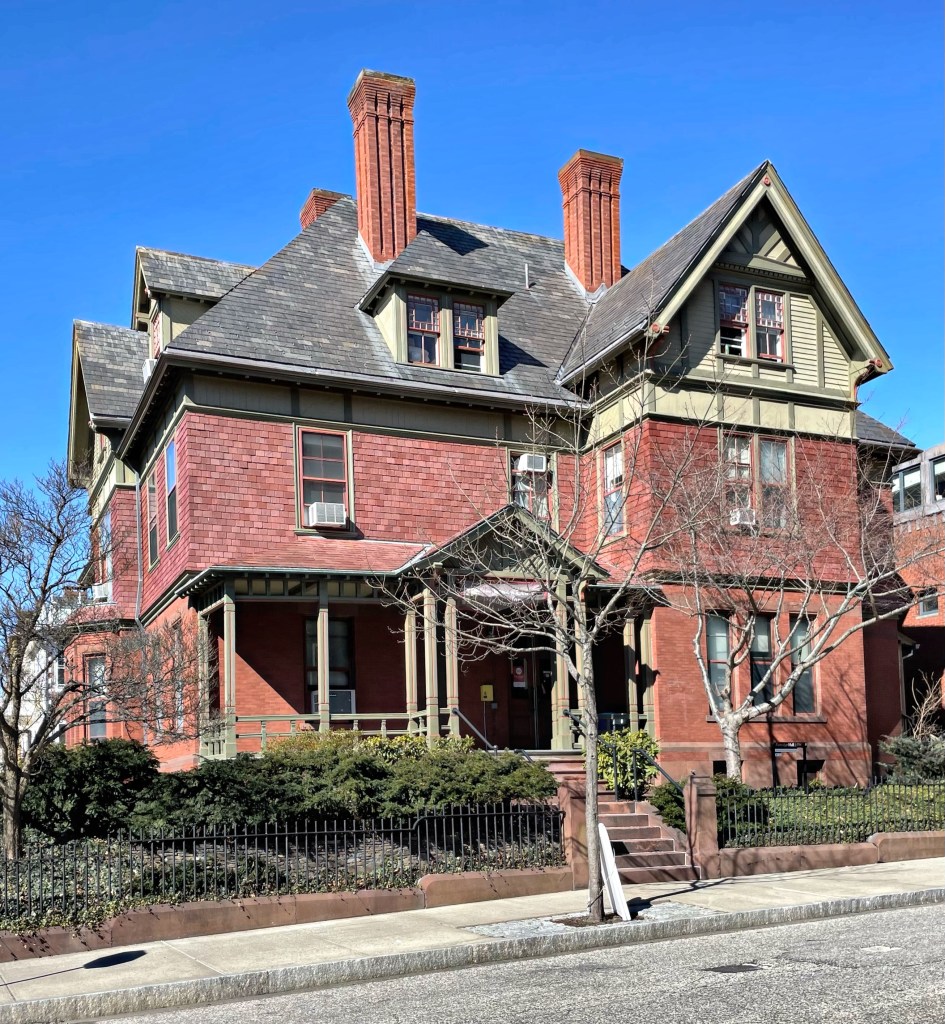
Beckwith House – Partridge Hall // 1882

Henry Truman Beckwith (1808-1893) was born in Providence and (of course) enrolled at Brown University. He left school after two years and wished to see the world. He began to work as a cargo clerk aboard ships for a cotton merchant of Macon, Georgia. He traveled between Boston and Calcutta at least twice, bringing aboard novels from American and British authors, spending much of his time reading. Being well-read and without a family of his own (he never married), he devoted much of his time to clubs and organizations including: the Providence Athenaeum, Rhode Island Historical Society, and the Rhode Island Horticultural Society. In the later years of his life, Henry had this Queen Anne style home built in College Hill, on the same block as the Historical Society where he was a member. The Beckwith House was eventually acquired by Brown University and has since been known as Partridge Hall. The building is now home to the Brown Center for Students of Color, an organization that was established after a series of student protests in 1968 and 1975. Amid the civil rights movement of the late 1960s and 1970s, a group of Black students walked out of Brown University in December 1968 in protest of fierce racism on campus. The mission of the Brown Center for Students of Color has evolved over the years, but its current mission statement reads “Visualize. Vocalize. Mobilize”, they remain an integral piece of the campus and provide much-needed space for students of color to build a sense of community on campus.

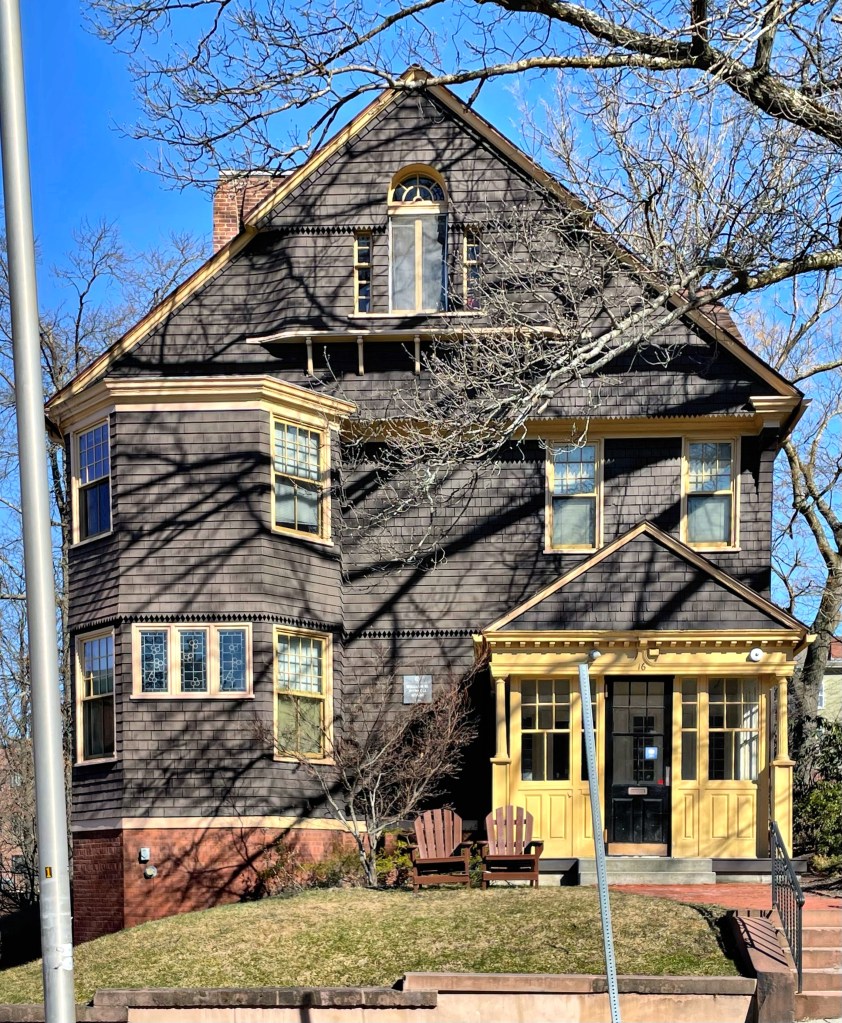
Dunnell House // 1884

William Wanton Dunnell (1850-1933) was born in Pawtucket, Rhode Island and was educated in Rhode Island schools. He eventually helped run his family’s cotton goods business, which grew over the next decades. The Dunnell Finishing Works factory was a success in Apponaug (Warwick) Rhode Island, and he had over 500 employees turning out over 1,000,000 yards of printed cloth a week! Before all this, William had this amazing house built in College Hill, Providence for his family. The local architectural firm of Stone, Carpenter & Willson was hired and blended Shingle, Queen Anne, and Colonial Revival styles elegantly under one roof. I am particularly fond of the sawtooth shingles, Palladian motif windows in the gable, and undulating facade. The house is owned today by RISD.

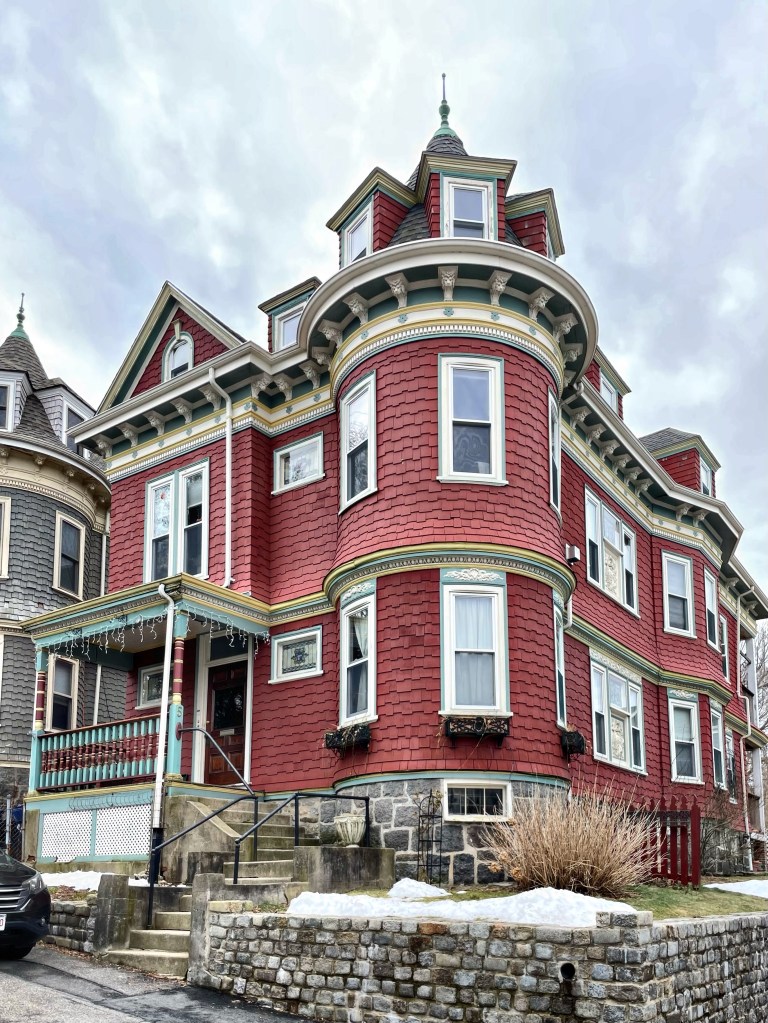
Emmel Rental Houses // 1896

Tucked behind the massive Emmel Building (last post), you will find these two charming houses on the dead-end street in Jamaica Plain, Boston. Like the Emmel Building, these two homes were built by Charles Emmel, an architectural sculptor and real estate investor, who hired local architect George Zimmer to furnish plans for the buildings. The two transitional Queen Anne houses feature some of Emmel’s architectural decoration, from the lion’s head corbels to the decorative lintels above the windows, these homes really stand out!

Stetson House // 1897

Waban is full of eclectic homes from the end of the 19th century, and this example is probably my favorite! The Herbert and Georgia Stetson House was built in 1897 and demonstrates how elements of the Colonial Revival style were incorporated into a less rigid Queen Anne style plan. Herbert was a lumber dealer, and likely used his own product in his home. The mixture of ornament includes Colonial
Revival style pedimented dormers, a Palladian motif window, oval windows, and a modillion cornice in combination with bays, oriels, a dramatically overshot gable roof, and a swept dormer reminiscent of the Queen Anne style. Together, the composition is perfection, and really makes you stop and analyze all the details!

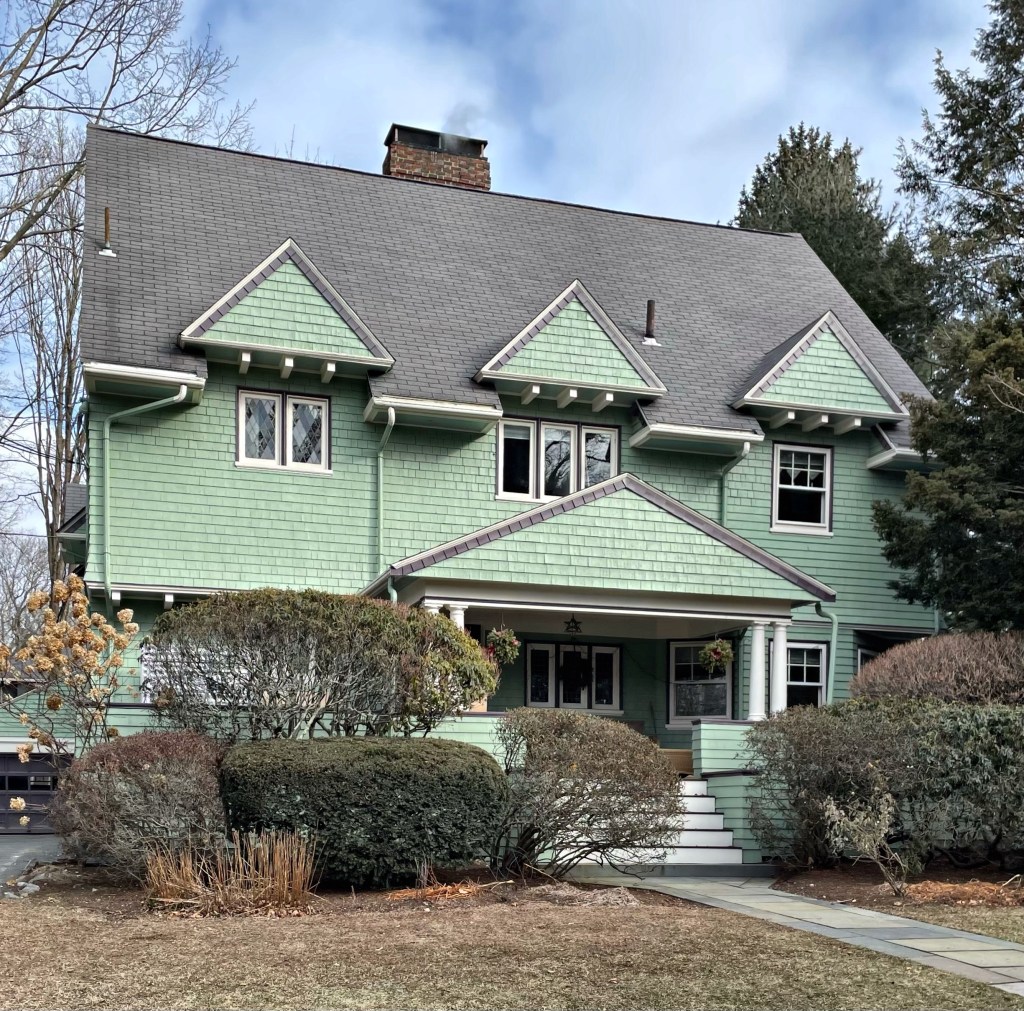
Hovey House // 1897

In 1897, tailor Charles L. Hovey and his wife Bertha, had this house in Waban built for their family. The architecture really stands out as an eclectic blending of styles, common at the end of the 19th century, when architects and builders would design homes to exhibit architectural details from multiple styles, all under one roof. The shingled house has a steep gable roof and three gabled dormers, which reflects Queen Anne theme. The diamond-pane windows and the technique of cantilevered dormers and the second floor overhanging the first, is First Period-Medieval in style, a unique interpretation of American architecture. What do you think of this home?

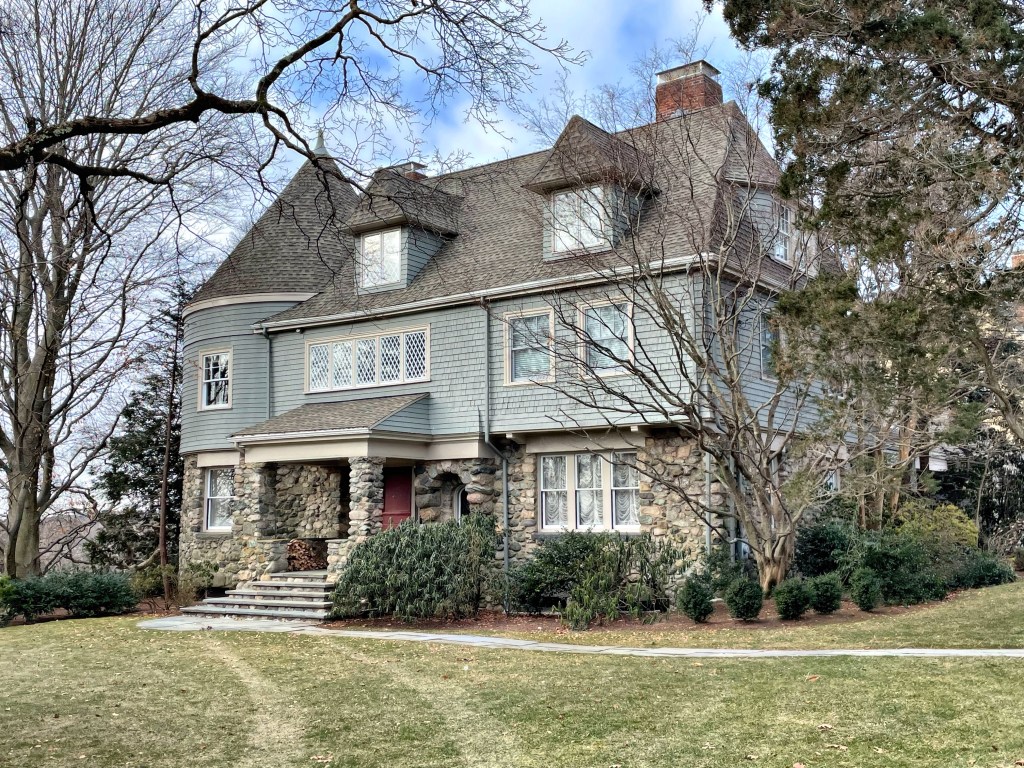
Louis K. Harlow House // 1888

One of the best houses in Waban Village in Newton is this absolutely stunning Shingle style/Queen Anne home perched high on Moffat Hill. This house was built in 1888 for Louis K. Harlow, who began his career as a professional artist in 1880 and traveled Europe to study the work of prominent painters. Back in the Boston area, Harlow painted nature and landscapes and produced etchings that were shown in the Boston Art Club and sold worldwide. He later got into poetry and published multiple works. Harlow hired the firm of Longfellow, Alden, and Harlow, to design this country retreat. I assume there is a relation between Louis K. and the architect Alfred Branch Harlow, but I would love to find out the connection! The design is quintessentially Queen Anne, with the asymmetry, complex roof form, varied siding types, and diamond window sashes. The shingled second floor overhangs the fieldstone first floor which to me, evokes the Shingle style where the house seems to have grown out from the earth. I can only imagine how spectacular the interior is!